
Chapter 1, History of Arts, opens NCERT’s Class 9 Art Education textbook Madhurima (Art Education). It runs 38 printed pages and is the first chapter of the book.
This history of arts class 9 chapter follows one integrated timeline of Indian theatre, music, dance and visual arts — from prehistory to 1200 CE — with parallel developments from the rest of the world alongside. The official NCERT PDF of the chapter is right here on this page.
Download the History of Arts Class 9 PDF
NCERT publishes the complete book free on its official portal, and this is the same edition your school follows. Open the History of Arts Class 9 chapter PDF from the NCERT textbook portal to read the official NCERT edition of Chapter 1 of Madhurima (Art Education) — all 38 pages, including every figure and caption.
Chapter 1 at a glance
The count table on this page lists how much the chapter holds — its sections, figures, activities and exercises. What the numbers cannot show is how the chapter is arranged:
- A teacher’s note first. The chapter opens with a note to the teacher that lists assessable learning outcomes — the seven things you should be able to do after studying it (NCERT, p. 1-2).
- One integrated timeline. The body brings Theatre, Music, Dance and Visual Arts together in a single narrative split into four time periods (NCERT, p. 5).
- India and the world side by side. Each period pairs Indian developments with a related developments-in-global-art spread (NCERT, p. 6).
- Built-in discussion. Discussion circles, “Let us explore” prompts and hands-on activities appear throughout the body.
- A living-traditions close. The chapter ends with Living Traditions and a set of eight exercises, including two projects — Q7 (Individual) and Q8 (Group) (NCERT, p. 32-37).
- Overlapping periods. The chapter itself says the timeline’s periods overlap, so read them as a guide rather than hard cut-offs (NCERT, p. 5).
What this chapter covers
This is a survey, not a deep dive into one art form. It is built to be read as one connected story of four art forms moving across four periods.
The novelty is the integrated timeline: instead of studying music, theatre, dance and visual arts separately, the chapter studies them together so you can see how they influenced one another, how ideas travelled across regions, and how global events shaped artistic expression (NCERT, p. 5).
The four periods are:
- 50,000 BCE – 4000 BCE — the prehistoric era, known mainly through cave paintings.
- 4000 BCE – 500 BCE — the river-valley civilisations, including the Sindhu-Sarasvati world.
- 500 BCE – 600 CE — the classical period: first treatises, Buddhist art, Ajanta.
- 600 CE – 1200 CE — temple arts, Bhakti devotion, and Indian art reaching Southeast Asia.
Each period pairs what was happening in India with what was happening elsewhere, in the chapter’s timeline table on page 6. And because history does not divide neatly, the chapter notes that the periods have many overlaps — treat them as a guide, not a set of hard cut-offs (NCERT, p. 5).
Key concepts you will meet
Four ideas carry the whole chapter, and every period section assumes you already know them. Understand these first, and the timeline reads almost by itself.
Tangible and intangible cultural heritage
UNESCO divides cultural heritage into two kinds, and this pair frames the chapter’s opening (NCERT, p. 4). Exercise Q1 tests it directly.
- Tangible cultural heritage — physical, material expressions of culture: artefacts, monuments, artworks, manuscripts, musical instruments, clothing, jewellery, masks, props and tools.
- Intangible cultural heritage — living expressions passed down from ancestors: oral traditions, performing arts, social practices, rituals, festive events, knowledge of nature, and the skills behind traditional crafts.
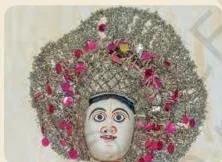
The mask above is a physical object — tangible heritage. But the skill of carving it, and the performance that wears it, are intangible: the tradition lives only while people practise it. Figure 1.3 shows the intangible kind in action — Kala Utsav participants singing the harvest song of Meghalaya. A song lives in the singing, not the museum.
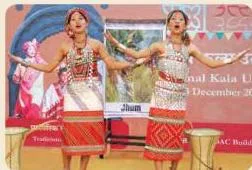
You meet the same pair in daily life: a family wedding song is intangible heritage, while the photograph of that wedding is the tangible record. This is exactly the sort of sorting Q1 asks for.
Śhruti, smṛiti and the oral tradition
Before writing existed, art and knowledge travelled by word of mouth — and Indian traditions kept that method alive for millennia. The chapter’s vocabulary for this is the pair śhruti and smṛiti (NCERT, p. 7).
- Śhruti — “that which is heard.” The Vedas travelled through the guru-śiṣya-paramparā (teacher-student tradition), learnt by careful listening.
- Smṛiti — “remembered.” The Rāmāyaṇa, Mahābhārata, Purāṇas and Dharmaśhāstras were told and retold from memory, generation after generation.
Mnemonic: the word “memory” is hidden inside smṛiti. Regional retellings of the epics that survive today include Rāmalīlā, Bhavāī, Kāvaḍ Kathā, Terukūtu, Bayalāṭa, Paṭachitra and Aṅkiyā Nāṭ.
Indian music traces its origin to the Sāmaveda, where mantras were recited as ritual chants — first in one note, then three (udātta, anudātta, svarita), and finally the seven-note saptasvara.
The Vedas also name drums such as the dundubhi (Rigveda 1.28.5), used in war and peace, and the Rigveda describes Uśhas, the dawn, arriving like a bejewelled dancer (NCERT, p. 7).
The chapter names the performers of this oral world:
- Lava and Kuśha — Rāma and Sita’s sons, who recount their parents’ story through drama, music, dance and poetic narration.
- Kuśhilava tradition — professional singers and performers, named in Pāṇini’s Aṣṭadhyāyī.
- Kathaka community — Mahābhārata performers who lifted the exiled Pāṇḍavas’ spirits with songs, dances and stories.
- Sūtradhāra — the narrator who guides a performance.
- Sūta-paramparā — storytellers who performed the epics with dialogue, voice modulation and gestures.
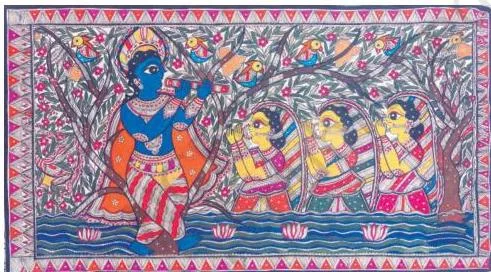
The epics even star artists: Śiva as Naṭarāja, “lord of dance”; Rāvaṇa as a skilled veena player; Kṛiṣṇa as Muralidhara, the enchanting flute player (NCERT, p. 7).
Symbolism and iconography
Artists said sacred meanings without writing them down. Learning to read those symbols is a skill this chapter returns to again and again.
In early Buddhist art, the Buddha was not shown as a person. Symbols stood for him — the platform under a Bodhi tree, the stūpa, the elephant and the lotus (NCERT, p. 16). The same habit runs through Ashoka’s pillars, whose animals carry symbolic meanings, and the wheel, which represents the Chakra of Dharma (NCERT, p. 17).
The human image of the Buddha developed later, mainly in three centres. The chapter’s comparison table on page 19 is worth memorising:
| Centre | Material | Style / characteristics |
|---|---|---|
| Sarnath | Chunar sandstone | Idealised body proportions, clinging drapery, serene and spiritual expressions |
| Mathura | Red spotted sandstone | Rounded body with expressive eyes and faces; modelled on earlier Yakṣa sculptures |
| Gandhara | Grey schist | Realistic anatomy with Greek/Roman resemblance — wavy hair, flowing robes, facial features |
Hindu deities work the same way, and the chapter gives this its technical name: iconography — identifying characters by fixed images and symbols (NCERT, p. 19). Śiva is recognised by the trishula and ḍamaru, Sarasvatī by the veena and her swan, Viṣṇu through his avatāras. The Varāha boar relief (Fig. 1.28), walked through below, is the chapter’s worked example.
Living traditions
Many practices are clearly ancient, yet no one can place their exact origin on a timeline. The chapter calls these living traditions (NCERT, p. 32).
They include pottery, textiles, sculpture, painting, handicrafts, musical instruments and performing traditions of music, dance and drama. The chapter’s examples:
- Dhokrā metal craft — metal artworks and jewellery made with the lost-wax process, kept alive by communities across central and eastern India (p. 32).
- Warli painting — a painting tradition of Maharashtra (p. 33).
- Dance forms — like the Kumaon dance of Uttarakhand (p. 33-34).
- Masks — Pilivesha (tiger dance) in Karnataka, masks of the Monpa tribe in Arunachal Pradesh, and masked dance in Goa (p. 34).
- Songs for life events — birth, wedding, harvest, grinding-mill, fisherfolk and travel songs (p. 34).
- Taus or Mayūri Veena — a peacock-shaped musical instrument (p. 35).
- Tolpāvakūtu — shadow puppetry from Kerala (p. 35).
The tallest Naṭarāja sculpture in the world — cast in a living bronze tradition — now stands at Bharat Mandapam in erstwhile Pragati Maidan, New Delhi (NCERT, p. 33). This section feeds exercises Q5, Q7 and Q8.
How to read the figures in this chapter
The chapter gives one instruction that applies to every picture in the book: read the caption for the subject, materials, dimensions and time period of the artwork (NCERT, p. 3). That habit is how you trace historical development and spot connections between art forms.
The figures below carry the chapter’s argument, shown in period order. Each caption tells you what the artwork is; each note tells you what to notice.
Reading the prehistoric figures
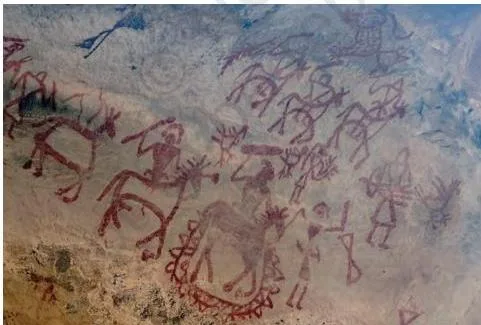
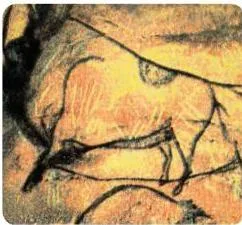
Notice: the colours are earth pigments — red, white, yellow, green — mixed with water and a binder, and the paintings come from different periods, so the walls show art actually evolving (NCERT, p. 8).
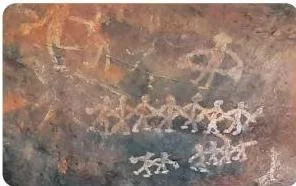
Notice: people dance with interlinked arms, and one figure holds an object that looks like a musical instrument — some of the earliest visual evidence of performance in India (NCERT, p. 8-9).
Reading the ancient-world figures
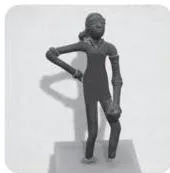
Notice: it was cast with the lost-wax technique around 2600 BCE, and its feet are not visible — that hidden detail is the whole point of Activity 1.2 (NCERT, p. 10-11).
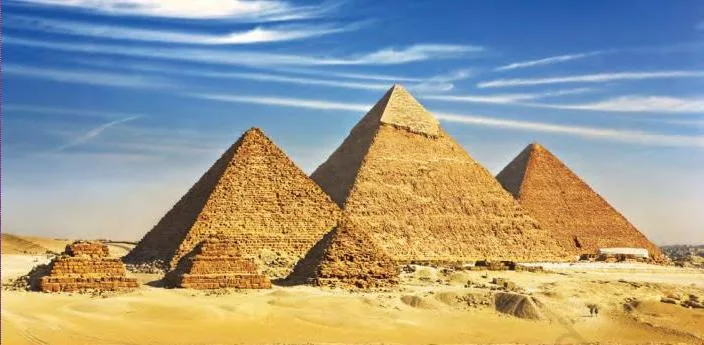
Notice: monumental stone tombs built for the Egyptian pharaohs around 2580 BCE — architecture as a state-scale art (NCERT, p. 12).
Reading the classical-period figures
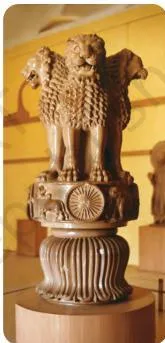
Notice: the mirror polish, achieved by finely grinding the stone until it is smooth and reflective; this capital is India’s national emblem (NCERT, p. 17).
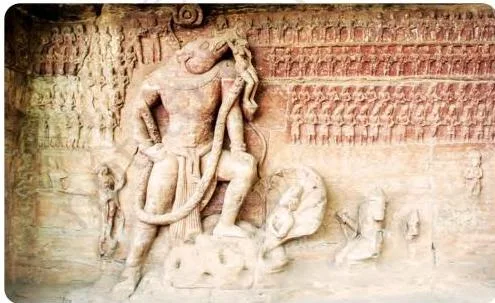
Notice: a Gupta-period iconography lesson — Viṣṇu as the boar rescuing Bhūdevī (Earth). The chapter asks whether Varāha’s pose resembles a dance pose, and to compare this sculpture with the others you have met (NCERT, p. 19-20).
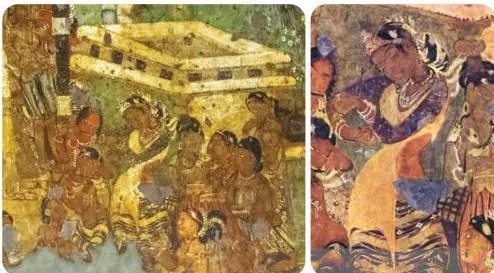
Notice: painted on a plaster base; the blue comes from lapis lazuli, hinting at contact with Persian or Central Asian visitors. The scene is the Mahājanaka Jātaka — a dancer with flute, cymbals and drums (NCERT, p. 20-21).
Reading the temple-period figures
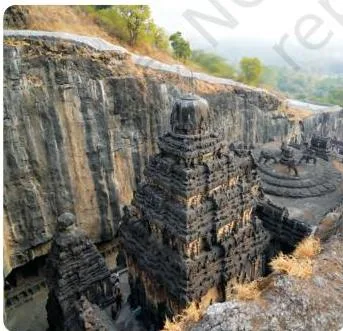
Notice: the largest monolithic free-standing structure in the world — carved from the top down from a single basalt rock, with about 18 years of work and 4,00,000 tonnes of rock removed (NCERT, p. 26).
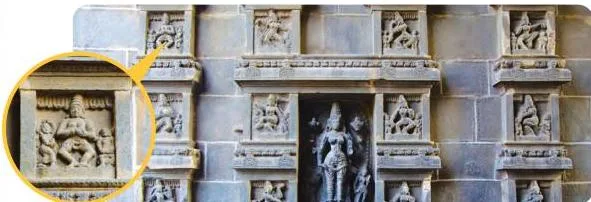
Notice: dance phrases from the Nātyashāstra carved like a storyboard on a temple wall — sculpture recording a written performance theory (NCERT, p. 28).
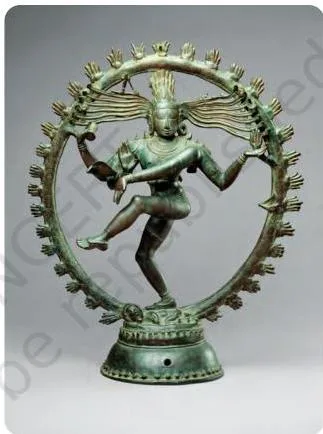
Notice: the ring of fire and the four hands — every element carries meaning, decoded in the table below (NCERT, p. 29).
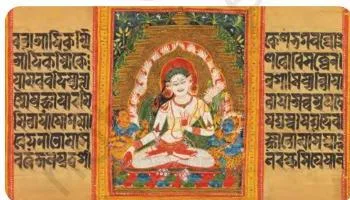
Notice: a palm-leaf manuscript painting of the Pala period. Palm leaf and cloth were fragile and small, which is why no manuscript older than the fifth century has survived (NCERT, p. 30).
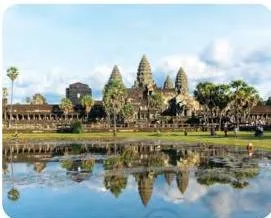
Notice: a 12th-century Hindu-Buddhist temple in Cambodia built under Suryavarman II — visible proof that Indian art and ideas had travelled to Southeast Asia (NCERT, p. 31).
The earliest art: 50,000 BCE – 4000 BCE
The period before writing is known only through archaeology — cave paintings, figurines and stone tools — so the art itself is the evidence (NCERT, p. 8).
- Sites in India: Bhimbetka in Madhya Pradesh — one of the oldest groups of rock shelters in India — and Lakhudiyar in Uttarakhand, with more painted caves in Andhra Pradesh, Karnataka, Uttar Pradesh, Jharkhand and Bihar (p. 8).
- Technique: earth pigments mixed with water and a binder, in red, white, yellow and green.
- Themes: animals, hunting scenes, processions and everyday life.
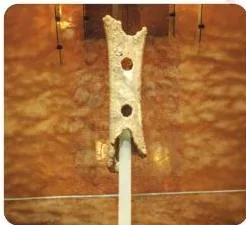
- Global parallels: cave paintings at Altamira (Spain), Chauvet and Lascaux (France) and Sulawesi (Indonesia), plus Neanderthal bone flutes (p. 9).
- A shared style: prehistoric animals are drawn with lines and minimal colour, yet most can be identified by their physical features (p. 9).
- Hands-on match: Activity 1.1 asks you to draw an animal from observation or memory and test whether it is identifiable — the same test the cave painters pass (p. 10).
Look back at Fig. 1.7 in the walkthrough: the dancers with interlinked arms and the possible musical instrument make this the chapter’s earliest window into performance.
The ancient world: 4000 BCE – 500 BCE
Once river-valley civilisations learned to write, art and records begin to survive together. This period gives us the subcontinent’s earliest script and one of the world’s earliest recorded performances.
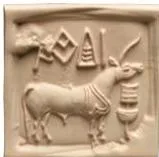
- Earliest script of the subcontinent: pictographic inscriptions on seals of the Sindhu-Sarasvati civilisation, like the unicorn seal from Harappa (NCERT, p. 10).
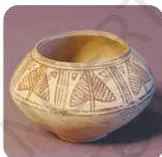
- Craft of the civilisation: painted terracotta pottery, jewellery, seals, bronze figurines and a few stone sculptures; the architecture points to well-planned towns (p. 6, 10).
- Mohenjo-Daro bronze figurine (2600 BCE): made by the lost-wax technique, an art still practised in West Bengal, Jharkhand and Chhattisgarh today (p. 10). The chapter asks what its pose portrays; Activity 1.2 has you mimic the pose because the feet are not visible (p. 11).
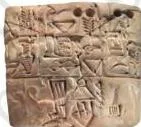
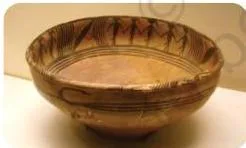
- Global neighbours: cuneiform tablets of Sumeria (one records a barley distribution, 3100–2900 BCE), a Majiayao bowl with dancing figures from China, the pyramids of Giza, and an arched harp from Egypt (p. 11-12).
- Earliest recorded performance: the Ikhernofret Stela of Abydos, Egypt (around 1864 BCE) — the “Passion Play of Abydos” — records roles, sequence of actions, symbolic costumes and props, designated spaces and audience participation in ritual processions (p. 12).
Two questions the chapter leaves open for you: which category of instrument does the Egyptian harp belong to, and how does Sindhu-Sarasvati pottery compare with the pottery of other ancient civilisations? (NCERT, p. 11-12).
The classical period: 500 BCE – 600 CE
The heart of the chapter: the period that produced India’s first art treatises, its great Buddhist monuments and its most famous murals. Five threads run through it (NCERT, p. 13-23).
- First treatises on the arts. Three texts anchor the period: the Nāṭyaśhāstra by Bharata Muni, the Chitra-sūtra of the Viṣṇu-dharmottara Purāṇa, and the Silappadigāram by Iḷaṅgo Aḍigal (p. 13). The Nāṭyaśhāstra is among the earliest treatises on Indian arts, with structured technique for drama, dance, music and the visual arts — and its rasa theory makes eight bhāvas the basis of the eight rasas. Kauṭilya’s Arthaśhāstra even recognises naṭa, nartakī and gāyaka/vādaka as professional performers who contribute to the state’s economy (p. 14).
- Buddhist architecture. Stūpas (monuments over the Buddha’s relics), chaityas (prayer halls) and vihāras (monasteries) rose from the third century BCE at Barabar, Bharhut, Vidisha, Vaishali, Udayagiri, Khandagiri, Sarnath, Kushinagar, Amravati, Ajanta and Ellora (p. 14). The four toranas (gateways) of Stūpa No. 1 at Sanchi carry reliefs of the Buddha’s life and Jātakas such as the Vessantara, Mahākapi and Syāma (p. 15).
- The Buddha in art. Early reliefs show only symbols — find the platform under a Bodhi tree, the stūpa, elephant or lotus in Figs. 1.21 and 1.22 (p. 16). The human image came later in the three centres compared in the table above, with Gandhara resembling Greek and Roman sculpture (p. 18-19).
- Painting and sculpture. Murals developed at Ajanta and Sittannavasal; a mural is painted directly on a wall surface (p. 20). Gupta coins show Samudragupta playing the seven-stringed, bow-shaped Parivādinī veena, called Yāzh in Saṅgam literature (p. 20).
- Literature feeds the arts. Sanskrit plays and poetry shaped performance: Kālidāsa’s Mālavikāgnimitram and Vikramorvaśhīyam, Śhūdraka’s Mṛichchhakaṭikam, the Pañchatantra of Viṣṇu Śharmā, and Aśhvaghoṣa’s Buddhacharitam — a mahākāvya (epic poem) on the Buddha’s life, by the first Sanskrit dramatist (p. 21-22).
Bhāravi’s Kirātārjunīyam, a mahākāvya that exudes vīra rasa, contains a verse built from a single consonant — the test of Activity 1.7 (NCERT, p. 22):
Na nonanunno nunnono nānā nānānanā nanu
Nunno’nunno na nunneno nānenā nunnanunnanut
— Kirātārjunīyam, 15.14
The verse celebrates the ethics of bravery: realising one’s own strength and refusing to persecute the weak. Meanwhile, Greek and Roman theatre ran its own course — Dionysian festivals used masks of comedy and tragedy, our words “theatre” and “scene” descend from theatron and skene, and Rome built the Colosseum for gladiator games (NCERT, p. 22-23).
Temple arts and Bhakti: 600 CE – 1200 CE
This is the period of the temple as a complete art gallery — architecture, sculpture, music and dance together in one building. Six threads matter (NCERT, p. 24-31).
- Bhakti and temple dance. Around the seventh century, the Tamil poetry of the Āḷvārs and Nāyanārs made devotion accessible to everyone, regardless of social status (p. 24). Chola records categorise dancers as temple, ritual, court and general-audience performers, and the Chera ruler Kulaśhekhara Varman reconstructed Kūdyāṭṭam — Sanskrit theatre combined with dance (kūtu) — still alive in Kerala (p. 24).
- New treatises. Saṅgīta-makaranda (Nārada) classifies rāgas, some named after regions — Gurjar, Khamboj, Malava (p. 24). Bṛihaddeśhi (Matanga Muni) separates mārga (classical) from deśhī (regional) music and colours each svara (p. 25). Abhinavabhāratī, Nātakalakṣaṇaratnakośha and Daśharūpaka continue rasa theory, drama rules and the ten drama types; Abhinaya-darpanam (Nandikeśhvara, 11th century), the first text solely on dance and drama technique, is still followed by dancers (p. 25).
- Rock-cut architecture. The Kailāśha Temple at Ellora (Rāṣṭrakūṭa, 8th century) is the largest monolithic free-standing structure in the world — carved from the top down from a single basalt rock; historians estimate 18 years of work and 4,00,000 tonnes of rock removed (p. 26). Unakoti’s 30-foot Kālabhairava (Tripura, 7th-9th century) is another immense rock-cut Shiva, and the Kudumiyanmalai inscription (Pallava, 7th century) records musical notes and treatise details in Sanskrit and Tamil (p. 27).
- Sculpture records performance. The 108 karanas at Chidambaram set out dance phrases from the Nātyashāstra like a storyboard (p. 28). Khajuraho (Chandela) and the Harshgiri sandstone panel (973 CE) show dancers and musicians, and Hoysala sculpture at Belur — like the soapstone Madanikā, a dancing drummer — favours short, rounded forms with intricate carving (p. 28-30).
- Manuscript painting. Birch bark and palm leaf carried the earliest painted books: the Gilgit manuscript from Kashmir (5th-6th century, Śhāradā script) and Pala palm-leaf manuscripts like the Aṣṭasahasrikā Prajñāparimitā with its White Tārā image (p. 30). Fragility is exactly why nothing older than the fifth century survives (p. 30).
- Indian art abroad. From about the first century BCE, maritime trade, Chola military campaigns and travelling monks carried Indian art and culture to Southeast Asia (p. 31). The Rāmāyaṇa and Mahābhārata shaped art, architecture, dance and theatre in Indonesia, Thailand, Vietnam and Cambodia — seen in Angkor Wat and Wayang Kulit shadow puppetry (p. 31).
Decoding the Chola Naṭarāja
The walkthrough above showed the bronze (Fig. 1.46). The Cholas mastered bronze sculpture, and their Naṭarāja — Śhiva as the Lord of Dance, framed in a ring of fire — became an icon of cosmic rhythm and movement (NCERT, p. 29). Every element carries meaning:
| Element | What it symbolises |
|---|---|
| Ring of fire | The cyclical nature of the universe |
| Five cosmic activities | Creation, preservation, destruction, illusion and salvation |
| Back left hand (fire) | Destruction in the cycle of nature |
| Front left hand (gajahasta-mudrā) | Refuge and emancipation for the soul (elephant-trunk gesture) |
| Back right hand (ḍamaru) | Birth of sound; source of the alphabet of language |
| Front right hand (abhaya hasta) | Protection |
| Flying hair | River Ganga and a snake within it |
| Left foot | Detachment, leading to the soul’s upliftment towards mokṣha |
| Right foot | Crushing Apasmāra Puruṣha, the dwarf of ignorance |
Learn the table as pairs — the four hands, the two feet, the ring, the hair — and you can read any Naṭarāja image at a glance.
Key terms defined
A quick glossary so you can read the chapter without stopping at every Sanskrit term. Definitions are in plain words, with the NCERT page for each.
| Term | What it means in this chapter | NCERT page |
|---|---|---|
| 64 kalās | The 64 arts and skills named in ancient scriptures for the holistic development of character — painting, music, drama, dance, literature, crafts and sciences like metallurgy and carpentry | p. 3 |
| Tangible cultural heritage | Physical objects of culture: artefacts, monuments, artworks, manuscripts, instruments, clothing, jewellery, masks, props and tools | p. 4 |
| Intangible cultural heritage | Living expressions passed down: oral traditions, performing arts, rituals, festive events, and the skills behind traditional crafts | p. 4 |
| Śhruti | “That which is heard” — the Vedas, transmitted through the guru-śiṣya-paramparā by careful listening | p. 7 |
| Smṛiti | “Remembered” — texts retold from memory, like the Rāmāyaṇa, Mahābhārata, Purāṇas and Dharmaśhāstras | p. 7 |
| Saptasvara | The seven notes of Indian music, which grew from ritual chanting that began with one note, then three | p. 7 |
| Lost-wax technique | A metal-casting method used for the Mohenjo-Daro figurine and Dhokrā craft — the wax model is removed and metal takes its place | p. 10 |
| Nāṭyaśhāstra | Early treatise on Indian arts by Bharata Muni, covering drama, dance, music and visual arts, famous for its rasa theory | p. 13 |
| Rasa and bhāva | Rasa is the aesthetic flavour the audience feels; bhāva is its emotional basis — eight bhāvas underlie eight rasas | p. 13 |
| Stūpa | A monument built over the Buddha’s relics | p. 14 |
| Chaitya | A prayer hall | p. 14 |
| Vihāra | A monastery | p. 14 |
| Iconography | Using fixed images and symbols to identify characters — Śiva by the trishula and ḍamaru, Sarasvatī by the veena and swan | p. 19 |
| Mural | A painting made directly on a wall surface | p. 20 |
| Mahākāvya | An epic poem — for example, Aśhvaghoṣa’s Buddhacharitam on the Buddha’s life | p. 22 |
| Karaṇa | A dance phrase; the 108 karanas of the Nātyashāstra are carved at Chidambaram | p. 28 |
| Living tradition | A practice continued across generations whose exact origin cannot be placed on a timeline | p. 32 |
Common mistakes to avoid
Six confusions catch students in this chapter — and most are tested by the closing exercises. Read the mistake, apply the correction, then check your answer.
| Mistake | Correct rule | How to check your answer |
|---|---|---|
| Treating a mask or pot as intangible because it is folk art | The object is tangible; the skill to make it and the performance wearing it are intangible | In Q1, sort sculptures, pottery and jewellery as tangible; Vedic chanting, weaving knowledge and wedding songs as intangible (p. 4, 36) |
| Using śhruti and smṛiti interchangeably | Śhruti = heard (the Vedas, by listening); smṛiti = remembered (retold texts like the epics) | Ask which method carried the text; the word “memory” lives inside smṛiti (p. 7) |
| Assuming early Buddhist art always showed the Buddha as a person | Early reliefs used symbols — platform under a Bodhi tree, stūpa, elephant, lotus; the human image came later at Sarnath, Mathura and Gandhara | When reading a relief, ask: is there a human figure, or a symbol standing in for the Buddha? (p. 16, 18) |
| Calling the lost-wax technique modern | The 2600 BCE Mohenjo-Daro figurine already used it, and Dhokrā artists still do today | Name two artworks from different eras that share the technique (p. 10, 32) |
| Calling any large painting a mural | A mural is painted directly on a wall surface, like the Ajanta and Sittannavasal caves | Check where the paint was applied: wall = mural; cloth, paper or palm leaf = not (p. 20) |
| Believing Ajanta survived because people repainted it | The murals survived because the caves gave a stable, sheltered environment that protected them from sunlight, rain and wind | Exercise Q3’s correct option (iii) states exactly this reason (p. 36) |
Using this chapter for homework and projects
The chapter’s opening note to the teacher lists the assessable learning outcomes; the exercises at the end test each one (NCERT, p. 1-2). The outcomes, in plain words:
- Interact with artists in your community to know more about art practices.
- Create artwork inspired by the ideas and processes of art history.
- Identify and discuss the evolution of materials, processes and techniques.
- Trace the historical development of visual arts, theatre, music and dance with examples.
- Identify continuing ideas and traditions mentioned in ancient Indian texts and treatises.
- Correlate geographic, social and cultural linkages across art forms of the same period.
- Explain why an artwork or performance matters to you, in your own context.
The eight exercises map onto the chapter like this:
| Exercise | What it asks | Where the material lives |
|---|---|---|
| Q1 | Sort a list into tangible and intangible cultural heritage | Definitions on p. 4; the list, on p. 36, mixes sculptures and jewellery (tangible) with Vedic chanting, weaving knowledge and wedding songs (intangible) |
| Q2 | MCQ: why ancient treatises on the arts are still relevant | p. 13’s three reasons — the correct option names historical knowledge, technical guidance and philosophical foundations |
| Q3 | MCQ: why the Ajanta murals survived close to 1,500 years | p. 21’s discussion; option (iii) names the stable, sheltered cave environment |
| Q4 | Write three rules for respecting a monument, performance or gallery | Your own writing — sensible answers cover no touching, no flash, silence during performance, no climbing or marking |
| Q5 | Trace technique changes in one art form over time | Period sections p. 8-31, guided by the three prompts on p. 36 |
| Q6 | Note on any pre-1200 CE artwork, using five prompts | Any artwork in the chapter; use material, time period, location, subject, iconography, style and your own response (p. 36) |
| Q7 (Individual project) | Note on a living tradition practised today | Living Traditions section p. 32-35; nine prompts given on p. 37 |
| Q8 (Group project) | Explore a living tradition of another State or Union Territory | Choose a State you do not live in; gather information and present in class (p. 37) |
Three activities build the exact skills these projects need: Activity 1.3 (watch two performances and note postures, rasas, costumes and props), Activity 1.7 (the one-consonant verse recitation), and Activity 1.9 (mindful movement with the Abhinaya-darpanam śloka). For theatre-heavy projects, the Class 9 Arts theatre notes on this site go deeper into that thread.
One honesty note: textbook contents and the examinable syllabus are not always identical. Check the current official syllabus before planning your study.
Recap: the chapter’s timeline in one table
One screen for the whole chapter — the four periods, what was happening in India, what was happening in the world, and one landmark artwork to anchor each (built from the timeline on NCERT, p. 6).
| Time period | India | The world | Landmark artwork |
|---|---|---|---|
| 50,000 BCE – 4000 BCE | Rock paintings at Bhimbetka (MP) and Lakhudiyar (Uttarakhand), plus other caves; earth-pigment technique | Cave paintings in Indonesia, France and Spain; bone-flute fragments | Bhimbetka performance scene (Fig. 1.7) |
| 4000 BCE – 500 BCE | Sindhu-Sarasvati artefacts — painted pottery, jewellery, seals, bronze figurines; well-planned towns | Mesopotamia, Egypt and China: pottery, jewellery, seals, sculptures, instruments, manuscripts | Mohenjo-Daro bronze figurine, 2600 BCE (Fig. 1.12) |
| 500 BCE – 600 CE | Sarnath lion capital; stūpas, chaityas, vihāras; sculpture at Sarnath, Mathura, Gandhara; Ajanta and Sittannavasal murals; Nātyashāstra, Chitra-sūtra, Silappadigāram | Continued growth in Egypt and China; Greece and Rome develop theatre, sculpture and architecture | Sarnath lion capital (Fig. 1.24) |
| 600 CE – 1200 CE | Rock-cut and structural temples with detailed carvings; Chola bronzes, murals, manuscripts; Bhakti poetry shapes music and dance; more treatises written | Indian art and culture reach Southeast Asia; temple architecture, sculpture, music and dance show Buddhist and Hindu influence | Chola Naṭarāja (Fig. 1.46) |
Related resources
This listing is maintained for the 2026-27 academic session using the NCERT textbook information available to us. NCERT remains the authority for confirming the latest edition.
Where to go next with this chapter. The chapter’s final page notes that you will continue studying the arts in Grade 10 (NCERT, p. 35).
- Class 9 Arts (Madhurima) notes — notes for the other chapters of the Madhurima book.
- Class 9 Arts theatre notes — the theatre thread of this chapter, in more depth.
- Class 9 notes hub — study material across Class 9 subjects.
- CBSE notes home — everything on this site, by class and subject.
Beyond this site, the complete Madhurima book is free on the official NCERT textbook portal, the authoritative source for every NCERT chapter and PDF.
Sources and data verification
This page describes NCERT Madhurima (Art Education), Class 9, Chapter 1, “History of Arts”, in the official NCERT edition — chapter pages 1 to 38 of the printed book.
- Coverage: this single chapter only, not the whole Art Education syllabus or the other chapters of Madhurima.
- Authority: NCERT settles textbooks, editions and PDFs; CBSE settles the curriculum, syllabus and examinations. This page is maintained for the current session using the NCERT information available to us.
- Caution: textbook contents and the examinable syllabus are not always identical — check the current official syllabus.
| What the chapter holds | Count | Where it is used |
|---|---|---|
| Printed pages | 38 | |
| Figures with NCERT captions | 62 | |
| Tables | 4 | |
| Activities | 10 | |
| Official NCERT PDF | Download the chapter PDF | the chapter exactly as NCERT publishes it |

Reference: NCERT Class 9 Madhurima (Art Education) textbook, chapter 1, official edition on ncert.nic.in.
Frequently asked questions
Direct answers to the questions students actually search about this chapter.
Which Class 9 textbook does chapter 1, History of Arts, belong to?
It belongs to Madhurima, the NCERT Art Education textbook for Class 9 — History of Arts is its opening chapter and runs 38 printed pages. The official PDF is published free on NCERT’s textbook portal and is linked at the top of this page.
What is the difference between tangible and intangible cultural heritage?
Tangible heritage is physical: artefacts, monuments, manuscripts, musical instruments, jewellery, masks and tools. Intangible heritage is living: oral traditions, performing arts, rituals, festive events and craft skills passed down by practice. Exercise Q1 asks you to sort a list into these two categories (NCERT, p. 4, 36).
What are the four time periods in the history of arts timeline?
The four periods are 50,000 BCE – 4000 BCE, 4000 BCE – 500 BCE, 500 BCE – 600 CE and 600 CE – 1200 CE. Each pairs Indian developments with worldwide developments, and the chapter notes that the periods overlap — treat the timeline as a guide (NCERT, p. 5-6).
Why is the Buddha not shown in human form in early Buddhist art?
In the early phase of Buddhism, the Buddha was represented through symbols — the platform under a Bodhi tree, a stūpa, an elephant or a lotus — rather than in a human body. The human image developed later at Sarnath, Mathura and Gandhara, with the Mathura style modelled on earlier Yakṣa sculptures (NCERT, p. 16, 18).
Which artworks in this chapter were made using the lost-wax technique?
The chapter names two: the bronze figurine from Mohenjo-Daro (2600 BCE) and Dhokrā metal craft, a living tradition of central and eastern India that still uses the lost-wax process. It then asks you to identify the other lost-wax sculptures you have met in the chapter (NCERT, p. 10, 32, 33).
What do the exercises at the end of Chapter 1 ask me to do?
Q1 sorts a list into tangible and intangible heritage; Q2 and Q3 are multiple-choice questions on ancient treatises and Ajanta’s survival; Q4 asks you to write three rules for protecting monuments, performances and galleries.
Q5 and Q6 are written answers on technique change and any pre-1200 CE artwork, while Q7 (individual) and Q8 (group) are projects on living traditions (NCERT, p. 36-37).
Explore Class 9 Arts Books
- Next: Theatre
Related chapters:
- Symbols and Metaphors on Stage
- Creativity in Light and Sound
- From Vision to Performance: Direction and Acting