
This page gives you the Dance Class 9 chapter — Chapter 10 of the NCERT Class 9 Arts textbook Madhurima, presented in the book under the title Components of Dance. It runs across about 19 printed pages (printed pages 134–153), and the official chapter PDF is right below.
After the link, the rest of the page explains what the chapter actually teaches — the four abhinayas, posture and rhythm, the activities, and the exercises — with the textbook’s own figures and page numbers.
Download the Dance Class 9 Chapter 10 PDF
The official file is the NCERT Class 9 Arts Madhurima Chapter 10 Dance PDF, hosted on ncert.nic.in — the same chapter, pages 134–153, that appears in the printed textbook. It contains the full Components of Dance chapter: all 33 sections, photographs, the activity pages and the end-of-chapter EXERCISES.
If the direct file link ever fails, the NCERT textbook portal lists every official chapter file of the Madhurima edition.
Chapter 10 Dance at a Glance
This is an experiential Arts chapter. It is built around movement practice, observation, group work and journalling — it has no formulas or equations, and it ends with a short EXERCISES page rather than a long question set. The table below shows what the chapter contains.
| What the chapter holds | Count |
|---|---|
| Printed pages | 19 (pages 134–153) |
| Sections | 33 |
| Figures (photographs and diagrams) | 35 |
| Numbered activities | 5 (Activities 10.1–10.5) |
| Discussion prompts | 4 |
| Exercise blocks | 1 (EXERCISES, page 153) |
| Equations or formulas | 0 |
What the Dance Class 9 Chapter Covers
The chapter’s purpose is to deepen what students already know about posture, movement and rhythm, and to add the one tool that turns movement into dance: abhinaya, the art of expressing meaning. It moves in a clear arc — from alignment, to shape, to rhythm, to expression, to watching dance in performance and in cinema.
- The epigraph (p. 135). The chapter opens with a Sanskrit shloka from Natyashastra, Chapter 6, verse 38. It declares that abhinaya is four-fold: āṅgika (body gestures), vāchika (speech and vocals), āhārya (costume and make-up) and sāttvika (inner emotion). This verse is the key to the whole chapter.
- The river metaphor (p. 139). Dance knowledge is compared to the Ganga — an ancient river whose water is always fresh. The chapter’s phrase for this is Nitya Nūtana aur Purātana: dance is simultaneously old and always capable of newness.
- The eleven Grade 9 goals (pp. 135–136). Students will: develop posture, line and disposition; recall rasa and bhāva; use abhinaya as a communicative tool; meet Indian, Southeast Asian and contemporary dance; create solo and group choreography; journal regularly; work as a team; and learn that dance is for everyone.
- Classroom and pedagogy notes (pp. 136–138). The chapter lists what the dance classroom needs — a spacious, ventilated hall and a space to showcase work — and prints the Learning Outcomes tables for the whole four-chapter dance unit (Chapters 10–13).
- The content arc (pp. 139–150). Alignment (saushṭava) → shapes (rekhā, rūpa) → rhythm (tāla) and tempo (laya) → movement flow → the distinction between nṛitta and nṛitya → the four abhinayas.
- Observation, journalling and cinema (pp. 151–152). Watching live dance is treated as a way of learning, journals fix the experience in words, and cinema is examined for its Indian dance roots.
- EXERCISES (p. 153). One multiple-choice item, short explanations, picture identification, a dance-legends fill-in, and two journal tasks.
Chaturvidha Abhinaya: The Four Expressive Tools
Abhinaya is the dancer’s method of communicating the main idea of a performance. The chapter classifies it into four tools — together called Chaturvidha Abhinaya — and uses each one to transfer the performer’s feeling to the audience, creating the aesthetic enjoyment called rasa (p. 145). The shloka on the chapter’s opening page says the same thing in one Sanskrit verse.
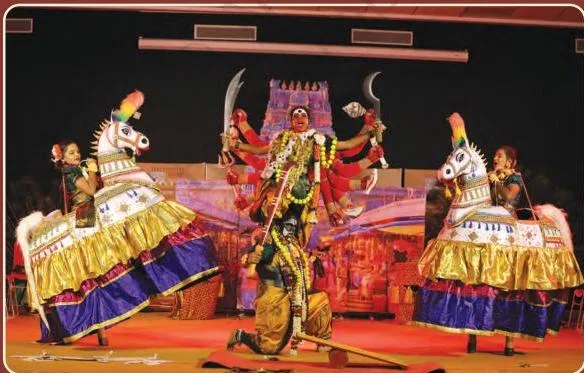
| Abhinaya | What it uses | Chapter example |
|---|---|---|
| Āṅgika | Body — gestures, posture, stance, movement | The Boat Man (Nabik) of Seraikela Chhau, whose stance mimics rowing (Fig. 10.11, p. 145); Chhinnamastā in Odissi (Fig. 10.10, p. 145); Gambhir Singh Mura’s organised animal and indigenous movements in Purulia Chhau (p. 145) |
| Vāchika | Verbal elements — spoken or sung words, poetry, music, rhythmic syllables | The Mahārīs of Shree Jagannatha Temple and temple dancers of Somnath and Brihadeeswara, who sang as they danced (p. 146); the kathākārs of the Sāvan Jhūlā festival in Ayodhya (pp. 146–147) |
| Āhārya | Appearance — costume, jewellery, make-up, props | Koli fisherfolk using oars and nets at the first Republic Day Parade in 1950 (p. 147); Javāra-nṛitya pots (p. 147); Pulikāḷi body paint and tiger mask (p. 147); Kathakali make-up (p. 148); Astad Deboo’s masks and stilts (p. 148) |
| Sāttvika | Inner emotion — genuine, heartfelt feeling projected to the audience | Ranjana Jhaveri’s bliss, Saroja Vaidyanathan’s anger, Jatin Goswami’s bee of concentration, Kanak Rele’s pain and fear, Kelucharan Mohapatra’s joy, Bipin Singh’s serenity (pp. 149–150) |
To fix the four in order, try Body, Voice, Look, Heart — āṅgika is the body, vāchika the voice, āhārya the look (costume and appearance), and sāttvika the heart (inner emotion). You could also build a sentence from the traditional order: Angika-Vachika-Aharya-Sattvika.
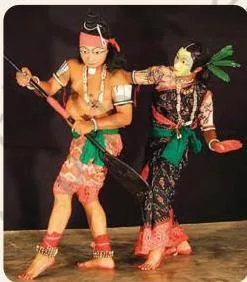
This is the chapter’s purest example of āṅgika: the whole story of the boatman is told through the body alone, without words. The chapter even asks you to try the stance yourself and imagine what expression the dancer wore behind the mask (p. 145).
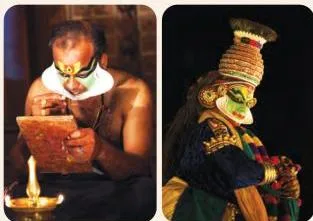
Kathakali is the chapter’s example of āhārya doing heavy lifting: elaborate make-up and costumes, with different face colours and headgear for different male characters, and the white make-up accessory made from a rice mixture (p. 148).
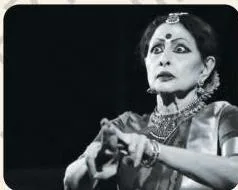
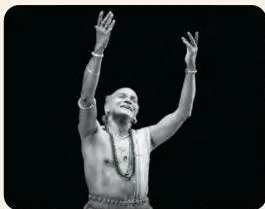
Read those two side by side. Saroja Vaidyanathan’s face and body project anger; Kelucharan Mohapatra projects joy. The chapter pairs each maestro — including Kanak Rele’s pain and fear, Ranjana Jhaveri’s bliss and Bipin Singh’s serenity — with the emotion they made famous, because that visible feeling is what sāttvika abhinaya means (pp. 149–150).
Body, Shape and Rhythm: Saushthava, Rekhā, Rūpa, Tāla and Laya
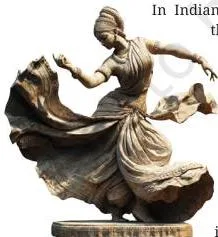
Alignment comes first in this chapter because every movement depends on it. The book argues that a well-aligned body lets energy flow freely, prevents injuries from incorrect posture, and turns an ordinary movement into a stylised one — “almost like a sculpture coming to life” (pp. 139–140). Work through these ideas in the order the chapter builds them.
- Saushṭava — the dancer’s poised stance (p. 141). Imagine a central meridian line passing vertically through your body. Align ears, shoulders and waist in one line; stand with feet together, weight evenly on both feet; place hands on your waist; keep the torso upright and lifted — body erect yet relaxed, alert and ready to move with control.
- Rekhā — lines made by the body (p. 142). These linear or curved forms — a diagonal with the arms, a quadrangle with the lower body, an arc with the torso — are the visual “lines” of dance.
- Rūpa — disposition (p. 142). With bright, expressive eyes and a pleasant face, the dancer reflects joy or any emotion. This visible disposition is rūpa.
- Recall from earlier grades (p. 143). The chapter asks you to revisit sthāna (body postures), chārī and gati (lower-limb movements), utplavana (jumps), bhramarī (spins) and the karaṇa, from your textbooks Bansuri and Kriti.
- Tāla and laya (p. 143). The chapter uses your heartbeat as the model — repetitive, yet faster when you run and slower when you sleep. Indian rhythmic cycles are built on beats of 3, 4, 5, 7 and 9, and the three basic tempos are slow, medium and fast.
- Nṛitta vs nṛitya (p. 144). Per the Abhinaya-darpanam: nṛitta is pure, non-narrative dance movement — joy without meaning; nṛitya narrates or expresses a story, blending movement with abhinaya. In some dances the two are fully merged with no visible line between them.
Reading the Chapter’s Figures: Saushthava, Shapes and Costume
The figures in this chapter carry the actual lessons — the point is to compare and observe, not just look. Here is what each one is showing you.
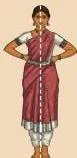
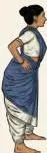

Read all three together. In Fig. 10.4 the ears, shoulders and waist sit on one vertical line. The two improper poses (Figs 10.5 and 10.6) show what goes wrong — leaning forward or back, shoulders out of line. Before you practise, decide which of the two mistakes you are most likely to make.
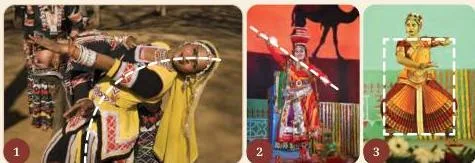
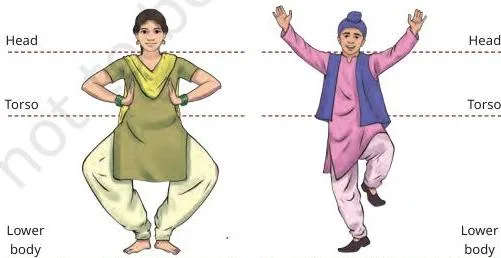
These three shapes become your rekhā (p. 142). The chapter’s activity asks you to make a diagonal line with your arms, a quadrangle with your lower body, and an arc with your torso — then try whole-body versions by stretching and balancing.
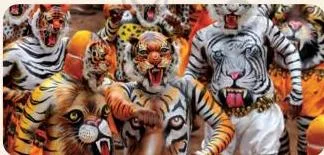
Pulikāḷi, the Tiger Dance of Kerala, is the chapter’s best example of āhārya and āṅgika working together: body painting plus a tiger mask, coupled with ferocious tiger movements (p. 147). Its pioneer, Chathunni Asan, performed in the Onam-season Pulikāḷi of Thrissur for 60 years.
The Chapter’s Activities and Your Dance Journal
This chapter teaches by doing — the five numbered activities and the “Let us explore” prompts are the actual lessons, not optional extras. Each one builds a specific concept.
| Activity | What it asks | What it builds |
|---|---|---|
| Activity 10.1 (p. 141) | Hold the saushṭava pose, then walk, turn, jump and move your limbs while holding it | Alignment that stays alive inside movement |
| Activity 10.2 (pp. 141–142) | Create lines and shapes with body parts, then whole-body shapes | Rekhā — the dancer’s visual lines |
| Activity 10.3 (p. 143) | In groups of four, connect five chosen shapes with conscious transitions; choose a mood and a tāla cycle and tempo; present to the class | Continuous flow, intention and rhythm |
| “Let us explore” river prompt (p. 144) | Create a movement that flows like a river — ebbing, swirling, overflowing | Connecting dance to Social Science learning about rivers |
| Activity 10.4 (p. 151) | Watch a live performance, or a screened one in school | Observation as a way of learning |
| Activity 10.5 (p. 152) | Pick a dance sequence from a film, discuss it and correlate it to an Indian dance form | Recognising tradition inside popular culture |

This prompt belongs to the journalling section (p. 151).
A complete dance journal entry, built from the chapter’s own prompts, covers: the dance form and the music; whether you enjoyed the song, rhythm and tempo; the āṅgika elements used — including the hand gestures; the part you enjoyed most and the emotion it raised; and the costume, props and stage decor, connected if possible to a region of India.
Dance in Cinema: Finding the Classical Roots
The chapter turns to cinema to help you recognise classical and traditional dance forms inside popular culture (p. 151). The film-to-form table below is the chapter’s own list, all from page 151.
| Film | Indian dance tradition behind it |
|---|---|
| Jab We Met | Punjabi folk Bhangra |
| Devdas | Kathak |
| Padmavat | Rajasthani folk Ghoomar |
| Hellaro | Gujarati folk Garba |
| Manichitrathazhu | Bharatanatyam |
| Bahubali: The Beginning | Gussādi of the Lambadi community |
| Natarang | Maharashtrian Lāvaṇī |
Older films get their own roll call on the same page: Jhanak Jhanak Payal Baje, Mughal-e-Azam, Pakeezah and Amrapali; the Tamil Thillana Mohanambal; the Telugu Sankarabharanam and Swarnakamalam; the Marathi Sangte Aika; the Odia Maa; and the 1957 Indo-Soviet co-production Pardesi, whose temple-dancer sequence resembles Bharatanatyam. The chapter also names two “Do you know?”
facts: Uday Shankar’s Kalpana (1948) is described as the first dance film (p. 152), and Kumari Kamala — a child artist in nearly 100 films, star of the first Technicolour Tamil film Konjum Salangai (1962) — held both the Sangeet Natak Akademi Award (1968) and the Padma Bhushan (1970) (p. 152).
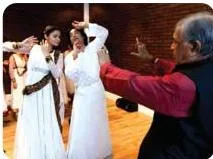
The figure illustrates the chapter’s point: a contemporary film performance can still carry the grammar of classical Indian dance. When you watch a dance sequence, the chapter suggests you discuss it and correlate it to a named Indian dance form (p. 152).
Key Terms Defined in This Chapter
The chapter assumes you will meet these terms precisely. Here is each term in one clear definition, with the printed page where the book uses it.
| Term | Meaning | NCERT page |
|---|---|---|
| Abhinaya | The art of expressing and communicating a performance’s meaning | p. 145 |
| Chaturvidha Abhinaya | The four expressive tools: āṅgika, vāchika, āhārya, sāttvika | pp. 135, 145 |
| Āṅgika abhinaya | Expression through the body — gestures, posture, stance | p. 145 |
| Vāchika abhinaya | Expression through verbal elements — words, song, poetry, rhythmic syllables | p. 146 |
| Āhārya abhinaya | Expression through appearance — costume, jewellery, make-up, props | p. 147 |
| Sāttvika abhinaya | Expression through genuine inner emotion, from sattva (purity and harmony) | p. 148 |
| Nṛitta | Pure, non-narrative dance movement carrying no story | p. 144 |
| Nṛitya | Dance that narrates or expresses meaning | p. 144 |
| Tāla | The repeating rhythmic cycle, built on beats of 3, 4, 5, 7 and 9 | p. 143 |
| Laya | Speed or tempo — slow, medium, fast | p. 143 |
| Saushṭava | The poised, aligned dancer’s stance — erect yet relaxed, weight evenly balanced | p. 141 |
| Rekhā | Linear or curved forms created by coordinating body parts | p. 142 |
| Rūpa | Disposition — bright expressive eyes and a pleasant face | p. 142 |
| Bhāva and rasa | Feelings carried by the performer (bhāva); the aesthetic enjoyment created in the audience (rasa) | pp. 145, 149 |
| Garbha-griha | The inner sanctum of a temple, where temple dancers’ voices resonated | p. 146 |
| Kathākār | A storyteller who narrates through live singing and dancing | p. 146 |
| Sattrās | Vaishnavite monasteries of Assam, home of Sattriya | p. 149 |
Common Mistakes in This Chapter
These are the points where students misread this chapter. The book is explicit on each — read the correction, not the confusion.
| What students often think | What the chapter says | How to check yourself |
|---|---|---|
| Nṛitta and nṛitya are the same thing | Nṛitta is pure movement that conveys no story; nṛitya narrates or expresses meaning — though in some dances they merge completely | Ask: is a story being told? Story → nṛitya; pure joy in movement → nṛitta (p. 144) |
| Tāla and laya both mean “rhythm” | Tāla is the repeating cycle of beats (3, 4, 5, 7, 9); laya is the speed — slow, medium, fast | Tap the cycle, then speed it up — that’s tāla then laya (p. 143) |
| Abhinaya means facial expression only | It is four-fold — body, voice, costume and inner emotion, from the opening shloka | Name all four before you name one (pp. 135, 145) |
| All Chhau is masked | Mayurbhanj Chhau works without a mask, using stylised body movement; Seraikela and Purulia Chhau use masks | Match the region to the mask (p. 146) |
| Saushṭava means standing stiffly | It is poised alignment — weight evenly balanced, body erect yet relaxed, ready to move | Check ears-shoulders-waist in one line; you should feel ready, not rigid (p. 141) |
| Bhāva, rasa and abhinaya are interchangeable | The four abhinayas transfer the performer’s bhāva to the audience, creating rasa | Identify which step of the chain a sentence describes (pp. 145, 149) |
Note: this chapter has no “Points to Ponder” box — the list above is built from the chapter’s own definitions and examples.
How This Chapter Is Assessed
The book itself prints what can be assessed (pp. 136–138), and the chapter ends with an EXERCISES page (p. 153). Here is both, turned into concrete study targets.
Learning outcomes — you should be able to:
- describe the classifications of dance and the four abhinayas, and apply footwork, hand gestures, rhythm, tempo and mood in dance sequences;
- describe and demonstrate body alignment (saushṭava) while performing dance movements;
- identify a dance form and correlate nṛitta, nṛitya, abhinaya, rasa and rhythm in performances you watch;
- examine the four abhinayas through the work of important dance personalities.
What the EXERCISES page asks (p. 153):
- Q1 is a single multiple-choice question: which option is not essential for proper body alignment? The answer is vāchika — it is a verbal element, not an alignment term.
- Q2 offers a choice of three short explanations: nṛitta and nṛitya; rhythm (tāla) and tempo (laya); or saushṭava.
- Q3 asks you to identify the abhinaya in four pictures (Figs 10.29–10.32).
- Q4 asks for nine dance legends in a fill-in-the-blanks table.
- Q5 is a journal task covering the performance you watched and the cinema sequence you chose.
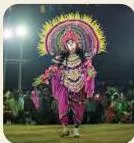
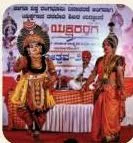
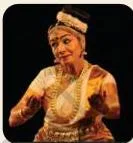
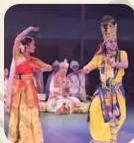
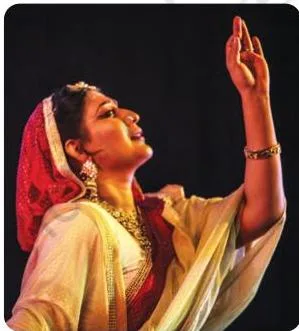
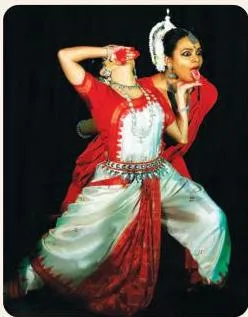
How do you classify each picture? Use the chapter’s definitions as a filter. Costume-led images point to āhārya — the Purulia Chhau costume and the Yakṣhagāna performer lead with appearance. An expression-led image points to sāttvika — the Mohiniyattam face lives on projected emotion.
The Sattriya Krishna blends costume with a gentle inner feeling, so more than one abhinaya can be at work in a single image — state which one dominates and why. The book prints the exercise but not official answers, so the reasoning matters more than a one-word label.
The dance-legends table for Q4 (from the chapter’s own text):
| Dance form | Legend named in the chapter | NCERT page |
|---|---|---|
| Purulia Chhau | Gambhir Singh Mura (1930–2002) | p. 145 |
| Pulikāḷi | Chathunni Asan (1941–2019) | p. 147 |
| Sadir (Bharatanatyam lineage) | Mylapore Gouri Amma (1892–1971) | p. 146 |
| Bharatanatyam | Saroja Vaidyanathan (1937–2023) | p. 149 |
| Manipuri | Ranjana Jhaveri (1930–2017) and Bipin Singh (1918–2000) | pp. 149–150 |
| Sattriya | Jatin Goswami (b. 1933) | p. 149 |
| Mohiniyattam | Kanak Rele (1937–2023) | p. 150 |
| Odissi | Kelucharan Mohapatra (1926–2004) | p. 150 |
One honest gap: the chapter names no specific legend for Kathak or Kathakali in the classical list, so those two blanks need your class notes or a teacher’s input.
Finally, a syllabus note: textbook contents and the examinable syllabus are not always identical — check the current official syllabus for what is assessable this session.
The Whole Dance Chapter in One Pass
This chapter has no printed SUMMARY box, so here is its teaching arc in one fast pass — every point comes from the chapter itself.
- Dance begins with sensitivity to the body, not with perfection (pp. 135, 139).
- The Natyashastra makes abhinaya four-fold — body, voice, appearance, inner emotion (p. 135).
- Warm-ups and aligned posture prevent injury and free the flow of energy (pp. 139–140).
- Saushṭava — ears, shoulders, waist in one line, weight balanced, erect yet relaxed (p. 141).
- Rekhā (lines and shapes) and rūpa (disposition) create the visual composition (pp. 141–142).
- Indian dance rests on tāla and laya — cycles of 3, 4, 5, 7 and 9 beats, at slow, medium and fast tempos (p. 143).
- Nṛitta is pure movement; nṛitya tells a story; the two can merge (p. 144).
- The four abhinayas communicate meaning and create rasa in the audience (pp. 145–150).
- Observing live dance is a way of learning, and journals fix the experience (p. 151).
- Cinema carries Indian dance traditions into popular culture (pp. 151–152).
- Dance is for everyone (p. 136).
Related Resources
This listing is maintained for the 2026-27 academic session using the NCERT textbook information available to us. NCERT remains the authority for confirming the latest edition.
Explore the rest of the Class 9 Arts silo: the Class 9 Arts hub lists every chapter of Madhurima. In the dance unit, Chapter 9 — Music Travels Around the World leads into this one, and Chapter 11 — Dance as Visual Storytelling continues it.
Sources and Data Verification
- Textbook edition: NCERT Madhurima, Class 9 Arts (English), Chapter 10 “Dance” / “Components of Dance”, printed pages 134–153, official edition hosted on ncert.nic.in.
- Coverage: this page describes only this one chapter of this book. It does not claim to describe the full CBSE Arts scheme.
- Maintenance: this listing is maintained for the current academic session using the NCERT information available to us.
- Authority: NCERT settles textbooks, editions and PDFs; CBSE settles curriculum, syllabus and examinations.
| What the chapter holds | Count | Where it is used |
|---|---|---|
| Printed pages | 19 | |
| Figures with NCERT captions | 35 | |
| Tables | 4 | |
| Activities | 5 | |
| Official NCERT PDF | Download the chapter PDF | the chapter exactly as NCERT publishes it |

Reference: NCERT Class 9 Arts Madhurima textbook, chapter 10, official edition on ncert.nic.in.
Frequently Asked Questions
What is the difference between nritta and nritya in the Class 9 Dance chapter?
Nṛitta is non-narrative dance made of pure movement — expression of joy without conveying meaning. Nṛitya is dance that narrates or expresses a story or meaning, blending movement with abhinaya. The chapter adds that in some dances the two are fully merged with no visible demarcation (p. 144).
What are the four abhinayas in the NCERT Class 9 Dance chapter?
They are āṅgika (body gestures), vāchika (speech and vocals), āhārya (costume, jewellery, make-up and props) and sāttvika (inner emotion) — together called Chaturvidha Abhinaya. The chapter’s opening shloka from the Natyashastra states exactly this four-fold division (pp. 135, 145).
How do I practise the saushtava pose for this chapter?
Stand with feet together, weight evenly distributed; place hands on your waist; keep the torso upright and lifted; and align ears, shoulders and waist in one line, imagining a central meridian line through your body. The pose is described as “body erect yet relaxed,” ready to move with control and grace (p. 141).
Then try walking, turning, jumping and using your limbs while keeping the alignment.
Which earlier textbook concepts does the Dance chapter ask me to recall?
Body postures (sthāna), dynamic lower-limb movements (chārī and gati), jumps and spins (utplavana and bhramarī) from Bansuri and Kriti, the karaṇa from Grade 8 Kriti, and the concepts of bhāva and rasa from Grade 8 (pp. 143, 149).
Which dance forms appear in the Dance in Cinema section of this chapter?
The chapter’s film-to-form table lists Bhangra (Jab We Met), Kathak (Devdas), Ghoomar (Padmavat), Garba (Hellaro), Bharatanatyam (Manichitrathazhu), Gussādi of the Lambadi community (Bahubali: The Beginning) and Lāvaṇī (Natarang). Older films including Jhanak Jhanak Payal Baje, Mughal-e-Azam, Pakeezah, Amrapali, Thillana Mohanambal, Sankarabharanam, Swarnakamalam, Sangte Aika, Maa and the Indo-Soviet Pardesi are also named (p. 151).
What should a dance journal entry for this chapter include?
Describe the dance form and the music; say whether you enjoyed the song, rhythm and tempo; list the āṅgika elements used — especially the hand gestures; name the part you enjoyed most and the emotion it raised; and describe the costume, props and stage decor, connecting them to a region if you can (p. 151).
Explore Class 9 Arts Books
- Previous: Music Travels Around the World
- Next: Dance as Visual Storytelling
Related chapters:
- History of Arts
- Theatre
- Symbols and Metaphors on Stage