
This page covers 12 Cultural Connections Through Dance Class 9 — Chapter 12 of the NCERT Madhurima Arts textbook, printed on pages 160–168. The official PDF sits right below; after it comes a map of every dance in the chapter, the Southeast Asian Rāmāyaṇa traditions, and guidance for the five activities and four closing exercises.
Official NCERT PDF: 12 Cultural Connections Through Dance Class 9
You can download the official 12 Cultural Connections Through Dance Class 9 PDF free from the NCERT website — open it to read the complete chapter text, every photograph, the five activities and the closing exercises exactly as printed in the book.
The chapter belongs to Madhurima, the NCERT Arts textbook for Class 9 in English medium. It is an activity-led chapter rather than a formula-led one: you learn by researching dances, performing them, and reflecting on how culture moves across borders.
Chapter 12 at a glance: sections, figures and activities
The table below shows what the chapter holds — sections, figures, captioned figures, activities and the closing exercise block — before you open the file. The chapter spans NCERT pages 160–168.
| What the chapter holds | Count |
|---|---|
| Sections | 11 |
| Figures | 19 |
| Figures with captions | 14 |
| Activities (12.1, 12.2, 12.3, 12.4, 12.5) | 5 |
| Closing EXERCISES block | 1 (four questions: Q1, Q2, Q3, Q4) |
What this chapter covers: dance as cultural connection
The chapter’s big idea is that culture travels across boundaries, and dance is one of the vehicles that carries it. When people from different cultures appreciate one another’s dance traditions, they connect and develop mutual respect (NCERT, p. 160).
The opening pages make this concrete. Dandiya and Bhangra have travelled beyond India with the Indian diaspora and are now enjoyed across the world — no longer limited to a single community, they have become part of the wider local culture wherever they are performed. Indian dance forms have also been adopted by international dancers, promoting cross-cultural relations (NCERT, p. 160).
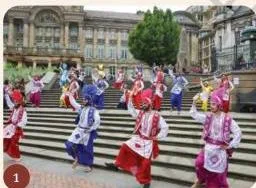
Bhangra alone appears in four global settings: flashmobs in Birmingham, half-time performances at NBA games in the USA, stage competitions in Singapore, and Lohri celebrations in Punjab (NCERT, p. 160). The same dance now serves both the diaspora and its home culture.
Key ideas: dance, culture and shared stories
Five ideas carry the chapter. Read them before the tables below, so the names of dances and regions have somewhere to attach.
- Culture — the chapter’s working sense is customs, social traditions, regional ideas and beliefs taken together (NCERT, p. 160).
- Dance for every life stage — from birth to death, dances mark key moments (NCERT, pp. 160–162): birth is celebrated by Badhāī of Madhya Pradesh and Sohar of Bihar; weddings by Khoriyā of Haryana and Chholiyā Nṛitya of Kumaon, Uttarakhand; funeral rites by Naṭa-Saṅkīrtana of Manipur; and celebrations by Nāṭī of Himachal Pradesh and Jhūmar of Bihar.
- Harvest and community dances — Bihu of Assam and Hojāgiri of Tripura celebrate harvest; Taraṅgmel of Goa is a community dance with flags as props; Ummattāṭ of Karnataka opens with an invocation to the river Kaveri (NCERT, p. 162).
- Historical exchange — trade and travel from the eastern shores of Bharat since the first century BCE brought cultural, religious and linguistic exchange; Bāli-yātrā, recorded from Kalinga in the third century BCE, marked the start of trade voyages after the monsoons on Kārtika-Pūrṇimā, and is still celebrated in Odisha (NCERT, p. 165).
- A shared story — from the seventh to the fourteenth century CE, a shared movement and performance vocabulary emerged across Southeast Asia, and the Rāmāyaṇa became a central theme, retold in each region’s own style (NCERT, pp. 165–166).
The Ramayana across Southeast Asia: one story, many dance traditions
The same epic travelled, and each region adapted it to its own performance style, dance language and local aesthetics (NCERT, p. 166). Seven traditions appear in the chapter; the table below is the matching exercise’s answer key.
| Region / Country | Local Rāmāyaṇa tradition | Form of presentation |
|---|---|---|
| Thailand | Ramakien | Classical masked dance-drama called Khon |
| Java (Indonesia) | Sendratari Rāmāyaṇa | Large-scale dance-drama in open-air theatres |
| Bali (Indonesia) | Kecak | Ensemble dance with rhythmic vocal chanting (“cak-cak”) |
| Myanmar | Yama Zatdaw | Dance-drama |
| Philippines | Singkil | Traditional dance narrating a segment resembling the Rāmāyaṇa |
| Laos | Phra Lak Phra Rām | Classical dance-drama adapting the Rāmāyaṇa narrative |
| Cambodia | Reamker | Classical dance presented by the Royal Khmer Ballet |
Before turning to Southeast Asia, the chapter explains where India’s own Rāmalīlā comes from: it has roots in the Kuśīlava traditions and developed its modern form during the seventeenth century CE, performed around Dussehra (Vijaya-daśhmi) (NCERT, p. 165).
Dance forms in this chapter: a region and occasion map
This map exists because Exercise Q2 and the classroom discussions both depend on matching dances to occasions. Keep the entries short — the table is a lookup, not an essay.
| Dance | Region | Occasion or purpose |
|---|---|---|
| Badhāī | Madhya Pradesh | Celebration of birth |
| Sohar | Bihar | Celebration of birth |
| Khoriyā | Haryana | Weddings |
| Chholiyā Nṛitya | Kumaon, Uttarakhand | Weddings and processions |
| Naṭa-Saṅkīrtana | Manipur | Funeral rituals in Vaishnavite communities |
| Nāṭī | Himachal Pradesh | Weddings, among other celebrations |
| Jhūmar | Bihar | Celebratory dance performed year-round |
| Bārḍo Chham | Arunachal Pradesh | Symbolises the journey between death and rebirth; victory of good over evil |
| Bihu | Assam | Celebration of good harvest |
| Hojāgiri | Tripura | Harvest festival dance |
| Taraṅgmel | Goa | Community dance; flags as props, dhol and tāśhā, unison cries of “ho ho” |
| Ummattāṭ | Karnataka | Harvest origins; begins with invocation to the river Kaveri |
| Garba | Not stated in the chapter | Dance for community joy and togetherness (Exercise Q2) |
| Mayurbhanj Chhau | Not stated in the chapter | Martial art presented as a dance (Exercise Q2) |
Most regions above come from NCERT pages 160–162; Garba and Mayurbhanj Chhau appear only in the exercise block on page 168.
Figure walkthrough: reading the photographs
These photographs are evidence, not decoration: each one supports a claim in the text. Read them with the captions, and you can answer most identification questions without re-reading the chapter.
Fig 12.1 — Bhangra goes global
Bhangra is the chapter’s opening example of a dance that has crossed borders (NCERT, p. 160).
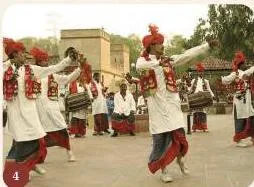
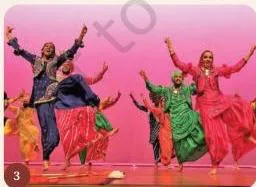
Fig 12.1 puts the chapter’s first claim in one image: a single Punjabi dance now appears on four kinds of stage — flashmobs in Birmingham, half-time performances at NBA games in the USA, stage competitions in Singapore, and Lohri celebrations in Punjab. The diaspora and the home culture are performing the same dance.
Figs 12.2 to 12.6 — dances for every stage of life
These five photographs run from birth to death and on to harvest, proving the chapter’s claim that Indian dance accompanies every stage of life (NCERT, pp. 160–162).
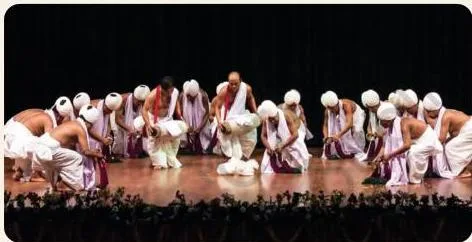
Fig 12.2 shows Naṭa-Saṅkīrtana of Manipur, an integral part of funeral rituals in the region’s Vaishnavite communities (NCERT, p. 161). This is the chapter’s most common identification trap: pair it with death, never with birth.
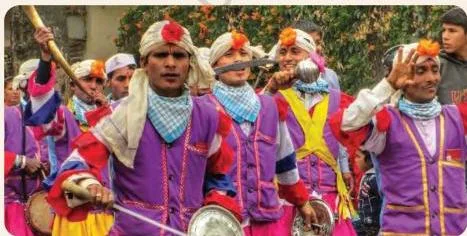
Fig 12.3 is Chholiyā Nṛitya of the Kumaon region of Uttarakhand, performed at weddings and in processions (NCERT, p. 161).
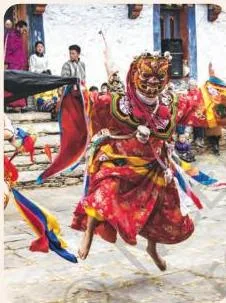
Fig 12.4 shows Bārḍo Chham from Arunachal Pradesh, which symbolises the journey between death and rebirth and is presented as the victory of good over evil (NCERT, p. 162).
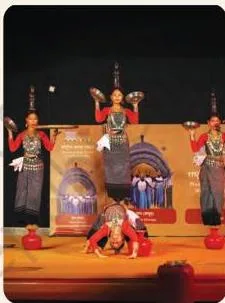
Fig 12.5 is Hojāgiri from Tripura, one of the chapter’s harvest festival dances (NCERT, p. 162). Group it with Bihu, not with the life-cycle dances.
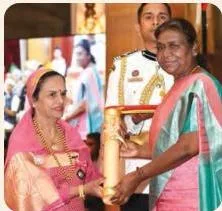
Fig 12.6 records a March 2023 ceremony: Rani Machaiah receiving the Padma Shri from President Droupadi Murmu. Machaiah was honoured for preserving and popularising the Ummattāṭ folk dance of the Koḍava community in Karnataka (NCERT, p. 162).
The chapter prints a safety disclaimer beside these photographs: do not imitate these dance forms without a teacher’s supervision (NCERT, p. 162). Read it as a rule, not a suggestion.
Figs 12.7 and 12.8 — Ramlila in performance
Rāmalīlā is the chapter’s example of a home-grown dance-theatre tradition that keeps the Rāmāyaṇa alive in India (NCERT, p. 165).
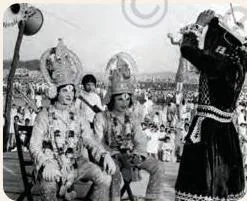
Fig 12.7 dates to August 1949 and shows the moment Lord Rāma and Lakṣmaṇa receive Vibhīṣaṇa, the brother of Rāvaṇa (NCERT, p. 165) — a turning point in the epic’s story of loyalty.
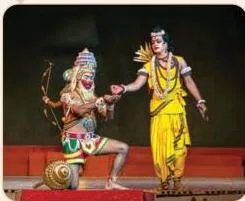
Fig 12.8 is a general scene from Rāmalīlā (NCERT, p. 165), showing how the epic is presented as a staged, costumed performance.
Figs 12.9 to 12.11 — Hanuman across cultures
These three images make the chapter’s deepest point: the Rāmāyaṇa lives beyond performance. The same figure, Hanumān, appears in stone and on stage across regions, each version reflecting local styles (NCERT, p. 167).
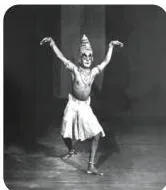
Fig 12.9 shows C.K. Balagopalan as the iconic Hanumān of Kalakshetra (NCERT, p. 167) — the Indian classical dance tradition at work.
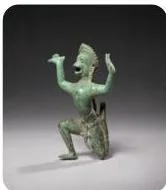
Fig 12.10 is a flying Hanumān from Cambodia in Koh Ker style, dated to the 10th century CE (NCERT, p. 167). Here the story is carved in stone.
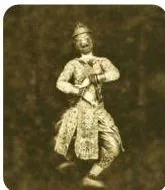
Fig 12.11 is Hanumān from the Cambodian Reamker, presented by the Royal Khmer Ballet in 1915 (NCERT, p. 167).
Compare the three images and you can see the chapter’s argument: one character, three visual languages — a live performer in India, a medieval sculpture in Cambodia, and a costumed ballet figure from a century ago.
Figs 12.12 and 12.13 — the same story, two dance languages
These two photographs are placed side by side in the chapter to invite comparison (NCERT, p. 167).
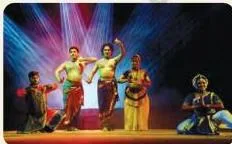
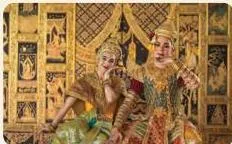
Fig 12.12 shows the Rāmāyaṇa in Indian dance and Fig 12.13 shows it in Khon dance from Thailand (NCERT, p. 167). The story is identical; the costuming, gesture vocabulary, group formations and musical character are local.
This side-by-side is the preparation for Activity 12.5, where you choreograph a Rāmāyaṇa episode in a style of your own group’s choice.
Activities 12.1 to 12.5: what each one asks
The activities are the spine of this chapter. Each one builds on the last — Activity 12.1 begins with individual research, and by Activity 12.5 the group is performing a Rāmāyaṇa episode.
- Activity 12.1 (NCERT, p. 163) — research into a journal. Find information on the folk, tribal, popular, classical and contemporary dances of your State/UT of residence and of a State/UT that does not share a geographic boundary with it. Write up the instruments, songs, recurring syllables, costumes, occasions and venues in your journal.
- Activity 12.2 (NCERT, p. 163) — become part of the culture. In groups of four or five, choose two dance forms — one from your region, one from a different region. Learn their signature movements from videos and other resources, discuss what appeals to you, then introduce both forms to the class with short performances.
- Activity 12.3 (NCERT, p. 163) — fuse two forms respectfully. Create and perform a short piece combining elements from two dance forms. The chapter’s instruction is explicit: be creative while remaining respectful to both traditions.
- Activity 12.4 (NCERT, p. 164) — make a dance podcast. This activity has three stages: pre-production (research dance schools, institutions, organisations and artists; prepare open-ended questions), production (visit with a teacher; assign interviewer, lighting, recording and technical roles; video preferred, audio acceptable), and post-production (edit the podcast, create highlight excerpts, present key takeaways in class).
- Activity 12.5 (NCERT, p. 167) — choreograph the Rāmāyaṇa. In groups of three or four, select any episode from the Rāmāyaṇa and present it through dance. Each member plays a character, and you may weave in gestures, group formations, musical patterns, costumes or storytelling styles from different Rāmāyaṇa presentations.
The teacher’s note on Activity 12.4 matters for students too: if artists cannot be met in person, interviews may be conducted online or by telephone, and students can summarise the conversation instead of producing a full interview (NCERT, p. 164).
Common mistakes in this chapter
The traps in this chapter are identification traps, not calculation traps. All five below are answered by a single page of the chapter.
| Mistake | Correct rule | How to check your answer |
|---|---|---|
| Matching Naṭa-Saṅkīrtana to birth | It belongs to funeral rituals in Manipur’s Vaishnavite communities | Ask which dance the chapter pairs with death; the birth dances are Badhāī and Sohar (NCERT, p. 161) |
| Mixing up Thailand and Cambodia | Thailand is Ramakien performed through Khon; Cambodia is Reamker of the Royal Khmer Ballet | Re-read the table on NCERT, p. 166, before answering Q4 |
| Imitating the dances in the photographs | The chapter prints a safety disclaimer: do not imitate these forms without a teacher’s supervision | Look for the disclaimer printed near the photographs on NCERT, p. 162 |
| Fusing two forms without respecting both | Activity 12.3 says: be creative while remaining respectful to both traditions | Before combining moves, state what each tradition contributes (NCERT, p. 163) |
| Skipping interviewee consent in the podcast | Consent is part of a responsible production process, and Exercise Q3 asks about it | Plan consent into the pre-production stage, before any recording (NCERT, p. 164) |
Exercise guidance: what the four questions test
The EXERCISES block on NCERT page 168 has four questions: one description, two matching tasks and one reflection. Here is what each question tests and how a full answer is built.
| Question | What it tests | How to answer |
|---|---|---|
| Q1 — name a dance form with a global presence and describe where it is performed and by whom | Connecting a dance to its performing contexts | Name Bhangra. Locations: flashmobs in Birmingham, NBA half-time shows in the USA, Singapore stage competitions, Lohri celebrations in Punjab. Performers: the Indian diaspora, and international dancers who have adopted Indian forms. A full answer names the dance, gives at least two locations and states who performs it (NCERT, p. 160). |
| Q2 — match i–iv with a–d | Life-cycle, harvest, martial and community dances | i → b (funeral rites: Naṭa-Saṅkīrtana); ii → a (good harvest: Bihu); iii → d (martial art as a dance: Mayurbhanj Chhau); iv → c (community joy: Garba). |
| Q3 — why is consent from the interviewee important in a podcast or interview? | Responsible production ethics | The interviewee must agree before recording begins and before the material is published. Consent protects the artist and makes the production responsible; build it into the pre-production stage of the three-stage podcast (NCERT, p. 164). |
| Q4 — match Thailand, Java, Bali, Laos and Cambodia with a–e | The Rāmāyaṇa table of Southeast Asia | Thailand → Ramakien; Java (Indonesia) → Sendratari; Bali (Indonesia) → Kecak; Laos → Phra Lak Phra Rām; Cambodia → Reamker (NCERT, p. 166). |
Exam notes: what to expect and what not to assume
Two honest cautions before you treat this chapter as exam material. The chapter itself does not state any mark weight, and no question can be promised from it; its exercises are identification, matching and reflection tasks rather than numerical problems.
Textbook contents and the examinable syllabus are not always identical — check the current official CBSE syllabus to see how Madhurima is assessed this session. For revision support built from the same book, the Class 9 Arts notes hub collects everything, and the Class 9 notes page links out to the wider CBSE notes collection.
What to remember from Cultural Connections Through Dance
This is a recap, not new content. If you have five minutes before class, read these bullets.
- Culture is customs, social traditions, regional ideas and beliefs, and dance is one way cultures connect across boundaries (NCERT, p. 160).
- Dance follows life from birth to death: Badhāī and Sohar for birth; Khoriyā and Chholiyā Nṛitya for weddings; Naṭa-Saṅkīrtana for funeral rites; Nāṭī for weddings; Jhūmar year-round (NCERT, p. 161).
- Harvest and community: Bihu, Hojāgiri, Taraṅgmel and Ummattāṭ — and the Padma Shri for Rani Machaiah, who preserved Ummattāṭ (NCERT, p. 162).
- Seaborne trade since the first century BCE carried culture across the eastern shores of Bharat; Bāli-yātrā is still celebrated in Odisha (NCERT, p. 165).
- The Rāmāyaṇa was retold as Ramakien, Sendratari, Kecak, Yama Zatdaw, Singkil, Phra Lak Phra Rām and Reamker (NCERT, p. 166).
- Hanumān’s image changes across regions — Kalakshetra, Koh Ker and the Reamker (NCERT, p. 167).
- The five activities build from a research journal to a group Rāmāyaṇa performance (NCERT, pp. 163–164, 167).
Related resources: where to go next
This listing is maintained for the 2026-27 academic session using the NCERT textbook information available to us. NCERT remains the authority for confirming the latest edition.
This chapter sits between two related dance chapters in the same book. If you are moving forward or back, the notes for Chapter 11, Dance as Visual Storytelling cover the ideas that lead into this chapter, and the notes for Chapter 13, Dance Choreography continue the performance work started here.
For the complete collection of books, use the Class 9 NCERT books hub, and open the rest of this book from the NCERT Class 9 Arts (Madhurima) book page.
Sources and data verification
Four facts about what this page describes, stated plainly:
- The contents, photographs and exercise guidance above describe the NCERT Madhurima textbook, Class 9, English medium, Chapter 12, “Cultural Connections Through Dance”, in the official edition published on the NCERT portal.
- This page covers Chapter 12 only — not other Madhurima chapters, and not other Class 9 books.
- The page is maintained for the current academic session using the NCERT information available to us.
- NCERT settles textbook editions, chapter contents and official PDFs; CBSE settles the curriculum, syllabus and examinations. The current files live on the official NCERT website.
| What the chapter holds | Count | Where it is used |
|---|---|---|
| Printed pages | 9 | |
| Figures with NCERT captions | 19 | |
| Tables | 1 | |
| Activities | 5 | |
| Official NCERT PDF | Download the chapter PDF | the chapter exactly as NCERT publishes it |




Reference: NCERT Class 9 Arts (Madhurima) textbook, chapter 12, official edition on ncert.nic.in.
FAQs about this chapter
Which dances from this chapter are performed at weddings?
Three dances are tied to weddings: Khoriyā of Haryana, Chholiyā Nṛitya of Kumaon, Uttarakhand (performed at weddings and in processions), and Nāṭī of Himachal Pradesh, a colourful dance performed at weddings among other celebrations (NCERT, p. 161).
Where is Naṭa-Saṅkīrtana of Manipur performed, and why is it often mismatched?
It is performed as an integral part of funeral rituals in the Vaishnavite communities of Manipur (NCERT, p. 161). Students mismatch it because it is a ritual dance — but its occasion is death rites, not birth. The birth dances in the chapter are Badhāī and Sohar.
What is the difference between Ramakien and Reamker?
Ramakien is Thailand’s Rāmāyaṇa tradition, performed through Khon, a classical masked dance-drama. Reamker is Cambodia’s version, presented by the Royal Khmer Ballet through classical dance (NCERT, p. 166). The story is shared; the form is local.
How should I answer the question about consent in a dance podcast interview?
Say that consent means the interviewee gives clear permission before the recording is made and before it is published or shared. In the three-stage podcast, consent belongs to the production process: the interviewer should tell the artist how the material will be used and get agreement during pre-production, before any recording happens (NCERT, p. 164).
Is Chapter 12 of Madhurima part of the CBSE board exam?
The chapter itself does not state any mark weight, and this page cannot promise that it will be examined. Textbook contents and the examinable syllabus are not always identical — check the current official CBSE syllabus to see how Madhurima is assessed this session.
Explore Class 9 Arts Books
- Previous: Dance as Visual Storytelling
- Next: Dance Choreography
Related chapters:
- History of Arts
- Theatre
- Symbols and Metaphors on Stage