
You are looking for the innovation, inclusivity and class 8 chapter on dance — Chapter 13, ‘Innovation, Inclusivity and Inspiring Change’, from the NCERT Class 8 Arts textbook Kriti. The chapter runs to about eight printed pages, and the official PDF is right below, followed by a plain-language walkthrough of its ideas, figures and activities.
Download the Innovation, Inclusivity and Class 8 Chapter PDF
The Class 8 Kriti Chapter 13 PDF is the complete chapter from the official NCERT Arts textbook, English medium, published on ncert.nic.in — the same portal where every NCERT textbook and chapter can be verified and downloaded. Open it to read the full text, see the figures, and work through the activities alongside this page.
This is the official NCERT Kriti (Class 8 Arts) textbook chapter, English medium, from ncert.nic.in.
What Is Inside the Innovation, Inclusivity and Class 8 Chapter
The table below lists the chapter’s contents — sections, figures and activities — straight from the book, so you can see its size at a glance before opening the PDF.
What This Chapter Covers
This is a dance chapter, and it moves from one question — how can dance change? — to another: who is dance for? The tour below follows the chapter’s own order.
- How dance changes: the opening metaphor is a tree — the deeper the roots, the higher the branches reach. For dance, that means the more knowledge and depth you have of your traditions, the more you can create and innovate.
- Everyday movement as raw material: movement and rhythm are everywhere — the flutter of birds, the quivering of leaves, the sweeping of a broom, the picking of tea leaves. Any of these can grow into an original movement of your own.
- Allied forms: one step ahead in innovation is bringing other movement traditions into dance, like martial arts. The chapter recalls that you already met Chhau, which grew from the phari khanda martial tradition.
- Two new martial arts: Kalaripayattu from Kerala and Thang-Ta from Manipur, both presented as movement systems being creatively used in present-day dance.
- Four choreographers: Narendra Sharma, Acharya Parvatikumar, Chandralekha and Kumudini Lakhia — each honoured with the Sangeet Natak Akademi Award for creative choreography — turned a classical base into contemporary storytelling.
- Inclusivity: who is dance for? The chapter’s answer covers differently-abled dancers on national platforms, dance beyond gender, and the Republic Day 2025 record of over 5,000 folk and tribal artists dancing together on Kartavya Path.
- Dance Empowers: dance as a voice — it inspired everyone during the freedom movement, and JNMDA’s 1985 choreography Keibul Lamjao used dance to speak for the endangered Sangai deer.
- What you should take away: the chapter closes with a learning-outcomes grid and two reflective questions — what does inclusivity mean to you, and what changes can your dance prompt?
Key Concepts: Innovation, Allied Forms and Inclusivity
Innovation in Dance: Roots First, Branches Later
This is the chapter’s opening idea, and it is easy to misread. Innovation here does not mean abandoning your tradition; it means knowing it deeply enough to build on it.
The tree metaphor is the whole argument in one image: deeper roots, higher branches. The book then adds a second point — everyday movement is raw material.
The flutter of birds, the quivering of leaves, the sweeping of a broom and the picking of tea leaves are all movements, and any dancer can turn one into an original movement phrase using what they have already learned.
The logic behind the metaphor is that creation is not invention from nothing. A dancer who knows the grammar of a form can bend it deliberately — that knowledge is what keeps an innovation readable as dance rather than as random movement.
Allied Forms: Kalaripayattu and Thang-Ta
An allied form is another movement tradition — here, a martial art — whose sequences a dancer brings into their own form. One step beyond creating new movement from observation is borrowing from these established movement systems.
| Kalaripayattu | Thang-Ta | |
|---|---|---|
| State | Kerala | Manipur |
| Origin story | Considered one of the oldest martial arts in the world. Legend traces it to Parashurama, said to be the creator of Kerala; recent research connects it to the Sangam period (600–300 BCE). | The name means ‘Art of Sword and Spear’. The Meitei people are believed to have originated all their movements from Thang-Ta. |
| Training basis | Developed as self-defence, built on the marma knowledge of Ayurveda, with movement phrases based on animal stances and movements. | Harmonises inner energies with outer actions, expressing movement with rhythmic breath control; ritualistic in practice. |
| How it enters dance | Chandralekha pioneered fusing kalaripayattu and yoga with bharatanatyam in her choreographies. | Presented as one of the martial arts being creatively incorporated into present-day dance development. |
Why breath matters in Thang-Ta? Because its training joins inner energies to outer actions, and rhythmic breath control is the mechanism the book names for that joining. Both martial arts train a body’s movement vocabulary before any dance use begins.
Both forms appear in the chapter’s figures, explained below. The name to remember is Chandralekha: she is the chapter’s practical link between martial arts and classical dance.
Inclusivity: Dance for Everyone
The chapter’s second half changes the question from “how can dance change?” to “who can dance?” — and answers: everyone.
- Differently-abled dancers — more dancers are creating work accessible to all abilities, and performances by differently-abled dancers now appear on national television and important platforms.
- Dance beyond gender — traditions once performed mainly by men have opened to women; most folk traditions already have men and women dancing side by side. The book states it plainly: there is no gender bias.
- Inclusivity as a record — on 26 January 2025, India’s 76th Republic Day, the Ministry of Culture set a Guinness World Record by bringing over 5,000 folk and tribal artists from across India to perform together on Kartavya Path in New Delhi.
The chapter calls this the beauty of dance — its ability to bring people together — and then turns the idea back on you: what does inclusivity mean to you?
The Figures in This Chapter, Explained
Each figure the chapter contains appears below in the order the book presents it, with what it shows and why the chapter included it. The captions use the book’s short labels; the explanation is in the prose.
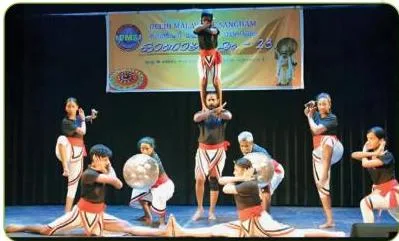
This figure sits beside the chapter’s first martial-arts description. Read it with the paragraph’s keywords in mind: Kerala, one of the oldest martial arts in the world, the Sangam period (600–300 BCE), and movement phrases built on animal stances.
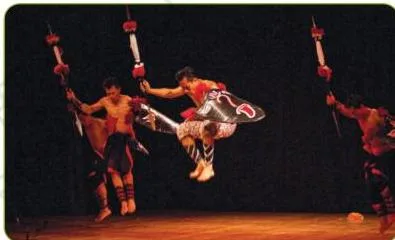
The second martial-arts figure introduces Manipur’s ‘Art of Sword and Spear’. Notice the pairing: where Kalaripayattu builds on vital-point science, Thang-Ta builds on rhythmic breath control, joining inner energies to outer actions. The chapter adds that it is ritualistic in practice.
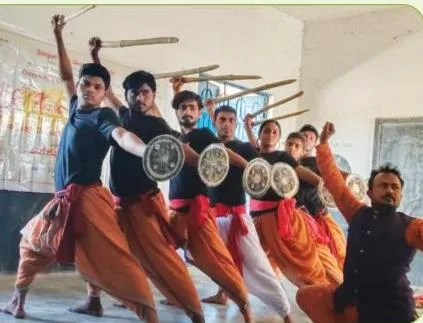
This image belongs to Activity 13.1. It shows the session the activity describes: trying one or two martial-arts movements with a visiting practitioner, or working from the QR code under a teacher’s guidance. The note to the teacher adds that this works best in small groups.
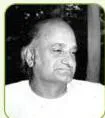
The figure marks the first of the chapter’s four Sangeet Natak Akademi Award-winning choreographers. Narendra Sharma, one of the senior-most students of Uday Shankar, produced over 40 original works — the chapter names Kamayani (1970), Wolf-Boy (1977), Antim Adhyaya (1985) and Gandhi (2007) — acclaimed for innovative themes and choreographic excellence.
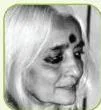
Acharya Parvatikumar is the chapter’s example of contemporary concepts inside traditional forms. His dance dramas included Discovery of India, Rhythm of Culture and Dekh Teri Bambai; within them, a scene of the Dabbawalas making deliveries around the city used kathak footwork, and a police-and-thief chase used the game of hu-tu-tu.
He also choreographed the dance text Abhinaya Darpanam into audio-visual form.
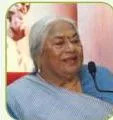
This production image belongs to Kumudini Lakhia, the kathak dancer whose question — “Where do I go from here?” — produced her first group choreography, Atah Kim. Feathered Cloth (Hagoromo) is one of the works the chapter lists as integrating the abstract and the narrative, often on contemporary themes. Her other named productions include Dhabkar (Pulse) and The Coat.
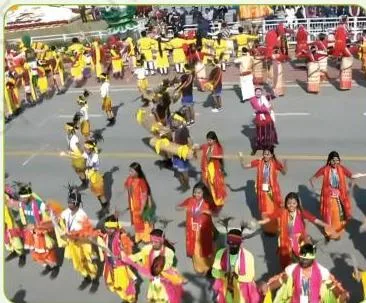
The chapter uses this event as its proof of inclusivity in practice. On 26 January 2025, India’s 76th Republic Day, the Ministry of Culture brought together over 5,000 folk and tribal artists from across India to perform on the Kartavya Path in New Delhi, setting a Guinness World Record for the largest ensemble of folk and tribal artists at a single venue.
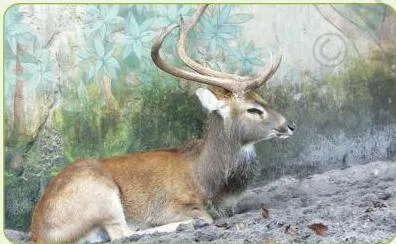
This figure belongs to the Dance Empowers section. It shows the Sangai deer, the animal at the centre of JNMDA’s 1985 choreography Keibul Lamjao — the premier Manipuri institution in Imphal staging a work based on M. K. Binodini Devi’s script about the deer’s conservation. It is the chapter’s example of dance raising environmental awareness.
Terms You Need to Know from This Chapter
This chapter is built around proper nouns — people, dance forms and a handful of technical terms. This quick list fixes each one in one line.
| Term | What it means in this chapter |
|---|---|
| Innovation | New movement created from a strong foundation in your dance tradition plus observation of everyday life — the deeper the roots, the higher the branches. |
| Allied forms | Other movement traditions, such as martial arts, that dancers integrate into their own form. |
| Kalaripayattu | Kerala’s martial art, among the oldest in the world, trained through marma and animal-stance movement phrases. |
| Thang-Ta | Manipur’s ‘Art of Sword and Spear’, harmonising inner energies with outer actions through rhythmic breath. |
| Marma | The Ayurvedic knowledge of vital points on which Kalaripayattu’s self-defence training is built. |
| Choreography | Composing and arranging dance movements into a performance — the chapter’s four artists each won the Sangeet Natak Akademi Award for creative choreography. |
| Inclusivity | Dance made accessible to all — differently-abled dancers, all genders, all communities — without barriers and inhibitions. |
| Bharatanatyam and kathak | The classical forms the chapter’s choreographers worked from: Chandralekha fused bharatanatyam with kalaripayattu, Parvatikumar used kathak footwork, and Lakhia was a kathak dancer. |
| Sangeet Natak Akademi Award | The national honour for the performing arts that each of the four choreographers received for creative choreography. |
| Abhinaya Darpanam | The classical dance text on expression that Parvatikumar choreographed into audio-visual form. |
| Uday Shankar | Pioneer of modern dance in India, whose senior-most student was Narendra Sharma. |
Where Students Go Wrong in This Chapter
This chapter has no formulas, but it has five traps — mostly mix-ups between names and ideas. If you name the mistake before you make it, it stops being a mistake.
| Mistake | Correct rule | How to check your answer |
|---|---|---|
| “Innovation means breaking from tradition.” | The tree metaphor says the opposite: the deeper the roots, the higher the branches reach. All four choreographers innovated from a classical base. | Ask of each artist: did they abandon their form or build on it? All four built on it. |
| Confusing Kalaripayattu with Thang-Ta. | Kalaripayattu is Kerala’s martial art, built on marma and animal stances. Thang-Ta is Manipur’s ‘Art of Sword and Spear’, built on rhythmic breath. | Check by state: Kerala → Kalaripayattu; Manipur → Thang-Ta. |
| Mixing up the choreographers and their works. | Kamayani and Gandhi → Narendra Sharma; the Dabbawala kathak scene → Acharya Parvatikumar; Angika, Lilavati and Prana → Chandralekha; Atah Kim, Dhabkar and Feathered Cloth → Kumudini Lakhia. | Match the work to the form: kathak group works → Lakhia; kalaripayattu-bharatanatyam fusions → Chandralekha. |
| Reducing inclusivity to physical disability alone. | The chapter covers three directions: differently-abled dancers, dance beyond gender, and communities together — shown by the 5,000-artist Republic Day ensemble. | List all three groups the book names before you write about inclusivity. |
| Treating the activities as written homework. | Activities 13.1, 13.2, 13.3 and 13.5 are practice-and-performance tasks that build the learning outcomes in the closing grid. | Your finished work should be a performed or researched piece, not a page of notes. |
Who made what: a quick check
The four choreographers are the easiest facts to mix up, so here they are side by side.
| Choreographer | Signature works | What made it innovative |
|---|---|---|
| Narendra Sharma | Kamayani (1970); Gandhi (2007) | Over 40 original works reflecting socially relevant contemporary situations; created a free dance movement for children. |
| Acharya Parvatikumar | The Dabbawala delivery scene; Abhinaya Darpanam in audio-visual form | Integrated various Indian dance styles to show contemporary concepts — a city scene on kathak footwork, a chase drawn from hu-tu-tu. |
| Chandralekha | Angika; Lilavati; Prana | Fused bharatanatyam with kalaripayattu and yoga; turned a mathematics treatise and the theme of breath into dance. |
| Kumudini Lakhia | Atah Kim; Dhabkar (Pulse); Feathered Cloth (Hagoromo) | Broke kathak’s solo format with group choreography and contemporary themes. |
How This Chapter Is Assessed: Learning Outcomes and Activities
The chapter closes with a learning-outcomes grid — the book’s own statement of what you should be able to do when you finish. Each outcome carries a competency code (2.1, 3.1 or 4.2) and has a Teacher column and a Self column for ticking off.
| Learning outcome (in brief) | Code | Built by |
|---|---|---|
| Understands how allied forms such as martial arts can be integrated into dance, and how this enhances a performance | 2.1 | Activity 13.1 |
| Investigates contemporary social or cultural issues and interprets them through thematic dance compositions | 2.1 | Activity 13.2 |
| Shows curiosity and openness about how inclusivity is entering diverse dance practices and communities | 2.1 | Activity 13.3 |
| Experiments with original and creative movement vocabulary in their own choreography | 3.1 | Activities 13.2 and 13.3 |
| Conducts independent research and presents a journal or case study on a transgender dance artist | 4.2 | Activity 13.5 |
Because this is an Arts textbook chapter, assessment is typically through participation, performance and observation rather than a written test. Textbook contents and the examinable syllabus are not always identical — check the current official syllabus for what is examined this session.
How to Approach the Activities in This Chapter
This chapter’s real work is its activities, numbered 13.1, 13.2, 13.3 and 13.5. They are practice tasks, and each one builds a specific learning outcome.
Activity 13.1: Watch and Learn
Try one or two movements of Kalaripayattu or Thang-Ta with a visiting practitioner, or work through the QR code under a teacher’s guidance. The note to the teacher says to do this in small groups, so expect to move, not to write.
Activity 13.2: Dance the Now
Choose a current theme concerning a socially relevant issue — the chapter suggests environment, cleanliness or climate change — and develop a creative dance, set to a song your teacher suggests. The book’s example is the Swachh Bharat song.
Here is a step-by-step method that stays inside the chapter’s own logic:
- Pick one everyday movement — the book’s examples are sweeping a broom and picking tea leaves.
- Isolate its rhythm: notice the beat inside the action — the sweep, the pick, the pause.
- Build a short movement phrase from it, using the dance vocabulary you have already learned.
- Shape the phrase into a beginning, middle and end, and set it to the chosen song.
Activity 13.3: Dance for All
Think of ways to make your dance accessible and enjoyable to those who are differently-abled. Ground your ideas in the chapter’s examples: work open to all abilities, performances reaching national platforms, and a stage with no barriers or inhibitions.
Activity 13.5: Dance Beyond Gender
Research one transgender dance artist and present the findings in a journal. A complete journal entry names the artist and their dance form, states their contribution, and explains why their presence matters for diversity in dance.
Innovation, Inclusivity and Inspiring Change: The Chapter in Brief
Ten lines for the night before — the chapter’s whole arc in its own order.
- Tradition is the root, innovation the branch: deeper roots, higher branches.
- Everyday movement — birds fluttering, a broom sweeping, tea leaves being picked — is raw material for choreography.
- Martial arts are allied forms entering dance: Kalaripayattu from Kerala, Thang-Ta from Manipur.
- Four Sangeet Natak Akademi Award-winning choreographers turned classical tradition toward contemporary themes: Sharma, Parvatikumar, Chandralekha and Lakhia.
- Inclusivity means dance for all — differently-abled dancers, all genders, all communities.
- The Republic Day 2025 record — over 5,000 folk and tribal artists on one stage — is the chapter’s proof of inclusivity in practice.
- Dance empowers: it inspired the freedom movement and, in Keibul Lamjao (1985), spoke for the endangered Sangai deer.
- The chapter ends by asking: what does inclusivity mean to you, and what changes can your dance prompt?
Related NCERT Chapters and Resources
This listing is maintained for the 2026-27 academic session using the NCERT textbook information available to us. NCERT remains the authority for confirming the latest edition.
This chapter builds on dance ideas you have met before: it recalls Chhau, developed from the phari khanda martial tradition, and two pioneers of modern dance in India from Grade 7. From here you can move to the Kriti book page to browse its chapters, the Class 8 NCERT books hub, or the full NCERT books index.
The other dance chapters of Kriti are covered in the Class 8 Arts notes:
- Dance for Well-Being — study notes for the related dance chapter
- A Presentation of Dance and Choreography — notes on presenting dance work
- Class 8 Arts notes — the full notes hub for this book
- Class 8 notes hub
- CBSE notes index
| What the chapter holds | Count | Where it is used |
|---|---|---|
| Printed pages | 8 | |
| Figures with NCERT captions | 8 | |
| Tables | 1 | |
| Official NCERT PDF | Download the chapter PDF | the chapter exactly as NCERT publishes it |
Reference: NCERT Class 8 Kriti textbook, chapter 13, official edition on ncert.nic.in.
Sources and Data Verification
- The chapter contents, figures and activities described on this page come from the NCERT Class 8 Arts textbook Kriti (English medium), Chapter 13, official edition.
- This page covers only this one Kriti chapter. It does not cover the other chapters of the book or other Class 8 arts books.
- The edition described is the current NCERT one; the chapter’s own text refers to the Republic Day record of 26 January 2025.
- NCERT settles the textbook, its editions and its official PDFs; CBSE settles curriculum, syllabus and examinations. To confirm a textbook edition, check NCERT — not CBSE.
Frequently Asked Questions
Where can I download the official Class 8 Kriti Chapter 13 PDF?
At the top of this page — the complete chapter from the NCERT Class 8 Arts textbook Kriti, English medium, hosted on ncert.nic.in. It contains all the chapter’s text, figures and activities.
What are Kalaripayattu and Thang-Ta, and how are they used in dance?
Kalaripayattu is Kerala’s martial art, among the oldest in the world; Thang-Ta is Manipur’s ‘Art of Sword and Spear’. Both have movement sequences that artists bring into dance — most famously, Chandralekha fused kalaripayattu and yoga with bharatanatyam.
Who are the four choreographers in this chapter and what is each known for?
Narendra Sharma (Kamayani, Gandhi), Acharya Parvatikumar (the Dabbawala delivery scene in kathak), Chandralekha (Angika, Lilavati, Prana) and Kumudini Lakhia (Atah Kim, Feathered Cloth). Each received the Sangeet Natak Akademi Award for creative choreography.
What does the chapter mean by inclusivity in dance?
Dance made accessible to all — performers who are differently-abled appearing on national platforms, dance beyond gender with no gender bias, and artists of every community sharing the stage, as on Republic Day 2025.
What Guinness World Record from Republic Day 2025 appears in this chapter?
On 26 January 2025, India’s 76th Republic Day, the Ministry of Culture brought over 5,000 folk and tribal artists from across India to perform together on Kartavya Path in New Delhi — the largest ensemble of folk and tribal artists at a single venue.
How do I complete Activity 13.2, Dance the Now?
Choose a current socially relevant theme — the chapter suggests environment, cleanliness or climate change — and develop a creative dance to a song your teacher suggests. Build your movement from an everyday action such as sweeping or picking tea leaves, then shape it into a beginning, middle and end.
Explore Class 8 Arts Books
Related chapters: