
This page gives you the official applause and advice class 8 PDF — Chapter 4 of the NCERT Kriti (Arts) textbook for Class 8 — and a plain-language guide to what the chapter teaches: how to be a good audience member for the performing arts, and how to write a review of a performance.
The chapter moves in one clear arc: the audience’s duty first, then the Nātyaśhāstra’s teaching on applause, then the step-by-step skill of reviewing a show.
Open the official applause and advice class 8 PDF (NCERT Kriti Chapter 4) to read the complete chapter exactly as NCERT published it, with the illustrations, both activities and the assessment tables in place.
This is the official NCERT file itself — not a summary and not a third-party copy.
Chapter 4 at a Glance: What Is Inside Applause and Advice
This section is a quick map of the chapter, so you know where each part sits before you start reading. For the file’s totals — pages, figures and tables — see the counts table on this page.
The main parts, in the order you meet them:
- Being a good audience for the performing arts — the audience’s duties and what performers expect back.
- You Will Learn — the chapter’s two promises: good audience behaviour and review writing.
- The Nātyaśhāstra connection — how a performance’s success is communicated to the performers.
- Reviewing defined — what a review is, theatre reviewing, and the three review types.
- Activity 4.1: Play Watching — seven preparation steps before you watch.
- Writing a Review — five rules for a fair, readable review.
- Circle Time — three reflection questions on giving and accepting feedback.
- Activity 4.2: Watch and Reflect — a picture-based micro review.
- Competencies — the C-3.2 and C-4.2 learning outcomes.
- Summative Assessment — an individual and a group task with their criteria.
What Applause and Advice Teaches: From Audience Duty to Review Writing
This section follows the chapter’s argument, so you can see why the parts come in this order. The whole lesson rests on one claim: watching performances makes you a better performer.
So the audience is never a passive crowd. The chapter says that when you sit among the audience you are as important as the actors on stage, and it lists what that responsibility means — respectful attention, no talking or phones, applause at the right time, and appreciation of the performers’ effort.
The duty list is not presented as a modern invention. It is matched to the 27th chapter of the Nātyaśhāstra, whose third stanza says a performance’s success must be communicated to the performers in two ways:
- Vocally — through words: speech, exclamations and writing.
- Physically — through actions: clapping, standing up after the show, and giving gifts.
This chapter takes the written route. The process of writing about a performance so others can read and understand its elements and spirit is called a review, and the rest of the chapter trains you to produce one.
If your next question is “how do I actually write a review?”, the answer sits in the Writing a Review section below — five rules first, then a structure, then a full model review built on both.
Key Concepts: Audience Behaviour, Reviewing and the Three Review Types
Three ideas hold the chapter together. Understand these, and the activities stop being instructions and start being a method.
The audience’s duty
Performers work hard backstage and on stage to keep the audience happy, and they expect something back: respectful behaviour, understanding of the work, and applause and support after the show.
Your side of that bargain is simple:
- Watch and listen respectfully, giving the performance full attention.
- Do not talk, fidget or use phones.
- Applaud at the right time.
- React kindly and appreciate the performers’ effort.
The chapter warns that small distractions from even one person disturb the actors and the other audience members. Silence and attention are part of the performance itself.
The Nātyaśhāstra’s two ways of expressing appreciation
The chapter steps back into the oldest Indian writing on theatre, the Nātyaśhāstra. Its 27th chapter discusses the success of a performance, and the third stanza says appreciation must be communicated to the performers in one of two ways:
- Vocally, through words — speech, exclamations and writing.
- Physically, through actions — clapping, standing up after the show as a sign of respect, and giving gifts.
Both are legitimate applause. This chapter simply picks the written option and spends the rest of its pages teaching it.
What reviewing means
A review is a written account of a performance that lets someone else understand the elements and spirit of the show — written so well, the chapter says, that the reader feels the show being viewed again.
Reviews are not limited to theatre. The chapter lists books, products, paintings, projects, sports, movies, music, drama and dance concerts as things people review.
Reviewing is the process of thoughtfully observing, reflecting and giving feedback on a performance, product or experience. It looks at what worked well, what could be improved, and how effectively the goal was achieved.
Good reviewing is not fault-finding. It appreciates strengths, notices details, offers suggestions, sharpens critical thinking and helps everyone improve.
Reviewing in theatre
Theatre reviewing narrows that skill to the stage. You watch not only the play but how well the actors perform, how the story is told, and how voice, movement, costumes, lighting and sets are used.
Its purpose is celebrating what made the performance powerful and suggesting how it could connect more deeply with the audience — not criticising. That is why a theatre review is a form of respect.
Activities 4.1 and 4.2: Watching a Play and Writing the Review
The chapter includes activities because reviewing is a skill you build by watching and writing, not by reading about it. Activity 4.1 trains you before the show; Activity 4.2 trains you after it.
Activity 4.1: Play Watching — seven steps in order
Before you watch, prepare like a reviewer would. Each step exists for a reason:
- Research the play — find out the name, the playwright, and the basic plot without spoiling it; also the time period or setting. The reason: you follow the story instead of guessing at it.
- Know the genre — comedy, tragedy, musical, historical drama or modern play. The reason: the genre sets the right mindset for what you are about to see.
- Find out about the theatre team — professionals, students or a community group. The reason: knowing who they are explains the point of view behind their choices.
- Keep a journal — a small notebook for jotting down thoughts during or right after the show. The reason: memories fade, and the notes are the raw material of the review.
- Set your mindset — go with an open mind, ready to enjoy and observe. The reason: a reviewer must be honest but fair and respectful, and holding a bias towards the team or an actor makes the review dishonest.
- Revise what you intend to observe — acting, set design, costumes, lights and sound, story, flow between scenes, and how visible errors were handled. The reason: a reviewer needs a checklist before the show starts.
- Have no expectations — every production is different. The reason: expecting a copy of a movie or an earlier version stops you seeing this show on its own terms.
The activity also asks you to watch plays whenever possible — school field trips, or with family and friends — and to write a review for every performance you watch. Practice is the point.
Activity 4.2: Watch and Reflect — a short review from pictures
The second activity shows pictures of a play in your textbook and asks you to write a small review from them. It gives three questions:
- What is the genre of the play?
- What scene is being enacted? Observe each actor and their action, and invent a few possible dialogues.
- What is your opinion on the lighting, costumes, make-up and props?
The pictures are in the textbook, not on this page. The journal entries from Activity 4.1 are exactly what you use here — observation first, opinion second.
The Circle Time that closes the chapter is itself a form of review exercise — reviewing what you just did.
Writing a Review: Five Rules and a Structure That Works
This is the payoff of the chapter: you have watched, made notes, and now write. Before you start, the chapter sets five rules that keep the review fair to the performers and readable for everyone else.
The five rules
- Don’t be mean or personal — critique the performance, not the person. Never insult an actor, director or team.
- No spoilers — if the story depends on a surprise, don’t ruin it for others.
- Avoid single vague phrases like “it was not bad” — explain why it was good or needed improvement, and justify every opinion.
- Balance positives and negatives — even a show you did not enjoy has something positive, and the purpose is to help the team improve.
- Neither too long nor too short — detailed but easy to read; around 300 words is a good length for beginners.
A structure that keeps the review ordered
The chapter allows a creative presentation that reflects your style, but it notes that a structure puts things in order and makes the review easy for readers. A dependable order follows the chapter’s own observation list:
- Open by naming the play and its genre.
- Describe how the acting, story, set, costumes and lighting worked.
- Comment on the flow of scenes and how the show held attention.
- Give a balanced verdict — strengths first, then what could improve.
- Close with a respectful suggestion for the team.
A model review of an imaginary school play
The model below is an original review of an invented production — a school play called The Lantern Thief — written to show the five rules and the structure in action. Every number and detail is invented for this page.
The Lantern Thief, presented by the drama club of Sarang Public School, opened their annual day with a mystery set in a small hill town the night before its winter festival. It is a light mystery with comic touches, and the Class 8 cast performed it with visible energy.
The trouble begins when the town’s festival lantern vanishes on the eve of the celebration. What worked best was the lead actor’s panic at discovering the loss — real enough that the audience went quiet.
The grandmother, played by a student barely taller than her prop stove, stole every scene she was in with a slow, kind voice. The comic constable earned genuine laughter, and his timing was the sharpest in the cast.
The set suggested the hillside with painted slopes and a paper moon, simple but effective. Costumes matched the setting without slowing the action. Lighting warmed the festival scenes, though one spotlight wobbled near the start; the actors did not break character, and the moment passed. A flute piece between scenes carried the mood well.
The middle act dragged — two dialogues repeated what the audience already knew — and the ending came quickly. I would trim the middle scene and rehearse the final chase once more. I will not say who took the lantern; that surprise is worth keeping.
The show was not flawless, but it was honest, inventive and clearly rehearsed with care. The team grew as the play moved forward, and by the final scene they were performing for each other as much as for us. That is the kind of evening that makes a reviewer glad to write.
What the model review shows
- It opens by naming the play and genre, then works through the chapter’s observation list — a structure in action.
- Criticism stays on the performance (“the middle act dragged”), never on the student actors — the first rule.
- The identity of the lantern thief is kept secret — no spoilers.
- Every judgement carries a reason, so there is no vague “it was not bad”.
- The verdict balances strengths and weaknesses, and ends with a respectful suggestion — a review that helps the team improve.
The Chapter’s Illustrations: What Each Figure Shows and Why It Matters
Four of the chapter’s illustrations are reproduced below. In the book they sit beside key passages, and their captions are phrases drawn from those passages, so each image marks a turning point in the lesson.

The first illustration sits with the audience-duty list and the Nātyaśhāstra passage. Its caption is the chapter’s summary of that list — applaud, appreciate, congratulate and offer help; do not disrespect or distract.
Everything the chapter says later about reviewing grows out of this image’s idea: the audience’s response is part of the performance.

The second illustration marks the chapter’s central turn. It sits beside the passage that announces the written route — using the first option, writing about the performance. The image is the bridge from applause as an action to applause as writing.
From this point the chapter changes subject: the audience’s duty is behind you, and review writing is ahead.
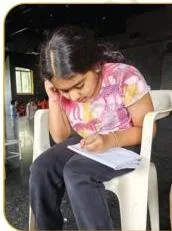
The third illustration belongs to step 4 of Activity 4.1, Keep a Journal. Its caption is the step itself: carry a small notebook to jot down thoughts during or right after the show.
The picture is the chapter reminding you that a review is built from notes, not memory. The journal is where the review begins.

The fourth illustration stands at the head of the Writing a Review section. Its caption describes the moment: you have watched the performance, made key points in your notepad, and have more points in your mind waiting to be expressed.
The image marks the shift from watching to writing — everything before it has been preparation for this section.
Definitions in the Chapter: Reviewing, Theatre Reviewing, Self, Peer and Critical Reviews
These are the working definitions the chapter uses. Keep them together in your head: the first two say what reviewing is, and the three review types say who reviews, and when.
Reviewing
The chapter defines reviewing as the process of “thoughtfully observing, reflecting and giving feedback” on a performance, product or experience. It looks closely at what worked well, what could be improved, and how effectively the goal was achieved.
Good reviewing is not just about finding faults. It appreciates strengths, notices details, offers suggestions, and sharpens critical thinking — for the reviewer and for the performers alike.
Reviewing in theatre
Theatre reviewing is a special skill. You watch not only the play but how well the actors perform, how the story is told, and the use of voice, movement, costumes, lighting and even sets.
It is about celebrating what made the performance powerful and suggesting how it could connect more deeply with the audience. The chapter calls it training to be a careful observer, a sensitive listener and a respectful communicator.
The three review types
The chapter lists three kinds of review, and their differences are a simple matter of who reviews and when:
| Review type | Who does it | When | What it does |
|---|---|---|---|
| Self-review | The creators themselves | Before presenting to the audience | Examine their own art and check for ways to improve |
| Peer review | Contemporaries in the field | Before or after the show | Offer suggestions to the creators |
| Critical review | Gathered from everyone | After the show | A detailed analysis of all aspects, including strengths, weaknesses and scope for improvement |
Notice the order of the timeline: self-review comes first, peer review around the show, and the critical review afterwards. The chapter is preparing you to give the last kind — the written review of a performance you watched.
Common Mistakes in Reviews and in the Audience, with Fixes
The chapter names these errors directly, and each has a simple fix. Check your draft against this table before you call it finished.
| Mistake | Correct rule | How to check your answer |
|---|---|---|
| Reviewing the person instead of the performance | Critique the performance, not the person; never insult an actor, director or team | Would the performer read your line and learn something rather than feel attacked? Say “the dialogue delivery felt rushed”, not “the actor is bad” |
| Giving away the surprise | No spoilers — if the story depends on a surprise, don’t ruin it for others | Could a reader who has not seen the show still be surprised when they watch it? |
| Writing a vague one-liner | Avoid single phrases like “it was not bad” — justify every opinion | Does every judgement carry a “because”? |
| Going one-sided | Balance positives and negatives — even a disliked show has something worth acknowledging | If the review is all praise or all complaint, add one honest sentence from the other side |
| Making it too long or too short | Detailed but easy to read; around 300 words is good for beginners | Count your words and trim or expand to about 300 |
| Reviewing with bias | Bias towards the team or an actor makes the review dishonest — be honest, fair and respectful | Would you write the same sentence about any other team? |
On the audience side, the chapter names these quiet sins:
- Talking during the show.
- Fidgeting.
- Using phones.
- Applauding at the wrong time.
Each one disturbs the actors and the other audience members. The fix is simple: full attention, still hands, and applause at the right moment.
The chapter then turns the question back on you in Circle Time: can you accept reviews from others as fairly as you give yours? This chapter has no separate Points to Ponder list — Circle Time supplies the reflection.
How This Chapter Is Assessed: Summative Tasks and Competencies
This is a practical arts chapter, so the book ends with its own assessment framework: what a student should be able to do, and what the work is judged on.
One warning first: textbook contents and the examinable syllabus are not always identical. This section reports what the book itself sets out — check the current official syllabus for what applies to your exam.
The two summative tasks
The summative assessment in the chapter has an individual task and a group task:
| Task | What you do | What it is judged on |
|---|---|---|
| Individual | Write a simple review of a performance you have seen; read it aloud using voice skills like volume, pitch, diction and intonation; make the reading as creative and dramatic as possible | Confidence in combining multiple techniques and skills; creativity and clarity in thought |
| Group | Pick a story from a Social Science or English textbook; write a script by creating characters and dividing it into scenes; add music and dance where required; perform a three-minute show | Decision-making in teams; including multiple ideas of team members; creativity, collaboration and cooperation |
The book adds that the 30-minute play suggested as the culmination of middle-stage learning can also be used for this assessment, and that the whole process draws on life skills as well as theatre skills learned over the years.
The competencies the tasks serve
The chapter maps its learning to two competencies (NCERT, ‘COMPETENCIES’):
- C-3.2 — understand the stages of a production in the process of reviewing, and refine one’s review based on the steps the chapter suggests.
- C-4.2 — read professional reviews to understand the role of a critic, and describe the life and works of theatre critics in English and local languages.
There are no marks or guarantees to state here. The book’s own criteria are the honest evidence to prepare by.
The Chapter in a Nutshell: What to Remember from Applause and Advice
This chapter has no printed summary section, so this checklist gathers its teaching for a quick revision.
- The audience’s duty: watch and listen respectfully, do not talk or fidget or use phones, applaud at the right time, appreciate the performers’ effort.
- The Nātyaśhāstra (27th chapter, third stanza): a performance’s success is communicated vocally — through words, exclamations and writing — or physically, through clapping, standing up and giving gifts.
- A review is written so well that the reader feels the show again; reviewing is observing, reflecting and giving feedback.
- Theatre reviewing attends to acting, story, voice, movement, costumes, lighting and sets — celebrating strengths, not criticising.
- Three review types: self-review, peer review, critical review.
- Prepare before you watch: research the play, know the genre, know the team, keep a journal, fix your mindset, decide what to observe, have no expectations.
- Five writing rules: not personal, no spoilers, justify opinions, balance positives and negatives, around 300 words.
- Bias towards the team or an actor makes a review dishonest.
- Circle Time: accept reviews as fairly as you give them.
Related Resources: Class 8 Arts Kriti and the Official Source
This listing is maintained for the 2026-27 academic session using the NCERT textbook information available to us. NCERT remains the authority for confirming the latest edition.
Continue with the rest of the Kriti book from the Class 8 Arts page, which lists the chapters around this one. For the full set of Class 8 pages, use the Class 8 hub, or start from the notes home.
In the Kriti book itself, the previous chapter, From Page to Stage, and the music chapter that follows, connect naturally to this one: performing, then watching, then reviewing.
Sources and data verification
What this page describes comes from the NCERT Kriti (Arts) textbook for Class 8, Chapter 4, “Applause and Advice”, in its official NCERT edition.
- This page covers this one chapter of the Kriti book. It does not describe the full CBSE scheme or other Class 8 textbooks.
- It is maintained for the current academic session using the NCERT information available to us. NCERT publishes the textbook and its official PDFs; CBSE settles the syllabus and examinations.
- The official chapter PDF sits on the NCERT textbook portal, which lists the current Kriti edition and every other NCERT book.
| What the chapter holds | Count | Where it is used |
|---|---|---|
| Printed pages | 8 | |
| Figures with NCERT captions | 4 | |
| Tables | 2 | |
| Official NCERT PDF | Download the chapter PDF | the chapter exactly as NCERT publishes it |
Frequently Asked Questions about Applause and Advice
What is a review in the Class 8 Kriti chapter Applause and Advice?
A review is a written account of a performance that lets others read and understand its elements and spirit — so well written that the reader feels the show is being viewed again.
Reviewing is the process of thoughtfully observing, reflecting and giving feedback on a performance, product or experience, looking at what worked, what could improve, and how effectively the goal was achieved.
What are the three types of reviews mentioned in the chapter?
Self-review — the creators examine their own art and improve it before presenting it to the audience. Peer review — contemporaries in the field give suggestions before or after the show. Critical review — a detailed analysis gathered from everyone after the show, covering strengths, weaknesses and scope for improvement.
How long should a review be, and what rules does the chapter give for writing one?
Around 300 words is a good length for beginners. The five rules: don’t be mean or personal — critique the performance, not the person; no spoilers; avoid vague phrases like “it was not bad” and justify opinions; balance positives and negatives; and keep it detailed but easy to read.
What should a good audience member do during a performance?
Watch and listen respectfully with full attention; do not talk, fidget or use phones; applaud at the right time; and react kindly, appreciating the performers’ effort. Small distractions disturb the actors and the other audience members.
What does the chapter say about applause in the Nātyaśhāstra?
The 27th chapter of the Nātyaśhāstra discusses the success of a performance. Its third stanza says appreciation must be communicated to the performers either vocally — through words, speech, exclamations and writing — or physically, through clapping, standing up after the show and giving gifts. This chapter takes the written option.
How is the Applause and Advice chapter assessed in Class 8 Kriti?
The book sets an individual task — write a simple review of a performance you have seen and read it aloud with voice skills like volume, pitch, diction and intonation — and a group task: turn a story from a Social Science or English textbook into a script and perform a three-minute show.
The tasks map to competencies C-3.2 (understanding the stages of a production in reviewing and refining one’s review) and C-4.2 (reading professional reviews and describing critics’ work).
Textbook contents and the examinable syllabus are not always identical — check the current official syllabus.
Reference: NCERT Class 8 Kriti textbook, chapter 4, official edition on ncert.nic.in.
Explore Class 8 Arts Books
Related chapters: