
Pan Indian Class 8 is the official NCERT chapter 11 of the Kriti (Arts) textbook — a 12-page, image-led chapter on India’s eight classical dance forms and the folk dance traditions of Nagaland and Chhattisgarh. It introduces each major form through its posture, costume and speciality, then shows how dance lives on in community festivals.
The official NCERT Class 8 Kriti Chapter 11 Pan Indian PDF is published on ncert.nic.in; this page gives you that file, a map of the chapter’s contents, and a plain-language walk through every dance form in it.
Download the Pan Indian Class 8 PDF
Opening the NCERT Class 8 Kriti Chapter 11 Pan Indian PDF takes you to the full 12-page official chapter in its original NCERT layout — the dance photographs, all eight form descriptions and both activity charts — so you can read the book and this explanation side by side.
Chapter 11 Pan Indian at a glance
This is an image-led, descriptive chapter, not a problem-solving one. In content, it works through the eight major classical dance forms one by one, adds folk traditions from Nagaland and Chhattisgarh, names one eminent personality per form, sets two activities and closes with a learning-outcomes table. The chapter table on this page lists what the file holds at a glance.
The sections below explain what those contents actually teach — the forms, the folk traditions, the terms, the activities and the learning outcomes.
What Chapter 11 Pan Indian covers
This section maps the whole chapter before the detail: the eight forms come first, then the folk traditions, then the activities, and the learning outcomes close it. The collage below opens the chapter — dancers in different styles — and its caption announces the eight major dance forms of India.
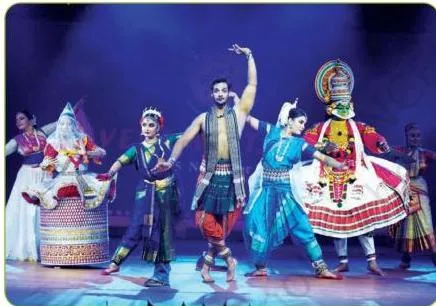
Each dancer in the collage stands for one of the eight forms the chapter then describes one by one:
- Bharatanatyam — Tamil Nadu, South India
- Kathak — Uttar Pradesh and Rajasthan
- Kathakali — Kerala
- Kuchipudi — Andhra Pradesh and Telangana
- Manipuri — Manipur, North-East India
- Mohiniyattam — Kerala
- Odissi — Odisha, eastern India
- Sattriya — Assam
After the eight descriptions the chapter broadens out: a panel of eminent personalities, folk traditions from two regions, two activities, and the learning-outcomes table that tells you what you should be able to do.
The personalities panel pairs one renowned guru or exponent with each form: C. V. Chandrashekhar (Bharatanatyam), Sitara Devi (Kathak), Kalamandalam Gopi (Kathakali), Vempati Chinna Satyam (Kuchipudi), Guru Bipin Singh (Manipuri), Kalamandalam Leelamma (Mohiniyattam), Kelucharan Mohapatra (Odissi), and Rasheshwar Saikia completing the list.
The eight classical dance forms and how to tell them apart
This is the chapter’s main content. It describes each of the eight forms through the same lens — home region, basic posture, costume and speciality — so the way to learn them is to compare, not to memorise eight separate pages.
Bharatanatyam comes from Tamil Nadu in South India. Its marks are geometric, graceful movement, strong footwork, and expressive hand gestures and facial expressions that tell stories through emotion, music and rhythm. The posture to remember is aramandi (also called ayatamandala) — a diamond-shaped half-sit — worn with colourful silk sarees and temple jewellery.
Kathak literally means storytelling and belongs to northern India — Uttar Pradesh and Rajasthan. It narrates through expressive gestures, intricate footwork and graceful movement, and its showpieces are swift spins and rhythmic foot stamping. Dancers stand tall in sama sthana, feet together or in a slight V, and wear long anarkalis or lehengas with dupattas.
Kathakali is Kerala’s dance-drama, traditionally performed by men, acting out stories from the Indian epics with stylised facial expressions, hand gestures and body movements. It has two styles — northern vadakkan and southern thekkan. The stance, atimandala, is deep and grounded: knees bent outward, feet firmly planted apart, with faces painted green for heroes and red for villains under big crowns.
Kuchipudi, from Andhra Pradesh and Telangana, is named after the village of Kuchipudi, still home to dance families such as the Vempati, Vedantam and Bhagavatula. It is dance-drama with a special feature — vachika abhinaya, the spoken word delivered mid-dance.
The stance is close to Bharatanatyam’s aramandi but less deep, and the movement is quick-footed with leaps, sculpturesque poses and brass-plate balancing. Traditionally it was performed exclusively by men, who often portrayed both male and female roles. Dancers wear stitched silk with the gochi kattu drape.
Manipuri, from Manipur in North-East India, is soft, gentle and flowing, with smooth round movements like gliding and a calm, peaceful expression. Its repertoire includes raas leela (stories of Krishna), Lai Haraoba movements, Sankirtan (devotional music and dance with cymbals and drums) and pung cholom — playing a drum while dancing.
Dancers keep their feet together, move circularly and never stamp hard. The famous costume is the poloi — a stiff, colourful skirt with a veil; men wear white dhotis and turbans, especially during pung cholom or raas performances.
Mohiniyattam is Kerala’s graceful, flowing dance, originally performed only by women, full of expression and devotion. It uses gentle upper-body movements and delicate steps, shifting between low and medium positions — aramandala, chaturmandala and atimandala. Dancers wear white or cream kasavu sarees with golden borders.
Odissi originates from Odisha in eastern India and carries the sculptural postures of Odisha’s temples. It grew from the Maharis (Devadasis of Odisha) and Gotipua — boy dancers dressed as girls who dance for Lord Vishnu.
The signature is the tribhanga pose — the body bending in three places, head, torso and hip — along with the square half-sit called chauka. Costumes use pattasari silk with fan-shaped pleats, silver filigree jewellery and the flower-like tahiya headpiece.
Sattriya comes from Assam and was first performed in monasteries called sattras by male monks known as bhokots, before it opened to women and the public. The upper body expresses while the lower body keeps rhythm.
It includes group patterns like sarpa and performances such as sutradhari and gopir nach, and dancers train in sixty-four basic exercises called mati-akhora. Its two postures are purusha and prakriti, and costumes are Assamese pat silk with a dhoti or skirt like the monks wore.
Bāṇis and gharanas: the two words for a dance school
Bāṇis and gharanas are the same kind of thing — a named school or tradition inside one form — but the two words do not swap between forms. Bharatanatyam has bāṇis; the chapter names Thanjavur, Pandanallur, Vazhuvoor and Mysuru as well-known ones. Kathak has gharanas: Lucknow, Jaipur, Banaras and Raigarh.
Match the word to the form — bāṇi with Bharatanatyam, gharana with Kathak.
Who performed each form, traditionally
The chapter is careful about the traditional performers, and these facts are easy to confuse: Kathakali was performed primarily by men; Kuchipudi exclusively by men, who often played both male and female roles; Mohiniyattam originally only by women; and Sattriya began with male monks, the bhokots, and later opened to women and the general public.
Folk dance traditions: Nagaland and Chhattisgarh
The chapter adds folk traditions after the eight classical forms to make one point: dance in India is not only classical — it is also rooted in community festivals, harvests and rituals. It spotlights two regions — Nagaland and Chhattisgarh — and the award-winning personalities who have carried these dances forward.
The Ao Naga dances of Nagaland
The Ao Naga tribe of Nagaland celebrates Moatsu Mong as a time of recreation and joy after the hard work of clearing fields, burning jungles and sowing seeds, with vibrant songs, dances and merrymaking. Another festival, Tsungrem Mong, is observed on the eve of the harvest to offer gratitude to the Supreme Power. The Ao warrior is known as mangkoteppsu.
Beyond the Ao, the Sumi tribe performs the energetic Sumi war dance to celebrate victory in battle, and Lotha women perform mungyanta, a harvest dance, during the Tokhu Emone festival. Nagaland is home to around 30 traditional dances, including the Sangtam War Dance, Hornbill Dance, Chang Lo and Butterfly Dance.
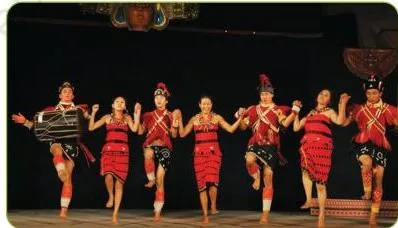
The image above shows the folk dance and music of the Ao tribe. One of the community’s most important contributors is Sangyusang Pongen, who received the Sangeet Natak Akademi Award for his contribution to the dances.
The folk dances of Chhattisgarh
The chapter notes that this region of Bharat has a vibrant culture, with dances performed during festivals, harvests and rituals. Panthi is danced by groups of men of the Satnami community in formations, to the beats of the mandar drum and jhanjh.
Gaud maria, from the Bison-Horn Maria community of the Bastar plateau, is performed by both men and women at births and marriages. Three more dances complete the section: karma, honouring Karma Devi during harvest; suwa danda, the parrot dance performed by women during harvest and Diwali; and gedi, the Gond people’s dance on bamboo stilts.
Mamta Chandrakar, a Sangeet Natak Akademi Awardee and Padma Shri recipient, is a prominent figure in preserving and promoting the indigenous dances of Chhattisgarh.
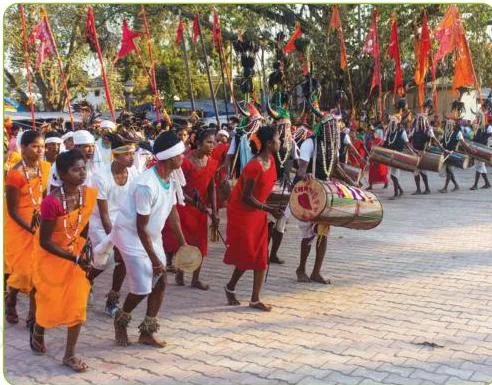
The image above — the Bastar band of Bastar — is the chapter’s example of the musical traditions this region boasts.
How to identify a dance form from its picture
The chapter is full of photographs, so the quickest way to recall a form is to read its image. Each figure below pairs the photograph with the cues the chapter itself gives you for that form.
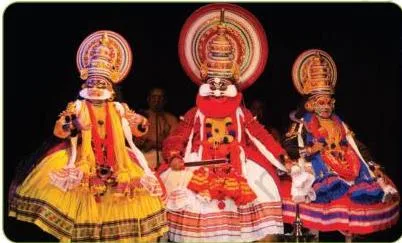
Look for the painted face — green for heroes, red for villains — under a big crown, and the deep atimandala stance with knees bent outward. The poses and eye movements are powerful, and the whole thing reads like a colourful play.
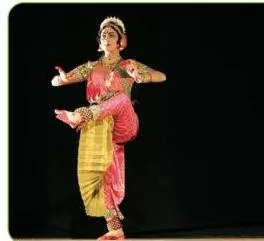
Look for stitched silk with the gochi kattu drape, quick-footed movement and sculpturesque poses. The showpiece is a dancer balancing on a brass plate while dancing.
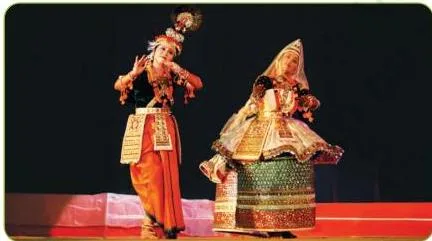
Look for the stiff poloi skirt with a veil, a calm face, feet kept together and a circular glide with no hard stamping. Everything about the movement is soft and flowing.
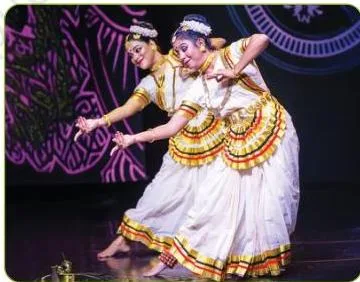
Look for a white or cream kasavu saree with a golden border and gentle movements of the upper body. The style is soft, flowing and lyrical.
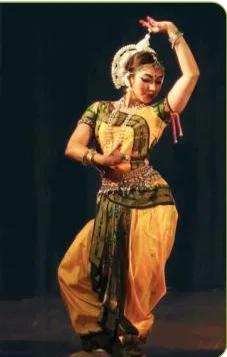
Look for the tribhanga — the body bending in three places, head, torso and hip — and the square chauka stance. Fan-shaped pleats and the flower-like tahiya headpiece complete the picture.
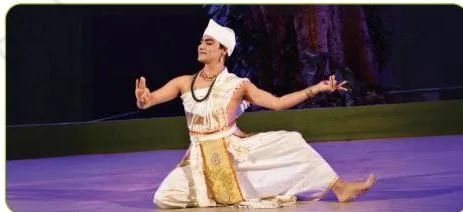
Look for Assamese pat silk and a dhoti or skirt that recalls the monks who first performed the form. The upper body expresses while the lower body keeps rhythm — the same division the chapter describes.
Bharatanatyam and Kathak appear in the opening collage rather than as separate photographs, so fix their cues from the text: Bharatanatyam’s aramandi diamond half-sit with bright silk and temple jewellery; Kathak’s tall sama sthana stance with swift spins and rhythmic stamping.
The chapter’s own study advice is a reliable memory hook — watch live or recorded performances whenever you can. It points you to Kathakali, Bharatanatyam, Mohiniyattam and Manipuri as a starting set; a form seen moving is a form remembered.
Dance terms defined in the Pan Indian chapter
The chapter uses a set of Sanskrit and regional terms, and the definitions below match the sense the chapter gives each one. Cross-check any word you meet while reading.
The classical forms use these terms:
| Term | What it means in the chapter | Form or region |
|---|---|---|
| aramandi / ayatamandala | Diamond-shaped half-sitting stance. | Bharatanatyam |
| sama sthana | Tall stance with feet together or in a slight V. | Kathak |
| atimandala | Deep, grounded stance, knees bent outward and feet firmly apart. | Kathakali (also in Mohiniyattam) |
| bāṇi | A school or tradition within a form. | Bharatanatyam |
| gharana | A school or tradition within a form. | Kathak |
| vachika abhinaya | Spoken word delivered during the dance. | Kuchipudi |
| gochi kattu | Special silk drape stitched for easy movement. | Kuchipudi |
| raas leela | Stories of Krishna performed in dance. | Manipuri |
| Lai Haraoba | Traditional movement repertoire of Manipuri. | Manipuri |
| Sankirtan | Devotional music and dance with cymbals and drums, often in temple rituals. | Manipuri |
| pung cholom | Dancing while playing a drum. | Manipuri |
| poloi | Stiff, colourful skirt worn with a veil. | Manipuri |
| chaturmandala | A low or medium position in Mohiniyattam. | Mohiniyattam |
| tribhanga | Pose with the body bent in three places: head, torso, hip. | Odissi |
| chauka | Square-shaped half-sitting pose. | Odissi |
| maharis | Devadasis of Odisha; one origin of Odissi. | Odissi |
| gotipua | Boy dancers dressed as girls, dancing for Lord Vishnu. | Odissi |
| pattasari | Silk fabric used in Odissi costumes. | Odissi |
| tahiya | Flower-like headpiece worn in Odissi. | Odissi |
| sattras | Monasteries in Assam where Sattriya began. | Sattriya |
| bhokots | Male monks who first performed Sattriya. | Sattriya |
| mati-akhora | The sixty-four basic exercises of Sattriya. | Sattriya |
| sutradhari | A Sattriya performance type. | Sattriya |
| gopir nach | A Sattriya performance type. | Sattriya |
| purusha / prakriti | Sattriya’s two postures: male and female. | Sattriya |
| nṛtta | Pure dance. | Learning outcome 2.2 |
| nṛtya | Expressive dance. | Learning outcome 2.2 |
The folk traditions use these terms:
| Term | What it means in the chapter | Region |
|---|---|---|
| mangkoteppsu | The Ao warrior of Nagaland. | Ao Naga, Nagaland |
| Moatsu Mong | Ao festival of recreation and joy after field clearing and sowing. | Ao Naga, Nagaland |
| Tsungrem Mong | Ao festival on the eve of harvest, offering gratitude to the Supreme Power. | Ao Naga, Nagaland |
| mungyanta | Harvest dance of Lotha women during the Tokhu Emone festival. | Nagaland |
| panthi | Men’s dance of the Satnami community to the mandar drum and jhanjh. | Chhattisgarh |
| gaud maria | Dance of the Bison-Horn Maria community of Bastar, by men and women. | Chhattisgarh |
| karma | Dance honouring Karma Devi during harvest. | Chhattisgarh |
| suwa danda | Parrot dance performed by women during harvest and Diwali. | Chhattisgarh |
| gedi | Dance of the Gond people on bamboo stilts. | Chhattisgarh |
Common mix-ups in Pan Indian dance forms
This chapter’s difficulty is not concepts but look-alike names and postures. The table below names the confusions and the correction from the chapter text.
| The mix-up | What is correct | Quick check |
|---|---|---|
| Kathak and Kathakali sound alike, so they get merged. | Kathak is northern (Uttar Pradesh and Rajasthan) storytelling with spins, stamping and anarkali or lehenga costumes. Kathakali is Kerala’s painted dance-drama with crowns and green or red faces. | Ask: North India or Kerala? Flowing dress or painted face? |
| Bharatanatyam and Mohiniyattam both use low half-sits and sarees, so their costumes get crossed. | Bharatanatyam is Tamil Nadu’s diamond aramandi in bright silk with temple jewellery. Mohiniyattam is Kerala’s women’s dance in cream kasavu with a golden border. | Ask: which state, and what colour saree? |
| Postures swap between forms — chauka, atimandala, sama sthana. | Chauka is Odissi’s square half-sit. Atimandala is Kathakali’s deep, wide stance. Sama sthana is Kathak’s tall stance. | Name the form first, then say its posture aloud. |
| Bāṇis and gharanas are treated as interchangeable words. | Bāṇis belong to Bharatanatyam (Thanjavur, Pandanallur, Vazhuvoor, Mysuru). Gharanas belong to Kathak (Lucknow, Jaipur, Banaras, Raigarh). | Bharatanatyam takes bāṇi; Kathak takes gharana. |
| The traditional performers are remembered wrong. | Kathakali and Kuchipudi were performed by men. Mohiniyattam was originally performed only by women. Sattriya began with male monks and later opened to all. | Ask who danced the form originally, before it opened up. |
| Tribhanga is read as one single curve of the body. | It is a triple bend — the body bends in three places: head, torso and hip. | Count three bends in the dancer’s body. |
Learning outcomes: what Chapter 11 expects you to master
The chapter ends with a learning-outcomes table that tells you what you should be able to do after working through it, numbered 2.2, 4.1 and 4.2.
- 2.2 — Identify and distinguish nṛtta (pure dance) from nṛtya (expressive dance) in a performance, and understand their unique characteristics and purposes.
- 4.1 — Show eagerness to learn about the eight major dance forms of India and other regional and traditional dance forms.
- 4.2 — Show curiosity and interest in learning about notable dance personalities and their contributions to dance.
Outcome 2.2 is the chapter’s one conceptual idea: nṛtta is pure dance, nṛtya is expressive dance. Activity 11.2 puts it to work — during the performance you arrange, discuss which elements are pure dance and which are expressive.
One honest caution: textbook contents and the examinable syllabus are not always identical, so check the current official syllabus to see how this chapter is assessed in your session.
Chapter 11 recap: the Dance Matrix, filled in
Activity 11.1 asks you to make a comparative chart of the dance forms based on their distinctive features. The table below is the same chart filled from the chapter’s own descriptions — use it to check your version and to revise from a single table.
| Dance style | Where it is from | Basic posture | Specialities | Costumes |
|---|---|---|---|---|
| Bharatanatyam | Tamil Nadu, South India | Aramandi (ayatamandala) — diamond-shaped half-sit | Strong footwork; geometric, graceful movement; storytelling through emotion, music and rhythm; bāṇis such as Thanjavur, Pandanallur, Vazhuvoor, Mysuru | Colourful silk saree with front pleats; temple jewellery |
| Kathak | Uttar Pradesh and Rajasthan | Sama sthana — standing tall, feet together or slight V | Storytelling; swift spins; rhythmic foot stamping; gharanas: Lucknow, Jaipur, Banaras, Raigarh | Anarkali or lehenga with dupatta; northern fabrics |
| Kathakali | Kerala | Atimandala — deep, grounded, knees outward, feet apart | Epic dance-drama; painted faces (green heroes, red villains); powerful poses and eye movements; vadakkan and thekkan styles | Bright costumes, big crowns, heavy makeup |
| Kuchipudi | Andhra Pradesh and Telangana | Like aramandi but less deep | Vachika abhinaya (spoken word); dance-drama; brass-plate balancing; quick-footed with leaps and sculpturesque poses | Stitched silk with gochi kattu drape; temple jewellery |
| Manipuri | Manipur, North-East India | Feet together, circular glide, no hard stamping | Soft, flowing movement; raas leela; Lai Haraoba; Sankirtan; pung cholom | Poloi — stiff colourful skirt with veil; men in white dhoti and turban |
| Mohiniyattam | Kerala | Moves between aramandala, chaturmandala and atimandala | Originally performed only by women; soft, flowing, devotional; gentle upper-body movement | White or cream kasavu saree with golden border |
| Odissi | Odisha, eastern India | Chauka — square half-sit; tribhanga triple bend | Sculptural temple postures; derived from Maharis and Gotipua; slow turns and graceful steps | Pattasari silk with fan-shaped pleats; silver filigree jewellery; tahiya headpiece |
| Sattriya | Assam | Two postures: purusha (male), prakriti (female) | First performed in sattras; realistic storytelling; sarpa group patterns; sutradhari and gopir nach; 64 mati-akhora exercises | Assamese pat silk; dhoti or skirt like the monks wore |
A quick way to recall the map: two forms come from Kerala (Kathakali, Mohiniyattam), two from the south (Bharatanatyam from Tamil Nadu, Kuchipudi from Andhra Pradesh and Telangana), one from the north (Kathak from Uttar Pradesh and Rajasthan), and three from the eastern and north-eastern side (Odissi from Odisha, Sattriya from Assam, Manipuri from Manipur).
The two activities in Chapter 11 and how to complete them
The chapter tests understanding through two activities rather than written questions. Here is what each one asks and how to finish it.
Activity 11.1: The Dance Matrix
The task is to make a comparative chart of the dance forms based on their distinctive features — the same chart filled in above. Work row by row: read one form’s description, then fill in its home region, basic posture, specialities and costume before moving to the next form.
The chapter’s blank chart lists two more headings — footwork and music. Footwork facts sit inside each description (Kathak’s stamping, Manipuri’s no-hard-stamping rule); music appears for only some forms, so fill that cell from a performance you watch.
Activity 11.2: Dance as Knowledge, Dance as Experience
This activity has three parts. First, learn about the important personalities named in the chapter and find out about young dancers performing professionally today. Second, identify a dancer from your region and invite them to share a short performance and conduct a workshop.
Third, during the performance, watch for the nṛtta and nṛtya elements you saw, discuss them, and try to learn the movement yourself.
The collage below shows the regional-dance examples the chapter pairs with this activity — Bihu from Assam and Rouf from Kashmir — proof that the activity is about noticing dance around you, not only the eight classical forms.
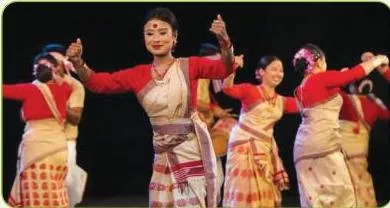
The workshop image below shows the second task in action: a dancer sharing a performance with students, which is exactly what you are asked to arrange in your own region.
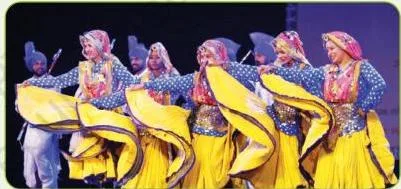
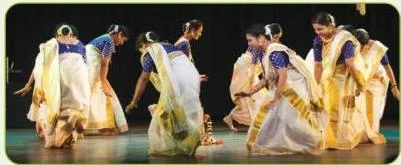
The chapter also shows Phag from Haryana (pictured below) and Kaikottakali from Kerala as more regional traditions you could explore the same way — watch, discuss and try to learn.
Related chapters and sources
This listing is maintained for the 2026-27 academic session using the NCERT textbook information available to us. NCERT remains the authority for confirming the latest edition.
This chapter belongs to the Class 8 Kriti (Arts) book. Open the Class 8 Arts book page to see every chapter of the book, or the Class 8 hub for all NCERT books of the year.
Move to the previous chapter to see what comes before this one, or the next chapter to continue through the book.
For revision versions of this material, the Class 8 Arts notes, the Class 8 notes and the CBSE notes hub organise the same content for faster study.
Two more notes pages sit under the same Class 8 Arts section: dance and movement and dance for well-being.
The official NCERT portal publishes the complete Kriti textbook and every chapter PDF: NCERT textbook portal on ncert.nic.in.
Sources and data verification. The details on this page describe NCERT Class 8 Kriti (Arts), Chapter 11 “Pan Indian”, as published in the current NCERT edition of the textbook. This page covers this single chapter of the book.
It is maintained for the current academic session using the NCERT materials available to us. NCERT settles textbook editions and official PDFs; CBSE settles the curriculum, syllabus and examinations.
| What the chapter holds | Count | Where it is used |
|---|---|---|
| Printed pages | 12 | |
| Figures with NCERT captions | 12 | |
| Tables | 2 | |
| Official NCERT PDF | Download the chapter PDF | the chapter exactly as NCERT publishes it |
Reference: NCERT Class 8 Kriti textbook, chapter 11, official edition on ncert.nic.in.
Pan Indian Class 8 — frequently asked questions
What are the eight classical dance forms listed in Pan Indian Class 8?
Bharatanatyam, Kathak, Kathakali, Kuchipudi, Manipuri, Mohiniyattam, Odissi and Sattriya. The chapter names these eight as the major dance forms of India and then describes each one.
What is the difference between nṛtta and nṛtya in Chapter 11?
Nṛtta is pure dance and nṛtya is expressive dance. Learning outcome 2.2 asks you to identify and distinguish both in a performance — to recognise which moments are pure movement and which carry expression and story.
Which state is Kathakali from and how is it different from Kathak?
Kathakali is from Kerala; Kathak is from Uttar Pradesh and Rajasthan. Kathakali is a painted dance-drama with big crowns and the deep atimandala stance, traditionally performed by men. Kathak is northern storytelling with swift spins, stamping and the tall sama sthana stance.
What is the aramandi posture and which dance form uses it?
Aramandi — also called ayatamandala — is the diamond-shaped half-sitting stance of Bharatanatyam. Kuchipudi uses a similar stance that is less deep, and Mohiniyattam moves through aramandala among its low and medium positions.
Which folk dances and dancers from Nagaland and Chhattisgarh does the chapter mention?
From Nagaland: the Ao Naga festivals Moatsu Mong and Tsungrem Mong, the Sumi war dance, the Lotha women’s mungyanta harvest dance, and Sangeet Natak Akademi awardee Sangyusang Pongen. From Chhattisgarh: panthi, gaud maria, karma, suwa danda and gedi, plus Sangeet Natak Akademi and Padma Shri awardee Mamta Chandrakar.
Where can I download the official NCERT Class 8 Kriti Chapter 11 Pan Indian PDF?
From NCERT’s own portal. Use the NCERT Class 8 Kriti Chapter 11 Pan Indian PDF link on this page to open the official chapter file, or browse the NCERT textbook portal for the full Kriti book.
Explore Class 8 Arts Books
Related chapters: