
This is the official Inspiration and Imagination Class 8 Kriti (Arts) chapter PDF from NCERT — a short, activity-based chapter about musicians who overcame challenges, music built into ancient temples, and imagining your own musical future.
The official PDF is right here, above the contents list.
Download the Official Chapter PDF
Open the publisher’s own copy of the chapter: Download the Inspiration and Imagination Class 8 Kriti chapter PDF — this is the official NCERT edition, the same file teachers use in class.
Chapter at a Glance
The table below is taken from the NCERT chapter file: it shows how the chapter is organised — where its sections, figures, activities and the learning-outcomes table sit — so you can see at a glance what is text, what is activity, and where the pictures are.
Inspiration and Imagination Class 8: What the Chapter Covers
This chapter pulls together what you have explored over the year — elements of music, instruments, songs and emotions — and asks you to absorb inspiration from real musicians and from India’s musical heritage, then turn that inspiration into your own imagined future.
The chapter moves in four movements:
- A biography of Ravindra Jain, a blind composer who worked in Hindi films.
- Artists who overcame challenges — a research activity about differently-abled or barrier-breaking artists.
- Music in stone — temples, forts and pillars connected to music, including pillars that ring when struck.
- Two writing activities about your future self — a newspaper report and a musical autobiography.
This is an activity chapter: there are no solved numerical problems. The work happens inside four numbered activities, and each one is explained below.
Inspiring Artists: Ravindra Jain and Activity 8.1
The chapter opens by questioning a common assumption. We tend to think musicians are born with a gift and are lucky to perform on stage. The book’s counter-example: many musicians reached success only after overcoming a disability or a difficult circumstance.
Who Was Ravindra Jain (1944–2015)?
Ravindra Jain was a music composer and songwriter who worked mainly in Hindi films. He was blind, yet he became one of India’s most loved musicians.
He composed music for more than 200 Bollywood films, including the music for the popular television series Ramayan, and won the Filmfare award for Best Music Director for Ram Teri Ganga Maili (1985). He also performed in hundreds of live and TV shows.
Why begin here? His life is the chapter’s first example of talent meeting difficulty — and winning.
Activity 8.1: Artists Who Overcame Challenges
Activity 8.1 turns the biography into research on someone closer to you.
- Think of an artist in your community, region or state who is differently-abled, or had to break barriers to pursue their passion.
- Learn about suggested names like Ghatam Suresh Vaidyanathan and Puttaraj Gawai if you need starting points.
- Find out where the artist is from, what art form they practise, how they started, and what specific challenges they overcame.
- Listen to their music and watch videos of their performances or interviews.
- Reflect on what you can learn from their lives and share that with your classmates.
Musical Monuments: Temples That Hold Music
The chapter moves from people to places. Many temples and historical buildings in India have deep connections with music, and several temple sculptures show instruments being played. Your task is to research three heritage monuments and write about each.
The sculpture group above is the chapter’s visual evidence that instruments were part of temple life, not just court or stage performance.
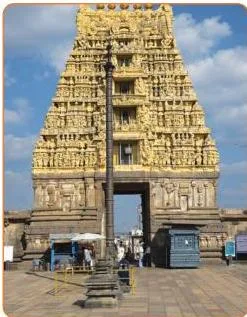
The Chennakeshava Temple at Belur in Karnataka is the first monument on the chapter’s list. The photograph shows the building you will be researching.
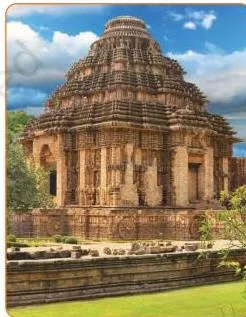
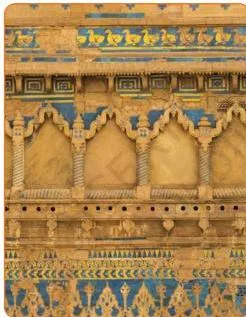
Gwalior Fort in Madhya Pradesh is the second monument. The chapter also names the Konark Sun Temple in Odisha, though it does not print a photograph of it.
For each monument you must find out how it is connected to music, write a page about it, and check whether concerts or festivals still happen there today.
Musical Pillars: Stone That Rings With Notes
Indian temples also have a tradition of musical pillars — stone carved so precisely that it produces musical notes when struck. The chapter calls this a coming together of music, science and sculpture.
| Temple | Place | Musical feature |
|---|---|---|
| Vijaya Vittala Temple | Hampi, Karnataka | 56 pillars that produce musical notes |
| Airavateshwara Temple | Darasuram, Tamil Nadu | A stone staircase that produces different notes when tapped |
| Padmanabha Swamy Temple | Thiruvananthapuram, Kerala | Carved stone pillars that produce musical notes when struck |
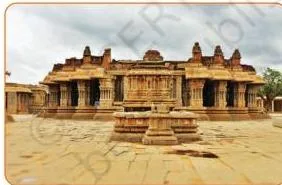
The photograph above shows the Airavateshwara temple, where the musical staircase is found.
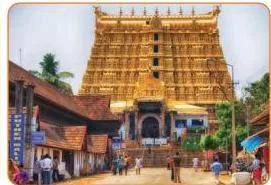
The image above shows the Vijayavitthala temple at Hampi, home to the 56 note-producing pillars. The chapter’s third site, Padmanabha Swamy Temple, is described only in words.
How Do the Pillars Work?
The chapter’s own explanation is simple: the pillars are made of resonant stone that vibrates at clearly audible frequencies when struck.
- The pillars are often hollow.
- Their densities vary, which is how different frequencies are produced.
- Nothing sounds without the strike — the pillars ring when tapped, not by themselves.
Activity 8.2: Explore a Music Institution
This activity moves music from ancient temples to living institutions. It asks you to find a real music school or venue and learn what happens there.
- Do you know a local music school or venue? If not, search online or ask family and friends.
- Find out what the institution does: does it run music classes, organise concerts, or host other activities?
- If you can, visit and understand their activities first-hand.
- You may even discuss with your parents about joining a music class in-person or online.
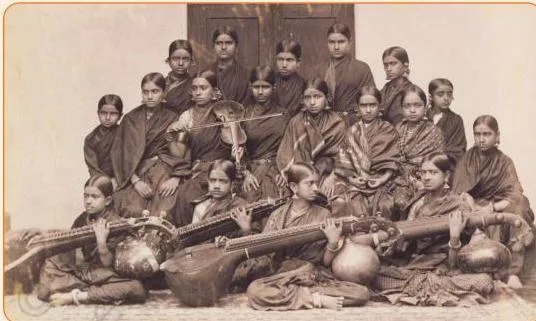
The photograph above is the chapter’s proof that music schools in India are more than a century old — your local class is part of a long tradition.
What the Note to the Teacher Adds
The chapter suggests a field trip to a nearby music institution so students get first-hand experience of a music environment. It also names two ensembles to listen to: the Shillong Chamber Choir and the Bastar Band of Chhattisgarh, and asks you to research other communities that have orchestral or vocal bands.
Imagining My Future: The Activity 8.3 Newspaper Report
After learning how others found inspiration, the chapter asks you to imagine your own future. It reminds you that with focus and dedication you can be successful and contribute to building a stronger nation.
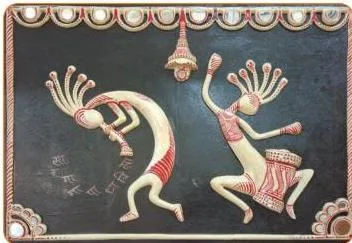
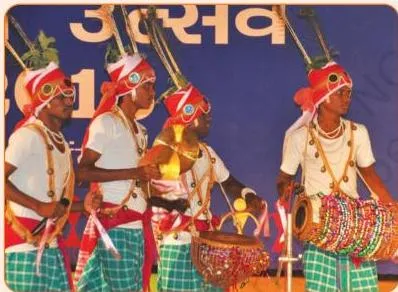
The folk-art image above shows indigenous instruments being played — a reminder that music belongs to ordinary life, not only to stages. That idea feeds the reflection point about music’s contribution to your own life.
Activity 8.3: Report on Your Future Self
You write a newspaper article about yourself twenty years from now, and it must be in the third person point of view.
Before writing, note down points on: the career you have selected; your major accomplishments; the contribution of music or another art form to your personal life; the milestone event you want to report; what you enjoy doing now; other interesting details about your personal life; and your future dreams.
Then create a draft, think of an eye-catching headline, write a final article of 400–500 words, and post it on the class notice board.
The instruction students most often miss is the third-person requirement. You are writing about yourself the way a reporter would, not as “I will be…” — refer to yourself by name or as “the artist”.
Extension: think about how media and reporting may evolve. If you prefer, make a podcast, a short-form video, or a blog instead of a newspaper article.
Activity 8.4: Your Musical Autobiography
A musical autobiography is the chapter’s way of telling your life story through music — each song stands for a detail or moment in your life.
- Think about your life so far and note down important details: where you were born, something about your family, interesting things you have done, your hobbies, and anything else you want people to know.
- For each detail, identify a piece of music that represents what you want to convey.
- Write a few sentences on why that song is relevant to your autobiography.
- Share the songs and descriptions with the class.
Extension: take events from your personal history and write an original song. Think about the lyrics, the melody, and the arrangement, and how each supports the story.
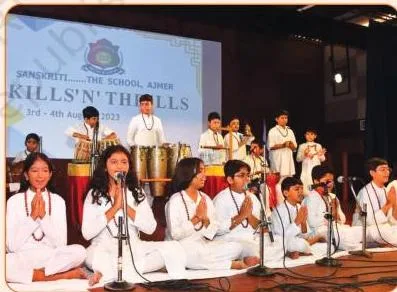
These two student pictures are the book’s own examples of imagining a musical identity — one a future drummer, one stepping into an ensemble of orchestra and choir.
Reading the Chapter’s Pictures, in Order
The pictures in this chapter are not decoration; they trace the argument.
- Temple sculptures and the Belur and Gwalior photographs show music as heritage.
- The Hampi and Darasuram pillar photographs show music as science — stone made to ring.
- The 1895 Mysore music-school photograph shows music as an institution.
- The tribal folk art shows music as ordinary life.
- The drummer and extension illustrations show music as personal identity.
By the last picture, the subject of the images has changed from buildings to you.
Key Terms in This Chapter
The chapter uses a handful of terms that may be new to you; each one names a real thing.
- Musical pillars — temple pillars carved and placed so they produce musical notes when struck.
- Resonant stone — stone that vibrates at clearly audible frequencies when struck; the chapter’s phrase for why the pillars ring.
- Musical autobiography — telling the story of your life through music, as defined in Activity 8.4.
- Third person point of view — writing about yourself as the subject of a report rather than as “I”; exactly what Activity 8.3 demands.
- Heritage monument — a temple or historical building with deep cultural connections, like Belur, Gwalior Fort and Konark.
The first three terms are defined by the chapter itself; the others are phrased here for clarity.
Common Mistakes Students Make in These Activities
The chapter tells you exactly what it wants — these are the instructions students usually miss.
| Mistake | Correct rule | How to check your answer |
|---|---|---|
| Writing Activity 8.3 in first person | The article must be in third person — refer to yourself by name or as “the artist”, never “I will be…” | Re-read every sentence; if any uses “I” or “my”, rewrite it using your name or a third-person phrase. |
| Treating musical pillars as statues that sing on their own | The pillars are struck, and the resonant stone vibrates at audible frequencies | Your explanation should include the words “struck” or “tapped” and mention the vibrating stone. |
| Activity 8.4 songs with no stated connection | Each life detail needs a few sentences on why the chosen song fits | Check that every song in your list has a “because…” sentence beside it. |
| Activity 8.1 biography only, no reflection | The activity ends by asking what you can learn from the artist’s life and to share it | Your submission should end with your own learning, not just facts about the artist. |
How This Chapter Is Assessed: The Learning Outcomes Table
The chapter ends with a table of learning outcomes — the book’s own checklist of what you should be able to do when you finish. The table has a Teacher column and a Self column, inviting both a teacher’s check and your own honest self-check.
| Outcome | What you should be able to do | Activities that build it |
|---|---|---|
| CG 2.2 | Use music to tell a personal story. | Activity 8.4 (musical autobiography) and Activity 8.3 (your future report). |
| CG 3.2 | Reflect on a music performance or a visit to a music institution. | Activity 8.2 (explore a music institution) and the reflection in Activity 8.1. |
| CG 4.1 | Engage with music in contemporary genres and by contemporary artists. | Activity 8.2, including the Shillong Chamber Choir and Bastar Band examples, and Activity 8.1’s contemporary artists. |
Textbook contents and the examinable syllabus are not always identical — check the current official syllabus before deciding what to prioritise.
The Chapter in One Page: What to Remember
If you remember nothing else, remember this.
- The chapter’s two themes are inspiration (people and places) and imagination (your own future).
- One biography: Ravindra Jain — a blind composer of more than 200 Hindi films, the Ramayan television series, and the Filmfare-winning Ram Teri Ganga Maili.
- Three monuments to research: Chennakeshava Temple at Belur, Gwalior Fort, and Konark Sun Temple.
- Three musical stone sites: Hampi’s 56 pillars, Darasuram’s musical staircase, and Padmanabha Swamy Temple’s carved pillars. They ring because resonant stone, often hollow and of varying densities, vibrates at audible frequencies when struck.
- Four activities: research an artist who overcame challenges (8.1), explore a music institution (8.2), write a third-person newspaper report on your future self (8.3), and build a musical autobiography (8.4).
- Three learning outcomes as your self-check: tell a personal story through music, reflect on a performance or music institution, and engage with contemporary artists and genres.
Related Resources
This listing is maintained for the 2026-27 academic session using the NCERT textbook information available to us. NCERT remains the authority for confirming the latest edition.
- Kriti book page for Class 8 — lists the previous and next chapters of the book.
- Class 8 hub — other Class 8 subjects.
- Class 8 Indian art notes — related arts material.
- Class 8 My World art notes — the companion arts book.
- Official NCERT textbook portal — where the current Class 8 Kriti edition is published.
Sources and Data Verification
- The figures and chapter contents described on this page come from the NCERT Class 8 Kriti (Arts) textbook, Chapter 8 “Inspiration and Imagination”, official edition published on ncert.nic.in.
- This page covers that single chapter — not the full CBSE scheme, which includes other subjects and options.
- The listing is maintained for the current NCERT edition available on the official portal.
- NCERT settles textbooks, editions and PDFs. CBSE settles curriculum, syllabus and examinations — for that, the current official syllabus is the authority.
| What the chapter holds | Count | Where it is used |
|---|---|---|
| Printed pages | 7 | |
| Figures with NCERT captions | 9 | |
| Tables | 1 | |
| Official NCERT PDF | Download the chapter PDF | the chapter exactly as NCERT publishes it |
Reference: NCERT Class 8 Kriti textbook, chapter 8, official edition on ncert.nic.in.
Frequently Asked Questions
Who was Ravindra Jain and why does Chapter 8 start with his story?
Ravindra Jain was a blind music composer and songwriter who composed music for more than 200 Hindi films, created the music for the television series Ramayan, and won the Filmfare award for Best Music Director for Ram Teri Ganga Maili (1985).
The chapter opens with him because his life proves that musicians are not simply born lucky — many succeed after overcoming disability or difficult circumstances.
What are musical pillars and how do they produce sound?
Musical pillars are temple pillars carved and placed so precisely that they produce musical notes when struck. The chapter explains that they are made of resonant stone that vibrates at clearly audible frequencies; being often hollow and having varying densities allows different frequencies to be produced. They do not sing by themselves — they ring when struck or tapped.
Which temples in India have musical pillars or a musical staircase?
The chapter names three: Vijaya Vittala Temple at Hampi in Karnataka, with 56 pillars that produce musical notes; Airavateshwara Temple at Darasuram in Tamil Nadu, with a stone staircase that produces different notes when tapped; and Padmanabha Swamy Temple at Thiruvananthapuram in Kerala, with carved stone pillars that ring when struck.
What do I have to write for Activity 8.3?
You write a newspaper article about yourself twenty years from now, in the third person, 400 to 500 words long, and post it on the class notice board.
Before writing, note down points on your chosen career, major accomplishments, the contribution of music or another art form, a milestone event to report, what you enjoy doing now, other personal details, and your future dreams. An extension allows a podcast, short video or blog instead.
What is a musical autobiography in Activity 8.4?
A musical autobiography tells the story of your life through music. You note down important life details, choose one piece of music for each detail, write a few sentences on why that song fits, and share the songs and descriptions with the class. The extension is to write an original song with attention to lyrics, melody and arrangement.
Where can I download the official Class 8 Kriti arts book PDF?
Use the download link at the top of this page, which points to the official NCERT textbook portal at ncert.nic.in — the publisher’s own edition of the current Class 8 Kriti book.
Explore Class 8 Arts Books
Related chapters: