
Looking for the One Stage, Many Scripts Class 8 chapter PDF? This is Chapter 2 of the NCERT Class 8 Arts textbook Kriti (Arts Education). The official NCERT file is right here — the chapter runs from page 18 to page 25 of the printed book and teaches how scripts, ancient drama forms and genres work.
The most fundamental part of any performance is a script, and this chapter shows where scripts come from and how we classify them. Use the download block just below to save the official One Stage, Many Scripts Class 8 NCERT chapter PDF, or read on for a section-by-section explanation. This page is maintained for the current academic session.
The One Stage, Many Scripts Class 8 chapter at a glance
This chapter moves in one direction: from why writing matters, to what a script is (in ancient India and today), to which kind of story a script tells — its genre. The counts table on this page shows at a glance how many of each the chapter holds; below is the order in which they appear.
- Why writing matters — five benefits of writing ideas down, and the forms writing takes (NCERT, p. 18)
- Play scripts in ancient India — rupa, rupaka, drushya kavya and the Nātyashāstra (NCERT, p. 19)
- Types of scripts — the Daśha Rūpaka table of ten ancient forms beside modern classifications (NCERT, pp. 19–20)
- Activity 2.1: Script Your Style! — one shared story written in four script styles (NCERT, pp. 20–21)
- Genres — nine broad genres, why categories exist, and two 19th-century playwrights (NCERT, pp. 21–22)
- Activity 2.2: Genre Genius! — four short texts to label, plus genres beyond theatre (NCERT, pp. 23–24)
- REMEMBER and CIRCLE TIME — the chapter’s essential rule and its discussion questions (NCERT, p. 25)
- The closing learning-outcomes grid for self-assessment
What this chapter covers, section by section
Here is a map of what each part of the chapter asks you to do, so you know where you are as you read the PDF. The teaching itself follows in the next section.
- Why writing matters (NCERT, p. 18): writing brings clarity, builds ideas with more creativity, lets others collaborate, helps you remember, and acts as a record for future generations. The chapter also notes that every film, TV show, web series, news telecast and documentary has a written script behind it.
- You will learn (NCERT, p. 18): the chapter’s own objectives — types of scripts, and genres in various forms.
- Scripts for stage (NCERT, pp. 18–19): play scripts are written works meant for performance on stage, in film, or on television, and their structure changes with the medium.
- Play scripts in ancient India (NCERT, p. 19): drama was called rupa or rupaka, described as drushya kavya (visible poetry), and classified in the Nātyashāstra.
- Types of scripts (NCERT, pp. 19–20): the Daśha Rūpaka table compares ten Sanskrit drama forms with modern script labels.
- Activity 2.1 (NCERT, pp. 20–21): write one page of script on a shared topic in one of four styles, then compare the results.
- Genres (NCERT, pp. 21–22): nine broad genres are defined, mixed genres are listed under both categories, why genre matters is explained, and two playwrights are introduced.
- Activity 2.2 (NCERT, pp. 23–24): label four short texts by genre, and see that music, dance and visual arts have genres too.
- REMEMBER (NCERT, p. 25): plan Beginning—Middle—End and find an interesting conflict — for any script, in any genre.
- CIRCLE TIME (NCERT, p. 25): three discussion questions that close the chapter, followed by the learning-outcomes grid.
Key concepts: scripts, ancient forms, and genres
The chapter’s big picture fits in one sentence: a script is the written plan of a performance, and we sort scripts two ways — by form (how many acts, how the plot is built) and by genre (what kind of story it tells). The three parts below follow that order.
Play scripts and the Sanskrit tradition: rupa, rupaka and drushya kavya
A play script is a written work intended for performance on stage, in film, or on television. Its structure, style and purpose change with the medium it is designed for (NCERT, p. 18). Ancient India already treated drama as a written text: thinkers used the terms rupa or rupaka for drama.
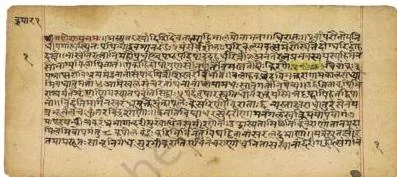
Writers called drama drushya kavya — visible poetry — because the written text combined dialogue and poetry, which is why Sanskrit playwrights were also poets (NCERT, p. 19). Kalidasa is the example that runs through the chapter: his plays survive on birch-bark manuscripts, the very material the class is asked to imagine finding in Activity 2.1.
The ancient text that classifies it all is the Nātyashāstra, which describes the different types of drama (NCERT, p. 19).
The Daśha Rūpaka table: ten ancient forms beside modern script types
This is the book’s proof that classifying scripts is not a modern habit. The Daśha Rūpaka — the ten rupakas, or drama forms, of the Nātyashāstra — is set beside the way we sort scripts today; the two columns are parallel systems of classification, not translations of each other (NCERT, pp. 19–20).
Grouped by number of acts, the ten forms are easier to carry:
- Full-length: Nataka (5–10 acts; stories of kings or divine beings, with love, heroism or pathos) and Prakarana (up to 10 acts; an invented plot based on society).
- Four-act: Dima (popular stories, including Devas and Asuras) and Ihamrga (popular stories mixed with fiction from pauranik sources).
- Three-to-four-act: Samavakara (traditional stories of Devas and Asuras).
- One-act: Bhana (invented plots of rogues and heroism), Prahasana (humour — the comic form), Vyayoga (traditional heroic stories, non-comical), Anka or Utsrishtanka (built on karuna rasa, the emotion of pathos), and Veethi (only 2–3 characters, performable at any location).
Beside these, the chapter places today’s labels (NCERT, p. 20): one-act plays (10–30 minutes, a single dominant situation or conflict), two-act plays (a climactic midpoint where the stakes rise or the goal changes), the three-act structure (setup, confrontation, resolution), linear, cyclical and non-linear plots, and adapted scripts built from novels, poetry, short stories or historical events.
The nine genres: tragedy, comedy, and the rest
A genre is a category of works that share common characteristics. The chapter’s frame is the Oxford English Dictionary definition: a particular type or style of art, music, literature, or film, with distinctive features (NCERT, p. 21). The nine broad genres below are the popular ones — records have documented more than 300.
Tragedy focuses on serious themes, often a flawed protagonist who comes to a downfall through fate, personal mistakes, or societal forces (NCERT, p. 21).
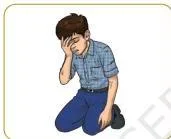
Historical drama is based on historical events and figures, dramatising real-life occurrences (NCERT, p. 21).
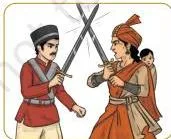
Comedy is designed to entertain and amuse: humorous dialogue, misunderstandings, exaggeration and a happy ending (NCERT, p. 21).
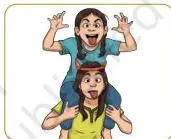
Musical tells its story through songs, dialogue with rhyme and rhythm, and dance (NCERT, p. 21).
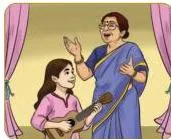
Melodrama runs on exaggerated emotions and moral conflicts, with a clear line between heroes and villains (NCERT, p. 21).
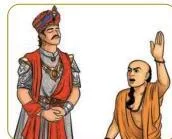
Mystery is centred on solving a puzzle, usually a crime, and the answer stays hidden till the end (NCERT, p. 21).

Experimental scripts break conventional storytelling norms using unconventional structures, abstract themes and surreal elements (NCERT, p. 22).
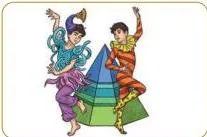
Fantasy brings magical elements into imaginary worlds, characters and situations (NCERT, p. 22).

Docudrama presents dramatised re-enactments of real events and facts (NCERT, p. 22).
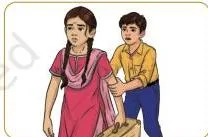
A work can combine the features of two genres, and then it is listed under both. The chapter’s example is tragicomedy, which mixes serious themes with moments of humour and relief (NCERT, p. 22).
Why do genres exist? The chapter gives two reasons: a genre gives the audience a framework for understanding a text, so the writer’s intent is not misread, and categories organise libraries and bookstores, making works easy to find (NCERT, p. 22).
The writer of a play is called a playwright (NCERT, p. 22).
The chapter profiles two 19th-century Indian playwrights. Bharatendu Harishchandra, born in Varanasi in 1850, is known as the father of modern Hindi literature; his play Andher Nagri is still performed today.
T. P. Kailasam, born in Karnataka in 1884, wrote in a style that combined Kannada and English. His satire earned him the title Prahasana Prapitamaha (NCERT, p. 22).
Activities 2.1 and 2.2: write your style, then name the genre
The two activities are the heart of the chapter: one makes you write like a playwright, the other makes you think like a critic.
Activity 2.1: Script Your Style! (NCERT, pp. 20–21) gives the whole class one writing task: write a single page of script on the shared topic of two friends in a forest who find a box with the birch bark and writing material Kalidasa used.
Each group picks one of four styles: dialogue (characters speak directly), narrative (a narrator tells the story), mime (only actions and stage directions), or musical (lyrics or rhythmic speech). Then the class discusses two questions: did the style affect the content, and how did the audience’s experience vary?
See how the same beat of the story changes across the four styles — the moment the friends lift the lid of the box:
- Dialogue: “What is that smell?” Ravi asked, leaning over the box. “Old paper,” said Meera. “Very old paper.” The lid came off and both went quiet.
- Narrative: The two friends knelt in the forest. The box held no gold, only a roll of birch bark — and neither knew that a poet’s hands had once held the same roll.
- Mime: (Ravi circles the box. Meera kneels and lifts the lid slowly. Both freeze. Ravi steps back, one hand over his mouth.)
- Musical: “A box in the woods, a box in the woods — what inside for you and me?” / “Bark from a birch and ink from a reed, a story for all to see.”
The chapter’s DO YOU KNOW box adds a famous detail: according to the Nātyashāstra, the first written script was a Samavakara by Brahma, based on the Amrita Manthana — the churning of the ocean by the Devas and Asuras (NCERT, p. 21).
The same event appears as an iconic representation at Suvarnabhumi Airport in Bangkok, and the box reminds you of Natyotpatti, learned in Grade 6. The note to teachers suggests extending the writing into other subjects — a story or script in place of an essay for Language or Social Science.
Activity 2.2: Genre Genius! (NCERT, pp. 23–24) gives you four short texts and asks you to name each one’s genre — remembering that an answer can combine genres. The printed answer key:
| Short text | What happens in it | Genre (printed answer key) |
|---|---|---|
| The Curious Case of the Vanishing Vada Pav | A lunchbox snack vanishes at school; a student detective finds the culprit within a few comic lines | Mystery + Comedy |
| The Last Paper Boat | A boy sets his last paper boat into a rain stream — his sister made hundreds before falling ill | Tragedy |
| Lunchbox Rhapsody | A rhyming poem turns an ordinary lunch break into music, rhythm and dance | Musical |
| The Time-Travelling Tabla | A glowing tabla found in Mohenjodaro opens a portal, and Kalidasa appears | Fantasy + Historical |
The activity page also widens genres beyond theatre: music and dance have genres like classical, folk, contemporary and semi-classical, and visual arts have categories like portrait, landscape and still life (NCERT, p. 23).
Reading the chapter’s figures: posters, manuscripts, and portraits
The chapter teaches through pictures as well as text. The nine genre posters above carry the genre definitions; the figures below round out the chapter’s visuals.
The opening figure, Genres in various forms, previews the whole chapter: one story can be told in many shapes, and the chapter will give those shapes names. It is the book’s visual way of saying that writing takes many forms.
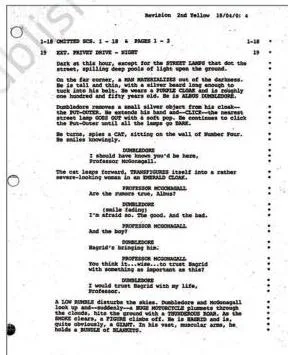
The manuscripts figure shows what ancient Indian drama looked like as a physical object — plays written by Kalidasa on the bark of the birch tree. That same birch bark is exactly what the box in Activity 2.1 contains.
The portrait of Bharatendu Harishchandra accompanies the subsection on playwrights — the man the book calls the father of modern Hindi literature, born in Varanasi in 1850.

Even music, dance and visual arts have genres! widens the genre idea beyond theatre: every art form sorts its works into categories.

The companion figure, Music and dance have genres like —, names the categories: classical, folk, contemporary and semi-classical for music and dance; portrait, landscape and still life for visual arts.
The last figure is a visual clue for Activity 2.2. The teacher came and tapped a beat — now lunch and music made the treat. It pictures the exact moment of Lunchbox Rhapsody, the text the answer key labels Musical.

Terms to know from this chapter
If a word stops you while reading the PDF, check this table instead of re-reading the chapter.
| Term | What it means in this chapter |
|---|---|
| Script | The written form of a performance — the words, directions and structure that performers work from. |
| Play script | A written work intended for performance on stage, in film, or on television; its structure, style and purpose change with the medium. |
| Playwright | The writer of a play. |
| Genre | A category or class of works within a form that share common characteristics — the chapter uses the Oxford English Dictionary’s definition as its frame. |
| Rupa / Rupaka | The terms ancient Indian thinkers used for drama. |
| Drushya kavya | Visible poetry — the ancient Indian view of drama, because the writing combined dialogue and poetry; this is why Sanskrit playwrights were also poets. |
| Nātyashāstra | The ancient text that describes the different types of drama. |
| Daśha Rūpaka | The ten forms (rupakas) of Sanskrit drama classified in the Nātyashāstra. |
| Karuna rasa | The aesthetic of pathos or sorrow; Anka (Utsrishtanka) is a one-act form composed primarily on this rasa. |
| Samavakara | A 3–4 act ancient form based on traditional stories of Devas and Asuras; according to the Nātyashāstra, the first written script was a Samavakara by Brahma. |
| Amrita Manthana | The churning of the ocean by the Devas and Asuras — the event on which the first written script was based. |
Where students go wrong: genres, acts, and mixed labels
One idea runs through this chapter: ancient forms and modern genres are both classification systems, and a work can belong to more than one category. Students lose the answer when they force a single label. The table below names the confusions the chapter’s own material clears up.
| Mistake | Why it happens | The correction |
|---|---|---|
| Forcing one label on a mixed work | Genres feel like separate boxes, so the natural habit is to pick a single answer | A work combining two genres is listed under both — the book’s example is tragicomedy, and Activity 2.2’s own answers include Mystery + Comedy and Fantasy + Historical. |
| Confusing melodrama with tragedy | Both are serious in tone, so they look alike at first | Tragedy centres a flawed protagonist’s downfall through fate, personal mistakes or societal forces; melodrama runs on exaggerated emotions and moral conflicts with a clear hero and villain. |
| Confusing docudrama with historical drama | Both dramatise real events, so the category seems the same | Historical drama is based on historical events and figures; docudrama is a dramatised re-enactment of real events and facts. |
| Reading “one-act” as “short and comic” | A one-act play sounds like a small, light format | One-act refers to a single dominant situation within one act, typically 10–30 minutes. Bhana, Prahasana, Vyayoga, Anka and Veethi are all one-act yet range from comic to heroic to sorrowful. |
| Missing that The Last Paper Boat is a tragedy | The story has no loud downfall, so the sadness is easy to misread | The printed answer key marks it as Tragedy. The loss carried through pathos is the same karuna rasa the Nātyashāstra names as the basis of Anka. |
How this chapter is assessed: learning outcomes and self check
Kriti is an Arts Education textbook, so this chapter ends with a learning-outcomes grid rather than a marks scheme. The grid is organised around two competencies: C-2.1 — creates and performs drama based on situations or stories that challenge stereotypes observed around us — and C-2.2 — connects elements of drama, themes and symbols with personal experiences, emotions and imagination (NCERT, p. 25).
The grid’s rows tell you what you should be able to do when the chapter is done:
- Share thoughts on genres and the stereotypes associated with them
- Relate different genres to stories you have read or movies you have watched
- Try to create simple imaginary stories in each genre
- Bring stories from personal experience into genre work
- Read plays to identify different types of scripts
- Participate overall in class
Each row has a Teacher column and a Self column, so the grid works as a checklist: your teacher marks one, you mark the other. The chapter itself sets no marks or question pattern — the grid is its assessment framework.
Note that textbook contents and the examinable syllabus are not always identical. Check the current official syllabus for what carries marks this session.
The whole chapter in one look: what to remember
The chapter’s own REMEMBER box is the spine: whatever genre or script type you write, plan your Beginning—Middle—End and find an interesting conflict. The book calls this a must (NCERT, p. 25). Here is the full arc around that spine:
- Writing brings clarity, builds ideas with creativity, enables sharing for collaboration, helps you remember, and acts as a record for future generations (NCERT, p. 18).
- A play script is written for stage, film or television (NCERT, pp. 18–19).
- Ancient India called drama rupa or rupaka — drushya kavya, visible poetry — and the Nātyashāstra classified ten forms (NCERT, pp. 19–20).
- Genres are categories of works with shared characteristics; nine are defined, and a work that mixes two genres is listed under both (NCERT, pp. 21–22).
- Music, dance and visual arts have their own genres too (NCERT, p. 23).
- The first written script, says the Nātyashāstra, was Brahma’s Samavakara on the Amrita Manthana (NCERT, p. 21).
- Two 19th-century playwrights to remember: Bharatendu Harishchandra and T. P. Kailasam (NCERT, p. 22).
Use the chapter’s CIRCLE TIME questions as your final self-check: which genre do you like and why; do you prefer lengthy writing or short plays and stories; and how do ancient and contemporary scripts differ (NCERT, p. 25)?
Related resources
This listing is maintained for the 2026-27 academic session using the NCERT textbook information available to us. NCERT remains the authority for confirming the latest edition.
Continue with the rest of the Class 8 Arts material on this site, or jump to the class and subject hubs:
- Class 8 Arts (Kriti) book page — the full chapter set and notes for this textbook
- Class 8 Arts theatre notes — performance and script skills that build on this chapter
- From Page to Stage — what happens after a script is written
- Class 8 hub — notes for every Class 8 subject on this site
- CBSE notes home — the full subject index
Want the file itself? The Kriti textbook, including the One Stage, Many Scripts Class 8 chapter PDF, is published by NCERT and is freely downloadable from the official textbooks portal at ncert.nic.in/textbook.php — open it whenever you need to confirm the exact printed edition.
Because textbook contents and the examinable syllabus are not always identical, check the current official syllabus on cbse.gov.in.
| What the chapter holds | Count | Where it is used |
|---|---|---|
| Printed pages | 10 | |
| Figures with NCERT captions | 15 | |
| Tables | 2 | |
| Official NCERT PDF | Download the chapter PDF | the chapter exactly as NCERT publishes it |
Reference: NCERT Class 8 Kriti textbook, chapter 2, official edition on ncert.nic.in.
Sources and data verification
Four things you should be able to check:
- The chapter described is One Stage, Many Scripts, Chapter 2 of the NCERT Class 8 Arts textbook Kriti, official edition published on ncert.nic.in.
- Page references (18–25) follow the printed folios of the book exactly as they appear in the chapter.
- This page covers this one chapter of Kriti; it does not cover other chapters of the book or other Class 8 subjects.
- NCERT settles textbooks, editions and PDFs; CBSE settles the curriculum, syllabus and examinations.
Frequently asked questions about One Stage, Many Scripts
What are the four script styles in Activity 2.1 of One Stage, Many Scripts?
The four styles are dialogue (characters speak directly), narrative (a narrator tells the story), mime (only actions and stage directions), and musical (lyrics or rhythmic speech).
Everyone writes one page on the same topic — two friends in a forest find a box with the birch bark and writing material Kalidasa used — then the class discusses whether the style changed the content and how the audience’s experience varied (NCERT, pp. 20–21).
Which genres do the four short texts in Activity 2.2 belong to?
The printed answer key is: The Curious Case of the Vanishing Vada Pav → Mystery + Comedy; The Last Paper Boat → Tragedy; Lunchbox Rhapsody → Musical; The Time-Travelling Tabla → Fantasy + Historical. Two answers mix genres because the chapter lists works under both categories when the features of two genres combine (NCERT, p. 24).
What are the Daśha Rūpaka and the ten types of scripts from the Nātyashāstra that the chapter lists?
The Daśha Rūpaka is the set of ten drama forms (rupakas) described in the Nātyashāstra: Nataka, Prakarana, Bhana, Prahasana, Dima, Vyayoga, Samavakara, Anka (Utsrishtanka), Ihamrga and Veethi (NCERT, pp. 19–20). They range from full-length forms like Nataka with 5–10 acts to one-act forms like Bhana and Veethi.
The chapter sets these beside modern script labels such as one-act, three-act and adapted scripts — two parallel ways of classifying drama.
What is the difference between a script and a genre?
A script is the written text of a performance — what characters say and do, for stage, film or television (NCERT, p. 18). A genre is the category a work belongs to by its style and content, such as tragedy or comedy (NCERT, p. 21). Script answers what is written; genre answers what kind of story it is.
Who were Bharatendu Harishchandra and T. P. Kailasam, and why does the chapter include them?
They are two 19th-century Indian playwrights the chapter profiles. Bharatendu Harishchandra, born in Varanasi in 1850, is known as the father of modern Hindi literature; his most popular play, Andher Nagri, is still performed.
T. P. Kailasam, born in Karnataka in 1884, wrote in a style that combined Kannada and English and was known for his satire, which earned him the title Prahasana Prapitamaha (NCERT, p. 22).
What does karuna rasa mean and why is it mentioned in the chapter?
Karuna rasa is the aesthetic of pathos — the emotion of sorrow that a sad scene carries. The chapter mentions it because Anka (Utsrishtanka), one of the ten ancient forms, is a one-act play composed primarily on karuna rasa; it is also the emotion behind The Last Paper Boat, the Activity 2.2 text the answer key marks as Tragedy (NCERT, pp. 19–20, 24).
Explore Class 8 Arts Books
Related chapters: