
Here is the Campaign for Art Awareness Class 8 chapter — Chapter 19 of NCERT’s Kriti (Arts) textbook — with the official PDF right below and a walkthrough of the four activities it asks you to do.
This is an activity chapter, not a theory one: you build a real awareness campaign about an artist or art practice of your choice. The official chapter file from ncert.nic.in (rationalised edition) sits directly under this paragraph.
Download the official chapter PDF
This chapter is a project you run, not a text you read once — and the book’s own layout matters because its diagrams carry instructions.
Open the official NCERT Class 8 Kriti Chapter 19 Campaign for Art Awareness PDF to see the chapter as NCERT published it, with the campaign diagram, example brochure pages and the two assessment tables in place; it is the rationalised edition hosted on ncert.nic.in.
What is inside this chapter
The table below shows the chapter’s contents at a glance.
By shape, this is an activity chapter with no written exercises. It opens with the idea of an awareness campaign, then runs four numbered activities — choose a subject, collect information, organise it, create visuals — and closes with brochure steps, a learning-outcomes table, and a summative-assessment table.
What a campaign for art awareness involves
This chapter does not teach theory — it makes you run a real campaign so that others notice, support and appreciate art forms and cultural artefacts (NCERT, p. 208).
An awareness campaign, the chapter says, helps communicate a particular message and brings focus to important issues; its examples are mask-wearing during the pandemic and voter registration (p. 208). The message travels through attention-grabbing formats — posters, fliers, banners, hoardings, handouts and brochures, each crafted with words and visuals (p. 208).
The chapter runs as four activities, and each one produces something the next step uses:
| Activity | What you do | What it produces |
|---|---|---|
| 19.1 Choose the subject | Pick a local artist — painter, sculptor, designer or photographer — or a community keeping an art and craft tradition alive. Work in groups of 4 to 5 and discuss your choice with your teacher. | A subject your group can actually meet and research. |
| 19.2 Collect information | Talk to teachers, friends and family; visit the library, local newspapers, artists’ studios, galleries, museums, art fairs or haats; use the internet under adult supervision. Keep notes and collect visual and text pieces. | Notes that answer the chapter’s six research questions. |
| 19.3 Organise the information | Fix the main message, write a catchy 5-to-7-word title, and sort the material under headings. | A clear message and organised material, ready for design. |
| 19.4 Create visuals and bring it together | Make a poster, brochure or flyer; experiment with collage and printmaking; take inspiration from the artist’s materials. | The finished campaign, ready to share. |
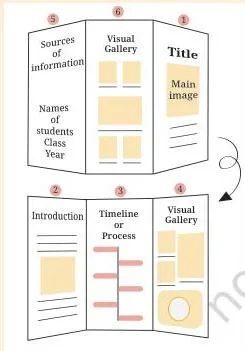
The most detailed part of the chapter is the brochure recipe inside Activity 19.4. Fold an A4 sheet into three equal parts to get six sides, then assign the sides to the sections below, in the chapter’s order (NCERT, p. 211).
| Side of the brochure | What it carries |
|---|---|
| Cover page | Your title and main message. |
| Introduction | What the brochure is about, in a few words and visuals. |
| Process | Background on how an artwork is created, or a timeline of the artist’s important works. |
| Gallery | A visual gallery — photos and drawings of the artist, their work, materials and tools. |
| Sources | Where you took your information from, so readers can find out more themselves. |
The chapter’s list names five sections; what the sixth side carries depends on the flow of information you decide on.
Key ideas behind the campaign activities
Everything in this chapter hangs on three ideas — a main message, a format that carries it, and information gathered well. In the chapter’s own terms, an awareness campaign is a planned effort to communicate a particular message and bring focus to an important issue (NCERT, p. 208).
| Format | Where this chapter uses it |
|---|---|
| Poster | A single visual about the artist or art practice (Activity 19.4, p. 211). |
| Brochure | A folded A4 sheet compiling a series of the artist’s works (p. 211). |
| Flyer | A small print to distribute during lunch time (p. 211). |
| Banner, hoarding, handout | Listed among campaign formats at the chapter’s start (p. 208). |
Before the formats, one idea deserves its own look. The chapter gives six questions to answer about any artist or artwork — use them as an interview checklist (NCERT, p. 209):
- What does the artist or artwork contribute to society?
- What story lies behind the artist and the artwork?
- What do you find most special about the artist, artwork or art practice?
- What inspired the artwork?
- Which specific materials or techniques are used?
- What social, economic or environmental challenges did they face?
Together, the six answers make the story your campaign will tell. And that is the chapter’s hidden instruction: turn the information into stories with visuals, not a chronology of biography dates — its Note to the Teacher says exactly this (p. 209). It is also the mistake most campaigns make, so it returns in the mistakes table below.
Reading the chapter’s images
In a project chapter, the pictures carry instructions, not decoration. Each captioned figure below is explained for what it teaches.
The campaign-steps image below opens the chapter and acts as its map. It shows the whole cycle — collecting material, researching, choosing a format, writing your main message and making visuals (NCERT, p. 208). Every activity that follows is one step of this cycle.
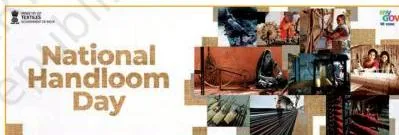
The image beside Activity 19.1 makes the case for choosing locally: there are so many artists and art practices around you that you may not know about. Its prompts point to artists from your region, an upcoming festival or crafts fair, an art and design school, or a nearby museum or gallery (NCERT, pp. 208–209).
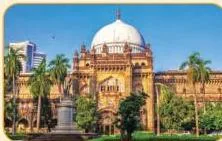
The note beside Activity 19.2 is the book’s most important warning. Students should present the information as interesting stories with visuals rather than dates and chronology from a biography (NCERT, p. 209) — dates are forgettable, and a story makes the message stick.
The DO YOU KNOW? box on page 210 asks why Satyajit Ray named his documentary about Benode Behari Mukherjee The Inner Eye. Mukherjee was visually impaired, yet created large murals, paintings and collages. The book prints no answer; one reading is that the title points to artistic vision rather than eyesight — his work shows an inner eye at work.

The example title A Stitch in Time belongs to an embroidery or patchwork tradition: each stitch made with care, one at a time, reflects a patient and thoughtful process (NCERT, p. 210). It also carries the idiom ‘a stitch in time saves nine’ — a two-level title, and a good model for your own 5-to-7-word one.
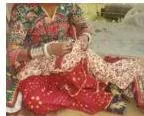
The closing image shows what Activity 19.4 produces: a poster about the artist or art practice, or a brochure compiling a series of their works (NCERT, p. 211). The activity adds two techniques to try — collage and printmaking — and asks you to look closely at the artist’s materials for inspiration.
Terms this chapter uses
These words carry the whole chapter. Here is what each one means in the context of the activities.
| Term | How this chapter uses it |
|---|---|
| Awareness campaign | A planned effort to communicate a particular message and bring focus to an important issue (NCERT, p. 208). |
| Poster, flier, banner, hoarding, handout, brochure | Campaign formats crafted with words and visuals to grab attention (pp. 208, 211). |
| Main message | The core idea your campaign communicates (p. 210). |
| Collage and printmaking | Techniques to experiment with while making your visuals (p. 211). |
| Visual gallery | The brochure section that collects photos and drawings of the artist, their work, materials and tools (p. 211). |
Common mistakes in the campaign activities — and how to avoid them
These are the slips the chapter itself warns about — catch them before your group spends a week on the wrong thing.
| Mistake | Correct rule | How to check your answer |
|---|---|---|
| Writing the artist like a biography — dates and chronology instead of a story | Present the information as an interesting story with visuals (the chapter’s Note to the Teacher, p. 209). | Re-read each line: does it tell why this artist matters, or just record a date? |
| A title that is too long or vague | Keep the title to 5–7 words that clearly reflect your message (p. 210). | Count the words; read it aloud and ask a classmate what they think the campaign is about. |
| Designing visuals before fixing the main message | Fix the main message first — the message decides the visuals, never the reverse (pp. 210–211). | Ask: if a stranger sees only the visual, do they hear the same message? |
| Building the brochure without a flow | Decide the sequence of pages and the flow of information before assigning the six sides (p. 211). | Lay the folded sheet flat and label every side before you glue anything. |
| Forgetting the sources page | Mention your sources on the brochure — readers may want to find out more themselves (p. 211). | Check that the last side carries a Sources section before printing. |
| Gathering information from one place only | Use several sources: people, library, newspapers, studios, galleries, art fairs or haats, and the internet under adult supervision (p. 209). | Count how many of the chapter’s listed sources your group actually used. |
How the book assesses your campaign work
Kriti assesses by the work you produce, not by a written test. Chapter 19 ends with its own checklists — a learning-outcomes table and a summative assessment — so you can see what your teacher will look at before you build the campaign.
Learning outcomes. The chapter’s closing learning-outcomes table lists three abilities the activities are meant to build:
- Use of visual elements to highlight the important information in a brochure.
- Undertaking a sequential process while making a brochure.
- Choosing a locally relevant artist or art practice for the awareness campaign.
Summative assessment — what your teacher looks for. The closing summative-assessment table sets two tasks:
- Individual — portfolio presentation. Choose 5 artworks that mark your learning milestones: the most challenging artwork, the one you are most satisfied with, one that uses a technique or material for the first time, plus rough sketches and process samples. Your teacher looks at elements and principles of visual art, and composition or visual arrangement.
- Group — class exhibition. Work in groups of 6 to 8: find a common theme across your group’s artworks, give the display a title, plan and execute the display format, and label every artwork with the student’s name, title, medium and date. Your teacher looks at the theme and title, the selection of artwork, and how design principles are applied while displaying.
Textbook contents and the examinable syllabus are not always identical — check the current official syllabus for how arts is assessed in your session.
The campaign process in one flow: a checklist
This is the chapter’s four activities compressed into a single build order — follow it during the project, or check it the night before a deadline.
- Choose the subject. A local artist (painter, sculptor, designer or photographer) or a community keeping an art and craft tradition alive, in groups of 4 to 5.
- Collect information from varied sources — people, library, newspapers, studios, galleries, art fairs or haats, and the internet under adult supervision.
- Decide the main message your campaign will communicate.
- Write a catchy title of 5 to 7 words that reflects it clearly.
- Organise the information under headings — Introduction, Process of Making, Background Information, Visual Gallery.
- Choose the format — poster, brochure or flyer.
- Build the brochure in the chapter’s order: cover (title + main message), introduction, process, gallery, sources.
- Make visuals with collage or printmaking, taking inspiration from the artist’s materials and techniques.
- Check your work against the learning outcomes and the portfolio or exhibition criteria.
Related chapters and resources
This listing is maintained for the 2026-27 academic session using the NCERT textbook information available to us. NCERT remains the authority for confirming the latest edition.
Once your campaign is planned, the next places to go are the NCERT Class 8 Kriti book page for other chapters and the Class 8 hub for the rest of the subjects.
Activity 19.1 points you to the previous chapter on communities keeping art and craft traditions alive — that is Arts of the People, with the People, for the People. You can also browse the CBSE notes index or verify the whole book on NCERT’s official textbook portal.
| What the chapter holds | Count | Where it is used |
|---|---|---|
| Printed pages | 8 | |
| Figures with NCERT captions | 6 | |
| Tables | 2 | |
| Official NCERT PDF | Download the chapter PDF | the chapter exactly as NCERT publishes it |
Reference: NCERT Class 8 Kriti textbook, chapter 19, official edition on ncert.nic.in.
Sources and data verification
- This page describes Chapter 19 of the NCERT Kriti Class 8 textbook (rationalised edition), English medium; it does not cover other Class 8 books or other arts textbooks.
- The page references 208–211 come from the running page footer printed in the chapter itself.
- NCERT publishes the textbook and its official PDFs on ncert.nic.in; CBSE settles the syllabus and examinations. Textbook contents and the examinable syllabus are not always identical — check the current official syllabus.
- This page is maintained for the current academic session from NCERT’s published textbook files.
Frequently asked questions
Why did Satyajit Ray name his film about Benode Behari Mukherjee The Inner Eye?
The book prints no answer to this — the question is there to make you think (NCERT, p. 210). One reading is that the title points to artistic vision rather than eyesight: Mukherjee was visually impaired, and still created large murals, paintings and collages, so the film’s title suggests the inner eye of an artist at work.
Your campaign research is a good place to develop your own answer — that is exactly the kind of idea your brochure’s story section should carry.
How many students should be in my campaign group?
4 to 5 students for the campaign activities — Activity 19.1 says to make small groups of 4 to 5 (NCERT, p. 209). The closing summative assessment uses larger groups of 6 to 8, but that is for the separate class-exhibition task.
What is the difference between a poster, a banner, a flier and a brochure in this chapter?
All of them are word-and-visual formats built to grab attention and focus people on your message (NCERT, p. 208).
In this chapter, a poster carries a single campaign statement about the artist or art practice, a flier is small enough to distribute during lunch time, and a brochure folds into six sides and can compile a series of the artist’s works (p. 211).
Banners, hoardings and handouts are listed among the campaign formats, but the chapter gives its step-by-step instructions only for the poster, brochure and flier.
What makes a good campaign title for this activity?
Five to seven words, catchy, and clearly reflecting the campaign’s main message (NCERT, p. 210). The chapter’s model is A Stitch in Time: each stitch made with care, one at a time, reflects a patient and thoughtful process.
The phrase also doubles as the idiom ‘a stitch in time saves nine’ — two meanings in five words. Test your title by reading it aloud to a groupmate.
Do we have to mention sources in the brochure?
Yes. The chapter’s Sources side of the brochure says not to forget where you took your information from, because your readers may want to find out more themselves (NCERT, p. 211).
Is Chapter 19 of Kriti part of the exam syllabus?
Textbook contents and the examinable syllabus are not always identical — check the current official syllabus for how arts is assessed in your session. The chapter itself expects assessment through the work you produce: its learning-outcomes and summative-assessment tables describe what a finished campaign, portfolio and group exhibition should look like.
Explore Class 8 Arts Books
Related chapters: