
This page is about My World Class 8 — Chapter 9 of the NCERT Kriti textbook for Class 8 Arts, titled ‘My World of Music’. The chapter runs to nine printed pages and asks how music shows up in everyday life: folk songs that reach films, jingles and sports anthems, campaign songs, and music careers beyond performing.
The official NCERT Class 8 Kriti Chapter 9 My World PDF is on the NCERT website — open it to read the full chapter, including the lyrics of both songs, all six activities and the assessment tables that this page describes.
What This Chapter Contains
The chapter treats music as part of everyday life, not only as a stage performance. It opens by asking how you relate to music, then shows four places music is deliberately made and used: traditional songs reworked for popular culture, advertising jingles, sporting-event theme songs, and music that carries a social or environmental message.
The chapter is also hands-on. Between the explanations sit activities in which you compare two versions of a folk song, write a jingle, write an anthem for a national campaign, research a music career, and volunteer at a real event. If you are studying the whole book, the Class 8 Arts notes hub links the other Kriti chapters.
Chapter 9 at a Glance
The Chapter 9 at a Glance table on this page lists the size and shape of the chapter — its sections, figures, activities and printed pages — as they appear in the NCERT book.
One feature is worth knowing before you open the PDF: the work in this chapter is practical. The tasks are listening, singing, writing and presenting, so keep the audio versions of the songs and your own voice handy, not just a pen.
The Two Traditional Songs in the Chapter
Traditional music — both folk and devotional — keeps finding its way into popular culture, and the chapter opens with two songs that have become very popular. Both are printed in the book with their lyrics, and both carry the same instruction: listen, compare, then learn to sing the song.
- Nimbooda nimbooda is a traditional Rajasthani folk song performed by the Langa and Manganiar musicians. The book notes that such songs have been used in films and have gained immense popularity; its photograph shows Manganiar children performing with their guru at Mehrangarh Fort, Jodhpur, at a Sufi festival. The task is to listen to the traditional and the Bollywood versions, say what you like about each and how they differ, then learn to sing the song.
- Rind posh maal is the Kashmiri song in the chapter. The meaning of the Kashmiri song is given in plain words: it describes the landscape of Kashmir — its lake, forests, trees, flowers and mountains — so that everyone appreciates and knows about its beauty.
Most students do not speak Rajasthani or Kashmiri, so the listening step matters more than reading the printed lines. That is why the chapter asks for both versions before it asks you to sing.
How Music Is Used Around Us: Jingles, Sports Anthems and Film Themes
Music is not only something we listen to; it is also made on purpose, to do a job. The book groups this under the applications of music and gives three applications that students often run together.
- Jingle — a short, catchy song written about a product so that people remember the brand or product. The chapter asks you to name popular jingles you remember.
- Sporting theme song — major sporting events such as Khelo India and the Olympics have their own signature tunes and theme songs. These tunes create a feeling of community among the people attending the event.
- Film character theme — in movies, a particular theme may play whenever a specific character appears. It is put there to highlight the actions or presence of that protagonist.
Activity 9.2: create a jingle. Pick a product you use every day, then follow the book’s steps:
- List the features that make the product attractive for others to buy it.
- Use those features to write a few lines of lyrics.
- Set your words to a tune or rhythm; add sound effects if you like.
- Share your 15–30 second jingle with the class.
As an optional extra, draw an advertisement poster for the product using the tagline from your jingle.
Music and Climate Change: The Clean Ganga Example
The chapter’s argument is simple: climate change and global warming threaten serious damage to people and to the planet, and one way to spread awareness about the natural world — plants, animals and birds — is through music.
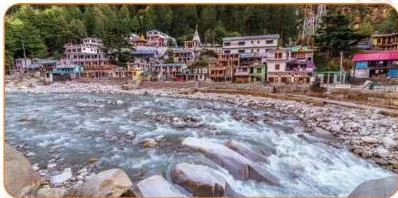
The Clean Ganga figure shows the case study the book pairs with that argument. The Clean Ganga movement is a project undertaken by the Government of India to restore and revitalise the Ganga river, and a theme song of the movement, ‘Namami Gange’, is available online.
The chapter tells you to find it and listen — the movement and its theme song are its music-and-climate-change example.
Activity 9.3: write a song for change. Divide the class into groups of 5–6 students and choose a nationally important issue or campaign — the book suggests Swachh Bharat, Clean Ganga or Beti Bachao Beti Padhao. Then write an anthem for that movement:
- Write down the key points you would like the song to express.
- Find a chorus or hook line that captures the message of the song.
- Write two verses that explore the theme.
- Think of a tune first and fit lyrics to it, or write the lyrics first and set them to a tune.
- Refine the song.
- Share it with your friends in class and, if possible, present it during the school assembly.
Five Music Careers the Chapter Introduces
The chapter asks a direct question: if you enjoy music, have you wondered how you could work with it as a career? It then points out that besides being a singer or an instrument player, there are many different careers in music, and it profiles five of them.
| Career | What the job involves |
|---|---|
| Sound engineer (audio engineer) | Records, mixes and reproduces sound for live performances and recordings, using microphones, speakers and mixing consoles. |
| Music producer | Helps artists record a song, album or project, bringing the artist’s vision to life and making sure the finished product is good. |
| Event manager (event curator) | Organises live concerts: selects artists, promotes the event, earns revenue from ticket sales and sponsorships, and arranges the venue, sound and lights. |
| Music therapist | Uses music to relieve pain, manage stress, and support mental health and rehabilitation. |
| Music educator | Teaches music in schools, universities, conservatories or online, to groups or individual students. |
The profile that surprises most students is the one that needs no stage at all. The music-therapist figure shows the side of music that sits at the intersection of music, science and medicine.
The chapter calls music therapy a growing area with many research experiments being conducted: depending on treatment needs, a therapist may create music, or select and play appropriate songs or ragas, and engage clients in active listening and responding to music.
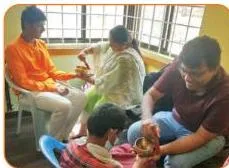
The music-educator figure shows a music class of parents and teachers — the book’s point that educators work with every age group. Some teach a choir at school, others teach individual students, and some use songs to teach concepts of maths and science.
The chapter adds that a music educator needs good knowledge and training in music, and must enjoy interacting with people.
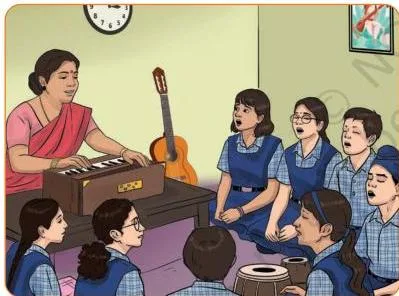
Activity 9.4: research careers in music. Research ‘careers in music’ online, pick one career, write a few lines about what the job involves, and share your perspective with the class.
What Students Often Misread in This Chapter
Three confusions come up again and again with this chapter. Each one below is corrected the way the book’s own pages answer it.
| Mistake | What the chapter actually teaches | How to check yourself |
|---|---|---|
| A career in music means singing or playing an instrument. | The chapter says plainly that besides being a singer or an instrument player, there are many different careers in music; its five profiles show five of them. | Name one music career that never puts you on a stage — a sound engineer or event manager, for example. |
| Reading the two songs’ lyrics is enough. | The songs are traditional songs in languages most students do not speak. The instruction is to listen to versions of the song and learn to sing it, so the audio is the point. | Before singing Nimbooda, can you describe how the traditional and Bollywood versions differ after listening to both? |
| A jingle and a theme song are the same thing. | They are different applications: a jingle sells a product, a sporting theme builds community feeling, and a film theme highlights a character. | Given any example, can you say whether it sells, builds community, or highlights a character? |
The activities test the distinction in practice: 9.2 is the jingle, 9.3 is a campaign anthem, and 9.4–9.6 explore the working side of music.
Activities and Learning Outcomes in the Chapter
This is a doing chapter. Between the opening page and the end, six activities carry the learning, and the final page prints four learning outcomes you should be able to show. The table maps each activity to the outcome it builds.
| Activity | What you do | Which learning outcome it builds |
|---|---|---|
| 9.1 | Opening music share: the first page asks how you relate to music and starts with the class singing popular songs. | 2.1 — appreciates the interconnection between music genres. |
| 9.2 | Create a jingle: choose a product, write its features as lyrics, set them to a tune, share a 15–30 second jingle. | 2.2 — understands the applications of music and is able to create a jingle. |
| 9.3 | Write a song for change: in a group, write an anthem for a national campaign. | 2.2 — applies music to a purpose, putting a message into a song. |
| 9.4 | Research careers in music: pick one career online and write what the job involves. | 4.2 — is aware of career opportunities in music and can present on them. |
| 9.5 | Behind the scenes: speak to an adult with a music job about a typical day and reflect on whether you would like such a career. | 3.2 — expresses insights on the work of a music professional. |
| 9.6 | Event promotion: volunteer at a local music event, design a promotion plan, help with backstage tasks. | 3.2 — sees how a real music event is organised and works as part of a team. |
The chapter prints these outcomes at the end in a checklist, each coded 2.1, 2.2, 3.2 or 4.2, with columns for teacher and self assessment. You can mark yourself on each one as you finish the related activities.
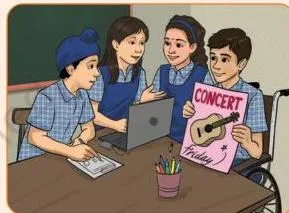
The figure beside Activity 9.6 carries the chapter’s closing instruction: document the process and performance, and share your report with the class. That final step — a written or presented report — is what turns volunteering into learning, so the activity ends with sharing, not just helping.
Key Ideas to Remember from Chapter 9
If you are revising the night before, these are the durable ideas from the chapter’s closing pages.
- Traditional music reaches new audiences. Folk and devotional songs adapted into films or pop music travel beyond their original listeners; the chapter’s example is the Rajasthani folk song Nimbooda.
- Music is engineered for purposes. Jingles sell products, sporting theme songs build community feeling, film themes highlight a character.
- Music can carry a message. The Clean Ganga movement and its theme song ‘Namami Gange’ are the book’s example of music spreading awareness about the natural world.
- Music careers go far beyond performing. Sound engineer, music producer, event manager, music therapist and music educator are all named in the chapter.
- The chapter rewards doing. Its own assessment criteria name accurate singing, quality of research and presentation, and teamwork.
These are the chapter’s own take-aways — none of this is a claim about exam marks or question patterns.
Chapter 9 closes the Kriti book. The chapters that come before it — Inspiration and Imagination and Dance and Movement — have their own pages in the same Arts notes set.
How the Chapter Is Assessed (as the Book Describes It)
The final page of the chapter prints the book’s own summative assessment suggestions — what a student may be asked to do, and the criteria for judging it. This is the book’s description of its own assessment, not a prediction about any external exam.
| Mode | What the book suggests asking | Criteria the book names |
|---|---|---|
| Individual | Choose and present a song on a given theme; create a presentation on an artist, musical monument or musical institution; or present a simple classical composition with arohana and avarohana while keeping tala. | Choosing appropriately and singing fluently in pitch and rhythm; quality of research, presentation and communication; singing the correct notes of the raga and maintaining the tala. |
| Group | The class presents a performance that shows teamwork — assigning roles and dividing responsibilities. | Creative ideas, coordination, teamwork and enthusiasm. |
Textbook contents and the examinable syllabus are not always identical — check the current official syllabus if you are preparing for a specific test.
Sources and Data Verification
This listing is maintained for the 2026-27 academic session using the NCERT textbook information available to us. NCERT remains the authority for confirming the latest edition.
This page describes Chapter 9 of the NCERT Kriti textbook for Class 8 Arts — ‘My World of Music’ — in the English edition published on ncert.nic.in, and is maintained for the current academic session. The figures and captions shown here are the chapter’s own.
NCERT settles the textbook, its editions and the official PDFs; CBSE settles curriculum, syllabus and examinations. This page covers Kriti Chapter 9; the Class 8 notes hub covers the other subjects in the class, and the CBSE notes home page lists every class.
| What the chapter holds | Count | Where it is used |
|---|---|---|
| Printed pages | 9 | |
| Figures with NCERT captions | 4 | |
| Tables | 2 | |
| Activities | 1 | |
| Official NCERT PDF | Download the chapter PDF | the chapter exactly as NCERT publishes it |
Reference: NCERT Class 8 Kriti textbook, chapter 9, official edition on ncert.nic.in.
Frequently Asked Questions
What is Kriti Chapter 9 ‘My World’ about in Class 8?
It is the chapter titled ‘My World of Music’. It explores music in everyday life: traditional songs that reach popular culture through films, three applications of music (jingles, sporting theme songs and film character themes), music used for social causes such as the Clean Ganga movement, and five music careers.
Which traditional songs are printed in this chapter?
Two. Nimbooda nimbooda is a traditional Rajasthani folk song performed by the Langa and Manganiar musicians and later used in films. Rind posh maal is a Kashmiri song whose meaning the chapter explains: it describes Kashmir’s landscape — its lake, forests, trees, flowers and mountains — so listeners appreciate its beauty.
For both songs the chapter asks you to listen to versions, compare them and learn to sing.
What music careers does the chapter discuss?
Five: sound engineer, music producer, event manager, music therapist and music educator. The chapter says clearly that besides being a singer or an instrument player, there are many different careers in music, and Activity 9.4 asks you to research one more online.
Does this chapter have exercises or only activities?
Only activities. The learning runs through six activities, 9.1 to 9.6 — listening, singing, writing and presenting — and the chapter ends with a learning-outcomes checklist and the book’s own summative assessment suggestions. There is no set of end-of-chapter exercise questions.
How does the book connect music to climate change?
The chapter argues that climate change and global warming threaten irreversible damage, and that one way to spread awareness about the natural world is through music. Its example is the Clean Ganga movement, a Government of India project to restore and revitalise the Ganga river, whose theme song ‘Namami Gange’ is available online for students to find and listen to.
Explore Class 8 Arts Books
- Previous: Inspiration and Imagination
- Next: Dance and Movement
Related chapters:
- Theatre
- One Stage, Many Scripts
- From Page to Stage