
Dance for Well-Being Class 8 is Chapter 12 of the NCERT Kriti — Arts Education textbook for Class 8, a ten-page, activity-based chapter about how hand gestures, emotions and breath come together in Indian dance. This page puts the official NCERT PDF right here, then walks you through every activity, the hasta vocabulary, the bhava–rasa pairs and the healing practices the chapter teaches.
NCERT publishes all its textbooks free on the official portal. Open the Dance for Well-Being Class 8 NCERT Kriti Chapter 12 PDF there to read the full ten pages of the chapter — the classroom activities, the hasta shlokas and every photograph — in print quality on any device.
Chapter 12 at a Glance: What Is Inside the Dance for Well-Being PDF
This section tells you what kind of chapter this file is before you open it.
A counts table on this page lists the chapter’s sections, figures and exercises straight from the book. In character, though, this is not a typical “read and answer” chapter. It is built around seven classroom activities, numbered 12.1 to 12.7, in which you recite shlokas, build a sign-language chart, choreograph dances and watch your own emotions change as you move.
There is no exercise set waiting at the end. The chapter’s only written task is one line in Activity 12.3, where you write what a hand gesture is communicating. It closes with a learning-outcomes table that carries teacher and self columns — a self-assessment checklist rather than a question paper.
The hand vocabulary the activities use comes from the Abhinaya Darpanam by Nandikeshvara, quoted in Sanskrit shlokas. You first met these hastas in earlier grades — the chapter simply asks you to pull them all together.
What This Chapter Covers: Seven Activities, One Arc
This section is a map of the chapter. Read it once and the activities stop looking like a random list — they follow one arc: hands, then emotions, then healing.
Communicating through dance. The opening pages go back to the hand gestures you learnt in previous grades. Each gesture can carry one meaning or many, and gestures of a single hand (asamyuta hastas) are separated from gestures of both hands (samyuta hastas). The vocabulary is quoted from the Abhinaya Darpanam.
Exploring hastas as a sign language. People used gestures long before there was any language. Activity 12.1 has you recite the hasta shloka while doing the gestures; the sign-language section then asks you to turn the hastas into a chart of agreed meanings.
In storytelling work, your group enacts a situation without words — like the mime done in Theatre in Grade 7, but more stylised and rooted in dance vocabulary. In communication work, you enact two everyday sentences using only hastas.
Expressing emotions through dance. A powerful performance can move a spectator because the dancer’s emotion carries. The chapter defines bhava as the first thought, the instant feeling when something happens, and treats it as something to express with the whole body — including the breath.
Activity 12.4 asks for a patriotic dance (utsaha bhava), Activity 12.5 runs through eight everyday emotions, and Activity 12.6 lets the body respond with eyes closed.
Choreography and healing. Activity 12.7 asks your group to compose and perform a song from your music class using every element learnt. The chapter closes on a bigger idea: releasing feelings through dance is emotional healing, and dance is physical therapy too — head and neck movements for spondylitis, eye movements for eye power, and dance movement therapy as a career.
The seven activities, one line each:
- Activity 12.1, Speaking with Hands — recite the hasta shloka while performing the gestures, with a QR code beside the activity.
- Activity 12.2, The Language of Silence — create a sign language using hastas you have learnt and prepare a chart.
- Activity 12.3, When Hands Speak — look at the photograph, decide what is being communicated, and write it in the space given.
- Activity 12.4, Dance of Motivation (Utsaha Bhava) — choose a patriotic song and choreograph a dance to it.
- Activity 12.5, Dance to Express the Eight Emotions — recall a recent moment for each of eight emotions and express each one as movement.
- Activity 12.6, Dance from the Heart — in two groups, close your eyes, let the body respond to a chosen emotion, then build a group dance; the activity ends with nirveda bhava leading to shanta rasa.
- Activity 12.7, Dance Choreography — in four groups, compose and perform a song from your music class using all the dance elements you have learnt.
Hastas: The Hand Vocabulary of Indian Dance
Hastas are the hand gestures of Indian dance, and this chapter treats them as a language you can actually speak with. Two types matter, and their numbers are worth remembering.
Asamyuta hastas are single-hand gestures — 28 are named in shlokas 89–92 of the Abhinaya Darpanam, and the chapter notes 4 more beyond the list. Samyuta hastas use both hands — 23 are named in shlokas 172–175, where every word denotes a particular hasta. You have practised these hastas since Grade 6, and the chapter asks you to refer to all of them.
The chapter’s key idea is that each gesture can have one meaning or many. That is why the activities have you build a sign-language chart: meaning is not fixed, it is decided — by you and your group.
The first figure below is the starting move of Activity 12.1 — recite the hasta shloka while your hands perform the gestures. The verse and the gesture are learnt together, so the name and the shape stay linked in memory.
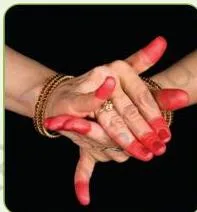
The second figure is the sign-language task itself, and the third shows the rule of the communication activity: anything your group manages to communicate with hastas alone gets added to the class chart.
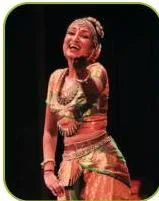

Try one yourself. To say “I am waiting for my turn” with hastas only: hold one open palm up in a stopping position, point to yourself, then bring both palms together in a calm, patient pose. Your class may read those three signs as “stop — me — calm”, which carries the whole sentence.
There is no single right way — the activity works because your group agrees on what each hasta will mean.
Bhava and Rasa: How Dance Carries Emotion
This section holds the idea the whole chapter circles around: a dancer’s felt emotion can genuinely move a spectator.
Bhava is the first thought — the instant feeling you get when something happens. Rasa is the resultant experience of that feeling, which you first met in Grade 7. The chapter’s example: when the sadness or joy a dancer expresses is powerful enough, it “touches your heart” — you tear up or smile without deciding to.
The eight emotions of Activity 12.5 are bhavas from everyday life, each matched to the rasa it produces. The table below is the chapter’s list, with the trigger each activity asks you to recall and the body’s response where the chapter names one.
| Bhava (the feeling) | Rasa (the experience) | Everyday trigger the chapter names | Body response in the chapter |
|---|---|---|---|
| rati | shringara | a recent moment that made you feel loved | your own loving expression, shared with friends |
| hasa | hasya | something you laughed at recently | laughter, recreated to make friends laugh |
| shoka | karuna | a sad moment you choose to recall | your own sorrow, expressed to a confidante |
| krodha | raudra | the thing that angers you | a dance movement that vents the anger |
| utsaha | veera | a moment when you were brave | the moment shared as a dance |
| bhaya | bhayanaka | a moment when you were scared | trembling, perspiration, loss of facial colour, shallow breath |
| jugupsa | bibhatsa | something that disgusted you recently | your instant reaction, recreated |
| vismaya | adbhuta | an “Oh how amazing!” moment | your own amazement, shown with friends |
| nirveda | shanta | the calm after the meditative music of Activity 12.6 | sitting with the chin mudra, breathing peacefully |
Breath is part of the expression, not an afterthought. The figure below spells out what fear does to the body — rapid shallow breathing, perspiration, trembling and loss of facial colour — and the chapter adds that a heavy exhale, a sigh, can express disappointment without a single word.
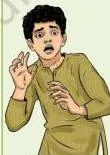
Work one example through. Imagine missing the school bus: you wake late, and by the time you reach the stop the bus is pulling away. That instant dread is bhaya bhava — the fear arrives before thought, and with it the shallow breaths and trembling the chapter describes.
A dancer showing this would not panic realistically; she would stylise it — quick visible breaths, a raised trembling hand, wide eyes — so the audience recognises the fear and receives it as bhayanaka rasa. The same mapping works for a surprise test announced in class: the instant dread is bhaya bhava, and the watchers experience bhayanaka rasa.
Figure Walkthrough: Reading the Chapter’s Pictures
This section explains what the chapter’s photographs are actually showing you — they carry content, not decoration.
The eight emotion pictures: a bhava–rasa set
The eight images in Activity 12.5 are one complete set. Each is a single emotion frozen into a pose, and each caption names the bhava first and the rasa it leads to second. Read them in order — love, laughter, sorrow, anger, courage, fear, disgust, wonder — and you have the whole vocabulary of the activity.


Notice the pattern: the first half of every caption is the emotion you feel (the bhava), and the second half is what the watcher receives (the rasa). That pairing is the chapter’s core idea, and these pictures are its index.
Dance forms on the page: the same joy, many styles
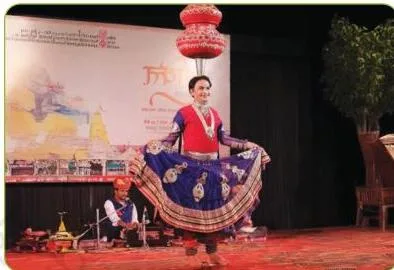
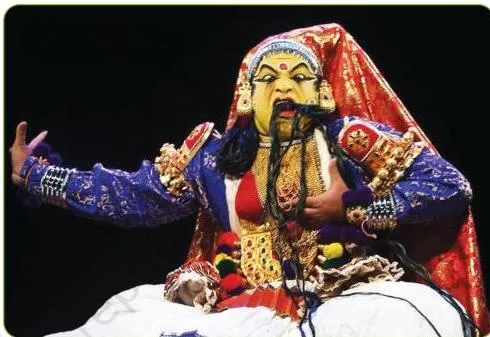
The chapter also uses photographs of real dance forms. The “beauty of the arts” image places four classical styles — Mohiniattam, Kuchipudi, Bharatanatyam and Kathak — side by side to show that each form has its own distinct language and mode of expression, yet all four carry the same joy.
The Nati dance from Himachal Pradesh appears as a folk example, and a Poothana Moksham scene from Kathakali — the chapter also names Surpanakha — shows a classical performance that pleases audiences of varied tastes.
The same passage mentions Bhawai from Rajasthan, kolatam from Tamil Nadu, dandiya from Gujarat, and the complex movements of Kuchipudi and Odissi, all expressing happiness in their own way. For a wider map of movement traditions across India, browse the pan-Indian arts notes.
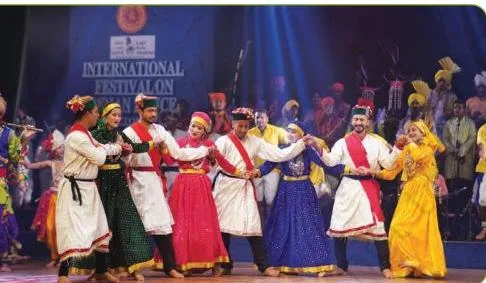
The eyes-closed image: letting the body answer first
Activity 12.6 is the chapter’s most unusual instruction: close your eyes, imagine something that makes you feel the chosen emotion, and let your body respond before your mind plans anything. The image below is the activity’s core rule — continue feeling what you felt when your eyes were closed, even after you open them and build the group dance.

Definitions: Dance Terms Used in This Chapter
These are the terms the chapter expects you to know, defined plainly.
| Term | What it means in this chapter |
|---|---|
| Hasta | A hand gesture used in Indian dance; the chapter treats hastas as a means of communication. |
| Asamyuta hasta | A gesture made with a single hand; 28 are named in shlokas 89–92 of the Abhinaya Darpanam. |
| Samyuta hasta | A gesture made with both hands; 23 are named in shlokas 172–175. |
| Abhinaya Darpanam | The Sanskrit text by Nandikeshvara from which the chapter quotes the hasta shlokas. |
| Shloka | A Sanskrit verse; the hasta names are delivered as shlokas to be recited with the gestures. |
| Bhava | The first thought — the instant feeling you get when something happens. |
| Rasa | The resultant experience that a bhava creates in the spectator. |
| Nirveda bhava, shanta rasa | The calm, detached feeling and the peace it produces; the closing moment of Activity 12.6. |
| Mudra | A hand position; the chapter uses the chin mudra for the meditative close of Activity 12.6. |
| Mime | Expression without words, as in the Theatre Grade 7 work the storytelling activity builds on. |
| Choreography | Composing and performing a dance; Activity 12.7 asks you to choreograph a song with all the elements learnt. |
Common Mistakes: Where Students Trip on Bhava and Rasa
These are the confusions that usually happen with this material, and the correction for each.
| Mistake | Correct rule | How to check your answer |
|---|---|---|
| Confusing bhava with rasa | The dancer expresses the bhava; the spectator experiences the rasa. | Ask who is feeling it: the performer = bhava, the audience = rasa. |
| Thinking each hasta has exactly one meaning | The chapter says a gesture can have one meaning or many. | Re-read the opening lines of the chapter; check that your sign-language chart records agreed meanings. |
| Swapping asamyuta and samyuta | Asamyuta = one hand, 28 named; samyuta = both hands, 23 named. | Count the hands in the gesture; match the shloka numbers 89–92 vs 172–175. |
| Acting the emotion realistically in a dance | Dance is more stylised and deliberate; theatre expresses the same emotion differently. | Compare your performance to the chapter’s mime-vs-dance note in the storytelling activity. |
| Forgetting breath as part of expression | Breath itself can express emotion — fear’s shallow breathing, the sigh of disappointment. | Watch a recording of yourself: is the breath visible and deliberate, not just the hands and face? |
| Treating the healing content as an aside | Emotional healing and empathy are the chapter’s closing point, not a footnote. | Re-read the last section: releasing feelings = healing; watching with feeling = empathy. |
Exam Notes: Learning Outcomes and How to Prepare
This section tells you what the chapter’s own end-of-chapter table says you should be able to do — no invented exam promises.
The chapter closes with a learning-outcomes table. Each row names one outcome, carries a CG (curricular goal) and C (competency) code, and leaves two columns — Teacher and Self — to be ticked when the outcome is observed.
- Engages with dance and the arts as a source of emotional well-being, recognising their therapeutic and healing potential.
- Collaborates effectively with peers, contributing ideas and offering support in group dance creation.
- Recites hasta shlokas with the corresponding hand gestures, demonstrating coordination and understanding of their meaning.
- Shows interest in exploring the communicative power of hastas as expression and symbolic sign language.
- Feels confident and comfortable expressing emotions (bhavas) through movement and facial expressions.
The two empty columns make the table’s purpose clear: it is a self-assessment and teacher-assessment tool, not a question paper. Use the Self column honestly after each activity, and let the Teacher column record what your teacher observes in class.
One caveat: textbook contents and the examinable syllabus are not always identical, and arts subjects vary from school to school — check the current official syllabus for what is assessable in your school. For revision support, see the Class 8 arts notes, the Class 8 notes hub and the wider CBSE notes collection.
Dance movement therapy is one of the innovative ways the arts serve well-being — see the notes on innovation and inclusivity in the arts.
Chapter 12 in One Page: A Quick Recap
This is the whole chapter compressed to what you must remember.
- Hastas — asamyuta hastas use one hand (28 named in shlokas 89–92 of the Abhinaya Darpanam); samyuta hastas use both hands (23 named in shlokas 172–175). You have practised them since Grade 6.
- Hastas as sign language — before language there were gestures; the chapter turns hastas into a class sign-language chart through storytelling and everyday communication, stylised like the Grade 7 mime work but rooted in dance vocabulary.
- Bhava to rasa — the emotion expressed (bhava) becomes the experience felt (rasa); a powerful performance of joy or sorrow “touches your heart”.
- The nine pairs — rati to shringara, hasa to hasya, shoka to karuna, krodha to raudra, utsaha to veera, bhaya to bhayanaka, jugupsa to bibhatsa, vismaya to adbhuta, and nirveda to shanta from Activity 12.6.
- Dance as healing — breath carries emotion (fear’s shallow breathing, the sigh of disappointment); head and neck movements (Grade 4) help spondylitis; eye movements (Grade 5) build eye power; dance movement therapy, healing through dance, and dance and wellness are careers in which dance supports emotional well-being.
Related Resources: Where to Go Next
This listing is maintained for the 2026-27 academic session using the NCERT textbook information available to us. NCERT remains the authority for confirming the latest edition.
This chapter is one strand of the Class 8 Kriti book, and it links forward and back to what you have already learnt.
- Browse the Class 8 hub for every Class 8 NCERT book on this site.
- Open the Kriti — Arts Education book page for the full list of chapters.
- Activity 12.4 tells you to remember that breath helps express emotions — go back to Kriti Chapter 1 for that ground.
- Read the previous chapter in Kriti and the next chapter in Kriti to keep the sequence.
- The official NCERT textbook portal holds every class’s books in PDF form, including this chapter.
| What the chapter holds | Count | Where it is used |
|---|---|---|
| Printed pages | 10 | |
| Figures with NCERT captions | 16 | |
| Tables | 1 | |
| Official NCERT PDF | Download the chapter PDF | the chapter exactly as NCERT publishes it |
Reference: NCERT Class 8 Kriti (Arts Education) textbook, Chapter 12, official edition on ncert.nic.in.
Sources and Data Verification
Four things, stated plainly.
- The figures and content descriptions on this page describe the NCERT Kriti — Arts Education textbook for Class 8, English medium, as published on ncert.nic.in.
- This page covers this single chapter of that book — not the full CBSE arts scheme, which includes subjects and electives this page does not index.
- The listing is maintained for the current academic session, using the NCERT information available to us.
- NCERT settles the textbook, its editions and the official PDF; CBSE settles the curriculum, syllabus and examinations.
FAQs: Dance for Well-Being Class 8
What is the difference between bhava and rasa in Dance for Well-Being Class 8?
Bhava is the emotion the dancer feels; rasa is the emotion the audience receives. The chapter defines bhava as the first thought, the instant feeling when something happens, and recalls from Grade 7 that rasa is the resultant experience of that feeling. When a dancer expresses bhaya bhava (fear) powerfully, the spectator experiences bhayanaka rasa — the fear touches them too.
How many asamyuta and samyuta hastas does Chapter 12 teach?
28 asamyuta hastas and 23 samyuta hastas. Asamyuta hastas are single-hand gestures named in shlokas 89–92 of the Abhinaya Darpanam (the chapter also notes 4 more beyond the list); samyuta hastas use both hands and are named in shlokas 172–175. You have practised them since Grade 6, and the chapter asks you to refer to all of them.
What are the eight bhavas and their rasas in this chapter?
They are rati to shringara, hasa to hasya, shoka to karuna, krodha to raudra, utsaha to veera, bhaya to bhayanaka, jugupsa to bibhatsa and vismaya to adbhuta. Activity 12.6 adds a ninth pair — nirveda bhava leading to shanta rasa — as the class settles into the closing meditative moment.
Why does the chapter connect breath with emotions like fear?
Because breath is how fear shows in the body, and breath can express emotion on its own. When you are scared, you breathe rapidly with shallow breaths, and the body responds with perspiration, trembling and loss of facial colour. The chapter also gives a heavy exhale or sigh as a wordless way to show disappointment.
What does the chapter say about dance as therapy and dance movement therapy careers?
Dance heals both physically and emotionally, and dance movement therapy is a real career. Releasing feelings through dance is emotional healing; watching and relating to a shown emotion is empathy.
Head and neck movements (from the Grade 4 textbook) are used to cure spondylitis, eye movements (from the Grade 5 textbook) to increase eye power, and psychologists and physiotherapists use movement as therapy. The careers the chapter names are dance movement therapy, healing through dance, and dance and wellness.
Which dance forms appear in the Dance for Well-Being chapter?
Mohiniattam, Kuchipudi, Bharatanatyam and Kathak appear together in the chapter’s “beauty of the arts” image, and the Nati dance from Himachal Pradesh and a Poothana Moksham scene from Kathakali are photographed on later pages.
The text also names Bhawai from Rajasthan, kolatam from Tamil Nadu, dandiya from Gujarat, and the more complex movements of Kuchipudi and Odissi as styles that express the same joy in their own way.
Explore Class 8 Arts Books
Related chapters: