
This page gives you the official Work with Machines and Materials Class 9 chapter — Chapter 5 of the NCERT Kaushal Vikas textbook for Skill Education. The PDF is right below, and after it a plain-language walkthrough of what the chapter teaches: choosing materials, safety signs, measuring tools, technical drawings and choosing a vocation.
Download the Official Work with Machines and Materials Class 9 PDF
Download the Work with Machines and Materials Class 9 PDF (NCERT Kaushal Vikas Chapter 5) — this is the official file NCERT publishes for this chapter, the same pages your school teaches from. The PDF is free and opens in any browser or reader; use it for the chapter’s tasks and its “Assess your learning” questions at the end.
Chapter at a Glance
The table below lists what is inside this PDF — the chapter’s sections, figures, tables and skill tasks, and the printed pages the chapter spans in the Grade 9 book. Check it once to gauge the chapter’s size before you open the file.
What This Chapter Covers
Every object around you — a clay pot, a wooden chair, a bicycle, a computer — began as a raw material taken from nature. Working with machines and materials means learning both the characteristics of materials and the tools and processes that shape them (NCERT p. 69).
- Materials decide what we can make. The book opens with uncommon materials: glass made by heating sand, obsidian blades 500 times sharper than a surgeon’s steel scalpel, and artificial spider silk about five times stronger than steel by weight (NCERT p. 75).
- Work is connected, never isolated. A livelihood ecosystem is the network of resources, people, institutions, activities and environmental factors that lets people earn a living. If demand for a product falls, the manufacturer is not the only one hurt — transport, equipment-making and technician work shrink too (NCERT p. 70).
- Chapter 5 is the foundation. The book says this chapter is mandatory. Chapters 6 and 7 cover construction and apparel; Chapter 8 covers sheet metal work, plumbing, food processing, furniture making and pottery — all built on the common processes you learn here (NCERT p. 71).
- You work in groups. Throughout the unit, consult your teacher or an expert at every stage; a large part of work is doing it together (NCERT p. 72).
Value Addition: Why Cotton Becomes a Costlier Garment
A finished product costs more than the material inside it. Value addition is the rise in worth that happens when a material is transformed from its natural form into a useful product (NCERT p. 75). A stone on a hillside is nearly free; chiselled into a statue, the same stone is worth much more.
The chapter gives a striking example: metal scrap sells for about ₹20 per kilogram, but the same metal becomes a kitchen utensil sold at ₹1200.
The jump comes from processing — melting and moulding the scrap into a utensil’s shape, polishing it or coating it with anti-sticking material, attaching wooden handles, and finishing the base so it works on both stove and induction cooktops (NCERT p. 76).
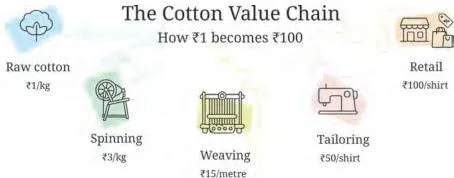
Figure 5.2 puts the same idea into cotton. Raw cotton → fabric → garment: at each step the material is worth more, because each step adds labour, skill and processing (NCERT p. 76). The book’s task asks you to list every factor that adds value to a raw material — ask people, search libraries and newspapers, and identify experts who can help.
How to Read the Key Figures: From Iron Ore to Finished Product
Two figures carry the chapter’s whole storyline. Learn to read them once and every later chapter becomes easier.
Figure 5.1 (NCERT p. 73) follows a metal product through six stages:
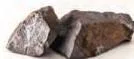
- Raw material — the journey starts with iron ore from nature.
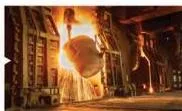
- Smelting — the ore is melted in a blast furnace to yield cast iron.
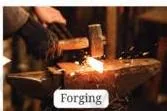
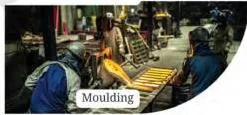
- Forging, casting and moulding — the molten metal is pushed, poured or pressed into shape.
- Machining — tools remove unwanted material to refine the shape.
- Joining and assembly — parts are fixed with fasteners, welding or soldering.
- Finishing — cleaning, polishing and painting protect the product and give it its final look.
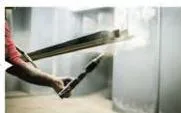
The order matters — you cannot machine a bar before the metal has been formed into that bar, and you cannot finish before the parts are joined. Each stage prepares the material for the next.
Figure 5.3 (NCERT p. 78) shows the same skeleton repeated in five materials: design and estimate, measure and mark, cut and shape, join and assemble, finish. The tools differ, the sequence does not (NCERT pp. 76–77).

| Stage | Fabric | Wood | Metal | Plumbing | Construction |
|---|---|---|---|---|---|
| Design and estimate | Draw the pattern | Draw the product on paper | Technical drawing or CAD | Layout diagram of piping | Sketch of the construction |
| Measure and mark | Mark pattern with chalk | Mark cuts and drilling points | Mark with engraving tool | Mark cuts and join points | Mark area with chalk |
| Cut and shape | Cut with scissors | Cut with a saw, wood held in a vise | Cutting or power tools | Cut with PVC cutter or hacksaw | Level site, lay foundation |
| Join and assemble | Sew with needle or machine | Adhesive, hammer and nails | Bolts, rivets, welding, soldering | Brazing, coupling, adhesives | Lay bricks, apply mortar |
| Finish | Ironing, trimming | Sanding, polishing, painting | Grinder and paint | Check for leakage, tighten joints | Plastering, painting, flooring, electrification |
If a product comes out wrong, inspect these five stages one by one — the error is usually in the measuring, cutting or joining step.
Choosing the Right Material for a Product
A wrong material fails — and can be unsafe. Plastic melts when heated, so cooking pots are made of steel or aluminium, which tolerate high heat and are safe for cooking (NCERT p. 78).
The book’s rule: the characteristics of a material decide whether it suits a product. A stool must hold weight, so it is wood or metal; a reusable shopping bag must be flexible and light, so jute fabric works. Bathroom shelves are steel, PVC or aluminium because wood would rot in dampness (NCERT p. 78).
One material can serve many uses. Clay is soft and moist for craft items; moulded, dried and fired, the same clay becomes durable pots and bricks (NCERT p. 79).
The book’s Table 5.1 lists eight products and leaves the material blank for you to justify. The table below is one justified set of answers — the test is whether the characteristic you name is the one the product genuinely needs.
| Product | Best-suited material | Characteristic that makes it suitable |
|---|---|---|
| Raincoat | Rubber | Water resistance |
| Electric wire | Copper | Electrical conductivity |
| Water bottle | Glass | Transparency and water resistance |
| Cooking pot | Steel | Thermal conductivity — tolerates high heat |
| Cushion | Fabric | Elasticity — flexible and soft |
| Window | Glass | Transparency — lets light through |
| Keychain | Steel | Hardness — resists scratches and wear |
| School bell | Steel | Hardness — tough and durable |
Try a fresh product: a picnic mat spread on damp grass. Rubber gives water resistance, so moisture cannot soak through; a plain fabric mat would soak and spoil. Decide what the job demands — water resistance here — and the material follows.
Safety First: Reading Signs and Following Protocol
Workshops and public places warn you before an accident happens — through standardised colours, symbols and text called safety signage (NCERT p. 80).
| Colour | What it signals | Examples |
|---|---|---|
| Red | Fire and prohibition | Fire extinguisher, stop buttons |
| Yellow | Warning and physical hazards | Wet floor caution, construction site |
| Blue | Mandatory actions | Wear helmet, machine safety instructions |
| Green | Safe conditions and guidance | Emergency exit, assembly point |
Symbols carry the same warnings in picture form: electric shock, fire extinguisher location, wear helmet, first aid, emergency exit, protective footwear, no smoking, and a slippery-floor caution (NCERT pp. 80–81).
Before starting any work, read the manuals or instruction guides, and ask your teacher or an expert about precautions (NCERT p. 80).
The chapter’s safety audit task sends you out to check your school and its surroundings: which signs exist, where more are needed, and whether a new symbol — like one for a hot surface — should be created and justified (NCERT p. 81).
Measuring Materials: Least Count, Tolerance and the Right Instrument
Measurement keeps work cheap and correct: it lets you estimate the exact material needed, waste less, control cost, and meet the required dimensions and quality (NCERT p. 82).
Least count is the smallest value an instrument can measure accurately. A metre scale’s least count is 1 mm; a vernier callipers’ is 0.02 mm, so it can measure more precisely — the same object that reads 2.3 cm on a metre scale reads 2.34 cm on the callipers (NCERT p. 82).
Tolerance is the amount of error a job can allow. Joining two pipes demands very low tolerance — the diameters must match closely — while cutting cloth for a bag allows a more generous error (NCERT p. 82).
Least count is a property of the instrument; tolerance is a property of the job. You choose the instrument whose least count is fine enough for the job’s tolerance.
- Vernier callipers — diameter or thickness of small objects; least count 0.02 mm.
- Metre scale — objects under a metre; least count 1 mm.
- Metre tape — larger objects, including curved surfaces; least count 1 mm.
- Surveyor’s tape — land measurement; least count 1 mm.
- Distance metre — long distances measured quickly; least count 2 mm.
So the choice follows the precision the job needs, not the length alone: land calls for a surveyor’s tape, cloth for a metre tape (NCERT pp. 82–83). Accurate measurement also needs care — select the instrument by its least count, handle it with care so it stays accurate, and take precautions specific to the material and purpose (NCERT p. 83).
Technical Drawings: The Language of Makers
A technical drawing carries exact dimensions and specifications, so different workers can build identical products — a set of dining chairs that match, or plumbing that lines up floor after floor in a block of flats (NCERT p. 84).
Every technical language has grammar, and in technical drawing the grammar is the drawing symbols (NCERT p. 84). The book shows the line types — visible, hidden, centre, dimension and extension lines — plus symbol sets for plumbing and civil engineering: buildings, rivers, paths, roads and railway lines all have their own marks.
One view never tells the whole truth: the top view of a table hides its height, and the front view alone hides its width. Projection solves this by representing a three-dimensional object on a two-dimensional surface through three views — front, top and side (NCERT p. 85).
In construction the same idea gets its own names: the top view is the Plan (the floor plan of the building) and the front view is the Elevation (NCERT p. 86).
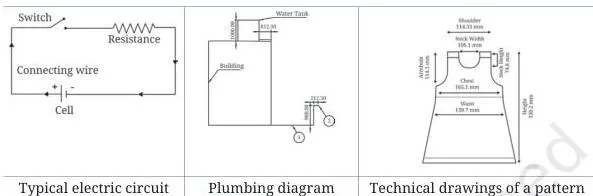
Figure 5.7 shows three more technical drawings you already half-know: an electric circuit diagram from Science, a plumbing system diagram, and a dress pattern. All three are technical drawings doing the same job — carrying exact information visually (NCERT p. 87).
Using Scale to Fit an Object on Paper
You cannot draw a full-sized chair on a page. A scale shrinks (or enlarges) an object in proportion: 1:XX means 1 unit on the drawing equals XX units in real life, and the scale is written at the bottom of the drawing in the title box (NCERT p. 87).
Step 1: The rule is simple — divide the real length by the number after the colon.
Example 1 — cupboard: a cupboard is 180 cm tall at scale 1:20, so every 20 cm of the real cupboard is 1 cm on paper.
\[ \text{Drawn height} = \frac{180\ \text{cm}}{20} = 9\ \text{cm} \]
Example 2 — door: a door is 210 cm tall at scale 1:50.
\[ \text{Drawn height} = \frac{210\ \text{cm}}{50} = 4.2\ \text{cm} \]
Example 3 — wall: a wall is 12 m long at scale 1:200.
First change metres to centimetres: 12 m = 1200 cm.
\[ \text{Drawn length} = \frac{1200\ \text{cm}}{200} = 6\ \text{cm} \]
Final answers: 9 cm, 4.2 cm and 6 cm on paper respectively.
The classic slip is to invert the ratio. At 1:100 a 6 m wall is 6 cm on paper (600 cm ÷ 100) — never 600 cm. Divide the real length by the number after the colon; do not multiply (NCERT p. 87).
Reading Technical Drawings: Table, House Plan and Stool
Reading a drawing means finding the numbers on its dimension lines and reading them against the scale. NCERT gives you three drawings to practise on (NCERT p. 88).
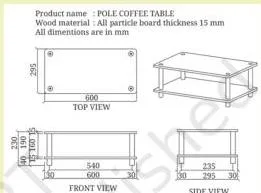
The table drawing in Figure 5.8 carries its own dimension lines, and the book asks four questions about it (NCERT p. 88): total length and breadth, the dimensions of the top, the number of legs and their length, and the distance between two legs.
Read the outermost dimension lines for the overall size, the line across the top for the top’s size, the lines beside the legs for their length, and the line between two legs for the gap — the number printed against each line is the answer.
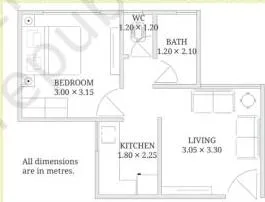
The house plan in Figure 5.9 is a top view, so it shows each room’s shape. The kitchen is the room with its own dimension lines — read the numbers on them; count the window and door symbols drawn on the walls to answer the book’s other two questions (NCERT p. 88).
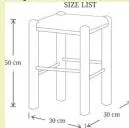
Finally, Figure 5.10 gives a 3D stool and asks you to draw it at scale 1:10. The real measurements are printed in the book: height 50 cm, seat width 30 cm and seat depth 30 cm (NCERT p. 88). Divide each by 10:
Step 1: Scale 1:10 means 1 cm on paper equals 10 cm on the real stool.
\[ \text{Height on paper} = \frac{50\ \text{cm}}{10} = 5\ \text{cm} \]
\[ \text{Seat on paper} = \frac{30\ \text{cm}}{10} = 3\ \text{cm} \; (\text{width}) \quad \text{and} \quad 3\ \text{cm} \; (\text{depth}) \]
Final answer: draw the stool 5 cm tall, with the seat 3 cm by 3 cm.
Machines, Automation and Robotics in Manufacturing
This short section connects hand skill to modern production. Old workshops ran on manual skill alone, and speed depended on the individual. Industrialisation brought power tools, which raised both the speed and the quality of production (NCERT p. 80).
Today the same repetition is automated. CNC (Computerised Numerical Control) machines and robots handle repetitive tasks, and they are more accurate and precise than humans — which is why they can produce in larger quantities (NCERT p. 80).
The chapter’s opening pictures the same story from the worker’s side: “smart” helmets and vests with sensors can warn a welder of dangerous body temperature or a technician of unsafe posture before an accident happens (NCERT p. 69).
Choosing a Vocation: Explore and Map Your Resources
This listing is maintained for the 2026-27 academic session using the NCERT textbook information available to us. NCERT remains the authority for confirming the latest edition.
The whole unit’s point is that you do real work. Chapter 5 teaches the common processes first; then you pick one of seven vocations to work on in later chapters — construction, apparel, sheet metal work, plumbing, food processing, furniture making or pottery (NCERT p. 89).
Two tasks help you choose (NCERT p. 89):
- Explore vocations around you. What work related to shaping materials exists near you? Describe what it involves — its inputs, key processes and outcomes — using experts, site visits, libraries, online resources and government reports.
- Map your resources. Use the book’s Table 5.7 to check honestly: can you finish in the time allocated, do you have space to build, have you found an expert to help, can you collect the tools, materials and machines, and will you get real hands-on work?
Remember the chapter’s working rule: work happens in groups, with your teacher or an expert guiding you at every point (NCERT p. 72).
Definitions: Key Terms from the Chapter
Use this glossary for quick revision. Each term is in original words, with the NCERT page where the book explains it.
| Term | What it means | NCERT page |
|---|---|---|
| Raw material | Material taken from nature before shaping, such as iron ore | p. 73 |
| Smelting | Melting iron ore in a blast furnace to obtain cast iron | p. 73 |
| Forging | Shaping molten metal by applying force | p. 73 |
| Casting | Shaping molten metal by pouring it into a mould | p. 73 |
| Moulding | Shaping material inside or around a mould | p. 73 |
| Machining | Removing part of the material using cutting tools | p. 73 |
| Joining | Fastening parts together — fasteners, welding or soldering | p. 73 |
| Finishing | Cleaning, polishing or painting the finished product | p. 73 |
| Value addition | Rise in worth from transforming a material into a product | p. 75 |
| Livelihood ecosystem | The network of resources, people, institutions and activities that lets people earn a living | p. 70 |
| Safety signage | Visual indicators — colours, symbols, text — that communicate hazards and safety information | p. 80 |
| Least count | The smallest value an instrument can measure accurately | p. 82 |
| Tolerance | The amount of error a measurement can allow | p. 82 |
| Projection | Drawing a 3D object on a 2D surface using front, top and side views | p. 85 |
| Plan | Top view of a building — its floor plan | p. 86 |
| Elevation | Front view of a building | p. 86 |
| Scale | The ratio 1:XX relating a drawing’s size to the real object’s size | p. 87 |
| CNC machine | Computerised Numerical Control machine — automated, highly accurate production | p. 80 |
Common Mistakes to Avoid in This Chapter
These six slips are the ones students make most often in this chapter. Name the mistake before you make it.
| Mistake | Correct rule | How to check your answer |
|---|---|---|
| Confusing least count with tolerance | Least count is what the instrument can do; tolerance is what the job allows | Ask: “Which instrument?” → least count; “How much error is OK?” → tolerance |
| Choosing a measuring tool by length alone | Choose by the precision the job needs | A pipe’s inner diameter needs vernier callipers (0.02 mm), not a metre tape |
| Inverting a scale like 1:100 | Divide the real length by the number after the colon | A 6 m wall is 6 cm on paper, not 600 cm |
| Mixing up plan and elevation | Plan = top view (floor plan); elevation = front view | The view showing room layout is the plan |
| Confusing red and yellow signs | Red = fire and prohibition; yellow = warning and hazards | A wet-floor sign is yellow; a no-smoking sign is red |
| Choosing wood for a damp bathroom | Wood absorbs moisture and rots; use steel, PVC or aluminium | Ask “Will it face water?” then choose a water-resistant material |
How the Chapter Assesses Your Learning
The seven questions on the last page of the chapter test skills, not facts. Here is what each one is really checking (NCERT p. 90).
| Question | Skill it tests | What a full answer must include |
|---|---|---|
| 1. Clay or wood for a pen stand | Material selection | Compare the characteristics of both, then justify the choice you make |
| 2. Design a symbol for hot surfaces | Safety communication | Pick a warning colour and an image clear enough to act on instantly |
| 3. Pipe diameter, cloth length, classroom length | Choosing measuring instruments | Match each object to an instrument and give the reason: precision for the pipe, flexibility for cloth, range for the classroom |
| 4. Wooden tray that does not stand flat | Common process sequence | Trace the five stages — design, measure, cut, join, finish — and identify which step went wrong |
| 5. Rack with front, top and side views | Technical drawing / projection | Draw three labelled views with correct dimensions |
| 6. Most and least enjoyable task | Reflection | Give examples of what went well and what did not, plus what you would change |
| 7. Applying learning in real life | Application | Connect a specific learning from the chapter to a real situation |
Two things to keep in mind. The assessment is practical: the chapter expects you to complete the tasks in groups, with your teacher or an expert guiding you (NCERT p. 90). And textbook contents and the examinable syllabus are not always identical — check the current official CBSE syllabus for what is assessable in your academic year.
Key Points to Remember
These six closing points from Section 5.6 are the chapter in miniature (NCERT p. 90).
- Material and manufacturing process are chosen from the material’s characteristics and the product you want.
- Technical drawings serve two jobs — designing the product and communicating it to everyone else involved.
- Measuring tools are selected on the basis of what is being measured and the accuracy required.
- Safety comes first: take precautions according to the work you are doing.
- Use safety signs and symbols wherever needed; they carry common meanings for potential risks and precautions.
- Keep the workplace clean and organised — tidiness prevents accidents.
Related Resources
Continue with the rest of the Class 9 Kaushal Vikas book:
- Class 9 Kaushal Vikas chapter list
- Previous chapter: Kaushal Vikas Chapter 4
- Next chapter: Chapter 6 — Construction
- Class 9 study resources
- CBSE notes home
For the official file, NCERT publishes this chapter as the Work with Machines and Materials Class 9 PDF on its own website — the same link you used above. The complete textbook and other editions are available at ncert.nic.in.
| What the chapter holds | Count | Where it is used |
|---|---|---|
| Printed pages | 22 | |
| Sections in the chapter | 10 | |
| Figures with NCERT captions | 17 | |
| Tables | 21 | |
| Official NCERT PDF | Download the chapter PDF | the chapter exactly as NCERT publishes it |


Reference: NCERT Class 9 Kaushal Vikas textbook, chapter 5, official edition on ncert.nic.in.
Sources and Data Verification
- This page describes the NCERT Kaushal Vikas Grade 9 textbook, Chapter 5, from the official NCERT edition published on ncert.nic.in.
- It covers this one chapter, not the full CBSE Skill Education scheme.
- The listing is maintained for the current academic session using the NCERT information available to us.
- NCERT settles textbooks, editions and PDFs; CBSE settles curriculum, syllabus and examinations.
Frequently Asked Questions
What is the difference between least count and tolerance in measurement?
Least count is the smallest value an instrument can measure accurately — a property of the instrument (metre scale 1 mm, vernier callipers 0.02 mm). Tolerance is the error a job can allow — a property of the task. Joining two pipes allows almost no error, so tolerance is very low; cutting cloth for a bag allows more (NCERT p. 82).
How do I read a scale like 1:100 on a technical drawing?
1:100 means 1 unit on the drawing equals 100 units in real life — the drawing is 100 times smaller. Divide the real length by 100: a 6 m wall (600 cm) becomes 6 cm on paper. The scale sits in the title box at the bottom of the drawing (NCERT p. 87).
Why is steel or aluminium used for cooking pots instead of plastic?
Steel and aluminium tolerate high heat and are safe for cooking; plastic melts when heated and is therefore unsafe (NCERT p. 78).
What do the four colours of safety signage mean?
Red signals fire and prohibition; yellow warns of physical hazards; blue orders mandatory actions; green shows safe conditions such as emergency exits and assembly points (NCERT p. 80).
Which NCERT textbook is Class 9 Work with Machines and Materials from?
It is Chapter 5 of Kaushal Vikas, the NCERT Class 9 textbook for Skill Education. The official PDF is published on ncert.nic.in.
Where can I download the official Class 9 Kaushal Vikas Chapter 5 PDF?
From NCERT’s own site: the Work with Machines and Materials Class 9 PDF. The file is free and is the same chapter your school teaches from.
Explore Class 9 Skill Education Books
- Previous: Additional Vocations
- Next: Construction
Related chapters:
- Work with Life Forms
- Rooftop Gardening
- Precision Farming