
This is Chapter 12, Additional Vocations, of the NCERT Class 9 Kaushal Vikas (Skill Education) textbook. The chapter runs from printed page 206 to page 215 and introduces five community-facing vocations as short project workflows. The official Additional Class 9 chapter PDF is right below, and everything the chapter contains is explained on this page.
Download the Additional Class 9 Chapter 12 (Additional Vocations) PDF
If you want the chapter exactly as printed — all five vocation units, their material tables and key-step lists — download the Additional Class 9 Chapter 12 Additional Vocations PDF from the official NCERT textbook portal, where the complete Kaushal Vikas Grade 9 book is available free of cost.
Chapter 12 at a glance: what is inside
Here is what the chapter holds, and where each vocation sits in the printed book.
| What | Count |
|---|---|
| Printed pages | 206–215 (10 pages) |
| Vocation units | 5 |
| Photos in the chapter | 5 |
| Material tables | 5 |
| Keywords defined | 15 (3 per unit) |
| Exercise questions | 0 — the units are practical workflows |
Each of the five units runs about two printed pages, in this order:
- Hospitality — pages 206–208
- Event Management — pages 208–209
- Data-based Services — pages 209–211
- Interior Design — pages 211–213
- Public Information Service — pages 213–215
Every unit follows the same five-part structure: an opening definition with a photo, keyword definitions, quality parameters, safety parameters, and key steps in the process.
What Chapter 12 covers: five vocations, one pattern
Before you read any one vocation, it helps to see the shape of the whole chapter. Five service vocations are presented in a row, and each one is built on the same five-part pattern.
- Opening definition with a photo: each unit starts with a photograph whose caption is the unit’s definition sentence.
- Keywords: three terms per unit, defined at the start so you meet the vocabulary before the steps.
- Quality parameters: the checks that tell you the service was done well.
- Safety parameters: the rules that tell you what must never go wrong.
- Key steps in the process: the ordered workflow that turns the idea into a finished service.
This is a practical chapter. Its content is checklists, parameters and process steps rather than theorems or formulas, so revision means rehearsing the steps and checking a plan against the quality and safety lists — not memorising derivations.
Key concepts: what each of the five vocations involves
This section walks through all five units one by one. If you have not opened the book yet, it is the fastest way to learn what each vocation involves — its definition, its checks and its process. Every unit opens with a photo, and all five photos are explained together in the figures section later on this page.
Hospitality
Hospitality work means welcoming, guiding and taking care of visitors so that they feel comfortable, respected and safe (NCERT, p. 206). The unit matters because every school event — an exhibition, a parent meeting, a community gathering — runs on this kind of care.
Quality parameters (NCERT, pp. 207–208) — how you know the service went well:
- Welcome: guests are greeted politely and guided without confusion.
- Comfort: seating, shade or ventilation, and water points are easy to reach.
- Cleanliness: the service area stays clean and waste is managed properly.
- Communication: language and tone stay clear, calm and respectful.
- Inclusion: elders and persons with disabilities can move and join in comfortably.
- Feedback: guests’ comments are collected and used to improve.
Safety parameters (NCERT, p. 207):
- Personal hygiene: clean hands, clean uniform, trimmed nails.
- Safe crowd movement: avoid pushing; keep clear paths and managed queues.
- Food and water safety: clean utensils, covered food, clean drinking water.
- Emergency readiness: mark exits, keep emergency numbers and a first-aid kit handy.
- Waste safety: place bins at visible points and dispose waste responsibly.
- Respect and privacy: do not share guest phone numbers or photos without consent.
Process in brief (NCERT, p. 208): identify a real situation that needs hospitality; plan roles such as greeters, guides, water servers and record-keepers; prepare the environment — entry, seating, water point, signage, queues, bins; then practise greeting, guiding and handling crowding.
After preparation come delivery, monitoring quality during service, collecting feedback and recording learnings, and post-service clean-up. Hospitality is the only unit that splits preparation into two steps, so its process runs eight steps instead of seven.
Event Management
Event management is the work of planning, organising and managing events that bring people together for a purpose (NCERT, p. 208). It covers the programme flow, the coordination of people and materials, and staying calm when something unexpected happens.
Quality parameters: activities follow the planned programme and timeline; guests feel welcomed, informed and safe; team members act responsibly; cleanliness is maintained before, during and after; and feedback is used for improvement.
Safety parameters (NCERT, p. 208): keep walkways, exits and emergency routes clear; follow fire, electrical and crowd-movement guidelines; keep first-aid materials and emergency contacts available; maintain safe sound levels and lighting; and use tools, décor and electrical equipment carefully.
Process in brief (NCERT, p. 209): pick an event and understand its purpose, audience and scale; plan space, timing, permissions, budget and safety, and draw a simple process chart; prepare theme, stage, seating, décor and signage, and rehearse; deliver — manage setup, welcome guests and coordinate the flow; monitor quality; collect feedback; and finish with clean-up and reflection.
The unit’s keywords are ambience, programme flow and logistics.
Data-based Services
Data-based services involve collecting, organising, analysing and using information to support decision-making for people and communities (NCERT, p. 209). The unit matters because careful, responsible data work helps schools, families and governments understand problems and plan improvements in education, health, governance, environment, welfare and local development.
Quality parameters: a clear purpose that matches the problem; simple, relevant, unbiased survey questions; ethical handling that uses information only for the stated purpose; clear charts and tables; and a useful insight that suggests action.
Safety parameters (NCERT, p. 210): data privacy — never share personal details, documents or OTPs; consent before collecting information; accuracy in recording; digital hygiene; and secure storage of forms and files.
Process in brief (NCERT, pp. 209–211): identify a real-life problem such as attendance, water use or waste; prepare simple survey questions and plan the tools; collect data with consent; analyse and visualise it in tables and charts; interpret what it shows; monitor quality; and present findings with next steps. In this unit the “delivery” phase is the data collection itself.
Interior Design
Interior design involves planning and improving indoor spaces so that they are comfortable, functional, safe and visually pleasing (NCERT, p. 211). It works through layout, colour, lighting, furniture and décor, starting from how people actually use a space.
Quality parameters (NCERT, p. 212): the redesigned space fits its purpose; furniture placement allows easy movement and use (comfort and ergonomics); colours, lighting and materials work together (aesthetics); recycled, reused or locally-available materials are preferred (sustainability); and the finish is clean and neat.
Safety parameters (NCERT, p. 212): tool safety with cutters, scissors and measuring tools; an organised, clutter-free workspace; material safety — paints, glue and finishes only in well-ventilated areas; safe posture and not lifting heavy items alone; and a full clean-up afterwards.
Process in brief (NCERT, pp. 211–212): choose an indoor space and speak to its users about comfort, storage, lighting and movement; measure the space, draw a floor plan and decide furniture, colours and lighting; make a cardboard model and present it for feedback; arrange the space to the plan; monitor quality; keep a project journal with before/after sketches, a budget tracker and feedback; and reflect on the design afterwards.
Public Information Service
Public information service helps citizens who do not know how to get information, fill forms or track their requests, especially now that many services are online (NCERT, p. 213). The work runs through Common Service Centres, e-Seva Kendras, panchayat and municipal offices, help desks and helplines, and it supports access to education, health, housing, utilities and social-welfare benefits.
Quality parameters: correct, up-to-date information; instructions in simple language; patient and polite treatment of every citizen regardless of literacy level; ethical handling of personal data; and effectiveness — people finish their task or understand the next step.
Safety parameters (NCERT, p. 213): data privacy; verified sources — only official government websites and centres; secure handling of forms and records; consent; and digital hygiene.
Process in brief (NCERT, p. 214): identify a common service such as a scholarship form or a certificate update; learn its purpose, documents, eligibility and official process; note the person’s basic information with consent; visit a verified website or centre and submit the application carefully; follow up with reference numbers to check status; and collect feedback on what worked and what was difficult.
Worked example: planning a school exhibition with the chapter’s steps
The chapter supplies steps; this illustration shows the steps running on a concrete case. It is built from the hospitality process on NCERT page 208 and uses only original numbers, none of which appear in the textbook — treat it as a practice run rather than an NCERT example.
Scenario: a school science exhibition expects about 150 visitors over 3 hours, and a team of 9 students is assigned to hospitality.
Step 1 — Identify the need: 150 visitors need welcoming, guiding, water and crowd control across an entry hall, two exhibit halls and a waiting area.
Step 2 — Plan the service and roles: the 9 members split as 2 greeters, 4 guides (2 per hall), 2 water servers and 1 record-keeper who also watches the help desk.
Step 3 — Prepare the environment: the materials list is 4 signage points (entry, exit, water, washrooms), 3 water points, 20 waiting chairs, 6 waste bins and 1 first-aid kit, with emergency numbers displayed at the help desk.
Step 4 — Practise: the team rehearses the greeting and agrees that guides hold each group for 2 minutes when a hall is crowded.
Step 5 — Deliver: greeters receive visitors, guides walk groups through, water servers refill the 3 points, and the record-keeper logs visitors every half-hour.
Step 6 — Monitor quality: at the 1-hour mark a queue builds at the second hall, so one guide moves there and one signage board is turned towards the queue.
Step 7 — Collect feedback: 50 feedback slips come back — 40 positive, 8 asking for clearer signage and 2 suggesting more water refills — so the recorded learning is to double the entrance signage and add a fourth water point next time.
Post-service: the team clears the halls, disposes waste, repacks the materials and notes the improvement in the project record.
What this shows: every decision in a real service maps to a named step of the chapter’s process — roles, materials, safety and feedback each have their own step.
Figures in Chapter 12: the five photos and what they show
In this chapter the photo captions do double duty: each caption is the definition sentence that opens its unit. Learning from these five photos means connecting the image to the checks and steps that follow it. Here are the chapter’s five photos with their page numbers.
This photo on NCERT page 207 defines hospitality before a single step is listed: the job is to make visitors feel comfortable, respected and safe. The image shows the vocation in action, which is why the unit opens with it.
Keep that sentence in mind when you read the quality parameters — every one of them, from welcome to inclusion, is a way of checking that the definition is being met.
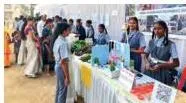
The event-management photo on NCERT page 208 states the whole unit in one line: planning, organising and managing events that bring people together for a purpose. It sits before the keywords ambience, programme flow and logistics, so the reader meets the aim before the vocabulary.
The safety rules that follow — clear walkways, fire and electrical care, first-aid readiness — are exactly the “managing” half of that sentence.
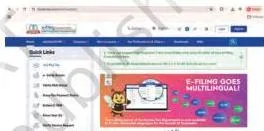
This photo on NCERT page 210 defines data-based services as collecting, organising, analysing and using information to support decisions for people and communities. The caption’s second half — “for people and communities” — is the point: the quality parameters (clear purpose, ethical handling, useful insight) and safety parameters (consent, privacy, accuracy) all exist to keep that purpose ethical.
The unit then turns the caption’s verbs — collect, organise, analyse, use — into a seven-step process.
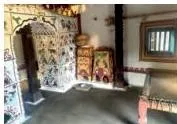
This photo on NCERT page 211 opens interior design with its definition: planning and improving indoor spaces so they are comfortable, functional, safe and visually pleasing. The word “improving” matters, because the process is a makeover of an existing room — measure it, draw a floor plan, build a cardboard model, then rearrange.
The unit’s material table lists measuring tape, rulers, cardboard and paint swatches, which are exactly the tools those steps need.

This photo on NCERT page 213 states the problem the service solves: many citizens do not know how to get information, fill forms or track their requests, especially when services are online. The caption is framed as a difficulty rather than a definition, because the unit is about closing that gap.
The keywords that follow — e-governance, transparency, grievance — are the chapter’s answer: digital delivery, open processes and a channel for complaints.
Definitions: the keywords the chapter asks you to learn
The chapter marks three keywords inside each unit, and this table gathers them so you can revise them together. Each meaning below is the book’s definition in plainer words.
| Keyword | Vocation | Meaning |
|---|---|---|
| Guest experience | Hospitality (NCERT, p. 207) | The overall comfort and support a visitor feels during a visit. |
| Etiquette | Hospitality (NCERT, p. 207) | Polite conduct — greeting, tone, posture and listening — that shows respect. |
| Ambience | Event Management (NCERT, p. 208) | The atmosphere or mood of an event, created by décor, lighting, music and layout. |
| Programme flow | Event Management (NCERT, p. 208) | The sequence in which the event’s activities take place. |
| Logistics | Event Management (NCERT, p. 208) | Managing the materials, equipment, people and time an event needs. |
| Data analysis | Data-based Services (NCERT, p. 210) | Examining data to identify patterns and trends. |
| Data visualisation | Data-based Services (NCERT, p. 210) | Presenting data as charts, graphs or tables so it is easier to read. |
| Survey | Data-based Services (NCERT, p. 210) | A way of collecting information from people through questions. |
| Insight | Data-based Services (NCERT, p. 210) | A meaningful conclusion from data that helps in decision-making. |
| Layout | Interior Design (NCERT, p. 211) | How the furniture and elements of a space are arranged. |
| Theme | Interior Design (NCERT, p. 211) | The overall style or idea behind a space’s design. |
| Sustainability | Interior Design (NCERT, p. 211) | Choosing materials and methods that reduce waste and protect the environment. |
| E-governance | Public Information Service (NCERT, p. 213) | Using digital technology to deliver government services and information. |
| Transparency | Public Information Service (NCERT, p. 213) | Keeping government processes and information open and understandable. |
| Grievance | Public Information Service (NCERT, p. 213) | A complaint asking an authority to take action or make a correction. |
Common mistakes: what to watch out for
This chapter keeps its best advice inside the safety parameters, so read them before starting any of these projects. The table below names the privacy and safety mistakes students actually make, states the chapter’s rule, and gives a quick way to check your own work.
| Mistake | What the chapter says instead | How to check your work |
|---|---|---|
| Sharing a guest’s phone number or photo without asking | Respect and privacy: never share guest numbers or photos without consent (NCERT, p. 207) | Ask the guest before forwarding or posting anything with their face or number. |
| Giving out personal details, documents or OTPs | Data privacy: keep personal details, documents and OTPs private (NCERT, pp. 210, 213) | Ask why any document or OTP is being requested, and refuse unless it serves the stated purpose. |
| Collecting information without permission | Consent: take permission before collecting anyone’s information (NCERT, pp. 210, 213) | Keep a signed consent note before recording responses. |
| Changing or guessing a respondent’s answer while recording | Accuracy: record carefully without guessing or changing responses (NCERT, p. 210) | Re-read the recorded response against what the person actually said. |
| Blocking walkways, exits or emergency routes during an event | Keep walkways, exits and emergency routes clear at all times (NCERT, p. 208) | Walk the route yourself — if you must step over something, it is blocked. |
| Leaving food uncovered or serving unhygienic water | Food and water safety: clean utensils, covered food and clean drinking water (NCERT, p. 207) | Check that every food item is covered and water comes from a clean, closed source before service. |
| Using paints, glue or finishes in a closed room | Material safety: use paints, glue and finishes in well-ventilated areas (NCERT, p. 212) | Open windows or move the work to a ventilated area if you can smell fumes. |
| Staying logged in on a shared device or clicking unknown links | Digital hygiene: log out after use and avoid unknown links (NCERT, pp. 210, 213) | Log out of every account and clear the session before handing the device back. |
How to use Chapter 12 in your Class 9 skill-education work
Skill-education chapters are practical, and this one is built as five project workflows. That changes how you should revise it.
- Use the process lists as project plans: the “key steps in the process” section of any unit is a ready-made workflow — follow the steps in order and you have planned the whole service.
- Use the quality parameters as a self-check before submitting: read each parameter and ask whether your plan meets it.
- Use the safety parameters as a doing checklist: check them before the activity starts, not after something goes wrong.
Textbook contents and the examinable syllabus are not always identical — check the current official CBSE skill education syllabus for Class 9 to see how this chapter is assessed.
If you want a shorter revision pass, the Class 9 skill-education notes cover these vocation workflows in compressed form. The Class 9 notes hub holds every subject, the CBSE notes library is the full index, and the tourism notes in the same section are a related service-vocation read.
Chapter 12 in one look: five vocations, one process
However different the five vocations look, every one follows the same seven-phase process — the fastest way to revise the whole chapter from memory.
- Identify the need or opportunity: choose the real situation that needs the service.
- Plan the service and roles: decide responsibilities, space, time, permissions, budget and materials.
- Prepare: get the environment, materials and team ready.
- Deliver: provide the service itself.
- Monitor quality during service: watch for confusion, crowding or discomfort and adjust.
- Collect feedback and record learnings: note what worked, what challenged and what guests or respondents said.
- Post-service activities: clean up, dispose waste, pack materials and reflect on improvements.
Two units bend this pattern. Hospitality (NCERT, p. 208) splits preparation in two — prepare the environment, then practise — so its list runs eight steps. Public information service (NCERT, p. 214) folds follow-up into the flow: after delivery, it uses reference numbers to track the application before collecting feedback. Data-based services expresses the delivery phase as data collection and analysis.
The table below compares the five vocations side by side: purpose, materials and tools, and the safety rule each unit stresses most.
| Vocation | Purpose in one line | Materials and tools it needs | Most important safety rule |
|---|---|---|---|
| Hospitality | Welcoming, guiding and caring for visitors so they feel comfortable, respected and safe (NCERT, p. 206) | Signage, seating sets, waste bins and sanitiser, name tags, water jugs and cups, first-aid kit | Never share a guest’s phone number or photos without consent (NCERT, p. 207) |
| Event Management | Planning, organising and managing events that bring people together for a purpose (NCERT, p. 208) | Event schedules and banners, sound system, tables and chairs, dustbins, welcome materials, first-aid kit | Keep walkways, exits and emergency routes clear at all times (NCERT, p. 208) |
| Data-based Services | Collecting, organising, analysing and using information to support decisions (NCERT, p. 209) | Computer or tablet, survey forms, consent forms, notebook or register, charts and graphs | Never share personal details, documents or OTPs; take consent first (NCERT, p. 210) |
| Interior Design | Planning and improving indoor spaces so they are comfortable, functional, safe and pleasing (NCERT, p. 211) | Measuring tape, ruler or set square, cardboard or recycled boxes, paint swatches, stationery | Use paints, glue and finishes only in well-ventilated areas (NCERT, p. 212) |
| Public Information Service | Helping citizens get information, fill forms and track their requests (NCERT, p. 213) | Computer or tablet, paper forms or printouts, register, stationery, consent form | Use only official, verified government websites and centres (NCERT, p. 213) |
Three safety rules repeat across more than one vocation, which marks them as the chapter’s priorities. Consent before collecting information appears in both data-based services and public information service (NCERT, pp. 210, 213). Digital hygiene — log out after use and avoid unknown links — also appears in both data units (NCERT, pp. 210, 213). First-aid readiness appears in hospitality and event management (NCERT, pp. 207, 208).
Related resources: the Class 9 Kaushal Vikas chapters
This listing is maintained for the 2026-27 academic session using the NCERT textbook information available to us. NCERT remains the authority for confirming the latest edition.
Continue with the rest of the book from here: the Kaushal Vikas Class 9 book page lists every chapter in the volume, and the Class 9 hub opens all NCERT Class 9 books. In this book, Chapter 12 follows Chapter 11 and is followed by Chapter 13.
The chapter PDF comes from the official NCERT textbook portal, ncert.nic.in/textbook.php, where the Kaushal Vikas Grade 9 book is published in full at no cost.
| What the chapter holds | Count | Where it is used |
|---|---|---|
| Printed pages | 10 | |
| Figures with NCERT captions | 5 | |
| Tables | 5 | |
| Official NCERT PDF | Download the chapter PDF | the chapter exactly as NCERT publishes it |
Reference: NCERT Class 9 Kaushal Vikas textbook, chapter 12 (Additional Vocations), official edition on ncert.nic.in.
Sources and data verification
This page describes the NCERT Kaushal Vikas (Skill Education) Grade 9 textbook, Chapter 12, ‘Additional Vocations’, printed pages 206–215, official edition.
- The counts and structure on this page describe that single chapter — not the whole CBSE skill education scheme, which is larger and includes options this page does not list.
- The listing is maintained for the current session using the NCERT information available to this site.
- NCERT settles textbooks, editions and PDFs; CBSE settles curriculum, syllabus and examinations. For assessment details, check the official CBSE skill education syllabus for Class 9.
Frequently asked questions about Chapter 12 Additional Vocations
Quick answers to the questions most often asked about this chapter.
What are the five vocations covered in Additional Class 9 Chapter 12?
Hospitality, Event Management, Data-based Services, Interior Design and Public Information Service. They run in that order from printed page 206 to page 215, roughly two pages each.
How is the Additional Vocations chapter organised?
Every unit follows the same five-part pattern: a photo whose caption is the definition, three keywords, quality parameters, safety parameters, and key steps in the process. The chapter is practical, so the content is checklists and workflows rather than problem sets.
Which safety rules does the chapter give for handling people’s data?
Data-based Services (NCERT, p. 210) and Public Information Service (NCERT, p. 213) both require data privacy — no sharing of personal details, documents or OTPs — plus consent before collecting information, accuracy in recording, secure storage and digital hygiene such as logging out of shared devices.
What is the difference between hospitality and event management?
Hospitality is the welcoming, guiding and caring work that makes visitors feel comfortable, respected and safe (NCERT, p. 206). Event management is the wider job of planning and organising the whole event — programme flow, logistics, sound, seating and coordination (NCERT, p. 208). A hospitality team is one part of what an event manager coordinates.
Where can I download the official Chapter 12 PDF?
On the official NCERT portal, ncert.nic.in/textbook.php, where the complete Kaushal Vikas Grade 9 book is published free. The download link at the top of this page opens it directly.
Explore Class 9 Skill Education Books
- Previous: Tourism
Related chapters:
- Work with Life Forms
- Rooftop Gardening
- Precision Farming