
The Additional Vocations Class 9 chapter is Chapter 8 of NCERT’s Kaushal Vikas (Skill Education) book for Grade 9, running from page 132 to 140 of the printed textbook. It introduces five practical vocations — sheet metal work, plumbing, food processing, furniture making and pottery — so a student can see what each trade involves before choosing one to work on.
The official chapter PDF is right on this page.
Use the sections below to find what each vocation needs: the key words, the materials, the quality checks, the safety rules and the step-by-step process the book gives for making a finished product.
Download the official Additional Vocations Class 9 PDF
The official Kaushal Vikas Grade 9 book is published by NCERT and available free on its website. Open the official NCERT textbook page, locate Kaushal Vikas Grade 9, and download the Additional Vocations Class 9 chapter PDF — it contains pages 132 to 140 of the book exactly as printed, with all five vocation sections, their materials tables and their photographs.
Chapter 8 at a glance: what is inside the file
This section is a quick inventory of the chapter before you open it. Additional Vocations is a practical, activity-driven chapter: instead of long theory, each vocation section gives you a working brief.
The file spans printed pages 132 to 140 of Kaushal Vikas Grade 9. Every vocation section follows the same internal structure — key words, a materials table, quality parameters, safety parameters and a step-by-step process — and those process lists do the job that end-of-chapter questions do in a theory chapter. The table below lists what the chapter contains.
What this chapter covers: five vocations, one shared structure
Think of this as a sampler. It introduces five different trades so you can see what each involves before you commit to making something in it.
- Sheet metal work (NCERT p.133): shaping thin metal sheets — steel, aluminum and copper — into useful products through cutting, bending, forming, joining and finishing.
- Plumbing (NCERT p.134): installing, maintaining and repairing systems that carry water, liquids, gases, fluids or waste through pipes.
- Food processing (NCERT p.136): transforming raw food materials into safe, usable and longer-lasting food products through cleaning, cutting, drying, cooking, fermenting and preserving.
- Furniture making (NCERT p.137): designing and creating useful objects — stools, tables, shelves, benches, storage units and simple seating.
- Pottery (NCERT p.139): preparing clay, shaping it with simple techniques, drying it carefully, strengthening it through firing or hardening, and finishing the surface for use or decoration.
Once you notice the pattern, the chapter becomes predictable: every section runs keywords → materials → quality → safety → key steps. Read one section properly and the other four open the same way.
Key concepts: keywords, quality and safety in every vocation
Every vocation in this chapter is organised the same way, and that repeated pattern is what makes it easy to read. Three kinds of concepts keep appearing: key words, quality parameters and safety parameters.
Key words: the terms each trade is built on
Each section opens by defining the technical words you need for that trade. Sheet metal work gives four terms — forming, burr, rivet and gauge (NCERT p.133) — and the other four vocations give three each. The complete set is collected in the glossary table below.
Why bother with them? Because the process steps later use these words. “Remove the burr” or “join with slip” only makes sense if you already know what a burr and slip are.
Quality parameters: checks on the finished product
Quality parameters describe what a good finished item looks like. Each vocation carries five, and the list works as a build-it checklist, not just a description.
- Sheet metal work (NCERT p.133): accurate dimensions, smooth edges, strong joints, proper shape, minimum waste.
- Plumbing (NCERT p.134): leak-free joints, proper alignment, secure fittings, smooth water flow, minimum waste.
- Food processing (NCERT p.136): freshness, hygiene, consistency, safety, minimum waste.
- Furniture making (NCERT p.138): strength and stability, accuracy, finish, useability, material efficiency.
- Pottery (NCERT p.139): material quality, uniform thickness, stability, finishing, minimum waste.
Safety parameters: rules that protect the worker
Safety parameters protect the person doing the work, not the product. Wear gloves, goggles and an apron (sheet metal adds ear plugs); keep hands dry when handling plumbing tools; wash hands before any food work; and keep the workspace clean and free of obstacles.
Pottery adds two specific rules — avoid inhaling clay dust and clean surfaces with wet cloths (NCERT p.139).
Two ideas repeat in every single list. Minimum waste is the last quality parameter of every vocation, and dispose waste as per protocol is the last safety parameter of every vocation. If you remember nothing else, remember those two — they are the chapter’s standard for responsible work.
Figure walkthrough: the five photographs in the chapter
Each of the five vocation sections opens with a photograph whose caption is the book’s own definition of that trade. Match the image to the caption once and the materials table under it makes sudden sense — you can see what each tool is actually for.
Sheet metal work figure (NCERT page 133)
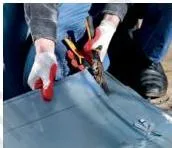
This caption tells you the trade is about transformation: flat metal becomes a useful 3D object. Each process named maps to a tool in the materials table on the same page — tin snips or shears for cutting, hammer or mallet for shaping and forming, files or grinder for smoothing, and fasteners or rivets for joining parts.
The quality parameter “smooth edges: burrs removed” is exactly what the files and grinder are for (NCERT p.133).
Plumbing figure (NCERT page 134)
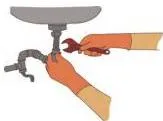
The word that matters here is systems. Plumbing is not about single pipes — it is about networks of pipes, so the chapter also covers routes, joints, valves and flow.
The materials table makes that concrete: pipes (PVC, GI or CPVC), fittings such as couplings and elbows, taps and valves, a pipe wrench or spanner, a hacksaw or pipe cutter, and thread seal tape or adhesive to stop leaks at joints (NCERT p.134). The caption and the table together teach the whole trade: pipe network + fittings + controlled flow.
Food processing figure (NCERT page 136)
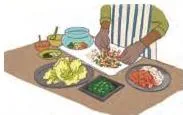
Two ideas ride inside this caption. The first is transformation: a raw material becomes a new product. The second is safety: the result must be safe and longer-lasting.
These map directly to the keywords on the same page — raw material, processing, preservation — and to the materials table, which lists knives and peelers, a chopping board, drying trays or cloth, and packaging material such as jars and pouches (NCERT p.136).
Furniture making figure (NCERT page 137)
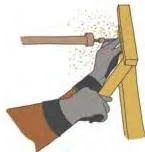
Notice that the caption stresses usefulness and design. Furniture is treated as an object that must support a person or a load safely, which is why strength and stability is the first quality parameter on the following page (NCERT p.138).
The materials table carries the same logic: wood, bamboo or engineered boards as the main material, joining tools such as the hand saw, chisel and plane, and fasteners — nails, screws and bolts — for the joints (NCERT p.137).
Pottery figure (NCERT page 139)
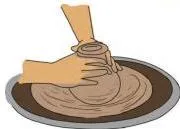
The caption hides a complete sequence: prepare → shape → dry → strengthen → finish. That five-stage order is why pottery has more process steps than the other vocations (see the quick review below).
The materials table supports every stage — clay or terracotta as the main material, water for softening and slip, sand or grog to improve strength and reduce cracking, a wire cutter for cutting clay lumps, rolling pin and paddles for shaping, and moulds for uniform shapes (NCERT p.139).
Definitions: every key word in one place
Each vocation introduces its own technical terms, so the whole chapter’s vocabulary is sixteen terms — four for sheet metal work and three for each of the other four vocations. Here they all are in plain language, with the page where the book defines them.
| Vocation | Term | Plain meaning |
|---|---|---|
| Sheet metal work | Forming (NCERT p.133) | Shaping metal without cutting it |
| Sheet metal work | Burr (NCERT p.133) | A sharp unwanted edge left on metal after cutting |
| Sheet metal work | Rivet (NCERT p.133) | A fastener used to join metal sheets |
| Sheet metal work | Gauge (NCERT p.133) | The thickness of a sheet of metal |
| Plumbing | Valve (NCERT p.134) | A device used to control water flow |
| Plumbing | Joint (NCERT p.134) | The connection point between two pipes or fittings |
| Plumbing | Flow (NCERT p.134) | The movement of water through a pipe system |
| Food processing | Raw material (NCERT p.136) | Unprocessed food, such as grains, fruits, vegetables or milk |
| Food processing | Processing (NCERT p.136) | Cleaning, cutting, cooking or preserving the raw material |
| Food processing | Preservation (NCERT p.136) | Methods used to increase the shelf life of food |
| Furniture making | Joinery (NCERT p.137) | Methods used to join two or more parts of furniture |
| Furniture making | Seasoned wood (NCERT p.137) | Wood that has been dried to reduce its moisture |
| Furniture making | Finishing (NCERT p.137) | The final surface treatment, such as sanding, polishing or painting |
| Pottery | Wedging (NCERT p.139) | Kneading clay to remove air bubbles and even out its moisture |
| Pottery | Firing (NCERT p.139) | Heating clay in a kiln or open fire to make it hard and durable |
| Pottery | Slip (NCERT p.139) | Clay mixed with water, used for joining parts or surface decoration |
Two pairs are easy to confuse. Gauge is thickness, not overall size. Slip is liquid clay used for joining and decoration — it has nothing to do with slipping up in your work.
Common mistakes in Additional Vocations and how to avoid them
The quality and safety parameters are not decoration — each one exists because that mistake actually happens in a workshop. The table below pairs the common slip with the rule that prevents it.
| Mistake | Correct rule | How to check your answer |
|---|---|---|
| Leaving burrs on cut metal | File or grind the cut edges until smooth | Run a cloth along the edge — if it snags, the burr is still there (NCERT p.133) |
| Starting plumbing repairs before shutting off the water | Close the valve first; restore supply only after joints are tight | After opening the valve, watch every joint for drips for a few minutes (NCERT p.135) |
| Letting raw food touch processed food | Wash hands, keep surfaces and tools clean, use separate containers | Check whether knives, boards and hands were cleaned between ingredients (NCERT p.136) |
| Using unseasoned wood, or skipping the test model | Confirm the wood is dried, and make the cardboard prototype first | Test the prototype’s joints and stability before cutting real material (NCERT p.138) |
| Skipping wedging, or drying pots in direct sun | Wedge the clay to remove air, then dry slowly in shade | Look for cracks or warping before firing (NCERT p.139) |
| Jumping straight to the real product | Make the prototype or test piece (or a detailed plan, for plumbing) before real material is cut | Ask: have I tested folds, joints and stability on cheap material yet? (NCERT pp.134, 138, 140) |
Practical assessment: what a school activity would check
This is a practical skills chapter, so the chapter’s own parameters are effectively its assessment checklist. A teacher watching the activity would check three things: whether the steps run in order from scoping to finished product, whether the listed safety gear is worn before work starts, and whether the finished item meets that vocation’s quality parameters.
Here is what handling one task looks like in practice — replacing a leaking 30 cm section of PVC pipe, using the book’s own plumbing process (NCERT pp.134–135).
- Close the main valve so no water flows while you work.
- Measure and mark 30 cm on the pipe; keep the mark square.
- Cut the marked section with a pipe cutter or hacksaw.
- Dry-fit the new pipe and the couplings at both ends; check alignment.
- Apply thread seal tape or adhesive on the threads.
- Tighten the joints with a pipe wrench or spanner.
- Open the valve slowly and watch both joints for drips for two minutes.
Notice the order: shut off the supply first (safety), measure and cut (accuracy), dry-fit before sealing (checking joints), and a leak test at the end (quality). That sequence is the whole chapter in miniature. Textbook contents and the examinable syllabus are not always identical — check the current official syllabus.
Quick review: five vocations, six steps, one chapter
If you are revising the night before an activity, rebuild the whole chapter from one pattern.
- Scoping — choose a simple item and decide how many to make.
- Design and draw — sketch the product and mark dimensions.
- Make a prototype — build a cheap test model (for plumbing, prepare a detailed step-by-step plan instead).
- Select materials and tools — pick what the task needs.
- Prepare the product — measure, mark, cut, shape and join.
- Finish the product — smooth, trim, and apply colour, polish or varnish.
Mnemonic: See, Draw, Try, Pick, Make, Finish. Try the prototype on cardboard before touching real material — for a sheet-metal chalk box, a cardboard box of about 20 cm by 10 cm by 6 cm shows whether the fold lines and joints work before you cut metal (NCERT p.134).
The pottery exception. Pottery lists eight steps (NCERT p.140). After the common six it adds two more — strengthen the product (kiln firing, open firing or extended sun drying) and a final finish and decorate stage — and it builds slow shaded drying and crack-watching into the preparation step. Remember the six-step template, then add pottery’s two extras.
| Vocation | Main material | Key tool | Core skill | Main safety risk |
|---|---|---|---|---|
| Sheet metal work | GI or aluminium sheet | Tin snips / shears | Cutting, bending, riveting | Sharp edges and burrs |
| Plumbing | PVC / GI / CPVC pipes | Pipe wrench / hacksaw | Joining pipes, stopping leaks | Wet hands, blocked drains |
| Food processing | Grains, fruits, vegetables | Knives / peelers | Cleaning, cooking, preserving | Cross-contamination, heat |
| Furniture making | Wood / bamboo / engineered boards | Hand saw / chisel | Joinery and finishing | Sharp tools, unstable joints |
| Pottery | Clay / terracotta | Wire cutter / rolling pin | Shaping, firing, finishing | Clay dust, firing hazards |
Close with the two rules that repeat in every section: minimum waste, and dispose waste as per protocol.
Related resources
This listing is maintained for the 2026-27 academic session using the NCERT textbook information available to us. NCERT remains the authority for confirming the latest edition.
Use these links to move around the same book or to the official source.
- Kaushal Vikas Class 9 book page
- Class 9 hub
- CBSE notes home
- Previous chapter
- Next chapter
All chapter PDFs are published by NCERT on the official NCERT portal, which is the source for every page in this book. This page follows the NCERT Kaushal Vikas Grade 9 textbook as published there; textbook contents and the examinable syllabus are not always identical — check the current official syllabus.
| What the chapter holds | Count | Where it is used |
|---|---|---|
| Printed pages | 8 | |
| Figures with NCERT captions | 5 | |
| Tables | 5 | |
| Official NCERT PDF | Download the chapter PDF | the chapter exactly as NCERT publishes it |
Reference: NCERT Class 9 Kaushal Vikas textbook, chapter 8, official edition on ncert.nic.in.
Frequently asked questions about Additional Vocations Class 9
Which five vocations does Additional Vocations Class 9 cover?
Sheet metal work (NCERT p.133), plumbing (NCERT p.134), food processing (NCERT p.136), furniture making (NCERT p.137) and pottery (NCERT p.139). Each section runs the same structure: key words, materials, quality parameters, safety parameters and a step-by-step process.
What is wedging and why is it important in pottery?
Wedging is kneading clay to remove air bubbles and even out its moisture (NCERT p.139). It matters because trapped air expands when the piece is fired and can crack or break the pot.
Why does the chapter ask for a cardboard prototype before making the real product?
Cardboard is cheap and easy to cut. A prototype shows whether the folds, joints and overall shape actually work before you cut real material such as sheet metal, wood or clay (NCERT pp.133–134, 138).
What is the difference between a burr, a rivet and a gauge in sheet metal work?
A burr is a sharp unwanted edge left on metal after cutting; a rivet is a fastener used to join metal sheets; and gauge is the thickness of a sheet (NCERT p.133).
How are the quality parameters different from the safety parameters in this chapter?
Quality parameters describe what the finished product must be — accurate dimensions, smooth edges, strong joints, proper shape — while safety parameters protect the person doing the work, such as wearing gloves and goggles and keeping the workspace clean. Every vocation section lists both (NCERT pp.133–140).
Does Additional Vocations Class 9 count towards the board exam syllabus?
This chapter belongs to an NCERT Skill Education textbook, and schools assess skill subjects in different ways. Textbook contents and the examinable syllabus are not always identical — check the current official syllabus to see how your school assesses it.
Explore Class 9 Skill Education Books
- Previous: Apparel
- Next: Work in Human Services
Related chapters:
- Work with Life Forms
- Rooftop Gardening
- Precision Farming