
This page holds NCERT’s Kaushal Vikas Grade 9 textbook, Chapter 4, Additional Vocations — eight printed pages (pages 61–68) that introduce five vocations you can start in small, controlled spaces. The official Additional Vocations Class 9 PDF is here, exactly as published by NCERT.
Additional Vocations Class 9 PDF Download
Open the official Additional Vocations Class 9 PDF from NCERT’s Kaushal Vikas Grade 9 textbook to read the complete chapter in its printed layout, including every keyword box, materials table and process checklist the book prints. This is the official NCERT edition hosted on ncert.nic.in.
Chapter 4 Additional Vocations at a Glance
The chapter table on this page lists how much the chapter holds — its sections, figures, tables and exercise questions — so you can check the file’s size in one glance. Underneath those counts, the chapter itself is descriptive and practical: it is built around checklists and processes, not long arguments.
Every vocation section in the chapter follows the same anatomy:
- a keyword box defining the section’s technical terms;
- a materials table naming each tool or material and its job;
- a quality parameters list for the produce, the animal or the system;
- a safety parameters list for people, tools and the environment;
- a numbered Key steps in the process sequence.
Read one vocation section all the way through and you have a template for the other four.
What Chapter 4 of Kaushal Vikas Covers
The chapter presents five vocations that can be started in a small or controlled space:
- Mushroom cultivation recreates the cool, moist, dark growing conditions mushrooms need indoors (NCERT p. 61).
- Aquaponics pairs fish and plants in one recirculating system, so both are produced together (p. 62).
- Pisciculture raises fish in ponds or tanks up to marketable size (p. 64).
- Backyard poultry keeps a small flock in home courtyards, verandas and simple sheds (p. 65).
- Non-Timber Forest Produce is collected from forests and processed in community spaces (p. 67).
One skeleton holds the chapter together. Four of the five vocations run a six-step cycle — design, prepare, initiate, manage, monitor, harvest — and the NTFP section condenses the same cycle to five steps. Every vocation also carries its own quality and safety parameter lists, so the chapter teaches you to judge the produce and the process separately.
Key Concepts: The Five Vocations Explained
Each subsection below says what the vocation is, why it fits a small space, and which conditions the chapter treats as the ones that decide success. Page numbers refer to the NCERT Kaushal Vikas Grade 9 edition.
Mushroom Cultivation
Mushroom cultivation is the one vocation on this list that does not begin with a seed. Mushrooms grow from spores and develop through a root-like network called mycelium, which absorbs nutrients the way roots do (NCERT p. 61).
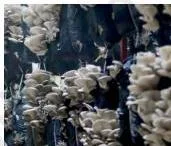
The photograph above shows the mycelium network spreading through the growing medium. That white, thread-like growth is the organism itself — the part of the process that keeps feeding until the caps form.
The chain from start to harvest has three links. Spawn — substrate that already carries growing mycelium — acts as a growth initiator. It is added to a larger sterilised substrate in the step called inoculation, then incubation gives the mycelium conditions to spread through the entire substrate (NCERT p. 61).
The quality parameters set the limits (p. 62): temperature 25–30°C; humidity 80–90 per cent with good airflow; substrate damp but not soggy; harvest at firm white caps; storage at 4–8°C in ventilated packs.
The six key steps in the process:
- Selection and site design.
- Growth-medium preparation — testing and sterilisation.
- Inoculation and incubation.
- Management — irrigation needs, including the squeeze test, and pest control.
- Monitoring — humidity, temperature, growth height, colour and smell.
- Harvesting between flush intervals, then storage and packing.
Aquaponics
Aquaponics joins two farming methods in one system: aquaculture (raising fish) and hydroponics (growing plants without soil). The payoff is that vegetables and fish are produced together, with the fish doing the fertilising (NCERT p. 62).
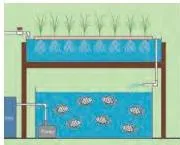
The photograph above shows the two halves side by side — the fish tank and the grow beds. The system works because water circulates between them: bacteria living in the biofilter convert fish waste into nutrients the plants can use (the nitrogen cycle), and the cleaned water returns to the fish tank (NCERT p. 62).
Each part in the materials table has one job: the fish tank holds the fish and nutrient water; grow beds hold the plants; grow media (gravel or clay pellets) support the roots and filter the water; the pump circulates water; the aerator adds oxygen for the fish; and a water testing kit checks pH, ammonia, oxygen and temperature (p. 62).
Quality checks (pp. 62–63): water clean and odour-free; pH slightly acidic to neutral; new leaf growth; fish active and feeding regularly; smooth flow with no blockages. One sequencing rule from the steps matters most: start the nitrogen cycle with a few fish or an ammonia additive before adding the full fish load (p. 63).
Pisciculture
Pisciculture raises fish in ponds or tanks, and its success rests on one idea: fish health depends on the water — its cleanliness, temperature, dissolved oxygen and the regularity of feeding (NCERT p. 64).
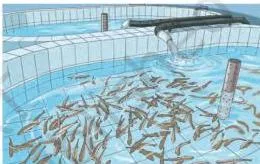
The photograph above shows fish in a managed water body. The point of the image is that you manage the environment, not the fish alone: the pond base is cleaned and treated with lime and organic manure, water is tested for pH, dissolved oxygen, temperature, ammonia and nitrite, and aeration keeps oxygen levels up (pp. 64–65).
Note the two growth stages in the keywords. Spawn are newly hatched baby fish; juveniles are older and stronger. Both are introduced according to size, and before that, cow dung slurry or manure is added to stimulate plankton — the tiny plants and animals that serve as natural starter food (p. 64).
Feeding discipline (p. 65): rice bran and vegetables such as kale and spinach, fed twice daily, with feeding trays so leftover feed is visible. Overfeeding matters because leftover feed raises ammonia in the water. Every two weeks, sample fish with nets, measure average weight, and adjust feed accordingly.
Backyard Poultry
Backyard poultry is the chapter’s argument that farming does not need large spaces: a small flock can be managed in home courtyards, verandas, or simple sheds built from locally available materials (NCERT p. 65).
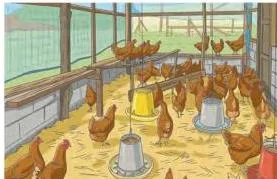
The photograph above shows birds kept in a backyard setting — exactly the section’s point, that small spaces are enough when housing, feed, water and hygiene are managed.
Two shelters do different jobs. A coop is the small shelter that keeps birds safe and protected; a brooder is a specially warmed house for very young chicks, because warmth is one of the essential conditions for rearing them (p. 65).
The daily work is hygiene. The quality parameters ask for dry bedding, wet bedding removed promptly, water changed daily and tested for E. coli, limited outsider entry, and sick birds separated (pp. 65–66). Feed is grains, mash and kitchen greens, stored in closed containers.
The six steps run from layout and preparing the coop, through introducing chicks and managing them, to monitoring growth and collecting eggs gently (p. 66).
Non-Timber Forest Produce
Non-Timber Forest Produce (NTFP) is the chapter’s name for forest products that support nutrition, health and livelihoods without cutting down trees — honey, medicinal plants, resins, gums, fruits, seeds, leaves and bamboo (NCERT p. 67).
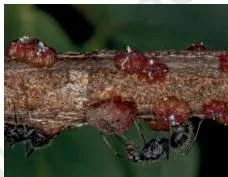
The photograph above shows collected forest produce — the end point of a five-step collection process that runs from selecting a safe forest area, to maintaining the growth medium of the host, managing and monitoring it, and finally harvesting, sorting, drying and storing the produce (p. 68).
Two keywords carry the section’s meaning. Sustainable means using a resource carefully so it keeps renewing for future use; the quality parameters make it concrete: no uprooting, partial collection, and no damage to host trees (p. 67).
Lac is a natural resin made by a tiny insect on ber and kusum trees, used for varnish, toys, dyes and polishes; mulching is covering soil with dry leaves, straw or grass to protect it.
Tools from the materials table: collection baskets, sickles and hand pruners, knives for trimming bark and scraping gums, gloves, sieves to remove dirt, and storage jars that keep moisture out (p. 67).
Figure Walkthrough: What the Five NCERT Photographs Show
The five photographs in this chapter are already embedded in the Key Concepts sections above. This table collects them so you can check each image against the one detail that matters.
| NCERT page | What the photo shows | What to learn from it |
|---|---|---|
| p. 61 | Mushroom mycelium spreading through the growing substrate | Mushrooms grow through a root-like network, not from seeds |
| p. 62 | An aquaponics system with a fish tank and grow beds together | Fish waste feeds plants in one closed recirculating loop |
| p. 64 | Fish in a managed pond or tank | Water conditions decide fish health |
| p. 65 | Poultry kept in a backyard setting | Small spaces are enough for a home flock |
| p. 67 | Collected forest produce | NTFP collection ends in sorting, drying and storage |
Key Terms Glossary: Additional Vocations Vocabulary
The chapter scatters its definitions in keyword boxes — one per section. This table collects every keyword box in the chapter into one place for revision.
| Term | Plain meaning | NCERT page |
|---|---|---|
| Mycelium | The thread-like, root-like network that spreads through the substrate and absorbs nutrients | p. 61 |
| Sterilisation | Cleaning the growth medium so it is free of germs and other organisms | p. 61 |
| Spawn (mushroom) | Substrate that already contains growing mycelium; it acts as the growth initiator | p. 61 |
| Substrate | The base medium — straw, sawdust or compost — that mushroom mycelium grows through | p. 61 |
| Inoculation | Adding spawn into a larger sterilised substrate | p. 61 |
| Incubation | Keeping the inoculated substrate in conditions that let mycelium grow through it | p. 61 |
| Nitrogen cycle | The process in which bacteria convert fish waste into nutrients plants can use | p. 62 |
| Biofilter | A filter of beneficial bacteria that purifies the water in an aquaponics system | p. 62 |
| Flow rate | How fast water moves through the aquaponics system | p. 62 |
| Aeration | Adding air or oxygen to water to keep fish healthy | p. 64 |
| Plankton | Tiny plants and animals floating in water; the natural starter food for fish | p. 64 |
| Spawn (pisciculture) | Newly hatched baby fish | p. 64 |
| Juveniles | Young fish, older and stronger than newly hatched spawn | p. 64 |
| Coop | The small shelter where chickens are kept safe and protected | p. 65 |
| Brooder | A specially warmed house for very young chicks | p. 65 |
| Feeding response | How actively and eagerly chicks eat, a sign of their health | p. 65 |
| E. coli | Bacteria in contaminated water that can make humans and chickens sick | p. 65 |
| Wet bedding | Damp litter on the coop floor; it must be removed promptly to prevent disease | p. 65 |
| NTFP | Natural forest products such as honey, medicinal plants, resins, gums, fruits, seeds, leaves and bamboo, collected without cutting down trees | p. 67 |
| Sustainable | Using a resource carefully so it keeps renewing and remains available for future use | p. 67 |
| Lac | A natural resin made by a tiny insect on ber and kusum trees; hardens on branches and is collected for varnish, toys, dyes and polishes | p. 67 |
| Mulching | Covering soil with dry leaves, straw, grass or plastic sheets to protect it and help plants grow | p. 67 |
Common Mistakes with These Vocations (and How the Chapter Corrects Them)
The chapter never lectures about mistakes directly, but its quality and safety parameters quietly correct the ones beginners make. Each row below names the mistake, the book’s rule, and how to check it.
| Mistake | Correct rule | How to check your work |
|---|---|---|
| Treating spawn as a seed | Mushrooms grow from spores; spawn is substrate that already carries growing mycelium and acts as a growth initiator, not a seed (NCERT p. 61) | Spawn should show white, fresh, uncontaminated mycelium — a growth network, not a seedling |
| Letting the substrate get soggy | The substrate must be damp, not soggy, with humidity at 80–90 per cent (p. 62) | Use the chapter’s squeeze test — a damp handful should not release water |
| Adding the full fish load before the nitrogen cycle starts | Start the nitrogen cycle with a few fish or an ammonia additive before adding all fish (p. 63) | Test water with the kit until the cycle is established before the full load |
| Overfeeding fish | Leftover feed raises ammonia in the water; feed twice daily and use feeding trays (p. 65) | Check the feeding tray after feeding — visible leftovers mean a smaller next portion |
| Leaving wet bedding in the coop | Wet bedding must be removed promptly to prevent disease (p. 66) | Check the coop floor daily; bedding should stay dry and must be replaced once wet |
| Uprooting plants while collecting NTFP | Sustainable harvesting means partial collection, no uprooting and no damage to host trees (p. 67) | Before cutting, confirm you are taking only the mature leaf, seed or resin, not the whole plant |
| Mixing up quality and safety parameters | Quality describes the produce or the animal; safety describes people, tools and the environment — the book prints both lists for every vocation | Ask: does this sentence describe the product, or the worker and workspace? |
How to Study Chapter 4: What the Chapter Itself Emphasises
Textbook contents and the examinable syllabus are not always identical, so check the current official CBSE skill education syllabus for what is assessable this session. What the chapter itself rewards is its repeated structure — study that structure and the details fall into place.
- The repeated process cycle — design, prepare, initiate, manage, monitor, harvest — runs through four vocations in six steps and NTFP collection in five. Learn it once, then fit each vocation into it.
- The quality versus safety distinction is applied to every vocation. Quality judges the produce, animal or system; safety judges people, tools and the environment.
- Term-to-vocation matching: the chapter’s keywords identify a vocation faster than its description does.
| Keyword or part | Vocation it belongs to |
|---|---|
| Spawn and mycelium | Mushroom cultivation |
| Biofilter and bell siphon | Aquaponics |
| Feeding trays and juveniles | Pisciculture |
| Coop and brooder | Backyard poultry |
| Lac and mulching | Non-Timber Forest Produce |
Chapter 4 in a Nutshell: One Line per Vocation
Use this table for the night before your test: each vocation compressed to what it produces, what it depends on, the condition that decides success, and one keyword to remember.
| Vocation | What it produces | Key material it depends on | The condition that decides success | One keyword |
|---|---|---|---|---|
| Mushroom cultivation | Edible mushrooms | Spawn and sterilised substrate (straw, sawdust or compost) | Temperature 25–30°C and humidity 80–90 per cent | Spawn |
| Aquaponics | Fish and soil-free vegetables together | Fish tank, grow beds, pump and grow media | The nitrogen cycle, driven by bacteria in the biofilter | Biofilter |
| Pisciculture | Fish raised to marketable size | Pond or tank, nets and feeding trays | Water quality and measured feeding | Feeding trays |
| Backyard poultry | Eggs and meat at home | Coop, bedding, feed and fencing | Hygiene and a predator-proof coop | Brooder |
| NTFP | Forest products collected without cutting trees | Collection baskets, sickles, gloves and storage jars | Sustainable harvesting in a clean forest area | Lac |
Under the table runs the chapter’s shared skeleton: design, prepare, initiate, manage, monitor, harvest — six steps for four vocations, five for NTFP collection.
Related Resources: Class 9 Skill Education
This listing is maintained for the 2026-27 academic session using the NCERT textbook information available to us. NCERT remains the authority for confirming the latest edition.
Chapter 4 sits inside the Kaushal Vikas Class 9 book, which introduces students to a range of skills and vocations. Browse the Kaushal Vikas Class 9 book page to open other chapters, or visit the Class 9 hub for the other subjects and notes on this site.
Related Kaushal Vikas chapters include Precision Farming and Work with Machines and Materials; you can also browse the full notes collection.
| What the chapter holds | Count | Where it is used |
|---|---|---|
| Printed pages | 8 | |
| Figures with NCERT captions | 5 | |
| Tables | 7 | |
| Official NCERT PDF | Download the chapter PDF | the chapter exactly as NCERT publishes it |
Reference: NCERT Class 9 Kaushal Vikas textbook, chapter 4, official edition on ncert.nic.in.
Sources and Data Verification
- The material described here is NCERT’s Kaushal Vikas Grade 9 textbook, Chapter 4, Additional Vocations, printed pages 61–68, as published on ncert.nic.in.
- This page covers that single chapter of the Kaushal Vikas book, not other Class 9 subjects or books.
- The listing is maintained for the current academic session using the NCERT information available to us.
- NCERT settles textbooks, editions and PDFs; CBSE settles curriculum, syllabus and examinations.
FAQs on Additional Vocations Class 9
What is the difference between spawn and substrate in mushroom cultivation?
The substrate is the base medium — straw, sawdust or compost — that mushroom mycelium grows through. Spawn is a portion of substrate that already carries growing mycelium, so it acts as a growth initiator. Inoculation is the step where spawn is added into a larger sterilised substrate, and incubation then lets the mycelium spread through it (NCERT p. 61).
How does the nitrogen cycle work in an aquaponics system?
The nitrogen cycle is the process where bacteria convert fish waste into nutrients that plants can use (NCERT p. 62). The bacteria live in the biofilter, which consists of beneficial bacteria and purifies the water.
As water circulates from the fish tank to the grow beds, the waste is broken down into plant food and the cleaned water returns to the fish tank — which is why the system keeps running without added chemicals.
Why should you avoid overfeeding fish in pisciculture?
Leftover feed does not disappear — it breaks down and raises ammonia in the water, which harms the fish (NCERT p. 65). The chapter’s discipline is to feed rice bran and vegetables twice daily and to use feeding trays so any wastage is visible. If the tray still holds feed after feeding time, reduce the next portion.
What is a brooder in backyard poultry and why do young chicks need one?
A brooder is a special warm house for very young chicks (NCERT p. 65). Warmth is one of the essential conditions for successful rearing, and the brooder keeps new chicks warm, dry and protected. The chapter’s layout step builds it from a cardboard or wooden box, an electric bulb, a bowl for water and sawdust bedding (p. 66).
Which products count as Non-Timber Forest Produce and how should they be collected?
NTFP covers natural forest products such as honey, medicinal plants, resins, gums, fruits, seeds, leaves and bamboo — items that support nutrition, health and livelihoods without cutting down trees (NCERT p. 67). Collection must follow sustainable harvesting: no uprooting, partial collection only, and no damage to host trees.
The quality parameters also require a clean, unpolluted collection site, produce at the right maturity stage, and clean handling with gloves.
Is Chapter 4 of Kaushal Vikas Class 9 part of the exam syllabus?
Textbook contents and the examinable syllabus are not always identical. Chapter 4 is part of NCERT’s Kaushal Vikas Grade 9 book, but whether and how it is assessed is decided by the current official CBSE skill education syllabus, so check that document for this academic session. This page describes the textbook chapter itself and makes no claims about examination weightage.
Explore Class 9 Skill Education Books
- Previous: Precision Farming
- Next: Work with Machines and Materials
Related chapters:
- Work with Life Forms
- Rooftop Gardening
- Construction