
The Tourism class 9 chapter in NCERT’s Kaushal Vikas skill education book runs 22 printed pages. It takes you through planning and delivering a small tourism service in your own locality, and the official PDF is right below.
This page tells you what the chapter contains, explains its key ideas and portfolio tasks in order, and walks you through every numbered figure — so you can follow along in your own book instead of rereading from the start.
Tourism Class 9 NCERT Chapter 11 PDF Download
The official NCERT Class 9 Kaushal Vikas Chapter 11 Tourism PDF is hosted on ncert.nic.in and contains the chapter as printed in the book — from the opening Sanskrit verse on travel to the final “Assess your learning” questions, with the caselets, tables and portfolio tasks included.
The chapter is listed on the official NCERT textbook page for Kaushal Vikas Class 9 (book code iekv1), where you can also reach the PDF whenever you need it.
Chapter 11 Tourism at a Glance: What’s Inside the PDF
This quick orientation tells you the shape of the file before you open it — what the chapter is built around, and where its tables and closing questions sit.
The size summary at the top of this section shows the chapter’s totals — sections, figures, tables and questions — at one glance. What matters next is how the chapter is organised, and that is below.
- It opens with the Ministry of Tourism’s Incredible India campaign and a Sanskrit verse on travel — “one who travels the world… their intelligence expands, just as a drop of oil expands on water” (p. 185).
- It follows one team — students of Government High School — as they plan and run a heritage walk in their own locality.
- Numbered tables run from Table 11.1 (process chart, p. 188) to Table 11.7 (materials checklist, p. 201).
- A sample information brochure for Fort Kochi appears on p. 197; a consent form, a tourism map, a script diagram, a poster and a site-visit photo appear as numbered figures.
- The chapter closes with an eight-question “Assess your learning” set (p. 206).
- This is a skill education book, not one of the main academic subject books — it is taught through project work and a portfolio.
Use the section-by-section map below to jump straight to the stage you are working on.
What the Tourism Chapter Covers, Section by Section
This is a navigation map. Find the stage of the project you are working on, and the table below takes you to the exact page it lives on.
| Section | NCERT page | What happens in it |
|---|---|---|
| 11.1 Introduction | 186-187 | Why tourism matters, kinds of travel experiences, responsible tourism |
| 11.2.1 Scoping the work | 187 | Four decisions: type of service, materials, usefulness, delivery location |
| 11.2.2 Making the process chart | 188 | A task table with dates and responsibility, built on Chapter 9 |
| 11.3 Site visit | 189 | Observe a working site, talk to a practitioner, use Table 11.2 |
| 11.4 Selecting materials | 190 | Consumables — stationery, dustbins, water bottles, safety kit |
| 11.5 Selecting tools | 191 | Devices — tablet, map/GPS, speaker — each with a safety note |
| 11.6 Bill of Materials | 191-192 | Visible and hidden costs; the labour formula |
| 11.7 Consent form | 193 | What you provide, safety, charges and refunds, photo consent |
| 11.8 Preparation for service and safety | 194-195 | Safety planning and accessibility for persons with disabilities |
| 11.8.1 Preparing a tourism map | 195-196 | Places of interest, facilities, routes |
| 11.8.2 Making an information brochure | 196-197 | Verified facts, timings, emergency numbers; Fort Kochi sample |
| 11.8.3 Preparing a script | 198 | Facts + stories + minute instructions; mock presentation |
| 11.8.4 Signages and protection of monuments | 199 | Signs for toilets, rest points, safe and unsafe spots; monument law |
| 11.8.5 Promoting the service | 200 | Match the medium to the audience size |
| 11.9.1 Pre-tour checklist and itinerary | 200-202 | Day schedule (Table 11.6) and materials checklist (Table 11.7) |
| 11.9.2 Engaging with tourists | 202-203 | Attire, patience, care for elders and children, pre-tour reminders |
| 11.9.3 After the service | 204 | Feedback, waste segregation, site restoration, documentation |
| 11.10 While performing the service | 205 | Five on-day rules for a smooth tour |
| 11.11 Assess your learning | 206 | Eight closing questions |
None of these headings is a separate topic. They are the stages of one small tourism service, in the order you perform them — plan in this order and the project stays on schedule.
Key Concepts: How a Class 9 Tourism Service Is Built
This chapter is a do-it-yourself project, not a set of tourism facts. Each section produces one piece of a small real service — a decision, a chart, a form, a product — and the pieces fit together in order.
What tourism means here
The tourism industry helps people visit places that enrich them by their uniqueness and beauty. Behind every pleasant journey stand guides, storytellers, drivers, artisans, hospitality staff and volunteers (p. 186).
The book lists five kinds of travel experiences:
- community and eco-village stays, homestays
- tribal and cultural heritage tourism
- cycling and walking trails
- river, lake and forest tourism
- spiritual and wellness journeys
The attitude behind the whole chapter is Atithi Devo Bhava — “guests are equivalent to gods” (p. 186). Modern tourism adds responsible tourism: leaving no waste, keeping noise low and protecting the habitat (p. 187).
Scoping the work: four decisions
Before any planning, the chapter makes you scope the work — decide exactly what service you will offer. The four decisions are:
- Type of service — based on where your school is: a visit to an old school, a festival celebration, a mandi, a food street or a religious site.
- Availability of materials and resources — maps, photographs, tablets, stationery, and elders in the community who know the stories.
- Usefulness and relevance — will it highlight local heritage and make people want to visit? Ask local people and any tourists what is special.
- Where the service will be delivered — inside the school (an exhibition) or outside (a nearby site); check accessibility, safety, distance and permissions.
The service must be small-scale and manageable, and easily organised around the school (p. 187).
Process chart
The process chart is the chapter’s first planning tool — a table of tasks, dates and responsibility. It prevents confusion by locking every job to a person and a deadline, and keeps the service on schedule (p. 188). It builds directly on the efficiency ideas of Chapter 9.
Site visit
You do not plan from imagination. The chapter sends you to a working tourism site to observe and interview an expert — a tourist guide, travel agent, museum attendant, hotel or homestay staff member, or a local artisan — with a teacher present (p. 189). Table 11.2 gives six lenses for the visit:
- tools and materials
- key processes
- scheduling and organisation
- safety
- quality and visitor satisfaction
- use of technology
Materials vs tools
The chapter separates what you buy from what you use. Materials are consumables — stationery, dustbins or disposable bags, water bottles and a safety kit, each with a safety note (Table 11.3, p. 190). Tools are devices — a tablet or smartphone, a map or GPS, and a speaker — again each with a note (Table 11.4, p. 191).
Bill of Materials (BoM)
Every service has a cost, and the chapter makes you cost it honestly. Some costs are small and visible — chart paper, pens. Others are hidden: preparation time, delays, cancellations, weather changes, and the higher cost of running services in remote areas (p. 191).
The formula the book uses for the value of labour is:
\( \text{value of labour} = \text{hours spent} \times \text{hourly estimate} \times \text{number of people} \) Worked example — a festival tour with new costs. The table below is an original BoM built with the chapter’s own method:
| Item | Quantity | Estimated cost (₹) | Remark |
|---|---|---|---|
| Decor for the venue | 1 set | 300 | Reuse from school events |
| Paper cups and plates | 4 packets | 80 | Biodegradable |
| Waste bags | 4 packets (40 bags) | 120 | Separate colours for dry and wet waste |
| Itinerary printouts | 40 sheets | 80 | Timings verified before printing |
| First-aid kit | 1 | Borrowed from school | Check expiry dates |
| Labour: setting up | 2 h × ₹40 × 3 people | 240 | |
| Labour: guiding visitors | 2 h × ₹60 × 2 people | 240 | |
| Labour: cleaning up | 1 h × ₹40 × 2 people | 80 | |
| Total | 1,140 | Materials ₹580 + labour ₹560 |
Notice how the labour rows use the formula exactly: for guiding, \( 2 \times 60 \times 2 = 240 \) rupees. Add materials (₹580) and labour (₹560) separately, and the total is ₹1,140. Check that your own BoM reconciles the same way.
Consent form
A consent form is a clear communication of what the service provider will provide and what the tourist can expect — not a legal document (p. 193). It builds trust and avoids confusion. A consent form must cover four things:
- what you will provide
- safety expectations
- charges and refunds
- consent for photographs
Four preparation products
Once the plan is set, you make four items before the service day. Each is one portfolio piece in itself:
- Tourism map (pp. 195-196) — unlike a geographical map, it focuses on places of interest, useful facilities (washrooms, drinking water, parking, eateries) and safe routes, drawn with clear symbols.
- Information brochure (pp. 196-197) — history, culture, timings, entrance fees, emergency numbers, hotels and homestays; every fact must be verified and authentic. The Technology and AI box (p. 197) suggests apps for creating e-brochures.
- Script (p. 198) — facts mixed with legends, festivals and anecdotes, plus minute operational instructions like when to rest or where to remove shoes. A mock presentation with teacher feedback improves it.
- Signages (p. 199) — labels for exhibits, safe and unsafe spot signs, rest points, “Do Not Touch” or “Fragile” signs, and zero-waste messages.
Protecting monuments is a legal duty
The signages section carries a law that many students miss. The chapter states it clearly:
- Article 51A(f) of the Constitution makes valuing and preserving the country’s rich heritage and culture a fundamental duty.
- Section 30 of the Ancient Monuments and Archaeological Sites and Remains Act, 1958 — destroying, removing, injuring, altering, defacing (including by writing, scribbling, carving or painting) or misusing a protected monument is punishable by up to two years’ imprisonment, a fine of ₹1 lakh, or both.
- The Prevention of Damage to Public Property Act, 1984 also punishes damage to heritage sites.
The book’s instruction is direct: stop people from writing on the walls of monuments and other public places during your tour (p. 199).
Promoting the service
Promotion depends on how the target audience prefers to receive information, and how many people you want to reach. A few people — personal invitations or printed material. A large number — digital media and social group platforms. Either way, the communication must be inviting and catchy (p. 200).
Engaging with tourists
Tourism services are about behaviour, care and confidence, not only information (p. 202). Wear neat, comfortable clothes. Stay patient and calm under heat, noise or crowding. When a request is not possible, refuse politely but firmly, with an apology — not with irritation.
Take special care of elders and children: offer help, remind them of uneven ground or steps, offer water and suggest rest points. Before the tour, give friendly reminders — an umbrella, sunglasses or caps, water, comfortable shoes, a light jacket.
The chapter’s “Check your understanding” activity (p. 203) presents four situations. Here is how the chapter’s own rules handle each:
| Situation on the walk | How the chapter’s rules handle it |
|---|---|
| Hot and humid weather | Keep everyone hydrated; offer water, suggest resting points and slow the pace. |
| One elder walks slowly | Walk at their pace; offer help, warn about uneven ground or steps, offer water and rest stops. |
| A visitor suggests another spot | Refuse politely but firmly, with an apology — the chapter’s model reply: “Sorry Madam, we understand your suggestion. But if we go there now, it may get dark.” |
| Some children move ahead of the group | Bring them back calmly, keep the group together and manage crowd movement; the provider is responsible for guiding tourists safely (p. 203). |
Aftercare
The service is not over when the tour ends. Take written feedback or short video and audio comments from service users (p. 204). Segregate waste into dry and wet, dispose it responsibly, and clean and restore the site to its original condition.
Then document the tour in a write-up or photo story for the school blog — with the teacher’s permission and written consent before sharing anyone’s photographs.
Walkthrough of the Figures: What Each One Teaches
The chapter’s numbered figures — 11.1 through 11.9 — each show a deliverable you will produce: a public campaign, a site visit, a form, a map, a brochure, a script, a poster. Follow them in order and you watch the project being built.
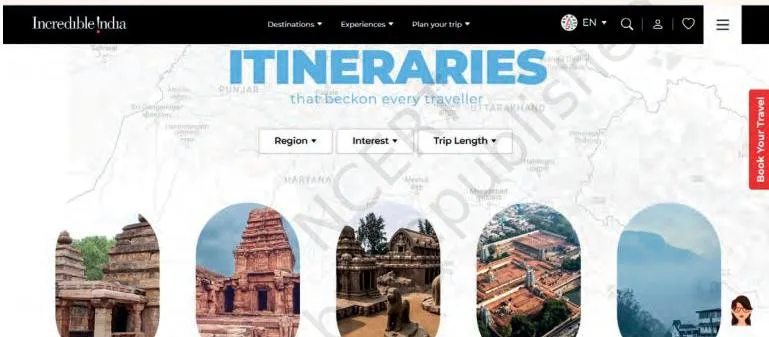
Figure 11.1 opens the chapter (p. 185). The Ministry of Tourism, Government of India launched this campaign in 2002 to encourage travellers from India and abroad to explore the country. It is the chapter’s way of saying tourism is a national priority — and a reminder that your locality is part of that bigger picture.
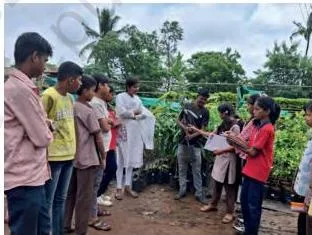
Figure 11.2 (p. 189) shows the site visit in action: students observing and talking to a practitioner before they plan. The visit matters because every decision in your process chart should be grounded in what real tourism work looks like, not in guesswork. Use Table 11.2’s six pointers while you observe.
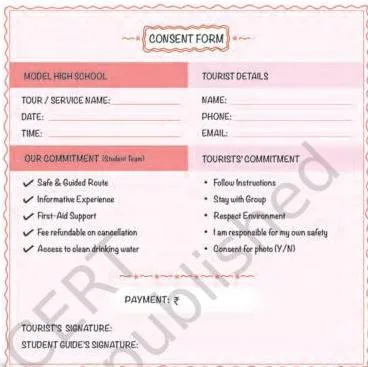
Figure 11.3 (p. 193) is the form layout the book uses. The consent form is a statement of expectations — what you will provide, safety expectations, charges and refunds, and consent for photographs. It is not a legal document; its job is to build trust before the tour begins.

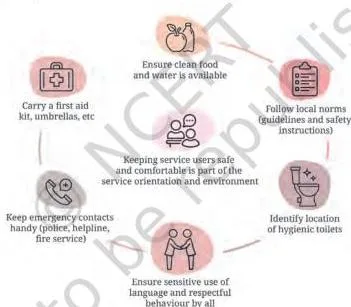
Figure 11.4 (p. 194) sets out simple safety points that apply to most tourism activities. The chapter asks you to add your own based on your location, and to discuss accessibility for persons with disabilities — accessible toilets, restaurants with ramps, and easier alternative paths (p. 195).
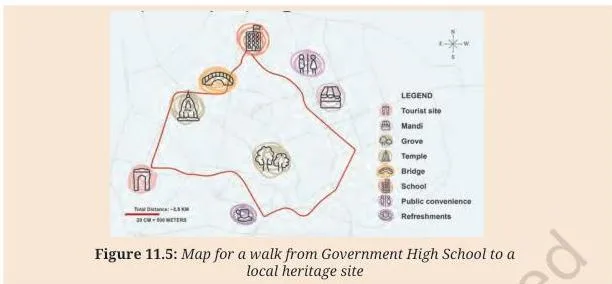
Figure 11.5 (p. 196) is a working tourism map. It shows the route from school to the site and back, and marks refreshment, clean water and toilet points along the way. This is exactly what a tourism map does: places of interest, useful facilities and safe routes (p. 195).
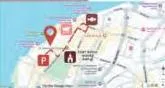
Figure 11.6 (p. 197) is the Fort Kochi sample. Its printed sections are the anatomy of a good brochure: importance and highlights, visitor timings, facilities, getting here, safety and emergency, and visitor guidelines. The rule on p. 196 is the important one — all this information must be verified and authentic.

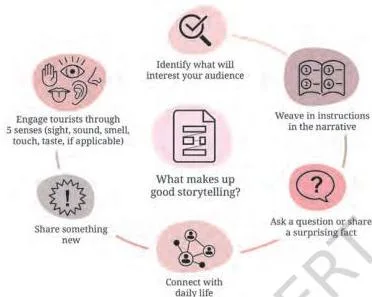
Figure 11.7 (p. 198) shows what a script is made of. History, legends, festivals and anecdotes make the tour interesting; minute instructions — when to stop for rest, where to remove shoes — make it run smoothly. The chapter recommends a mock presentation so you test the script before the real day.
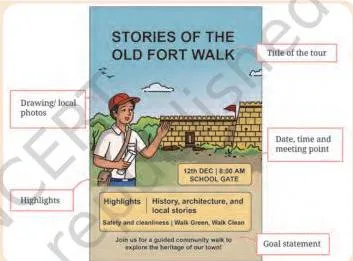
Figure 11.8 (p. 200) is the promotion piece. The medium should match the audience — personal invitations or printed material for a few people, digital media and social groups for many. Whatever you choose, the communication must be inviting enough to attract people.
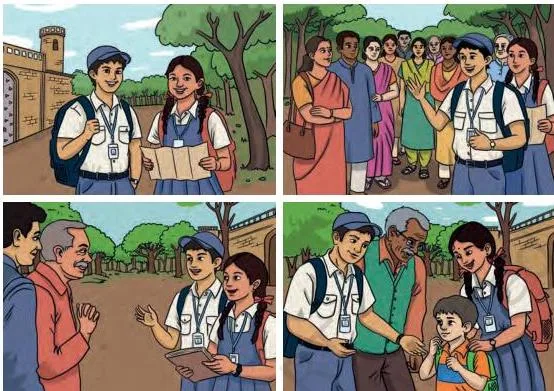
Figure 11.9 (p. 203) is about behaviour on the day: neat attire, patience, care for elders and children, and polite but firm communication. The image captures the chapter’s core claim — tourism services are about behaviour, care and confidence, not information alone.
Key Terms in the Tourism Chapter, Explained
These are the words you will use in your portfolio entries. Learn the plain meaning of each before you write, and use the concept correctly.
| Term | Plain meaning | NCERT page |
|---|---|---|
| Tourism | The industry that helps people visit places that enrich them by their uniqueness and beauty | 186 |
| Atithi Devo Bhava | “Guests are equivalent to gods” — the cultural attitude behind respectful service | 186 |
| Responsible tourism | Leaving no waste, keeping noise levels low and protecting the habitat | 187 |
| Process chart | A table of tasks with dates and responsibility, used to keep the service on schedule | 188 |
| Bill of materials | A full cost list covering bought items and the hidden value of labour | 191 |
| Consent form | A clear statement of what the provider will offer and what visitors can expect; builds trust | 193 |
| Tourism map | A simplified map showing places of interest, facilities and safe routes | 195 |
| Signage | The whole system of signs — labels, directions, safety notices — that guides tourists | 199 |
| Itinerary | The entire plan of the walk tour, task by task with timings (Table 11.6) | 201 |
| Dry and wet waste | Waste separated into dry (paper, wrappers) and wet (food) for responsible disposal | 204 |
Common Mistakes in the Tourism Project and How to Avoid Them
Most marks in this project are lost in planning, not on the day of the tour. Each mistake below is one the chapter explicitly warns about, with the NCERT page where the correction appears.
| Mistake | Correct rule | How to check your answer |
|---|---|---|
| Leaving hidden costs out of the BoM | Include labour time, delays, weather changes and remote-area costs (p. 191) | Add a labour row using hours × hourly estimate × number of people, then ask what could delay the plan |
| Treating the consent form as a legal document | Treat it as a clear statement of expectations that builds trust (p. 193) | Does it cover what you provide, safety, charges and refunds, and photo consent in plain language? |
| Trusting GPS alone for routes | Verify routes on a map in advance; do not rely only on GPS in unfamiliar areas (p. 191, Table 11.4) | Walk the route once before tour day and mark it on your map |
| Printing unverified facts in the brochure | Timings, tariffs and emergency numbers must be checked and authentic (p. 196) | Confirm one timing and one emergency number by phone before printing |
| No accessibility planning | Plan ramps, accessible toilets and easier alternative paths (p. 195) | Walk the route and note every stretch that is hard for a person in a wheelchair |
| Rejecting a suggestion rudely | Explain gently and with an apology — polite but firm (p. 202) | Would the tourist feel respected even while being refused? |
| Mixing dry and wet waste, or leaving the site dirty | Segregate waste and restore the site to its original condition (p. 204) | Check the bins after the tour and compare the site before and after |
| Letting visitors scribble on monuments | Stop them — defacing a protected monument is punishable by law (p. 199) | Place a “Do Not Touch” sign at the spot and supervise the group |
Portfolio Tasks and “Assess Your Learning”: How the Chapter Checks Your Work
This is a skill education book, not one of the main academic subject books. The chapter checks your work through the portfolio you build at every stage, and through a closing question set that tests thinking rather than recall.
Portfolio deliverables — what the chapter asks you to produce, in order:
| Deliverable | What it must show | NCERT page |
|---|---|---|
| Choice of service with reasons | Which service you chose and why | 188 |
| Process chart | Tasks, dates and responsibility | 189 |
| Site-visit notes | Observations using Table 11.2’s pointers | 189 |
| Bill of materials | Bought items plus labour value | 192 |
| Consent form | Service, safety, charges, photo consent | 193 |
| Tourism map | Places of interest, facilities, routes | 196 |
| Brochure | Verified information about the service | 197 |
| Script | Stories plus operational instructions | 198 |
| Signages | Signs prepared for the service | 199 |
| Schedule and checklist | Day plan and materials list | 202 |
| Waste list and tour write-up | Waste made, reduced, disposed; tour documented | 204 |
The eight “Assess your learning” questions (pp. 205-206) map to the skills they test:
| Question | Skill it tests |
|---|---|
| 1 — Review the service your class designed | Reflection: which decisions improved the experience, which to change, with reasons |
| 2 — Compare two tourism services | Comparison and justified choice |
| 3 — Tourists ignore local rules or damage sites | Ethics: responsibilities of tourists and service providers |
| 4 — The bus breaks down in a remote area | Contingency planning: safety, minimising inconvenience, maintaining trust |
| 5 — Plan for next year’s batch | Sustainability: training, materials, safety, communication, costing, documentation |
| 6 — Create a new tourism service idea | Creativity: purpose, people helped, process chart, safety plan, values |
| 7 — Which tasks you enjoyed most and least | Self-assessment: what went well, what to do differently |
| 8 — Apply your learning to real life | Transfer of learning beyond school |
One honest boundary: NCERT publishes the book; CBSE decides how skill education is offered and assessed in schools. Textbook contents and the examinable syllabus are not always identical — check the current official syllabus.
The Ten-Step Service Flow: From Scoping to Feedback and Reflection
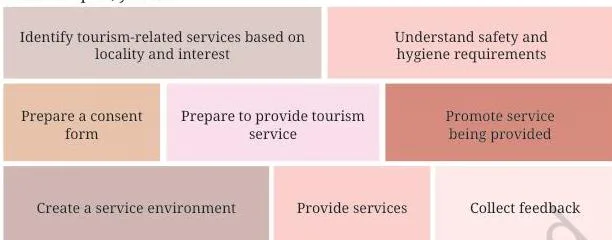
This flow is the chapter — learn the order and you have learned the book. Each step names the page where it lives.
- Scope the work — service type, materials, usefulness, location (p. 187).
- Make a process chart — tasks, dates, responsibility (p. 188).
- Do a site visit — observe a working site and interview an expert (p. 189).
- Select materials and tools — consumables and devices, with safety notes (pp. 190-191).
- Prepare a bill of materials — visible and hidden costs (pp. 191-192).
- Build a consent form — service, safety, charges, photo consent (p. 193).
- Make the preparation products — tourism map, brochure, script, signages (pp. 195-199).
- Promote the service — match the medium to the audience (p. 200).
- Deliver the tour — pre-tour checklist plus engagement (pp. 200-203).
- Aftercare — feedback, waste segregation, site restoration, documentation (p. 204).
On the day itself, the chapter’s five rules (section 11.10, p. 205) are:
- plan a clear route map with entry and exit points, rest stops, water points and emergency support;
- build the guided script from careful observation of practitioners;
- use simple, visible signages with clear language, symbols and visuals;
- engage politely, listen actively, respond clearly, and dress in suitable neat attire;
- leave every place clean and do not allow anyone to damage the sites visited.
Related Resources: Kaushal Vikas Class 9 and the Chapters Around It
This listing is maintained for the 2026-27 academic session using the NCERT textbook information available to us. NCERT remains the authority for confirming the latest edition.
Chapter 11 is part of the Kaushal Vikas Class 9 skill education notes, where you can find the other chapters of the book. The Class 9 study resources hub covers the main academic subjects too, and the CBSE notes library is the index for all classes.
The chapter explicitly builds on Chapter 9: the process chart (p. 188), the consent form (p. 193) and the idea that quality services are user-centric and improve through feedback (p. 202) all come from it. If a section here feels unfamiliar, read Chapter 9 first. For related skill subjects, see the healthcare chapter notes and the other additional skill chapters.
The official source for the file is the NCERT textbook page for Kaushal Vikas Class 9 (book code iekv1); the direct NCERT Class 9 Kaushal Vikas Chapter 11 Tourism PDF is also linked at the top of this page if you want to jump straight to it.
Sources and Data Verification
Four plain facts about where the information on this page comes from:
- The figures, tables and page numbers cited on this page describe the NCERT Class 9 Kaushal Vikas textbook, Chapter 11 (Tourism), current printed edition, pages 185-206.
- This page covers that one chapter. It does not cover other Kaushal Vikas chapters in detail; the related-resources links above open those pages.
- This listing is maintained for the current academic session using NCERT’s published information.
- NCERT settles the textbook, its editions and the official PDF; CBSE settles the skill-education curriculum and examinations.
Questions Students Ask About the Tourism Chapter
Direct answers to the questions this chapter’s readers most often ask.
Is the NCERT Class 9 Tourism chapter a theory chapter or a project to do?
It is a project to do. The chapter’s purpose is to plan and deliver a small tourism service in your own locality (p. 186): you decide the service, chart it, visit a site, cost it, and produce a map, brochure, script and signages. Portfolio tasks follow every stage, and “Assess your learning” closes the chapter (p. 206).
What is a Bill of Materials (BoM) in the Tourism chapter and how do you estimate labour cost?
A BoM is the complete cost list for the service: bought items plus the value of everyone’s time (p. 191). The labour formula is hours spent × hourly estimate × number of people.
The book’s own example costs cleaning at 1 hour × ₹50 × 2 people — ₹100 (Table 11.5). For a new example, 2 hours at ₹40 per hour for 3 people gives \( 2 \times 40 \times 3 = 240 \) rupees of labour.
Is the consent form in the Tourism chapter a legal document?
No. The chapter states plainly that a consent form is not a legal document but a way to state expectations from both sides, building trust, avoiding confusion and ensuring safety (p. 193). It must cover what you will provide, safety expectations, charges and refunds, and consent for photographs.
What safety points does the chapter give for a school tourism service?
Figure 11.4 (p. 194) sets out simple safety points for most tourism activities, and the chapter asks you to add your own for your location. Accessibility is part of safety: identify accessible toilets, check for ramps in restaurants, and find easier alternative paths for persons with disabilities (p. 195).
Tool notes add two more rules: do not use a tablet while crossing roads, and verify routes rather than relying only on GPS (p. 191, Table 11.4).
What does the law in the chapter say about protecting monuments?
The chapter cites two laws. Article 51A(f) makes preserving the country’s rich heritage and culture a fundamental duty. Section 30 of the Ancient Monuments and Archaeological Sites and Remains Act, 1958 makes damaging or defacing a protected monument — including by writing, scribbling or carving — punishable by up to two years’ imprisonment, a fine of ₹1 lakh, or both.
The Prevention of Damage to Public Property Act, 1984 also covers damage to heritage sites (p. 199).
What kind of questions does the “Assess your learning” section at the end of the chapter ask?
Eight open-ended questions, all thinking questions rather than recall (p. 206). They ask you to review and justify decisions, compare services, discuss tourist ethics, plan for a bus breakdown, design a handover plan for the next batch, create a new service idea, self-assess your tasks, and apply the learning to real life.
| What the chapter holds | Count | Where it is used |
|---|---|---|
| Printed pages | 22 | |
| Sections in the chapter | 21 | |
| Figures with NCERT captions | 25 | |
| Tables | 9 | |
| Worked examples | 6 | solved step by step in our NCERT Solutions |
| In-text questions | 7 | |
| Official NCERT PDF | Download the chapter PDF | the chapter exactly as NCERT publishes it |


Reference: NCERT Class 9 Kaushal Vikas textbook, chapter 11, official edition on ncert.nic.in.
Explore Class 9 Skill Education Books
- Previous: Healthcare
- Next: Additional
Related chapters:
- Work with Life Forms
- Rooftop Gardening
- Precision Farming