
Looking for the dance, you class 7 chapter from NCERT? This page carries the official PDF of Chapter 12, “Dance, You” — full running title “Dance, You and Creativity” — from the Kriti (Arts) textbook for Class 7. The printed chapter runs about 7 pages in the current NCERT edition.
The PDF is below. After it comes a plain-language account of what the chapter holds: the four hip movements, the two dance-drama traditions, the transformation brought by Tagore and Uday Shankar, and the three activities you will do in class.
Download the Dance, You Class 7 chapter PDF
This chapter is published by NCERT as a free PDF as part of the Kriti (Arts) textbook for Class 7. The file is Chapter 12’s own PDF from the official NCERT portal, file code gekr112, so you get the exact printed chapter, not a scanned copy or a summary.
Open the official file here: dance, you class 7 chapter PDF — the complete Chapter 12 of Kriti (Arts) Class 7 as published by NCERT, with every figure, activity and table from the printed book.
Chapter 12 Dance, You at a glance
The table below lists what Chapter 12 holds — its sections, captioned figures, activities and exercise questions — so you can see the chapter’s size at once.
What the numbers cannot tell you is the chapter’s shape: movement first, tradition second, transformation third, and your own composed dance at the end.
What Chapter 12 Dance, You covers
Dance, You moves in one direction: from the smallest unit of movement to a complete dance you compose yourself. Six stops mark the path.
- The hips as body vocabulary. The chapter opens with the kati, a body part named in the Natyasastra, and shows four hip movements used across Indian dance.
- Two dance-drama traditions. The Traditions and Transformations section introduces Bhagavata Mela Natakam of Melattur and Ankiya Bhaona of Assam — both traditions where men traditionally played female characters.
- Transformation in the nationalist era. The chapter shows how classical dances were regenerated and contemporary dance vocabulary emerged, through Rabindranath Tagore and Uday Shankar.
- Choreography from stage to screen. A short section traces Indian dance in cinema, from Mughal-e-Azam to Garba sequences.
- Three activities. The chapter is built around doing: observing, replicating, portraying a character, and composing a group dance.
- The learning-outcomes table. The final page lists what the teacher tracks — participation, props, hip comfort, creative composition, and interest in dance today.
Each stop is taught below in the same order the chapter follows.
Key concepts: the four hip movements and the dances that use them
Why does the chapter start with the hips? Because the kati — the hip — is a body part named in the Natyasastra, the ancient Indian treatise on performance. In Indian dance, hip movement carries the rhythm and emotion of the song, and the chapter describes it as marked by grace, precision and fluidity.
The chapter gives four movements, each tied to a dance family:
| Hip movement | Dance form in the chapter | What to observe |
|---|---|---|
| Twisting | Garbha (Garba) | The twist happens inside the turn — the hip leads the rotation as the dancer spins. |
| Side to side | Kalbelia | The hip sways evenly from one side to the other; common in many folk dances. |
| Back and front | Bihu and Chhau | The hip moves forward and backward in the step, not sideways. |
| Circular | Sapera dance of Rajasthan | The hip makes a full circle, the way you rotate a hula hoop. |
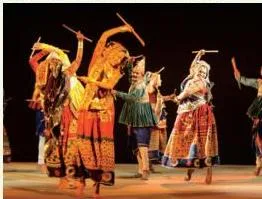
Look at the Garbha photo first. The twist is not an extra sway added to the step — it is built into the turn. When you practise it, the hip starts the rotation and the rest of the body follows.
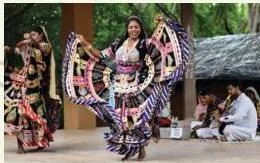
In the Kalbelia figure the movement is the reverse: the hips sway side to side while the upper body stays relaxed. The chapter’s point is that the same body part does different work in different traditions.
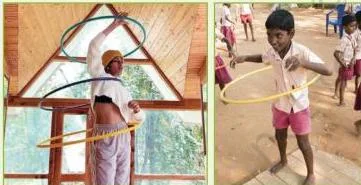
The Sapera dance of Rajasthan uses circular hip movement. The chapter’s hula-hoop question is the trick to getting it: rotate the hips in a circle as if turning a hoop, and you have the snake-dance motion.
Activity 12.1 sends you from these pictures into practice: observe such hip movements in different Indian dances, replicate them, and then create your own dance with characters and animals, adding appropriate hip movements.
Two dance-drama traditions: Bhagavata Mela Natakam and Ankiya Bhaona
This section groups two traditions because both go beyond boundaries. In both, men have traditionally played female characters — as in the work of the Kuchipudi dancer Vedantam Satyanarayana Sarma, who performed in female costume — and one of them, like the Chhau you met in Grade 6, uses masks.
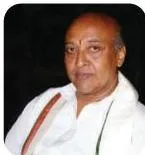
The figure beside the discussion of Vedantam Satyanarayana Sarma shows a performer in female costume — the exact point the section makes before introducing the two traditions.
| Bhagavata Mela Natakam | Ankiya Bhaona | |
|---|---|---|
| Region | Melattur, Tamil Nadu | Assam |
| Origins | Grew from the Kuchipudi line of Tirtha Narayana Yati and Siddhendra Yogi; bhagavatars moved from Andhra after the decline of the Vijayanagara Empire and were patronised by the Nayaka kings in the Thanjavur region. | Ankiya Nat developed in the 15th century CE, following the Vaishnavite tradition of singing and dancing. |
| Where it happens | The main performance, Prahlada Charitam, is staged at the Varadaraja Perumal temple during Narasimha Jayanti in May or June. | In namghars and sattras, where monks performed Bhagavata Purana stories through music and dance; the most important is the Kamalabari Sattra in Majuli. |
| Performance features | Conventionally male dancers play the roles of women. | The staged production, bhaona, combines live instruments, singers, dance and elaborate costumes; masks are important props. |
| Language and opening | A centre of fine arts; Sanskrit scholars such as Gopal Krishna Shastri and Venkatrama Shastri were associated with it. | Opens with a Sanskrit benediction; the songs are in Brajaboli. |
| Famous names | Natesha Iyer, G. Swaminathan, Balu Bhagavathar, T.V. Natesh Bhagavathar and N. Sreekanth Natarajan; E. Krishna Iyer revived the tradition with the Madras Music Academy around 1950. | Developed and sustained within the Vaishnavite sattra tradition. |
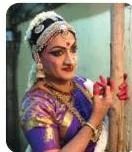
The chapter fixes Bhagavata Mela in place with this detail: its main performance is Prahlada Charitam, staged at the Varadaraja Perumal temple when Narasimha Jayanti falls in May or June. The figure records that temple staging.
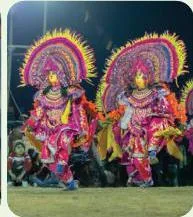
The Sita mask carries the section’s idea: my character determines costume and my movement. A mask turns the performer into the character. Activity 12.2 asks you to use that idea — decide on a character, such as a lady’s movement or a peacock costume, then choose your hip movement or mask to portray it.
From tradition to transformation: Tagore, Uday Shankar and dance on screen
During cultural reconstruction with the nationalist movement, classical dances were regenerated and a contemporary movement vocabulary emerged. The chapter maps that change through two creators and the cinema that followed.
| Year | Event | Why it matters |
|---|---|---|
| 1920 | Uday Shankar began dancing with Anna Pavlova, with no formal training. | He became, the chapter says, perhaps the pioneer of modern Indian dance. |
| 1921 | Rabindranath Tagore established the Vishwabharati University at Shantiniketan, one of the first fine-arts universities. | A new dance vocabulary drew on traditional dances and became Rabindra Nritya; Tagore pioneered professional dance for women. |
| 1948 | Uday Shankar’s dance film Kalpana was made. | The chapter calls it unparalleled to date. |
| Later | Indian cinema absorbed Indian dances into its choreography. | Mughal-e-Azam by Lacchu Maharaj, Jhanak Jhanak Payal Baje by Gopi Krishna, M S Subbulakshmi’s abhinaya, Birju Maharaj’s kahe ched ched mohe, and Garba and folk sequences carried dance to every part of the country. |
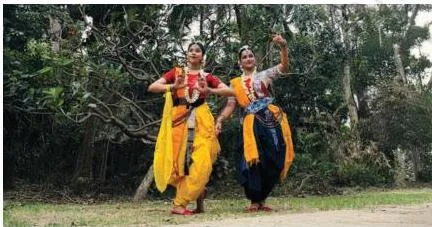
Tagore’s contribution is tied to a place. The figure presents the founder of Vishwabharati University at Shantiniketan; from that institution came Rabindra Nritya, and with it professional dance for women.
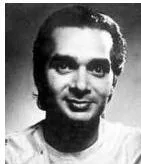
Uday Shankar matters because he built a new style from many sources: classical, folk, traditional and tribal, amalgamated into one. The chapter pairs his name with the idea of going beyond any single tradition.
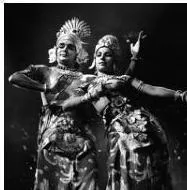
This picture comes with an instruction, not just information: watch clips of Uday Shankar and Kalpana from the chapter’s QR code, and try to dance a few phrases. The same look-then-move pattern drives the whole chapter.
Students often merge the two. Rabindra Nritya grew from Tagore’s Shantiniketan, drawing traditional dances into a new vocabulary. The Uday Shankar Style is Uday Shankar’s own amalgamation — classical, folk, traditional and tribal together in a completely new style.
The Choreography: From Stage to Screen section shows the next stage — Indian cinema used Indian dances through its whole existence. The chapter’s notable names are Mughal-e-Azam (Lacchu Maharaj), Jhanak Jhanak Payal Baje (Gopi Krishna), M S Subbulakshmi’s flair for abhinaya, Birju Maharaj’s kahe ched ched mohe, and Garba and folk sequences in movies everywhere.
Figure walkthrough: what the remaining pictures teach
This chapter teaches by looking. Each activity tells you to observe, then replicate, then create — and the pictures are the observation material. Four more figures complete the set.
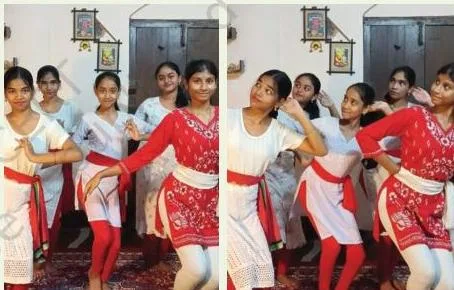
The first figure is a class watching dance. That is Activity 12.1’s opening instruction — observe such hip movements in different Indian dances — so notice what the students are doing: looking at the dancer’s hips, not just the arms or feet.

The second figure moves from watching to doing: students practicing dance using hip movements. The chapter wants you to replicate the movements before you invent your own.
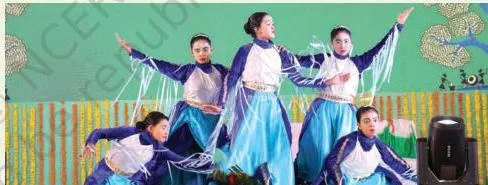
The third belongs to Activity 12.3. In groups of 1, 2, 3 and 4, each group works out different phrases of movement; the figure shows that group-composition stage before the phrases are joined.

The last figure is the finished product — students performing creative dance. Notice the grouping and the costumes: the chapter’s activities always end in performance, not just practice.
Definitions: dance terms you meet in this chapter
Keep this table beside you while reading. Each term is explained the way the chapter uses it, with the part of the chapter where it appears.
| Term | Meaning in this chapter | Where it appears |
|---|---|---|
| kati | The hip; a body part named in the Natyasastra and the chapter’s opening concept. | Opening page of the chapter |
| Natyasastra | The ancient Indian treatise on performance that names the body parts used in dance. | Opening page of the chapter |
| Garbha (Garba) | A dance that uses the movement of twisting in its style of turning. | Hip-movements pages |
| Kalbelia | A folk dance in which you observe side-to-side hip movements. | Hip-movements pages |
| Bihu | A dance tradition with back-and-front hip movements. | Hip-movements pages |
| Chhau | A dance tradition with back-and-front hip movements; a mask tradition shared with Purulia Chhau in Activity 12.2. | Hip movements and Activity 12.2 pages |
| Sapera | The snake-charmer dance of Rajasthan; uses circular hip movements like a hula hoop. | Circular hip-movement page |
| Vedantam Satyanarayana Sarma | Kuchipudi dancer who performed in female costume. | Beyond Boundaries page |
| Bhagavata Mela Natakam | Dance-drama from Melattur, Tamil Nadu, rooted in the Kuchipudi tradition; main performance Prahlada Charitam. | Traditions and Transformations pages |
| bhagavatar | Performer in the Bhagavata Mela tradition; some moved from Andhra to Melattur after the decline of the Vijayanagara Empire. | Bhagavata Mela page |
| Ankiya Nat | Dance-drama tradition from Assam, developed in the 15th century CE. | Ankiya Bhaona page |
| bhaona | A presentation of ankiya nat combining live instruments, singers, dance and elaborate costumes; opens with a Sanskrit benediction and uses songs in Brajaboli. | Ankiya Bhaona page |
| namghar | Vaishnavite hall where stories of the Bhagavata Purana were performed through music and dance. | Ankiya Bhaona page |
| sattra | Vaishnavite centre established for the singing and dancing tradition; the Kamalabari Sattra in Majuli is the most important. | Ankiya Bhaona page |
| Brajaboli | The language of the songs in Ankiya Bhaona. | Ankiya Bhaona page |
| Rabindra Nritya | The dance vocabulary developed at Shantiniketan under Tagore, drawing from traditional dances. | Rabindranath Tagore page |
| Uday Shankar Style | The modern Indian dance style created by amalgamating classical, folk, traditional and tribal traditions. | Uday Shankar page |
| choreography | Composing and arranging dance; Activity 12.3 takes you through the complete process of composing and choreographing a dance. | Stage to screen and Activity 12.3 pages |
| abhinaya | Expressive acting in dance; M S Subbulakshmi had a flair for it in her film performances. | Stage to screen page |
| swar | Musical notes; Activity 12.3 asks you to choose music, swar and rhythm variations. | Activity 12.3 page |
The three activities: how you learn this chapter by doing
Kriti is a doing-book: the activities are the chapter, not an add-on. Together they walk you from observation to a composed group dance.
- Activity 12.1: Dance with hip movements. Observe hip movements in different Indian dances and replicate them, then create your own dance with characters and animals, adding appropriate hip movements. The note to the teacher says to coordinate watching dance forms and divide the class into groups to try the ways the hip can move.
- Activity 12.2: My character determines costume and my movement. Decide on a character — a lady’s movement, a mask with side-to-side hips, or a peacock costume or mask with front-and-back hips. Recall the mask-making you learnt in theatre, then portray the character using your chosen hip movement or mask.
- Activity 12.3: My creative dance. Divide into groups of 1, 2, 3 and 4. Each group works out different phrases of movement; choose your composition, music, swar and rhythm variations, and add a situation or character with emotions. Join every group’s phrases into one complete dance — the chapter says you have then gone through the complete process of composing and choreographing a dance.
Each activity maps to the learning-outcomes table on the chapter’s final page:
| Activity | What it builds | Learning-outcome row |
|---|---|---|
| 12.1 | Comfort in using the hips, and adding them creatively to movement | 3.2 — feels comfortable in using hips in movement and creatively adds it |
| 12.2 | Using props and masks for characterisation | 3.1 — explores the use of props like masks to enhance characterisation |
| 12.3 | Creative composition from all learnt techniques, plus class participation | 3.2 — creatively uses all techniques learnt to make a dance; 2.2 — overall participation in class |
The chapter also tells the teacher to let children watch dance-movie songs such as apalam chapalam, jhanak jhanak payal baje and Sankarabharanam while working through this section.
Common mistakes students make with this chapter
This is a practical chapter, so its mistakes are practical. Five slips are worth naming before you make them.
| Mistake | Correct rule | How to check your work |
|---|---|---|
| Practising hip movements in silence | Hip movement carries the rhythm and emotion of the song | Put the song on and move with its beat; if the movement floats free of the music, restart. |
| Mixing up the movements across dances | Twisting → Garbha; side to side → Kalbelia; back and front → Bihu and Chhau; circular → Sapera | Say the dance’s name while you do its movement; the pairing should come automatically. |
| Moving the hips without a character | The costume and mask decide the portrayal; the same movement reads differently in different costumes | Fix the character first, then let costume and movement together do the work. |
| Calling these women’s dances | Both traditions had men in female roles (Vedantam Satyanarayana Sarma) and now welcome women | Explain the section’s point in one line: boundaries were crossed, not fixed. |
| Merging Rabindra Nritya with the Uday Shankar Style | One is Tagore’s Shantiniketan vocabulary; the other is Uday Shankar’s fusion of classical, folk, traditional and tribal styles | Ask who created the style — if the answer is Tagore or Shankar, you have kept them apart. |
How this chapter is assessed: the learning outcomes table
The chapter ends with a table the teacher uses to track your learning — the closest thing to assessment in this book. It lists six outcomes across competence groups 2, 3 and 4.
- 2.2 — Overall participation in class: the teacher watches whether you join in, not how perfectly you dance.
- 3.1 — Props for characterisation: using masks or other props to make a character stronger.
- 3.2 — Comfort with the hips: feeling at ease using hip movement and adding it creatively.
- 3.2 — Character postures and movements: trying different characters while using the hips.
- 3.2 — Creative composition: using every technique learnt to make a dance.
- 4.1 — Contemporary dance: interest in how dance develops today, both in tradition and in popular culture.
One honest note: textbook contents and the examinable syllabus are not always identical — for how this subject is assessed in your school, check the current official CBSE syllabus.
What to remember from Dance, You Class 7
- The kati (hip) is named in the Natyasastra; hip movement expresses a song’s rhythm and emotion with grace, precision and fluidity.
- Four movements, four families: twisting → Garbha; side to side → Kalbelia; back and front → Bihu and Chhau; circular → Sapera of Rajasthan.
- Bhagavata Mela Natakam from Melattur, Tamil Nadu: men traditionally played women; the main performance, Prahlada Charitam, happens at the Varadaraja Perumal temple during Narasimha Jayanti in May or June.
- Ankiya Bhaona from Assam: masks as props, a Sanskrit benediction at the start, songs in Brajaboli, performed in namghars and sattras; the Kamalabari Sattra in Majuli is the most important.
- Costume and mask decide the character — my character determines costume and my movement.
- 1921: Tagore founds Vishwabharati University at Shantiniketan; Rabindra Nritya grows from it, and Tagore pioneers professional dance for women.
- Uday Shankar begins in 1920 with Anna Pavlova, builds a style fusing classical, folk, traditional and tribal forms, and makes his film Kalpana in 1948.
- Cinema carried dance everywhere: Mughal-e-Azam, Jhanak Jhanak Payal Baje, M S Subbulakshmi’s abhinaya, Birju Maharaj’s kahe ched ched mohe, and Garba sequences.
- The three activities end in a group dance that you compose and choreograph yourself.
Related resources
This listing is maintained for the 2026-27 academic session using the NCERT textbook information available to us. NCERT remains the authority for confirming the latest edition.
Continue with the same chapter through the site’s Class 7 Arts material, or move around the book:
- Class 7 Arts (Kriti) notes for revision help on this book
- Class 7 hub covering all subjects for the class
- Dance vocabulary and techniques notes for movement terms
- Dance personalities notes on Tagore, Uday Shankar and other figures
The full Kriti textbook, including Chapter 12, is published free on the official NCERT portal (ncert.nic.in); the chapter’s own PDF link is at the top of this page.
Sources and data verification
- This page describes Chapter 12, “Dance, You”, of the NCERT Class 7 Arts textbook Kriti (English); its figures, terms and activities come from the NCERT edition of that chapter.
- The PDF offered is the official NCERT publication on ncert.nic.in (file code gekr112). This page covers that edition only; other arts books or editions are not described here.
- This page is maintained for the current NCERT edition of Kriti (Arts), as named in the introduction above.
- NCERT settles textbooks, editions and PDFs; CBSE settles the examinable syllabus.
| What the chapter holds | Count | Where it is used |
|---|---|---|
| Printed pages | 7 | |
| Figures with NCERT captions | 13 | |
| Tables | 1 | |
| Activities | 1 | |
| Official NCERT PDF | Download the chapter PDF | the chapter exactly as NCERT publishes it |
Reference: NCERT Class 7 Arts (Kriti) textbook, chapter 12, official edition on ncert.nic.in.
Frequently asked questions about Dance, You Class 7
What are the hip movements taught in Dance, You Class 7?
Four movements: twisting, used by Garbha in its turning; side to side, seen in Kalbelia and many folk dances; back and front, in Bihu and Chhau; and circular, in the Sapera dance of Rajasthan. Activity 12.1 asks you to observe these in different dances, replicate them, and build your own dance with characters and animals.
What is the difference between Bhagavata Mela Natakam and Ankiya Bhaona?
Bhagavata Mela Natakam comes from Melattur, Tamil Nadu, grew from the Kuchipudi line, and centres on Prahlada Charitam at the Varadaraja Perumal temple in May or June. Ankiya Bhaona comes from Assam, developed in the 15th century CE, and combines live instruments, singers, dance and elaborate costumes with masks, a Sanskrit benediction and songs in Brajaboli.
Both had men traditionally playing female roles, and both now welcome women.
Where is Ankiya Bhaona performed and what makes it unique?
It is performed in Assam, in Vaishnavite namghars and sattras — the most important being the Kamalabari Sattra in Majuli. It is unique because masks are important props, it opens with a Sanskrit benediction, its songs are in Brajaboli, and the tradition began with all-male monks performing Bhagavata Purana stories through music and dance.
Who created Rabindra Nritya and what is the Uday Shankar style?
Rabindra Nritya grew from Rabindranath Tagore’s Vishwabharati University at Shantiniketan (1921), drawing on traditional dances into a new vocabulary. The Uday Shankar Style is Uday Shankar’s own creation — he began dancing with Anna Pavlova in 1920 and amalgamated classical, folk, traditional and tribal styles into one new style, later shown in his film Kalpana (1948).
What is Activity 12.3 in Chapter 12 Dance, You?
Activity 12.3, “My Creative Dance”, asks you to divide into groups of 1, 2, 3 and 4. Each group works out different phrases of movement, then you choose your composition, music, swar and rhythm variations, add a situation or character with emotions, and join every group’s phrases into one complete dance.
Does the Dance, You Class 7 chapter have exercise questions?
No. This chapter has no numbered exercise questions. Its work is the three activities and the learning-outcomes table at the end, so check the current official syllabus for how arts is assessed in your school.
Explore Class 7 Arts Books
Related chapters: