
Looking for the Performance Class 7 chapter of the NCERT Kriti (Arts) book? It is Chapter 9 — a practical performance project that runs about eight pages in the official PDF — and the file is here.
The chapter takes you through planning a performance, preparing it and putting it on stage, with two songs to learn and six activities to complete.
Open the official NCERT Class 7 Kriti (Arts) Chapter 9 Performance PDF from the NCERT textbook portal — this is the complete chapter exactly as NCERT publishes it, not a summary or a substitute page, and it opens on any phone, tablet or computer.
Chapter 9 at a Glance
This section tells you what the eight-page chapter contains before you open it. The chapter is a project, not a reading lesson: it is divided into three parts — Plan, Prepare and Perform! — and it guides a student through six activities (9.1 to 9.6), two songs, a learning-outcome table and a summative-assessment table.
Everything in it points towards one final event: a performance your class puts on (chapter page 1).
Performance Class 7: What the Chapter Asks You to Do
This section walks you through the six activities in the order the book gives them, so you can follow along in the PDF with a finger on the page.
Part A: Plan (Activities 9.1 and 9.2)
The chapter’s first part opens with a strong claim: like most activities, the planning phase is the most important one while putting a performance together (chapter page 1). Activity 9.1 asks you to visualise a performance by answering these questions:
- Where will it be, and when?
- How long will it be?
- Who will be your audience?
- Will it have a theme and a title?
- Is it for a particular event or occasion?
- Which elements from other performances do you want to borrow?
Activity 9.2 asks you to create a song list with your teacher. Everyone contributes songs they know and like, and the list can draw on songs from this book and outside it (chapter page 2).
Worked example: a sample performance plan from the Activity 9.1 questions
Here is how the Activity 9.1 questions get answered in practice, with original numbers so you can model your own plan on it:
- Where and when: the school’s open-air stage, the last Saturday before the winter break, 5:00 pm.
- How long: 30 minutes, including a 3-minute welcome and a 2-minute thank-you.
- Audience: about 120 students from Classes 6 and 7, plus teachers and parents.
- Theme and title: “Celebrations of Our Country” — songs of festivals and togetherness.
- Occasion: the school’s annual cultural evening.
- Ideas borrowed: an invocation song to open (from this chapter), body percussion and synchronisation (from Chapter 1), and a group finale.
- Song list for the show: “Swagatham shubha swagatham” as the welcome; the Koraput Odia folk song; one folk song from a tradition other than your own; one song the class already learnt during the year.
Prepare: Activities 9.3 and 9.4
Activity 9.3 asks you to include folk music — look for a folk song from a tradition other than your own, by researching online, asking musicians, or choosing from what you have already learnt (chapter page 3). Activity 9.4 turns the group into an ensemble:
- Practise the chosen song, and practise together when performing as a group.
- Reuse Chapter 1 elements: singing in parts or in canon, body percussion and synchronisation.
- Vocalists: think about the lyrics, the emotion and the story you are telling.
- Instrumentalists: play with dynamics and feeling; know when you lead and when you support.
- Find a musical part for every performer; if there are no instruments, support the music another way — a stick can even keep the beat (chapter page 4).
- When ready, perform for your teacher or a friend, ask for feedback, and make a practise plan from it.
Perform: Activities 9.5 and 9.6
Activity 9.5 covers production, promotion and support — everything around the music that makes a performance happen (chapter page 5):
- Design the stage to suit the theme; plan lights and sound; use the performance space well.
- Decide on props, an anchor to announce and engage the audience, and chairs for the audience.
- Advertise: eye-catching posters around the school (using ideas from Visual Art class) and social-media content.
Activity 9.6 is the final show: welcome the audience, introduce the show, present it, and end with a thank-you. Then try to record the performance and collect constructive feedback from the audience to discuss with your team. The chapter closes with its own salute: “Congratulations! You are now a young performer!” (chapter page 5).
The Ideas Behind the Activities
This section steps back from the checklist and names the four ideas that hold the six activities together. Understand these and the activities stop feeling like random tasks.
- Planning comes before performing. The chapter states it directly: the planning phase is the most important one when putting a performance together (chapter page 1).
- Audience and occasion decide the music. Activity 9.1 pins down who is watching, where, when and for what occasion before a single song is picked; Activity 9.2 builds the song list from those answers (chapter pages 1–2).
- Feedback is a loop. You rehearse, perform for a teacher or a friend, make a practise plan from the feedback, perform, and collect audience feedback to discuss with the team — Activities 9.4 and 9.6 are the two ends of the same cycle (chapter pages 4–5). The journal from the learning-outcome table is where the practise plan and feedback live through the whole preparation (chapter page 6).
- Everyone contributes. The opening page says there is a lot to contribute even off stage; Activity 9.5 lists the anchor, lights, props, posters and chairs, and Activity 9.4 gives musical support roles such as keeping the beat (chapter pages 1, 4, 5).
The Two Songs in the Chapter
This section introduces the two songs the chapter gives you as repertoire — the actual music you are expected to perform. A song list works best when it mixes an opening item with music that carries your theme, and these two show the range.
Swagatham shubha swagatham is an invocation or welcome song (chapter page 2). The DO YOU KNOW? box on the same page tells the story behind it: composed by sitar maestro Pandit Ravi Shankar, it was sung at the inauguration of the 1982 Asian Games in New Delhi — an example of music marking an important event.
The Odia folk song is a folk song of the tribals of Koraput, Odisha, sung widely during the celebration of Chaita Paraba. The song is about coming together and celebrating the festival with love and enthusiasm (chapter page 3). It is the chapter’s example for Activity 9.3, because it belongs to a tradition most students will not know from home.
| Song | Language and tradition | Occasion or festival | Composer or context | Role in a performance |
|---|---|---|---|---|
| Swagatham shubha swagatham | Invocation (welcome) song | Opening of a major event — sung at the inauguration of the 1982 Asian Games, New Delhi | Composed by Pandit Ravi Shankar | Welcome/invocation — opens the show and greets the audience |
| Odia folk song | Folk song of the tribals of Koraput, Odisha | Chaita Paraba festival | Anonymous folk tradition | Folk celebration — brings togetherness and festival joy into the show |
The Illustrations in Chapter 9 and What They Mark
This section reads the chapter’s two illustrations for you. They are not decoration — each marks a moment the book wants you to pause at.
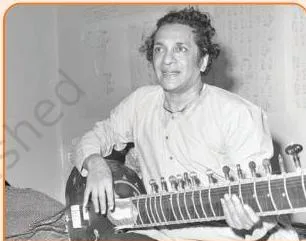
The first illustration sits with the Swagatham song on chapter page 2. Its caption is the song’s closing line — Shashwath suvikashitha athi shubham ananda mangala mangalam — so the picture closes the welcome-song page the way the song closes a welcome. It marks where the invocation ends and the preparation begins.
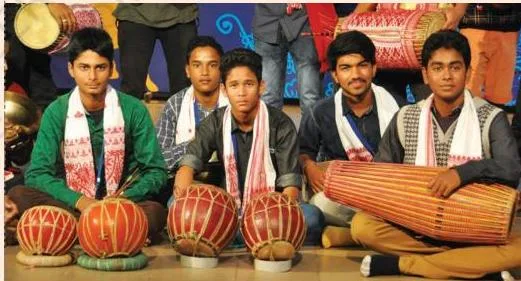
The second illustration accompanies the final step of Activity 9.4 on chapter page 4. Its caption is the instruction itself — make a practise plan, based on the feedback you have received — and that is the moment it marks: rehearsal has finished, and now the feedback turns into a plan.
It is also the moment the journal (a learning outcome on chapter page 6) starts to matter.
Key Terms in the Chapter
This table is a quick reference for the musical, production and assessment terms you meet in the chapter, with the chapter page where each one appears.
| Term | Meaning in this chapter | Chapter page |
|---|---|---|
| Invocation or welcome song | A song that opens a performance and greets the audience | 2 |
| Folk song | A song belonging to a community or region, passed on through performance | 3 |
| Repertoire | The set of songs a group chooses to perform | 6 |
| Rehearsal | Practising the performance together before the actual show | 4 |
| Singing in parts | Performers sing different voice parts that fit together | 4 |
| Canon | One group starts a melody and other groups follow it in turn | 4 |
| Body percussion | Making rhythm with the body instead of instruments | 4 |
| Synchronisation | Keeping the same timing as the rest of the group | 4 |
| Dynamics | Varying loudness and softness while playing or singing | 4 |
| Lead and supporting roles | Knowing when you carry the music and when you support others | 4 |
| Anchor | The person who announces items and engages the audience | 5 |
| Props | Objects on stage that support the theme | 5 |
| Constructive feedback | Comments meant to build on strengths and fix weaknesses | 5 |
| Journal | A notebook kept through the preparation period for plans and feedback | 6 |
| Raga | A melodic framework built on a fixed set of notes | 7 |
| Arohana and avarohana | The ascending and descending scales of a raga | 7 |
| Tala | The rhythmic cycle that keeps time in the music | 7 |
| Chaita Paraba and Koraput | The festival, and the Odisha district, that the folk song comes from | 3 |
The chapter lists raga, arohana, avarohana and tala in its summative-assessment table without defining them; the standard meanings above cover the classical-composition task on chapter page 7.
Mistakes the Activities Are Built to Prevent
This section names six typical performance flops before you make them, and pairs each with the activity the chapter uses to stop it.
| Mistake | What the chapter says instead | How to check your work |
|---|---|---|
| Treating performance as singing and playing only | The opening page says there is more than singing and playing — off-stage jobs matter (chapter page 1) | Every member has a role: anchor, lights, props or a poster |
| Choosing songs before thinking about audience and occasion | Activity 9.1 settles where, when, how long, audience, theme and occasion first | Your song list matches the theme and occasion you wrote down |
| Rehearsing alone or only on the day | Activity 9.4 makes the group practise together, with parts, canon, body percussion and synchronisation | The group can start together, stay together and end together |
| Skipping early feedback | Activity 9.4: perform for a teacher or a friend first, then make a practise plan | A written practise plan sits in your journal before the final show |
| Forgetting to advertise | Activity 9.5 asks for eye-catching posters around school and social-media content | Posters went up before the show, and the team knows who was invited |
| Treating the final bow as the end | Activity 9.6: record the performance and collect constructive audience feedback | You can show one piece of audience feedback and discuss it with the team |
How This Chapter Is Assessed
This section puts the chapter’s last two pages in plain language: what counts as success in Performance, and the tasks a student may be asked to do.
The learning-outcome table on chapter page 6 lists four things a student should be able to do:
- Participate willingly in the final performance with confidence and collaborative spirit.
- Play an active role in planning, including choosing the repertoire.
- Prepare enthusiastically through practice and rehearsal.
- Maintain a journal through the preparation period.
The summative-assessment table on chapter page 7 then lists tasks and the criteria for each:
| Task | Individual or group | Criteria the book lists |
|---|---|---|
| Present a song on a given theme | Individual | Ability to choose appropriately; singing fluently in pitch and rhythm |
| Create a story and embellish it with sound and music | Individual | Creativity, expression, musical choices, overall presentation |
| Present a simple classical composition with arohana and avarohana, keeping tala | Individual | Correct notes of the raga and correct tala |
| Plan and run a class performance, including repertoire and promotion | Group | Creative ideas, coordination, teamwork and enthusiasm |
| Present a performance of songs learnt through the year | Group | Creative ideas, coordination, teamwork and enthusiasm |
One caution: textbook contents and the examinable syllabus are not always identical — check the current official syllabus for what counts as examinable. The book’s assessment tables are its own idea of success, not a promise about marks in any examination.
The Performance Chapter in One Page: a Checklist
This section is a scannable recap of the whole chapter, in the shape of its own three parts. Work through the three Ps — Plan, Prepare, Perform — and the journal runs through all of them.
Plan
- Visualise the performance: where, when, how long, audience, theme and title, occasion (9.1).
- Build the song list with your teacher; everyone contributes songs (9.2).
Prepare
- Learn the songs; include one folk song from a tradition other than your own (9.3).
- Rehearse together: singing in parts or canon, body percussion, synchronisation (9.4).
- Vocalists think about lyrics and emotion; instrumentalists think about dynamics, lead and support.
- Perform for a teacher or friend, get feedback, make a practise plan; keep the journal (9.4, chapter page 6).
Perform
- Design the stage for the theme; arrange lights, sound, props, an anchor and audience chairs (9.5).
- Promote: posters around school and social-media content (9.5).
- On the day: welcome, introduce, present, thank; record; collect feedback and discuss it with the team (9.6).
Close with the chapter’s own salute: “Congratulations! You are now a young performer!” (chapter page 5).
Related Chapters and Resources
This listing is maintained for the 2026-27 academic session using the NCERT textbook information available to us. NCERT remains the authority for confirming the latest edition.
This section points to where to go next. The Performance chapter reuses musical ideas such as singing in parts and body percussion, so the notes for The Music of the People chapter help if those elements are new to you, and the Dance and Movement chapter shows where performance adds movement.
For everything in the book, open the Class 7 Arts (Kriti) book notes or the Class 7 notes hub; the full CBSE notes index is the starting point for other subjects. Every Class 7 Kriti chapter PDF, including this one, is published on the official NCERT textbook portal.
| What the chapter holds | Count | Where it is used |
|---|---|---|
| Printed pages | 8 | |
| Figures with NCERT captions | 2 | |
| Tables | 2 | |
| Official NCERT PDF | Download the chapter PDF | the chapter exactly as NCERT publishes it |
Reference: NCERT Class 7 Kriti textbook, chapter 9, official edition on ncert.nic.in. NCERT settles textbook editions, chapters and PDFs; CBSE settles the examinable syllabus — which is why textbook contents and the syllabus are not always identical.
Frequently Asked Questions
Is the Class 7 Kriti Performance chapter only about singing?
No. The chapter opens by saying a successful performance involves more than singing and playing, and that there is a lot to contribute even if you are not on stage (chapter page 1). The production, promotion and support activities — stage design, lights, sound, props, anchoring and posters — are as much a part of the chapter as the music.
Who composed Swagatham shubha swagatham and where was it sung?
It was composed by sitar maestro Pandit Ravi Shankar and sung at the inauguration ceremony of the 1982 Asian Games in New Delhi (chapter page 2, DO YOU KNOW? box). In this chapter it is offered as an invocation or welcome song.
What folk song is in this chapter and where is it from?
It is an Odia folk song of the tribals of Koraput, Odisha, sung widely during the celebration of Chaita Paraba. The song is about coming together and celebrating the festival with love and enthusiasm (chapter page 3), and it serves as the example for Activity 9.3 on including folk music.
Do I need musical instruments for the Performance chapter?
No. Activity 9.4 says that if you do not have instruments, find other ways to support the performance — sometimes you can even use a stick to keep the beat (chapter page 4). The opening page makes the same point about support roles off stage.
What does the summative assessment in this chapter ask a student to do?
Individual tasks: present a song on a given theme; create a story embellished with sound and music; present a simple classical composition with arohana and avarohana while keeping tala. Group tasks: plan and run a class performance including repertoire and promotion, and present a performance of songs learnt through the year (chapter page 7).
What are arohana, avarohana and tala in the assessment table?
They are standard classical-music terms: arohana is the ascending scale of a raga, avarohana the descending scale, and tala the rhythmic cycle that keeps time. The chapter uses them in the classical-composition task without defining them (chapter page 7).
Explore Class 7 Arts Books
Related chapters: