
How You Feel Class 7 is Chapter 17 of the NCERT Kriti Arts textbook for Class 7 — a ten-page, activity-led chapter that starts with reading emotions on faces and bodies, moves through face proportions and expression drawing, and ends with the Mahabalipuram relief and a clay sculpture project.
The official How You Feel Class 7 PDF is published by NCERT and linked below. This page tells you what is inside the chapter — every activity, figure and definition — before you open the file.
Download the official How You Feel Class 7 PDF
The official How You Feel Class 7 PDF is the NCERT-published file of Kriti Chapter 17 — open it to read all five activities in order, see the Mahabalipuram sculpture images in print quality, and follow the complete 14-step clay relief process with its diagrams.
The link goes to NCERT’s official textbook portal, so you are downloading the current edition from the source. Keep the PDF open while you work through the activities below.
Chapter 17 at a glance: activities, figures and exercises
Chapter 17 is built from short, hands-on activities rather than long prose. The table below lists what the PDF actually holds — its sections, figures and exercise questions — so you can size up the chapter before you start.
What this chapter covers: five activities from expressions to clay relief
The chapter is organised as five numbered activities that run in a fixed order. Each one trains a different skill, and the later activities reuse what the earlier ones built.
| Activity | What it asks you to do | What it trains |
|---|---|---|
| 17.1 Act and Guess | Work in teams; one person enacts a prompt from the box while the others observe body movements and facial expressions and guess the situation. | Reading emotions through faces and bodies, using the navarasa system from theatre and dance. |
| 17.2 Proportions of the Human Head | Analyse how face proportions change as a person grows; write facial proportions as fractions or ratios; draw faces using proportion guidelines, with your index finger as the measuring tool. | Careful observation and measurement — the ‘Math in Art’ link between art and mathematics. |
| 17.3 Drawing Facial Expressions | Watch friends pose in different expressions; note how eyes, eyebrows, mouth and jawline change; draw four to five faces; modify the features to make expressions; create your own emojis. | Turning observed emotion into a drawn face that keeps correct proportions. |
| 17.4 Let Us Travel Back in Time! | Imagine being in 8th-century CE Mahabalipuram in front of the rock-cut ‘Descent of Ganga’ sculpture; study faces in relief; then make your own clay relief of a face. | Connecting with an ancient Indian sculpture and learning relief-making skills in clay. |
| 17.5 Everybody Has a Beautiful Story | Look at body types around you and in different painting styles; discuss common assumptions; note your thoughts; create sketches that challenge stereotypes. | Recognising body stereotypes and producing artwork that questions them. |
The order matters: the expression-drawing of Activity 17.3 is what you use in Activity 17.4 when you reimagine the eroded carved faces, and Activity 17.5 turns the same observation skill onto whole bodies.
Key concepts in Chapter 17: navarasa, proportion, relief and stereotype
This chapter is not about one single technique. It connects how we read faces and bodies to how artists represent them — so the same ideas keep returning across the five activities.
Navarasa and facial expressions
Navarasa is the system of emotions used in Indian theatre and dance, and Activity 17.1 assumes you have met it before. The activity turns it into a guessing game: one student enacts a prompt from the box while the team watches the face and body and tries to guess the situation.
Prompt examples in the chapter’s box include:
- being hugged by family or friends
- receiving help or support from someone
- spending time with animals or plants
- working hard and getting rewarded — or not getting what you wanted
- meeting someone you are very fond of
- others laughing at you, or laughing at others
The point of the game is that an emotion shows on the whole face. Activity 17.3 tells you exactly where to look: the eyes, eyebrows, mouth and jawline all change together when a person is sad, laughing or worried.
Face proportions and ‘Math in Art’
Facial proportion means the size relationship between the parts of a face, and it is the reason a baby’s face looks different from an adult’s. Activity 17.2 opens with that question; the book’s answer is proportion, not the features themselves (see the proportions figure in the walkthrough below).
Activity 17.2 gives two rules you can test on your own face:
- The space between two eyes is about another eye — the gap is roughly one eye-width (\(1:1\)).
- The ears sit between the level of the eyebrows and the tip of the nose.
Worked example — measure your own face with your finger. Place your index finger beside your face as a fixed unit, as the activity suggests. Suppose your eye measures one and a half finger-widths — about \(3\ \text{cm}\). The one-eye rule says the gap between your eyes should also be about \(3\ \text{cm}\).
Now keep the same finger as your unit and measure your nose, ear, eye and forehead. Compare the length of your nose with the length of your ear, and check the gap between your eyes against one eye width.
Write what you find as fractions or ratios — the chapter’s ‘Math in Art’ box asks you to take your math teacher’s help with this. The goal is simple: the parts of a face relate to each other in ratios you can actually measure.
Relief sculpture and the ‘Descent of Ganga’
Activity 17.4 is a time-travel exercise. You imagine arriving, in the 8th century CE, in front of a massive rock-cut temple sculpture at Mahabalipuram in Tamil Nadu. The sculptors at work call the carving the ‘Descent of Ganga’; others tell the same story as ‘Arjuna’s Penance’.
The carving shows the river flowing down the cleft between the two boulders, with all life gathering around the water — a story that celebrates life around water. Some figures are clear; others look unfinished.
A relief, as the chapter’s ‘Faces in Relief’ section explains, is a sculpture that stays connected to its base — its back is usually flat or not sculpted. The activity names the characters you should locate in the bigger picture:
- Kinnaras — half-human, half-bird or animal
- Gandharvas — celestial singers, musicians or dancers
- Yakshas — dwarves
- a sage sitting near the shrine
- Sage Bhagirath, also identified as Arjuna
Because the sculptures in the Shore Temple at Mahabalipuram have eroded, the characters can still be identified by their body movements and props, but the facial expressions are no longer clear.
That is why the activity asks you to reimagine their faces: sketch each face with expressions on separate sheets 15 cm by 15 cm, choose one, cut it out and keep it ready for your clay relief.
Clay slip as a joining technique
This is the technical idea that makes the clay activity work. To join two clay parts, the chapter’s Technical Tip says: make some clay into a smooth paste called slip, scratch marks on the joining surface to roughen it, apply the slip — it acts like glue — then press the other part on.
The roughening is what gives the slip something to hold.
Stereotypes in representing the body
Activity 17.5 moves the observation skill from faces to whole bodies. A stereotype, in the chapter’s definition, is a widely accepted idea that generalises a person, place or community — and is not factual.
The book’s examples of body stereotypes include assuming a person with a large body cannot run fast, assuming a slender body is weak, or assuming one skin colour is more beautiful than another.
It points out that the images in magazines, hoardings, films, videos and social media influence how we think about bodies, and asks you to gather more examples and create sketches of your own that challenge them.
To show that there is no single way a body must look, the chapter displays people depicted in very different styles — a Mughal portrait, a dancer in a Jain manuscript, a Bengal patachitra, a Warli painting and Raja Ravi Varma’s ‘Galaxy of Musicians’.
Figure walkthrough: what the NCERT images in this chapter show
Here is what the NCERT images inside Chapter 17 show, one by one. Read each caption together with the note beside it — every figure below is one the activities actually ask you to look at and use.
Expressions and proportions (Activities 17.1 and 17.2)
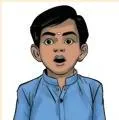
The navarasa figure is the chapter’s reminder that you have already met navarasa in theatre and dance, and it sits right at the start of Activity 17.1. Keep it in front of you while your team enacts and guesses — the game is based on these expressions.
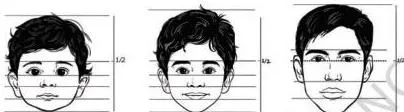
The proportions figure answers the question that opens Activity 17.2: what makes a baby’s face look different from an adult’s? The features are the same — what changes is the proportion. Analyse where the change appears as a person grows, then use your index finger to measure and write the proportions as fractions or ratios.
The Mahabalipuram relief (Activity 17.4)
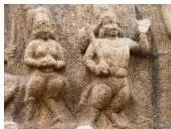
The eroded Shore Temple figures are the reason the whole reimagine-the-faces task exists. Body movements and props still identify the characters, but the expressions have worn away — so the chapter puts your Activity 17.3 drawing skills to work and asks you to reconstruct, on paper, what those faces might have felt.
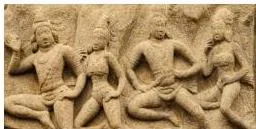
Kinnaras are half-human and half-bird or animal figures — the caption itself defines them. Your job in Activity 17.4 is to locate the same characters in the bigger picture of the relief, then reimagine their faces with expressions and sketch them.
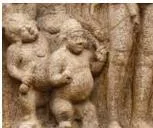
Gandharvas are celestial singers, musicians or dancers, as the caption states. As with the Kinnaras, you first find them in the larger relief and then practise giving them readable expressions in your own drawings.
The clay relief process (Activity 17.4)
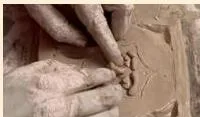
Step 10 of the clay process is the moment the face actually appears. By this stage you have traced your paper cut-out onto the slab and removed a thin layer from the background so the face sits raised.
The figure shows the leftover clay, kept moist, being pressed on to build the forehead, eyebrows, eyelids, eyes, cheeks, nose, mouth and chin — the features the caption lists.
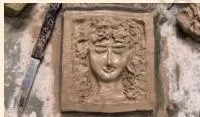
Step 14 is the finishing step: let the relief dry for a few days. The chapter adds that you can paint the relief after it is completely dry. Drying is also where cracks appear, which is why the Technical Tip asks you to reflect on what caused them if they do.
Body types and different styles (Activity 17.5)
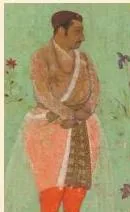
This figure carries the instruction itself: note down your thoughts. It belongs with the part of Activity 17.5 where you have observed body types around you — short, tall, thin, fat, dark-skinned, light-skinned, bald, hairy, hunched — and are asked to write what you think before creating sketches that challenge the stereotypes.
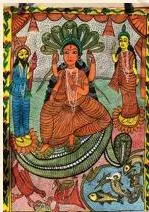
The dancer in a Jain manuscript is one of the five styles of depicting people that Activity 17.5 shows — alongside the Mughal portrait, Bengal patachitra, Warli painting and Ravi Varma’s ‘Galaxy of Musicians’. The point is visible even without words: the same human body can be drawn very differently across traditions, so no single body type is the ‘correct’ one.
Definitions students need from Chapter 17
These five terms carry most of the chapter’s ideas. Each definition below matches how the chapter uses the word.
- Navarasa — the system of emotions used in Indian theatre and dance; Activity 17.1’s act-and-guess game is based on the same expressions.
- Relief — a sculpture that stays connected to its base, with a back that is usually flat or not sculpted.
- Clay slip — a smooth paste made from clay; after the joining surface is roughened, slip acts like glue to hold two clay parts together.
- Stereotype — a widely accepted idea that generalises a person, place or community and is not factual.
- Facial proportion — the size relationship between parts of the face, such as the space between the eyes being about one eye-width; Activity 17.2 uses these ratios to draw faces.
Common mistakes in Chapter 17 activities (and how to avoid them)
The chapter’s activities are skill-based, so the errors happen while doing, not while reading. These are the mistakes that show up most often in proportion drawing, clay handling and the stereotype discussion.
| Mistake | Correct rule | How to check your work |
|---|---|---|
| Eyes drawn too close or too far apart | The space between two eyes is about one eye-width | Measure the gap on your drawing against one eye width |
| Ears at the wrong height | Ears sit between the eyebrow line and the tip of the nose | Check the ear top against the brows and the ear bottom against the nose tip |
| Clay too wet and sticky | Too much water makes clay sticky; aim for a workable consistency | If the clay sticks to your palm and tools, it has too much water |
| Clay cracking while you work | Too little water makes clay crack; sprinkle the slab lightly as you go (step 11) | Keep a spray or damp cloth nearby; if cracks appear, the chapter’s reflection asks what caused them |
| Joining clay parts without slip | Roughen the surface, apply slip as glue, then press the parts together | Test the join gently — it should hold and not separate |
| Repeating body stereotypes in your sketches | Question the assumption; draw alternatives that challenge it | Ask: does this drawing repeat a generalisation that is not factual? |
The chapter itself ends the clay process with two reflection questions: did your artwork develop cracks, and what could the reasons be? Answering both is part of the skill, not an optional extra.
Assessment focus in Chapter 17: what the book asks you to show
Chapter 17 prints its assessment targets right after Activity 17.3, and both are observable skills rather than memorised facts. The printed ASSESSMENT block asks you to be able to:
- Observe and depict the ratios and proportions of the human head — exactly what Activity 17.2 trains.
- Depict a variety of facial expressions to express emotions — exactly what Activity 17.3 trains.
The chapter’s closing page then lists the fuller learning outcomes. The table below maps each printed outcome to the activity that trains it.
| Learning outcome (as printed in Chapter 17) | Trained in |
|---|---|
| Observes and depicts the ratios and proportions of the human head | Activity 17.2 and its ‘Math in Art’ box |
| Depicts a variety of facial expressions to express their emotions and experiences | Activity 17.3 |
| Recognises stereotypes in representing the body and creates alternatives in artwork | Activity 17.5 |
| Recognises navarasas and emotions seen in Indian sculptures | Activities 17.1 and 17.4 |
| Makes a clay relief using appropriate tools and techniques (rolling, coiling, pinching, patting, scooping, making a slab, using slip, etc.) | Activity 17.4, clay steps 1–14 |
One honest note: textbook contents and the examinable syllabus are not always identical — check the current official syllabus for what is assessed this session.
What you should be able to do after Chapter 17
The chapter’s opening promises, and its closing learning outcomes confirm, a single checklist of skills.
- Study the human body and facial expressions, and read emotions from faces and body language.
- Find hidden ratios and proportions in faces, and draw faces using them.
- Know the rock-cut sculpture at Mahabalipuram — the ‘Descent of Ganga’, also called ‘Arjuna’s Penance’ — and name characters such as Kinnaras and Gandharvas.
- Make a clay relief of a face using the 14-step process, including joining with slip.
- Recognise body stereotypes and create sketches that show bodies in new ways.
If you can do all five, you have met the chapter’s learning outcomes as printed at the end of the chapter.
Related resources: Class 7 Arts and the NCERT Class 7 hub
This listing is maintained for the 2026-27 academic session using the NCERT textbook information available to us. NCERT remains the authority for confirming the latest edition.
If you are working through Kriti in order, the NCERT Class 7 Arts Kriti book page gathers the chapter pages and notes for this book, and the NCERT Class 7 books hub covers the other Class 7 subjects. The notes pages for the chapters close to this one — Nature’s Palette and Textiles and Traditions — are linked from the Arts page.
| What the chapter holds | Count | Where it is used |
|---|---|---|
| Printed pages | 10 | |
| Figures with NCERT captions | 9 | |
| Tables | 1 | |
| Exercise questions | 2 | answered in our NCERT Solutions |
| Official NCERT PDF | Download the chapter PDF | the chapter exactly as NCERT publishes it |
Reference: NCERT Class 7 Kriti textbook, chapter 17, official edition on ncert.nic.in.
Sources and data verification
This page is a guide to one chapter, not a syllabus document.
- The contents described here come from the NCERT Kriti textbook for Class 7, Chapter 17, ‘How You Feel’, official edition published on ncert.nic.in.
- This page covers that single chapter. The other chapters of Kriti have their own pages in the Class 7 Arts section.
- The listing is maintained for the current academic session using the NCERT editions currently published on the official portal.
- NCERT settles textbook editions and PDFs; CBSE settles curriculum, syllabus and examinations. Check the current official CBSE syllabus before planning exam revision.
Frequently asked questions about How You Feel Class 7
Which NCERT book has the How You Feel chapter for Class 7?
The Kriti book — NCERT’s Arts textbook for Class 7. ‘How You Feel’ is its Chapter 17, in the English edition that NCERT publishes on its official textbook portal.
What activities are in Chapter 17 of Kriti?
Five activities: 17.1 Act and Guess (enacting and guessing emotions), 17.2 Proportions of the Human Head (measuring faces and ‘Math in Art’), 17.3 Drawing Facial Expressions (observing and drawing emotions), 17.4 Let Us Travel Back in Time! (Mahabalipuram relief study and clay relief making), and 17.5 Everybody Has a Beautiful Story (body stereotypes and alternative sketches).
What is a relief sculpture in this chapter?
A relief is a sculpture that stays connected to its base, with a back that is usually flat or not sculpted. In Chapter 17 you make a relief of a face on a flat clay slab: the face stays raised while the background is cut away.
How do I make the clay relief in Chapter 17?
Follow the 14 steps in Activity 17.4. Soak dry clay in water for a day if it has hardened, knead it and remove stones, then flatten a ball into a slab of about 15 cm by 15 cm by 3 cm.
Trace your paper cut-out onto the slab, remove a thin layer from the background so the face stands raised, then build the features — forehead, eyebrows, eyelids, eyes, cheeks, nose, mouth, chin — with the leftover clay kept moist.
Sprinkle water lightly as you work, refine the features with tools, make a hole at the top for hanging, and allow the relief to dry for a few days. Join separate parts with slip: roughen the surface, apply the smooth paste, then press the parts together. Painting is optional, after the relief is completely dry.
What is the Descent of Ganga, and why is it in this chapter?
The ‘Descent of Ganga’ is what the sculptors in Chapter 17 call the massive rock-cut temple sculpture at Mahabalipuram, Tamil Nadu, made in the 8th century CE; others call the same story ‘Arjuna’s Penance’. The carving shows the river flowing down the cleft between two boulders, with life gathering around the water.
The chapter uses the sculpture to study how bodies and emotions are shown in stone. You identify characters such as the Kinnaras and Gandharvas, reimagine their eroded faces, and then make your own clay relief of a face.
What does the chapter say about body stereotypes?
It defines a stereotype as a widely accepted idea that generalises a person, place or community — and says it is not factual. Its examples: assuming a large body cannot run fast, a slender body is weak, or one skin colour is more beautiful than another.
The chapter adds that images in magazines, films and social media shape these assumptions, and the task is to gather more examples and create sketches that challenge them.
Explore Class 7 Arts Books
Related chapters: