
Story of India’s Class 7 Kriti Chapter 4 is the NCERT arts chapter on India’s folk storytelling traditions, and the official PDF is right below. Under it you get a walkthrough of every tradition the chapter names — Harikathe, Kaavad Katha, Phad and Thangka — with the regions, storytellers and terms needed to tell them apart.
Official Story of India’s Class 7 Kriti Chapter 4 PDF
The official NCERT file for this chapter is published on ncert.nic.in and opens straight from the board’s server — use it for the chapter text, the CIRCLE questions and the Become a Storyteller! activity by opening the Story of India’s Class 7 Kriti Chapter 4 PDF.
Chapter 4 at a glance
The table below lists what is inside the official chapter file.
| What the file contains | Count |
|---|---|
| Printed pages | 10 |
| Section headings | 14 |
| Illustrations | 9 |
| Tables | 2 |
| Numbered exercises | 0 |
| Discussion and activity features | CIRCLE questions and Become a Storyteller! |
The chapter’s two tables are its Learning Outcomes chart and its Summative Assessment chart, both matched to the activities described further down this page.
What this chapter teaches: India’s folk storytelling traditions
The chapter opens with Kathanjali, a fictional storyteller who has lived for thousands of years. She has watched kings and rulers, lived among common people and travelled the world — so she tells the chapter herself, as one long story.
Early in her account, Kathanjali explains that people in Bharata once knew no stories at all, so she created storytellers — people who could remember and narrate stories in interesting ways. Storytellers spread across the country, entertaining everyone from small children to old people.
This oral telling went on for hundreds of years. Around the 2nd century BCE, listeners began to get bored, so pictures, music, dance and puppets were added. That is the chapter’s turning point: after it, different regions developed their own ways of using these new elements.
You will learn from this chapter:
- Folk forms of storytelling in India.
- The problems that artists in these forms face today.
- Well-known traditional storytellers.
The chapter closes with a preservation argument: oral traditions carry stories like the Ramayana and Mahabharata to every home, teach values to people who cannot read, keep culture alive, and cannot be destroyed the way written books or computer data can.
Worked example: turn a textbook story into a picture-story
The chapter itself suggests taking any story from your English or Social Science textbook and narrating it with pictures. The Become a Storyteller! activity supplies the steps:
- Pick a story from your English or Social Science textbook.
- Connect the traditional paintings shown in the chapter — or your own scene pictures — into a story. You may change the order of the pictures.
- Choose a unique way to narrate it: a sing-song tone, dance steps for situations, or songs that fit the mood.
- Add rhyming words to make the narration more interesting.
- Present it in front of your class and share feedback.
Example: take the story of a brave queen from your history textbook. Draw four scenes — her childhood, the enemy’s attack, the queen leading her army, and peace after victory. Swap scenes two and three when you practise, to test whether you really remember their order.
Add a repeated line such as “She did not turn back” in a sing-song voice, and clap a rhythm for the battle scene. Present the four pictures to your class and explain each one.
Key concepts: the four storytelling traditions
The chapter introduces four different forms to show one idea: the same need — keeping listeners interested — produced different arts in different regions. The table below is the fastest way to keep them apart.
| Tradition | Region | Community or performer | What the form looks like |
|---|---|---|---|
| Harikathe | Andhra Pradesh, Telangana, Maharashtra, Karnataka and Tamil Nadu | Bhagavatar community; performer called Harikathe Dasa | Song-and-dance narration of Lord Hari’s stories |
| Kaavad Katha | Rajasthan | Bhaat craftspeople; performer called Kaavadiya | A painted wooden box with 8 to 16 parts |
| Phad | Rajasthan | Community not named in the chapter | Painted scrolls of Puranas, kings and battles |
| Thangka | Ladakh, Sikkim, Jammu and Kashmir and Arunachal Pradesh | Community not named in the chapter | Scroll paintings of Buddhist scriptures, saints’ lives and folk stories |
Harikathe: song and dance from the Bhagavatar community
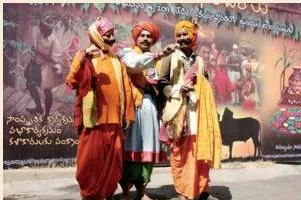
Harikathe is a song-and-dance storytelling form from the 12th century. Kathanjali remembered how Narada Muni travelled narrating the stories of Lord Vishnu, and she encouraged the Bhagavatar community to do the same through songs and dance. Because the stories were of Lord Hari, the form became known as Harikathe, and listeners loved it because it was interactive.
It became popular across Andhra Pradesh, Telangana, Maharashtra, Karnataka and Tamil Nadu, and the performer was called a Harikathe Dasa.
Gururajulu Naidu, born in 1931, was a multilingual, multitalented storyteller whose contribution earned him the title Karnataka Harikathe Pitamaha. Traditional Harikathe ran all night; Naidu’s style lasted 90 minutes, a change audiences welcomed. His famous performances include Bhakta Markendeya, Maya Bazaar, Lava Kusha and Shri Krishna Garudi, and he acted in films such as Mooruvare Vajragalu and Hannele Chiguridaaga.
Because Harikathe rests on song and rhythm, it pairs well with the Class 7 music notes.
Kaavad Katha: the painted wooden story box of Rajasthan
Kaavad Katha is a picture-story tradition over 500 years old, created for common people who could not read scriptures like the Ramayana, Mahabharata and Puranas. The Bhaat craftspeople community of Rajasthan made it: pictures need no language, so a storyteller could carry the story to any village and tell it in the local tongue, with songs.
The Kaavad itself is a box of pictures made from mango wood, with anywhere between 8 and 16 parts depending on the story; the largest cover made so far is 25 feet long. The tradition also used Panchatantra and Hitopadesha stories for children, and now includes modern tales with socially relevant messages, such as educating girl children and maintaining hygiene.
Khojaram ji, a Kaavadiya from Kumar Dhani near Jodhpur, has practised Kaavad Katha for more than 40 years and is among the few surviving performers. He recalls the old belief of gyan-daan-bhagwan, when everyone would gather under a tree and the Kaavad came to them like a temple, bringing the knowledge inside the stories.
Today he visits a jajman’s house once a year and, like other Kaavadiyas, keeps a book of records of the families in the neighbourhood — the living, the dead and the newly born.
Phad paintings: scroll stories of Rajasthani deities
Phad is a painted scroll tradition from Rajasthan. The chapter lists its contents in a single line: stories of Puranas, kings and the battles they fought, and praise of local deities like Pabuji and Devnarayan.
Remember Phad as Rajasthan’s scroll of divine and royal tales. That pairing — scroll plus Rajasthan — is what separates it from Thangka.
Thangka: Buddhist scroll stories of the Himalayan regions
Thangka is the Himalayan painted scroll. It is practised in Ladakh, Sikkim, Jammu and Kashmir and Arunachal Pradesh, and it carries stories from Buddhist scriptures, events in the lives of saints and local folk stories.
The chapter uses Thangka as its example of a tradition becoming rare. Young people are not learning it, and with television and smartphones there is no one left to listen. The warning is direct: if the storytellers go, the stories go with them.
Figure walkthrough: what each illustration belongs to
Each illustration in Chapter 4 sits beside the sentence it belongs to. Match the picture to the line under its caption and you can place it in the right tradition every time.
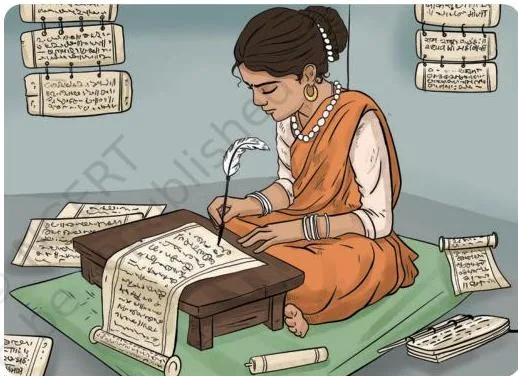
This illustration marks the moment Kathanjali takes over the chapter. Everything you read after it — all four traditions — comes from her narration, so treat the picture as the doorway into the story.
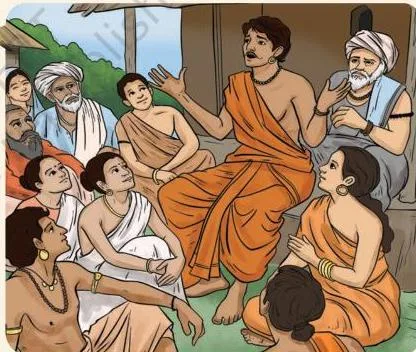
This belongs to the oral phase of the story. The line beside it explains that storytellers spread across the country telling stories to everyone, from small children to old people, and that this oral telling continued for centuries before the 2nd century BCE.
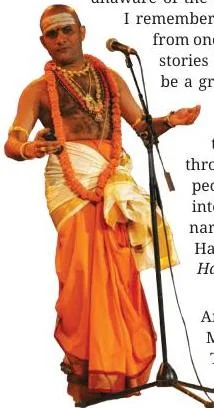
This is a Harikathe illustration. Its caption is the region list for Harikathe — the five states above are the exact set you need for any matching question.
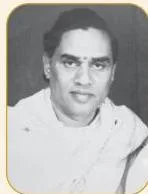
This portrait belongs to Gururajulu Naidu. The caption’s film references support the chapter’s description of him as multilingual and multitalented — a Harikathe performer who crossed into cinema.
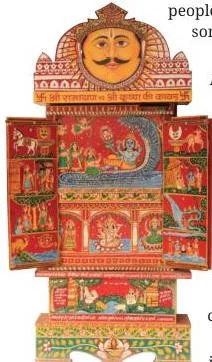
The Kaavad Katha illustration. Attach two facts to it: the tradition is over 500 years old, and it was created so common people who could not read scriptures could still receive the stories.
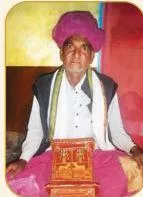
This figure belongs to Kaavad Katha’s modern face: Khojaram ji, a surviving Kaavadiya with more than 40 years of practice. The caption fixes his home — Kumar Dhani near Jodhpur, Rajasthan.
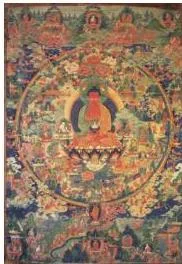
The Phad illustration. Its caption is actually a summary of Phad content — Puranas, kings and battles, plus praise of local deities such as Pabuji and Devnarayan. If you can remember the caption, you can remember Phad.
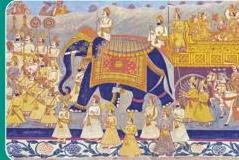
This belongs to the Become a Storyteller! activity. It goes with the last step of the exercise: after you connect pictures into a story and choose your narration style, you present it to the class and take feedback — the step that turns the activity into a performance.
The closing image belongs to the chapter’s final argument. The line beside it asks why these forms should be saved, and the answer follows: oral traditions carry the Ramayana and Mahabharata to everyone, teach values to people who cannot read, and can never be destroyed like files.
Storyteller terms, explained
The chapter names its performers and communities in local terms. The table below decodes them in plain language.
| Term | Meaning |
|---|---|
| Kathanjali | The chapter’s narrator: a fictional storyteller who has lived for thousands of years, seen kings and common people, and created storytellers. |
| Storyteller | A person who can remember and narrate stories in interesting ways, so listeners enjoy them and learn values. |
| Harikathe | A song-and-dance storytelling form from the 12th century, named after Lord Hari; popular across five states. |
| Harikathe Dasa | The title given to a Harikathe performer. |
| Bhagavatar community | The community encouraged to tell stories through songs and dance; the creators of Harikathe. |
| Kaavad Katha | A storytelling tradition over 500 years old from Rajasthan, told with a painted wooden box called a Kaavad. |
| Kaavadiya | A storyteller who performs Kaavad Katha; Khojaram ji is one of the few surviving. |
| Bhaat | The craftspeople community of Rajasthan that created the Kaavad. |
| jajman | The host family a Kaavadiya visits once a year to perform. |
| gyan-daan-bhagwan | The old belief that listening to the knowledge inside the stories was itself a sacred gift. |
| Phad | A Rajasthani painted scroll carrying stories of Puranas, kings and battles, and praise of local deities. |
| Thangka | A Himalayan painted scroll carrying Buddhist scriptures, saints’ lives and local folk stories. |
| Oral tradition | Stories passed down by word of mouth across generations; the chapter argues these can never be destroyed. |
Common mistakes: which tradition belongs where
This chapter is mostly matching — tradition to region, performer to form, material to art. These are the mix-ups students make while revising.
| Mistake | Correct rule | How to check your answer |
|---|---|---|
| Karnataka Harikathe Pitamaha means Harikathe began in Karnataka. | The title honours Naidu, a performer associated with Karnataka. The form itself spread across Andhra Pradesh, Telangana, Maharashtra, Karnataka and Tamil Nadu. | Re-read the region list beside the word “popular”; the title belongs to Naidu’s section, not to the form’s origin. |
| Kaavad boxes are made of paper or painted cloth. | Kaavad boxes are made from mango wood and have 8 to 16 parts. | Find the line about the box: the chapter says it is created with the wood of the mango tree. |
| Phad and Thangka are the same kind of scroll painting. | Both are painted scrolls, but Phad is Rajasthani — Puranas, kings, Pabuji, Devnarayan — while Thangka is Himalayan — Buddhist scriptures, saints’ lives, folk stories. | Compare the two section headings: one names Rajasthan, the other names Ladakh, Sikkim, Jammu and Kashmir and Arunachal Pradesh. |
| Storytelling itself began around the 2nd century BCE. | Storytelling existed for hundreds of years before that; the 2nd century BCE is when pictures, music, dance and puppets were added. | The line “This went on for hundreds of years” comes before the 2nd century BCE sentence. |
| Kathanjali is a historical person. | Kathanjali is a narrative device — a fictional storyteller who has lived for thousands of years and created storytellers. | The opening says she has been living for thousands of years; no real person can do that. |
Learning Outcomes and Summative Assessment in Chapter 4
The chapter’s own Learning Outcomes chart tells you what you should be able to do by the end, and its Summative Assessment activities test those abilities. The charts use Teacher and Self columns rather than marks, so treat them as a checklist of what to practise.
- Understand storytelling as a performing art that integrates music, dance and art.
- Think of initiatives to protect and grow dying art forms.
- Identify storytellers from your own experience and describe their style of performance.
- Compare contemporary storytelling with older formats.
Here is how each activity in the chapter practises those outcomes:
| Activity | What it asks | What it practises |
|---|---|---|
| Individual summative assessment | Pick an emotion, list 3 or 4 levels of intensity, build it into a story, write a script with scenes and dialogues, then narrate it dramatically with music, dance or pictures. | The performing-art outcome — combining music, dance and art in one telling; judged on command over techniques and clarity of thought. |
| Group summative assessment | Pick a story from the Social Science or English textbook, write a script with characters and scenes, and perform a 3-minute pantomime. | Comparing and adapting a known story into a new format; judged on team decision-making, including multiple ideas, and cooperation. |
| CIRCLE questions | Design a new storytelling form; list two things a government could do to save dying art forms. | The protection outcome — thinking of initiatives to keep art forms alive. |
| Become a Storyteller! | Connect traditional paintings into your own story and narrate it in a unique style. | A contemporary retelling of an older format — the comparing outcome in practice. |
The group pantomime is staging without words, so the Class 7 stage technicals notes are a useful companion for it.
Chapter 4 recap: what to remember
The chapter’s closing section is called Storytelling — A Treasure in Tradition, and its argument is the one fact to keep: oral stories cannot be destroyed. Here is the whole chapter in short form.
- Harikathe — song-and-dance stories of Lord Hari from the Bhagavatar community; popular across Andhra Pradesh, Telangana, Maharashtra, Karnataka and Tamil Nadu; performer called Harikathe Dasa; Naidu shortened it to 90 minutes.
- Kaavad Katha — over 500 years old; a mango-wood picture box with 8 to 16 parts; created by the Bhaat craftspeople of Rajasthan; Khojaram ji is a surviving Kaavadiya.
- Phad — Rajasthani painted scrolls of Puranas, kings and battles; praise of local deities like Pabuji and Devnarayan.
- Thangka — Buddhist scroll stories from Ladakh, Sikkim, Jammu and Kashmir and Arunachal Pradesh; now becoming rare.
- Why save them — oral traditions carried the Ramayana and Mahabharata to everyone; they teach values even to people who cannot read; they keep culture alive; and unlike written books or computer data, they can never be destroyed.
Memory hook: Harikathe is Hari’s katha — a song-and-dance story of Lord Hari. Kaavad Katha is a katha carried in a Kaavad, a wooden box of pictures. Phad starts with P like Puranas, Pabuji and praise — the Rajasthan scroll. Thangka is the mountain scroll — Buddhist stories from Ladakh, Sikkim, Jammu and Kashmir and Arunachal Pradesh.
Related resources
This listing is maintained for the 2026-27 academic session using the NCERT textbook information available to us. NCERT remains the authority for confirming the latest edition.
Use these pages to move around the Class 7 arts library:
- Class 7 Kriti book page — the textbook this chapter belongs to.
- Class 7 arts page — all NCERT arts books for Class 7.
- Class 7 hub — every NCERT Class 7 textbook.
- Class 7 arts study notes — revision support for the arts subjects.
- Class 7 notes hub — notes across subjects.
- CBSE notes home — every class and subject.
The official source for every point above is the NCERT PDF at the top of this page — the file on ncert.nic.in is the version to trust.
Sources and data verification
This page describes the NCERT Class 7 Kriti textbook, Chapter 4 (Story of India’s Storytelling Traditions), official edition published on ncert.nic.in. It covers this one chapter; the rest of the book is listed on the Class 7 Kriti book page. The listing is maintained for the current academic session.
NCERT settles textbook editions and official PDFs; CBSE settles curriculum, syllabus and examinations. Textbook contents and the examinable syllabus are not always identical, so check the current official syllabus.
| What the chapter holds | Count | Where it is used |
|---|---|---|
| Printed pages | 10 | |
| Figures with NCERT captions | 9 | |
| Tables | 2 | |
| Official NCERT PDF | Download the chapter PDF | the chapter exactly as NCERT publishes it |
Reference: NCERT Class 7 Kriti textbook, Chapter 4, official edition on ncert.nic.in.
Frequently asked questions
What is Story of India’s Class 7 Kriti Chapter 4 about?
It is the NCERT arts chapter on India’s folk storytelling traditions. A fictional narrator, Kathanjali, explains how oral storytelling began, gained pictures, music, dance and puppets around the 2nd century BCE, and grew into forms like Harikathe, Kaavad Katha, Phad and Thangka — then argues why these traditions must be saved.
What are the four storytelling traditions in Chapter 4 of Kriti?
Harikathe — song-and-dance stories of Lord Hari across five states; Kaavad Katha — painted wooden story boxes of Rajasthan; Phad — Rajasthani painted scrolls of Puranas, kings and local deities; and Thangka — Buddhist scroll stories from Ladakh, Sikkim, Jammu and Kashmir and Arunachal Pradesh.
Who is Khojaram ji in Kaavad Katha?
A Kaavadiya from Kumar Dhani near Jodhpur, Rajasthan, who has practised Kaavad Katha for more than 40 years and is among the few surviving performers. He recalls the old belief of gyan-daan-bhagwan, when people gathered under a tree to listen, and today visits a jajman’s house once a year while keeping family records of his neighbourhood.
Who was Gururajulu Naidu and why is he important in Harikathe?
Born in 1931, he was a multilingual, multitalented performer honoured as Karnataka Harikathe Pitamaha. He revolutionised Harikathe by cutting all-night performances to 90 minutes, and he acted in films such as Mooruvare Vajragalu and Hannele Chiguridaaga.
Where is Thangka painting practised according to this chapter?
In the Himalayan regions of Ladakh, Sikkim, Jammu and Kashmir and Arunachal Pradesh. Thangka carries stories from Buddhist scriptures, events in the lives of saints and local folk stories.
How do I download the official NCERT Class 7 Kriti Chapter 4 PDF?
Open the official Story of India’s Class 7 Kriti Chapter 4 PDF from ncert.nic.in — the link at the top of this page loads the file straight from the board’s server.
Explore Class 7 Arts Books
Related chapters: