
This is Chapter 3, “Let’s Design — Stage Technicals 2,” of the NCERT Kriti (Arts) textbook for Class 7. The chapter runs about 16 printed pages and is split into two halves: backstage work (the departments, life skills and history of theatre support) and script writing (structure, characters, scenes and a write-your-own-script task). The official NCERT PDF of the chapter is right below.
Let’s Design — Stage Technicals 2 Class 7: download the NCERT PDF
The official NCERT textbook portal publishes every Kriti chapter as a free PDF. Open the NCERT Class 7 Kriti Chapter 3 Let’s Design — Stage Technicals 2 PDF there to read the full chapter, including its pictures, activities and the closing learning outcomes table.
Chapter 3 at a glance
The table below counts what is inside this chapter file — sections, figures, activities and questions — so you can see its size before you open it.
(Counts rendered by code — not restated here.)
In shape, the chapter is in two clear halves. Part I covers backstage work: the four departments, planning before the show and duties after the show, seven life skills, the history of backstage from the Natyashastra to the Green Room, the three bells, and two show-day scenarios.
Part II covers script writing: structure, characters, scenes, and the checklist that ends with your own “Draft 1.” The chapter closes with a learning outcomes table.
What this chapter covers: backstage work and script writing
The chapter’s through-line is simple: theatre is a collective effort, and the invisible team behind the stage is as important as the actors on it. The book opens with the “You will learn” list (NCERT, p. 1): backstage and its importance; life skills from theatre such as problem solving, discipline and integrity; and script writing covering character work and scene division.
By the end, the book’s learning outcomes table expects you to be able to (NCERT, p. 16):
- understand the discipline and hard work involved in backstage work;
- categorise stories by their structure and use that structure in your own script;
- relate theatre skills to everyday discipline;
- compare historical backstage work with present-day work;
- plan scenes and attempt to write a script independently.
Backstage departments: set, costume, music and lighting
The book explains backstage work through a simple analogy: a tree is beautiful because of its roots, and a temple stands because of its foundation — every successful performance rests on its backstage team. The key distinction is stated plainly: backstage matters not because of the physical space, but because of the work that happens and the people involved (NCERT, p. 2).
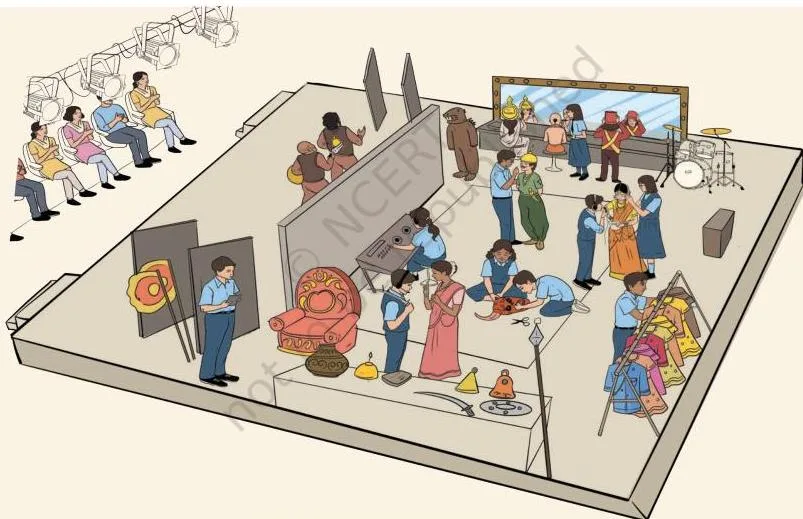
Four departments carry the show. Each has duties before, during and after the performance.
| Department | During the show | Before the show | After the show |
|---|---|---|---|
| Set and properties (NCERT, p. 3) | Changing the set between scenes; keeping hand props ready; keeping the stage clear of obstructions; supporting the actor if something is forgotten or goes wrong. | Making the set or backdrop; borrowing, renting or buying properties; marking exact positions; practising quick changes during the 30-second blackout. | Dismantling and packing the set; transporting it to storage; identifying issues for the next show; returning borrowed or rented properties. |
| Costume and make up (NCERT, p. 3) | Getting actors ready in character; helping with quick changes between scenes; repairing minor tears and damage. | Designing for the character; procuring, renting or making costumes; planning wigs and stylisation; holding a costume rehearsal. | Collecting clothes and jewellery; checking for damage; arranging repairs; returning borrowed material; washing and ironing for the next show. |
| Music (NCERT, p. 3) | Working with actors and the tech team on sound cues; covering onstage glitches with appropriate sound or music. | Checking mics, speakers and sound mixers; tuning instruments. | Packing instruments and equipment safely; storing wires, ports and plugs. |
| Lighting (NCERT, p. 3) | Planning lights and knowing cues; timing lights and supporting actors during unexpected issues. | Planning the light design during rehearsals; rigging lights and marking actors’ exact positions. | Separating team equipment from the venue’s; transporting lights, cables and stands back safely. |
The textbook asks you to notice that the lists above are all during-show work — and then shows that a lot happens before and after the show too (NCERT, p. 4). With 8–10 actors, a play needs at least 15–18 backstage people, sometimes more.
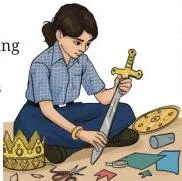
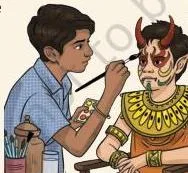
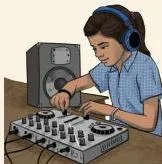
The four department figures in the chapter each capture one during-show situation:
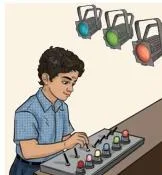
Life skills from backstage: teamwork, time management and discipline
Theatre is one of the few places where you learn discipline while having fun. The chapter’s PLANNING, MANAGEMENT AND DISCIPLINE section (NCERT, pp. 5–6) lists seven skills:
- Teamwork and leadership — all departments must coordinate; a problem in one affects the whole show.
- Human resource — the right person in the right role, comfortable in their work, keeps quality high.
- Time management — a must for every member, actors and backstage alike.
- Communication — constant sharing of ideas and issues between teams; if one team does not know what another faces, the performance suffers.
- Resource management — materials for sets, props and costumes procured on time, stored safely, with a check on budget.
- Sales and marketing — all that hard work deserves a good audience to watch it.
- Discipline and commitment — attending every rehearsal without excuses, doing assignments as the director instructs, arriving on time, being present for repeat shows, and volunteering to help.
The chapter then bridges these skills into daily life with the “Theatre Skills in My Life” list (NCERT, p. 7): taking good care of your belongings, and practising regularly so that exams — like performances — do not become a last-minute scramble. Where else can you use these skills? The chapter invites you to add your own ideas.
History of backstage: Natyashastra, Nepathya and the Green Room
Backstage work is as old as theatre itself — any performance in history needs a support system behind it. The Natyashastra, the oldest treatise on performing arts, was written more than 2500 years ago, and its step-by-step preparation instructions are called the Poorvaranga Vidhi (NCERT, p. 7).
The book introduces four connected terms (NCERT, p. 8):
- Natya Gruha — the place where performances were held.
- Nepathya — the backstage, or the entire space around the stage except the audience.
- Nepathya Vidhi — the discipline and procedures followed in that space.
- Mahavarinis — big elephant-shaped pillars at the corners of the stage where artists kept sets and properties ready for entrances and exits. Today’s side wings do a similar job; most theatres have three wings on each side, creating three pathways.
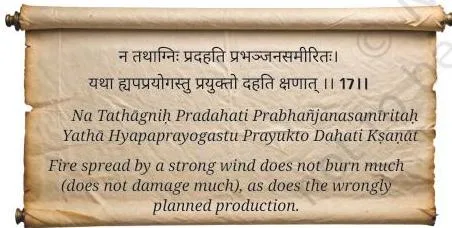
The stanza compares a wrongly planned production to a fire fanned by strong wind — it damages more in a moment. The book’s point: careful preparation is what protects a show.
The Green Room story comes from Greek theatre. Because the performance space was open-air, actors got ready behind the stage among green vineyards, trees and bushes — so the dressing space became known as the Green Room, a name still used worldwide even though there is nothing green about it today.
The chapter also honours two Indian backstage professionals:
- V Rama Murthy — known across the country for lighting, sound, stage design, mime and music; he produced plays and mime shows and trained many backstage crew who work in theatre today (NCERT, p. 6).
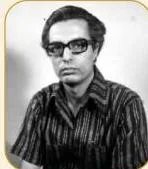
- Tapas Sen — an expert lighting designer between 1940 and 2006, “a magician with lights” in an era without sophisticated equipment. He lit plays across India and was invited to design the lights for the year-2000 New Year celebrations at the Eiffel Tower in Paris (NCERT, p. 6).
The three bells: how a professional show begins
A professional theatre performance signals its start with three bells, and each bell means something different — for the cast, the crew and the audience (NCERT, p. 7).
| Bell | What it signals |
|---|---|
| First bell | Audience maintains silence; the play will start soon. Sets and props for the first scene are already on stage. |
| Second bell | Actors are on stage and in position; everyone backstage is in position. Stage mics are switched on; the announcement names the play, playwright, director and special mentions; flash photography and phone use are banned. |
| Third bell | The show begins. |
The book then makes a striking comparison: the show is like the final exam for the team after many rehearsals. It asks you to identify three steps you would follow to avoid stress before exams and do well.
Our suggestion, matching the chapter’s own logic: prepare steadily beforehand (that is the rehearsal), get everything in position the day before (like the first-scene sets), and begin calmly on the day (like a well-signalled start).
Script structure: protagonist, goal, conflict, resolution
Structure is simply the order in which you arrange story events (NCERT, p. 10). The basic structure the book asks every script to fit has four elements:
- Protagonist — who the story is about.
- Goal — what the protagonist wants.
- Conflict — the obstacle in the path to the goal.
- Resolution — does the protagonist achieve the goal, and how?
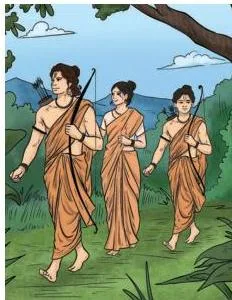
The book’s own example is the Ramayana: Rama is the protagonist; his goal is to rule Ayodhya and follow the path of dharma; the conflict is his 14-year banishment and Sita’s kidnapping by Ravana; the resolution is Hanuman’s support in bringing Sita back, completing the 14 years, and returning to rule Ayodhya (NCERT, p. 10).
The book then gives you a practice table to fill the same four boxes for Chandragupta Maurya and Kautilya and for Prabhavati Gupta from your Social Science textbook.
Here is the same four-part structure on an original story, so you can see how the framework transfers:
- Protagonist — Meera, who organises her colony’s terrace garden.
- Goal — to win the society’s best-garden trophy.
- Conflict — the monsoon floods the garden the night before judging.
- Resolution — she and her friends replant the saplings in pots and dig a drainage channel overnight; the garden recovers and wins.
Characters: personal problems, the character arc and supporting characters
A writer controls every character, and that right comes with a responsibility to make each one matter (NCERT, p. 11). The chapter teaches characters in three steps.
Know your main characters well
Ask two questions: what does this character want in the story, and what issues do they have as an individual? The book warns: a character’s personal problem is not to be confused with the conflict of the story.
The example is Harsha — he wants to solve the mystery of the sound coming from his backyard, but his individual problem is that he is afraid of darkness (NCERT, p. 11). Activity 3.2.1 asks you to list main characters with their name, age, background, individual problem and special features.

Understand the changes in characters through the story
Just as experiences change us, they change characters. This change is the character arc (NCERT, p. 11). Harsha keeps failing because he avoids going out after dark — until his Ajji visits and tells him how she overcame her fear of getting into a bus. Her story inspires Harsha, and from that point he reacts differently to the backyard at night.
Activity 3.2.2 asks you to note each character’s thought and behaviour at the beginning, mid-story and at the end.

A worked arc on an original character: Ritu is terrified of speaking in assembly and hides at the back of every practice. Mid-story, a friend quietly trusts her with a small responsibility — collecting the class slips. By the end, she volunteers to lead the morning assembly. Beginning: fearful and invisible. Middle: trusted with a small task.
End: she chooses to speak.
Supporting characters
Supporting characters matter even when the story is not about them. The rule the book teaches is simple: every new character must have meaning and purpose towards the goal of the script.
Ajji works because she helps Harsha overcome his fear; a scientist who explains sound and wind would also work; but a milkman who comes home every day without contributing to the mystery need not be in the script at all (NCERT, p. 12).
Activity 3.2.3 asks you to list every supporting actor and check whether each one makes a difference to the main character or the goal, or provides context — and to remove any character who does neither.
Scenes: dividing the play with purpose
Just as a book is divided into chapters, a play is divided into scenes. The chapter’s definition: scenes are divisions that mark a change in time, place or action (NCERT, p. 13). Every scene you write must pass four checks:
- Purpose — does it take the story forward, introduce a new character, or bring clarity to a situation?
- Valid transitions — the change must not be abrupt; it must follow the audience’s thought flow and connect logically to the scene before and after.
- Beginning–middle–end inside every scene — an introduction, the core purpose achieved, and a lead into the next scene.
- First and last scenes — the first must grab attention to hold interest through the whole play; the last must end with impact, tying up loose ends and leaving no unanswered questions.
Write your own script: the Draft 1 checklist
Without a script, the chapter says, “a play is like a ship without compass” — a script anchors the story to the vision (NCERT, p. 10). The closing checklist (NCERT, p. 14) turns everything you have learnt into a first draft:
- Decide whether to write alone or in a group — get a team of 3–4 friends ready.
- Choose a concept that inspires you, or choose one of the pictures in the chapter and build a story from it.
- Prepare an overall beginning–middle–end structure with the conflict clearly defined.
- Fit it into protagonist–goal–obstacle–resolution.
- Create the characters.
- Divide the story into scenes and write dialogue.
- The result is Draft 1 — improve it till it is ready, then start rehearsing.

The Draft 1 figure marks the moment the script stops being ideas in your head and becomes a written document the whole team can rehearse from. That is also why the chapter places it at the very end — it is the goal of both halves of the chapter.
The chapter’s figures at a glance
Here is a fast index of every figure in the chapter, so you can find and re-read the images while revising.
| Figure (caption) | Part of the chapter | What to notice |
|---|---|---|
| “It is important not because of the physical space, but because of the work that happens and the people involved.” | Backstage work | The crew at work — support is about people, not the space. |
| “Support during the scene, in case something goes wrong or something is forgotten by the actor.” | Set and properties | A helper stepping in mid-scene to cover a forgotten prop or line. |
| “Support with minor tear and damage in costumes.” | Costume and make up | The quick mending that keeps a show moving. |
| “Sometimes cover-up onstage glitches with appropriate sound or music.” | Music | Sound hiding a mistake from the audience. |
| “Timing lights and supporting the actors during unexpected issues.” | Lighting | Light cues timed to support the actor, not just the scene. |
| “Tapas Sen was an expert lighting designer between 1940 and 2006.” | History of backstage | A master working without sophisticated equipment. |
| “The importance of backstage work is summarised in the below stanza from the Natyashastra — Chapter 5 Poorvaranga.” | History of backstage | The stanza comparing a bad production to a wind-fanned fire. |
| “It is 11 in the morning and the show is scheduled for the same evening.” | Scenario 1 | The clock and the stage — five hours to solve two problems. |
| “RESOLUTION — Finds support of Hanuman to bring back Sita, completes 14 years, returns to rule Ayodhya.” | Script structure | How a resolution completes the four-part frame. |
| “Example: Harsha wants to solve the mystery of the sound coming from the backyard of his house.” | Characters | Goal (mystery) versus personal problem (fear of darkness). |
| “Example: Ajji, who helps Harsha overcome his fear is a good supporting character.” | Supporting characters | A supporting character who changes the main character. |
| “You now have the ‘Draft 1’ of your first script!” | Write your own script | The script as a written team document. |
Key terms from Chapter 3: a working glossary
This chapter mixes Sanskrit theatre terms, English stage terms and script-writing terms, so a quick glossary helps you re-read the prose sections without stopping.
| Term | Meaning as the chapter uses it |
|---|---|
| Backstage crew | The team that takes up different responsibilities and works hard so the performance runs smoothly without glitches (NCERT, p. 1). |
| Natyashastra | The oldest treatise on performing arts, written more than 2500 years ago (NCERT, p. 7). |
| Poorvaranga Vidhi | The history of backstage — a step-by-step set of preparation instructions, from setting up instruments, sets and properties to invoking blessings for an uninterrupted show (NCERT, p. 7). |
| Natya Gruha | The place where performances were held (NCERT, p. 8). |
| Nepathya | The backstage, or the entire space around the stage except the audience (NCERT, p. 8). |
| Nepathya Vidhi | The discipline and procedures followed in the Nepathya (NCERT, p. 8). |
| Mahavarini | Big elephant-shaped pillars at the corners of the stage where sets and properties were kept ready by artists (NCERT, p. 8). |
| Wings | The modern equivalent of the Mahavarinis — side spaces creating three pathways for entry and exit on each side of the stage (NCERT, p. 8). |
| Green Room | The dressing space behind the stage, named after the green vineyards where Greek actors prepared; the name is still used today (NCERT, p. 8). |
| Cue | A signal for an action — music and light teams must know their cues well (NCERT, p. 3). |
| Blackout | Lights switched off for about 30 seconds between scenes, used for quick changes (NCERT, p. 4). |
| Scene | A division of a play that marks a change in time, place or action (NCERT, p. 13). |
| Character arc | The change a character goes through across the story (NCERT, p. 11). |
| Protagonist / Goal / Conflict / Resolution | The four structural elements of a script: who the story is about, what they want, the obstacle in their path, and whether and how they achieve the goal (NCERT, p. 10). |
Common mistakes in this chapter
Most activity checklists in this chapter are lost on a few predictable confusions. Here they are, named before you make them.
| Mistake | Correct rule | How to check your answer |
|---|---|---|
| Mixing up the character’s personal problem with the story’s conflict. | Personal problem is the character’s individual issue; conflict is the obstacle to the goal. The book warns about this explicitly (NCERT, p. 11). | With Harsha, both exist separately: mystery = goal, fear of darkness = personal problem. |
| Keeping a character who does not help the goal or add context. | Every character must earn their place (the milkman rule, NCERT, p. 12). | Run Activity 3.2.3: does the character make a difference or provide context? If neither, cut them. |
| Changing scenes abruptly without a logical connection. | Scene changes must follow the audience’s thought flow and connect to the previous and next scenes (NCERT, p. 13). | Ask: would the audience be lost at this cut? |
| Weak first or last scenes. | The first scene must grab attention; the last must tie up loose ends and leave no unanswered questions (NCERT, p. 13). | Re-read your opening line and closing moment — do they do their jobs? |
| Forgetting after-show duties. | The show’s work continues after the curtain — props returned, costumes washed and repaired, equipment packed (NCERT, p. 4). | Cover all four departments’ after-show lists, not just the during-show work. |
| Ignoring time and money limits in scenario questions. | The chapter reminds you that a new set is expensive and the time available is short (NCERT, p. 9). | State the constraint in your solution — time, cost, and teamwork. |
| Thinking backstage means only the physical space. | The book says it is about the work and the people, not the space (NCERT, p. 2). | Answer “why is backstage important?” with people and work, not walls. |
Activities and self-assessment in this chapter
In this arts chapter, practice is the study — you learn by doing the tasks it sets.
- Activities 3.2.1, 3.2.2, 3.2.3 — main characters with details; tracking thought and behaviour at beginning, middle and end; and checking every supporting character’s contribution (NCERT, pp. 11–12).
- Scenario 1 — a lead actor is injured and the made-to-order costume is torn five hours before the show (NCERT, p. 9). The chapter asks for a solution that keeps in mind the time needed for planning, the actual time available, and the money involved.
- Scenario 2 — the magical bracelet prop is stolen on show day (NCERT, p. 9). Options the book names: make something that looks like it, change the script, or manage with lighting and dialogue — and decide whether to solve it alone or as a team.
- Backstage question set — which department interests you, which skill you would use in everyday life, and which skill would help you in exams (NCERT, p. 9).
- Circle Time — your favourite character’s arc and flaw, your chosen genre for script writing, and a play or movie whose script you thought was weak (NCERT, p. 13).

The Scenario 1 figure sets the scene for the task: a morning clock, a venue, and a team beginning preparation — all the constraints of the problem in one image.
On assessment: the chapter’s closing table frames its learning outcomes as teacher and self assessment (NCERT, p. 16). Textbook contents and the examinable syllabus are not always identical — check the current official syllabus for what is assessed in your school.
Revision summary: what to remember
Part I — Backstage:
- Backstage is the invisible support that runs the show — people and work matter, not the physical space.
- Four departments — set and properties, costume and make up, music, lighting — each with before-show and after-show duties.
- A play with 8–10 actors needs at least 15–18 backstage people.
- Life skills: teamwork and leadership, human resource, time management, communication, resource management, sales and marketing, discipline and commitment.
- History runs from the Natyashastra’s Poorvaranga Vidhi, through Natya Gruha, Nepathya and Mahavarinis, to today’s wings and the Green Room.
- Three bells: silence, positions, show begins. The show is the team’s final exam.
- Backstage works in silence — “making the magic happen” (NCERT, p. 15).
Part II — Script writing:
- The script is the compass; it anchors the story to the vision.
- Structure = protagonist → goal → conflict → resolution.
- A character’s personal problem is not the story’s conflict.
- The character arc is the change through the story — note beginning, middle and end.
- Supporting characters must earn their place (the milkman rule).
- Scenes divide by time, place or action and must pass the four checks — purpose, valid transitions, beginning–middle–end, and strong first and last scenes.
- The Draft 1 checklist ends the chapter: decide the team, choose the concept, plan the structure, create characters, divide scenes, write dialogue, then rehearse.
Related chapters and official resources
This listing is maintained for the 2026-27 academic session using the NCERT textbook information available to us. NCERT remains the authority for confirming the latest edition.
This chapter builds on what you learnt in Grade 6 Kriti — the book itself says costume design was learnt in Grade 6 (NCERT, p. 4). The backstage “silent work” section even notes you can use your mime skills there (NCERT, p. 15).
Browse the full NCERT Class 7 Kriti arts chapters on this site or the Class 7 hub for the rest of the book, and it helps to revisit say more without speech — mime for the stage-work connection. When you analyse a story’s structure, the story of India’s past chapters give you plenty of protagonists, goals and conflicts to practise on.
The official chapter file is published on ncert.nic.in.
| What the chapter holds | Count | Where it is used |
|---|---|---|
| Printed pages | 16 | |
| Figures with NCERT captions | 12 | |
| Tables | 3 | |
| Activities | 3 | |
| Official NCERT PDF | Download the chapter PDF | the chapter exactly as NCERT publishes it |
Reference: NCERT Class 7 Kriti textbook, chapter 3, official edition on ncert.nic.in.
Sources and data verification
- This page describes the NCERT Kriti (Arts) textbook for Class 7, Chapter 3, official edition published on ncert.nic.in.
- The section names, figures, activities, scenarios and learning outcomes above come from that edition.
- The listing is maintained for the current academic session using the NCERT information available to us.
- NCERT settles textbooks, editions and PDFs; CBSE settles curriculum, syllabus and examinations. Textbook contents and the examinable syllabus are not always identical — check the current official syllabus.
Frequently asked questions
What do the three bells in a theatre mean?
The first bell asks the audience to maintain silence; sets and props for the first scene are already on stage. The second bell means actors and backstage are in position, mics are on, the announcement is made, and flash photography and phones are banned. The third bell means the show begins (NCERT, p. 7).
How many people are needed backstage for a play with eight to ten actors?
At least 15–18 backstage people, sometimes more, working across the four departments (NCERT, p. 4).
What is a character arc in script writing?
A character arc is the change a character goes through across the story — how their thought and behaviour differ at the beginning, mid-story and at the end (NCERT, p. 11). Harsha moves from avoiding the dark backyard to reacting differently because of Ajji’s inspiration.
What is the difference between a story conflict and a character’s personal problem?
The conflict is the obstacle in the protagonist’s path to the goal. A personal problem is the character’s own individual issue, and the book warns it is not to be confused with the story’s conflict (NCERT, p. 11). Harsha’s goal is solving the backyard mystery; his problem is fear of darkness.
Where does the name Green Room come from?
In Greek theatre the performance space was open-air, and actors prepared behind the stage among green vineyards, trees and bushes — so the dressing space was called the Green Room, a name still used worldwide (NCERT, p. 8).
How should I approach the scenario questions in this chapter?
Keep three constraints in mind: the time needed for planning versus the time actually available, the money involved, and the fact that you can work as a team or alone. The chapter itself notes you may not be able to buy an entire new set because it could get very expensive (NCERT, p. 9).
Explore Class 7 Arts Books
Related chapters: