
This is the theatre class 7 chapter: Chapter 1, “Theatre” — titled “Understanding Emotions” — from Kriti, the NCERT Arts textbook for Class 7, English medium.
The official PDF is published by NCERT on ncert.nic.in, and the chapter download for the 2026-27 session is right below. Use this page to see what the chapter teaches before you open it, or to revise it quickly after reading.
Download the Theatre Class 7 Kriti Chapter 1 PDF
Get the official theatre class 7 Kriti Chapter 1 PDF from the NCERT textbook portal to read the full “Theatre” chapter — its activity instructions, photographs of temple sculptures, and the notes for teachers — in the exact published edition.
What Is Inside the Theatre Class 7 Chapter
Read this section first to see how the chapter is arranged, so that when you open the PDF you know exactly where each idea sits.
The chapter table on this page lists how much of the chapter there is — its sections, figures and activity instructions — so you can judge the file at a glance. The structure below is what the chapter actually teaches.
The chapter runs in this order:
- Opening verse — a few lines from the Tamil epic Silappadikaram by Ilango Adigal (Sangam literature), about how an actor’s expression of a character’s emotions brings about changes in the actor’s own body and mind.
- Note to the teachers — the textbook’s vision for a fruitful theatre class: free space to move, connections to real-world applications, and a planned assessment that keeps the spirit of theatre intact.
- Understanding Emotions — the main teaching section, opening with a Sanskrit line from Bharata’s Natyashastra and the three “You Will Learn” goals.
- Exploring Expression Styles — how the same emotion looks different in different people, and the two universal styles of acting.
- Ancient Architecture — temple sculptures as a gallery of the Navarasa, with stories of the artists behind them.
- Theatre and Life — the closing section, linking theatre to empathy and emotional intelligence.
- Chapter 1 rubric — a list of learning outcomes at the end, which the teacher and the student each grade.
What This Chapter Covers: From Emotions to Architecture
This section is a guided tour of the chapter’s own sequence, so you can follow the argument from one idea to the next.
The chapter opens by asking why emotions matter. A Sanskrit line from Bharata’s Natyashastra gives the answer: in a performance, feelings, sentiments, mood, thoughts and state of mind must be created, and only one who knows this well will make the play succeed.
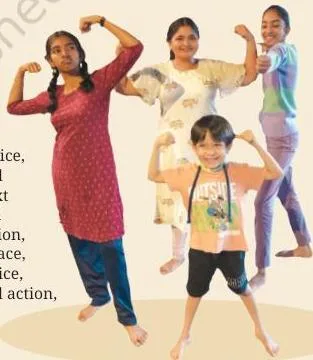
The image below carries the chapter’s central claim right after that verse: emotions are the most important thing to connect not just for the audience, but people in general.
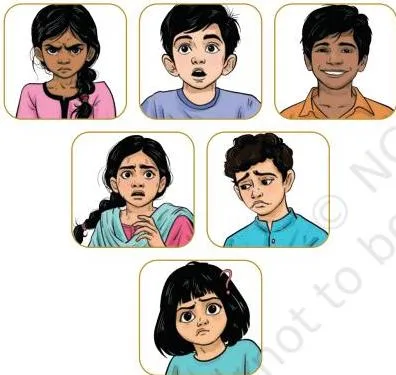
Before going deeper, the chapter recaps what Class 6 covered: Bhava — the inherent attitude and state of mind of the individual; Rasa — the feeling felt in a situation because of that bhava; the Navarasa as the Indian view of emotions; tragedy and comedy as the Greek view; the Hot Seat game; and mask-making.
From that recap, the chapter names its three “You Will Learn” goals:
- Emotions in different intensities.
- Lokadharmi and Natyadharmi — realistic and stylised acting.
- Representation of emotions in ancient architecture.
Each goal takes up its own section. The Different Levels section shows that one emotion can be felt weakly or strongly; the Styles of Acting section introduces Bharata Muni’s two dharmis; the Ancient Architecture section reads emotions in stone. The chapter closes by returning to Theatre and Life — what all this practice does for the person doing it.
Key Concepts: Intensity, Loka Dharmi and Natya Dharmi
These are the three ideas the chapter promises you will learn, and every activity exists to drill one of them. Understand these and you understand the chapter.
Intensity: one emotion, many strengths
Every emotion has levels. The chapter’s own example is anger: mild anger, then very angry, then rage. Intensity is defined as the measurable quality or degree of a property or condition — in theatre, how strongly an emotion comes through in your voice, face and body.
To see the pattern clearly, here is a four-level ladder for fear, with a name and a physical cue for each level, ready to act out in Emotional Corners:
| Level | Name | What the body does |
|---|---|---|
| L1 | Uneasy | Shoulders tense, eyes keep checking the room |
| L2 | Nervous | Stomach tight, voice shakes, you look around often |
| L3 | Terrified | Breathing quickens, you step back, heart pounds |
| L4 | Panicked | Body freezes or shakes, you cannot think clearly |
Act the ladder from L1 to L4 and back. Your voice should rise and your gestures grow — that is intensity in action, exactly what the chapter’s activities train.
The two figures below are the chapter’s own anchors for this idea.
The Sanskrit verse opens the Understanding Emotions section. It declares that feelings, sentiments, mood, thoughts and state of mind must be created in a play — only then does the play attain success.
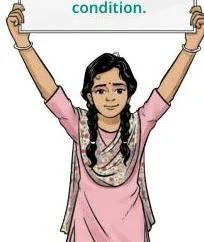
The second figure defines the word the section runs on: intensity is the measurable quality or degree of a property or condition.
Loka Dharmi and Natya Dharmi: the two styles of acting
More than 2,500 years ago, the sage Bharata Muni studied, researched and analysed the performing arts and wrote it all in the Natyashastra. Teachers still use his work today because it remains relevant. His most famous division for actors is the two styles of performance.
- Loka Dharmi — the realistic style. Perform as in real life: actions, expressions and costume are all natural. It looks like the situation is naturally happening on stage, not being acted.
- Natya Dharmi — the stylised, theatrical style. Bigger, exaggerated movement; over-the-top expressions; loud voice; elaborate bright costume and makeup; lots of jewellery and accessories.
Here is the same contrast, row by row, in one comparison table:
| Aspect | Loka Dharmi (realistic) | Natya Dharmi (stylised) |
|---|---|---|
| Voice | Normal, everyday voice | Loud voice that fills the space |
| Costume | Everyday clothes, close to real life | Elaborate bright costume, jewellery, accessories |
| Movement | Natural gestures, normal behaviour | Bigger, exaggerated movement |
| Makeup | Close to everyday life, minimal | Elaborate, bright makeup |
| Music | Minimal music | Elaborate music |
Why does the chapter bother with both? Because the same action can be performed either way, and both are respected styles. The stanza from the Natyashastra puts it formally: the practice of representation in a dramatic performance is twofold — Lokadharmi, or realistic, and Natyadharmi, or theatrical. The figure in the walkthrough below shows that stanza as printed.
Emotions carved in stone
The third learning goal is ancient architecture. The chapter treats temple walls as a timeless gallery of human emotion, with the Navarasa depicted in stone. Each building, temple and sculpture carries a story, and those stories hold more emotions hidden within them.
The sculptures themselves are walked through in the figures section below, with a quick reference chart for revision.
The Activities in Theatre Class 7: What Each One Trains
This textbook teaches through doing, not reading. Each of the chapter’s three activities trains a different skill, so know what each one is asking of you.
Activity 1.1: Emotional Corners — expressing emotion in voice, face and body
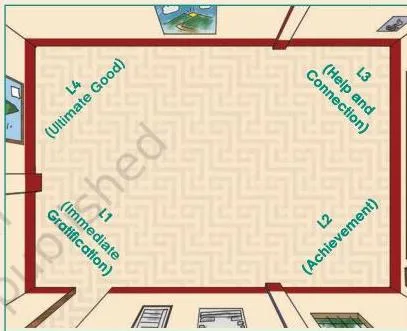
Every corner of the room is assigned an emotion, with placards marking them. All children start at the centre. Each child takes a turn to go to an emotion of their choice, say one or two lines that depict the feeling, and act it out in speech, facial expression and body language.
Then the class picks another emotion, discusses its levels, and makes new placards. The book’s second example runs from immediate gratification (your favourite ice cream) through personal achievement and help and connection, up to ultimate good (donating books to an orphanage). You can add a fourth level if you can identify one.
Two variations build control. Doing it without voice forces you to carry the whole emotion in expression and body language; skipping action leaves only voice and expression.
In the advanced round, corners carry only level names — L1, L2, L3, L4 of any emotion — and one narrator calls out a rasa and a level while the class moves to that corner and emotes it.
Worked example for the advanced round, with a different plot from the book’s queen story, calling out emotion levels at the turning points:
A shepherd boy named Karan sees a wolf near his flock at dusk. He calls out — Bhayanaka rasa, L3 (terrified) — and the class runs to the Terrified corner, crying out in fear. The wolf turns out to be a friendly stray dog, and Karan laughs at his own panic — Hasya rasa, L2.
The next morning he tells the village children, and they are amazed at his courage — Adbhuta rasa, L3. His father hears the story and feels proud — Veera rasa, L2.
The book’s note to the teacher is important: children must think and arrive at the levels each time, the levels need not be the same for every batch, and there is no correct or wrong answer. The teacher supports the class in arriving at names, rather than handing the names over ready-made.

The note with this activity explains why: each child’s own experience decides their levels. Writing them builds self-awareness, and sharing them gives peer validation. The book adds that emphasising voice and volume helps children with visual impairment connect better.
Activity 1.2: Pick Your Style! — realistic or stylised
Simple actions are written on chits — walking on a road with many potholes, taking a gift out of a bag, eating your favourite chocolate. In the basic round, each child picks one chit and chooses whether to perform the action naturally or in a stylised way.
In the advanced round, a second bundle of chits carries the words realistic, stylised and both. Each child picks one chit from each bundle and follows what is written, trying different combinations.
Activity 1.3: Find a Picture! — reading emotion in sculpture
Find a picture of a temple sculpture you have seen, paste it in the box, and write about the emotion in the sculpture and the story behind it. This trains you to read a carved face the way you read an actor’s face — the exact skill the Ancient Architecture section teaches.
How the activities map to the closing rubric
The end of the chapter carries a rubric of learning outcomes, and every activity in the chapter feeds one of them. The mapping below is useful for revision and self-assessment.
| Activity | What you do | Learning outcome it builds |
|---|---|---|
| 1.1 Emotional Corners | Show an emotion at different intensities in voice, face and body | Identifies and expresses action, expression and dialogue in varying intensities of emotions |
| 1.1 Advanced (story round) | Narrate a story and call out rasa and level for the class to emote | Builds stories independently, connecting various emotional levels, and narrates to the class effectively |
| 1.2 Pick Your Style! | Perform the same action in realistic and stylised ways | Distinguishes Lokadharmi (realistic) and Natyadharmi (stylised) acting in action and expression |
| 1.3 Find a Picture! | Identify the emotion and story in a temple sculpture | Identifies and recalls sculptures or artwork that show emotions in expression and action |
| Circle Time after each activity | Observe classmates and accept different expressions and perceptions | Shows empathy in understanding and accepting differences in how a situation is perceived by classmates |
How to Read the Figures in This Chapter
The figures in this chapter are teaching tools, not decoration. Each one shows either a step of an activity or a sculpture to read. Go through them in order with the textbook open.
Activity figures: the Emotional Corners setup
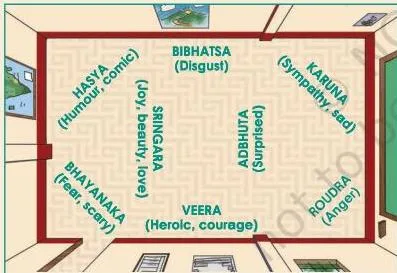
This is the trial-round layout for Activity 1.1. Each corner belongs to one emotion, the placard names it, and every player begins at the centre. When a name is called, you walk to that corner and show the emotion in speech, expression and action.
The figure shows the chapter’s example of choosing a corner: one child picks Veera (bravery), stands in its place, and depicts it in voice, expression and action. The next child then chooses a different emotion, and so on round the class.
This is the variation that switches speech off. Without words, the emotion must be carried entirely by facial expression and body language — the same skill the mime chapter “Say More Without Speech” builds later in the Kriti book.
Style figures: spotting the performance style
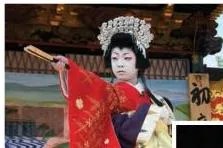
These pictures sit in the Styles of Acting section, where the text names Brecht style and method acting as examples of styles that are closer to real life. Try to guess the country or culture each one comes from — it is difficult, and that is the point.
These are technique-based styles that work for any script or story, unlike the culture-based styles named beside them — the traditional styles of Japan in South-East Asia and some parts of India.
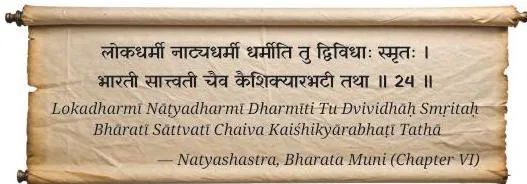
This is the root of everything the chapter teaches about style. The stanza’s meaning is given in the book: the practice of representation (dharmi) in a dramatic performance is twofold — Lokadharmi, or realistic, and Natyadharmi, or theatrical.
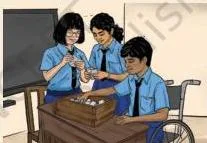
In the advanced round of Activity 1.2, this second bundle joins the action chits. One chit from each bundle decides both what you do and how you do it, and the combinations can be tried multiple times.
Architecture figures: reading emotion in stone
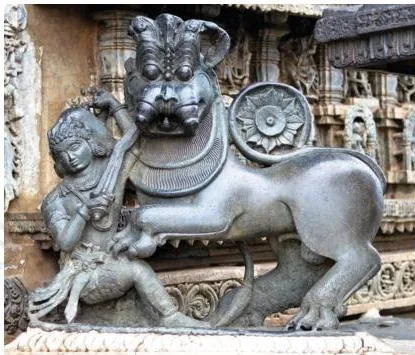
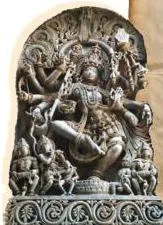
This image opens the Ancient Architecture section. Where an actor’s face is a canvas for emotion, the walls of ancient buildings are too — a timeless gallery of the Navarasa, with every part of the country adding its own style and its own dynasty’s story.

The sculpture shows Sala, a young boy, fighting a lion — an image of bravery and courage, the Veera rasa. The chapter tells the legend that the Hoysala dynasty (1006–1346 CE) earned its name from this very scene: “Hoy-Sala!” — “kill the lion, Sala!”
The sculpture quick reference chart
Keep this chart for revision — it pairs every sculpture the chapter names with its temple, its rasa and its dynasty.
| Sculpture | Temple / site | Rasa (emotion) | Dynasty |
|---|---|---|---|
| Sala fighting a lion | Chennakeshava Temple, Belur, Karnataka | Veera — bravery and courage | Hoysala (1006–1346 CE) |
| Dvarapalaka, guardian of the entrance | Brihadeeshwara Temple, Tanjavur, Tamil Nadu | Bhayanaka — fear; meant to scare off negative forces | Chola (815–1280 CE) |
| Trimurti — three faces of Shiva | Elephanta Caves, Maharashtra | Three emotions in one: creation, sustenance and destruction | Rashtrakuta (755–975 CE) |
Two details are worth remembering with this chart. The Brihadeeshwara Temple was built without binding agents such as cement or soil and without a conventional foundation, yet it has stood against earthquakes and storms for over a thousand years. The Trimurti shows that a single sculpture can carry more than one emotion — emotions are layered, and so are stories.

This image closes the Jakanachari story. Every artist who carved such sculptures treated the work as God’s work, where even a minor scratch was unacceptable — that is why the detailing has survived centuries.
The theatre-and-life figure

The last figure lands the chapter’s biggest idea. Theatre is not just acting on stage — it is about feeling, growing and connecting with people better, which the book calls emotional intelligence.
Definitions You Need for Theatre Class 7
These terms return in later grades, so learn them now. Each definition is in plain language, with the section that introduces it named alongside.
| Term | Plain meaning | Where the chapter introduces it |
|---|---|---|
| Bharata Muni | The great sage from India who, more than 2,500 years ago, studied, researched and analysed the performing arts and defined their elements. | Understanding Emotions; Styles of Acting |
| Natyashastra | Bharata Muni’s ancient work on performing arts, still used today because it remains relevant. | Understanding Emotions; Styles of Acting |
| Bhava | The inherent attitude and state of mind of the individual. | Understanding Emotions (recap from Grade 6) |
| Rasa | The feeling felt in a situation as a result of the bhava within. | Understanding Emotions (recap from Grade 6) |
| Navarasa | The Indian view of emotions: the eight predominant emotional experiences Bharata Muni concluded, plus a ninth added later. | Understanding Emotions (recap from Grade 6) |
| Intensity | The measurable quality or degree of a property or condition — in this chapter, how strong an emotion is. | Different Levels |
| Loka Dharmi | The realistic style of acting: natural actions, expressions and costume, as in real life. | Styles of Acting |
| Natya Dharmi | The stylised, theatrical style of acting: exaggerated movement, over-the-top expressions, loud voice, elaborate costume. | Styles of Acting |
| Empathy | Understanding other people’s emotions and their ways of expressing them. | Theatre and Life |
| Emotional intelligence | The ability to feel, grow and connect with people; to accept all emotions and express them freely without overdoing anything. | Theatre and Life |
Common Mistakes Students Make in Chapter 1
These are the points where most students slip in this chapter. Read the correction before you make the mistake.
The biggest trap: thinking there is one correct list of intensity levels. The book’s note to the teacher says children have to think and arrive at different levels each time, and there is no correct or wrong answer.
Your levels may differ from a friend’s — that is the design, not an error. If a teacher simply hands over the names of variable intensities, the thinking part disappears.
This is the book’s own guard against the trap: the teacher’s job is to help the class arrive at the names, not to supply them.
| Mistake | Correct rule | How to check your answer |
|---|---|---|
| Believing there is one correct list of intensity levels | Each group arrives at its own levels; no answer is wrong | Compare your levels with a classmate’s — different lists are both acceptable |
| Calling Loka Dharmi “not acting” | It is acting, done naturally, as in real life; it only looks unstaged | Ask: is the actor still performing on a stage? Yes — so it is a style |
| Calling Natya Dharmi “better acting” | It is a different, stylised style — not a higher one | Both are Bharata Muni’s two dharmis; neither is superior |
| Thinking stylised acting is only ancient | Movies and TV are full of exaggerated, stylised performances | List three stylised performances from shows or films you watch |
| Mixing up sculpture, temple and dynasty | Sala → Chennakeshava → Hoysala; Dvarapalaka → Brihadeeshwara → Chola; Trimurti → Elephanta → Rashtrakuta | Cover the dynasty column of the chart above and recall it from the sculpture alone |
How Theatre Class 7 Is Assessed: Formative and Summative
In this textbook, theatre is assessed through activities, not through a pen-paper question paper. Knowing the plan tells you exactly what to prepare for.
The chapter’s assessment section names four qualities for the teacher to weigh: knowledge application, effort and participation, creativity and presentation, and teamwork and collaboration. The final presentation is not the only benchmark — the thoughts and processes behind it count too.
Formative assessment: during the year
- Circle Time — after every class and every activity, the teacher sits with students informally and asks what they did, what they observed and how they felt. The teacher makes notes on each child. The chapter says this informality is deliberate: it gets honest responses.
- Brain Booster — practical tasks that ask a child to try what was learnt. The outcome of each activity is not whether the product is “good” or “bad”, but whether the process was understood and the skills developed.
- Rubrics — after each chapter, the teacher marks the desired learning outcomes, and the child also grades themselves on their own perception of their performance. That self-analysis acts as feedback for the teacher.
Summative assessment: the end of the year
An activity-based test is conducted at the end of the year, combining the lessons learnt during the year. It is held at individual and group level to assess different skills and competencies, and a sample set of activities is given at the end of the section.

Circle Time questions grouped by what they test
If you want to practise answering in the informal Circle Time setting, group the chapter’s questions by what they test.
- Intensity: How many new additions did you make to Bharata Muni’s list of emotions? Do you think you can have more than three or four levels of intensity? What are those emotions? Do you actually feel or experience the emotion and its intensities as you express them, or is it just external?
- Style: What are the differences observed in both styles of acting? Which method is more effective, and why? Share examples of where you have seen stylised acting (movies, TV etc.).
- Architecture and life: Share more examples of pictures, paintings or other instances where you have seen emotions. If you were given the work of creating such a temple, how would you prepare for it? How much time would you spend practising it? Can you apply the same to your work in school?
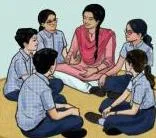
That last style question connects the chapter to the student’s own screen time: stylised acting is not a museum piece — it is on television and in films all around you.
Revision Summary: Understanding Emotions in One Page
If you have five minutes, read this. Everything essential from the chapter, in compact form.
- Every emotion has levels of intensity. Anger runs from mild anger to very angry to rage; intensity is the measurable quality or degree of a property or condition. There is no single correct list of levels — groups arrive at their own.
- Bharata Muni, more than 2,500 years ago, defined two styles of acting: Loka Dharmi (realistic — natural actions, expressions and costume) and Natya Dharmi (stylised — exaggerated movement, loud voice, bright costume and makeup).
- The same emotion looks different in different people — fear can be shown with eyes closed tightly or eyes wide open. Observing others builds empathy.
- Ancient temples are a gallery of the Navarasa: Sala fighting the lion (Veera rasa, Chennakeshava, Hoysala), the Dvarapalaka (Bhayanaka rasa, Brihadeeshwara, Chola) and the Trimurti (three emotions in one, Elephanta Caves, Rashtrakuta).
- The Jakanachari story is about dedication: a master craftsman, a flaw found by his own son, a frog in a cavity — and sculpture that survived for centuries only through the dedication, commitment and persistence of thousands of artists.
- Theatre builds emotional intelligence: it is about feeling, growing and connecting with people. All emotions are equal, and nothing should be overdone.
- Assessment is activity-based: Circle Time, Brain Booster and rubrics during the year, and an activity-based test at individual and group level at the end of the year.
Related Class 7 Arts Resources
If this chapter made you curious about the arts, the Class 7 Arts revision notes cover the rest of the Kriti book, chapter by chapter.
For every subject in the class, the Class 7 hub collects revision material in one place, reachable from the main CBSE notes index. The mime chapter link above is a good place to start if the no-voice exercise appealed to you.
Sources and Data Verification
This page describes the NCERT Kriti Class 7 Arts textbook, Chapter 1, “Theatre” (Understanding Emotions), English medium, as published on ncert.nic.in. NCERT settles textbook editions and official PDFs; CBSE settles the examinable syllabus. Textbook contents and the examinable syllabus are not always identical, so check the current official syllabus before examinations.
Dynastic periods and sculpture details on this page come from the chapter text itself.
| What the chapter holds | Count | Where it is used |
|---|---|---|
| Printed pages | 19 | |
| Figures with NCERT captions | 18 | |
| Tables | 2 | |
| Worked examples | 1 | solved step by step in our NCERT Solutions |
| Official NCERT PDF | Download the chapter PDF | the chapter exactly as NCERT publishes it |
Frequently Asked Questions About Theatre Class 7
What is the difference between Loka Dharmi and Natya Dharmi in Theatre Class 7?
Loka Dharmi is the realistic style: actors perform as in real life, with natural actions, expressions and costume, so the situation looks as if it is naturally happening on stage. Natya Dharmi is the stylised, theatrical style: exaggerated movement, over-the-top expressions, loud voice, bright elaborate costume, makeup and jewellery.
Bharata Muni defined both in the Natyashastra more than 2,500 years ago; the chapter’s stanza calls them realistic and theatrical.
What are the levels of emotion in Kriti Chapter 1?
The chapter shows each emotion has levels of intensity. Its example is anger in three levels — mild anger, very angry, rage — and its second example lists four: immediate gratification, personal achievement, help and connection, and ultimate good. There is no single correct list: the book says each group arrives at different names and levels, and no answer is wrong.
The fear ladder on this page (uneasy, nervous, terrified, panicked) is a ready-made example you can act out.
Is Class 7 theatre assessed through a written exam?
No. The textbook plans an activity-based assessment. Formative assessment runs through the year with Circle Time after every class and activity, Brain Booster practical tasks, and rubrics marked by the teacher and by the student. Summative assessment is an activity-based test at the end of the year, conducted at individual and group level.
This is the textbook’s own plan; any board weightage is set by the official CBSE syllabus.
Which temple sculptures show the Navarasa in the Theatre chapter?
Three sculptures are discussed. Sala fighting a lion shows Veera rasa (bravery and courage) at the Chennakeshava Temple, Belur, Karnataka, from the Hoysala dynasty. The Dvarapalaka, guardian of the entrance, shows Bhayanaka rasa (fear) at the Brihadeeshwara Temple, Tanjavur, Tamil Nadu, from the Chola dynasty.
The Trimurti — three faces of Shiva showing creation, sustenance and destruction — is in the Elephanta Caves, Maharashtra, from the Rashtrakuta dynasty.
What is the story of Jakanachari and the Hoysala temple?
Master craftsman Jakanachari was ordered by the Hoysala King Nripa Haya to build a grand temple. He left home for years, choosing each stone after a blessing from God. A young artist in his team found a flaw in one statue — a cavity in the navel where a frog lived.
Jakanachari cut off his hands, considering himself incapable of the God’s work. The young artist turned out to be his own son, Dankachari. God blessed Jakanachari to regain his hands, and the father-son duo completed the temple in Belur, Karnataka.
What does the Emotional Corners activity teach?
Emotional Corners trains you to express one emotion at different intensities in voice, facial expression and body language. Each corner holds an emotion; players start at the centre, choose a corner, say one or two lines that depict the feeling, and act it out.
In the advanced round, corners carry only level names, and the class acts out a story as the narrator calls out a rasa and a level.
Reference: NCERT Class 7 Arts (Kriti) textbook, Chapter 1, official edition on ncert.nic.in.
Explore Class 7 Arts Books
Related chapters: