
This page is about Utsav Class 1 Joyful Mathematics Chapter 9 — the festival-patterns chapter of NCERT’s Joyful Mathematics textbook for Class 1, as published for the current academic session.
The official NCERT chapter PDF is linked right below, and the rest of this page explains what the chapter contains and what each activity asks a child to do, so a parent can follow the book page by page.
The chapter’s theme is one early-maths idea: the colours, shapes and designs of festivals such as Makar Sankranti, Pongal, Bihu and Lohri teach how patterns repeat and how to extend them.
Download the official Utsav Class 1 chapter PDF
NCERT publishes Joyful Mathematics as the Class 1 mathematics textbook, with Utsav as Chapter 9 inside that ebook. The NCERT Class 1 Joyful Mathematics Chapter 9 Utsav PDF is the official file from the ncert.nic.in portal — open it for the full chapter, with every picture, pattern strip and activity in place.
Utsav Class 1 chapter at a glance
The table lists what is inside the chapter — its sections, figures and activities — so you can see how much the PDF holds before opening it.
| What the chapter holds | Count | Where it is used |
|---|---|---|
| Printed pages | 7 | |
| Figures with NCERT captions | 6 | |
| Activities | 1 | |
| Official NCERT PDF | Download the chapter PDF | the chapter exactly as NCERT publishes it |
The chapter itself is organised in four parts:
- Opening festival picture and discussion. The first spread introduces Uttarayan, Makar Sankranti, Pongal, Bihu and Lohri, and asks children to talk about the festivals their own families celebrate.
- Extend the patterns by drawing further. Eight pattern strips labelled A to H, each one a row the child continues by drawing.
- Let us Do. One activity page holding several pattern tasks, from fingerprint patterns to a kolam to complete.
- Project Work. Four open-ended projects that carry the pattern idea outside the book.
What the Utsav chapter covers
This is a patterns chapter wearing a festival costume. Every task frames a pattern idea inside an Indian celebration, so the maths arrives through colours, prints and designs rather than through symbols.
The chapter flows from discussion to drawing to doing:
- The opening spread sets the scene: Uttarayan, Makar Sankranti, Pongal, Bihu and Lohri mark the turn from winter to summer and the start of the harvest season, with sunny days returning. Children discuss local festivals their families celebrate, and the picture points out the main elements of each celebration and the shapes and patterns inside them.
- The pattern strips, A to H, move it to the page: the child extends each row by drawing further. The book also advises adults to encourage children to use concrete objects to make patterns first.
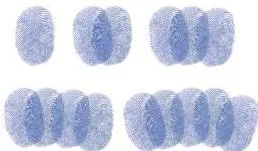
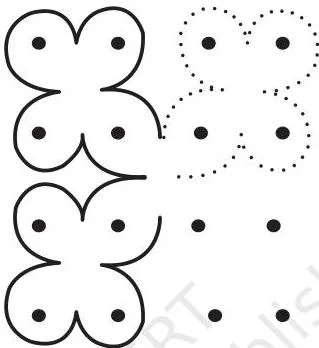
- Let us Do turns to creating: a thumb-and-finger impression pattern like Munna’s, a colour question about pink, vegetable-slice printing, colouring to extend patterns, completing a pattern, filling in missing numbers, and finishing a kolam or rangoli for Murthy and Vani.
- Project Work takes patterns outdoors: arrange objects in patterns, find patterns in nature, make a collage, and create action patterns.
Key ideas in Utsav: what a pattern is and how children extend one
The whole chapter is one idea: a pattern is a part that repeats, and the child’s job is to find that part and continue it. The book never prints a formal definition — the activities carry the meaning.
Here is how to explain it to a six-year-old in four moves:
- Look at the row and find the smallest part that keeps coming back.
- Say that part aloud — name the colours for a colour row, read the numbers for a number row.
- Draw, colour or place the same part again, and again.
- Check by reading the whole row aloud; it should sound regular.
The strips A to H, the colouring activity, the “complete the pattern” row and the missing-numbers task all use these same four moves — only the material changes.
The colour question, read step by step
The chapter asks one pointed question about Munna’s pattern: what colour should come after pink, and why? The book’s strip uses its own colours, so the method below matters more than the example — apply it to the row in the book.
- Say the colours of the pattern aloud, left to right.
- Find the smallest group of colours that keeps coming back. That group is the repeating unit.
- Say the unit twice in a row. If it fits perfectly, you have found it.
- Look inside the unit for pink. The colour that follows pink inside the unit is the next colour of the whole strip.
- Answer the “why” by pointing at the unit, not at a favourite colour.
For example, in a strip that runs pink, blue, yellow, pink, blue, yellow, pink…, the unit is pink–blue–yellow, so after the pink comes blue — not because blue is anyone’s favourite, but because that is what the repeating order puts next.
What each “Let us Do” activity practises
The activity page is not a random list; each task trains one slice of the same idea.
| Let us Do activity | What the child does | Pattern skill it practises |
|---|---|---|
| Munna’s thumb-and-finger impression pattern | Makes a pattern with fingerprints in the given space | Creating a repeating pattern |
| “What colour should come after pink and why?” | Names the next colour and explains the reason | Finding the repeating unit and predicting the next element |
| Vegetable-slice printing | Prints a pattern of choice with cut vegetable slices | Creating and describing an original pattern |
| “Look at the patterns and extend them by colouring” | Continues the coloured rows | Extending a pattern |
| “Complete the pattern” | Fills the part the pattern is missing | Completing a pattern with a gap |
| “Study the pattern and fill in the missing numbers” | Writes the missing numerals | Number patterns — the same idea with digits |
| Kolam or rangoli for Murthy and Vani | Completes the floor design | Recognising and continuing a repeating design |
Pattern words a Class 1 child needs
The chapter uses a handful of working words without defining them. A child who knows what each instruction means can simply do the task.
| Word | What it means in Class 1 language | Where it appears |
|---|---|---|
| Pattern | Something that repeats in a regular order | The whole chapter |
| Repeating unit | The smallest part that comes again and again | Strips A–H and the colouring activities |
| Extend | Draw or colour what comes next by following the unit | Strips A–H and “extend them by colouring” |
| Complete | Fill the gap a pattern leaves | “Complete the pattern” and the kolam |
| Missing numbers | The blanks inside a number pattern | “Fill in the missing numbers” |
| Kolam or rangoli | A floor design made of dots, lines and colours that follows a pattern | Murthy and Vani’s activity |
Reading the pictures in the Utsav chapter




Utsav is an illustrated activity book, so much of the teaching happens in its pictures. Here is how to read each main visual with a child, based on what the chapter text itself says about them.
- The opening celebration picture highlights the main elements of each festival — Uttarayan, Makar Sankranti, Pongal, Bihu and Lohri — and the shapes and patterns within them. Point and name together: the festival element, the shape, the part that repeats.
- The labelled strips A to H are the chapter’s practice rows. Each strip shows the beginning of a pattern, and the child draws the continuation in the rest of the row.
- Munna’s pattern is made from the impression of his thumb and fingers; the child makes a similar pattern from fingerprints in the given space.
- The kolam is the floor design Murthy and Vani are helping their Amma make; the child completes it by following the repeating design.
One caution for adults: the chapter does not describe the exact colours or positions of these pictures, so this page does not add any. Read what the picture itself shows and let the child name what they see.
Where children slip in pattern work — and how to fix it
Pattern tasks look easy, but children fail them in a few predictable ways — and the chapter’s own “what colour should come after pink” question is designed to catch the first one.
| Mistake | Correct rule | How to check your answer |
|---|---|---|
| Choosing the colour after pink by favourite colour | Read the repeating order; the colour that follows pink inside the unit comes next | Say the unit aloud twice — pink should always be followed by the same colour |
| Extending a row with a single shape instead of the whole unit | Repeat the whole unit, not one element | Read the drawn row aloud — the unit should appear again and again |
| Filling missing numbers by guessing | Read the number sequence aloud and compare each gap with the unit | Fill one gap, then read the whole row again — it should sound regular |
| Completing the kolam by copying one corner | Find the repeating design first, then continue it across the whole kolam | Compare the completed part with the existing part — the unit should match |
All four mistakes share one fix: say the pattern aloud before continuing it. A child who can say the unit can draw it; a child who guesses has not looked.
How Utsav pattern work is used in Class 1
There is no board exam in Class 1, so this section is about what the chapter actually builds. Utsav develops observation, prediction and sequence sense — the readiness skills behind the number work of later chapters.
The chapter runs on activities, not numbered exercises: “Let us Do” and “Project Work” are the work. Revising at home means doing the tasks again aloud — one strip, one colour question, one kolam — not drilling sums. One honest note: textbook contents and the examinable syllabus are not always identical, so check the current official syllabus.
Project Work itself contains four project types:
- Arrange objects in a pattern. Collect pebbles, flowers, leaves, glasses, bowls, sticks, bangles, coins and caps, and arrange them into patterns — jewellery, floral pot arrangements, art showpieces.
- Find patterns in nature. Look at leaves, a butterfly, animal skins (cat, dog, zebra, tiger), curtains, sarees, dupattas, tiles and a beehive.
- Make a collage. Collect different objects seen around and arrange them into a collage.
- Create action patterns. Use clapping, snapping fingers and stamping feet to make movement patterns.
The chapter closes by asking children to notice patterns in the heritage around them — temples, mosques, churches, gurudwaras and monuments — and in art forms and the movement patterns of dance.
Utsav revision summary: what the chapter asks of a child
If the chapter is done well, the child can do all of these:
- Talk about a festival their family celebrates.
- Say what makes a pattern repeat — the part that keeps coming back.
- Extend a row by drawing further, like the strips A to H.
- Colour the next shape in a colour pattern.
- Fill the missing numbers in a number pattern.
- Complete a kolam or rangoli.
- Make a pattern from objects or from actions.
Run through the list aloud; any item the child cannot do yet is the activity to repeat.
Related chapters and resources
This listing is maintained for the 2026-27 academic session using the NCERT textbook information available to us. NCERT remains the authority for confirming the latest edition.
If your child is working through Joyful Mathematics in order, the chapter before Utsav is Fun with Numbers, and the chapter after it is How Do I Spend My Day?.
For the full book, the Class 1 mathematics notes hub lists every chapter of Joyful Mathematics, and the Class 1 hub gathers the other subjects at this stage. The NCERT books home page is the place to start for any class or subject.
Textbook editions and PDFs are settled by NCERT, whose official site at ncert.nic.in hosts the complete Joyful Mathematics ebook.
Sources and edition
This page describes NCERT Joyful Mathematics for Class 1, Chapter 9 (Utsav), English edition, as published by NCERT. The official PDF of the book lives on the ncert.nic.in textbook portal, linked at the top of this page.
This page covers the Utsav chapter only; the other chapters of Joyful Mathematics have their own pages in the Class 1 mathematics section.
NCERT settles textbooks, editions and PDFs; CBSE settles the curriculum, syllabus and examinations. The information here is maintained from the NCERT information available to us.
Reference: NCERT Class 1 Joyful Mathematics textbook, chapter 9, official edition on ncert.nic.in.
Utsav Class 1 chapter: common questions
What does the Utsav chapter in Class 1 Joyful Mathematics teach?
Utsav teaches patterns through festivals, and it does it without any formal definition. The opening spread connects Uttarayan, Makar Sankranti, Pongal, Bihu and Lohri with the turn from winter to summer and the start of the harvest season; every activity after that — pattern strips, colouring, missing numbers, kolam — practises the same skill: find the part that repeats and continue it.
What activities are inside the Utsav chapter?
The “Let us Do” page holds several pattern tasks: a thumb-and-finger impression pattern like Munna’s, the “what colour should come after pink” discussion, vegetable-slice printing, colouring to extend patterns, completing a pattern, filling in missing numbers, and finishing a kolam or rangoli. Project Work then adds four projects, from arranging objects to action patterns.
Why does the chapter ask what colour should come after pink — and why?
The question checks pattern reading, not colour taste. The “why” forces the child to point at the repeating unit and name the colour the order places after pink, instead of choosing a favourite colour. It is the chapter’s built-in test of whether the child has understood the idea.
How can a parent help a child extend a pattern at home?
Use concrete objects first — the book itself recommends it. Lay out buttons, pebbles or spoons in a row, say the repeating part aloud, and let the child place the next objects. Once the idea is clear on objects, the same steps work on drawn strips and on number patterns.
Does the Utsav chapter have exercises like later classes?
No. Utsav is activity-based: its work is “Let us Do” and “Project Work”, not numbered exercise sets. Revising at home means doing the tasks again aloud, not drilling sums. Textbook contents and the examinable syllabus are not always identical, so check the current official syllabus.
Where is the official Utsav Class 1 PDF available?
On the NCERT textbook portal at ncert.nic.in, inside the Joyful Mathematics ebook for Class 1 — Chapter 9 is Utsav. The direct link is at the top of this page.
Explore Class 1 Mathematics Books
- Previous: Fun with Numbers
- Next: How do I Spend my Day?
Related chapters:
- Finding the Furry Cat!
- What is Long?
- Mango Treat