
Fun with Numbers Class 1 is Chapter 8 of the NCERT Joyful Mathematics textbook, and it carries a child from counting within 20 to reading, writing and using numbers up to 100. The official NCERT chapter PDF is right below, followed by a plain guide to what the chapter teaches — counting, number names and number games from 21 to 100.
Download the Fun with Numbers Class 1 chapter PDF
The official file is the chapter itself, exactly as NCERT published it — not a summary and not a third-party copy. Open the Fun with Numbers Class 1 PDF — official NCERT chapter file from ncert.nic.in to read the chapter as printed, or save a copy to your phone for practice at home.
Chapter 8 at a glance: what is inside the PDF
The table below shows what is inside the file — sections, activities, figures and tables — so you can see the chapter’s shape before reading on.
| What the chapter holds | Count | Where it is used |
|---|---|---|
| Printed pages | 14 | |
| Figures with NCERT captions | 8 | |
| Tables | 6 | |
| Activities | 2 | |
| Official NCERT PDF | Download the chapter PDF | the chapter exactly as NCERT publishes it |
The chapter is a sequence of small games and real tasks rather than a wall of sums: an orange-packing story, number-name tables from 21 to 100, tens frames, ginladi games, a matchbox project, a 1–100 slide-and-ladder grid and a Warli painting picture-talk.
The sections below walk through each activity and the skill it builds.
What this chapter covers: from orange boxes to Warli painting
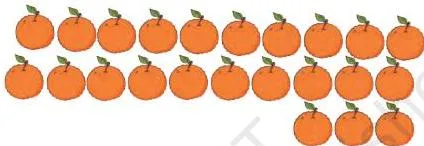
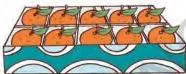
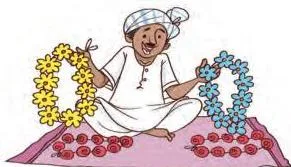

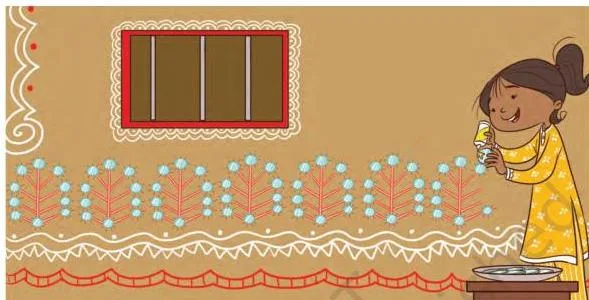


The chapter’s goal is to move a child from counting within 20 to reading, writing and using numbers up to 100. Each activity hands the child one new piece — tens, number names, order or comparison — while it still feels like play.
- Simran’s orange boxes — Simran packs oranges into boxes that hold 10 each, and the child counts the oranges in the picture. Skill it builds: seeing ten as a unit.
- Writing and naming 21–30 — the first number-name table pairs each numeral with its word, from twenty-one to thirty. Skill it builds: reading and writing numerals.
- Counting flowers and neem daatun (31–50) — the child counts flowers and neem daatun (teeth-cleaning sticks) and writes numbers from 31 to 50. Skill it builds: counting real objects and recording the count.
- Tens frames for 29, 41 and 30 — three 10-cell frames are filled to show each number at a glance. Skill it builds: seeing a number as tens and ones.
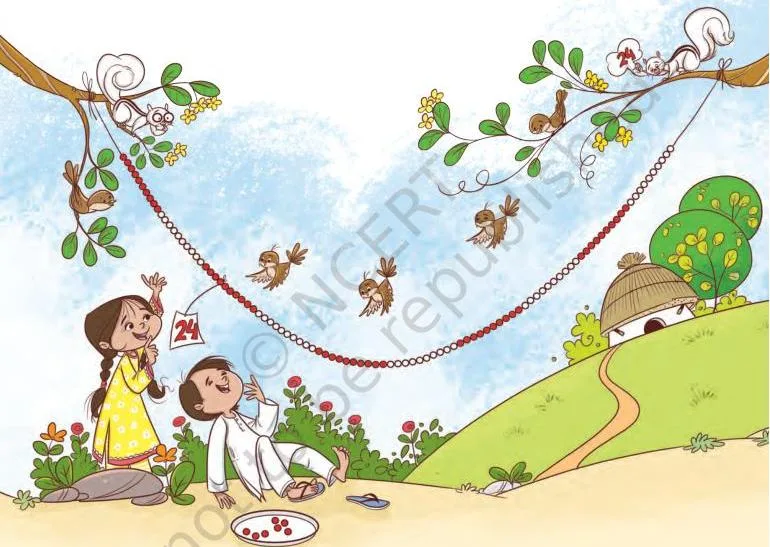
- First ginladi play (Let us Do) — a child picks a number card from 1 to 50 and clips it on the ginladi at the right place, then writes the numbers on the displayed cards. Skill it builds: ordering numbers on a number line.
- The matchbox project — Farha has packed more than fifty amazing things in her matchbox; children collect small items and see how many a matchbox holds. Skill it builds: counting many small objects without losing the tally.
- Ankita’s mirror design (51–60) — Ankita is pasting mirrors on her house; children count the mirrors in the design and write numbers from 51 to 60. Skill it builds: reading a quantity from a picture.
- Tables for 61–80 and 81–100 — two more tables run from sixty-one to eighty and eighty-one to one hundred, ending at “100 Hundred”. Skill it builds: completing the number sequence to 100.
- The tied-ginladi game (Let us Do) — children clip random 1–99 cards in place, add with the ginladi, and answer questions about the numbers between any two cards. Skill it builds: ordering, counting backwards, adding and comparing.
- The slide-and-ladder grid — a 1–100 grid with missing numbers is filled in, and outdoors the same game is drawn in chalk with changing instructions like “jump to a number where the digits are exchanged”. Skill it builds: the full 1–100 sequence and attention to digits.
- The Warli painting talk (Let us Talk) — the chapter closes with a Warli painting and questions to observe and count, ending with “make your own warli“. Skill it builds: turning looking into counting.
The big ideas behind Fun with Numbers
These are the mathematical ideas a child meets while playing the chapter’s games. They are the reason the games are not busywork: every card clipped on the string and every blank on the grid is teaching one of them.
- Counting and writing numbers from 21 to 100 — the chapter’s whole arc, from the first number-name table to the 1–100 grid.
- Grouping by tens — the orange boxes make ten a unit, and that unit is the seed of place value. Worked example with new numbers, using boxes of ten like Simran’s oranges: if a child packs 6 boxes and every box holds 10 oranges, counting by tens gives 10, 20, 30, 40, 50, 60 — six tens make sixty, so 60 oranges fill 6 boxes.
- Number names as a pattern — twenty-one, twenty-two, twenty-three follow the same shape as thirty-one, thirty-two, thirty-three; only the decade word changes.
- Order and sequence — filling missing numbers on the grid and placing cards on the ginladi both ask for the same knowledge: which number comes next?
- Before, after and between — the book’s instruction to ask about the numbers between any two given numbers turns a confusing idea into a spoken game.
- Counting backwards — the teacher note that goes with the tens-frame work asks adults to encourage counting backwards from any given number, first with the ginladi or a number line, then without it.
- Reading quantity from a picture — counting mirrors, houses and people in the pictures trains a child to find numbers in what they see.
Number names from 21 to 100: the pattern at a glance
Every number name from twenty-one to one hundred follows one rule: the decade word stays and the ones digit changes. The table below shows the pattern decade by decade, using the names the chapter teaches.
| Decade | Decade word | Pattern you can predict |
|---|---|---|
| 21–30 | twenty | twenty-one, twenty-two … twenty-nine, then thirty |
| 31–40 | thirty | thirty-one, thirty-two … thirty-nine, then forty |
| 41–50 | forty | forty-one … forty-nine, then fifty |
| 51–60 | fifty | fifty-one … fifty-nine, then sixty |
| 61–70 | sixty | sixty-one … sixty-nine, then seventy |
| 71–80 | seventy | seventy-one … seventy-nine, then eighty |
| 81–90 | eighty | eighty-one … eighty-nine, then ninety |
| 91–100 | ninety, then hundred | ninety-one … ninety-nine, then one hundred |
Read the table down the rows and the pattern appears: the decade word stays the same while the ones digit changes. That is why a child who has mastered twenty-one to twenty-nine over-applies the rule and invents names like “twenty-ten” — an honest mistake that shows the pattern has been understood.
The few words a child must simply learn are the decade names themselves — twenty, thirty, forty, fifty, sixty, seventy, eighty, ninety — and the new word the chapter ends on, hundred, written 100. Everything else between twenty-one and one hundred can be predicted from those anchors.
Reading the pictures: oranges, mirrors and the Warli scene
Children of this age learn by counting what they can see, so much of the chapter’s teaching happens through pictures. The illustrations carry no printed captions — the counting lives in the questions that go with each picture.
Simran’s oranges. The opening picture shows Simran packing oranges into boxes. The child looks at all the oranges and answers how many there are — the count is in the picture, not in the text — and in doing so meets the idea that ten oranges make one full box.
Ankita’s mirrors. Ankita is pasting mirrors on her house in a design. The child helps find out how many mirrors she has used, then counts and writes numbers from 51 to 60. The picture is the counting material.
The Warli scene. The closing picture-talk turns looking into counting. The chapter’s own questions are the lesson:
- What is happening in the picture?
- What are the different things you can see?
- How many houses are there?
- How many people are in the picture?
- Guess how many lines are used to draw the leaves of a tree.
- Do you know the special name for this type of painting?
- Which part of India is famous for Warli painting?
An important parent note: “guess” here means estimate, and the child does not need to be right. The counts of houses and people are not printed in the text — they live in the picture itself, to be found by looking. End where the chapter ends: with the invitation to make your own warli drawing.
Terms the chapter uses, explained simply
A few words keep returning in this chapter, and each one names a tool or a distinction a parent will need while helping. Here is what each means and where it shows up.
- Ginladi — a string or stand stretched across the room, with number cards clipped on in order. The chapter uses it for ordering cards, counting backwards, adding, and finding the numbers between any two cards.
- Tens frame — a box divided into 10 cells that shows a number at a glance. The chapter fills frames for 29, 41 and 30, so the child can see each number as a filled shape.
- Numeral and number name — the numeral is the symbol (21) and the number name is the word (twenty-one). The chapter’s tables always show both together, so the child connects what a number looks like with what it is called.
- Missing numbers — the blanks in the slide-and-ladder grid. The child fills each blank by following the 1–100 order of the numbers around it.
- Hundred — the new number the chapter ends on, written 100. It is the one name in the range that does not build on a decade word — it is simply hundred.
Common counting mistakes — and the fixes the chapter builds in
Six-year-olds make a handful of predictable slips with numbers up to 100, and the chapter’s activities quietly train them out. Here are the slips, why they happen, and the fix that is already built into the games.
| Mistake a child makes | Why it happens | Fix the chapter builds in |
|---|---|---|
| Reads 21 as 12 — digits swapped | Both digits are familiar, and the child has not yet learned that position decides value | The slide-and-ladder game makes the confusion playful: jump to a number where the digits are exchanged |
| Skips a number when counting aloud, for example … twenty-eight, thirty | Counting runs ahead of the number names | The missing-number grid and the ginladi cards force the child to meet every number in order |
| Loses count when counting many objects | Counting one at a time with nothing to group | Groups of ten in the orange-box story, and the matchbox project’s small count |
| Cannot say what comes before, after or between | The sequence is memorised words, not a map | The ginladi question — ask about the numbers between any two given numbers — makes the map visible |
A check for any of these tasks: read the finished line aloud — a filled row of the grid, the cards on the string. If the numbers flow in order, the work is right. When one is missing, skipped or doubled, go back to the same game and play it again — the game itself is the correction.
What schools usually check after this chapter
Class 1 has no board exam. Assessment is set by the school, so “checking” here means what a teacher watches for in everyday classwork and small tasks. The chapter builds these skills:
- Counting aloud to 100 — the number-name tables and the 1–100 grid keep the full sequence in front of the child.
- Pointing and counting objects without skipping or double-counting — the orange boxes, mirrors, flowers and neem daatun.
- Reading numerals from 21 to 100 — each table pairs the numeral with its word.
- Writing the matching number names — the chapter’s “count and write” prompts.
- Filling a missing number in a sequence — the slide-and-ladder grid.
- Saying what comes before, after and between — the ginladi questioning.
Textbook contents and what a school examines are not always identical, so check the school’s own scheme for the term’s assessment. This list is about skills, not questions: no specific questions or marks are promised here.
What a child should be able to do after this chapter
By the end of Fun with Numbers, a child should be able to do these things. Check them through quiet play together, not through a test:
- Count and write numbers from 21 to 100.
- Say the number name for any numeral in that range — 21 is twenty-one.
- Pack objects into tens and say how many — boxes of 10.
- Place a number card on the ginladi in order, and count backwards from a given number.
- Fill the missing numbers in a 1–100 slide-and-ladder grid.
- Count houses, people and objects in a picture, and make a warli drawing.
A 10-minute home practice routine
- Count 20–30 real objects — beans, spoons or buttons — and group them in tens.
- Draw a 10-cell tens frame and fill it for 29, 41 and 30, exactly as the chapter does.
- Tie a string across a doorway as a home ginladi, and clip number cards in order — then backwards.
- Draw a chalk slide and ladder grid with missing numbers, like the chapter’s game, and fill the blanks.
- Try the matchbox project: collect tiny items and see how many a matchbox holds.
Where to go next: related chapters and resources
This listing is maintained for the 2026-27 academic session using the NCERT textbook information available to us. NCERT remains the authority for confirming the latest edition.
Continue with the next chapter in the book — Chapter 9 of Joyful Mathematics Class 1 — or step back to Chapter 7 to see what the child met before. For the whole book, open the Joyful Mathematics Class 1 book page and move chapter by chapter. For other subjects, use the Class 1 notes hub, or start at the CBSE notes index.
Sources and data verification
- This page follows the NCERT Joyful Mathematics textbook for Class 1, English medium, Chapter 8 “Fun with Numbers”, official edition on ncert.nic.in.
- The page explains the chapter’s activities and teaching points; it does not replace the textbook.
- The page is maintained for the current academic session using the NCERT information available to us.
- NCERT settles textbooks, editions and official PDFs; CBSE settles curriculum, syllabus and examinations.
Reference: NCERT Class 1 Joyful Mathematics textbook, chapter 8, official edition on ncert.nic.in.
Fun with Numbers Class 1: questions parents ask
What numbers does Fun with Numbers Class 1 cover?
Numbers 21 to 100 are the main focus. The chapter also reaches back into 1–50 — the first ginladi activity uses cards from 1 to 50, and the tens-frame work shows 29, 41 and 30 — so a child keeps practising the range just learned while meeting the new one.
What is a ginladi and how do we use it?
A ginladi is a string or stand stretched across the room, with number cards clipped on in their correct places. The chapter uses it to order cards, count backwards from any given number, add, and talk about the numbers between any two cards. A string across a doorway makes the same tool at home.
What does the orange-box story teach?
Grouping by tens. Each box holds 10 oranges, so a child can count in groups — ten, twenty, thirty — instead of one orange at a time, and can say how many boxes are needed. That grouping is the first step toward place value.
Which part of India is famous for Warli painting?
Maharashtra is the well-known answer. The chapter’s picture-talk asks the question but does not print the answer, so treat this as general knowledge to share while looking at the picture, not as a fact to find in the book.
How can I help my child practise numbers up to 100 at home?
Use the chapter’s own tools: count real objects and group them in tens, tie up a home ginladi for number cards, draw a tens frame for a number like 29 or 41, and make a chalk slide and ladder grid with missing numbers. Five minutes of any of these does more than a page of written sums at this age.
Explore Class 1 Mathematics Books
- Previous: Lina's Family
- Next: Utsav
Related chapters:
- Finding the Furry Cat!
- What is Long?
- Mango Treat