
How do I Spend my Day? Class 1 is Chapter 10 of the NCERT Joyful Mathematics textbook for Class 1 — a six-page picture chapter in which a six-year-old girl called Pihu tells her daily routine from morning to night.
The official Class 1 Joyful Mathematics Chapter 10 PDF is right below, followed by a plain-English walkthrough of what the chapter teaches and how to practise it at home.
Parents and teachers are the main readers here, so the sections that follow say plainly what each part of the chapter asks a child to do — no jargon, and nothing that replaces the book’s own pictures.
Download the How do I Spend my Day? Class 1 chapter PDF
The official file comes from NCERT’s own textbook portal and is the same chapter your child’s school uses — open the Class 1 Joyful Mathematics Chapter 10 How do I Spend my Day? PDF to read Pihu’s full day with its pictures, then come back here for the section-by-section guide.
Chapter at a glance: what the PDF holds
This is a talk-and-pictures chapter, not a page of sums. A child learns by following Pihu’s day, answering aloud, ticking pictures and sorting them by season, so reading it together with the book open in front of you is the right way to use it.
| What the chapter holds | Count | Where it is used |
|---|---|---|
| Printed pages | 6 | |
| Figures with NCERT captions | 2 | |
| Activities | 3 | |
| Official NCERT PDF | Download the chapter PDF | the chapter exactly as NCERT publishes it |
What this chapter teaches: a day told as a story
This is a Class 1 child’s first organised look at the order of a day and the cycle of the seasons, and the lesson arrives through Pihu’s narrative rather than through instruction. Nothing here asks a child to write or calculate; the chapter’s work is watching pictures, answering questions and talking.
The book presents the chapter in five parts:
- The story of Pihu’s day — the chapter’s backbone, told page by page from sunrise to night.
- Let us Talk — oral questions that turn the story into the child’s own routine.
- Let us Do — tick, colour and match activities that check understanding without writing.
- Seasons — four season pictures to compare, and objects to match with the right season.
- Project Work — a home activity on seasonal foods and local festivals, shared with the class.
In one line, the story is this: Pihu wakes, drinks warm water, does yoga or exercise, brushes and bathes, goes to school, has lunch with friends, rests, plays and studies in the evening, then has dinner, reads a story book and sleeps. A child who can retell that order has understood the whole chapter.
The key ideas: time of day and the four seasons
Two threads run through the chapter: the order of a day and the four seasons. Both are meant to be said aloud, so this is what to practise.
Pihu’s routine is the chapter’s backbone, and a child can retell her whole day in order:
- Get up and drink a glass of warm water
- Do yoga or exercise
- Brush teeth and take a bath
- Eat breakfast and get ready for school
- Have lunch with friends at school
- Come home and rest for a while
- Play, then study, in the evening
- Eat dinner with the family
- Read a story book and go to sleep
The day is split into four parts, and the chapter’s key words are morning, afternoon, evening and night. Each one has a sky clue attached to it, covered in the next section.
The chapter names four seasons — summer, spring, monsoon and winter — and asks children to look at the season pictures, discuss how the seasons differ from one another, and match objects with the right season.
The activities your child does in this chapter
The activities are the chapter’s way of checking understanding without any writing. Each one takes a few minutes and depends on the pictures in the book, not on reading ability.
- Tick boxes: three Let us Do blocks ask the child to tick the activities done in the morning, the things done or seen during the day, and the activities done at night.
- Colour the longer activity: a “colour the activity that usually takes longer time” task — the chapter’s quiet first step toward comparing how long things take.
- Match objects with seasons: objects in the pictures are matched with monsoon, spring, summer or winter.
- Write and match season names: a later Let us Do asks the child to write the season names and match them to pictures.
- Project Work: draw or stick pictures of favourite food items for different seasons, and of local festivals celebrated in those seasons — linking the maths idea to real life.
- Guess the time: look at a picture, guess the time of day, and discuss with friends what you do during that time.
Reading the pictures: how the sky tells the time
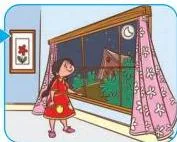
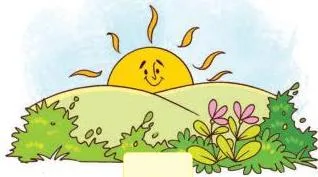
Every turn of Pihu’s day is introduced by a picture of the sky, and the sky is the chapter’s time signal. Getting the child to name the clue before naming the time is the skill the activities depend on.
| Picture clue | Part of the day | What Pihu does then |
|---|---|---|
| Sun rising in the sky | Morning | Gets up, warm water, yoga, bath, breakfast, school |
| Sun high in the sky | Afternoon | Washes hands and has lunch with friends |
| Sun setting | Evening | Plays with friends, then studies |
| Moon and stars visible | Night | Dinner, story book, sleep |
The book itself asks the child to guess the time from a picture and say what they do during that time — a ready-made home question. Because the chapter introduces time and seasons through talk and pictures, not definitions, the single best home practice is asking “when do you do this?” while looking at the pictures together.
Time words and seasons, explained simply
The chapter builds its words through use, not through definitions. Here they are said plainly, tied to the chapter’s own examples.
- Morning — the part of the day when the sun rises and the day begins. In the chapter, Pihu gets up, drinks warm water, does yoga, bathes and eats breakfast.
- Afternoon — when the sun is high in the sky. In the chapter, this is lunch time with friends at school.
- Evening — when the sun is setting. In the chapter, Pihu plays with friends and then studies.
- Night — when the moon and stars are visible. In the chapter, Pihu has dinner, reads a story book and sleeps.
The four seasons, and the link each one carries in the chapter:
| Season | What it means | What the chapter links to it |
|---|---|---|
| Summer | The hot season | An oral question: “What do you like to eat in the summer season?” |
| Spring | The season between winter and summer | One of the four season pictures to compare |
| Monsoon | The rainy season | One of the four season pictures to compare |
| Winter | The cold season | An oral question: “What do you like to wear in the winter season?” |
Where Class 1 children slip: wrong ticks and wrong seasons
These are the slips that actually show up when children do the Let us Do boxes. The correction is always the same move: go back to the picture clue and ask what the sky looks like.
| Mistake | Correct rule | How to check your answer |
|---|---|---|
| Ticking sleep or dinner under “morning” | Sleep and dinner belong to night, when the moon and stars are out | Ask: “What does the sky look like in that picture?” — a moon means night |
| Calling afternoon “morning” because the sun is still out | The sun’s height is the clue: a rising sun is morning, a high sun is afternoon, a setting sun is evening | Look where the sun sits in the picture before naming the time |
| Matching an object with the wrong season | Each object belongs to the season it is used in | Point at the object and ask: “When do we use this?” |
| Mixing up the season names | The chapter presents them in the order summer, spring, monsoon, winter | Say the four names aloud while looking at the four pictures |
How this chapter is checked: talk and observation
At Class 1, this chapter is checked by listening and watching rather than by written sums. A child shows understanding by telling, not writing, so the oral answers and the activity work carry the check.
- The three oral Let us Talk questions — “What is your daily routine?”, “When do you brush your teeth?” and “When do you take a bath?” — asked aloud, with the child answering in their own words.
- The tick boxes — done correctly, which shows the child can sort activities into morning, day and night.
- The guess-the-time discussion — naming the time of day from a picture and saying what they do then.
- Project Work — brought to class and shared, so the teacher sees the season sorting and the local festivals the child chose.
Underneath these sit the skills later chapters build on: telling events in order, using time words, and sorting things by season. As with every textbook chapter, textbook contents and the examinable syllabus are not always identical — the current official CBSE syllabus settles what is assessed.
One page recap: Pihu’s day and the four seasons
Read this aloud with the book open, one line per picture. It follows the chapter’s own order.
- Morning (sun rising): warm water, yoga or exercise, brush and bathe, breakfast, school.
- Afternoon (sun high): lunch with friends at school.
- Evening (sun setting): play with friends, then study.
- Night (moon and stars): dinner with family, a story book, then sleep.
Four seasons in one breath: summer (hot), spring (the season between), monsoon (rain), winter (cold). The matching the book asks for runs the same way — put each object with the season it belongs to.
Related pages: the Joyful Mathematics book and the Class 1 hub
This chapter sits inside the Joyful Mathematics Class 1 book page, which lists the chapters of the book in order. The Class 1 hub gathers the Class 1 resources on this site, and the notes home page is the starting point for every class.
The chapters next to this one are Chapter 9 and Chapter 11. Each chapter page opens its own official PDF and guide the same way this one does.
Sources and data verification
This listing is maintained for the 2026-27 academic session using the NCERT textbook information available to us. NCERT remains the authority for confirming the latest edition.
- The chapter described on this page is Chapter 10 (How do I Spend my Day?) of the NCERT Joyful Mathematics textbook for Class 1, from the current NCERT edition.
- This page covers this single chapter only — not the other chapters of Joyful Mathematics, and not any workbook or practice material.
- This listing is maintained for the current academic session using the NCERT information available to us.
- NCERT publishes and settles the textbooks, their editions and the official PDFs; CBSE settles the curriculum, syllabus and examinations.
How do I Spend my Day? Class 1: questions parents ask
What is the How do I Spend my Day? Class 1 Joyful Mathematics chapter about?
It is the story of Pihu, a six-year-old, telling her daily routine from morning to night. Along the way the chapter introduces the words morning, afternoon, evening and night, then moves on to the four seasons. There are no written sums; understanding is checked through talk, ticking and pictures.
What are the four seasons in this chapter?
Summer, spring, monsoon and winter. The chapter asks children to look at the four season pictures, discuss how the seasons differ, and match objects with the right season.
How can I help my child practise morning, afternoon, evening and night at home?
Use the sky clues: a rising sun means morning, a sun high in the sky means afternoon, a setting sun means evening, and the moon with stars means night. Point at any picture in the book and ask “when do you do this?” — naming the part of the day is the whole answer.
That one question is the method the chapter itself uses.
What does the Project Work in this chapter ask children to do?
It asks children to draw or stick pictures of their favourite food items during different seasons, and of local festivals celebrated in those seasons. It is genuine home work — done at home, then shared with the class.
Where can I find the official How do I Spend my Day? Class 1 PDF?
NCERT publishes all its textbook files on its official portal at ncert.nic.in, and the Joyful Mathematics Class 1 chapter PDFs are on the same portal. The download link at the top of this page points to that official source.
Reference: NCERT Class 1 Joyful Mathematics textbook, chapter 10, official edition on ncert.nic.in.
Explore Class 1 Mathematics Books
- Previous: Utsav
- Next: How Many Times?
Related chapters:
- Finding the Furry Cat!
- What is Long?
- Mango Treat