
This page gives you the official PDF and a part-by-part walk-through of the Crying Class 5 NCERT English chapter — Unit 4 of the Marigold textbook, in the 2026-27 edition. The unit runs about 20 pages and holds two texts: the poem Crying by Galway Kinnell and the play My Elder Brother, with exercises in reading, speaking, vocabulary, writing and grammar.
The download link sits right below. Everything after it explains what is inside the unit, what each exercise wants, and how to avoid the mistakes students make in it.
Download the Crying Class 5 NCERT English chapter PDF
One link takes you to the official file, so you never work from a photocopy or a retyped version.
Download the NCERT Class 5 English Marigold Chapter 4 Crying PDF from the NCERT textbook portal at ncert.nic.in — the same file schools print from, with the poem, the play and every exercise in the unit exactly as printed.
The portal lists the book as Marigold for Class 5 English; Chapter 4 is the unit titled Crying.
What is inside Class 5 Marigold Unit 4: Crying
This unit is bigger than one poem. The table below maps every part of Unit 4 in the order it appears in the book, so you can see where the poem ends and the play, the exercises and the project work begin.
| Part of Unit 4 | What it does |
|---|---|
| Crying | The opening poem by Galway Kinnell, to be read and enjoyed aloud. |
| New Words | Three words from the poem — soaked, shower, wept — with short meanings. |
| Let’s Read | Four questions on the poem, including right or wrong statements. |
| Let’s Talk | Three discussion prompts on crying and happiness. |
| Say Aloud | Five rows of rhyming words to practise saying aloud. |
| Word Building | A suffix task: write words that end in ness and the words they come from. |
| Let’s Write | Fill four blanks with the exact feeling word. |
| Creative Writing | Narrate an incident when you felt happiness, excitement or surprise. |
| Food for Thought | A light verse about vegetables, plus the meaning of the phrase food for thought. |
| My Elder Brother | A three-scene play based on Premchand’s Hindi story Bade Bhai Saheb. |
| Reading is Fun | Five questions about the play. |
| Let’s Talk | Talk about your school timetable and make your own. |
| Creative Writing | The model letter with labelled parts, then a letter-writing task. |
| Comprehension | The Oliver passage with questions and vocabulary. |
| Grammar practice | Exercises on teach and learn, was and were, and for and since. |
| Project Work | Turn a favourite story into a short play with dialogues, in groups of four. |
| Teacher’s Page | Themes of the unit and guidance for classroom time. |
What this chapter covers: a poem, a play and five skills
Two texts sit at the heart of this unit: a read-aloud poem and a three-scene play. Around them the book practises five skills, each with its own exercise.
- Reading poetry — the poem Crying by Galway Kinnell, written to be read and enjoyed aloud.
- Reading drama — the play My Elder Brother, based on Munshi Premchand’s Hindi story Bade Bhai Saheb and translated into English.
- Speaking aloud — the Say Aloud rhyming rows and the Let’s Talk discussion prompts.
- Building vocabulary — the three New Words, the exact feeling words, and the ness suffix in Word Building.
- Writing — a creative writing prompt, then a model letter with labelled parts and a letter-writing task.
- Using grammar — exercises on teach and learn, was and were, and for and since, plus a comprehension passage at the end.
The unit closes with a project that turns a favourite story into a short play, so everything you read gets put to use.
Key ideas in Unit 4: emotions, experience and expression
Four ideas run through the whole unit, each tied to a specific part of it. Hold on to these and the exercises make more sense.
- Feelings can be named exactly. The Let’s Write exercise makes you choose one precise word — amazed, not just “surprised” — for each situation.
- Crying can release happiness. The poem’s surprising claim: after you cry fully, you can laugh, because the final tear holds the happiness.
- Experience teaches as much as books. The play’s theme, stated through Ma and Baba, who know a thousand things without schooling.
- Letters and dialogues are both forms of expression. You write a letter the way you speak, and you turn a story into spoken dialogues for a play.
Illustrations in this unit: where each picture appears


This unit’s illustrations each mark a moment that matters — the food verse, each turn in the play, and the teacher’s guidance. The table shows where each one appears and what it belongs to.
| Illustration | Where it appears and what it shows |
|---|---|
|
|
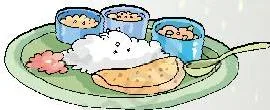
Appears inside Food for Thought. The picture belongs to the closing lines of the vegetable verse — tomatoes, beans, brinjal, potatoes, onions and carrots — and its message that vegetables keep you healthy. |
|
|
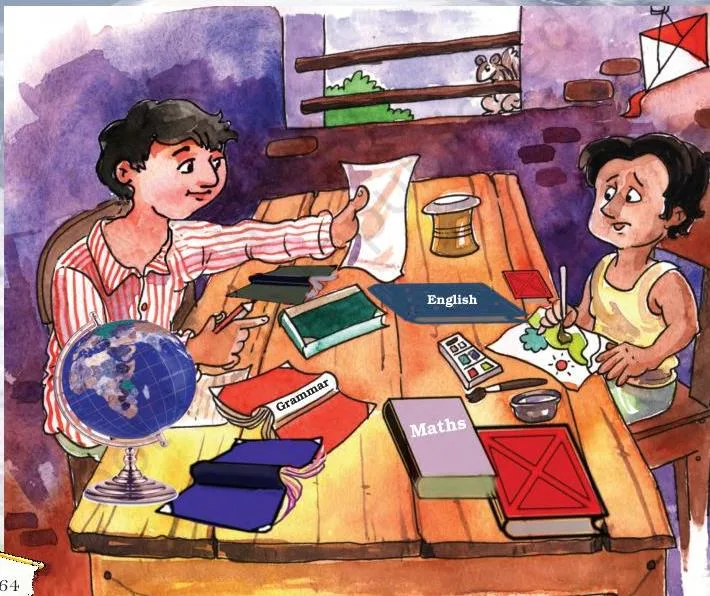
Opens the play, right before Scene 1. The stage direction tells you what you see: two brothers in their hostel room at a study table, one reading a book, one drawing pictures. |
|
|
Belongs to Scene 2, just after the results: Munna has passed and topped his class, while Bhaiya has failed. Bhaiya’s warning — one lucky pass does not make you smart. |
|
|
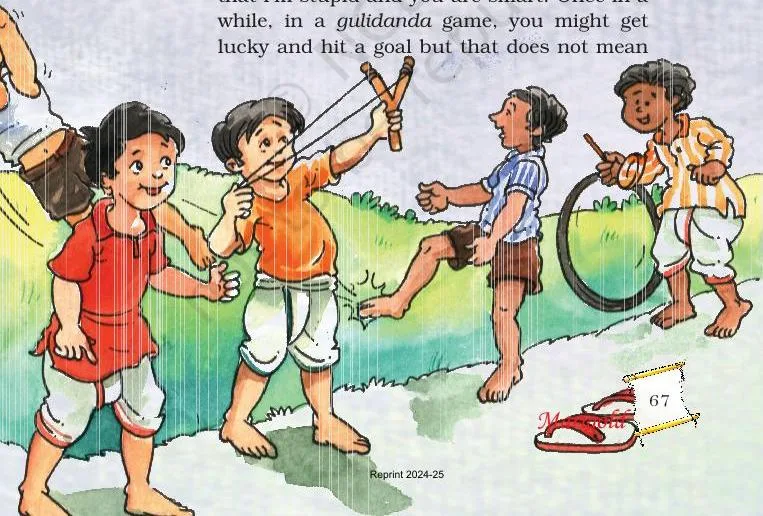
Scene 3, where Munna tells himself he is lucky, can pass easily, and needs to study less — right before Bhaiya catches him chasing a kite. |
|
|
The closing moment of the play. Munna apologises with tears in his eyes, Bhaiya hugs him lovingly, and Bhaiya explains that he watches over Munna because it is his responsibility. |
|
|
Sits on the Teacher’s Page at the end of the unit, beside the advice that writing work should come after a class discussion, and that the dictionary should be used to check feeling words. |
Words this unit teaches: New Words and feeling words
Before reading, the unit fixes three words from the poem. Later, the Let’s Write exercise tests six feeling words and makes you choose exactly.
New Words from the poem
- soaked — completely wet. A pillow soaked with tears is wet through and through.
- shower — a bath in which water is sprayed from above, not a rain shower.
- wept — shed tears, cried. It is the past form of weep: “I wept it” means “I cried it out”.
The six feeling words
Each feeling word names an exact shade of emotion. Match the strength of the feeling to the situation.
- amazed — full of wonder at something beautiful or surprising, like a great building.
- shocked — suddenly upset by something unexpected and bad, like money missing from a safe.
- frightened — afraid, usually of immediate danger or darkness.
- worried — troubled because something bad may come or has lasted long, like a long illness.
- unhappy — sad, not pleased, without the strength of the other words.
- angry — strongly annoyed, wanting to protest or blame.
The Teacher’s Page advises using a dictionary for these words — a quick check fixes the exact shade.
The poem Crying: why the poet says cry a lot, not a little
The poem gives advice that sounds upside-down: it tells you to cry a lot, not a little. Read the full arc and you will see why.
The arc of the poem
The poem moves through three beats. First, the advice: a small cry is no use; you must cry until your pillow is soaked — completely wet with tears.
Second, the release: you jump into the shower and splash, then throw your window open and laugh. The crying is finished; the energy turns cheerful.
Third, the message: if people ask what is going on, sing back that happiness was hiding in the last tear — and that you wept it. The tear that seemed worst carried the joy out.
Mood change (NCERT, Let’s Read Q3)
The first two lines are upset. Among the choices — happy, sad, angry, jealous, upset — the opening of the poem matches upset, because it talks about needing to cry.
The last lines are very happy. The poet laughs and announces that happiness was hiding in the last tear; cheerful also fits, because of the laughing.
Right or wrong statements (NCERT, Let’s Read Q4)
- (i) Wrong — the poet says the opposite: a small cry is no use, so you must cry a lot, until the pillow is soaked.
- (ii) Right — the second line says exactly this: cry till your pillow is soaked.
- (iii) Right — after crying you open the window and laugh, so people see that you are happy.
- (iv) Wrong — you open the window to laugh and show happiness; nothing in the poem shows people your crying.
Let’s Read Q1 asks whether to cry a little or a lot — the answer is a lot, since a small cry is no use. Q2 asks what comes after crying a lot: a shower, a splash, an open window and laughter.
Why the advice is surprising
Most advice says “be brave, cry a little.” The poet insists on the opposite: hold nothing back, because the happiness is inside the last tear. That is the unit’s “lighter side of life” idea.
Choosing the exact feeling word: the Let’s Write exercise
Each blank in Let’s Write comes with three near-synonyms. The trick is to match the size of the feeling to the situation.
- (i) amazed — the tourists felt wonder at the beautiful Taj Mahal. Not shocked (that needs something sudden and bad) and not worried (nothing here is threatening).
- (ii) frightened — the lights went out and you are alone in the dark; that is immediate fear. Not shocked (no sudden bad event yet) and not worried (the fear is here now, not ahead).
- (iii) worried — a long illness keeps the parents anxious over time. Not unhappy (plain sadness is too mild) and not angry (there is no one to blame).
- (iv) shocked — the safe is wide open and the money is gone; the sudden loss is a shock. Not unhappy (too weak for a robbery) and not angry (anger comes later; this moment is disbelief).
So the four correct answers are amazed, frightened, worried and shocked. The exercise is called “exact feeling word” because every option is a real emotion, but only one matches each situation precisely.
Say Aloud and Word Building: rhymes and the ness suffix
Two short exercises train the ear and the spelling hand: rows of rhyme words to say aloud, then a suffix that changes a word’s ending.
Say Aloud: five rhyme families
Each row is a group of words that share the same ending sound. Read them aloud and you will hear the pattern.
| Rhyme family | Words |
|---|---|
| ash | dash, bash, splash, cash, trash |
| ear | steer, tear, clear, deer, dear |
| ower | shower, power, tower, flower, mower |
| oked | poked, croaked, soaked, stroked, joked |
| ept | wept, kept, crept, leapt, slept |
Word Building: the ness ending
The word happiness ends in -ness and comes from happy. When the base word ends in y, change the y to i before adding ness: happy + ness = happiness.
Three more examples for the blanks, following the same pattern:
- sad → sadness
- dark → darkness
- kind → kindness
Only happy changes y to i; sad, dark and kind simply add ness. Say the words aloud and the shared ness ending sounds identical.
Food for Thought: the vegetables poem and its message
A light verse gives the unit its joke and its health lesson. “Food for thought” means something serious to think about — and this verse is literally about food.
The verse plays with colours: tomatoes red, beans green, a brinjal wearing a crown “just like a queen”, potatoes brown, onions pink, and carrots with juice you can drink. Calling the brinjal a queen is what makes the rhyme playful.
The message lands in the last two lines: vegetables make you healthy and wise, so eat some daily with roti and rice. The illustration in the table above shows that exact line.
My Elder Brother: Premchand’s play about Bhaiya and Munna
The play takes up most of the unit: three scenes in which a strict elder brother and his playful younger brother learn from each other. It is based on Munshi Premchand’s Hindi story Bade Bhai Saheb.
Scene 1 — the hostel room
Bhaiya, fourteen, studies almost without stopping. Munna, nine, draws pictures, plays marbles and flies paper kites. Bhaiya scolds him and says a strong foundation needs hard work.
Then Bhaiya makes a timetable that runs from 6 AM to 11 PM — with no playtime at all. Munna loves the green fields, kabaddi and volleyball and asks when he may play. The answer: play? What is the need?
Scene 2 — the results
The final exams are over. Bhaiya has failed again; Munna has passed and topped the class.
Bhaiya warns him not to be proud: one lucky pass does not mean he has mastered the game. Higher classes need hard work, and examiners will not spare a single mistake — writing acb for abc is marked wrong.
Scene 3 — the lesson
Munna grows careless, passes again while Bhaiya fails, and Bhaiya becomes gentler. One day he catches Munna chasing a kite.
Then comes the heart of the play: understanding does not come only from books. Ma has never been to school and Baba passed only fifth class, yet they know a thousand things more than the boys — from experience.
Touched, Munna apologises with tears in his eyes. Bhaiya hugs him lovingly and says he watches over his brother because that is his responsibility.
Reading is Fun — answers (NCERT, Reading is Fun)
- Munna liked to draw pictures of birds and animals, play marbles, fly paper kites, and play in the fields — kabaddi and volleyball pulled him like a magnet.
- Bhaiya studied all day, one book after another — writing words twenty times, copying poems, and working through his timetable.
- Munna was not happy with the timetable because it had no time for play at all.
- Munna felt hurt and started crying when Bhaiya was strict; he even wanted to run back home. Bhaiya was strict because he wanted Munna’s foundation to be strong and did not want him to waste his father’s hard-earned money.
- Own answer — your choice, with a reason. Munna is lively and honest about loving play; Bhaiya is responsible and truly cares for his brother.
The letter in this unit: format and parts
The unit teaches a friendly letter by labelling one. Letters to friends and close family are written the same way you speak to them.
The labelled parts of Pratap’s letter (NCERT, Creative Writing)
- Writer’s address — Krishna Boys’ Hostel, Model Public School, Kolkata.
- Date — 10th July, 2000.
- Greeting — My dear Ma.
- Introduction — the first sentence after the greeting: this is my first letter after the summer vacations; I have settled in well.
- Body — the news: a new clay modelling and pottery teacher, and an inter-house poetry recitation coming up in August.
- Ending — remembers Ma and Baba, sends love to grandmother and grandfather, and asks her to write back soon.
- Closing — Your loving son, Pratap.
Questions on the letter
- Who wrote the letter? — Pratap.
- To whom was it written? — his mother (My dear Ma).
- Where is the writer? — in Kolkata, at the Krishna Boys’ Hostel, Model Public School.
- What is the name of the hostel? — Krishna Boys’ Hostel.
- On which date was the letter written? — 10th July, 2000.
Your turn
Write to a friend or relative in another city about activities or events in your school, following the same pattern. Plan it in four steps: one line of introduction, two or three lines of news, a line remembering the reader, and a closing that asks them to write back.
Comprehension and grammar: Oliver’s soup, teach and learn, was and were, for and since
The unit ends with a reading passage and three grammar exercises. The passage is about Oliver, a hungry boy in an orphanage.
The Oliver passage (NCERT, Comprehension)
Oliver is a nine-year-old homeless boy who lives in an orphanage with other boys. They work hard but are never given enough to eat. The owner, Mr Bumble, is cruel and ill-treats them. Each of their three meals is only a bowl of watery soup, so they are almost starving.
The boys decide that someone must ask for more. Oliver, pushed by the others, walks up to Mr Bumble and says, “Please sir, I want some more.”
Answers to the passage questions
- Why did Oliver live in the orphanage? — Because he was homeless.
- Who was Mr Bumble? — The owner of the orphanage; a cruel man who ill-treated the boys.
- What meals were the boys given? — Three meals a day, but each was only a bowl of watery soup.
- What did Oliver say to Mr Bumble? — “Please sir, I want some more.”
- Why were the boys always hungry? — Because (i) the soup they were given was never enough.
- Very hungry — starving; to vanish — disappeared.
- Assembled means — (ii) collected.
- assembled minus its last two letters, plus one letter — assembly (assembl + y), a time when the whole school gathers.
- A suitable title — Oliver Asks for More, or The Hungry Boys.
Teach and learn
To learn is to understand or gain knowledge. To teach is to show how or to explain. The person who shows teaches; the person who understands learns.
| learn (you gain knowledge) | teach (you show or explain) |
|---|---|
| learn | teach |
| learns | teaches |
| learned | taught |
| has learned | has taught |
- (i) teach — “Will you teach me chess?” (someone must show you how).
- (ii) teaches — Mr Sharma teaches Class VIII (a present fact).
- (iii) learned — the students have learned about road safety.
- (iv) taught — my sister has taught me how to ride a horse (she showed me).
- (v) learned — I have learned some of the customs of India.
- (vi) learned — I learned how to cycle when I was just four.
Was and were
Was is for one person or thing (I, he, she, it). Were is for you, we, they and plural subjects like students or runners. In this passage the two was/were choices are both plural, so both take were:
- All the class V students were gathering in front of the Principal’s office. They were going for the inter-school race.
- The bus arrived and they left for the stadium.
- The runners were taken to the starting point. The runners took their positions.
- Sir blew the whistle. One student ran fast and came first.
- Everyone did their best and our school won the trophy. Everyone felt joyous.
For and since
For goes with a period of time: for two years, for many years, for the last 200 years. Since goes with a point in the past: since morning, since yesterday, since I was a baby.
- (i) since — “since I was a baby” is a starting point.
- (ii) for — “for many years” is a period.
- (iii) for — “for the last 200 years” is a period.
- (iv) since — “since yesterday” is a point.
Fresh examples for practice: I have lived here for two years (period). I have lived here since Monday (point).
Project work: turn a favourite story into a play
The unit’s project makes the play form practical: you turn a story you like into a short play, with dialogues written by your group.
- Choose a story you like.
- Work in groups of four, as the book suggests.
- List the main moments of the story in order.
- Turn each moment into dialogue — what would the characters say to each other?
- Add stage directions like the play’s: who is in the scene, what they are doing, how they feel.
- Rehearse, then present your play in class.
The brothers’ play is your model: its scene directions — for example, the opening that places two brothers at a study table — show how narration becomes action.
Common mistakes in this unit and how to avoid them
Most errors in this unit come from guessing a grammar rule or a feeling word too quickly. Here are the mistakes to name before you make them.
| Mistake | Correct rule | How to check your answer |
|---|---|---|
| “since two years” | since + a point in the past; for + a period → for two years | Is it a period or a point? Ask: can I name the starting moment? |
| “they was going” | was is singular (I, he, she, it); were is plural (they, we, you, students) | Find the subject. More than one person → were. |
| “my sister learned me to ride” | learn = you gain understanding; teach = someone shows you → my sister taught me | Ask who is showing. The one showing teaches; the one understanding learns. |
| Taking “cry a little” as the poem’s advice | The poem says a small cry is no use; cry until the pillow is soaked | Re-read the first two lines; the advice is the opposite of the usual one. |
| Reading the ending as still sad | The last lines are very happy — laughing, with happiness in the last tear | Check the final image: laughter and happiness, not tears. |
| Choosing unhappy for a sudden shock | shocked = sudden upsetting surprise; unhappy = plain sadness | Was the event sudden and bad? Sudden + bad → shocked. |
Each of these has the same cure: read the exact words of the exercise before choosing. The unit’s feeling-word and grammar questions all test precision, not guesswork.
How this unit is taught in class: themes and the teacher’s page
The Teacher’s Page at the end of the unit tells teachers what the unit is for. Two themes frame everything in it.
- Themes — respecting elders and their experience; looking at the lighter side of life.
- Reading time — poems need not rhyme; blank verse still has rhythm. The Premchand play is a translation, and translation is a way of understanding other cultures.
- Conversation time — children’s talk is a valuable resource; enact different emotions (joy, anger, excitement, sadness); discuss why children sometimes dislike being told what to do.
- Writing time — the writing exercises, creative writing and the letter writing should follow a class discussion, and a dictionary should be used to check feeling words.
- Project work — creative dramatics lets children become whatever they wish to be.
One honest note before exams: textbook contents and the examinable syllabus are not always identical. Check the current official CBSE syllabus to see exactly what is examinable in this unit this year.
Quick recap of Crying and My Elder Brother
If you have five minutes before class, this is the whole unit in bullets.
- The poem’s advice: cry a lot, not a little — until the pillow is soaked; a small cry is no use.
- After crying: shower, splash, throw open the window, laugh. The mood moves from upset to very happy — the last tear held the happiness.
- New Words: soaked, shower, wept.
- Rhyme families: dash-bash-splash-cash-trash; shower-power-tower-flower-mower; wept-kept-crept-leapt-slept.
- Word building: happy + ness = happiness (y changes to i); also sadness, darkness, kindness.
- Feeling words: amazed, shocked, frightened, worried, unhappy, angry — each names an exact shade.
- The play: Bhaiya and Munna; experience teaches as much as books; respect elders.
- Letter parts: writer’s address, date, greeting, introduction, body, ending, closing.
- Grammar: for + period, since + point; was (one), were (many); teach shows, learn gains.
- Project: turn a favourite story into a play with dialogues, in groups of four.
Related resources: the Class 5 English book and nearby chapters
Move around the same book and the same class from here.
For the whole book’s units, use the Class 5 English Marigold book page. The unit before Crying is The Rainbow Class 5 chapter, and the unit after it is Rip van Winkle Class 5 chapter.
The Class 5 hub gathers notes for every subject in the year, and the CBSE notes home covers higher classes too. The official textbook remains on the NCERT textbook portal.
| What the chapter holds | Count | Where it is used |
|---|---|---|
| Printed pages | 20 | |
| Figures with NCERT captions | 6 | |
| Tables | 3 | |
| Official NCERT PDF | Download the chapter PDF | the chapter exactly as NCERT publishes it |
Reference: NCERT Class 5 English Marigold textbook, Chapter 4, official edition on ncert.nic.in.
Sources and data verification
This page describes Unit 4 of the NCERT Marigold Class 5 English textbook, in the edition available on ncert.nic.in. It covers the poem Crying, the play My Elder Brother, and the exercises that follow them; other units of the book are covered on their own pages.
NCERT settles textbooks, editions and PDFs. CBSE settles curriculum, syllabus and examinations.
Crying Class 5: questions students often ask
Short answers to the questions students ask most about this unit.
What does the poem Crying say?
The poem advises you to cry a lot, not a little: a small cry is no use, so you must cry until your pillow is soaked. Then you shower, splash, throw open the window and laugh — because happiness was hiding in the last tear.
What is the story My Elder Brother about?
It is a three-scene play based on Munshi Premchand’s Hindi story Bade Bhai Saheb. Bhaiya (14) is strict with Munna (9); Munna passes while Bhaiya fails, and Bhaiya finally teaches that experience and elders’ wisdom matter as much as books. The brothers reconcile with a hug.
Which feeling word fits each blank in the Let’s Write exercise?
amazed for the Taj Mahal, frightened for being alone in the dark, worried for a long illness, and shocked for a safe found open with the money missing.
When do we use for and when do we use since?
for goes with a period of time (for two years, for many years). since goes with a point in the past (since Monday, since yesterday, since I was a baby).
How is the letter in this chapter formatted?
A friendly letter has seven parts: writer’s address, date, greeting, introduction, body, ending and closing — exactly as labelled in Pratap’s letter to his mother.