
This is Chapter 1 of the NCERT Class 5 English reader Santoor for the current academic session — the poem “Papa’s Spectacles” and its activities, which open the book on pages 1 to 10.
The poem tells of a father hunting for his lost spectacles while they sit on his own head, and the chapter around it plays with words, sounds and careful looking.
The official NCERT PDF is right below, followed by a plain explanation of the poem, the answers, and every activity in the chapter.
Download the Official NCERT PDF
You can open the official chapter file without any search — the same PDF NCERT publishes for schools, with the poem, its pictures, the questions and every activity exactly as printed.
Download the Papa’s Spectacles Class 5 NCERT PDF from ncert.nic.in to read the full chapter on any phone, tablet or computer; this direct link opens Santoor Chapter 1, free for anyone to view or save.
Chapter at a Glance: What Is Inside
The count table on this page shows what the chapter contains — its sections, pictures and activity pages — while the list below names each part in the order the book prints it.
- Let us Recite — the poem itself (p. 1).
- A. Answer the following questions and B. Think and discuss — reading and talking about the poem (p. 2).
- Let us Learn A — arranging words from smallest or lightest to biggest or heaviest (p. 3).
- Let us Learn B — completing “a pair of …” phrases from picture clues (p. 4).
- Let us Learn C — encircling the correctly spelled word (p. 5).
- Let us Learn D — filling prepositions into a story (p. 6).
- Let us Learn E — a crossword of opposites (p. 6).
- Let us Speak — sharing the word your language uses for “father” (p. 7).
- Let us Listen — hearing whether word pairs sound the same or different (p. 8).
- Let us Write — turning the poem into a story (p. 8).
- Fun pages — the candle illusion, finding the hidden “d”, and a riddle (pp. 9–10).
What the Poem Papa’s Spectacles Covers
A poem chapter asks two things of you: follow the story the lines tell, and notice how the words play. This poem does both — it tells a small family comedy, and its rhyming words set up the sound games later in the chapter.
Papa has lost his spectacles — his only pair. Without them he cannot read the newspaper, watch TV or cut vegetables, so he hunts through the room: he checks inside his pockets, glances under his chair and looks near the window (NCERT, p. 1). Everywhere comes up empty.
The child in the poem watches all this, walks up close and says, “Papa, your spectacles are right there on your head!” The joke is that Papa searched pockets, chair and window — but never the one place holding them. He was wearing them all along (NCERT, p. 1).
The questions on page 2 check whether you followed the search: what Papa is searching for, where he might find it, and where he finally does. The “Think and discuss” part then asks what else Papa cannot do without his spectacles, and what makes your papa happy (NCERT, p. 2).
The same “look carefully” idea carries into the chapter’s eye-and-ear games: the candle trick and the hunt for the letter “d” make you look closely, and the listening task trains your ear for small sound differences (NCERT, pp. 9–10). That is the spirit of the whole unit, “Let’s Have Fun”.
Key Ideas in Papa’s Spectacles: Pairs, Sounds, Opposites and Prepositions
The chapter teaches language through games. Each activity below names one skill and shows how to do it, so a student can finish the work at home without a teacher nearby.
Things that come in pairs (Let us Learn B, p. 4)
The book’s first example is “a pair of shoes”. A pair is two things that belong or are used together. On page 4 the activity repeats the blank phrase “a pair of …” with picture clues; look at each picture, name the object, and complete the phrase (NCERT, p. 4).
Words that sound the same (Let us Listen, p. 8)
The poem is built on rhymes — “pair” with “everywhere” — and the listening game continues that play with sounds. Your teacher reads two words and you decide: do they sound the same or different? When two words sound identical but are spelled differently and mean different things, they are homophones — sun and son are homophones (NCERT, p. 8).
| Pairs that sound the same | Pairs that sound different |
|---|---|
| ate – eight | bed – bad |
| knot – not | fair – fear |
| fair – fare | where – were |
| hair – hare | cold – could |
| sun – son | knot – note |
| deer – dear | dare – dear |
| heal – heel | fill – feel |
| wood – would |
Where–were is the classic trap: they look close, but “where” rhymes with “hair” while “were” rhymes with “her”. The list keeps them on the “different” side for exactly that reason (NCERT, p. 8).
Opposites from the crossword (Let us Learn E, p. 6)
The crossword clues are all opposites — words that mean the opposite of each other, like sad and happy. For each clue, ask yourself what word is the opposite of the clue (NCERT, p. 6).
| Crossword clue | Opposite |
|---|---|
| Not far, it’s … | near |
| I said no but he said … | yes |
| Something small is not … | big |
| Don’t be sad, be … | happy |
| Not inside, play … | outside |
| You are slow, she is … | fast |
| When it’s not bright, it’s … | dark |
| Not hot, she likes … coffee | cold |
| I want … clothes, not the dirty ones | clean |
| Not bought, but … | borrowed |
Prepositions: filling the story (Let us Learn D, p. 6)
A preposition is a small word that shows where something is or when something happens — on, in, above, around, among, before and after are all prepositions. The story on page 6 has seven blanks, and the word box above it holds exactly the seven words that fit (NCERT, p. 6).
| Story blank | Preposition | Why it fits |
|---|---|---|
| keeps his spectacles … random places | in | ‘in’ names the place or position — we say ‘in a place’ |
| looked … the house | around | ‘around’ means moving through many parts of a place |
| the box that reached … our waists | above | ‘above’ means higher than a point |
| the spectacles … the newspapers | among | ‘among’ means inside a group of things |
| kept … the table | on | ‘on’ means resting on a surface |
| two hours … finally giving up | before | ‘before’ means earlier in time |
| on the bed … giving one final look | after | ‘after’ means later in time |
Read the finished story aloud: the spectacles were kept in random places, Papa looked around the house, the big box reached above the waists, the search went among the newspapers kept on the table, it lasted two hours before giving up, and the final look happened after sitting on the bed.
Ascending order (Let us Learn A, p. 3)
Ascending order means writing things from the smallest or lightest first to the biggest or heaviest last (NCERT, p. 3). The book asks you to order groups such as apple, strawberry, cherry and watermelon — the ascending order is cherry, strawberry, apple, watermelon.
Here is a new example beyond the book’s list: order pea, orange, pumpkin and watermelon from smallest to biggest. The ascending order is pea, orange, pumpkin, watermelon. For numbers, six, nine, four and one become one, four, six, nine.
Spellings (Let us Learn C, p. 5)
The spelling activity gives three versions of the same word and asks you to encircle the correct one (NCERT, p. 5). The correct spellings from the exercise are:
| Wrong spellings in the exercise | Correct spelling |
|---|---|
| watter, weter | water |
| vegatables, veggetables | vegetables |
| ballon | balloon |
| hause, houze | house |
| elefant, ellephant | elephant |
| spektacles | spectacles |
| karpenter, carpainter | carpenter |
| fruitt, friut | fruit |
| recieve, raceive | receive |
| prinsipal, princpal | principal |
The trap is receive: many students write “recieve” (i before e), but after the letter c the order flips — e before i — so it is receive. Say it slowly, “re-see-ve”: the “see” sound pulls the e along with it.
Reading the Illustrations: Where the Joke Lives




Illustrations in a poem chapter are not decoration — they carry the joke and give clues to the tasks. The main pictures of the chapter are below, each with what it shows and what it is for.
The opening picture announces the unit’s theme, “Let’s Have Fun” — these pages are meant as play with words, eyes and ears, not heavy study. Let it set a light mood before you start the poem.
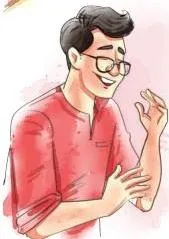
This is the punchline drawn as a picture: the child is up close and the spectacles sit on Papa’s head the whole time. The illustration shows exactly where the joke lives — the one place Papa never checked.
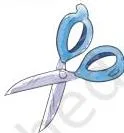
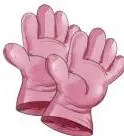
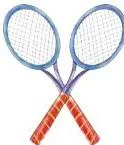
These four pictures are the clues for task B on page 4. Each shows an object that comes in twos; look at it, name it, and finish the phrase “a pair of …”. The captions carry the question numbers — these belong to blanks 1, 3, 5 and 7, and the other blanks (2, 4, 6) have their own pictures in the book (NCERT, p. 4).
This note belongs to the listening task on page 8. It tells the teacher to repeat each word pair three or four times and that audio recordings may be played in class, so students can focus on the sounds (NCERT, p. 8).
This is part of the “Let us Write” guidance on page 9. After a learner has turned “Papa’s Spectacles” into a story, the teacher may offer another poem and let the learner try the same trick — converting more poems into stories for practice (NCERT, p. 9).
Words and Definitions in Papa’s Spectacles
A few words in the poem and its activities deserve a definition before you read. Here they are in plain words, with the page where each appears.
| Word | Plain meaning | Page |
|---|---|---|
| spectacles | glasses worn on the eyes to help a person see clearly | p. 1 |
| pair | two things that belong or are used together, like a pair of shoes | p. 4 |
| searching | looking for something carefully, in many places | p. 1 |
| glance | a quick, short look | p. 1 |
| lost | cannot be found | p. 1 |
| preposition | a word that shows where something is or when it happens — on, in, above, around, among, before, after | p. 6 |
| homophone | words that sound the same but have different spellings and meanings, like sun and son | p. 8 |
The book itself stops on the word “pair” (NCERT, p. 4), which marks it as the chapter’s vocabulary focus — everything else in the activity grows from that one word.
Common Mistakes in Papa’s Spectacles (and How to Avoid Them)
Every mistake below comes straight from an exercise in this chapter — the activities were built to catch these exact errors. Naming the mistake before you make it is the fastest way to avoid it.
| Mistake | Correct rule | How to check your answer |
|---|---|---|
| Writing “recieve” for receive | After the letter c, the order is e before i: receive. | Say the word slowly — re-see-ve — the “see” sound keeps the e next to it. |
| Mixing “where” and “were” | “where” asks about a place (here–there–where); “were” is the past of “are” (we/you/they were). | “where” contains “here” (w-here); “were” does not. |
| Using “on” for every position | “in” = inside a place; “on” = resting on a surface; “around” = moving through many parts; “among” = inside a group. | Ask: is the thing inside, on top, or within a group? Match the word to the answer. |
| Saying “a spectacle” for one pair of glasses | Spectacles are a pair, so the word stays plural — “a pair of spectacles”. | The word “pair” fits because glasses have two lenses, like two shoes in a pair. |
| Writing a homophone by sound alone | Homophones share sound, not meaning: sun (in the sky) vs son (a child); hair vs hare. | Read the sentence aloud and check which meaning fits. |
The poem itself uses “where” — “Oh! Where can it be?” (NCERT, p. 1) — so this is a pair worth fixing early. The listening game places where–were on the “different” side for the same reason.
Exam Notes: What This Chapter Builds
This is a first-unit poem chapter, so its work is skill building, not content cramming. Each activity trains one small skill, and the table below shows which is which.
| Activity (NCERT page) | Skill it builds |
|---|---|
| Answer the following questions (p. 2) | Reading the poem and answering in your own words |
| Think and discuss (p. 2) | Speaking and reasoning with a partner |
| Let us Learn A — ascending order (p. 3) | Ordering by size, weight and number |
| Let us Learn B — a pair of (p. 4) | Vocabulary: words for things that come in twos |
| Let us Learn C — spellings (p. 5) | Spelling common words correctly |
| Let us Learn D — prepositions (p. 6) | Grammar: words for place and time |
| Let us Learn E — crossword (p. 6) | Opposites and word meanings |
| Let us Speak (p. 7) | Comparing words for “father” across languages |
| Let us Listen (p. 8) | Hearing small sound differences |
| Let us Write (p. 8) | Turning a poem into a story |
The teacher notes on pages 8–9 add two classroom options: learners may work individually or in pairs, and the story may be written in the present tense, with a different past-tense prompt — “One day my father lost his spectacles …” — for those who prefer it (NCERT, pp. 8–9).
One honest note: textbook contents and the examinable syllabus are not always identical — check the current official CBSE syllabus before exams. No mark value can be promised for any chapter.
Papa’s Spectacles: Quick Revision Summary
This is the whole chapter in a few bullets — a minute before class or a test.
- The poem’s story: Papa loses his only spectacles, cannot read, watch TV or cut vegetables, and searches the room (NCERT, p. 1).
- The twist: his child spots the spectacles on Papa’s own head — he was wearing them all along.
- Pairs: “a pair of shoes” teaches that a pair is two things used together (p. 4).
- Homophones: sun–son, hair–hare — same sound, different spelling and meaning (p. 8).
- Opposites: near–far, yes–no, big–small, happy–sad, outside–inside, fast–slow, dark–bright, cold–hot, clean–dirty, bought–borrowed (p. 6).
- Prepositions: in, on, around, among, above, before, after fill the story (p. 6).
- Spellings: water, vegetables, balloon, house, elephant, spectacles, carpenter, fruit, receive, principal (p. 5).
- Speaking: share the word your language uses for “father” (p. 7).
- Listening: decide whether word pairs sound the same or different (p. 8).
- Writing: turn the poem into a story, present or past tense (p. 8).
- Fun pages: the candle illusion, one “d” hidden among b’s, and a riddle — the answer is an onion (pp. 9–10).
Everything on these pages is a game about noticing carefully: watch where you look, listen to sounds, and read the small print of the word. That single lesson is what the chapter trains.
Related Resources
This listing is maintained for the 2026-27 academic session using the NCERT textbook information available to us. NCERT remains the authority for confirming the latest edition.
Keep moving through the book and the class — the reader, the hub, the notes and the official source are one click away.
- NCERT Class 5 English book Santoor — every chapter of the reader in one place.
- NCERT Class 5 books hub — the subjects of the class together.
- Class 5 English revision notes — quick study notes for class work and tests.
- Teamwork Class 5 notes — a later poem in the same book, if you are reading ahead.
- CBSE notes index — notes for other classes and subjects.
For the official source, the NCERT textbook portal lets you verify the current edition of Santoor and open any chapter PDF.
| What the chapter holds | Count | Where it is used |
|---|---|---|
| Printed pages | 10 | |
| Figures with NCERT captions | 8 | |
| Tables | 5 | |
| Activities | 1 | |
| Official NCERT PDF | Download the chapter PDF | the chapter exactly as NCERT publishes it |
Reference: NCERT Class 5 English textbook, chapter 1, official edition on ncert.nic.in.
One honest line: textbook contents and the examinable syllabus are not always identical — check the current official syllabus.
Sources and Data Verification
- The descriptions and page references on this page come from the NCERT Class 5 English textbook Santoor, Chapter 1 “Papa’s Spectacles”, printed as the book’s opening pages 1 to 10.
- This page covers that NCERT book only — not the whole CBSE scheme, which includes subjects and options this page does not list.
- This page is maintained for the academic session stated at the top, using the NCERT edition published on ncert.nic.in.
- NCERT settles textbooks, editions and PDFs; CBSE settles the curriculum, syllabus and examinations.
Frequently Asked Questions
What is the poem Papa’s Spectacles about?
It tells of a father who has lost his only pair of spectacles. He cannot read the newspaper, watch TV or cut vegetables without them, so he searches his pockets, looks under his chair and checks near the window — until his child finds the spectacles on his head (NCERT, p. 1).
What is the twist at the end of the poem Papa’s Spectacles?
The spectacles were on Papa’s head the whole time. He searched everywhere else, but the one place he never checked was his own head (NCERT, p. 1).
What are the answers to the comprehension questions after the poem?
Papa is searching for his spectacles. The possible places are his pockets, the space under his chair and near the window. At last he finds them on his head, where his child points them out (NCERT, p. 2).
Which word pairs in the listening activity sound the same?
ate–eight, knot–not, fair–fare, hair–hare, sun–son, deer–dear, heal–heel and wood–would all sound the same. The pairs that sound different include where–were and dare–dear (NCERT, p. 8).
What does a pair of mean in this chapter?
“A pair of” is used for two things that belong or are used together, like a pair of shoes. Spectacles too are a pair — a pair of spectacles — because they have two lenses (NCERT, p. 4).
What is the answer to the riddle at the end of the chapter?
The answer is an onion. It is bought at the market, brought home, set in front of you — and its last clue, “I cry, cry, cry,” works because cutting an onion makes you cry (NCERT, p. 10).