
Seeing without Seeing Class 2 is Chapter 4 of the NCERT Class 2 English textbook Mridang — a ten-page, fully illustrated story about Onshangla and the blindfold game her mother Ava plays with her.
The NCERT Class 2 English Mridang Chapter 4 Seeing without Seeing PDF sits on the official NCERT e-textbook portal — the same chapter file a school follows, free to read online or download. The rest of this page walks through the story, the word lists, the vowel ‘o’ table and the eye-care activities.
What is inside the chapter file
Open the file and you move through the chapter in this order. The chapter table above carries the file’s counts — its pages, sections and illustrations — and this section names the blocks by their NCERT headings.
- the story Seeing without Seeing, told in short dialogues between Onshangla and her mother Ava;
- two word lists — Sight words and New words;
- the Let us speak, Let us draw, Let us write and Let us do activity blocks;
- an Eye exercise using four look-directions;
- a picture-word reading table built around the vowel sound ‘o’;
- four short Note to the teacher boxes spaced through the chapter.
The chapter reads as one classroom lesson: hear the story, meet its words, talk about it, then look after your eyes. It is an early reader, fully illustrated and mainly text-based — it carries no numbered exercise set of the kind used in older classes.
What the chapter teaches and why it matters
This chapter teaches that we understand the world with all five senses, not only sight — and that a child who cannot see still learns through touch, smell, hearing and taste. That idea is the whole point of the story.
The first Note to the teacher states it directly: sensitize children to the challenges faced by the differently abled. The story gives children the same message in a form they can feel.
The chapter also builds literacy skills in the same ten pages:
- sight words — common words to recognise at once, not sound out;
- the vowel sound ‘o’ as in ‘top’;
- the article an before words beginning with ‘o’;
- simple first-person writing — “I like to…” and “I can…” sentences.
The story: how Onshangla learns to see without seeing
The story runs in four quick beats. This walkthrough follows the order of the chapter, and the table below names the sense used for each object.
- Onshangla comes home unusually quiet. Ava asks why: a new boy came to school, sits in the front desk, wears black glasses and cannot see. “How will he do things?” asks Onshangla.
- Ava tells her to finish the biscuits and milk, then ties a scarf over Onshangla’s eyes and turns it into a guessing game.
- Object by object, Onshangla identifies each thing with a sense other than sight.
- The scarf comes off. Onshangla blinks, sees Ava and cries “I see you!”
Ava’s closing message carries the chapter’s meaning: if a child cannot see, there are other ways of finding out things, but the child may have some difficulties — and she hopes everyone will be friends with the new boy.
| Object | How Onshangla identifies it | Sense used |
|---|---|---|
| Rose | It feels soft — a flower; then she bends forward and sniffs it | Touch, then smell |
| Small bell | Ava shakes it — Trin… Trin… — and Onshangla knows the musical sound | Hearing |
| Glass | She touches it and puts one finger slightly inside | Touch |
| Orange juice | She tastes it and cries out — not water, orange juice | Taste |
Only at the end does Onshangla use her eyes — and the first thing she sees is Ava.
Sight Words and New Words in Seeing without Seeing Class 2
Sight words are common words a young reader should recognise instantly, without stopping to sound them out — many of them do not follow simple sound rules. The Sight words list holds: is, from, what, on, how, and, it, me, our, some, other.
These words run through the whole story: what, how, it and me carry the guessing dialogue, while our and other appear in Ava’s message about the new boy.
The New words list follows, and each word is used once in the story. The table gives what each word means in its story context:
| Word | What it means here | Where it appears in the story |
|---|---|---|
| quiet | making little sound | Onshangla opens the door quietly; Ava says, “You are very quiet today.” |
| front | the desk near the teacher | The teacher helps the new boy sit at the front desk. |
| sniff | breathe in through the nose to smell | Onshangla bends forward and sniffs at the rose. |
| remove | take off | Ava removes the scarf from Onshangla’s eyes. |
| joy | great happiness | Onshangla names the bell with joy and shouts with joy at the end. |
| blink | open and close the eyes quickly | Onshangla blinks when the scarf comes off. |
| difficulties | problems or hard things | A child who cannot see may have some difficulties. |
Pictures that carry the story
The chapter is fully illustrated, and every picture supports a child who cannot yet read the words. None of the illustrations carries a printed caption, so no image is reproduced on this page — the text itself names the scenes that matter.
A child sees, in order: the scarf tied over Onshangla’s eyes, the rose, the small bell, the glass of orange juice, and the scarf coming off as Onshangla blinks.
The reading table headed “Read the words below each picture” works the same way — in an early reader, the picture is the first thing a child reads.
Each picture shows the object whose name sits under it, so a child who cannot yet decode the word “orange” can say it from the picture and then match the printed word to it.
The vowel ‘o’ and the ‘an’ rule
This block teaches the vowel sound ‘o’ as in ‘top’, and it quietly teaches when an is used instead of a. All nine words in the table share the same ‘o’ sound — say them aloud: ox, otter, orange, fox, dot, top, clock, lock, frock.
The picture-word table runs in three rows:
- row 1 — an ox, an otter, an orange;
- row 2 — a fox, a dot, a top;
- row 3 — a clock, a lock, a frock.
The pattern is plain: the three words beginning with the letter o take an, and the words beginning with consonants take a. The chapter’s teacher note says exactly this — the chapter introduces the vowel sound ‘o’ as in ‘top’ and helps children notice that ‘an’ occurs before words beginning with ‘o’.
Why the rule exists: an is used before a vowel sound because the phrase slides more smoothly — say “a orange” and “an orange” aloud and you will hear the difference. One original practice line of your own: an orange in a box.
Speak, draw and write: the chapter’s activities
After the story, the chapter moves from listening to speaking, drawing and writing — so a child practises the new words instead of only seeing them.
Let us speak. Onshangla calls her mother Ava. Children say the word for mother in their own mother tongue, then close their eyes and identify water, a flower, sugar, and the direction of a clapping sound.
The mother-tongue activity matters because the teacher note asks that every child say the word for mother in their own language and that all the words be written on the blackboard — the book wants each child’s home language honoured in the English classroom.
Let us draw. Draw two things you like to smell and two things you like to taste, then share your drawing with a friend.
Let us write. Three tasks follow: fill the blanks from the word box; write activities you do with family members; and write five things you can do by yourself. The book’s examples are “I like to walk with my grandfather” and “I can take a bath by myself”.
Here are the fill-in-the-blank answers, each mapped to the story moment that supplies it:
| Blank | Answer | Story moment |
|---|---|---|
| (a) Onshangla was very __________ one day. | quiet | Ava: “You are very quiet today.” |
| (b) A new __________ came to Onshangla’s school. | boy | A new boy came to our school. |
| (c) Ava placed __________ and __________ on the table. | biscuits and milk | Ava places biscuits and milk on the table as they talk. |
| (d) Ava played a new __________ with Onshangla. | game | “Then we will play a new game.” |
| (e) “…it is not water, it is __________ juice.” | orange | Onshangla tastes it and cries out. |
Two original practice sentences that follow the book’s pattern: I like to play with my sister and I can brush my teeth by myself.
Eye care and the eye exercise
The story is about seeing without eyes, so the chapter ends by teaching children to protect the eyes they have. The Let us do page asks children to tick what is good for our eyes and cross what is not.
| Habit | Mark |
|---|---|
| Sit straight while reading or drawing | ✓ good |
| Read in good light | ✓ good |
| Eat carrots and lots of vegetables | ✓ good |
| Close eyes and splash water on the eyelids | ✓ good |
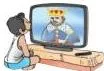
| Sit very close to the TV | ✕ not good |
| Stare at the sun | ✕ not good |
| Play for a long time on the mobile | ✕ not good |
Then comes the Eye exercise. Children follow the teacher’s instructions and repeat four movements — look up, look down, look right, look left — moving only the eyes, never the face or body. The teacher note asks teachers to ensure children do the exercise and to tell them how to protect their eyes.
Common mistakes young readers make here
Four mistakes are typical in this chapter, and each is tied to a named part of the chapter you can open and check.
| Mistake | Correct rule | How to check your answer |
|---|---|---|
| Writing “a orange” | an is used before words beginning with the vowel-sound o — the table shows an orange, an ox, an otter but a fox, a dot, a top | Say the word aloud; if it begins with an o-sound, write an |
| Treating the blindfold game as just a game | Ava’s purpose is that a child who cannot see finds out things through other senses but may have difficulties — classmates should be friends with him | Read Ava’s last speech in the story |
| Ticking the eye-care list by preference, e.g. passing over “eat carrots” as a joke | The book marks sitting straight, good light, carrots and vegetables, and splashing water as good; the TV, sun and mobile habits as not good | Re-check the tick and cross marks on the Let us do page |
| Spelling quiet as “quite” | quiet is q-u-i-e-t and means making little sound — Onshangla was quiet that day | Ava says, “You are very quiet today.” |
What the chapter expects children to be able to do
Mridang is a classroom reader, so this chapter is assessed through classroom work — reading aloud, speaking, drawing and the exercise pages — not a board-style examination. The four Note to the teacher boxes are the book’s own checklist of what children should achieve:
- sensitisation to the challenges faced by the differently abled — from the note that follows the story;
- every child says the word for mother in their own language, and all the words are written on the blackboard — from the note with Let us speak;
- children do the eye exercises and learn how to protect their eyes — from the note with the Eye exercise;
- children notice the vowel sound ‘o’ as in ‘top’ and the word an before o-words — from the note with the reading table.
One caveat: textbook contents and the examinable syllabus are not always identical — check the current official syllabus.
A parent’s read-back check: the child can recognise the sight words instantly, answer the five blanks from the story, and mark the eye-care list correctly.
Seeing without Seeing in eight lines
The chapter closes without a printed summary block — these eight lines are our quick recap to read before class.
- Onshangla comes home quiet because a new boy who cannot see has joined her class.
- Ava ties a scarf over her eyes and turns it into a guessing game.
- The rose is found by touch, then smell; the bell by hearing; the glass by touch; the orange juice by taste.
- The scarf comes off — “I see you!” — and Onshangla sees Ava.
- Ava’s message: other senses work, but the child may have some difficulties — be friends with the new boy.
- Eleven sight words to recognise instantly: is, from, what, on, how, and, it, me, our, some, other.
- Seven new words: quiet, front, sniff, remove, joy, blink, difficulties.
- The vowel ‘o’ as in ‘top’, the word an before o-words, the eye-care tick-and-cross list, and the look up-down-right-left exercise close the chapter.
Related resources
This listing is maintained for the 2026-27 academic session using the NCERT textbook information available to us. NCERT remains the authority for confirming the latest edition.
Move through the rest of Mridang from here. The Class 2 English notes page groups the whole book, the Class 2 hub gathers the Class 2 subjects, and the CBSE notes home page is the entry point to the rest of the site.
Other chapters in the same book — It is Fun and Going Places — follow the same pattern of story, words and activities.
The chapter file itself is published on the official NCERT e-textbook portal, which is the authoritative source for every NCERT textbook PDF, including Mridang.
Sources and data verification
- The chapter described is “Seeing without Seeing”, Chapter 4 of the NCERT Class 2 English textbook Mridang.
- The story, sight words, new words, activities and teacher notes described here come from that NCERT edition.
- This page covers the NCERT textbook only. NCERT settles textbooks, editions and PDFs; CBSE settles the curriculum and syllabus — the two are separate. The official CBSE site is cbse.gov.in.
- The listing is maintained for the current academic session using the NCERT information available to us.
| What the chapter holds | Count | Where it is used |
|---|---|---|
| Printed pages | 10 | |
| Figures with NCERT captions | 4 | |
| Activities | 1 | |
| Official NCERT PDF | Download the chapter PDF | the chapter exactly as NCERT publishes it |
Frequently asked questions
What is the story Seeing without Seeing about?
Onshangla comes home quiet because a new boy who cannot see has joined her class. Her mother Ava ties a scarf over her eyes and plays a guessing game with touch, smell, hearing and taste, which ends with Onshangla crying “I see you!”
Why do we say an orange but a fox in this chapter?
Because orange begins with the letter o, and the chapter teaches that an is used before words beginning with ‘o’ — that is why the table shows an orange but a fox, a dot and a top.
Which words are the sight words in Mridang Class 2 Chapter 4?
The sight words are is, from, what, on, how, and, it, me, our, some and other — eleven common words the child should recognise instantly.
What did Ava want Onshangla to learn from the blindfold game?
That a child who cannot see finds out things through other senses but may have some difficulties — and that everyone should be friends with the new boy.
Which habits are good for our eyes according to the chapter?
Sitting straight while reading or drawing, reading in good light, eating carrots and lots of vegetables, and closing the eyes and splashing water on the eyelids are marked good. Sitting close to the TV, staring at the sun and playing long on a mobile are marked not good.
Is the new boy in the story blind, and what happens at the end?
The new boy wears black glasses and cannot see. At the end, Ava hopes everyone will be friends with him, and Onshangla agrees: “Yes, Ava.”
Reference: NCERT Class 2 English textbook (Mridang), chapter 4, official edition on ncert.nic.in.
Explore Class 2 English Books
Related chapters: