
Circles Class 10 is Chapter 10 of the NCERT Class 10 Mathematics textbook — a compact chapter of ten printed pages built around one idea: a line that touches a circle.
The official NCERT chapter PDF is right here on this page. Below it, the walkthrough explains both theorems, the key diagrams and the exercises, so you can study straight from the book for the current academic session.
Download the NCERT Class 10 Maths Chapter 10 Circles PDF
Students and teachers usually want the official file first, so here it is — straight from NCERT’s website.
Open the NCERT Class 10 Maths Chapter 10 Circles PDF from the official NCERT website to read the chapter exactly as printed, including the proofs, the worked examples and both exercises.
Chapter 10 Circles at a glance
This table maps the chapter’s content blocks to the printed pages they occupy, so you can jump straight to the part you need.
| Section | What it contains | NCERT pages |
|---|---|---|
| 10.1 Introduction | The three positions of a line and a circle: non-intersecting line, secant, tangent (Fig 10.1) | p. 144 |
| 10.2 Tangent to a Circle | Activity 1 and Activity 2, the point of contact, Theorem 10.1 with proof and two remarks | pp. 145–147 |
| Exercise 10.1 | Q1–Q4: definitions and basic facts about tangents and secants | pp. 147–148 |
| 10.3 Number of Tangents from a Point on a Circle | The three cases (inside, on, outside), length of the tangent, Theorem 10.2 with proof and two remarks, Examples 1–3 | pp. 148–151 |
| Exercise 10.2 | Q1–Q13: the main practice set, mixing proofs and numericals | pp. 152–153 |
| Figures | Fig 10.1 to Fig 10.14: the line–circle positions, two activities, the wheel, the proof of Theorem 10.1, the three tangent cases and the exercise diagrams | pp. 144–152 |
| 10.4 Summary | The three key results of the chapter in brief | p. 153 |
What this chapter covers: three positions, two theorems, one big idea
This short chapter moves in one straight line: it defines the tangent, proves two properties of it, then applies those properties to problems. The roadmap below tells you what each part is for before you reach it.
- Three positions of a line and a circle (p. 144). A line can miss a circle, cut it in two points, or touch it in one point — that third case is the tangent. Everything else in the chapter is about this single line.
- Why a tangent must exist, from two activities (pp. 145–146). Activity 1 rotates a straight wire about a point on a circular wire until the wire meets the circle only at that point; Activity 2 slides lines parallel to a secant until the chord they cut shrinks to zero. Both show the same thing: a tangent is a special case of a secant in which the two end points of the chord have coincided.
- Theorem 10.1 (p. 147). The tangent at any point of a circle is perpendicular to the radius through the point of contact. This turns every tangent problem into a right-triangle problem.
- Three cases for tangents from a point (p. 148). A point inside the circle gives no tangent, a point on the circle gives one, a point outside gives two.
- Theorem 10.2 (p. 149). The two tangents drawn from an external point are equal in length — the chapter’s second workhorse.
- Examples 1–3 (pp. 150–151). Worked applications: a chord of a larger concentric circle touching a smaller one, an angle-doubling result, and a chord-tangent length found by similar triangles.
- Exercise 10.2 and the Summary (pp. 152–153). The main practice set, followed by the three results the chapter wants you to remember.
The through-line: every numerical problem in this chapter is one of the two theorems applied to a right triangle. If you can spot the right angle, the rest is Pythagoras or simple angle sums.
Key concepts: the two theorems that carry the chapter
Two theorems carry every problem in this chapter. Learn them in this order — first the right angle, then the equal lengths — and every exercise becomes a matter of spotting which one applies.
Theorem 10.1: tangent perpendicular to radius (NCERT, p. 147)
Statement: “The tangent at any point of a circle is perpendicular to the radius through the point of contact.”
Why it is true: the proof is a shortest-distance argument. Let XY be the tangent at P, and take any other point Q on line XY.
Q cannot lie inside or on the circle — if it did, XY would cut the circle twice and would be a secant, not a tangent. So \(OQ \gt OP\) for every point Q on the tangent except P.
That makes OP the shortest distance from the centre to the line XY, and the shortest distance from a point to a line is along the perpendicular. Hence \(OP \perp XY\).
Two remarks that follow immediately (p. 147):
- At any point of a circle there is one and only one tangent — so, since a circle has infinitely many points, it has infinitely many tangents in total (the idea behind Exercise 10.1 Q1).
- The line containing the radius through the point of contact is called the normal to the circle at that point.
Theorem 10.2: equal tangents from an external point (NCERT, p. 149)
Statement: “The lengths of tangents drawn from an external point to a circle are equal.”
Why it is true: join the centre O to the external point P and to the two contact points Q and R. By Theorem 10.1, the angles at Q and R are right angles, so triangles OQP and ORP are right triangles.
They share the hypotenuse OP, and \(OQ = OR\) because both are radii. Two right triangles with equal hypotenuse and one equal side are congruent by RHS, so the tangent segments are equal: \(PQ = PR\).
Two remarks (pp. 149–150):
- The same result follows from Pythagoras: \(PQ^2 = OP^2 – OQ^2 = OP^2 – OR^2 = PR^2\), hence \(PQ = PR\).
- Since \(\angle OPQ = \angle OPR\), the centre O lies on the angle bisector of the angle between the two tangents.
The three cases for tangents from a point (NCERT, p. 148)
Before proving anything, the book settles a simpler question: from a given point, how many tangents can you actually draw? The answer depends only on where the point sits.
| Position of the point P | Tangents through P | Reason |
|---|---|---|
| P inside the circle | None | Every line through P cuts the circle in two points |
| P on the circle | Exactly one | The tangent at that point, unique by the remark after Theorem 10.1 |
| P outside the circle | Exactly two | The tangents PT1 and PT2 of Fig 10.6 (iii) |
The length of the tangent from P is the segment from the external point P to the point of contact — that is, the whole segment PT1, not just the part inside the circle (p. 148). Theorem 10.2 says these two lengths are always equal.
Worked example: both theorems in one problem, with fresh numbers
Here is how the two theorems actually combine in a numerical problem. The steps below are the same steps the exercises expect, with new numbers so you can work them yourself before checking.
Problem A: find the radius (Theorem 10.1 + Pythagoras)
Step 1: From an external point P, the tangent PA touches a circle at A.
The centre is O, with PA = 40 cm and OP = 41 cm.
By Theorem 10.1, the radius OA is perpendicular to the tangent PA, so \(\triangle OAP\) is right-angled at A (NCERT, p. 147).
Step 2: Apply Pythagoras in \(\triangle OAP\):
\[ OA = \sqrt{OP^2 – PA^2} = \sqrt{41^2 – 40^2} = \sqrt{1681 – 1600} = \sqrt{81} = 9\ \text{cm} \]
Final answer: the radius is \(9\ \text{cm}\). State the unit separately — a radius answer without its unit is incomplete.
Problem B: find the central angle (Theorem 10.2 + angle bisector)
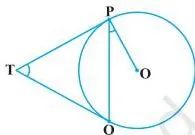
This NCERT diagram is the configuration Problem B uses: two tangents from one external point, radii to the two contact points, and the join from the centre to the external point.
Step 1: Tangents PA and PB meet at P, with \(\angle APB = 60^\circ\).
By Theorem 10.2, \(PA = PB\), so triangle APB is isosceles; and by the angle-bisector remark (p. 149), OP bisects \(\angle APB\).
Hence \(\angle APO = 30^\circ\).
Step 2: By Theorem 10.1, \(OA \perp PA\), so \(\angle PAO = 90^\circ\).
The angles of \(\triangle OAP\) sum to \(180^\circ\), giving \[ \angle POA = 180^\circ – 90^\circ – 30^\circ = 60^\circ \]
Step 3: The two right triangles OAP and OBP are congruent (RHS), so OP also bisects the central angle: \(\angle AOB = 2 \times 60^\circ = 120^\circ\).
Final answer: \(\angle POA = 60^\circ\) and \(\angle AOB = 120^\circ\).
Now read the two answers together: \(\angle APB + \angle AOB = 60^\circ + 120^\circ = 180^\circ\). The angle between the two tangents and the central angle are always supplementary — that is exactly the relation Exercise 10.2 Q10 proves, and Q2 uses with \(110^\circ\) and \(70^\circ\) (p. 152).
The book’s Example 3 (pp. 150–151) shows the other standard method: similar triangles. Its note then drops the same answer out of Pythagoras — whichever route you take, the first move is always to name the right angle supplied by Theorem 10.1.
Reading the diagrams: what the NCERT figures actually show
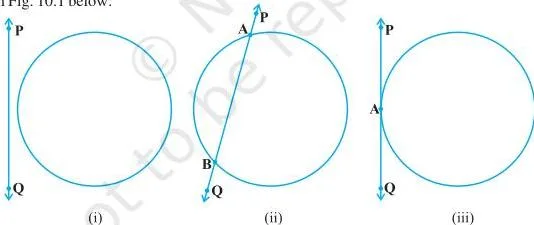
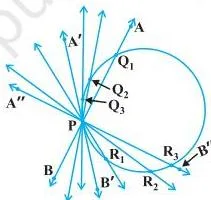
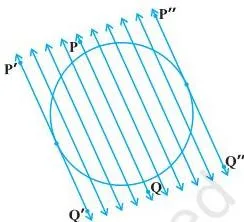
The figures in this chapter are not decoration — each one carries an idea you should be able to say in words. Read them in the order NCERT printed them and the whole chapter becomes one continuous argument.
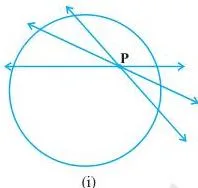
Fig 10.1: the three positions of a line and a circle (p. 144)
This opening figure states the chapter’s question. In panel (i) the line PQ and the circle have no common point — the line is non-intersecting. In (ii) they share two points A and B — the line is a secant. In (iii) they share exactly one point A — the line is a tangent, and A is its point of contact.
Fig 10.3(i): Activity 1 — the rotating wire (pp. 145–146)
Activity 1 lets you watch a tangent appear. As the wire AB rotates around P, its second intersection with the circle slides round the circle and finally lands on P itself in the position A’B’. That limiting position is the tangent — this is why the book says a tangent is a secant whose two chord end points have coincided.
Fig 10.3(ii): Activity 2 — parallel lines closing in (p. 146)
Activity 2 reaches the same limit from outside. Lines drawn parallel to a given secant cut shorter and shorter chords; in the positions P’Q’ and P”Q” the chord length is zero on each side. Those two positions are the tangents parallel to the secant, and the activity shows why there can never be more than two such tangents.
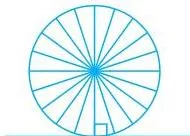
Fig 10.4: the wheel on the road (p. 146)
This everyday picture is the preview of Theorem 10.1. The ground line touches the wheel at one point, so it is a tangent; the spoke through the contact point is a radius, and it appears perpendicular to the ground in every position. The theorem that follows proves this appearance is always true.
Fig 10.5: the proof of Theorem 10.1 (p. 147)
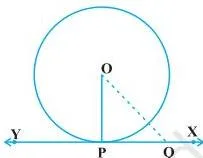
This diagram is the whole proof in one picture. The tangent XY touches the circle at P. Choose any other point Q on XY and join OQ: because Q is outside the circle, OQ is longer than OP.
Every point of the tangent except P is farther from the centre than P is, so OP is the shortest of all distances from O to the line — and the shortest distance from a point to a line is along the perpendicular. Hence \(OP \perp XY\).
Fig 10.6: tangents from a point inside, on and outside a circle (p. 148)
This figure answers the existence question that opens Section 10.3. From inside, every line through P crosses the circle twice, so no tangent exists. From a point on the circle, the unique tangent from Theorem 10.1’s remark appears.
From outside, exactly two tangents touch the circle, and the segments PT1 and PT2 — from the external point to the points of contact — are the tangent lengths that Theorem 10.2 proves equal.
Definitions: six terms that keep appearing
Six terms carry the chapter, and Exercise 10.1 Q2 is a fill-in-the-blanks test of exactly these. Learn them here, then check yourself with the exercise.
| Term | What it means | NCERT page |
|---|---|---|
| Non-intersecting line | A line that has no common point with the circle | p. 144 |
| Secant | A line that cuts the circle at two distinct points | p. 144 |
| Tangent | A line that touches the circle at exactly one point | p. 144 |
| Point of contact | The single common point of a tangent and the circle | p. 145 |
| Normal | The line containing the radius through the point of contact | p. 147 |
| Length of the tangent | The segment from the external point to the point of contact | p. 148 |
The word “tangent” itself comes from the Latin tangere, meaning “to touch” — introduced by the Danish mathematician Thomas Fineke in 1583 (footnote, p. 145). With these six definitions, Exercise 10.1 Q2 fills itself in: (i) one, (ii) secant, (iii) two, (iv) point of contact.
Common mistakes in tangent and circle problems
The steps in this chapter are short; the marks are lost when a wrong idea arrives early. These five mistakes, with their corrections, cover almost every error students make.
| Mistake | Correct rule | How to check your answer |
|---|---|---|
| “A tangent can be drawn through any point.” | A point inside the circle admits no tangent — every line through it cuts the circle twice (p. 148). | Place the point first. Only if it is on or outside the circle does a tangent exist. |
| Using the right angle away from the point of contact. | The radius is perpendicular to the tangent only at the point of contact (p. 147). | Mark the point of contact before drawing any right-angle symbol; the 90-degree angle sits between the radius and the tangent there. |
| Writing PO = PT1 in a Theorem 10.2 problem. | The equal segments are the tangents: PT1 = PT2. PO joins the centre to P and is usually the hypotenuse, not part of the equal pair (p. 149). | Name the two tangent segments from the same external point; O is never one of their endpoints. |
| Treating the angle between tangents as equal to the central angle. | The two angles are supplementary: they add to 180 degrees (p. 152, Q2 and Q10). | In quadrilateral O–T1–P–T2 the angles at the contact points are 90 degrees each (Theorem 10.1), so the remaining two angles must sum to 180 degrees. |
| Confusing the two circles in a concentric-circle problem. | The chord belongs to the larger circle; the radius perpendicular to it belongs to the smaller circle, where the chord is a tangent (Example 1, p. 150). | Ask which circle is being touched: the chord of the larger circle touches the smaller circle, so the perpendicular from O lands at the point of contact and bisects the chord. |
How the exercises test each idea: a question map
Every question in the chapter tests one of the ideas above. Use this table to choose targeted practice: find the idea you are unsure of, then do the questions in its row.
| Questions | Idea tested | Source |
|---|---|---|
| Exercise 10.1, Q1–Q4 | Definitions and basic facts: how many tangents, fill-in-the-blanks on secant/tangent/point of contact, the tangent length from a 5 cm radius and 12 cm join, and a drawing question | pp. 147–148 |
| Exercise 10.2, Q1, Q6, Q7 | Theorem 10.1 plus Pythagoras: the radius, the tangent and the join to the centre always form a right triangle | pp. 151–152 |
| Exercise 10.2, Q2, Q3, Q10 | Right angles at the contact points and the supplementary angle relation between tangents and centre | p. 152 |
| Exercise 10.2, Q4, Q5, Q9 | Theorem 10.1 applied to parallel and perpendicular tangents, including the 90-degree angle at the centre in Q9 | p. 152 |
| Exercise 10.2, Q8, Q11, Q12, Q13 | Theorem 10.2: equal tangent segments in quadrilaterals and triangles that circumscribe a circle | pp. 152–153 |
Within Exercise 10.2, the question types split cleanly: Q1–Q3 are choose-the-option questions that demand a justification, not just an answer; Q6, Q7 and Q12 are length numericals; the rest (Q4, Q5, Q8, Q9, Q10, Q11, Q13) are proofs. A full-marks proof names the theorem it uses, states why the angles are right angles, and ends with “hence proved”.
Questions that depend on a figure — Exercise 10.2 Q2, Q3, Q8, Q9, Q12 and Q13 — ask you to read Fig 10.11 to Fig 10.14 directly from your textbook; the figure numbers are printed next to the questions.
One honest note: textbook contents and the examinable syllabus are not always identical — check the current official syllabus before deciding what to prioritise.
The chapter in five lines: a recap
This recap is built from the chapter’s own Summary (p. 153) — if you revise tonight, these five lines carry the whole chapter.
- A tangent is a line that touches the circle at exactly one point — the point of contact.
- Theorem 10.1: the tangent at any point of a circle is perpendicular to the radius through the point of contact (right angle → Pythagoras).
- Theorem 10.2: the lengths of the two tangents drawn from an external point to a circle are equal.
- A tangent is a secant whose two chord end points have merged — the limiting case shown in Activities 1 and 2 (p. 146).
- The angle between two tangents is supplementary to the central angle between the radii to the contact points (Exercise 10.2 Q10; Q2 uses \(110^\circ\) and \(70^\circ\), p. 152).
Related chapters and resources
This listing is maintained for the 2026-27 academic session using the NCERT textbook information available to us. NCERT remains the authority for confirming the latest edition.
Circles sits between two chapters that share its geometry. Chapter 9, Some Applications of Trigonometry, is where the right-triangle work this chapter leans on first appears. Chapter 11, Areas Related to Circles, continues the same circle geometry with perimeter and area formulas.
For the whole book, open the Class 10 Mathematics book page to see every chapter in order, the Class 10 hub for all subjects, or the main index of CBSE notes to move between classes.
Sources and data verification
This page describes Chapter 10, Circles, of the NCERT Class 10 Mathematics textbook as published by NCERT on ncert.nic.in. All page numbers above refer to that printed edition.
The page covers this single chapter of the book; it does not describe the full CBSE scheme of subjects. It is maintained for the current academic session using NCERT’s published information.
NCERT settles textbook editions and official PDFs — verify either on the official NCERT site. CBSE settles the curriculum, syllabus and examinations. Textbook contents and the examinable syllabus are not always identical; check the current official syllabus for what is examinable this session.
| What the chapter holds | Count | Where it is used |
|---|---|---|
| Printed pages | 10 | |
| Sections in the chapter | 4 | |
| Figures with NCERT captions | 7 | |
| Exercise questions | 17 | answered in our NCERT Solutions |
| Official NCERT PDF | Download the chapter PDF | the chapter exactly as NCERT publishes it |
Reference: NCERT Class 10 Mathematics textbook, chapter 10, official edition on ncert.nic.in.
Frequently asked questions about tangents and circles
These are the questions students most often search for while working through this chapter, answered directly.
How many tangents can a circle have?
Infinitely many. Every point of the circle has exactly one tangent (the remark after Theorem 10.1, p. 147), and a circle has infinitely many points. Exercise 10.1 Q1 asks exactly this.
From a point outside a circle, how many tangents can be drawn?
Exactly two. A point inside the circle gives none, a point on the circle gives one, and a point outside gives two — the three cases of Fig 10.6 on p. 148.
Why is the tangent perpendicular to the radius at the point of contact?
Because the radius to the point of contact is the shortest distance from the centre to the tangent line. Any other point Q on the tangent lies outside the circle, so OQ is longer than the radius; the shortest distance from a point to a line is along the perpendicular, which proves Theorem 10.1 (p. 147).
Are the lengths of the two tangents from an external point equal?
Yes, always. Theorem 10.2 proves \(PQ = PR\) by RHS congruence of the two right triangles, or equivalently by Pythagoras: \(PQ^2 = OP^2 – OQ^2 = OP^2 – OR^2 = PR^2\) (p. 149).
What is the relation between the angle between two tangents and the angle at the centre?
They are supplementary — they add to 180 degrees. In Exercise 10.2 Q2, \(\angle POQ = 110^\circ\) gives \(\angle PTQ = 70^\circ\); Q10 asks you to prove the general statement (p. 152).
What is the difference between a secant and a tangent to a circle?
A secant cuts the circle at two points; a tangent touches it at exactly one. A tangent is the limiting case of a secant — the two chord end points have moved together until they coincide (pp. 144–146).
Explore Class 10 Mathematics Books
Related chapters: