
This is Chapter 8, Heredity, of the NCERT Class 10 Science textbook. The chapter runs from page 127 to page 133 and explains how traits pass from parents to offspring — from the small variations that appear during reproduction to Mendel’s pea experiments and the X and Y chromosomes that decide a child’s sex.
The official NCERT Class 10 Science Chapter 8 Heredity PDF is published on ncert.nic.in, and you can open it to read the original text alongside the walkthrough below.
What is inside the Heredity chapter
The chapter table below gives the chapter at a glance — how many sections, figures, activities and questions it contains. Heredity is a mostly conceptual chapter: it builds one chain of ideas (variation, the rules of inheritance, and how traits are expressed) and uses activity-based observations, with no formulas to memorise.
| What the chapter contains | Number |
|---|---|
| Sections | 15 |
| Figures | 4 |
| Activities | 2 |
| Questions | 10 |
What this chapter covers, section by section
Use this map to jump to the part of the chapter you need. Each entry names the section, its NCERT pages, and what it teaches.
- 8.1 Accumulation of Variation During Reproduction (pages 127–128). Opens with the sugarcane field observation and Fig 8.1, which shows diversity building over generations. It explains why asexual reproduction produces only minor differences, while sexual reproduction creates greater diversity, and ends with questions about variation and survival.
- 8.2 Heredity and 8.2.1 Inherited Traits (pages 128–129). Defines the rules by which traits are reliably inherited, and looks at what similarities and differences mean in humans. Activity 8.1 on page 129 asks you to survey free and attached earlobes in your class.
- 8.2.2 Rules for the Inheritance of Traits – Mendel’s Contributions (pages 129–131). The core of the chapter: Mendel’s crosses of tall and short pea plants, the F1 and F2 generations, dominant and recessive traits, and the independent inheritance of seed shape and seed colour (Fig 8.5). Activity 8.2 on page 130 suggests a way to confirm the 1:2:1 ratio.
- 8.2.3 How do these Traits get Expressed? (page 131). The mechanism behind the pattern: DNA, genes, enzymes, plant hormones, and the role of chromosomes and germ cells.
- 8.2.4 Sex Determination (page 132). How different species decide sex, and the human XX/XY pattern. The questions on page 132 test dominant and recessive traits, independent inheritance, the blood group reasoning, and sex determination.
- What you have learnt and Exercises (page 133). The chapter’s conclusions and its exercises, including the tall violet-flowered parent problem and a project to find the dominant coat colour in dogs.
Key concepts in Heredity
Heredity in this chapter answers one question: why do children resemble their parents but are never identical to them? The four ideas below are the steps the chapter uses to answer it.
Variation during reproduction: where differences come from
The chapter opens with a field of sugarcane, where the plants look almost identical, and contrasts it with human populations, where individuals are clearly different (NCERT, p. 127). That contrast sets up the chapter’s first idea.
- Inheritance gives the next generation both a common basic body design and subtle changes in it.
- In asexual reproduction, differences come mainly from small inaccuracies in DNA copying, so diversity builds slowly across generations.
- Sexual reproduction speeds diversity up, because the next generation draws on two parents.
- Not every variation is equally useful: the chapter’s example is bacteria that can withstand heat, which survive a heat wave better than others.
- Selection of variants by environmental factors forms the basis for evolutionary processes.
Fig 8.1, which shows the creation of diversity over succeeding generations, is described in the chapter text but is not reproduced on this page.
Mendel’s rules: why every trait has two copies
Father and mother contribute practically equal amounts of genetic material to the child, so every child carries two versions of each trait. Mendel’s crossing experiment shows what happens when the two versions differ (NCERT, pp. 128–130).
Follow the logic of the monohybrid cross in order:
- Tall plant × short plant: the F1 progeny are all tall, with no medium-height plants. One parental trait is seen, not a mixture.
- Self-pollinate the F1 plants: one quarter of the F2 progeny are short. The short trait was inherited in F1 but not expressed.
- Mendel therefore proposed that sexually reproducing organisms carry two copies of each factor (now called a gene). The two copies may be identical or may differ.
- One copy of T is enough to make a plant tall, while both copies must be t for the plant to be short (NCERT, p. 130).
- The genotype ratio in F2 is 1:2:1 — TT : Tt : tt. The visible phenotype ratio is 3 tall : 1 short. Activity 8.2 on page 130 asks which experiment would confirm the 1:2:1 ratio.
Mendel then tested two traits together. A tall plant with round seeds crossed with a short plant with wrinkled seeds gives F1 plants that are all tall with round seeds.
But the F2 progeny include tall plants with wrinkled seeds and short plants with round seeds — new combinations that prove the tall/short trait and the round/wrinkled seed trait are inherited independently (Fig 8.5, NCERT, p. 131). Fig 8.5 is described in the text but is not reproduced on this page.
Try this original cross yourself. A tall, wrinkled plant (Ttrr) is crossed with a short, round plant (ttRr). Here T = tall, t = short, R = round seed, r = wrinkled seed.
The tall, wrinkled plant makes gametes Tr and tr. The short, round plant makes gametes tR and tr. Combine them:
| Gametes | Tr | tr |
|---|---|---|
| tR | TtRr (tall, round) | ttRr (short, round) |
| tr | Ttrr (tall, wrinkled) | ttrr (short, wrinkled) |
All four trait combinations — tall round, tall wrinkled, short round and short wrinkled — appear among the offspring, exactly the kind of result that led Mendel to conclude that separate traits sort independently.
How traits get expressed: from DNA to protein to hormone
The crosses show the pattern; this section shows the machinery behind it (NCERT, p. 131). Cellular DNA is the information source for making proteins, and a section of DNA that provides information for one protein is called the gene for that protein.
The chapter explains tallness through this chain:
- Plant height depends on the amount of a particular plant hormone.
- The amount of hormone depends on the efficiency of the enzyme that helps make it.
- If the gene for that enzyme is altered, the enzyme works less efficiently.
- Less hormone is made, and the plant is short.
This is why genes control characteristics or traits. The same section then answers a deeper question: how do germ cells make a single set of genes when every other body cell has two copies? Each gene set is carried not as one long thread of DNA but as separate pieces called chromosomes.
Each cell has two copies of each chromosome, one from each parent; each germ cell takes one chromosome from each pair; and when two germ cells combine, the normal chromosome number is restored, keeping the species’ DNA stable (NCERT, p. 131).
Sex determination: X and Y chromosomes
If both parents pass similar gene sets, how can the sexes differ? The answer is that different species use very different strategies (NCERT, p. 132).
| Species or group | How sex is decided |
|---|---|
| Some reptiles | The temperature at which fertilised eggs are kept determines whether the young are male or female. |
| Snails | Individuals can change sex, so sex is not genetically determined. |
| Human beings | Sex is largely genetically determined by the sex chromosomes, XX in women and XY in men. |
In humans:
- Women have two X chromosomes, men have one X and one Y.
- Every child inherits an X chromosome from the mother.
- If the father contributes an X, the child is a girl; if he contributes a Y, the child is a boy (NCERT, p. 132).
- So half the children are boys and half are girls, and each child has an independent 50 percent chance of being either.
Reading the chapter’s figures
These are the NCERT figures from the chapter, and each one carries part of the argument. Fig 8.1 (creation of diversity over generations, page 127) and Fig 8.5 (independent inheritance of seed shape and colour, page 131) are described in the text but are not reproduced on this page. The four figures below are the ones to read carefully.
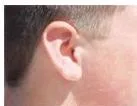
Fig 8.2 — free and attached earlobes
This figure appears where the chapter says that father and mother contribute practically equal genetic material, so each trait has two versions in each child. It shows two visible variants of a single human trait.
The figure pairs with Activity 8.1: observe the ears of all students in the class, calculate the percentage with free or attached earlobes, compare each student with their parents, and propose a rule for inheritance. A student reading the diagram should see two simple alternatives of one trait — the chapter’s first step before Mendel’s peas.
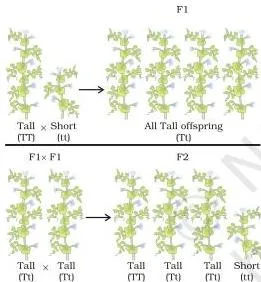
Fig 8.3 — the F2 inheritance pattern and the 1:2:1 ratio
This figure shows the pattern Mendel worked out once he assumed two copies of each gene. The two copies may be identical or different, depending on parentage, and the diagram shows how they combine in the next generation.
In the figure, each parent contributes one copy of the gene. TT and Tt both give tall plants, while tt gives a short plant. The F2 combination pattern produces the 1:2:1 ratio of TT, Tt and tt. Remember that 1:2:1 is a genotype ratio; the visible phenotype ratio is 3 tall to 1 short.
Activity 8.2 asks what experiment would confirm the 1:2:1 ratio — the figure is the answer.
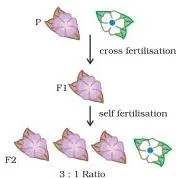
Fig 8.4 — germ cells and the single gene set
This diagram sits beside the question of how germ cells make a single set of genes from the normal two copies found in body cells.
If a progeny plant inherited a whole gene set from each parent, the two characteristics R and y would stay linked and could not be inherited independently.
The figure explains why this does not happen: each gene set is present as separate chromosomes, each cell has two copies of each chromosome, each germ cell takes one chromosome from each pair, and two germ cells restore the normal number when they combine (NCERT, p. 131).
This same idea answers the exercise question on page 133 about the equal genetic contribution of male and female parents.
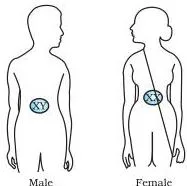
Fig 8.6 — how X and Y chromosomes decide sex
The sex determination diagram shows why half the children are boys and half are girls.
Every child inherits an X chromosome from the mother. The father’s contribution decides the sex: a child who inherits X from the father is a girl, and a child who inherits Y from the father is a boy (NCERT, p. 132).
In an exam answer, draw the two possible father contributions against the single mother contribution, show the two combinations, and state the equal probability. This figure is the answer to the chapter’s sex determination question.
Key terms in Heredity, with the page each is explained on
These are the terms the chapter builds on, with a plain meaning and the NCERT page where each is explained.
| Term | Plain meaning | NCERT page |
|---|---|---|
| Variation | Differences inherited from the previous generation plus new differences that arise. | p. 127 |
| Heredity | The rules by which traits and characteristics are reliably inherited. | p. 128 |
| Trait | A characteristic, such as earlobe type. | pp. 128–129 |
| Dominant trait | A trait expressed when a single copy is present, like T for tallness. | p. 130 |
| Recessive trait | A trait expressed only when both copies are present, like t for shortness. | p. 130 |
| Gene | A section of DNA that provides information for one protein. | p. 131 |
| Chromosome | An independent piece of the gene set; each cell has two copies of each chromosome. | p. 131 |
| F1 and F2 progeny | The first and second generation offspring of a cross. | pp. 129–130 |
| Sex chromosomes | The odd pair — XX in women and XY in men. | p. 132 |
Common mistakes in Heredity and the corrections
These are the points where a student reading this chapter typically slips, and each has a fix based on the chapter itself.
| Mistake | Correct rule | How to check your answer |
|---|---|---|
| The short trait disappeared in the F1 generation. | It was inherited but unexpressed; the F2 generation shows one quarter short plants (pp. 129–130). | Re-draw the F1 self-pollination: Tt × Tt gives TT, Tt, Tt and tt — one in four is tt. |
| A trait seen in a family must be dominant. | Family evidence alone cannot settle dominance. The light eye colour study (p. 133) and the blood group A/O question (p. 132) both show this — you need crosses and genotype combinations. | Ask: which offspring appear when two different pure lines are crossed? Only that decides dominance. |
| Reading the F2 result as 3:1 at the genotype level. | 3:1 is the visible phenotype ratio for tall:short. The genotype ratio is 1:2:1 TT:Tt:tt (Activity 8.2, p. 130). | Separate phenotype (what you see) from genotype (the allele combination). |
| Thinking the father decides sex simply because he is male. | It is the father’s X or Y chromosome in each child. X from the father gives a girl, Y gives a boy (p. 132). | Ask which parent can pass on a Y chromosome — only the father. |
| Assuming all variations matter equally. | A variant helps only if it suits the environment, such as heat-tolerant bacteria surviving a heat wave (pp. 127–128). | Ask: does this variant help the organism in its present environment? |
Exam notes: how to revise this chapter
The fastest revision route is the chapter’s own questions, because each one maps to a single key idea.
- The questions closing section 8.1 (page 128) test variation and survival — the trait-in-a-population question and why variation promotes survival.
- The questions closing section 8.2 (page 132) test dominant and recessive traits, independent inheritance, the blood group reasoning, and sex determination.
- The chapter exercises (page 133) test the tall violet-flowered parent cross, whether light eye colour can be called dominant from family data, planning a Mendel-style project for the dominant coat colour in dogs, and the chromosome mechanism that ensures equal genetic contribution.
The exercise that gives students the most trouble is the tall violet-flowered parent. Reason it in two steps:
Step 1 — flower colour: all the progeny have violet flowers. The short white-flowered parent must be ttww, so it can only pass on w. Since no white-flowered offspring appear, the tall parent must be WW for flower colour.
Step 2 — height: almost half the progeny are short. A TT parent crossed with tt would give all tall offspring, so the tall parent must be Tt. Crossing Tt × tt gives half tall and half short.
The genotype of the tall parent is therefore TtWW, which is option (c).
For the sex determination answer, keep the pattern short: mother passes X to every child; father passes X or Y; the combination decides the sex. The chapter has no formulas, so revision means being able to explain each idea and draw the small cross diagrams.
Note that textbook contents and the examinable syllabus are not always identical — check the current official syllabus.
The takeaway points of the Heredity chapter
The chapter closes with its own list of conclusions, rebuilt here in plainer words.
- Variations that arise during reproduction can be inherited, and these variations may improve an individual’s chance of survival.
- A sexually reproducing individual carries two copies of each gene for a trait; when the copies differ, the expressed one is dominant and the hidden one is recessive.
- Traits in one individual can be inherited separately, giving rise to new combinations of traits in offspring.
- Sex is determined by different factors in different species.
- In human beings, the sex of the child depends on whether the paternal chromosome is X (for girls) or Y (for boys).
Related resources and sources
This listing is maintained for the 2026-27 academic session using the NCERT textbook information available to us. NCERT remains the authority for confirming the latest edition.
Continue from where this chapter starts. Its foundation is the previous chapter, How do Organisms Reproduce, which explains why reproduction produces variation in the first place. The next chapter, Light – Reflection and Refraction, moves to a different topic.
For the rest of the book, use the Class 10 Science hub and the Class 10 hub. The official NCERT website at ncert.nic.in is the authoritative source for every NCERT textbook PDF.
Sources and data verification
- The chapter and figure descriptions on this page come from the NCERT Class 10 Science textbook (Science), Chapter 8 Heredity, pages 127–133, as published on ncert.nic.in.
- This page covers Chapter 8 only. It does not describe other chapters of Class 10 Science or other Class 10 subjects.
- NCERT settles textbook editions and PDFs; CBSE settles curriculum and examinations.
- Textbook contents and the examinable syllabus are not always identical — check the current official syllabus.
| What the chapter holds | Count | Where it is used |
|---|---|---|
| Printed pages | 6 | |
| Sections in the chapter | 6 | |
| Figures with NCERT captions | 4 | |
| Exercise questions | 4 | answered in our NCERT Solutions |
| In-text questions | 6 | |
| Activities | 2 | |
| Official NCERT PDF | Download the chapter PDF | the chapter exactly as NCERT publishes it |
Reference: NCERT Class 10 Science textbook, chapter 8, official edition on ncert.nic.in.
Frequently asked questions about Heredity
What is heredity in Class 10 Science?
Heredity is the set of rules by which traits and characteristics are reliably inherited from one generation to the next (NCERT, p. 128). In this chapter it explains why children resemble their parents but are not identical to them.
Why did Mendel use pea plants for his experiments?
Mendel chose garden peas because they have several contrasting visible characters — tall/short plants, round/wrinkled seeds, and white/violet flowers. He was also the first to keep count of individuals showing each trait in every generation, which let him work out the laws of inheritance (NCERT, pp. 129–130).
What determines whether a child is a boy or a girl in human beings?
The father’s sex chromosome. All children inherit an X chromosome from their mother; a child who inherits an X from the father is a girl, and a child who inherits a Y from the father is a boy (NCERT, p. 132).
What is the difference between a dominant trait and a recessive trait?
A dominant trait is expressed when a single copy is present — one T makes a pea plant tall. A recessive trait is expressed only when both copies are present — both copies must be t for a plant to be short (NCERT, p. 130).
Are all variations in a species useful for survival?
No. A variation helps only if it suits the environment. For example, bacteria that can withstand heat will survive a heat wave better than bacteria that cannot (NCERT, pp. 127–128).
Explore Class 10 Science Books
- Previous: How do Organisms Reproduce?
- Next: Light – Reflection and Refraction
Related chapters:
- Chemical Reactions and Equations
- Acids, Bases and Salts
- Metals and Non-metals