
This page gives you Direct and Inverse Proportions Class 8 in one place: the official NCERT chapter PDF, plus a plain-language walkthrough of what the chapter teaches. Chapter 11 has three main sections — 11.1 Introduction, 11.2 Direct Proportion, 11.3 Inverse Proportion — two exercises (Exercise 11.1 and Exercise 11.2) and a closing recap, “What Have We Discussed?”.
Download the Direct and Inverse Proportions Class 8 PDF
The official chapter file is hosted free on the NCERT website and opens in any PDF reader on a phone or computer, so you can keep the whole chapter beside you while you work through it: Download NCERT Class 8 Maths Chapter 11 Direct and Inverse Proportions PDF. It is the same file NCERT prints in the textbook — nothing added, nothing removed.
Chapter at a Glance: What Is Inside the File
This table shows the shape of the file above — the numbered sections, the diagrams and the exercises inside the chapter.
| What the chapter holds | Count |
|---|---|
| Numbered sections (11.1 Introduction, 11.2 Direct Proportion, 11.3 Inverse Proportion) | 3 |
| Figures in the chapter | 10 |
| Questions in Exercise 11.1 | 10 |
| Questions in Exercise 11.2 | 11 |
What This Chapter Covers: Everyday Situations That Vary Together
The chapter’s whole argument is that everyday observations — “more people means more tea ingredients”, “more people means less chair-arranging time” — are mathematical patterns. Each pattern has a test, and the two tests are the whole chapter.
Here is the road the chapter follows.
- 11.1 Introduction poses two questions: how much of each item Mohan needs to make tea for five people instead of two, and how long five students would take to arrange chairs that two students finish in 20 minutes. It also lists four familiar variations — articles bought and total cost, money deposited and interest earned, speed and travel time, workers and time to finish a job.
- 11.2 Direct Proportion defines the constant-ratio rule, tests it on sugar cost and on the distance a car covers per litre of petrol, runs two activities (the clock’s minute hand; the friend–mother age table), solves worked examples, and closes with Exercise 11.1.
- 11.3 Inverse Proportion defines the constant-product rule, tests it on Zaheeda’s four ways to reach school and on a fixed ₹6000 book budget, runs the 48-counters activity, solves worked examples, and closes with Exercise 11.2.
- What Have We Discussed? closes the chapter with the two rules side by side — the same pair this page rebuilds at the end.
The solved examples carry the ideas through real situations: cloth cost by the metre, an electric pole and its shadow, paper sheets weighed in grams, a train at uniform speed, a map’s scale, pipes filling a tank, hostel food provisions and workers building a wall.
Direct Proportion: The Ratio Stays the Same
Direct proportion is the “more means more” case: double one quantity and the other doubles too, because the two quantities always keep the same ratio. The book’s definition (Section 11.2): \(x\) and \(y\) are in direct proportion when \[ \frac{x}{y} = k \]
where \(k\) is a positive constant — the same value for every matching pair — and the definition is often written \(x = ky\). In the petrol–distance table, \(\frac{x}{y} = \frac{1}{15}\) for every row, so each litre of petrol carries the car 15 km.
For solving, the book turns the definition into the form used in most solutions:
\[ \frac{x_1}{y_1} = \frac{x_2}{y_2} \]
where \((x_1, y_1)\) is one matching pair and \((x_2, y_2)\) is another. Example 2 (pole and shadow) then shows the same statement reordered as \(\frac{x_1}{x_2} = \frac{y_1}{y_2}\) — the cross-multiplied version, which is sometimes quicker to solve.
The cost-of-sugar table is the first evidence: 1 kg costs ₹36, 3 kg costs ₹108, and every pair gives \(\frac{\text{cost}}{\text{weight}} = 36\). The figures below walk both tables in detail.
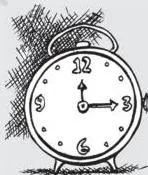
Two activities sharpen the idea (Section 11.2, Do This). The minute-hand clock shows angle and time moving together: 15 minutes gives \(90^\circ\), 30 minutes gives \(180^\circ\), so \(T_1 : T_2 = A_1 : A_2 = 1 : 2\) — directly proportional. The friend–mother age table shows the opposite: both ages increase, yet the ratio \(\frac{F}{M}\) is different every time.
A map’s scale is direct proportion in real life. The scale is the fixed ratio of map distance to actual distance, so Example 5 uses \(1 : 30000000\) to turn 4 cm on the map into 1200 km between two cities.
Worked example (direct): a car covers 96 km on 8 litres of petrol.
How far will it travel on 5 litres?
Step 1 — decide the relation: more petrol means more distance in a fixed ratio, so the quantities are in direct proportion.
Step 2 — write the relation:
\[ \frac{x_1}{y_1} = \frac{x_2}{y_2} \quad \Rightarrow \quad \frac{8}{96} = \frac{5}{y_2} \]
Step 3 — solve:
\[ 8 y_2 = 5 \times 96 = 480 \quad \Rightarrow \quad y_2 = 60 \]
Final answer: the car travels 60 km on 5 litres of petrol. Check with the ratio test: \(\frac{8}{96} = \frac{5}{60} = \frac{1}{12}\).
Inverse Proportion: The Product Stays the Same
Inverse proportion is the “more means less” case: double the speed and a fixed journey takes half the time. The two quantities move in opposite directions, and their product never changes.
Zaheeda’s four ways to school (Section 11.3) make the pattern visible: walking at 3 km/h takes 30 minutes, running at 6 km/h takes 15, cycling at 9 km/h takes 10, and going by car at 45 km/h takes 2. When the speed doubles, the time halves; when the speed triples, the time drops to one third.
The time changes by the reciprocal of the speed change.
Here the book introduces the multiplicative inverse: \(2 \times \frac{1}{2} = 1\), exactly why 2 times the speed gives \(\frac{1}{2}\) the time. The fixed-budget table shows the same rule as arithmetic: with ₹6000 to spend, books at ₹40 give 150 books and books at ₹50 give 120, and \(40 \times 150 = 50 \times 120 = 6000\).
Definition (Section 11.3): \(x\) and \(y\) are in inverse proportion when \[ xy = k \]
with \(k\) constant. For two matching pairs this becomes \(x_1 y_1 = x_2 y_2\), which the book also reorders as \(\frac{x_1}{x_2} = \frac{y_2}{y_1}\) — notice the y-ratio is flipped. That flipped form is what solves Example 8 (hostel provisions) and Example 9 (wall workers).
The chapter also introduces the proportional symbol here (Section 11.3): \(x \propto y\) says \(x\) varies directly with \(y\); \(x \propto \frac{1}{y}\) says \(x\) varies inversely with \(y\).
Worked example (inverse): 4 pumps of the same type fill a tank in 9 hours.
How long will 6 pumps take?
Step 1 — decide the relation: more pumps means less time for the same job, so the quantities are in inverse proportion.
Step 2 — write the relation:
\[ x_1 y_1 = x_2 y_2 \quad \Rightarrow \quad 4 \times 9 = 6 \times t \]
Step 3 — solve:
\[ t = \frac{4 \times 9}{6} = 6 \]
Final answer: 6 pumps fill the tank in 6 hours. Check with the product test: \(4 \times 9 = 36\) and \(6 \times 6 = 36\).
Direct or Inverse? Two Quick Tests That Decide
Both exercises keep handing you a table of values and asking which proportion it is. Two arithmetic tests settle every table.
- Ratio test: divide each \(y\) by its matching \(x\). If the quotient is the same for every row, the relation is direct proportion.
- Product test: multiply each \(x\) by its matching \(y\). If the product is the same for every row, the relation is inverse proportion.
- If both tests fail, the quantities are not in proportion at all.
| Relation | Test | Condition | Chapter example |
|---|---|---|---|
| Direct proportion | Divide: \(\frac{x}{y}\) | Same value for every row | Petrol and distance: \(\frac{x}{y} = \frac{1}{15}\) |
| Inverse proportion | Multiply: \(xy\) | Same value for every row | Book price and count: \(40 \times 150 = 6000\) |
| Neither | Both tests fail | Ratios differ and products differ | Parking charges, Exercise 11.1 Q1 |
See the method on a fresh set. Decide whether \(x = 2, 4, 6, 8\) and \(y = 36, 18, 12, 9\) are in proportion.
Ratio test: \(\frac{2}{36} = \frac{1}{18}\) but \(\frac{4}{18} = \frac{2}{9}\) — the quotients differ, so it is not direct proportion.
Product test: \(2 \times 36 = 72\), \(4 \times 18 = 72\), \(6 \times 12 = 72\), \(8 \times 9 = 72\) — the product is constant, so it is inverse proportion with \(k = 72\).
For practice, the Try These after Section 11.2 asks which \(x\)–\(y\) tables are directly proportional, and the Try These inside Section 11.3 asks which pairs are in inverse proportion. Do both before the exercises.
Reading the Figures: From the Sugar Table to the Paper Fold
Each diagram in the chapter shows one of the two tests working. Walk through them in order, and the tables in the exercises will feel familiar.
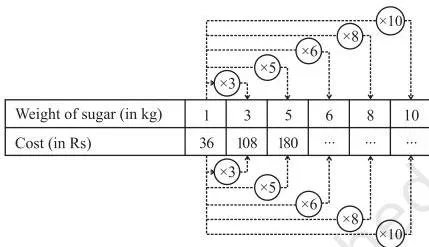
The sugar table is the chapter’s first proof of direct proportion: 1 kg costs ₹36, 3 kg costs ₹108, and the pattern continues — 5 kg costs ₹180 and 8 kg costs ₹288. Divide cost by weight in any row and the quotient is always 36, which is the constant \(k\).
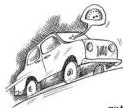
This is the petrol–distance table: 4 litres cover 60 km and 12 litres cover 180 km. The caption is thin, but the test is in the numbers — \(\frac{x}{y} = \frac{1}{15}\) in every column, so 8 litres gives 120 km, 15 litres gives 225 km, 20 litres gives 300 km and 25 litres gives 375 km.
This activity is the chapter’s trap-killer. A friend’s age and the mother’s age both increase together, yet \(\frac{F}{M}\) comes out different for “five years ago”, “present” and “after five years” — the book answers its own question with “No!”. Increasing together is necessary for direct proportion but not enough. (Section 11.2, Do This)
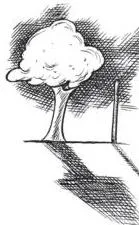
Example 2 solves the pole-and-shadow problem a second way with this reordering: instead of \(\frac{14}{10} = \frac{x}{15}\), it writes \(14 : x = 10 : 15\) and solves \(10 \times x = 15 \times 14\). Both routes give the same 21 m for the tree height; the figure shows the two forms are the same statement.

The map activity (Section 11.2, Do This) asks you to read the scale printed on a state map, measure the distance between two cities with a ruler, and multiply by the scale to find the real distance. The multiplication works because the scale is a constant ratio — direct proportion.
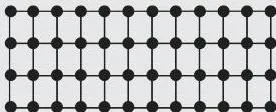
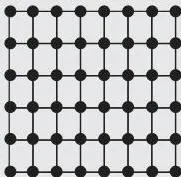

The counters activity (Section 11.3, Do This) is inverse proportion you can touch. Fewer rows mean more columns: \(4 \times 12 = 48\) and \(6 \times 8 = 48\). The table completes the pattern — 2 rows give 24 columns, 3 rows give 16, 8 rows give 6 — and the product never leaves 48.
This is Example 9’s table: a wall that 15 workers build in 48 hours needs how many workers for 30 hours? More workers means fewer hours, so \(48 \times 15 = 30 \times y\), giving \(y = 24\). Fix the two value pairs in the correct columns before multiplying.

The final activity (Section 11.3, Do This) asks why folding a paper is inverse proportion. One fold gives 2 parts of half area, two folds give 4 parts of quarter area — in every row, parts × area of each part equals the whole paper, so the product stays constant.
Key Terms: Direct Proportion, Inverse Proportion and the Constant k
Quick-reference definitions in the order the chapter introduces them.
| Term | Meaning | Where the chapter introduces it |
|---|---|---|
| Direct proportion | Two quantities whose ratio is constant: \(\frac{x}{y} = k\), also written \(x = ky\) | Section 11.2 |
| Constant of proportionality (\(k\)) | The fixed ratio (direct) or fixed product (inverse) that every matching pair must give | Sections 11.2 and 11.3 |
| Inverse proportion | Two quantities whose product is constant: \(xy = k\) | Section 11.3 |
| Multiplicative inverse (reciprocal) | A number paired with its reciprocal: \(2 \times \frac{1}{2} = 1\) | Section 11.3 |
| Proportional symbol (\(\propto\)) | \(x \propto y\) means direct variation; \(x \propto \frac{1}{y}\) means inverse variation | Section 11.3 |
| Scale of a map | The constant ratio of map distance to actual distance, e.g. \(1 : 30000000\) | Example 5 |
Common Mistakes in Direct and Inverse Proportion Problems
Every mistake below is one the chapter’s own activities and exercises are designed to catch. Name the wrong move before you make it.
| Mistake | Correct rule | How to check your answer |
|---|---|---|
| Both quantities increased, so it must be direct proportion | Increase alone is not enough — the ratio \(\frac{x}{y}\) must be constant | Repeat the friend–mother age test: both ages rise, yet \(\frac{F}{M}\) keeps changing |
| Checking only the first rows of a table | The constant must hold for every row | Try These (iii): \(\frac{15}{5} = 3\) holds for three rows, then \(\frac{60}{15} = 4\) — the relation breaks, so it is not direct |
| Parking charges: time and charge both rise, so they are in proportion | Ratios must be equal: \(\frac{60}{4} = 15\) but \(\frac{100}{8} = 12.5\), so they are not in direct proportion | Divide every charge by its time and compare all the results (Exercise 11.1 Q1) |
| Mixing units in the table | Convert first: 1 hour = 60 minutes; \(2\frac{1}{2}\) kg = 2500 g; \(12 \times 10^{7}\) cm = 1200 km | Write every value with its unit before setting up the equation (Examples 3, 4 and 5) |
| Inverting the wrong ratio in an inverse problem | Use \(x_1 y_1 = x_2 y_2\), or \(\frac{x_1}{x_2} = \frac{y_2}{y_1}\) — the y-values are swapped, not the x-values | Substitute both pairs and confirm both sides give the same \(k\) |
Exam Notes: The Two Formulas and the Question Shapes to Practise
Under test conditions the chapter comes down to two formulas. Write the right one down before substituting any numbers — writing it forces you to declare which proportion you are in.
- Direct proportion: \(\frac{x_1}{y_1} = \frac{x_2}{y_2}\)
- Inverse proportion: \(x_1 y_1 = x_2 y_2\), equivalently \(\frac{x_1}{x_2} = \frac{y_2}{y_1}\)
The exercises show the three question shapes you will meet.
- Check-the-table: decide whether a given set of values is proportional — Exercise 11.1 Q1 (parking charges) and Exercise 11.2 Q1 (five situations to classify).
- Complete-the-table: fill missing values using the constant ratio or product — Exercise 11.1 Q2 (paint base), Exercise 11.2 Q2 (prize money) and Q3 (wheel spokes).
- One-step word problems: the rest of both exercises — bottles, bacteria, ship model, sugar crystals, road map, poles, truck, sweets, cattle, rewiring, boxes, machines, car speed, windows and school periods.
For any word problem, ask one question first: “If this quantity doubles, does the other double or halve?” Double means direct proportion; halve means inverse. A full answer states the relation, substitutes the matching columns, and ends with the answer and its unit.
One clarification the book raises (Think, Discuss and Write, after Section 11.2): with principal and rate fixed, simple interest is in direct proportion with the time period, because \(\frac{P \times r \times t}{100}\) grows in a constant ratio with \(t\).
Compound interest is not, because \(P(1 + \frac{r}{100})^t – P\) does not grow in a constant ratio — each year’s interest earns interest itself.
Textbook contents and the examinable syllabus are not always identical — check the current official syllabus before you decide what to revise.
What Have We Discussed? The Chapter’s Two Rules
This is the night-before version of the chapter’s closing recap (the section called What Have We Discussed?), rebuilt in plainer words.
- Direct proportion: \(x\) and \(y\) vary directly when they increase (or decrease) together keeping the ratio constant — \(\frac{x}{y} = k\) with \(k\) positive, so \(\frac{x_1}{y_1} = \frac{x_2}{y_2}\).
- Inverse proportion: \(x\) and \(y\) vary inversely when an increase in one causes a proportional decrease in the other, keeping the product constant — \(xy = k\), so \(x_1 y_1 = x_2 y_2\), or \(\frac{x_1}{x_2} = \frac{y_2}{y_1}\).
Your one-line decision rule: double \(x\) and watch \(y\). If \(y\) doubles, direct; if \(y\) halves, inverse. And before substituting, put every value in the same unit — minutes, not hours; grams, not kilograms; kilometres, not centimetres.
Related Chapters and Resources
This listing is maintained for the 2026-27 academic session using the NCERT textbook information available to us. NCERT remains the authority for confirming the latest edition.
If you are working through the Class 8 Mathematics book in order, Direct and Inverse Proportions comes right after Exponents and Powers and before Factorisation.
- Exponents and Powers — the previous chapter
- Factorisation — the next chapter
- Class 8 Mathematics notes
- Class 8 hub — all subjects
- CBSE notes home
Sources and Data Verification
The sections, figures and questions described on this page come from the NCERT Class 8 Mathematics textbook, Chapter 11 “Direct and Inverse Proportions”, official edition on ncert.nic.in. This page is maintained for the current NCERT edition. NCERT settles textbooks, editions and PDFs; CBSE settles curriculum, syllabus and examinations.
Textbook contents and the examinable syllabus are not always identical — check the current official syllabus.
| What the chapter holds | Count | Where it is used |
|---|---|---|
| Printed pages | 16 | |
| Sections in the chapter | 3 | |
| Figures with NCERT captions | 10 | |
| Tables | 28 | |
| Worked examples | 3 | solved step by step in our NCERT Solutions |
| Exercise questions | 21 | answered in our NCERT Solutions |
| In-text questions | 2 | |
| Official NCERT PDF | Download the chapter PDF | the chapter exactly as NCERT publishes it |
Frequently Asked Questions
How do I check whether two quantities are in direct proportion or inverse proportion?
Run the two tests on the matching values. Divide: if \(\frac{x}{y}\) is the same for every row, the quantities are in direct proportion. Multiply: if \(xy\) is the same for every row, they are in inverse proportion. If both tests fail, there is no proportion.
For a word problem, ask what doubling does: if the other quantity doubles, direct; if it halves, inverse.
Are the parking charges in Exercise 11.1 in direct proportion to the parking time?
No. The charges rise with time, but the ratio of charge to time is not constant: \(\frac{60}{4} = 15\) for 4 hours, while \(\frac{100}{8} = 12.5\) for 8 hours. Because the ratios differ, the parking charges are not in direct proportion to the parking time.
Why are a person’s age and their mother’s age not in direct proportion?
Because the ratio of the two ages keeps changing. Five years ago, today and five years from now, both ages increase, but \(\frac{\text{friend’s age}}{\text{mother’s age}}\) is different every time. Direct proportion demands a constant ratio — two quantities that merely increase together are not enough.
What do the symbols ‘x varies as y’ and ‘x varies as 1/y’ mean?
\(x \propto y\) means \(x\) varies directly with \(y\), so \(x = ky\) for a constant \(k\). \(x \propto \frac{1}{y}\) means \(x\) varies inversely with \(y\), so \(x = \frac{k}{y}\), or \(xy = k\). The symbol \(\propto\) is shorthand the book introduces in Section 11.3; you still solve with \(x = ky\) and \(xy = k\).
Is simple interest in direct proportion with time, and is compound interest too?
Simple interest is in direct proportion with time. For principal ₹1000 at 8% per annum, the interest is ₹80, ₹160 and ₹240 for 1, 2 and 3 years, and \(\frac{\text{interest}}{\text{time}} = 80\) stays constant. Compound interest is not: it is ₹80, ₹166.40 and ₹259.71 for the same periods, and dividing by time gives 80, 83.2 and 86.57.
The reason is that each year’s compound interest earns its own interest, so its growth is not in a fixed ratio with time.
What does a map scale like 1 cm : 8 km mean in proportion terms?
It means 1 cm on the map stands for 8 km on the ground, and the ratio of map distance to actual distance is constant at \(1 : 800000\). So 2 cm on the map represents 16 km, 3 cm represents 24 km, and so on — this is direct proportion, with the scale acting as the constant \(k\).
Reference: NCERT Class 8 Mathematics textbook, chapter 11, official edition on ncert.nic.in.
Explore Class 8 Mathematics Books
- Previous: Exponents and Powers
- Next: Tales by Dots and Lines
Related chapters:
- A Square and a Cube
- Rational Numbers
- Power Play