
This is Chapter 5 of NCERT’s Class 10 Geography book Contemporary India II — “Minerals and Energy Resources”, the chapter on where India’s minerals are, how they form, and how the country generates energy. The chapter runs about 16 printed pages, beginning at NCERT page 41, and the official PDF is right below.
The rest of this page walks you through the chapter section by section, with page references so you can jump straight to what you need.
Download the Chapter 5 PDF
The file you searched for is the official chapter, published by NCERT on its own website. Open it to read or print the chapter exactly as it appears in the book, including the map of India’s mineral distribution and the energy photographs.
NCERT Class 10 Social Science Contemporary India II Chapter 5 Minerals and Energy Resources PDF — this is the official edition from ncert.nic.in. Once it opens, you can confirm it is the right file: the chapter begins at NCERT page 41 and runs to about page 56, closing with the exercises and the crossword.
Chapter 5 at a Glance
Before you read the full chapter, here is its shape — how it opens, what it builds up to, and how it ends.
- Opening (p. 41): Haban arrives in Guwahati from a remote village and asks his father why city buses and trains “move” while village houses do not. The answer: metal and energy.
- Block one — what minerals are (pp. 41-43): the definition of a mineral, what an ore is, and the five forms in which minerals occur.
- Block two — India’s minerals (pp. 43-48): the classification of minerals, the four iron ore belts, and the distribution of manganese, copper, bauxite, limestone and mica.
- Block three — the cost of mining (pp. 48-49): hazards of mining, the Jharia coal-fire newspaper clippings, and why minerals must be conserved.
- Block four — energy (pp. 49-55): conventional sources (coal, petroleum, natural gas, electricity) and non-conventional sources (nuclear, solar, wind, biogas, tidal, geothermal).
- Closing (pp. 55-57): the multiple-choice and short-answer exercises, plus a crossword revising the chapter’s minerals.
The chapter also scatters “Dig a little deeper” prompts and small activities — collect nutritional facts from food labels, list river valley projects, locate bauxite mines on a map. Treat them as revision tools; they practise the same skills the exercises test.
What This Chapter Covers: From Toothpaste to Thermal Power
This is a guided tour with page references so you can jump straight to the part you are studying or revising.
- The toothpaste hook (p. 41): the chapter opens by listing the minerals inside toothpaste — silica, limestone and aluminium oxide for cleaning, fluorite for fluoride, titanium oxide for whiteness, mica for the sparkle.
- Definition and the geographer–geologist contrast (pp. 41-42): geologists study mineral formation, age and composition; geographers study distribution and the economic activity around minerals.
- The five modes of occurrence (pp. 42-43): veins and lodes, beds and layers, residual weathered material, placer deposits, and ocean waters and beds.
- Ferrous minerals and the four iron ore belts (pp. 43-45): magnetite and hematite, then the four belts with their mines and ports.
- Manganese, copper and bauxite (pp. 45-47): what each metal is used for and where India mines it.
- Limestone and mica (pp. 47-48): the rock minerals and the non-metallic mineral with the Koderma mica belt.
- Hazards of mining and the coal-fire clippings (pp. 48-49): what mining costs miners and the environment, with Jharia and BCCL as evidence.
- Conservation of minerals (p. 49): minerals are finite and non-renewable; recycling and substitutes are the way forward.
- Conventional energy (pp. 49-52): the four coal types, petroleum, natural gas and electricity.
- Non-conventional energy (pp. 53-55): nuclear, solar, wind, biogas, tidal and geothermal sources with their Indian locations.
- Conservation of energy and exercises (pp. 55-57): “energy saved is energy produced”, then the questions and crossword.
The chapter sits mid-way through the book’s geography section: Chapter 6, Manufacturing Industries, builds directly on it, because industries locate where minerals and energy are available.
Key Concepts: What a Mineral Is and How It Occurs
Why does the chapter start with definitions? Because every later fact — the belts, the mines, the ports — depends on knowing how minerals form and what separates a deposit from a mine.
A mineral is a homogenous, naturally occurring substance with a definable internal structure (NCERT, p. 41). Rocks are combinations of minerals: limestone is the rare rock made of a single mineral, while most rocks hold several minerals in varying proportions.
The same elements form different minerals under different pressure, temperature and chemical conditions. That is why minerals range from the hardest diamond to the softest talc, and why geologists classify them by colour, hardness, crystal form, lustre and density (NCERT, p. 41).
Geographers and geologists study minerals differently: geographers see them as part of the earth’s crust and track their distribution and economic use; geologists focus on formation, age and physical and chemical composition (NCERT, p. 42).
An ore is an accumulation of a mineral mixed with other elements, concentrated enough that extraction is commercially viable (NCERT, p. 42). The mineral content must cover the cost of mining — that is what turns a deposit into a mine.
The mode of occurrence matters because it decides how easily an ore can be mined and what extraction costs (NCERT, p. 42). Ease of extraction, concentration of the ore and nearness to the market all affect whether a reserve is worked at all.
Minerals occur in five main forms (NCERT, pp. 42-43):
- Veins and lodes — in cracks, crevices, faults and joints of igneous and metamorphic rocks. Molten or gaseous mineral matter was forced upward, then cooled and solidified. Tin, copper, zinc and lead come from these.
- Beds and layers — in horizontal strata of sedimentary rocks, concentrated by deposition over long periods under heat and pressure. Coal and some iron ore; gypsum, potash salt and sodium salt form by evaporation in arid regions.
- Residual mass of weathered material — surface rocks decompose and soluble constituents are removed, leaving the ore behind. Bauxite forms this way.
- Placer deposits — alluvial sands in valley floors and at the base of hills, holding minerals water does not corrode: gold, silver, tin and platinum.
- Ocean waters and beds — common salt, magnesium and bromine from seawater, and manganese nodules on the ocean beds.
The chapter adds one more early fact: minerals are only about 0.3 per cent of our nutrient intake, yet without them the other 99.7 per cent of food cannot be used (NCERT, p. 41).
Classification of Minerals: Ferrous, Non-Ferrous, Rock and Non-Metallic
Minerals are classified by their composition, and the split matters because ferrous minerals — minerals containing iron — account for about three-fourths of the total value of India’s metallic mineral production (NCERT, p. 43). Non-ferrous minerals include copper, bauxite, lead, zinc and gold; rock minerals and non-metallic minerals cover limestone and mica.
Iron ore is “the basic mineral and the backbone of industrial development” (NCERT, p. 43). India has two important ores:
- Magnetite — the finest ore, up to 70 per cent iron, with magnetic qualities valuable in the electrical industry.
- Hematite — the most important industrial ore by quantity used, at 50-60 per cent iron.
In 2026-27 almost the entire production — 97 per cent — came from Odisha, Chhattisgarh, Karnataka and Jharkhand (NCERT, p. 43). The four belts below are prime map-revision material.
| Iron ore belt | States | Key mines / districts | Export port | Distinguishing fact |
|---|---|---|---|---|
| Odisha-Jharkhand | Odisha, Jharkhand | Badampahar (Mayurbhanj, Kendujhar); Gua and Noamundi (Singhbhum) | — | High-grade hematite ore |
| Durg-Bastar-Chandrapur | Chhattisgarh, Maharashtra | Bailadila range, Bastar district (14 deposits) | Vishakhapatnam | Super high-grade hematite with the best physical properties for steel making; exported to Japan and South Korea |
| Ballari-Chitradurga-Chikkamagaluru-Tumakuru | Karnataka | Kudremukh, Western Ghats | Mangaluru (slurry pipeline) | 100 per cent export unit; among the largest deposits in the world |
| Maharashtra-Goa | Goa, Ratnagiri district of Maharashtra | — | Marmagao | Ore not of very high quality but efficiently exploited |
The chapter gives the two odd names a memory hook: Kudre means “horse” in Kannada, and the highest peak in the Western Ghats of Karnataka resembles a horse’s face, so the mines are called Kudremukh (NCERT, p. 44). The Bailadila hills look like the hump of an ox, which is where that name comes from.
Seeing the shape once fixes both names for good.

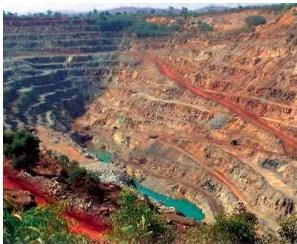
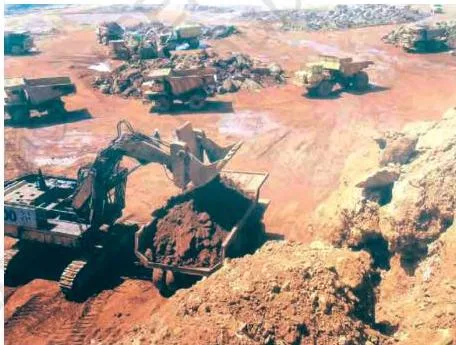
The photograph captioned simply Iron ore mine (NCERT, p. 45) is the chapter’s visual anchor for the belts — a working site where hematite of the kind described above is extracted.
Manganese belongs to the ferrous group too — about 10 kg of it is needed for every tonne of steel, and it is also used in bleaching powder, insecticides and paints (NCERT, p. 44).
Now study the distribution map of iron ore, manganese, bauxite and mica (NCERT, p. 46). All four minerals cluster in the peninsular block of India.
That single observation answers the chapter’s later question about why the Chota Nagpur plateau is a “storehouse of minerals”: peninsular rocks carry most of India’s coal, metallic minerals and mica, while the petroleum lies in the sedimentary flanks of Gujarat and Assam (NCERT, p. 43).
Copper is where the chapter turns cautious: India is critically deficient in copper reserves and production (NCERT, p. 46). Being malleable, ductile and a good conductor, copper drives electrical cables, electronics and chemicals. The leading producers are the Balaghat mines in Madhya Pradesh, the Khetri mines in Rajasthan and the Singhbhum district of Jharkhand.
Bauxite is the clay-like ore from which alumina and then aluminium are obtained. Aluminium matters because it combines the strength of iron with extreme lightness, good conductivity and great malleability (NCERT, p. 46). India’s deposits lie on the Amarkantak plateau, the Maikal hills and the Bilaspur-Katni plateau region.
Odisha was the largest bauxite-producing state in 2026-27, anchored by the Panchpatmali deposits in Koraput district (NCERT, p. 47).
Limestone is the chapter’s rock mineral — the basic raw material for the cement industry and essential for smelting iron ore in the blast furnace (NCERT, p. 47).
Mica is the star non-metallic mineral (NCERT, pp. 47-48): it splits into sheets thin enough that a thousand layers measure only a few centimetres, and its di-electric strength and resistance to high voltage make it indispensable in electric and electronic industries.
The Koderma Gaya-Hazaribagh belt of Jharkhand is the leading producer; the Ajmer area of Rajasthan and the Nellore belt of Andhra Pradesh also produce it.
Hazards of Mining and Why Minerals Must Be Conserved
The chapter turns from what minerals give us to what mining costs — the health of miners and the environment (NCERT, p. 48). The harms come in three groups:
- Miners’ health: dust and noxious fumes cause pulmonary diseases; collapsing mine roofs, inundation and fires in coal mines are a constant threat.
- Water: mining contaminates the water sources of the region.
- Land: dumping waste and slurry degrades land and soil and increases stream and river pollution.
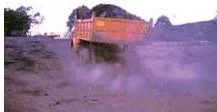
The photograph above is the chapter’s visual proof of the first hazard — the dust is not an inconvenience; it is lung disease in the making for the miners who breathe it (NCERT, p. 48).
The chapter then lets newspaper clippings from 1990 make the case for strict mining laws (NCERT, pp. 48-49). The Jharia coal fire in Dhanbad had burned underground for years, forcing a plan to relocate the whole township. A BCCL safety audit found that over half the coal-belt mines did not meet basic safety standards.
And the Supreme Court ordered coal companies to pay hundreds of crores as compensation for using forest land.
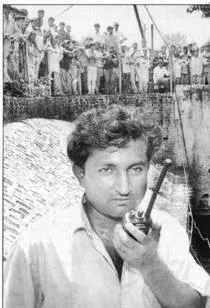
The clipping reproduced above records that same audit — BCCL’s grading of its mines. The chapter’s own conclusion from this dossier is the line to remember: stricter safety regulations and implementation of environmental laws are essential to prevent mining from becoming a “killer industry” (NCERT, p. 49).
Why conservation matters (NCERT, p. 49): workable mineral deposits are an insignificant fraction — about one per cent — of the earth’s crust, and they took millions of years of slow geological processes to form. Consumption is racing far ahead of replenishment, so minerals are finite and non-renewable. Extraction also gets costlier with depth and falling quality.
The chapter’s remedy is planned, sustainable use: improved technology to work low-grade ores at low cost, plus recycling of metals, scrap and substitutes (NCERT, p. 49). One misconception to clear — conservation here is not just “use less”; it is recycle, substitute and mine smarter.
Energy Resources: Conventional and Non-Conventional Sources
Energy is the second half of the chapter’s title, and the chapter splits it into conventional and non-conventional sources (NCERT, p. 49). Conventional sources are firewood, cattle dung cake, coal, petroleum, natural gas and electricity — both hydel and thermal. Non-conventional sources are solar, wind, tidal, geothermal, biogas and atomic energy.
Firewood and cattle dung cake still meet more than 70 per cent of rural household energy needs, but shrinking forests and the waste of valuable manure make that dependence a problem (NCERT, p. 49).
Coal is India’s most abundantly available fossil fuel. The chapter arranges the four grades as a maturity ladder (NCERT, p. 50):
- Peat — formed first from decaying plants in swamps; low carbon, high moisture, low heating capacity.
- Lignite — low-grade brown coal, soft with high moisture; principal reserves at Neyveli in Tamil Nadu, used for electricity generation.
- Bituminous — buried deep and heated further; the most popular commercial coal. High-grade bituminous is metallurgical coal, special for smelting iron in blast furnaces.
- Anthracite — the highest quality hard coal.
India’s coal belongs to two geological ages: Gondwana coal, a little over 200 million years old, in the Damodar valley (Jharia, Raniganj, Bokaro) and the Godavari, Mahanadi, Son and Wardha valleys; and Tertiary coal, about 55 million years old, in the north-eastern states of Meghalaya, Assam, Arunachal Pradesh and Nagaland (NCERT, p. 50). The map below shows that split.

There is a locational logic here that answers many exam questions: coal is bulky and loses weight on use as it turns to ash, so heavy industries and thermal power stations locate on or near the coalfields (NCERT, p. 51).
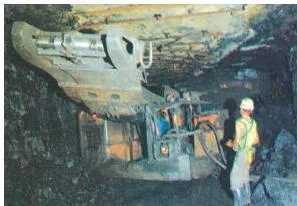
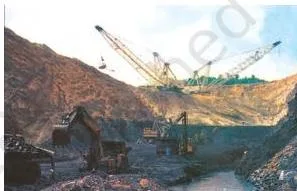
The pair of coal-mine photographs on NCERT page 50 sets the scene — one shows the dark underground working where coal is cut, the other the open site around it. They also give you the visual for the hazards section: the collapsing roofs and fires the chapter warns about happen inside the space of the first photograph.
Petroleum is India’s next major energy source after coal. It occurs in anticlines and fault traps in tertiary-age rocks: in an upfold, oil collects in the crest beneath a non-porous layer, and in fault traps it sits between porous and non-porous rocks with gas usually above it (NCERT, p. 51).
The major production areas are Mumbai High, Gujarat — where Ankleshwar is the most important field — and Assam, the oldest oil-producing state, with Digboi, Naharkatiya and Moran-Hugrijan as its key fields.
Natural gas is found with petroleum and released when crude oil reaches the surface. It fuels power generation, industry, chemicals and cooking, and is spreading as CNG for vehicles and PNG for homes.
The first 1,700 km Hazira-Vijaipur-Jagdishpur (HVJ) pipeline, built by GAIL, is the classic fact; India’s cross-country gas network has since grown to about 18,500 km, with new reserves found in the Krishna-Godavari basin (NCERT, p. 51).
Electricity is generated in two ways: hydro electricity, from fast-flowing water driving turbines, and thermal power, from burning coal, petroleum or natural gas (NCERT, p. 52). Hydro uses a renewable resource; thermal burns non-renewable fossil fuels. Because electricity has such wide application, its per-capita consumption is treated as an index of development.

The map of nuclear and thermal power plants on pages 52-53 accompanies the chapter’s instruction to locate the six nuclear power stations. Use it exactly that way in revision — the locate question tests map reading as much as memory.
Why do non-conventional sources exist? Rising oil and gas prices, possible shortages and the environmental damage of fossil fuels all push India toward renewables — and India has an abundance of sunlight, water, wind and biomass (NCERT, p. 53).
| Source | Type | What the chapter says | Indian location / example |
|---|---|---|---|
| Firewood, cattle dung cake | Conventional | Over 70% of rural household energy; shrinking forests and wasted manure are the problems | Rural India generally |
| Coal | Conventional | Most abundant fossil fuel; four grades from peat to anthracite | Damodar valley: Jharia, Raniganj, Bokaro; Neyveli lignite (Tamil Nadu) |
| Petroleum | Conventional | Fuel, lubricants, raw materials; refineries are a nodal industry | Mumbai High; Ankleshwar (Gujarat); Digboi, Naharkatiya, Moran-Hugrijan (Assam) |
| Natural gas | Conventional | Found with petroleum; CNG and PNG; HVJ pipeline grew from 1,700 km to about 18,500 km | Mumbai High and allied fields; Krishna-Godavari basin |
| Electricity | Conventional | Per-capita consumption as an index of development; hydel and thermal | Multi-purpose projects: Bhakra Nangal, Damodar Valley Corporation, Kopili |
| Nuclear / atomic | Non-conventional | Energy released by altering the structure of atoms | Uranium in Jharkhand; thorium in the Aravalli ranges and the monazite sands of Kerala |
| Solar | Non-conventional | Photovoltaic technology converts sunlight directly to electricity; popular in rural and remote areas | Big solar plants across India; solar dairy equipment (Fig 5.10) |
| Wind | Non-conventional | Largest wind farm cluster from Nagarcoil to Madurai; Jaisalmer well known | Tamil Nadu, Andhra Pradesh, Karnataka, Gujarat, Kerala, Maharashtra, Lakshadweep |
| Biogas | Non-conventional | Decomposition of organic waste; gobar gas plants give energy plus improved manure | Municipal, cooperative and individual plants in rural India |
| Tidal | Non-conventional | Floodgate dams across inlets trap high-tide water to drive turbines | Gulf of Khambhat, Gulf of Kuchchh (Gujarat); Sunderban delta (West Bengal) |
| Geothermal | Non-conventional | Heat from Earth’s interior turns groundwater to steam that drives turbines | Manikaran, Parvati valley (Himachal Pradesh); Puga Valley (Ladakh) |
Two details from the non-conventional list are easy exam targets. Nuclear or atomic energy is released by altering the structure of atoms; uranium comes from Jharkhand and thorium from the Aravalli ranges of Rajasthan and the monazite sands of Kerala (NCERT, p. 53).
Geothermal energy works where the earth’s interior heat turns groundwater to steam; India’s two experimental projects are at Manikaran in the Parvati valley of Himachal Pradesh and in the Puga Valley, Ladakh (NCERT, p. 54).
The chapter closes its energy half with the slogan “energy saved is energy produced” (NCERT, p. 55): use public transport, switch off electricity when not in use, adopt power-saving devices, and shift to non-conventional sources.
Reading the Chapter’s Figures and Maps

The chapter’s figures are not decoration — several carry the answers to its map and locate questions. Here is how to read the three kinds you will meet.
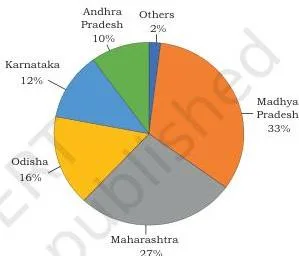
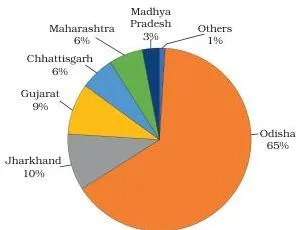
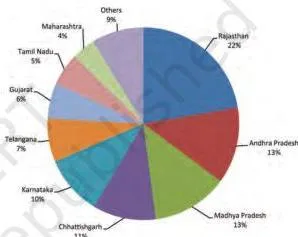
State-wise production share figures. Figures 5.3 (manganese), 5.5 (bauxite) and 5.7 (limestone) each show the state-wise share in per cent of India’s production for 2026-27. Read them the same way: the state with the largest share dominates that mineral’s output, so the figure tells you which states to name in a distribution answer.
For manganese, the figure sits next to the text fact that the metal is essential to steel making — about 10 kg per tonne (NCERT, p. 45). The production-share figure adds the distribution half of that answer.
For bauxite, pair the figure with the sentence beside it: Odisha produced the largest share in 2026-27, led by the Panchpatmali deposits in Koraput district (NCERT, p. 47). The figure is your state answer; Panchpatmali is your location answer.
For limestone, the figure accompanies the rock mineral’s uses — cement and blast-furnace smelting (NCERT, p. 48). The chapter does not expect you to memorise every state’s percentage; it wants you to read the distribution and connect it to the mineral’s industrial use.
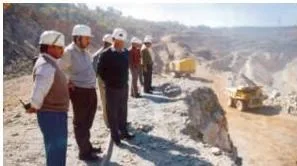
Location photographs. Figure 5.4 shows the copper mines at Malanjkhand, the visual anchor for the leading copper producers named in the text — Balaghat, Khetri and Singhbhum (NCERT, p. 46). Figure 5.6 shows a bauxite mine, illustrating the surface deposits of the Amarkantak plateau, Maikal hills and Bilaspur-Katni region (NCERT, p. 47).
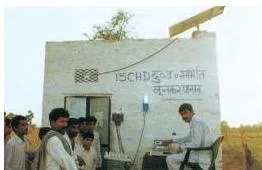
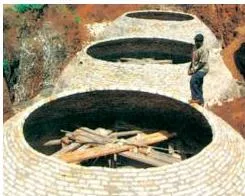
Energy photographs. The three non-conventional energy photographs all demonstrate rural India (NCERT, pp. 54-55). Figure 5.10 shows solar-operated electronic milk testing equipment — a village dairy running on photovoltaic power, evidence for the claim that solar energy is becoming popular in rural and remote areas.
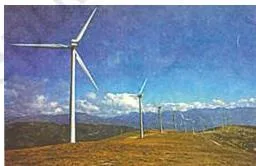
Figure 5.11 shows windmills at Nagarcoil, the southern anchor of India’s largest wind farm cluster, which runs from Nagarcoil to Madurai in Tamil Nadu. Figure 5.12 shows a biogas plant — the gobar gas unit whose twin benefit, energy and improved manure, is one of the chapter’s best-known lines.
Definitions You Need to Know, With Page References
This is a lookup table for revision speed, not new content. The book’s exact wording is in your copy; each term here is compressed to one line so you can scan it the night before.
| Term | Meaning (in brief) | NCERT page |
|---|---|---|
| Mineral | A homogenous, naturally occurring substance with a definable internal structure | p. 41 |
| Ore | An accumulation of a mineral mixed with other elements, concentrated enough for commercial extraction | p. 42 |
| Vein | A small occurrence of minerals in cracks, crevices, faults or joints of igneous/metamorphic rocks | p. 42 |
| Lode | A large occurrence of minerals in the same formations as veins | p. 42 |
| Placer deposits | Alluvial deposits in valley-floor sands, holding minerals not corroded by water (gold, silver, tin, platinum) | p. 42 |
| Ferrous minerals | Minerals containing iron; about three-fourths of the value of metallic mineral production | p. 43 |
| Magnetite | The finest iron ore, up to 70% iron, with magnetic qualities valuable in the electrical industry | p. 43 |
| Hematite | The most important industrial iron ore, 50-60% iron | p. 43 |
| Bauxite | Clay-like ore of aluminium, formed by decomposition of aluminium-silicate rocks | p. 46 |
| Mica | Non-metallic mineral splitting into thin sheets, with di-electric strength for electric/electronic industries | pp. 47-48 |
| Peat | First stage of coal: low carbon, high moisture, low heating capacity | p. 50 |
| Lignite | Low-grade brown coal, soft with high moisture; principal reserves at Neyveli (Tamil Nadu) | p. 50 |
| Bituminous coal | Most popular commercial coal; high-grade bituminous is metallurgical coal for smelting iron | p. 50 |
| Anthracite | The highest quality hard coal | p. 50 |
| Conventional sources | Firewood, cattle dung cake, coal, petroleum, natural gas and electricity (hydel and thermal) | p. 49 |
| Non-conventional sources | Solar, wind, tidal, geothermal, biogas and atomic energy | p. 49 |
| Hydro electricity | Electricity from fast-flowing water driving turbines; a renewable resource | p. 52 |
| Thermal electricity | Electricity generated by burning coal, petroleum or natural gas; non-renewable fuels | p. 52 |
| Biogas | Gas from decomposition of organic waste; higher thermal efficiency than kerosene, dung cake and charcoal | p. 54 |
| Geothermal energy | Heat/electricity from Earth’s interior; hot groundwater turns to steam to drive turbines | p. 54 |
Common Mistakes in This Chapter (and the Correction)
The chapter’s own multiple-choice questions point at the classic confusions — the four MCQs at the end test exactly the errors students make. Here are the traps, the correction, and a way to check yourself.
| Mistake | Correct rule | How to check your answer |
|---|---|---|
| Saying Koderma leads in iron ore or bauxite | Koderma (Gaya-Hazaribagh belt, Jharkhand) is the leading producer of mica | Associate Koderma with the northern edge of the Chota Nagpur plateau, where the mica deposits sit (NCERT, p. 48) |
| Putting bauxite in the “deposited in strata” box | Bauxite forms by decomposition of rocks, leaving a residual mass of weathered material; minerals in strata are sedimentary, like coal | MCQ (i) — the word “decomposition” is the clue for bauxite (NCERT, p. 42) |
| Calling monazite sand a source of uranium | Monazite sands of Kerala are rich in thorium; uranium is found in Jharkhand | MCQ (iv) — thorium is the monazite answer (NCERT, p. 53) |
| Swapping magnetite and hematite | Magnetite is the finest ore (up to 70% iron, magnetic); hematite is the most used industrially (50-60% iron) | Remember “magnet” = magnetic = magnetite = electrical industry (NCERT, p. 43) |
| Reversing the coal ladder | Order by quality: peat → lignite → bituminous → anthracite (highest) | The crossword clue “highest quality hard coal (10)” is anthracite (NCERT, p. 50) |
| Calling electricity “non-conventional” | NCERT places electricity — both hydel and thermal — under conventional sources; nuclear/atomic energy is non-conventional | Check the chapter’s own list on p. 49 before you write |
| Thinking all Indian minerals are privately owned | Most minerals in India are nationalised; rat-hole mining in Meghalaya (family tunnels for coal) was declared illegal by the National Green Tribunal | The “Interesting Fact” box on p. 43 is the source |
How the Chapter’s Questions Test You
This maps the exercise block at the end of the chapter (pp. 55-57) — what each format demands, not a prediction of any particular exam paper.
- The four multiple-choice questions test concept recognition: (i) which mineral forms by decomposition leaving a residual mass — bauxite; (ii) what Koderma leads in — mica; (iii) which rocks hold minerals deposited in strata — sedimentary rocks; (iv) what monazite sand contains — thorium.
- The 30-word questions test distinguishing and defining: ferrous vs non-ferrous minerals; conventional vs non-conventional energy; the definition of a mineral; how minerals form in igneous and metamorphic rocks; and why we must conserve mineral resources.
- The 120-word questions test distribution and reasoned argument: describe the distribution of coal in India, and argue why solar energy has a bright future in India.
- In-text prompts are the map skills: superimpose the iron ore, manganese, coal and iron-steel maps to see the correlation; locate the six nuclear power stations; locate bauxite mines on a physical map; name river valley projects and their dams.
A full-marks short answer names a place for every claim — a mineral without a location is half an answer. And a caution: textbook contents and the examinable syllabus are not always identical, and question formats vary by year — check the current official CBSE syllabus. For revision, our Class 10 Social Science notes track the chapter-wise material.
Revision Summary: Minerals and Energy in One Page
The night-before version — the chapter’s flow compressed to its spine. Skim it, then go back to any line you cannot yet say aloud.
- Definitions: a mineral is a homogenous, naturally occurring substance with a definable internal structure; an ore is a mineral accumulation concentrated enough to mine commercially (pp. 41-42).
- Five modes of occurrence: veins/lodes (igneous and metamorphic); beds/layers (sedimentary); residual weathered mass (bauxite); placer deposits (gold, silver, tin, platinum); ocean waters and beds (salt, magnesium, bromine, manganese nodules) (pp. 42-43).
- Classification: ferrous (three-fourths of metallic value), non-ferrous (copper, bauxite), rock minerals (limestone), non-metallic (mica) (pp. 43-48).
- Iron ore: magnetite finest (up to 70 per cent, magnetic); hematite most used (50-60 per cent). Four belts: Odisha-Jharkhand; Durg-Bastar-Chandrapur (Bailadila, exported via Vishakhapatnam); Ballari-Chitradurga-Chikkamagaluru-Tumakuru (Kudremukh, slurry pipeline to Mangaluru); Maharashtra-Goa (Marmagao) (pp. 43-45).
- Other minerals: manganese for steel (about 10 kg per tonne); copper — India critically deficient (Balaghat, Khetri, Singhbhum); bauxite — Odisha largest, Panchpatmali in Koraput; limestone — cement and blast-furnace smelting; mica — Koderma Gaya-Hazaribagh belt (pp. 44-48).
- Hazards: pulmonary diseases from dust and fumes; roof collapse, inundation and fires; water contamination; land degradation. The Jharia coal fire led to the “killer industry” warning (pp. 48-49).
- Conservation of minerals: workable deposits are about one per cent of the crust; formation takes millions of years; finite and non-renewable — so recycle, use scrap and substitutes, work low-grade ores with better technology (p. 49).
- Energy split: conventional (firewood, dung cake, coal, petroleum, natural gas, electricity — hydel and thermal) vs non-conventional (solar, wind, tidal, geothermal, biogas, atomic) (p. 49).
- Coal ladder: peat → lignite (Neyveli) → bituminous (metallurgical) → anthracite; Gondwana over 200 million years (Damodar valley), Tertiary about 55 million years (north-east) (p. 50).
- Petroleum and gas: anticlines and fault traps; Mumbai High, Ankleshwar, Assam (Digboi, Naharkatiya, Moran-Hugrijan); HVJ pipeline 1,700 km growing to 18,500 km (p. 51).
- Electricity: hydro (renewable) vs thermal (non-renewable); per-capita consumption as an index of development (p. 52).
- Non-conventional sources: nuclear (uranium in Jharkhand; thorium in the Aravalli ranges and Kerala’s monazite sands); solar (tropical country, photovoltaic); wind (Nagarcoil-Madurai, Jaisalmer); biogas (gobar gas — energy and manure); tidal (Gulf of Khambhat, Gulf of Kuchchh, Sunderban); geothermal (Manikaran, Puga Valley) (pp. 53-55).
- Conservation of energy: “energy saved is energy produced” (p. 55).
Related Resources
If you need another chapter from the same book, or the notes for revision, these links get you there.
- Class 10 Social Science NCERT books — the hub for the Class 10 Social Science textbooks.
- The previous chapter in Contemporary India II — Chapter 4.
- The next chapter in Contemporary India II — Chapter 6.
- Globalisation and the Indian Economy — the Economics chapter many students revise together with this one.
- CBSE revision notes for Class 10, and the main CBSE notes index.
Sources and Data Verification
Four things about where the facts on this page come from:
- The page references, figures and exercise descriptions above come from the NCERT Class 10 Social Science textbook, Contemporary India II, Chapter 5, Minerals and Energy Resources, official edition published on ncert.nic.in.
- This page covers that one chapter of that one book — not the whole CBSE Social Science scheme.
- The page is maintained for the current academic session using the NCERT information available to us. NCERT settles textbooks, editions and PDFs; CBSE settles the curriculum, syllabus and examinations.
- Where this page says a topic is worth revising, that is study guidance, not a syllabus statement — textbook contents and the examinable syllabus are not always identical.
| What the chapter holds | Count | Where it is used |
|---|---|---|
| Printed pages | 16 | |
| Figures with NCERT captions | 19 | |
| Tables | 1 | |
| Activities | 4 | |
| Official NCERT PDF | Download the chapter PDF | the chapter exactly as NCERT publishes it |
Frequently Asked Questions
What are the four iron ore belts of India?
The four belts are the Odisha-Jharkhand belt (Badampahar in Mayurbhanj and Kendujhar; Gua and Noamundi in Singhbhum), the Durg-Bastar-Chandrapur belt in Chhattisgarh and Maharashtra (Bailadila range, exported via Vishakhapatnam), the Ballari-Chitradurga-Chikkamagaluru-Tumakuru belt in Karnataka (Kudremukh, slurry pipeline to Mangaluru), and the Maharashtra-Goa belt (exported via Marmagao) (NCERT, pp. 44-45).
What is the difference between conventional and non-conventional sources of energy?
Conventional sources are the established fuels — firewood, cattle dung cake, coal, petroleum, natural gas and electricity (both hydel and thermal). Non-conventional sources are the renewable alternatives — solar, wind, tidal, geothermal, biogas and atomic energy. The chapter presents non-conventional sources as the answer to rising fossil-fuel prices, potential shortages and environmental damage (NCERT, p. 49).
Why do we need to conserve mineral resources?
Because workable mineral deposits are only about one per cent of the earth’s crust, and they formed over millions of years — so they are finite and non-renewable while consumption is rapid. The chapter’s conservation plan has four parts: recycling metals, using scrap, using substitutes, and better technology to work low-grade ores (NCERT, p. 49).
Why does solar energy have a bright future in India?
Because India is a tropical country with enormous possibilities for tapping sunlight. Photovoltaic technology converts sunlight directly into electricity, and solar energy is already popular in rural and remote areas. Large solar plants also reduce rural dependence on firewood and dung cakes, which helps environmental conservation and keeps manure for agriculture (NCERT, p. 54).
What is rat-hole mining and why was it stopped?
In Meghalaya, minerals are owned by individuals or communities, and families mined coal through long narrow tunnels known as “rat holes”. The National Green Tribunal declared the practice illegal and recommended that it be stopped forthwith (NCERT, p. 43).
Which is the finest iron ore — magnetite or hematite?
Magnetite. It is the finest iron ore, with up to 70 per cent iron and magnetic qualities valuable in the electrical industry. Hematite is the most important industrial iron ore by quantity used, at 50-60 per cent iron — students often swap the two (NCERT, p. 43).
Reference: NCERT Class 10 Social Science (Contemporary India II) textbook, chapter 5, official edition on ncert.nic.in.
Explore Class 10 Social Science Books
Related chapters: