
This is Chapter 4 of the NCERT Class 10 Economics textbook Understanding Economic Development — Globalisation and the Indian Economy — 20 printed pages, textbook pages 54 to 73. The official NCERT PDF is right below; underneath it, this page walks through what the chapter teaches, section by section, so you know exactly where every idea lives.
Get the Official Chapter PDF
The chapter traces how production, trade and investment spread across countries, and what that spread has meant for Indian producers, workers and consumers. The official file is below — open it to read the chapter in full, with its pictures, tables and exercises.
Download the Globalisation and the Indian Economy Class 10 NCERT Chapter 4 PDF — this is the exact file NCERT publishes on ncert.nic.in, containing the complete chapter text, its pictures, tables and all the exercises, and it stays open alongside this walkthrough while you study.
Prefer the whole book? The complete Understanding Economic Development textbook is on the NCERT textbook portal, the authoritative source for the current edition of every subject.
One orientation note: the PDF opens with a “Notes for the Teacher” page that explains the ideas behind each section, then comes the chapter itself. SUMMING UP, the chapter’s own recap, sits near the end on textbook p. 71, followed by the EXERCISES and a closing Additional Activity / Project.
Chapter at a Glance: What’s Inside
The table in this section lists the chapter’s holdings — its sections, figures and exercise questions — counted directly from the textbook, so you can judge its size at a glance. The chapter builds its argument in eight main sections:
| Main section | Opens on |
|---|---|
| Production Across Countries | p. 56 |
| Interlinking Production Across Countries | p. 57 |
| Foreign Trade and Integration of Markets | p. 59 |
| What Is Globalisation? | p. 61 |
| Liberalisation of Foreign Trade and Foreign Investment Policy | p. 64 |
| World Trade Organisation | p. 65 |
| Impact of Globalisation in India | p. 66 |
| The Struggle for a Fair Globalisation | p. 70 |
Two features repeat throughout and are worth using for revision: every section ends with a “Let’s Work These Out” practice box, and the chapter closes with the EXERCISES plus an Additional Activity / Project on checking everyday brands and studying one Indian industry.
How the Chapter Builds Its Argument, Section by Section
The chapter answers three questions in order: how production spread across countries, what made that spread possible, and who gained or lost inside India. Read the sections in this order and the argument builds naturally.
Production across countries (pp. 55–56)
The chapter opens with a puzzle: two decades ago Indian roads carried only a handful of car brands; today cars from nearly all the world’s top companies are sold here.
Until the middle of the twentieth century, production was largely organised within countries — what crossed borders were raw materials, food stuffs and finished products, and trade was the main channel connecting distant countries.
Then multinationals changed the picture: an MNC is a company that owns or controls production in more than one nation, and it sets up where labour and resources are cheap (NCERT, pp. 55–56).
Interlinking production across countries (pp. 57–58)
MNCs choose locations close to markets, with cheap labour and assured resources. Here the chapter defines investment — money spent to buy assets such as land, buildings, machines and other equipment — and foreign investment, which is investment made by MNCs (NCERT, p. 57).
Two examples carry the section: Cargill Foods buying up Parakh Foods, and women in Ludhiana stitching footballs for large MNCs.
Foreign trade and integration of markets (pp. 59–60)
Foreign trade lets producers reach beyond their domestic markets and gives buyers a wider choice of goods. The Chinese toys example shows what follows: within a year Chinese toys replaced Indian toys in most shops, toys became cheaper, and Indian toy-makers lost sales — markets of different countries get connected, or integrated (NCERT, pp. 59–60).
What is globalisation? (pp. 60–61)
The chapter’s definition arrives here: globalisation is the process of rapid integration or interconnection between countries (NCERT, p. 61). More goods, services, investments and technology move between countries, and MNCs play the major role in the process.
Technology and IT (pp. 61–63)
Technology is the first of the three facilitators the chapter highlights — the others are liberalisation and international organisations. Containers that move intact from ship to truck cut port costs, cheaper air transport moves more goods, and information and communication technology (IT) lets services, not just goods, be produced across countries — the London-to-Delhi magazine example shows exactly how (NCERT, pp. 62–63).
Liberalisation of foreign trade and foreign investment policy (p. 64)
A trade barrier is a government restriction, such as a tax on imports. India set up barriers after Independence to protect its new industries, then removed them to a large extent from about 1991 — and removing barriers is what the chapter calls liberalisation (NCERT, p. 64).
World Trade Organisation (pp. 64–65)
The WTO sets and enforces rules for international trade. The debate on US farm subsidies explains why developing countries argue that free trade is not the same as fair trade (NCERT, p. 65).
Impact of globalisation in India (pp. 66–69)
Winners: well-off urban consumers with more choice and lower prices, and producers with skill, education and wealth. Losers: small producers like Ravi and workers like Sushila. The section also covers the government’s steps to attract foreign investment — Special Economic Zones (SEZs) and flexibility in labour laws (NCERT, pp. 66–67).
The struggle for a fair globalisation (pp. 69–70)
The final section asks how globalisation can be made fairer: what governments can do, and what people’s organisations have already achieved. SUMMING UP on p. 71 then restates the entire argument as a checklist.
The Core Ideas: MNCs, Foreign Trade and Globalisation
The whole chapter hangs on one chain of reasoning: MNCs move production to where it is cheap; this connects countries through trade and investment; and that connection is what globalisation means. Hold that chain and every section of the chapter is a link in it.
What an MNC is, and why it moves production (pp. 56–57)
A multinational corporation (MNC) owns or controls production in more than one nation (NCERT, p. 56). It sets up offices and factories in regions where cheap labour and other resources are available, so its cost of production falls and profits rise.
The chapter’s own estimate is that spreading production across countries can mean 50–60 per cent cost savings for the MNC (NCERT, p. 56).
Worked example: one product, four countries
This illustration is ours, not the book’s — it applies the chapter’s logic (NCERT, p. 56) to a made-up sports-shoe MNC spreading one product across four countries:
- Design in Munich, Germany — where skilled engineers are available; design skill is the location’s advantage.
- Rubber from a small processor in Kerala — where the raw material is available locally.
- Assembly in a factory in Vietnam — where a young workforce keeps labour costs low.
- Customer support from a call centre in Gurugram — where educated English-speaking staff cost far less than in Europe.
Each location contributes a different advantage — skill, raw material, cheap labour, low-cost service — and together they save the company roughly a third of its cost compared with doing everything in one high-wage country. That is why production is organised in increasingly complex ways (NCERT, p. 56).
The four routes MNCs use to produce abroad (pp. 57–58)
There are four ways MNCs set up, control or produce in other countries — the chapter names all four, and its end exercise Q4 asks for exactly this list:
| Route | How it works | The chapter’s example |
|---|---|---|
| Joint production with a local company | The local company gains money for new machines and access to the MNC’s latest technology (NCERT, p. 57) | The chapter describes the two-fold benefit but names no specific company |
| Buying up local companies | The MNC uses its huge wealth to acquire an existing firm and expand production | Cargill Foods bought over Parakh Foods and is now the largest producer of edible oil in India |
| Placing orders with small producers | Small producers make the goods; the MNC sells them under its own brand and controls price, quality, delivery and labour conditions | Women at home in Ludhiana making footballs for large MNCs |
| Setting up their own factories | The MNC builds new production units where conditions suit | Ford Motors’ large plant near Chennai, set up in 1995 at a cost of Rs 1,700 crore |
The result of all four routes is the same: production in widely dispersed locations gets interlinked (NCERT, p. 58).
Why foreign trade integrates markets (pp. 59–60)
Foreign trade creates an opportunity for producers to reach beyond their domestic markets, and for buyers to choose from goods produced abroad (NCERT, p. 59).
The Chinese toys story shows the mechanism: Chinese manufacturers see toys selling at a high price in India, start exporting, and within a year 70 to 80 per cent of toy shops are selling Chinese toys at lower prices — Indian toy-makers sell much less.
When trade opens, goods travel between markets, choice rises, prices of similar goods tend to become equal, and producers separated by thousands of miles compete directly. That connecting of markets is integration of markets (NCERT, p. 60).
The precise definition of globalisation (p. 61)
Globalisation is the process of rapid integration or interconnection between countries through greater foreign trade and foreign investment by MNCs (NCERT, p. 61). Note what the definition includes: more goods, services, investments and technology moving between countries, with MNCs playing a major role.
The chapter deliberately leaves out the more complex issues of portfolio investment — buying financial assets purely to earn a return, without controlling production — so its definition stays focused on how production and markets are organised, not on financial speculation.
Trade barriers and liberalisation (p. 64)
A trade barrier is any restriction a government sets up to regulate foreign trade (NCERT, p. 64). Try this with our own numbers: an imported plastic toy costs ₹100, and a 30 per cent import tax adds ₹30, so the toy cannot be priced below about ₹130. An Indian toy at ₹120 is now cheaper, so imports fall and Indian toy-makers keep their market.
- Why India put up barriers: Indian industry was just coming up in the 1950s and 1960s; competition from imports would not have allowed these industries to grow, so India permitted only essential imports such as machinery, fertilisers and petroleum.
- Why barriers were removed (from about 1991): the government decided Indian producers should now compete with producers around the globe, believing competition would improve quality. Powerful international organisations supported the decision, and barriers were removed to a large extent.
Removing barriers or restrictions set by the government is liberalisation (NCERT, p. 64).
The WTO and the free-versus-fair debate (pp. 64–65)
The World Trade Organisation aims to liberalise international trade: it establishes rules regarding international trade and sees that these rules are obeyed (NCERT, p. 65). Started at the initiative of the developed countries, it has about 160 member countries.
Here is the unfairness the chapter exposes. Agriculture is a tiny part of the US economy — about 1 per cent of GDP and only 0.5 per cent of employment — yet US farmers receive massive government subsidies, so they can sell farm products abroad at abnormally low prices.
Developing countries, which removed trade barriers as WTO rules demanded, ask in reply: you told us to stop supporting our farmers while you kept paying yours — is this free and fair trade? (NCERT, p. 65).
That is the core distinction: free trade means no barriers at all, while fair trade means rules applied equally so that all countries can benefit. The WTO debate is exactly this conflict — free in theory, unfair in practice.
Impact on India: winners, losers and the state’s response (pp. 66–70)
The impact of globalisation has not been uniform (NCERT, p. 66).
To attract foreign investment, the government set up Special Economic Zones (SEZs) — industrial zones with world-class facilities such as electricity, water, roads, transport, storage, and recreational and educational facilities, where companies pay no taxes for an initial period of five years — and allowed flexibility in labour laws, so companies can hire workers for short periods instead of on a regular, protected basis (NCERT, p. 67).
Winners include well-off urban consumers with greater choice and lower prices, plus some top Indian companies — Tata Motors (automobiles), Infosys (IT), Ranbaxy (medicines), Asian Paints (paints) and Sundaram Fasteners (nuts and bolts) — which have emerged as multinationals themselves (NCERT, p. 67).
Losers include small producers such as Ravi, who makes capacitors in Hosur, Tamil Nadu: after restrictions on imported capacitors were removed in 2001, imported capacitors at half his price cut his production by more than half and reduced his workers from 20 to 7 (NCERT, p. 68).
Small and medium industries employ the largest number of workers in the country — 11 crore — next only to agriculture. And Sushila, a garment export worker in Delhi, went from permanent worker with health insurance, provident fund and double-rate overtime to temporary worker earning less than half her earlier wage, with none of the old benefits (NCERT, p. 69).
The government’s tools for fairer globalisation follow on pp. 69–70: implement labour laws properly, support small producers until they can compete, use trade and investment barriers when necessary, and negotiate at the WTO for fairer rules alongside other developing countries.
Key Terms: Quick Definitions with Page Numbers
Use this table when a term appears in an exercise and you need its meaning fast. Each definition is in plain words, with the textbook page where the term is introduced.
| Term | Plain meaning | NCERT page |
|---|---|---|
| Multinational corporation (MNC) | A company that owns or controls production in more than one nation | p. 56 |
| Investment | Money spent to buy assets such as land, buildings, machines and other equipment, in the hope of earning profit | p. 57 |
| Foreign investment | Investment made by MNCs in countries other than their own | p. 57 |
| Interlinking of production | Production in widely dispersed locations becoming connected as MNCs spread their operations across countries | p. 58 |
| Foreign trade | Exchange of goods and services across national borders; it lets producers sell beyond their domestic market and gives buyers a wider choice | p. 59 |
| Integration of markets | Connecting the markets of different countries so goods travel between them, choice rises and prices of similar goods tend to become equal | p. 60 |
| Globalisation | Process of rapid integration or interconnection between countries through greater foreign trade and foreign investment by MNCs | p. 61 |
| Trade barrier | A restriction set up by the government to regulate foreign trade, such as a tax on imports | p. 64 |
| Liberalisation | Removing barriers or restrictions set by the government on trade and investment | p. 64 |
| World Trade Organisation (WTO) | International organisation, started at the initiative of developed countries, that sets rules for international trade and sees that they are obeyed | p. 65 |
| Special Economic Zone (SEZ) | Industrial zone with world-class facilities where companies pay no taxes for an initial period of five years | p. 67 |
| Flexible labour laws | Rules that let companies hire workers for short periods instead of on a permanent, protected basis, cutting labour costs | p. 67 |
Reading the Chapter’s Pictures as Evidence
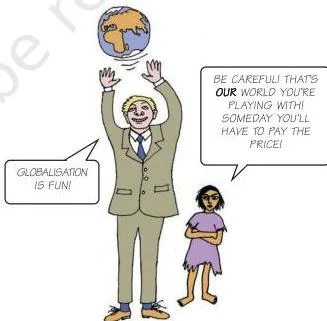
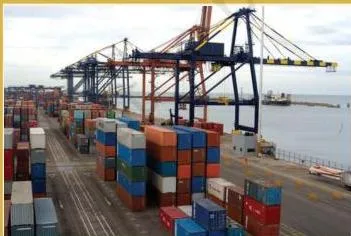
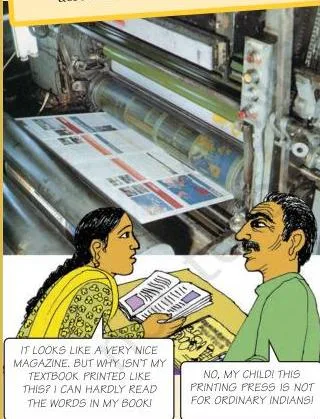

The pictures in this chapter are not decoration — each one carries one step of the argument. Look at each image in your own copy of the book as you read the point it illustrates.
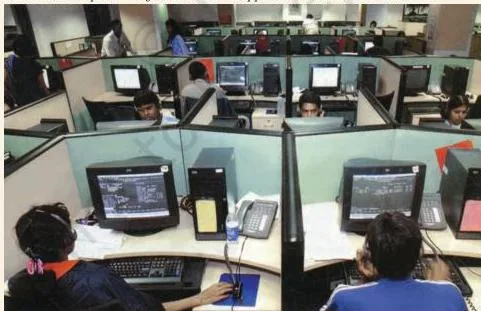
This photograph opens the chapter’s first example of an MNC spreading production. The Bengaluru centre gives information and support to customers abroad — India’s role in that example is the customer-care leg of a global production chain, staffed by educated English-speaking youth (NCERT, p. 56).
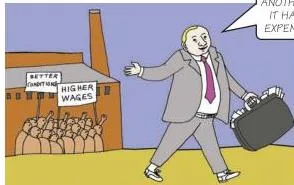
The image on this page works with the section text in two ways. Its caption makes the point that MNCs sometimes produce jointly with local companies — the local firm gains money for new machines and access to the latest technology.
The cartoon drawn beside it makes the harsher point in its own words: “We will shift this factory to another country. It has become expensive here!” When production costs rise, the MNC simply relocates (NCERT, p. 57).
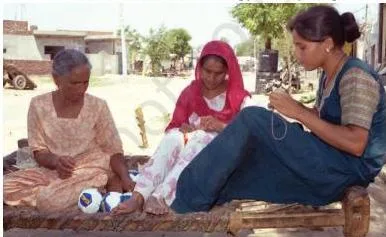
This photograph shows the third route MNCs use — placing orders with small producers. The women stitch footballs at home; the MNC supplies the order and sells the finished balls under its own brand. Garments, footwear and sports items are industries where this pattern is common, and the MNC keeps tremendous power over price, quality, delivery and labour conditions (NCERT, p. 58).
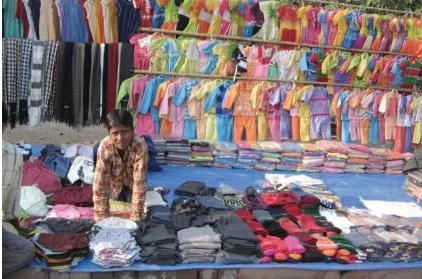
This image sits at the end of the Chinese toys discussion and carries its conclusion. With the opening of trade, goods travel between markets, choice rises, prices of similar goods tend to become equal, and producers separated by thousands of miles compete directly — that, in one picture, is integration of markets (NCERT, p. 61).
The second image on this page opens the “What is globalisation?” section by showing its cause. More and more MNCs hunting for cheap locations, rising foreign investment, and rapidly rising foreign trade together produce the greater integration that the chapter defines as globalisation (NCERT, p. 61).
This image illustrates the transport side of technology: containers that move intact from ships to railway wagons to trucks cut port handling costs sharply, and cheaper air transport lets far greater volumes of goods fly. Faster delivery at lower cost is one of the reasons globalisation became possible (NCERT, p. 62).
This image introduces the chapter’s strongest technology example: a news magazine for London readers is designed and printed in Delhi. Text travels by Internet, design orders arrive by telecommunication, and payment moves instantly through e-banking — the service is produced across countries exactly the way goods are (NCERT, p. 63).
This picture opens the Impact section with the first piece of evidence that globalisation has winners. MNCs invested in industries with large numbers of well-off buyers — cell phones, automobiles, electronics, soft drinks, fast food and urban banking — creating new jobs and helping the local companies that supply them (NCERT, p. 66).
This is the chapter’s visual signal that the story has a second side. It heads the “Small producers: Compete or perish” section, where Ravi’s capacitor unit and the shut-down units in batteries, capacitors, plastics, toys, tyres, dairy products and vegetable oil show how rising competition hit small manufacturers (NCERT, p. 68).
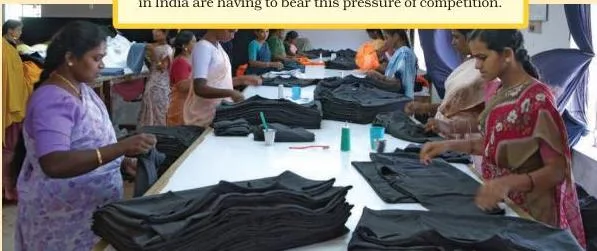
The photograph shows workers folding garments for export and accompanies the Sushila story. The chapter notes that globalisation has created opportunities for paid work for women, yet the conditions of employment deny women their fair share of benefits — temporary contracts, long hours, night shifts and low wages (NCERT, p. 69).
Common Mistakes in This Chapter and How to Fix Them
Most confusion in this chapter comes from a handful of mix-ups the book itself warns about. The table below names each mistake before you make it.
| Mistake | Correct rule | How to check your answer |
|---|---|---|
| Treating foreign trade and foreign investment as the same thing | Foreign trade moves goods and services across borders (p. 59); foreign investment is money spent to buy assets such as land, buildings and machines in another country (p. 57). The chapter’s own exercise on p. 59 asks you to distinguish them | Ask: is a good crossing a border, or is money buying an asset abroad? Goods crossing = trade; money buying assets = investment |
| Defining globalisation as only “more choice in the market” | Globalisation is the process of rapid integration of countries through greater foreign trade and foreign investment by MNCs (p. 61); choice is a result, not the definition | Does your definition name trade, investment and MNCs? No MNCs = incomplete answer |
| Assuming globalisation helped everyone | The impact has not been uniform (pp. 66–69): well-off consumers and skilled producers gained, while small producers and workers such as Ravi and Sushila lost out | Does your answer to Exercise Q6 name both sides? A one-sided answer misses the chapter’s point |
| Treating trade barriers as only taxes | Quotas — limits on the number of goods that can be imported — are also trade barriers (p. 64) | Can you explain, using the Chinese toys example, how a quota would reduce imports? |
| Believing WTO rules are applied equally to all countries | Developed countries retained farm subsidies while WTO rules forced developing countries to remove barriers (p. 65) | Can you quote the US farm-subsidy example and the “free and fair trade” question? |
| Reading “flexibility in labour laws” as good for workers | The chapter shows companies use flexibility to cut labour costs; workers get temporary jobs, lower wages and less job security (pp. 67–69) | Whose interests does flexibility serve in the chapter — employers’ or workers’? Exercise Q3 asks exactly this |
SUMMING UP on p. 71 is the book’s own checklist of what matters — if your revision notes cover its points, you have the chapter’s essentials.
How the Chapter’s Exercises Test You
This section describes the question types the chapter itself uses — it is not a prediction of board papers and promises no marks. The table below maps each chapter-end exercise, Q1 through Q13, to the pages that teach its answer.
| Exercise | What it asks | Where the answer is taught |
|---|---|---|
| Q1 | Define globalisation in your own words | pp. 60–61 |
| Q2 | Why India barred foreign trade and investment, and why it removed the barriers | p. 64 |
| Q3 | How flexibility in labour laws helps companies | p. 67 |
| Q4 | The various ways MNCs set up, control or produce in other countries | pp. 57–58 |
| Q5 | Why developed countries want liberalisation; what developing countries should demand in return | pp. 64–65 |
| Q6 | Explain “the impact of globalisation has not been uniform” | pp. 66–69 |
| Q7 | How liberalisation of trade and investment helped the globalisation process | pp. 64–65 |
| Q8 | How foreign trade integrates markets, with an example other than those given | pp. 59–60 |
| Q9 | Imagine what the world would be like twenty years from now | Whole chapter |
| Q10 | Respond to the argument: globalisation helped or hurt India’s development | pp. 66–70 |
| Q11 | Fill in the blanks | pp. 60–61, 66 |
| Q12 | Match the following | pp. 57–58, 64, 67 |
| Q13 | Choose the most appropriate option | pp. 57, 60–61, 66 |
The exercises test several distinct skills, so it is worth practising each format:
- define in your own words (Q1);
- explain a statement with reasons (Q2, Q3, Q6, Q7);
- explain with a new example of your own (Q8);
- take a side in a debate and justify it (Q5, Q10);
- fill in the blanks (Q11), match columns (Q12) and multiple choice (Q13).
Two in-chapter comprehension passages work like small case studies: the Ford Motors passage (p. 58), which is paired with a photograph of cars made by Indian workers being transported for sale abroad, and the US farm subsidies debate (p. 65). Look at that photograph in your own copy of the book while answering the Ford questions.
For Q8, any imported good works as a new example. Suppose Indian shops start selling dates imported from Morocco: Indian buyers gain a new choice, local date sellers must match the price or quality, and prices of similar dates in the two markets tend to move toward each other. That, in one line, is integration of markets (NCERT, pp. 59–60).
Q10 is the chapter’s most complete question, and a full answer develops both sides before concluding:
- The case that globalisation helped: greater choice and lower prices for well-off urban consumers; new jobs in MNC-invested industries such as cell phones, automobiles, electronics, soft drinks, fast food and banking; local suppliers to these industries prospered; top Indian companies invested in newer technology and some emerged as MNCs — Tata Motors, Infosys, Ranbaxy, Asian Paints, Sundaram Fasteners (NCERT, pp. 66–67).
- The case that it hurt: small producers such as Ravi saw imported goods at half their price, and their units shut down; workers such as Sushila lost permanent, protected jobs and now earn less than half their earlier wage with no benefits; conditions in the organised sector increasingly resemble the unorganised sector (NCERT, pp. 68–69).
- Concluding step: since both sets of evidence are real, the impact has not been uniform, so the answer should end with what fair globalisation would require — opportunities for all, and benefits shared better (NCERT, pp. 69–70).
The Whole Chapter in Ten Points
These ten points cover everything SUMMING UP (p. 71) says the chapter established. If you can explain each point in your own words, you have understood the chapter.
- Globalisation is the process of rapid integration or interconnection between countries — through greater foreign trade and foreign investment (p. 61).
- MNCs, companies that own or control production in more than one nation, are the major force driving the process (p. 56).
- More and more MNCs look for cheap production locations, so production is being organised in increasingly complex ways across countries (pp. 56–57).
- Technology, especially information and communication technology, made it possible to organise production and services across countries (pp. 62–63).
- Liberalisation — the removal of government barriers to trade and investment — facilitated globalisation; India began liberalising around 1991 (p. 64).
- At the international level, the WTO has put pressure on developing countries to liberalise trade and investment (pp. 64–65).
- Globalisation benefited well-off consumers and producers with skill, education and wealth (p. 66).
- Many small producers and workers suffered from rising competition — Ravi’s capacitors and Sushila’s garment work are the chapter’s evidence (pp. 68–69).
- Fair globalisation would create opportunities for all and ensure the benefits of globalisation are shared better (p. 70).
- Governments can push for fairness through labour laws, support for small producers, protective barriers where needed and negotiation at the WTO; people’s organisations have shown they can influence WTO decisions too (p. 70).
Related Resources: Chapters That Connect to This One
This listing is maintained for the 2026-27 academic session using the NCERT textbook information available to us. NCERT remains the authority for confirming the latest edition.
This chapter asks you to recall ideas from earlier chapters to judge globalisation’s impact — for example, Chapter 1’s discussion of development goals (p. 66) and Chapter 2’s account of organised-sector rules and the weight of agriculture in employment (pp. 65, 67).
The chapters around it in the same book are Money and Credit (Chapter 3, just before this one) and Consumer Rights (Chapter 5, which follows).
- Money and Credit Class 10 notes — Chapter 3, on how credit, banks and loans work.
- Class 10 Social Science notes hub — Economics, Geography, History and Political Science together.
- Class 10 notes hub — all subjects for this class.
- Main CBSE notes index — the starting point for any subject or class on this site.
- Minerals and Energy Resources Class 10 notes — a Geography chapter that also connects resources with development.
- Class 10 Social Science book page — the four NCERT books this class uses.
- NCERT Class 10 books hub — the full list of Class 10 textbooks.
Sources and Data Verification
Everything on this page traces to one place: the NCERT textbook itself. Here is the plain statement of what this page covers and who settles what.
- The content above describes NCERT’s Understanding Economic Development (Class 10 Social Science) textbook, official edition on ncert.nic.in — Chapter 4, “Globalisation and the Indian Economy,” runs across textbook pages 54–73.
- This page covers Chapter 4 only; it does not cover the other Class 10 Social Science textbooks (Geography, History, Political Science) or the other chapters of this Economics book.
- This page is maintained for the current academic session using the NCERT textbook information available to us.
- NCERT settles textbook editions and official PDFs; CBSE settles the curriculum, syllabus and examinations. Textbook contents and the examinable syllabus are not always identical, so check the current official syllabus on the CBSE website (cbse.gov.in) before trusting any chapter list for the board exam.
| What the chapter holds | Count | Where it is used |
|---|---|---|
| Printed pages | 20 | |
| Figures with NCERT captions | 10 | |
| Tables | 1 | |
| Exercise questions | 44 | answered in our NCERT Solutions |
| Official NCERT PDF | Download the chapter PDF | the chapter exactly as NCERT publishes it |
FAQs on Globalisation and the Indian Economy
What is globalisation according to NCERT Class 10 Economics Chapter 4?
Globalisation is the process of rapid integration or interconnection between countries through greater foreign trade and foreign investment by multinational corporations (NCERT, p. 61). As a result, more and more goods, services, investments and technology move between countries, with MNCs playing a major role in the process.
What is the difference between foreign trade and foreign investment?
Foreign trade is the movement of goods and services across national borders — it lets producers reach beyond their domestic markets and gives buyers a wider choice (NCERT, p. 59). Foreign investment is money spent by MNCs to buy assets such as land, buildings and machines in another country, in the hope of earning profit (NCERT, p. 57).
In short: trade moves goods; investment moves money into assets abroad.
Why did the Indian government remove trade barriers after 1991?
After Independence, India kept trade barriers to protect its new industries: in the 1950s and 1960s, competition from imports would not have allowed these industries to come up, so India permitted only essential imports such as machinery, fertilisers and petroleum (NCERT, p. 64).
Around 1991 the government decided Indian producers should now compete with producers around the globe, believing competition would force them to improve quality, and this decision was supported by powerful international organisations. Barriers were then removed to a large extent — removing barriers is what the chapter calls liberalisation (NCERT, p. 64).
What are the ways in which MNCs set up production in other countries?
There are four ways (NCERT, pp. 57–58): joint production with local companies; buying up local companies (the Cargill Foods takeover of Parakh Foods); placing orders with small producers who make garments, footwear and sports items (the women of Ludhiana stitching footballs); and setting up their own factories (Ford Motors’ plant near Chennai).
Through every route, production in widely dispersed locations gets interlinked.
Why does the chapter say the impact of globalisation has not been uniform?
Because globalisation has created clear winners and losers (NCERT, pp. 66–69). Well-off urban consumers gained more choice and lower prices, MNC-invested industries created new jobs, and top Indian companies such as Tata Motors and Infosys upgraded and some became MNCs themselves.
But small producers such as Ravi faced cheaper imports that cut his production by more than half, and workers such as Sushila lost permanent, protected jobs, now earn less than half their earlier wage and get no benefits.
How can globalisation be made fairer, according to the chapter?
Fair globalisation would create opportunities for all and ensure that the benefits of globalisation are shared better (NCERT, p. 70). The government can implement labour laws properly, support small producers until they are strong enough to compete, use trade and investment barriers when necessary, and negotiate at the WTO for fairer rules alongside other developing countries.
People’s organisations also matter — their campaigns and representations have already influenced important decisions relating to trade and investment at the WTO (NCERT, p. 70).
Reference: NCERT Class 10 Social Science (Understanding Economic Development) textbook, chapter 4, official edition on ncert.nic.in.
Explore Class 10 Social Science Books
Related chapters: