
Consumer Rights Class 10 is the fifth and final chapter of NCERT’s Class 10 Social Science economics textbook, Understanding Economic Development.
The official chapter PDF is right here, and below it this page unpacks everything the chapter teaches — why consumers are the weak party in the market, the six consumer rights under COPRA, the three-tier consumer courts, and the quality marks to look for before you buy.
Use the links below to jump to what you need — the six rights for last-minute revision, the three-tier commissions for the “where do I file?” question, or the exercise map to check what you can already answer.
Download the Official NCERT Consumer Rights Chapter PDF
This file is the official chapter from NCERT’s Class 10 Social Science textbook, hosted on the NCERT website. It contains the full chapter text — the opening news clippings, all six rights with their case studies, the consumer-court comic strip, posters, cartoons and the complete exercise set.
To read the full chapter with its case histories, posters and exercises, download the NCERT Class 10 Social Science Chapter 5 Consumer Rights PDF and keep it open while you revise — every case, figure and exercise referred to on this page comes from this same file.
The chapter itself names the Ministry of Consumer Affairs website (consumeraffairs.nic.in) as a place where real dispute case histories are published — worth visiting if an activity asks you to collect one.
Chapter at a Glance
The table below shows the size and shape of the chapter before you start reading it.
| What the chapter holds | Count |
|---|---|
| Sections (including in-text activity boxes) | 34 |
| Figures (news clippings, cartoons, posters, comic-strip panels) | 12 |
| Exercise questions (final exercise plus in-text tasks) | 42 |
This is a case-study chapter: it teaches through real consumer disputes, discussion questions, posters and cartoons rather than through long theory paragraphs.
What This Chapter Covers
Use this map to jump straight to the part of the book you need. The row labels are the chapter’s own section names, so you can find them in your copy of the textbook.
| NCERT section | What it teaches |
|---|---|
| The Consumer in the Marketplace | Why an individual consumer is weak against sellers, and the common forms of exploitation. |
| Consumer Movement | How the movement began in the 1960s and grew through the UN Guidelines (1985) and COPRA (1986). |
| Reji’s Suffering | The right to safety, taught through a medical negligence case. |
| Information about goods and services | Packaging details, MRP and the RTI Act (2005) — the right to information. |
| A Refund | The right to choose, taught through a coaching-institute refund case. |
| Where should consumers go to get justice? | The right to redressal and representation, and the three-tier commission system. |
| Learning to become well-informed consumers | Awareness posters and campaigns for consumer education. |
| ISI and Agmark | Quality certification marks, and when certification is compulsory. |
| Taking the consumer movement forward | The movement’s progress, its problems, and the 2019 amendment of COPRA. |
Why the Marketplace Needs Rules
Before the rights, the chapter establishes the problem: in a normal market transaction the seller is strong and the buyer is weak.
Consumers buy the final goods they use, while producers are few and powerful. The chapter compares this with earlier chapters: workers in the unorganised sector need rules against unfair wages, and borrowers need protection from moneylenders’ tricks. Consumers need the same protection.
When a buyer complains, the seller’s standard reply — quoted in the chapter — is “if you didn’t like what you bought, please go elsewhere”. The seller takes no responsibility once the sale is done. The consumer movement exists to change this.
Exploitation takes recognisable forms:
- shopkeepers weighing less than they should;
- traders adding charges that were never mentioned before;
- selling adulterated or defective goods;
- false claims passed through the media by large companies.
Two famous false-claim battles prove the last point. A baby-milk-powder company sold its product worldwide as better than mother’s milk, and was forced to admit the claim was false only after years of struggle. Cigarette companies faced long court battles before accepting that their product can cause cancer.
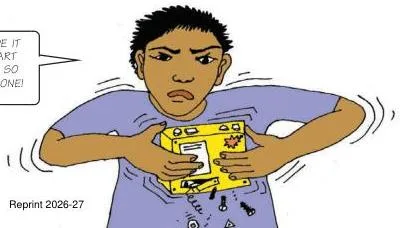
The cartoon above makes the argument visually: a customer complains that the product was purposely made to fall apart after a few months so he would buy a new one. A few large producers with wealth, power and reach can manipulate the market, while consumers are scattered and buy in small amounts — so no single buyer has any power.
Use the chapter’s discussion prompts as revision questions: (1) in what ways can people be exploited in the market? (2) recall one personal experience of being cheated in a market; (3) what should the government’s role be in protecting consumers?
The Consumer Movement: From the 1960s to COPRA
This is the history students need for the question “what factors gave birth to the consumer movement in India?” The short answer: dissatisfaction with sellers, and no legal system to protect buyers.
For a long time, an unhappy consumer’s only option was to stop buying from that shop or brand. It took years of organising by consumer groups to shift responsibility for quality onto the seller.
| Period | What happened |
|---|---|
| 1960s | Rampant food shortages, hoarding, black marketing and adulteration of food and edible oil gave birth to the consumer movement in an organised form. |
| Till the 1970s | Consumer organisations wrote articles and held exhibitions, and formed groups to check ration-shop malpractices and overcrowding in road passenger transport. |
| 1985 | The United Nations adopted the UN Guidelines for Consumer Protection. |
| 1986 | India enacted the Consumer Protection Act, popularly known as COPRA. |
| Today | Consumers International is the umbrella body of more than 200 member organisations from over 100 countries. |

The figure above marks the 1985 UN Guidelines, the event that turned a national effort into a global one. The Guidelines gave nations a ready framework for consumer-protection measures, and gave advocacy groups a document they could use to press their own governments.
What could consumer groups have done, asks the chapter’s in-text question? The chapter itself supplies the answer: write articles, hold exhibitions, form groups to check ration-shop malpractices and transport overcrowding, and press governments to act. The result was COPRA — the Consumer Protection Act of 1986, amended later in 2019.
The Six Consumer Rights
The heart of the chapter — and the most-examined part — is the set of six rights the Consumer Protection Act 1986 gives every consumer in India. Each right is taught through a real case, which makes them easy to remember.
A framework to keep the six straight: group them into two families.
- Protection rights — safety, information, redressal: these defend you against harm, deception and exploitation.
- Participation rights — choice, representation, consumer education: these let you act as an active consumer rather than a passive buyer.
| Right | The case NCERT uses to teach it |
|---|---|
| Safety | Reji Mathew’s tonsillectomy case |
| Information | Amritha’s RTI case |
| Choice | Abirami’s coaching-refund case |
| Redressal | Prakash’s money-order case |
| Representation | Consumer protection councils representing consumers |
| Consumer education | Government awareness posters and campaigns |
The chapter’s exercise Q4 asks you to categorise real cases under these six rights — the table above is the tool, and the cases are worked out in the exercise map below.
Right to Safety
Right to safety: the consumer has the right to be protected against goods and services that are hazardous to life and property.
NCERT teaches it through Reji’s case. Reji Mathew, a healthy Class IX student, was admitted to a private clinic in Kerala for removal of tonsils. Improper anaesthesia during the operation left him crippled for life.
His father filed a complaint in the State Consumer Disputes Redressal Commission claiming Rs 5,00,000 for medical negligence. The State Commission dismissed it for insufficient evidence, but the National Commission in New Delhi held the hospital responsible and directed compensation.
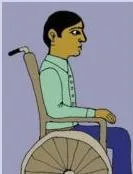
The illustration above is the chapter’s narration of Reji’s case. The lesson: producers must strictly follow safety rules, and bad products reach the market because supervision is weak and the consumer movement is not strong enough.
A pressure cooker’s safety valve is the chapter’s example — if the valve is defective, the accident is serious, so the manufacturer must guarantee its quality.
A consumer whose LPG regulator is faulty, or whose electrical appliance causes injury, falls directly under this right. Use the chapter’s discussion list to revise: what safety rules should a producer follow for an LPG cylinder, a cinema theatre, a circus, medicines, edible oil, a marriage pandal and a high-rise building?
Right to Information
Right to information: the consumer has the right to be informed about the particulars of goods and services before buying.
That is why packaging is regulated. A packet must show ingredients, price, batch number, date of manufacture, expiry date and the address of the manufacturer. Medicines must show directions for proper use, side effects and risks; garments must show washing instructions.
Why does this matter? If a product is defective within the expiry period, you can ask for a replacement — but only because the expiry date is printed. Without it, the manufacturer would blame the shopkeeper and accept no responsibility. Selling expired medicines invites severe action, and selling above the printed price can be protested.
MRP — maximum retail price — is a ceiling, not a fixed charge. Consumers can bargain below it.
The right was later extended to government: in October 2005 the government enacted the Right to Information (RTI) Act, which ensures citizens all information about the functions of government departments. The chapter’s case is Amritha, an engineering graduate whose job result a department refused to reveal; her RTI application produced both the reasons for the delay and her appointment letter.
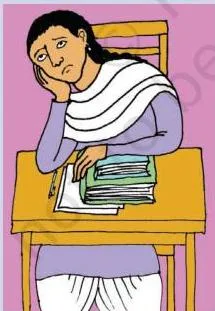
The figure above accompanies the RTI discussion and the Amritha case — proof that the right to information now covers services provided by the government, not just goods on a shelf.
Right to Choose
Right to choose: any consumer who receives a service — whatever their age, gender or the nature of the service — can choose whether to continue receiving it.
The case: Abirami joined a two-year professional coaching course in New Delhi and paid the entire fee of Rs 61,020 in advance. After one year she left because the teaching quality was poor, and the institute refused a refund for the remaining year.
The District Consumer Disputes Redressal Commission ordered a refund of Rs 28,000, holding that she had the right to choose. The institute appealed; the State Commission upheld the order, fined the institute Rs 25,000 for a frivolous appeal, and directed Rs 7,000 as compensation and litigation cost. It also barred institutes in the state from charging the full course fee in advance.
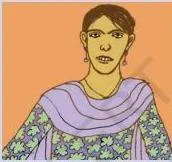
The illustration above captures Abirami’s case, which the chapter introduces with a simple question: should she be forced to stay? The right to choose is denied in everyday ways too — a shop that sells toothpaste only if you also buy a toothbrush, or a gas agency that insists you buy the stove from them for a new connection.
The chapter then asks which of six advertised offers genuinely benefit the consumer. Only one passes the test:
| Advertised offer | Reading of the offer |
|---|---|
| 15 gm more in every 500 gm pack | Genuinely benefits the consumer — more of the product for the same price. |
| Subscribe to a newspaper with a gift at year’s end | Pushes you to commit for a year; the seller gains more. |
| Scratch and win gifts worth Rs 10 lakh | A lottery-style lure, not a real gain for most buyers. |
| A milk chocolate inside a 500 gm glucose box | A promotional gimmick designed to sell the box. |
| Win a gold coin inside a pack | The prize is a lure to buy more packs. |
| Buy shoes worth Rs 2000 and get a Rs 500 pair free | Forces a larger purchase than you planned. |
The first offer adds genuine value; the rest are designed to sell more. This reasoning is what the chapter’s discussion question is testing.
Right to Seek Redressal
Right to seek redressal: the consumer has the right to complain against unfair trade practices and exploitation, and to receive compensation depending on the degree of damage.
Three practical points the chapter makes:
- a consumer can file a complaint before the appropriate consumer forum on their own, with or without lawyers;
- consumers can file individually or as a group — a group complaint is called a class action suit;
- complaints can be filed physically or through the internet, and cases can be conducted through video conferencing.
This right is the bridge to the next question — where exactly does a consumer go? — which the three-tier commission system answers below.
Right to Representation
Right to representation: the consumer has the right to represent, or be represented, in the Consumer Disputes Redressal Commissions.
The consumer movement led to the formation of consumer forums or consumer protection councils. These voluntary organisations guide consumers on how to file cases, and sometimes represent individual consumers before the commissions. They receive government financial support for creating awareness. Residents’ Welfare Associations take up unfair trade practices against their members in the same way.
This right is what makes the three-tier machinery meaningful: a trained organisation can stand in for an individual who does not know the procedure.
Right to Consumer Education
Right to consumer education: the consumer has the right to acquire the knowledge and skill to become a well-informed consumer — able to distinguish and make informed choices while purchasing.
COPRA led to separate Departments of Consumer Affairs in central and state governments, which spread information through posters and television advertisements about the legal process people can use.
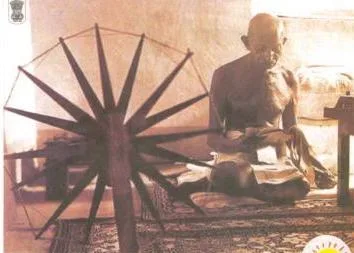
The chapter reprints Mahatma Gandhi’s well-known line beside such a poster: the customer is the most important visitor, not an outsider to the business, and does the business a favour by giving it a chance to serve.
Education turns rights into action: checking labels, keeping bills, and complaining in writing instead of grumbling.
Where a Consumer Goes for Justice: The Three-Tier Commissions
The practical question every student asks: I have been cheated — where do I file? The chapter answers with Prakash’s case and the machinery COPRA set up.
- Prakash sends a money order from New Delhi to his village for his daughter’s marriage.
- The money neither reaches his daughter when she needs it nor in the months that follow.
- He files a case in the district-level Consumer Disputes Redressal Commission in New Delhi.
- The chapter shows the whole journey in a comic strip, ending with the judge announcing the commission’s verdict.
Today a consumer can file as an individual or as a group (a class action suit), physically or through the internet, and conduct the case through video conferencing.
The comic-strip panel above is the strip’s closing frame — the judge announcing the verdict. NCERT includes it to show that a complaint, however long the path, ends in a decision.
Under COPRA, a three-tier quasi-judicial machinery handles disputes. Which tier you approach depends on the value of the claim:
| Commission | Claims it handles |
|---|---|
| District Commission | up to Rs 1 crore |
| State Commission | between Rs 1 crore and Rs 10 crore |
| National Commission | more than Rs 10 crore |
If a case is dismissed in the District Commission, the consumer can appeal to the State Commission and then to the National Commission.
Worked example with a fresh case: you buy a washing machine for Rs 18,500 and it stops working in the third month.
- Keep the bill and the warranty card — this is your evidence.
- Complain to the dealer first; the seller must get a chance to fix or replace the product.
- If the dealer refuses, file a complaint in the District Commission — Rs 18,500 is well under the Rs 1 crore ceiling.
- If the District Commission’s order is not satisfactory, appeal to the State Commission, and from there to the National Commission.
For comparison: a claim worth Rs 3 crore starts at the State Commission, and a claim above Rs 10 crore starts directly at the National Commission.
Do not confuse the two organisations the chapter keeps returning to:
| Consumer protection council | Consumer Disputes Redressal Commission |
|---|---|
| A voluntary organisation, also called a consumer forum | A quasi-judicial body set up under COPRA |
| Guides consumers on how to file cases; sometimes represents them | Decides disputes and awards compensation |
| Receives government financial support for awareness work | Exists at district, state and national levels |
This table is the direct answer to the chapter’s in-text question: what is the difference between a consumer protection council and a Consumer Disputes Redressal Commission?
Becoming a Well-Informed Consumer: MRP, RTI and Quality Marks
Rights are only as good as the consumer who uses them. This section collects the practical skills — what to check on a packet, what MRP and RTI mean, and what the quality marks actually guarantee.
(1) Read the packet. This table summarises what the rules say must be displayed:
| Product | Information that must be given |
|---|---|
| Any packaged good | ingredients, price, batch number, date of manufacture, expiry date, address of the manufacturer |
| Medicines | directions for proper use, side effects, risks |
| Garments | instructions for washing |
MRP is the maximum retail price — the ceiling. You can bargain below it, and selling above it can be protested. RTI, enacted in October 2005, extends the same idea to government departments; the chapter suggests using it for civic complaints about bad roads or poor water facilities when “no one listens”.
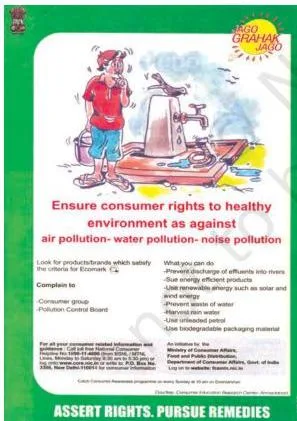
The poster above is one example of how the Departments of Consumer Affairs spread information about the legal process people can use — the same information appears in television advertisements.

The consumer hotline above is the practical help that follows: a toll-free number published by the consumer affairs department for consumer information. It is a reminder that the right to consumer education is meant to reach real people with real complaints.
(2) Look for the quality marks. ISI, Agmark, Hallmark and +F are logos that certifying organisations allow producers to use when the producers follow quality standards.

The figure above states the honest limit of certification: these organisations develop quality standards for many products, but following them is not compulsory for every producer. Certification is mandatory only for products that affect health and safety or are of mass consumption — LPG cylinders, food colours and additives, cement and packaged drinking water.
That is also the answer to exercise Q5 (why many goods in the market lack ISI or Agmark marks): for most products, certification is voluntary, and producers are not required to obtain it.
For exercise Q7, remember the pair: honey is a food article, so look for the Agmark mark; a biscuit packet is a manufactured product, so look for the ISI mark.
Taking the Consumer Movement Forward: Progress, Problems and the 2019 Law
The chapter closes with an honest balance sheet. The progress first:
- India observes 24 December as National Consumers’ Day — the day COPRA was enacted in 1986.
- India is one of the few countries with exclusive authorities for consumer redressal.
- There are more than 2000 consumer groups in the country, though only about 50-60 are well organised and recognised.
Then the problems:
- the redressal process is becoming cumbersome, expensive and time-consuming;
- consumers often have to engage lawyers;
- cash memos are rarely issued, so evidence is hard to gather;
- most purchases are small retail sales that nobody bills.
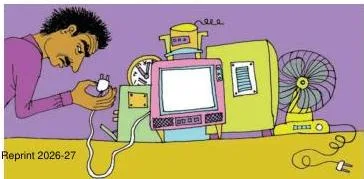
Do not skip the cartoon above — it is the chapter’s own verdict on the movement’s biggest weakness, shown visually instead of asserted.
The Consumer Protection Act was amended in 2019 to strengthen consumers further. Three changes matter:
- buying through the internet is now included in the Act;
- if there is a service deficiency or a defective product, the service provider or manufacturer is held responsible — they can be penalised or even imprisoned;
- settlement of disputes with the help of a neutral intermediary, called a mediator, is encouraged at all three tiers of the Consumer Commissions.
The chapter’s final judgement: after more than 30 years of COPRA, consumer awareness in India is spreading but slowly; the enforcement of laws that protect workers, especially in the unorganised sector, is weak; and rules for the working of markets are often not followed. Consumer movements can be effective only with the consumers’ active involvement.
Figure Walkthrough: Reading the News Clippings That Open the Chapter


The chapter’s first page is a collage of newspaper clippings of Consumer Disputes Redressal Commission verdicts. Most students skip it, but it is the chapter’s evidence that small losses are worth fighting. Read the five verdicts:
- A Delhi University teacher won Rs 45,000 from a telecom firm over a disputed bill of about Rs 400 — Rs 40,000 for mental agony and harassment plus Rs 5,000 litigation cost, while she had to pay only the disputed Rs 400.
- An insurance firm was ordered to pay Rs 7,000 for refusing a stolen-cellphone claim.
- A public sector bank was fined Rs 15,000 after crediting Rs 437 instead of Rs 4,371.
- A Rohini housing society had to pay Rs 20,000 compensation for poor construction, after ignoring the owner’s complaints.
- An insurance company was pulled up for refusing the medical claim of an 11-year-old girl’s knee surgery.
The two clippings reproduced above are part of that opening collage — headline-and-report stories of real verdicts. Read them together with the list: the legal ground that won all five cases is deficiency in service, and it covers telecom, banking, insurance, housing and medical care. No loss is too small to fight.
The chapter’s other visuals — the posters, cartoons and the comic strip — are explained in the sections where they appear above.
Key Terms in This Chapter
Every term below can be defined in one line in the exam. The definitions follow exactly what the chapter says.
| Term | Meaning |
|---|---|
| Consumer | a person who buys goods and services for use — the final user in the market |
| Unfair trade practices | seller tricks such as weighing less or adding charges not mentioned beforehand |
| Adulteration | mixing inferior or harmful substances into food and other products |
| Consumer movement | the organised effort, born in the 1960s, to protect consumer interests against unfair trade practices |
| UN Guidelines for Consumer Protection (1985) | the UN framework asking nations to adopt consumer-protection measures |
| Consumers International | the umbrella body of more than 200 consumer organisations from over 100 countries |
| COPRA | the Consumer Protection Act 1986 (amended 2019) that gave Indian consumers statutory rights |
| Consumer protection council (consumer forum) | a voluntary organisation that guides consumers on filing cases and sometimes represents them |
| Consumer Disputes Redressal Commission | the quasi-judicial body under COPRA that decides disputes and awards compensation |
| Class action suit | a complaint filed by a group of consumers together |
| Deficiency in service | a fault or shortfall in a service, the legal ground for most consumer cases |
| MRP | maximum retail price — the ceiling above which a seller may not charge |
| RTI | the Right to Information Act 2005, giving citizens information about government departments |
| ISI | a certification mark for manufactured goods |
| Agmark | certification of food articles such as edible oil and cereals |
| Hallmark | the certification maintained for standardisation of jewellery (as the chapter’s exercise states) |
| Mediator | a neutral intermediary who settles disputes outside the Consumer Disputes Redressal Commission |
| National Consumers’ Day | 24 December, the day COPRA was enacted in 1986 |
Common Mistakes Students Make
These are the traps built into the chapter’s own true-false statements and discussion questions. Name the mistake before you make it.
| Mistake | Correct rule | How to check your answer |
|---|---|---|
| “COPRA applies only to goods” | It covers services too — telecom, insurance, banking, education and medical care all appear in the chapter | Recall the cases: Reji (hospital), Abirami (coaching), Prakash (money order), John’s telecom complaint |
| “Consumer protection council and Commission are the same” | The council is a voluntary organisation that guides and represents; the Commission is a quasi-judicial body that decides and compensates | Council “guides”, Commission “decides” — match the verb to the body |
| “I must always file in the District Commission” | It depends on the claim value | Up to Rs 1 crore: District; Rs 1-10 crore: State; above Rs 10 crore: National; appeals go upward |
| “Only big losses are worth fighting” | Compensation depends on the degree of damage, and small claims win | The chapter opens with a Rs 400 phone-bill dispute that won Rs 45,000 |
| “The redressal process is simple and quick” | The chapter says it is cumbersome, expensive and time-consuming | Look at the cartoon in the taking-forward section — that is the chapter’s point |
| “Every product must carry ISI or Agmark” | Certification is voluntary for most products | It is mandatory only for LPG cylinders, food colours and additives, cement and packaged drinking water |
| “MRP is the price I must pay” | MRP is a ceiling; you can bargain below it | The chapter says consumers can bargain to buy at less than the MRP |
One more warning for the match-the-following questions: do not confuse the right to choice (freedom to continue or leave a service) with the right to representation (being guided or represented in a commission).
How the Chapter Asks Questions: Exercises and Activities
The chapter’s exercise set of 13 questions tells you exactly how the book asks questions. Every question maps to one section — use this as a checklist.
| Exercise | Concept it tests |
|---|---|
| 1. Why are rules required in the marketplace? | The Consumer in the Marketplace — exploitation and the weak consumer position |
| 2. What factors gave birth to the consumer movement? | Consumer Movement — the 1960s origins and evolution |
| 3. Need for consumer consciousness | Becoming well-informed consumers |
| 4. Factors causing exploitation | The Consumer in the Marketplace |
| 5. Rationale behind COPRA | Consumer Movement — why a law became necessary |
| 6. Your duties as a consumer | Well-informed consumers and the awareness survey |
| 7. Agmark or ISI for honey and biscuits | ISI and Agmark section |
| 8. Legal measures to empower consumers | COPRA, three-tier commissions, RTI |
| 9. Rights of consumers | The six rights section |
| 10. Expressing solidarity | National Consumers’ Day, consumer groups, active participation |
| 11. Critical examination of the movement | Taking the consumer movement forward |
| 12. Match the following | Concept terms across the whole chapter |
| 13. True or false | The traps listed in the common-mistakes section above |
Exercise Q12’s matching pairs, answered from the chapter:
| Item | Match |
|---|---|
| (i) Availing details of ingredients of a product | (e) Right to information |
| (ii) Agmark | (c) Certification of edible oil and cereals |
| (iii) Accident due to faulty engine in a scooter | (a) Right to safety |
| (iv) District Consumer Commission | (b) Dealing with consumer cases |
| (v) Food fortification | (g) Addition of key nutrients to staple foods |
| (vi) Consumers International | (f) Global level institution of consumer welfare organisations |
| (vii) Bureau of Indian Standards | (d) Agency that develops standards for goods and services |
Exercise Q4 asks you to categorise cases under the six rights. One consistent categorisation, with the reasoning:
| Case | Right | Reason |
|---|---|---|
| Lata gets an electric shock from a newly purchased iron | Right to safety | the product was hazardous to life and property |
| A friend is sold a medicine past its expiry date | Right to information | expiry information is mandatory on medicines |
| John files a case against his telecom provider | Right to redressal | he seeks compensation through a commission |
| Iqbal scans the particulars on every pack he buys | Right to information | he insists on full disclosure before purchase |
| Unhappy with the cable operator but unable to switch | Right to choice | freedom to leave a service is denied |
| Defective camera; persistent complaint to head office | Right to redressal | he demands correction of a defective product |
Exercise Q13’s true or false statements, corrected with one-line reasons:
| Statement | Answer | Reason |
|---|---|---|
| (i) COPRA applies only to goods | False | the Act covers services too — the chapter’s cases involve hospitals, telecom, insurance and coaching |
| (ii) India is one of the many countries with exclusive consumer-redressal authorities | True | the chapter states India has exclusive authority for consumer redressal |
| (iii) An exploited consumer must file in the District Commission | False | the right commission depends on the claim amount, and appeals run upward |
| (iv) Only high-value damages are worth taking to a commission | False | compensation depends on the degree of damage; the opening clippings show small claims winning |
| (v) Hallmark is the certification for standardisation of jewellery | True | the exercise itself states it, and the chapter lists Hallmark among certification logos |
| (vi) The consumer redressal process is very simple and quick | False | the chapter says it is cumbersome, expensive and time-consuming |
| (vii) A consumer has the right to compensation depending on the degree of damage | True | the chapter says exactly this in the redressal section |
Also try the in-text ordering task: Arita’s wall clock case.
The correct order is — she buys the clock, realises the dealer gave defective material, complains to the dealer and the branch office without result, engages a professional person, files a case in the District Commission, is asked to produce the bill and warranty, attends the commission proceedings, and within months the dealer is ordered to replace the clock at no extra cost.
For a quicker revision pass over this book, our Class 10 Social Science notes cover the same chapters in tighter form.
What the Chapter’s Activities Ask You to Do
Teachers often assign these as internal project work. They take longer than the exercises, but they test the same concepts in a practical way.
- Draft a poster covering all six consumer rights for your school’s consumer awareness week.
- Write a complaint letter for Mrs Krishna, whose colour television — under a six-month warranty — failed after three months, and whose dealer stopped replying to her complaints.
- Start a school consumer club and run mock awareness workshops monitoring the bookshop, canteen and nearby shops.
- Prepare posters with slogans like “An alert consumer is a safe consumer” and “Be aware of your rights”.
- Interview 4-5 neighbours about their experiences of being cheated in the market and how they responded.
- Run the 17-question consumer-awareness survey on people you know.
If you try the survey, the scoring key tells you where you stand: you are extremely aware as a consumer if your answers to questions 5, 12, 13, 15 and 16 are (C) and the rest are (A). If those five are (A) and the rest (C), you have to “wake up” as a consumer. An all-(B) sheet means you are somewhat aware.
The Chapter in Ten Points: Quick Recap
The whole argument of the chapter in ten lines, for the night before the exam.
- Consumers buy final goods and are the weak party in the market; sellers shift all responsibility onto buyers.
- Exploitation takes the form of unfair trade practices, adulteration, false claims and sellers refusing responsibility.
- The organised consumer movement in India began in the 1960s against food shortages, hoarding, black marketing and adulteration.
- The UN Guidelines of 1985 and Consumers International made the movement global.
- COPRA 1986 — amended in 2019 — gave Indian consumers six statutory rights.
- The six rights are safety, information, choice, redressal, representation and consumer education.
- Each right is taught through a real case: Reji (safety), Amritha (information), Abirami (choice), Prakash (redressal).
- Justice runs through three tiers: District up to Rs 1 crore, State from Rs 1 to 10 crore, National above Rs 10 crore, with appeals upward.
- An informed consumer reads packet information, uses MRP and RTI, and looks for ISI, Agmark and Hallmark marks.
- The movement’s progress is real but slow — the process is cumbersome, evidence is weak without cash memos, and the movement needs active consumer participation.
Related Resources
This listing is maintained for the 2026-27 academic session using the NCERT textbook information available to us. NCERT remains the authority for confirming the latest edition.
Consumer Rights is the final chapter of Understanding Economic Development, the economics book in Class 10 Social Science. The previous chapter, Globalisation and the Indian Economy, sets up the market context that this chapter protects consumers within.
For the full set of textbooks, open the Class 10 NCERT books hub, or go directly to the Class 10 Social Science book page.
For revision, use the Class 10 Social Science notes on this site, browse the Class 10 notes hub, or start from the complete set of CBSE notes. The economics chapters are covered in our notes on Globalisation and the Indian Economy, and the geography book’s industrial development is covered in the Manufacturing Industries notes.
Sources and Data Verification
This page describes Chapter 5, Consumer Rights, of the NCERT Class 10 Social Science textbook Understanding Economic Development (English medium), official edition published by NCERT.
It covers this single chapter — its sections, figures, case histories and exercises. It does not cover the other chapters of this book or the other Class 10 Social Science books.
It is maintained for the current academic session using the NCERT textbook information available to us. NCERT settles textbook editions and official PDFs; CBSE settles the curriculum, syllabus and examinations. Textbook contents and the examinable syllabus are not always identical, so check the current official CBSE syllabus before you plan your revision.
| What the chapter holds | Count | Where it is used |
|---|---|---|
| Printed pages | 19 | |
| Figures with NCERT captions | 12 | |
| Tables | 3 | |
| Exercise questions | 42 | answered in our NCERT Solutions |
| Official NCERT PDF | Download the chapter PDF | the chapter exactly as NCERT publishes it |
Reference: NCERT Class 10 Social Science textbook, chapter 5, official edition on ncert.nic.in.
Common Questions About This Chapter
What are the six rights of a consumer in India under the Consumer Protection Act?
The six rights are safety (protection against hazardous goods and services), information (full particulars before buying), choice (freedom to continue or leave a service), redressal (compensation depending on the degree of damage), representation (being represented in the consumer commissions) and consumer education (the knowledge and skill to be a well-informed buyer).
Where should I file a consumer complaint — District, State or National Commission?
It depends on the claim value. The District Commission handles claims up to Rs 1 crore, the State Commission from Rs 1 crore to Rs 10 crore, and the National Commission claims above Rs 10 crore. If a case is dismissed in a lower commission, you can appeal to the next tier.
Is an ISI or Agmark mark compulsory on every product?
No. Certification is voluntary for most products. It is mandatory only for products that affect health and safety or are of mass consumption — LPG cylinders, food colours and additives, cement and packaged drinking water.
What is the difference between a consumer protection council and a Consumer Disputes Redressal Commission?
A consumer protection council is a voluntary organisation that guides consumers on how to file cases and sometimes represents them. A Consumer Disputes Redressal Commission is a quasi-judicial body under COPRA that decides disputes and awards compensation.
What did the 2019 amendment to the Consumer Protection Act change?
Three things: buying through the internet is now covered; service providers and manufacturers can be penalised or imprisoned for service deficiency or defective products; and settlement through a neutral mediator is encouraged at all three tiers of the consumer commissions.
Why is 24 December observed as National Consumers’ Day in India?
Because COPRA — the Consumer Protection Act — was enacted by Parliament on 24 December 1986.
Explore Class 10 Social Science Books
Related chapters: