
This is the NCERT Class 7 English (Poorvi) Chapter 4, Travel and Adventure, which runs from page 138 to page 178 of the textbook. The unit takes one theme — travel and adventure — and explores it through three very different texts: a short story by Ruskin Bond, a poem by Edna St. Vincent Millay, and the biography of mountaineer Arunima Sinha.
The official chapter PDF is below, and the rest of this page shows what the file contains.
Download the official Travel and Adventure Class 7 English Poorvi Chapter 4 PDF free from NCERT’s own textbook page. The file is hosted on ncert.nic.in, so it is always the current official version of the chapter, with the complete book in the same place.
Chapter 4 Travel and Adventure — what is in the PDF
The chapter is built around one theme — travel and adventure — but it comes at the theme from three directions. Before you open the file, this is the shape of the unit:
| Text | Type | NCERT pages | What students do with it |
|---|---|---|---|
| The Tunnel, Ruskin Bond | Short story | 138–156 | Read the story; discuss the watchman and the leopard; answer extract questions; learn sound words, ‘would’/‘used to’, colons and semicolons; write a descriptive paragraph. |
| Travel, Edna St. Vincent Millay | Poem | 157–165 | Match stanzas to main ideas; find the rhyme scheme, imagery and tone; study soft and hard ‘c’; write a diamante poem; describe a travelling character. |
| Conquering the Summit | Biography of Arunima Sinha | 166–175 | Read her journey from accident to Everest; discuss resilience; learn articles; share opinions about adventure sports; write a formal letter. |
The listening transcripts used by the Let us listen tasks sit at the back of the chapter, on pages 176–178.
The chapter is skills-based, not a text followed by one exercise block. Each text carries its own set of tasks — Let us discuss, Let us think and reflect, Let us learn, Let us listen, Let us speak, Let us write and Let us explore. That is why the unit runs as long as it does.
The chapter contents table on this page lists the exact counts of sections, figures and activities in the official PDF.
The Tunnel by Ruskin Bond — reading the story
The chapter opens with a story because it is the most literal adventure in the unit: a boy walks through a railway tunnel just to see what is inside. The Tunnel (NCERT pp. 139–148) is by Ruskin Bond, and most of the early questions grow out of it.
The opening. Suraj, a curious boy, cycles out of town and waits at a jungle cutting to watch the midday steam engine roar out of the tunnel. He compares the engine to a beautiful green, black and gold dragon from his dreams.
The first figure shows that moment — Suraj has heard the shrill whistle, and the train is about to burst out of the tunnel mouth.
Then he does the thing that makes him different: instead of going home, he walks into the tunnel’s darkness. As he comes out, dazzled, he catches a flash of orange and gold — a long swishing tail — and meets Sunder Singh, the watchman, who claims the tunnel as his property.
The one real danger comes at night. On the second evening Suraj returns for tea. A rhythmic sawing sound tells them a leopard is inside the tunnel, and the night mail is ten minutes away. The two of them drive the animal out together before the train arrives (NCERT pp. 146–147).
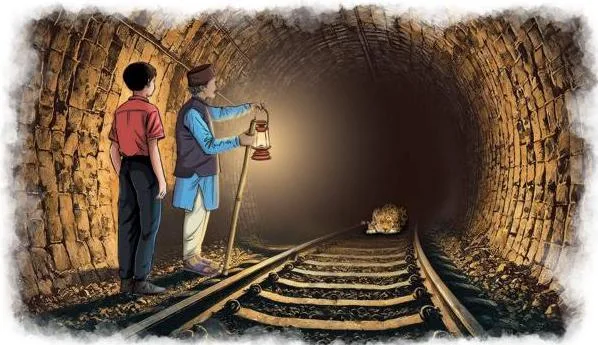
The lamp is raised high so its light falls on the leopard, crouched between the tracks only five metres away. Suraj’s throat is too dry to shout, but the two of them shout together, and the leopard, unsure how many humans are in the tunnel, turns and disappears.
The lamp as a symbol. Weeks later, Suraj is a passenger on that same night mail, going to Delhi with his father. He cannot see the hut in the dark, but he sees the lamp — and he knows his friend is there (NCERT p. 148).
The watchman’s lamp is the story’s quiet symbol: the same small light that guards the rails every night is the light Suraj recognises from a speeding train. The book’s own image for it is a firefly — a tiny point of light in the darkness that connects the thousands who pass to the one who stays.
The exercises that follow the story.
The flow chart on page 144 asks you to rebuild the watchman’s warning system: every day before the train he walks the tunnel; if all is well he rests, but if something is wrong he walks up the line and waves a red flag by day, or his lamp at night, and the driver slows down.
The extract on page 149 leaves one trait unnamed — Suraj wanted to know what the inside of a tunnel was like, so the trait is curiosity.
| Question the chapter asks (p. 150) | What a good answer needs |
|---|---|
| “I have lent it to the Government” — what does Sunder Singh convey? | Humour. He alone looks after the tunnel, so he treats it as his; “lending” it to the Government is his joke. |
| Safer in the forest than in the town — what example does he give? | In town he was almost run over by a bus; nothing has ever harmed him in the jungle. It shows his ease with forest life. |
| Sunder Singh has become part of jungle life. | He knows the leopard’s habits, reads the nightjar’s call, and moves through the night sounds without fear. |
| What draws Suraj and Sunder Singh together? | Suraj’s curiosity meets the watchman’s loneliness. The boy listens, the old man shares, and the leopard rescue seals the trust. |
| Why is Sunder Singh called a “firefly”? | From the moving train his lamp is a tiny light in the dark, like a firefly — a human connection across the night. |
| Is Suraj an adventure-loving boy? | Yes. He rides out alone, waits for the train, walks into a dark tunnel, and chooses to join the leopard rescue. |
Travel by Edna St. Vincent Millay — reading the poem
The second text changes the chapter’s meaning of adventure: the poem Travel (NCERT p. 158) shows that adventure can also live in the imagination. It is only three stanzas, but the chapter asks a great deal about it.
Plain meaning. The speaker hears and imagines trains even when no train passes. The track is miles away, yet all day she hears the whistle. At night, in the stillness, she sees its cinders red on the sky and hears the engine steaming. She loves her friends, yet she would take any train, no matter where it goes.
| Stanza | What the speaker describes | Main idea it matches (p. 159) |
|---|---|---|
| 1 — day | The whistle of a train miles away, heard over the day’s noise | Idea 3 |
| 2 — night | Cinders red on the sky and the engine’s sound in the quiet | Idea 1 |
| 3 — heart | Would take any train anywhere, though her heart is warm with friends | Idea 2 |
The devices the exercises test. The rhyme scheme is ABAB — end words such as away/day and speaking/shrieking alternate in every stanza. The whistle is personified: “shrieking” gives a human action to the train’s sound (NCERT p. 159). The imagery phrases include “day is loud” and “cinders red on the sky”.
The line “there isn’t a train goes by” repeats in all three stanzas to highlight the speaker’s fascination with the train — not to suggest heavy traffic.
Tone and meaning. The best tone words from the chapter’s list are excited and enthusiastic; the final stanza adds warmth, so “content” and “grateful” also fit the extract on page 160. The train symbolises adventure and opportunities for the speaker. Does she really see and hear the train?
Probably not — the train is so strongly in her mind that she notices it everywhere, and the whistle and cinders belong to longing and imagination.
Conquering the Summit — the story of Arunima Sinha
The third text is a biography, and it makes the theme real: a person who actually lived this adventure. Conquering the Summit (NCERT pp. 167–169) tells the story of Arunima Sinha, the first Indian female amputee to climb Mount Everest.
In 2011, at the age of 24, national-level volleyball player Arunima Sinha met with a train accident on the night of 11 April. In hospital, with one leg amputated, she made a vow many would deem impossible: not only to walk again with a prosthetic leg, but to scale Mount Everest.
She completed a basic mountaineering course at the Nehru Institute of Mountaineering in Uttarkashi, followed by eighteen months of rigorous training.
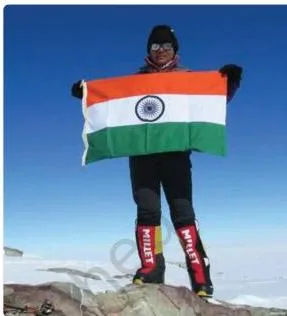
This training photo belongs to exactly that part of the story. When a question asks what Arunima did to fulfil her ambition, the answer is this course and this training — plus the guidance of Bachendri Pal, the first Indian woman to summit Everest.
Pal’s words, quoted on NCERT page 168, are the turning point: “you have conquered the Everest within you; the world will realise it later.”
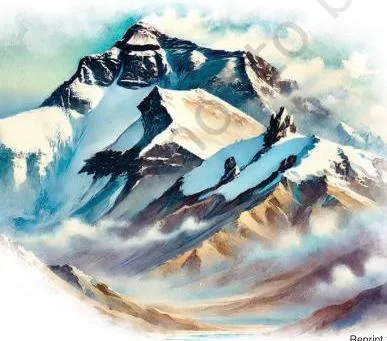
This second image pairs with the chapter’s line that Arunima has faced numerous challenges and setbacks. It is the evidence you quote when a question asks you to support the statement that she is a beacon of hope and resilience (NCERT p. 170).
| When | What happened |
|---|---|
| 11 April 2011 | Train accident; she survived, and her leg was amputated |
| After the accident | Prosthetic leg and physiotherapy; inspired by an article on Everest, she vowed to climb it |
| Training phase | Basic mountaineering course at Nehru Institute of Mountaineering, Uttarkashi; 18 months of rigorous training; Bachendri Pal’s guidance |
| 21 May 2013 | Reached the Everest summit after 52 days — the first Indian female amputee to do so |
| 2015 | Padma Shri (fourth highest civilian award), plus the Tenzing Norgay National Adventure Award |
| By July 2016 | Had summited peaks in Europe, Africa, Australia, South America and North America, besides Everest |
| January 2019 | Climbed Mount Vinson, Antarctica — the world’s first female amputee to do so — completing the Seven Summits |
| Later | Autobiography Born Again on the Mountain; honorary doctorate from the University of Strathclyde, Glasgow |
Two messages from the chapter work as revision anchors: “Never give up and work hard,” and her definition of failure — failure is not falling short of your goals, but having no goals worthy enough. Both fit value-based answers about courage and goal-setting.
Language work in the chapter — grammar, punctuation and sounds
Everything the chapter teaches about language, collected in one place so you can revise it without hunting through the unit.
Would and used to — past habits (NCERT p. 152)
Both words describe actions that happened regularly in the past. The difference is one of time.
- ‘used to’ — a past habit that no longer happens. Example: “I used to walk to school; now I take the bus.”
- ‘would’ — a repeated past action, often a routine. Example: “Every evening, my grandfather would water the plants and hum a tune.”
Quick check: if the action still happens today, ‘used to’ is the wrong choice.
Articles — a, an, the (NCERT pp. 171–172)
a and an introduce a general noun; the points to a specific one. The trap is the choice between a and an.
- a + consonant sound: a uniform (the “yoo” sound), a cat.
- an + vowel sound: an hour (silent h), an apple.
- the for one-of-a-kind things: the Ganga, the North Star; and for superlatives: the second highest peak.
Colon and semicolon (NCERT pp. 152–153)
These two punctuation marks separate ideas inside a sentence.
- Colon (:) introduces a list or an explanation. Example: “Pack three essentials: a water bottle, a hat, a map.”
- Semicolon (;) joins two closely related clauses without a conjunction. Example: “The trail was steep; we kept going.”
Soft and hard ‘c’ (NCERT p. 163)
The letter c has two sounds, and the next letter decides which one you hear.
- Soft c = /s/ before e, i, y: city, cinders, circle, bicycle.
- Hard c = /k/ before a, o, u or a consonant: cat, concert, cable, echo, uncle.
The poem’s word “cinders” takes the /s/ sound because c is followed by i.
Sound words — shades of meaning (NCERT pp. 151, 161)
The story and the poem collect words for noises, and the exercises make you match each word to its exact shade.
| Word | Shade of meaning |
|---|---|
| creaking | long low sound of moving wood |
| chatter | repeated short high sounds of birds or monkeys |
| hissing | long “s” sound, like steam or a snake |
| rustling | soft dry sound of leaves or paper |
| puffing | short quick blasts, like an engine |
| yelling | shouting loudly, often in anger or excitement |
| screeching | high-pitched, piercing sound |
| wailing | crying loudly with grief or sorrow |
| bawling | crying loudly and uncontrollably |
| screaming | crying out in fear or excitement |
| hollering | calling out loudly, casual or informal |
| whimpering | crying softly in a low, broken voice |
The diamante poem shape (NCERT pp. 163–164)
A diamante is a diamond-shaped poem of seven lines built from specific word types.
- Line 1: one noun — the first topic.
- Line 2: two adjectives about it.
- Line 3: three -ing words about it.
- Line 4: four nouns or a short phrase linking the two topics.
- Line 5: three -ing words about the second topic.
- Line 6: two adjectives about the second topic.
- Line 7: one noun — the second topic.
The book’s example connects day and night; the task on page 163 asks you to connect reading and adventure. Here is an original example in the same shape:
| Station |
| Bustling, echoing |
| Waiting, boarding, waving |
| Tickets, tracks, maps, trails |
| Climbing, straining, striving |
| Cold, triumphant |
| Summit |
Line 4 is the hinge: four nouns — tickets, tracks, maps, trails — that belong to both a station and a summit.
Key words from the three texts — glossary at a glance
The chapter prints its own word meanings beside the texts. These are the words the exercises reuse, so they are the ones to know.
| The Tunnel — word | Meaning (as glossed in the chapter) |
|---|---|
| embankment | stone wall carrying the railway over low ground |
| cutting | narrow valley cut through a hill for the railway line |
| scrub-covered | covered with short trees and bushes |
| plume of smoke | long, thin cloud of smoke |
| instinctively | without thought or plan |
| scuttled | ran hurriedly |
| dazzled | blinded by bright light |
| lithe / sinewy | thin and graceful / lean and muscular (the leopard) |
| night mail | the train that runs at night |
| reassure | comfort, calm |
The Let us learn task on page 151 also reuses four phrase-glosses: approaching engine (the sound of a train coming), flickering lights (lights burning unsteadily), sawing sound (the noise that reveals the leopard), and drifting smoke (smoke floating slowly).
The poem glosses only two words directly: shrieking (a high-pitched, piercing cry — the whistle personified) and cinders (small burning pieces of coal — the red sparks the speaker sees in the night sky).
| Conquering the Summit — word | Meaning (as glossed in the chapter) |
|---|---|
| beacon | source of inspiration |
| resilience | ability to recover quickly from a difficulty |
| amputated | cut off a part of the body (here, the leg) |
| prosthetic leg | artificial leg that helps a person move around easily |
| feat | achievement |
| harrowing | extremely disturbing and painful |
| rigorous | severe, demanding |
| endurance | ability to continue something difficult for a long time |
| fortitude | courage over a long period |
| adversity | a difficult situation |
| testament | proof |
Mistakes students make in this chapter
These are the errors the chapter’s own activities are designed to catch. Read them before you do the exercises, not after.
| Mistake | Correct rule | How to check your answer |
|---|---|---|
| “I used to play cricket every week” when the habit still continues | ‘used to’ is only for habits that have stopped; for a repeated past action that may still go on, use ‘would’ | Ask: does this habit still happen today? If yes, ‘used to’ is wrong. |
| “We waited for a hour” or “an uniform jacket” | a/an depends on the sound: an hour (silent h), a uniform (“yoo” sound) | Say the word after the article aloud; listen to the first sound, not the first letter. |
| Pronouncing “cinders” with a /k/ sound | c before e, i, y gives the soft /s/ sound; hard /k/ comes before a, o, u or a consonant | Look at the letter after c: e, i, y → /s/; a, o, u, consonant → /k/. |
| Taking “I have lent it to the Government” literally | It is Sunder Singh’s joke — he alone cares for the tunnel, so he claims it as his | Ask what the character means, not what the sentence says; page 150 expects the humorous sense. |
| Reading the “firefly” as a real insect | The lamp seen from the moving train is compared to a firefly — a small point of light in the dark, standing for friendship and connection | Look for the comparison: the image describes the watchman’s lamp, not an insect. |
| “Mount K2 is a second highest peak” or “A Ganga is a sacred river” | Unique things and superlatives take ‘the’: the Ganga, the North Star, the second highest peak | Is there only one of this thing? Then ‘the’, or no article for names like Mount K2. |
Using this chapter for exam practice
This chapter does not end in one question block; each text produces its own kind of question. The map below shows the patterns the chapter itself practises.
| Text | Question patterns it supports | What a full answer includes |
|---|---|---|
| The Tunnel | Character-trait questions (curiosity, courage, care); the watchman’s warning-system flow chart; extract questions on pages 149–150 | Name the trait and support it with one incident; keep the flow chart in order — inspect the tunnel, spot danger, signal the driver (red flag by day, lamp at night), train slows down. |
| Travel | Stanza-idea matching; rhyme scheme; imagery and personification; tone; purpose of the repeated line | Label the end words of each stanza to prove the rhyme scheme (ABAB); name the device, give the phrase, and state what it emphasises. |
| Conquering the Summit | Factual timeline questions; evidence-based answers (“beacon of hope and resilience”); impact on readers | Give dated facts in order — 2011 accident, 2013 summit, 2019 Mount Vinson — and support every value claim with a concrete fact from the text. |
Writing formats the chapter teaches. The writing tasks give you transferable formats for school tests:
- Descriptive paragraph on a journey (p. 155). Practice prompt: describe a journey you remember — say, a bus ride to your grandparents’ village. Use three sounds (the horn, the chatter, the engine), three sights (the hills, the roadside stalls, the conductor), and end with the one feeling the journey left you with.
- Character description (pp. 164–165). Cover name, looks, actions, personality, and one line or incident you liked.
- Formal letter to the Principal (p. 174). Use the components the chapter lists: sender’s address, date, receiver’s address, subject, salutation, introduction, statement of request, expression of interest, complimentary close, signature line. Practice prompt: request an excursion to a nearby hill station for Grade 7.
The museum map belongs to the first listening task on page 153. The audio guide leads teams through the route — from the entrance hall, right to the library, straight to the Art Gallery, then through the Weapons Room and the Musical Instruments Section to the Auditorium, where the treasure is hidden.
Following directions on a map is exactly the listening skill the chapter builds.
Textbook contents and the examinable syllabus are not always identical. Check the current official CBSE syllabus for Grade 7 English before deciding how this chapter will be assessed in your school.
Revision summary — the chapter in eight lines
- One theme — travel and adventure — in three text types: a story, a poem and a biography.
- The Tunnel: Suraj walks through a dark railway tunnel just to know what its inside is like; he meets Sunder Singh, who claims he has lent his tunnel to the Government.
- On the second evening they drive a leopard out of the tunnel before the night mail arrives; Suraj’s throat was too dry to shout, but he did not stay behind.
- Weeks later, in that same train, Suraj sees the watchman’s lamp and knows his friend is there — the lamp is a firefly of connection in the dark.
- Travel: the speaker hears and imagines trains even when none passes, and would take any train, no matter where it is going.
- Conquering the Summit: at 24, Arunima Sinha loses a leg in a 2011 train accident, vows to climb Everest, trains for eighteen months, and summits on 21 May 2013 after 52 days.
- She completed the Seven Summits with Mount Vinson in January 2019 and received the Padma Shri in 2015.
- The chapter practises skills, not just reading: discussion, grammar, pronunciation, listening to directions, and writing descriptions and formal letters.
Related resources for Class 7 English
This listing is maintained for the 2026-27 academic session using the NCERT textbook information available to us. NCERT remains the authority for confirming the latest edition.
Keep revising with the Class 7 English (Poorvi) notes hub, which collects the chapters of this book. For everything else in the class, go up to the Class 7 notes hub or the CBSE notes home to switch subjects.
The chapters around this one in the same book, Dreams and Discoveries and Bravehearts, are also covered there. For the authoritative text itself, the NCERT website is the official source for every textbook edition and chapter PDF.
Sources and data verification
This page describes Chapter 4 of the NCERT Class 7 English textbook, Poorvi (current NCERT edition). NCERT pages 138–178 were used, including the listening transcripts printed at pages 176–178 inside the chapter itself.
What this page covers: the three texts and activities of this one chapter of Poorvi. It does not cover other Class 7 English books or other subjects.
This listing is maintained for the current academic session using the NCERT information available to us. NCERT settles textbook editions and PDFs; CBSE settles the curriculum and examinations, so check the official CBSE syllabus for how the chapter is assessed.
| What the chapter holds | Count | Where it is used |
|---|---|---|
| Printed pages | 40 | |
| Figures with NCERT captions | 8 | |
| Tables | 10 | |
| Official NCERT PDF | Download the chapter PDF | the chapter exactly as NCERT publishes it |
Frequently asked questions
What is in NCERT Class 7 English Chapter 4 Travel and Adventure?
One theme — travel and adventure — taught through three texts: the story The Tunnel by Ruskin Bond, the poem Travel by Edna St. Vincent Millay, and the biography Conquering the Summit about Arunima Sinha. Each text is followed by discussion, grammar, listening, speaking, writing and explore activities, and the listening transcripts sit at the end of the chapter (pages 176–178).
Who are the main characters in The Tunnel?
Suraj, a curious boy who walks through the railway tunnel just to know what it is like inside, and Sunder Singh, the watchman who looks after the tunnel and the jungle around it. A leopard that takes shelter in the tunnel plays the key role in the middle of the story, and Suraj’s father appears in the final scene.
Who is Arunima Sinha and why is she in this chapter?
An Indian mountaineer who lost her leg in a train accident in 2011, trained for eighteen months, and summited Mount Everest on 21 May 2013 — the first Indian female amputee to do so. Her biography is the chapter’s proof that adventure can be about courage and endurance, not just sightseeing.
What grammar topics does Chapter 4 cover?
‘Would’ and ‘used to’ for past habits, articles (a, an, the), and the colon and semicolon. The chapter also practises the soft and hard ‘c’ sounds and the seven-line diamante poem form.
How many pages does the Travel and Adventure chapter have in the Poorvi book?
It spans NCERT pages 138–178 of the Poorvi textbook. For the exact number of sections, figures and activities inside it, see the chapter contents table on this page.
Where are the listening transcripts for this chapter?
At the back of the chapter: the museum treasure-hunt audio is on page 176, and the National Science Centre announcement and the adventure-sports speakers are on pages 177–178.
Reference: NCERT Class 7 English textbook, chapter 4, official edition on ncert.nic.in.
Explore Class 7 English Books
Related chapters: