
This is the Project 6 Class 7 Family Health Handbook chapter of NCERT’s Kaushal Bodh (Grade 7 vocational education) book; it runs from printed page 137 to page 160. The official NCERT PDF is right below, followed by a breakdown of the chapter — its activities, figures, tables and the key facts for completing the handbook.
Download the NCERT Class 7 Vocational Education Project 6 PDF
The official NCERT Class 7 Vocational Education Project 6 PDF is available free on the NCERT textbook portal. Open it to read the chapter on any device, or keep it beside you while you work through the activities.
Chapter at a glance: what this file contains
The table below shows the size and shape of Project 6 as it appears in the NCERT book. Read it to know what you are working with, then use the sections after it to understand the project itself.
| What the chapter holds | Count |
|---|---|
| Printed pages | 137–160 |
| Sections | 33 |
| Figures | 14 |
| Tables | 8 |
| Exercise questions | 0 |
The project is built as an introduction to family health, followed by eight activities — framing questions, a health-centre visit, a first-aid kit workshop, a family survey, a data analysis, an action plan and preventive actions — recorded in five numbered data tables and closed by reflection questions.
It is an activity-driven vocational project: there are no exercise questions and no formulas to solve in the chapter.
What Project 6 asks you to do: build a family health handbook
Before the activities, the book sets the aim in one sentence: you will create a family health handbook and identify actions that improve your family’s health. Every activity in the project feeds that single goal.
Family health means the overall physical, mental and emotional well-being of all members of a family. The book’s core idea comes first: the health of each person and the health of the family as a whole are interconnected (NCERT, p. 139).
By the end of the project you should be able to (NCERT, p. 140):
- Identify the specific needs of individuals of different age groups.
- Respond to any health issue that comes up in the family.
- Create a first-aid kit for use at school and at home.
- Develop a plan that supports the family’s health and well-being.
Everything you produce — lists, tables, plans and reflections — goes into your family health handbook. The handbook is the deliverable; you build it activity by activity.
The five factors of health this project revolves around
This section is the knowledge base the activities draw on. Every survey question, analysis table and action plan in the project comes back to these five factors.
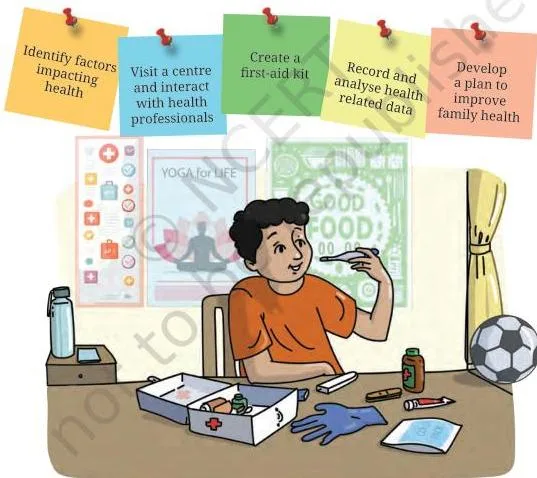
Figure 6.1 sets out the project’s organising idea: health is not one habit but several working together. Diet, sleep, physical fitness, mental well-being and environment all feed into the same result — how well the family stays well (NCERT, p. 138).
| Factor | What the book says | NCERT page |
|---|---|---|
| Diet and nutrition | Three main meals plus 1–2 healthy snacks at consistent intervals; at least 6–8 glasses of water daily; favour home-cooked food and limit outside orders, processed snacks, sugary drinks and fried food. | 142 |
| Sleep pattern | About 9–11 hours for ages 6–13; about 8–9 hours for adults; more than 11 hours below age 5. Keep a regular sleep schedule and avoid screens, loud music and heavy meals in the hour before sleep. | 142 |
| Physical fitness | Lack of activity and a sedentary lifestyle harm body functions in the long run. Consistency matters more than intensity — choose an activity you like, be it yoga, sport or a simple walk. | 142 |
| Mental well-being | Mental and physical well-being are interconnected. Spending time with family and friends, and on productive activities including games and sports, helps protect it. | 143 |
| Environment | Checked through the environment queries of Table 6.2, the \( H_2S \) water test and the soak pit activity — drains, stagnant water, air and noise all affect health. | 151–155 |
All five factors carry equal weight in the survey that follows. The environment factor is the one you cannot read from a person — it is checked through the environment queries in Table 6.2, the \( H_2S \) water test and the soak pit activity.
Reading the project’s diagrams: what each figure teaches
The figures in this project are procedures, not decoration — each one shows a sequence you will practise or a result you must read. The subsections below walk through the figures you will use most during the activities.
Figure 6.2 — the health-centre visit
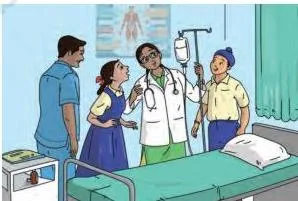
Activity 3 takes you to a hospital, PHC or CHC. Figure 6.2 shows the visit as an interaction with healthcare professionals (NCERT, p. 144): observe how an expert treats patients, which equipment is used, and how the patient’s comfort is taken care of. What you learn here feeds the visit record in your handbook.
Figures 6.3 and 6.4 — first-aid as three steps each
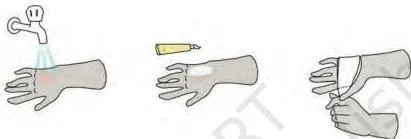
Both figures reduce first-aid to three steps, so you can practise them in the workshop (NCERT, p. 147).
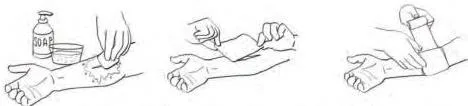
Minor wound (Figure 6.3):
- Clean the wounded area.
- Place gauze over the wound.
- Tie the bandage around the wound.
Minor burn (Figure 6.4):
- Wash under running tap water.
- Apply ointment.
- Cover with a loose bandage, ensuring no pressure on the burn.
Figure 6.5 — the ORS recipe, step by step
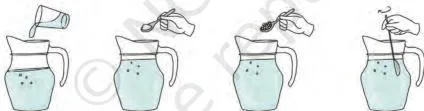
ORS — oral rehydration solution — is the drink prepared when someone is dehydrated. The chapter presents the recipe as Figure 6.5 (NCERT, p. 147); follow the four steps in order:
- Take one litre of water.
- Add half a teaspoon of salt.
- Add eight teaspoons of sugar.
- Stir well.
Figure 6.6 — components of the first-aid kit
Figure 6.6 shows the components of a ready first-aid kit (NCERT, p. 148). The materials list in the chapter’s ‘What will I need?’ section (NCERT, p. 140) is the packing checklist.
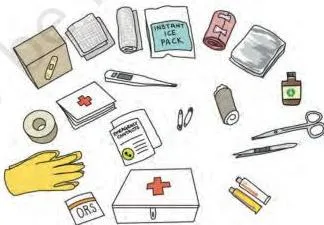
The kit holds small bandages, cotton balls or swabs, medical tape, hand sanitiser, masks, gloves, antiseptic ointment, salt, sugar, ORS, a thermometer, tweezers, scissors and safety pins, plus any basic medicines the doctor advises. One workshop rule to remember: the kit must be easy to reach, but out of younger students’ reach (NCERT, p. 148).
Figure 6.7 — reading the H2S test result
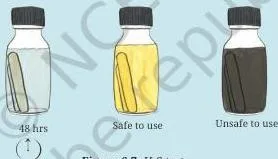
The \( H_2S \) kit tells you whether water is safe to drink. After 24–28 hours, read the colour (NCERT, p. 153): golden brown that stays means the water is safe; black means it carries harmful bacteria. If the test fails, inform the people using that water — the book suggests painting a poster and placing it near the source.
Figures 6.8 and 6.9 — building the soak pit
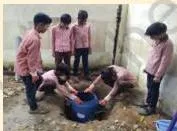
A soak pit drains excess water from the kitchen or washing area so it cannot stagnate and breed mosquitoes (NCERT, p. 155). Figure 6.8 shows students building one; Figure 6.9 is the cross-sectional design you follow:
- Dig a \( 1\ \text{m} \times 1\ \text{m} \times 1\ \text{m} \) pit — one metre by one metre by one metre — where the excess water will be released.
- Make 20 cm alternating layers of sand and brick.
- Add a 10 cm layer of sand on top.
- Arrange a pipe or channel to carry the excess water into the pit.
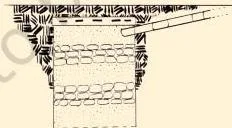
Keep the pit at least 5 metres from a borewell, well or other water source, and also 5 metres from buildings. You can place an old drum with holes inside the pit and build the same layers inside the drum (NCERT, p. 155).
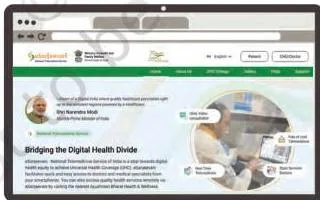
Figure 6.10 — the e-Sanjeevani telemedicine portal
e-Sanjeevani is a telemedicine portal managed by the Ministry of Health and Family Welfare (NCERT, p. 159). Figure 6.10 shows the portal. The extension task uses it: find out how a patient can consult a doctor online through e-Sanjeevani.
Key terms you will use in your handbook
This is a lookup table for the words the project keeps using. If a term stops you mid-activity, check it here and go back to work.
| Term | What it means in this project | NCERT page |
|---|---|---|
| Family health | The overall physical, mental and emotional well-being of all members of a family; individual health and family health are interconnected. | 139 |
| First-aid | Emergency treatment given before the patient is taken to the doctor. | 146 |
| Preventive action | Care taken over diet, sleep, physical fitness, mental well-being and environment so people stay as healthy as possible. | 148 |
| Potable water | Water that is clean and safe to drink. | 152 |
| \( H_2S \) strip test | A simple kit that checks drinking water for bacterial contamination. | 153 |
| Decibel (db) | The unit of sound; noise above 85 decibels is considered harmful for humans. | 152 |
| Air Quality Index (AQI) | A measure of air pollution; it can be checked for your location on the MAUSAM website of the India Meteorological Department. | 152 |
| Soak pit | A pit that soaks excess water from the kitchen or washing area so it cannot stagnate and breed mosquitoes. | 155 |
| PHC / CHC | Primary Health Centre / Community Health Centre — the local public health centres you visit in Activity 3. | 144 |
| ASHA worker | Accredited Social Health Activist — a community health worker you can ask for answers to family health questions. | 143 |
| ORS | Oral Rehydration Solution — the salt-and-sugar drink prepared when someone is dehydrated. | 147 |
The eight activities in order: what to do, what to record
The project is a chain — each activity’s output becomes the next one’s input. Work through the list in order, and record as you go.
- Activity 1 — Factors affecting health (p. 141). Give examples of how each listed factor impacts us — lack of hygiene, pollution, an unclean environment, poor diet, loneliness, lack of sleep, lack of exercise, excessive TV or mobile use — and add any factor you feel is important. Then sort them: which factors can you do something about, and which are out of your control? Output: the completed list in your handbook.
- Activity 2 — Framing family health questions (p. 143). Write the questions your family’s health raises, leaving space for answers. The book’s samples include ‘Why does my 4-year-old sister catch a cold so often?’ and ‘Why do my parents say no TV before sleeping?’ Output: your own question list, which later activities answer.
- Activity 3 — Visit to a hospital, PHC or CHC (pp. 144–145). Observe a health expert’s day: how patients are treated, what equipment is used, how patient comfort is handled. Ask the expert to demonstrate the first-aid kit and help list its materials. Record the centre’s details and emergency contacts — national emergency number 112 (police, ambulance, fire) and ambulance number 108. Output: the completed visit record for your handbook.
- First-aid kit workshop (pp. 147–148). An expert runs this workshop. You discuss the kit’s importance, decide its components, organise and label them, build the kit in a wide metal container or a bag with pockets, mark it ‘first-aid kit’, practise its use, and place it somewhere easy to reach but out of younger students’ reach. Output: a working, labelled first-aid kit.
- Activity 5 — Factors at different ages (pp. 149–153). Survey the six age groups — below 5, 6–18, 19–30, 31–45, 46–60, above 60 — using Table 6.1. If your family misses an age group, ask a relative, neighbour or friend; for under-5s, ask the parents. Record environment observations in Table 6.2, measure noise in decibels, check the Air Quality Index on the MAUSAM website, and test the drinking water with the \( H_2S \) kit. Output: filled Tables 6.1 and 6.2 plus the water-test record.
- Activity 6 — Analysing the survey (p. 154). For each family member and each factor, note in Table 6.3 what is a cause of concern, who can address it, and who is responsible — society, self, doctor, family or others. Keep in mind the specific needs of elders, babies and persons with disabilities (Divyang). Output: one row of Table 6.3 per family member.
- Activity 7 — Making the action plan (pp. 154–155). In Table 6.4, note which observations concern you, who is responsible for fixing them, how you will inform them, and what you can do yourself — the book’s example is controlling mosquitoes, through a cleanliness drive or by raising the issue to the municipal authority with elders’ support. Then build a soak pit to stop stagnant water. Output: Table 6.4 plus the class’s most important environmental action.
- Activity 8 — Preventive action (pp. 156–157). For each factor — nutrient-rich diet, sleep, physical fitness, mental well-being, environment, special needs — list three key actions you will implement with your family. Then choose five key actions and track them monthly in Table 6.5. Output: the monthly action tracker.
Mistakes students make in this project — and the correction
Most project errors are not in the doing but in a misread instruction. The book itself flags several of these — know them before you start.
| Mistake | Correct rule from the book | How to check your work |
|---|---|---|
| Treating first-aid as the treatment | First-aid is emergency care only, given before the patient reaches the doctor (p. 146). | After first-aid, ask: does the person still need a doctor? If yes, first-aid did its job — it is not the cure. |
| Reading the \( H_2S \) result as safe when the colour changes | Golden brown that stays means safe; turning black means the water is contaminated with harmful bacteria (p. 153). | Read the bottle after 24–28 hours without disturbing it. Any black = not safe; inform users and discuss cleaning the water. |
| Putting the soak pit too close to a water source or building | Keep it at least 5 metres from a borewell, well or other water source, and 5 metres from buildings (p. 155). | Measure the distance before you dig, not after. |
| Using one sleep rule for the whole family | Sleep hours differ by age: 9–11 hours for ages 6–13, 8–9 for adults, more than 11 below age 5 (p. 142). | Match each member’s answer in Table 6.1 to their age band. |
| Skipping the safety routine after the health-centre visit | Wash hands thoroughly after the visit; dispose of used gloves, masks and bandages as directed (p. 140). | Before touching your notebook, check that you washed up and disposed of the protection as told. |
| Ignoring the ‘Did you know?’ items | They carry protective facts: noise above 85 decibels is harmful, and mosquito nets prevent malaria (pp. 152, 157). | Add these observations to your environment notes in Table 6.2. |
Completing and recording your project: what the book expects
This project is built on what you record, not just what you do. The book expects these outputs in your handbook:
- The handbook itself — a notebook or binder with a separate section of 3–4 sheets for each age group you survey (p. 149).
- Filled survey tables: Table 6.1, basic health data, and Table 6.2, environmental factors.
- The health analysis — Table 6.3, one row per family member.
- The preventive healthcare action plan — Table 6.4.
- The monthly action tracker — Table 6.5, tracking five key actions.
- A timeline of the approximate hours each activity took (p. 158).
- Reflection answers: ‘What did I learn from others?’ (p. 158) and ‘Think and Answer’ (p. 160).
The ‘What else can I do?’ page (p. 159) offers three extension tasks: plan the disposal of health-related waste such as diapers and expired medicines; draw up a vaccination plan for children in your community and join a polio campaign; and explore the e-Sanjeevani portal for online doctor consultations.
Textbook contents and the examinable syllabus are not always identical — check the current official syllabus for this subject. The chapter itself contains no marks or grading instructions; it works through the records you keep.
Project 6 in five points: what to remember
A last-read recap for the night before submission — five points that compress the whole project.
- Five factors, one health: diet, sleep, physical fitness, mental well-being and environment work together, not one at a time (p. 139).
- Different ages, different needs: survey each family member separately, from below 5 to above 60 (p. 149).
- First-aid is a stopgap: emergency care before the doctor arrives, never the treatment itself (p. 146).
- The environment needs checking too: test water with the \( H_2S \) strip, stop stagnant water with a soak pit, and note noise and AQI readings (pp. 152–155).
- A plan needs a tracker: pick five key actions and track them monthly in Table 6.5 (p. 157).
Related resources
This listing is maintained for the 2026-27 academic session using the NCERT textbook information available to us. NCERT remains the authority for confirming the latest edition.
Continue with the other projects of the Kaushal Bodh book: Project 5, Work in Human Services, comes right before this one, and Project 7, Planning for Kaushal Mela, follows it. Both live in the Class 7 vocational education section, inside the Class 7 hub of the CBSE notes library.
The official NCERT textbook portal carries this chapter’s PDF for a fresh download whenever you need it. The Air Quality Index used in Activity 5 is on the MAUSAM website of the India Meteorological Department, named in the chapter on page 152.
| What the chapter holds | Count | Where it is used |
|---|---|---|
| Printed pages | 23 | |
| Figures with NCERT captions | 14 | |
| Tables | 8 | |
| Official NCERT PDF | Download the chapter PDF | the chapter exactly as NCERT publishes it |



Reference: NCERT Class 7 vocational education textbook, Project 6, official edition on ncert.nic.in.
Sources and data verification
Where this page’s information comes from, stated plainly:
- The page describes NCERT’s Kaushal Bodh Grade 7 (Vocational Education) textbook, Project 6: Family Health Handbook, printed pages 137–160, official edition on ncert.nic.in.
- It covers this NCERT textbook only — it is not a statement of the full CBSE subject scheme.
- The listing is maintained for the current academic session from the NCERT information available to us.
- NCERT settles textbooks, editions and PDFs; CBSE settles curriculum, syllabus and examinations.
Frequently asked questions
Short, grounded answers to the questions students search for about this project.
What is Project 6 in the Class 7 vocational education book about?
Project 6 has you build a family health handbook for your own family. You study the five factors of health, survey family members of different ages, visit a health centre, build a first-aid kit, test drinking water and finish with an action plan (NCERT, p. 139).
How do I use the H2S strip test kit to check if drinking water is safe?
Pour the water sample into the bottle up to the 20 ml mark, cap it and mix well — the water turns golden brown. Keep the bottle at room temperature, about 25 to 35 degrees Celsius, without disturbing it for 24–28 hours.
Read the colour now: if it stays golden brown, the water is safe; if it turns black, the water is contaminated with harmful bacteria and is not safe to drink (NCERT, p. 153).
What should a family first-aid kit contain?
The kit holds small bandages, cotton balls or swabs, medical tape, hand sanitiser, masks, gloves, antiseptic ointment, salt, sugar, ORS, a thermometer, tweezers, scissors and safety pins, plus basic medicines only as the doctor advises (NCERT, p. 140). Keep it labelled ‘first-aid kit’, somewhere accessible but out of younger children’s reach (NCERT, p. 148).
What are the five factors of health that the project asks you to study?
Diet and nutrition, sleep pattern, physical fitness, mental well-being and environment. The book stresses that they are interconnected — no single factor keeps a family healthy on its own (NCERT, p. 139).
How far should a soak pit be from a borewell or a building, and why?
At least 5 metres from a borewell, well or other water source, and also 5 metres from buildings (NCERT, p. 155). The chapter gives the distance as a fixed safety rule: the pit soaks excess water from the kitchen or washing area, so it should not sit close to the water you drink or to building walls.
Mark and measure the spot before you dig.
What is the ORS drink recipe used in this project?
Take one litre of water, add half a teaspoon of salt, add eight teaspoons of sugar, and stir well (NCERT, p. 147). This is the drink prepared for dehydration, shown in the chapter as Figure 6.5.
Explore Class 7 Vocational Education Books
Related chapters: