
This page covers Work in Human Services Class 7 — chapter 5 of the NCERT Kaushal Bodh vocational education textbook, whose Project 5 is Storytime with Puppets. The chapter runs from printed page 106 to page 137 of the book (31 pages), and the official PDF is right here in the download box below.
Download the Work in Human Services Class 7 chapter PDF
NCERT Work in Human Services Class 7 Chapter 5 PDF — the official NCERT edition of Kaushal Bodh, Grade 7, chapter 5 (Work in Human Services, Project 5: Storytime with Puppets), printed pages 106–137. The same file is published on the NCERT textbook portal at ncert.nic.in.
Chapter at a glance
The table below lists what the chapter holds. What matters for your project is what the chapter teaches you to do.
- One project: Project 5, Storytime with Puppets — everything in the chapter feeds this single show (p. 108).
- Eight activities: Activities 1–8 carry you from choosing a story to staging the show (pp. 112–135).
- Seven puppet types to try: sock, spoon and fork, slipper or shoe, ball, vegetable, leaf, cardboard (pp. 121–124).
- Seven show elements to plan: stage, backdrop, props, voice, sound and music, light, puppeteer (pp. 129–134).
- Planning tables and a pre-show checklist you complete as you go: Tables 5.1–5.6 (pp. 116–135).
Because the chapter is project-based, it has no numbered exercise set — the work is the activities, the planning tables, the checklist and the reflection questions themselves.
What this chapter covers: one project, four skills
This chapter is not a collection of separate topics. It is a single complete project, and that project builds four specific abilities — the chapter states them before any activity begins.
‘Work in Human Services’ is the chapter theme; its Project 5 is Storytime with Puppets (p. 108). The opening pages also name a second possible project, ‘Family Health Handbook’ — you take up only one project, either one of these or one you design with your teacher’s help (p. 106).
What will I be able to do? — the four outcomes the project promises (pp. 111–112):
- Write a script based on a story.
- Make puppets using different types of materials.
- Use music, sound, light and voice modulation as per the story.
- Narrate a story through a puppet show.
How do I keep myself and others safe? — the chapter’s safety checklist (p. 112), in five groups:
- Tool safety: use tools only as instructed and follow the necessary safety precautions.
- Storing delicate work: your workspace fills with raw materials and semi-finished work; store pieces safely to avoid accidental or unintended damage.
- Ventilation and light: work in a properly ventilated and well-lit room.
- Sensitivity to others: be sensitive to others’ sentiments and spread positive messages; if your story draws on real life, get permission from the people concerned.
- Internet safety: ask your teacher for help, do not upload or download anything, and do not share personal information online.
The book closes the project by naming jobs connected to this work (p. 137): script writer, puppet maker, costume designer, voice modulation, and light and sound technician.
Key concepts of Work in Human Services Class 7
This chapter is a step-by-step project, so the ideas below are the ones you will use while working through its eight activities. Each concept is tied to the page where the chapter explains it.
What ‘human services’ means in this chapter
Human services are about serving people and interacting with them in different ways (p. 106). The chapter teaches this service through projects — you build something for other people to use or enjoy.
The puppetry link is explicit: puppet shows have been used to share sensitive social messages people hesitate to discuss — addiction, superstition, other social ills — and to involve people who otherwise stay aloof (pp. 110–111). Since the puppet, not the human, speaks, the audience will listen and laugh about things that would otherwise make them angry or upset.
That is why the project sits inside ‘Work in Human Services’.
Storytelling traditions the chapter builds on
The chapter opens with history before any making, because a puppet show is one more form of a very old tradition. Storytelling forms keep changing — but puppet shows have persisted (p. 110).
- Ajanta cave paintings — made between the second century BCE and the fifth century CE at Chhatrapati Sambhajinagar in Maharashtra; they tell the Jataka tales through paintings (p. 109).
- Oral traditions — Baul songs in Bangla, Dastangoi in Urdu, Katha in different languages, Kavad in Rajasthan (a wooden shrine that opens as the story unfolds), Yakshagana in Kerala and Karnataka, and Ram Leela across the country (pp. 109–110).
- Modern forms — writing, photography, cinema, animation (p. 110).
Traditionally these performances were done without a written script (pp. 109–110) — your project, by contrast, begins by writing one.
What counts as a puppet — and what does not
A puppet is a human or animal figure that can be moved by the puppeteer (p. 110).
The chapter gives a memorable test. A clockwork doll that moves on its own is not a puppet, but a simple sock with eyes, nose and mouth stitched on is a puppet if it moves with the help of the puppeteer (p. 110).
Puppetry is the art of moving puppets by hand, rods or strings to narrate a story; the person who moves the puppet is the puppeteer. The advantage the chapter names: a show needs only one or two humans and a few puppets, and it can be carried from place to place (p. 110).
How a story becomes a script
Before you make a single puppet, the chapter makes you write. The script is the instruction manual every other part of the show follows — props, sound, light, even the way each character speaks.
The chapter’s order has a reason: you have to make puppets, write a script and put on a show, so the story must be short and simple but with some drama or action (p. 115). It also needs at least 2–3 characters (p. 117) — animals, humans or aliens.
Before choosing, the chapter asks just one question: what will interest people in your show (p. 112)?
Why story before script before puppets? Because the story decides the characters, and the puppets are made according to those characters — make puppets first and you will probably have to remake them.
A script is the written show. It contains (p. 117):
- the step-by-step flow of scenes, dialogues and emotions of the characters;
- the position and movement of the puppet(s) in each scene;
- short songs or poems, and light and sound effects;
- the style of speaking — natural, casual, formal, authoritative, submissive — depending on the character and the scene.
The chapter gives you three planning tables. Table 5.1 maps the key elements of your chosen story — what it is about, its title, characters, setting, whether the setting changes, plot, sequence of main events, central message (pp. 116–117).
Table 5.2 shows a finished sample script, ‘Gopal and the Hilsa Fish’: a king who forbids talk of the fish in his court, and a courtier who accepts the challenge to bring a huge Hilsa fish to the court without anyone mentioning it.
The courtier’s trick: shaving half his beard and smearing ash on himself, so the surprise keeps people silent (pp. 117–118).
Table 5.3 is the blank four column script template you fill.
Props are objects other than puppets, used on stage to show the setting clearly — like the king’s throne — and they can easily be moved around (p. 119).
A sample script in the chapter’s four column script template. This is an original example — ‘The Thirsty Crow’ — so you can see the template at work before writing your own lines in Table 5.3.
| S. No. | Character | Dialogue and style | Props required | Special effects |
|---|---|---|---|---|
| Scene 1: A hot afternoon in a dry field. A clay pot stands to one side. Backdrop: a dry field with a bright sun. | ||||
| 1 | Narrator | (In a calm voice): It was a hot afternoon, and a thirsty crow flew over a dry field. | Clay pot with a little water | Sun cut from yellow chart paper, pasted on the backdrop |
| 2 | Crow | (Tired voice, flapping wings): What a hot day! I must find water soon. | — | — |
| 3 | Crow | (Peering into the pot, worried): Oh no! The water is too low for my beak to reach. | — | — |
| 4 | Crow | (Slowly, thinking aloud): If I drop pebbles into the pot, the water will rise. | Pebbles made from crumpled paper | — |
| 5 | Crow | (Dropping pebbles, counting happily): One… two… three… four! The water is climbing. | — | — |
| 6 | Crow | (Bending down, satisfied): Now I can drink. Never give up! | — | — |
Character sketch and the seven puppet types
Before making a puppet, decide what it is like as a person — tall or short, cheerful or grumpy, outgoing or shy. The chapter calls these characteristics, and deciding them is making a character sketch (pp. 118–119). The sketch decides the face and body, the expression, the voice, and mannerisms such as jumping when excited or slumping when sad.
The chapter also gives a graph-paper method for drawing a bigger puppet (p. 120): trace the picture onto tracing paper, paste the tracing on graph paper, draw proportionate lines on chart paper, copy each part onto the chart paper, erase the lines, colour it, paste it on cardboard and attach a stick.
Then come the seven puppet types the chapter teaches, in order (pp. 121–124):
- Sock puppets (pp. 121–122)
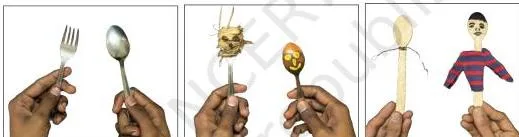
- Spoon and fork puppets (p. 122)
- Slipper or shoe puppets (pp. 122–123)
- Ball puppets (p. 123)
- Vegetable puppets (p. 123)
- Leaf puppets (pp. 123–124)
- Cardboard puppets (p. 124)
The full comparison — materials, movement and page — is in the figure walkthrough below. The chapter stresses that puppets can be made from anything available: clay, soft wood, grass, wastepaper, used bottles, thermocol, cardboard or any other suitable material (p. 121).
The seven elements of a puppet show
Activity 7 lists what makes a great show. Each element has a separate job, so your team can divide the work (pp. 129–134):
- Stage (pp. 129–130): space where the puppets are clearly visible, plus space for the audience to sit. Keep the show’s puppets close to the stage but out of sight — for example, behind the cloth covering the table.
- Backdrop (p. 131): shows the setting of the story and changes as scenes change; draw or paint it on chart paper or an old bedsheet, or slide it on a curtain using hooks or hoops.
- Props (pp. 131–132): objects other than puppets that show the setting; anything the puppeteer holds must be very light, so use paper, aluminium, cardboard or disposable containers.
- Voice (p. 132): voice modulation is how the puppeteer acts. Give each puppet a distinct voice — a lion deep and commanding, a rabbit high-pitched and playful — speak clearly and loudly, and practise emotions like happiness, fear and excitement.
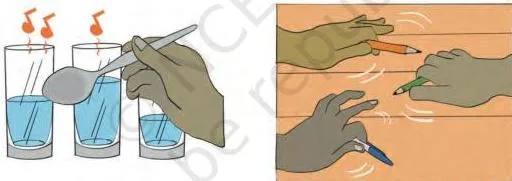
- Sound and music (pp. 132–133): background music and effects such as thunder; make them with instruments, by tapping a desk with a pencil or scale, by tapping glasses or bottles with different water levels, or by whistling into a microphone for wind.
- Light (p. 133): so the audience can see and for effects — a torch behind curtains for moon, sun or magic lamp, fairy lights, table lamps, diya. For an outdoor daytime show, light has no role.
- Puppeteer (pp. 133–134): rehearse the dialogues well — the puppet is speaking, not you; know each puppet’s entry ‘in’ and exit ‘out’; look at the puppet and keep your face flat without emotions so the audience watches the puppet.
Figure walkthrough: what the chapter’s pictures teach
This chapter is a picture-led manual — its figures carry real instructions, from tying twigs to hiding the puppeteer. The walkthrough below reads the key figures aloud, in the order you meet them.
Puppets and storytelling traditions (Figures 5.1, 5.2, 5.3)
Figure 5.1 is the goal of the whole project: an audience watching a show.
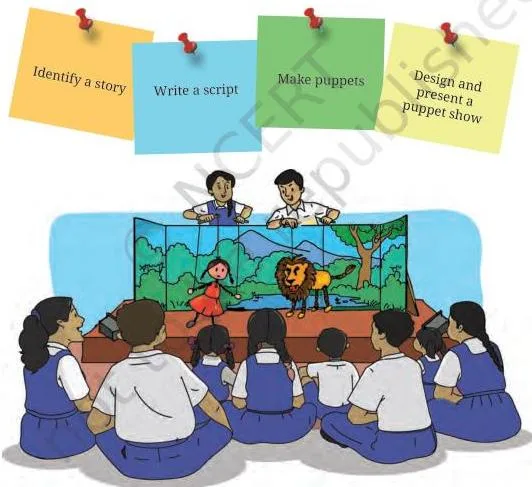
Everything you make — puppets, backdrops, props — exists for this moment (p. 109).
Figure 5.2 shows a shadow puppet show, which uses light and the shadow of puppets to tell stories from the ancient epics (p. 110).
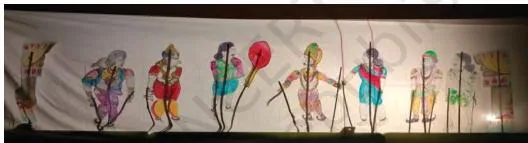
Notice the light in Figure 5.2: it is the same element you will plan under Activity 7.
Figure 5.3 is the chapter’s proof that puppets are ancient in India: a puppet-headed bull excavated between 2012 and 2014 at Karanpura in Rajasthan, from the Sindhu–Sarasvati civilisation (p. 111).
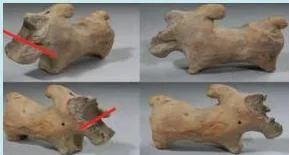
The head is missing, but the grooves show a string could pass through it to make the head move — a movable puppet, thousands of years old.
From story to script to character (Figures 5.4, 5.5, 5.6)
These three figures connect the writing half of the project to the making half.
Figure 5.4 is the finished puppet of Gopal from the sample script ‘Gopal and the Hilsa Fish’ — an idea from a character sketch becomes an object you can hold (p. 119).
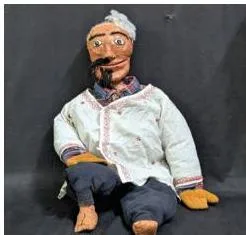
Figure 5.5 shows a scared lion made of paper and his mouse friend, a sock puppet, in one scene — two materials side by side, with the emotion written on the faces (p. 120).
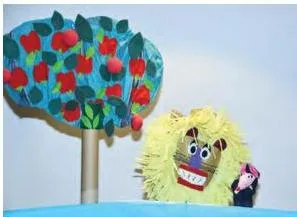
It supports Activity 5: before making, you decide how the character looks and feels.
Figure 5.6 shows the graph-paper method for making a rabbit — trace the picture, paste the tracing on graph paper, copy each part proportionally onto chart paper, erase the lines, colour, and attach a stick (p. 120).
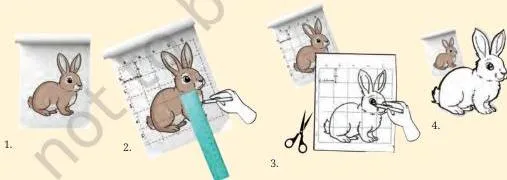
Seven ways to make a puppet (Figures 5.7, 5.10, 5.13)
Three of the seven puppet types are pictured here; the rest are described in the book. All of them use materials already around the house.
Figure 5.7 shows sock puppets with wool stitched on as hair. They move by being worn over the hand — your fingers become the mouth (p. 122).
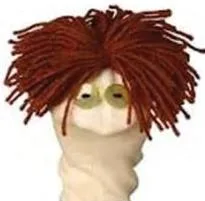
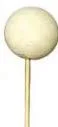
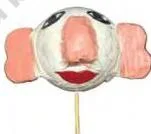
Figure 5.10 shows ball puppets: a face painted on a ball, a nose and ears of paper stuck on, and a broomstick inserted into the bottom so you can move it (p. 123).
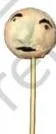
Figure 5.13 shows a cardboard puppet built from discarded cardboard — eyes, nose, mouth, ears and hair cut out and pasted on, with broomsticks taped together and inserted into the body to move it (p. 124).
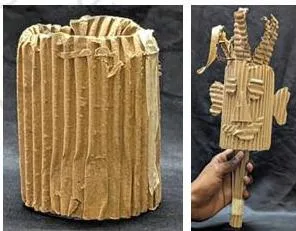
The comparison table of the seven puppet types below covers material, movement method and page:
| Puppet type | What it is made from | How it moves | Page |
|---|---|---|---|
| Sock | Old socks; wool stitched on for hair | Worn over the hand | p. 122 |
| Spoon and fork | Steel or wooden spoons and forks; painted faces; paper clothes | Held and moved by the handles | p. 122 |
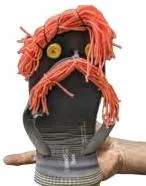
| Slipper or shoe | Face painted on the sole; buttons or cork for eyes; wool for hair and moustache | Held by the sides or worn on the hand | pp. 122–123 |
| Ball | Ball, broomstick, paint, paper cutouts for nose and ears | Broomstick inserted into the bottom | p. 123 |
| Vegetable | Potato, radish, carrot, toothpicks | Moved by the sticks | p. 123 |
| Leaf | Green or dried leaves; attached twigs for hands and arms | Held wherever you want to move it | pp. 123–124 |
| Cardboard | Discarded cardboard; cut and pasted features | Broomsticks taped together and inserted | p. 124 |
Memory aid for the seven types in chapter order: Some Students Simply Buy Very Light Cardboard — Sock, Spoon, Slipper, Ball, Vegetable, Leaf, Cardboard.
Figures 5.8 (p. 122), 5.9 (p. 123), 5.11 (p. 123) and 5.12 (p. 124) show the spoon-and-fork, shoe-and-slipper, potato and leaf puppets in the book — check them before you choose your own type.
Head, face and expression (Figures 5.14, 5.15, 5.16)
The most technical pages are about the puppet head, because the head carries the expression the audience reads (pp. 124–126).
Figure 5.14 shows how to make a puppet head (p. 125): tie two small twigs in a plus sign, make a ball of straw, husk or newspaper, and tie it around the plus sign with thread.
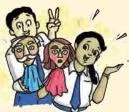
Then mix a water–glue solution in the ratio 3 : 1 water to glue, dip torn pieces of paper into it, and paste them over the whole ball. Add a nose and eyes, then paint.
Figure 5.15 shows the papier-mâché alternative; the chapter tells you to search online using the keywords ‘how to make papier mâché’ (p. 126).

Figure 5.16 shows different kinds of faces and a painted puppet face. The chapter’s rule: imagine a combination of eyes, nose, lips and ears that expresses the emotion — smiling, frowning, laughing (p. 126).
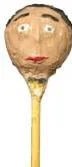
And one permission worth remembering: it is not necessary to paint the skin colour exactly like our skin. A puppet is an imaginary character, so the colours can be imaginary (p. 126).
The body is simpler than the head. Cut an old fabric like a long dress so the stick attached to the head is covered, stitch it with thread and needle, add a shirt and skirt or pants if you wish, and cut cardboard hands to attach to the sleeves (Figure 5.17, pp. 126–127).
Figure 5.18 shows the finished puppets ready for the show (p. 128).
For movement, the chapter suggests: tie string to the back of the neck or the hands, open the jaw by hand to make the puppet laugh, use the stick to make it fly, or wear it over your hand (pp. 127–128).
Because expressions and positions change — a smiling puppet and a sad one — you may need more than one puppet for the same character (p. 128).
Stage, backdrop, props and music (Figures 5.21, 5.24, 5.25, 5.26)
These four figures cover the production around the puppets — how the show is set up.
Figure 5.21 shows the easiest classroom stage: a bedsheet covering a table. The sheet hides the puppeteer, who moves the puppets by hand or with sticks (p. 130).
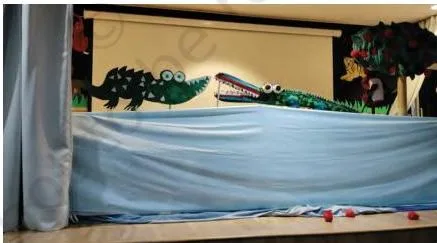
Figure 5.24 shows a backdrop of a jungle with animals. Settings are drawn or painted on chart paper or an old bedsheet and change as scenes change (p. 131).
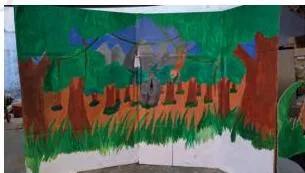
Figure 5.25 shows a tree used as a prop so a monkey can pluck an apple — the monkey’s hand is moved by a stick attached to it. A prop can do story work, not just decorate (p. 132).
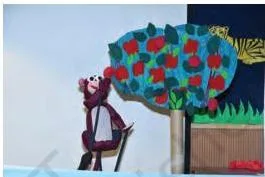
Figure 5.26 shows students making music — tapping a desk with a pencil or scale, and tapping glasses or bottles filled with different water levels (p. 133).
Comparison of the three stage designs — and the note on when each one suits a show:
| Stage design | How it works | When it suits a show |
|---|---|---|
| Bedsheet over a table (Figure 5.21, p. 130) | The sheet hides the puppeteer; puppets are moved by hand or with sticks | Simplest — quick classroom shows with hand or stick puppets |
| Bedsheet as a curtain tied to a string behind a table (Figure 5.22, p. 131) | The sheet covers the puppeteer like a curtain | When the puppeteer uses strings |
| Rectangular frame used like a film screen (Figure 5.23, p. 131) | The frame makes a ‘window’ for the performance | Most theatre-like — the window must be large enough for the puppets and their movement to be clearly visible |
One rule on props applies across all three stages: use thick cardboard for furniture like a chair or a throne, but anything the puppeteer holds must be very light — paper, aluminium, cardboard or disposable containers (pp. 131–132).
Definitions: the working words of the chapter
These are the working words of the chapter — the terms the activities assume you know.
| Term | Plain meaning | Page |
|---|---|---|
| Human services | Serving people and interacting with them in different ways | p. 106 |
| Puppet | A human or animal figure that can be moved by the puppeteer | p. 110 |
| Puppetry / puppeteer | The art of moving puppets by hand, rods or strings to narrate a story / the person who moves the puppet | p. 110 |
| Script | The written flow of scenes, dialogues and emotions, with movements, effects and speaking style | p. 117 |
| Props | Objects other than puppets, used on stage to show the setting | p. 119 |
| Characteristics / character sketch | Deciding a puppet’s traits — height, mood, confidence — before making it | p. 119 |
| Backdrop | The painted background that shows the setting of the story | p. 131 |
| Voice modulation | Changing your voice to act — a distinct voice for each puppet, clear and loud | p. 132 |
Common mistakes in the puppet project — and the chapter’s warnings
Most problems in this project come from a handful of repeatable mistakes — and the chapter quietly warns against all of them. Here is the list of project mistakes the chapter itself warns against, each with its page:
| Mistake | Correct rule (chapter’s warning) | How to check your answer |
|---|---|---|
| Choosing a long or complicated story | The story must be short and simple but with some drama or action — you still have to make puppets, write a script and stage a show (pp. 115–116) | Could a friend summarise your story in two sentences? |
| Making puppets before writing the script | The order is story first, script second, puppets third — puppets are made according to the characters in the story (pp. 114–115) | Does every puppet you made have a role in the script? |
| Letting the puppeteer’s face show emotion | Puppeteers look at the puppet and keep their face flat so the audience watches the puppet, not the human (pp. 133–134) | In rehearsal, ask a viewer: who were you looking at? |
| Using one voice for every character | Assign each puppet a distinct voice and speak clearly and loudly (p. 132) | Can a classmate tell which puppet is speaking without looking? |
| Making puppeteer-held props heavy | Anything the puppeteer holds must be very light (pp. 131–132) | Hold the prop for ten seconds — is it easy to keep steady? |
| Painting puppet faces in real skin colours | A puppet is an imaginary character, so imaginary colours are allowed (p. 126) | Does the face show the emotion you chose for the character? |
| Leaving delicate semi-finished work unguarded | Store raw material and semi-finished work safely to avoid accidental or unintended damage (p. 112) | Is every finished piece stored where it cannot be knocked over? |
| Treating a self-moving toy as a puppet | A clockwork doll is not a puppet; a sock moved by the puppeteer is (p. 110) | Does your puppet move only when the puppeteer moves it? |
How the project is assessed: the chapter’s own checks
Because this is a project chapter, the book’s own checkpoints are the closest thing to assessment. A teacher works through the same lists you do.
- The four learning outcomes (pp. 111–112) are what the project must prove: write a script based on a story; make puppets from different materials; use music, sound, light and voice modulation; narrate a story through a puppet show.
- The planning tables you must complete: Table 5.1 (key elements of the story, pp. 116–117), Table 5.3 (your script, pp. 117–119) and Table 5.4 ‘Planning your puppets’ (p. 129), which asks for each puppet’s material, what you did, how it moves and how you will use it.
- The 10-point pre-show checklist of Table 5.5 (p. 134) runs from ‘Is your script ready?’ to ‘Have you decided who will introduce the show and who will introduce the cast post the show?’
- The cast list of Table 5.6 (p. 135) — name of the artist and role.
- A time log (pp. 135–136) — mark the approximate hours each of the eight activities took on the book’s timeline.
- Closing reflections (pp. 136–137): ‘What did I learn from others?’, ‘What did I do and how long did it take?’, ‘What else can I do?’ and ‘Think and Answer’ — the last question asks for jobs related to the work: script writing, puppet making, costume design, voice modulation, light and sound technician.
Textbook contents and the examinable syllabus are not always identical — check the current official syllabus for how this subject is assessed. This page does not promise marks or weightage; the chapter itself does not either.
Recap: the project from story to show
This is the whole project as one eight-step workflow — the order you must work in, with the printed page where each step begins.
- Think about what will interest people in your show, then choose a short story with at least 2–3 characters (pp. 112, 115–116).
- Analyse the story using Table 5.1 — title, characters, setting, plot, sequence of main events, central message (pp. 116–117).
- Write the script in the chapter’s four-column script template, Table 5.3 (pp. 117–119).
- Make a character sketch for each puppet — its characteristics decide its face, voice and mannerisms (pp. 118–119).
- Make the puppets — try the seven types, then head, face, body and movement (pp. 120–128).
- Plan the seven show elements — stage, backdrop, props, voice, sound and music, light, puppeteer (pp. 129–134).
- Rehearse, then run the pre-show checklist of Table 5.5 (p. 134).
- Perform, bow, introduce the cast, collect feedback and reflect (pp. 135–137).
The project is itself a human service: the show is made for an audience, and the chapter ends by asking you to see the same work as real jobs (p. 137).
Related resources
This listing is maintained for the 2026-27 academic session using the NCERT textbook information available to us. NCERT remains the authority for confirming the latest edition.
You are here: NCERT books → Class 7 → Vocational Education (Kaushal Bodh) → Chapter 5: Work in Human Services.
From here you can open the Class 7 book hub, the Vocational Education (Kaushal Bodh) Class 7 notes, the previous project (Project 4) or the next one (Project 6). The official NCERT textbook portal publishes the same chapter PDF.
| What the chapter holds | Count | Where it is used |
|---|---|---|
| Printed pages | 31 | |
| Figures with NCERT captions | 35 | |
| Tables | 7 | |
| Activities | 1 | |
| Official NCERT PDF | Download the chapter PDF | the chapter exactly as NCERT publishes it |


Reference: NCERT Class 7 Vocational Education textbook, chapter 5, official edition on ncert.nic.in.
Sources and data verification
- The figures and page numbers on this page describe the NCERT Kaushal Bodh — Grade 7 textbook (vocational education), chapter 5, ‘Work in Human Services’ (Project 5: Storytime with Puppets), English edition, printed pages 106–137.
- This page covers that one chapter only, not the full vocational education curriculum.
- The page is maintained for the current academic session using the NCERT information available to us.
- NCERT settles textbooks, editions and official PDFs; CBSE settles the curriculum, syllabus and examinations.
FAQ: Work in Human Services Class 7 questions
What is ‘Work in Human Services’ in Class 7 Kaushal Bodh?
It is chapter 5 of the NCERT Kaushal Bodh vocational education book for Class 7, and its theme is learning to serve people by working with them.
The chapter’s Project 5, Storytime with Puppets, takes you through writing a script, making puppets and staging a puppet show — the definition it starts from is that human services are about serving people and interacting with them in different ways (p. 106).
Why does a chapter on human services teach a puppet project?
Because puppet shows have been used to share sensitive social messages that people hesitate to discuss — the chapter names addiction, superstition and other social ills — and to involve people who otherwise stay aloof. Since the puppet, not the human, is speaking, the audience will listen and laugh about things that would otherwise make them angry or upset (pp. 110–111).
That makes puppetry a service.
Do I have to make all seven kinds of puppets for the show?
No. The seven types — sock, spoon and fork, slipper or shoe, ball, vegetable, leaf, cardboard — are examples to try with the materials you have (pp. 121–124). You make the puppets your story’s characters need, and you can make more than one puppet per character with different expressions and positions (p. 128).
Which stage setup is easiest for a school puppet show?
A bedsheet covering a table (Figure 5.21, p. 130). The sheet hides the puppeteer, who moves hand or stick puppets, and it is the simplest setup for a classroom show. Use a bedsheet as a curtain when the puppeteer works with strings (Figure 5.22, p. 131), or a rectangular frame like a film screen for a more theatre-like show (Figure 5.23, p. 131).
Does this chapter have exercise questions or a test?
No numbered exercise set. The chapter is project-based: eight activities, planning tables (Tables 5.1–5.6), a pre-show checklist and reflection questions at the end. Your work — the completed tables and the actual show — is the project. Textbook contents and the examinable syllabus are not always identical, so check the current official syllabus for how the subject is assessed.
Where can I download the official Class 7 Kaushal Bodh Chapter 5 PDF?
From the NCERT textbook portal at ncert.nic.in. The link above labelled ‘NCERT Work in Human Services Class 7 Chapter 5 PDF‘ points to the official portal where the chapter is published.
Explore Class 7 Vocational Education Books
Related chapters: