
Project 2 Class 7 Kaushal Bodh is the School Habitat Garden project — a hands-on chapter of the NCERT Vocational Education textbook for Grade 7 in which you turn an unused corner of your school into a working habitat for birds, butterflies, insects and small mammals.
This page carries the official chapter PDF, then walks you through the whole project: the nine activities, the working tables, the figures and the build steps.
The official chapter file is free on the NCERT textbook portal. Open Project 2 Class 7 Kaushal Bodh PDF (School Habitat Garden) to download the full current edition of the chapter directly from NCERT.
Chapter at a Glance: The School Habitat Garden Project
The chapter is one long project in four phases. Work through them in order, because each phase feeds the next.
- Understand (Activities 1–2): identify the animals around your school and talk to an expert about what they need.
- Observe and plan (Activities 3–5): study natural habitats, record each animal’s needs, and design the garden layout.
- Build (Activity 6): clean the site, prepare the soil, plant, fence the garden and add non-plant elements.
- Keep it alive (Activities 7–9): observe the visitors, maintain the garden on a schedule, and showcase the work.
You will fill working tables numbered 2.1 to 2.7 as you go, and finish with reflection pages called What did I learn from others? and Think and Answer. For how many sections, figures and tables the chapter holds, check the counts table on this page.
What Project 2 Class 7 Asks You to Do
A habitat garden is a patch of land designed so that animals can find everything they need to live. The chapter’s opening argument is simple: every animal needs space, shelter, food and water, and as towns grow, natural habitats shrink, pushing leopards, wolves and even tigers into unfamiliar areas (NCERT, p. 26).
A school habitat garden gives some of that space back.
The chapter uses nearby animals as evidence of adaptation. Pigeons perch on building ledges because their natural habitat is cliffs and rocky hills. House sparrows prefer dense trees and bushes, so as green spaces disappear, sparrow populations decline (NCERT, p. 26). Fireflies, it notes, have not adapted: light pollution blocks their signalling, and they vanish from changed habitats (NCERT, p. 33).
At the end of the project you should be able to do five things (NCERT, p. 28):
- Identify groups of animals in and around the school that the garden can attract.
- Identify their needs in terms of space, shelter, food and water.
- Describe how those needs can be met inside the school habitat garden.
- Design and set up the garden based on those needs.
- Observe the groups of animals the garden attracts.
Three safety rules run through the whole project: be sensitive to animals and do not disturb them, do not damage their habitat, and wear gloves when handling tools and materials (NCERT, p. 29).
Online, ask your teacher for help, check before uploading or downloading anything, and do not share personal information (NCERT, p. 29). Working with tools is a skill the same book takes up in its work with machines and materials project.
Key Concepts: Space, Shelter, Food and Water
This project runs on one framework: the four essentials. Before you design anything, you work out what each animal you want needs under each of these four headings (NCERT, p. 26).
| Need | What it means for the garden | Example from the chapter |
|---|---|---|
| Space | Room to move, feed and raise young without crowding | Carpenter ants colonise a few square centimetres; spiders spin webs much larger than themselves (p. 27) |
| Shelter | A safe place to rest and raise young, away from predators and harsh weather | Squirrels nest high in trees; lizards rest on flat walls where few predators can climb (p. 27) |
| Food | Energy for daily life, from nectar and leaves to insects and leftovers | Nectar, human leftovers, leaves, insects and small animals; birds also collect twigs and dried grass for nests (p. 27) |
| Water | Drinking, bathing and cooling off | Birds drink from puddles and leaking taps; butterflies and ants sip dew from grass (p. 27) |
Once the basics are met, habitats must also give comfort: birds like the bulbul, dove and munia bathe in shallow water containers to cool down and clean their feathers (NCERT, p. 27).
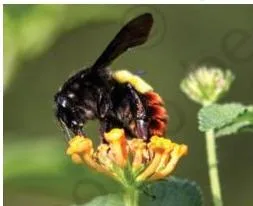
Figure 2.4 shows why nectar-bearing plants belong in the garden. The insect gets food; the plant gets pollinated as pollen rides from flower to flower. One plant can feed and multiply at the same time.
The chapter also introduces the idea of a sanctuary — literally “a safe place where one’s needs are met” (NCERT, p. 28). On a large scale, sanctuaries like Kaziranga (one-horned rhinoceroses), Bharatpur (migratory birds), Periyar (tigers), the Fambong Lho butterfly enclosure in Sikkim and Kanha (barasingha) protect wildlife. A small habitat garden works the same way in miniature.
Figure Walkthrough: Reading the Chapter’s Diagrams
The chapter’s photographs are not decoration — each one is evidence. Here is what to look for in the figures grouped under each idea.
Animals That Share Our Surroundings
Figures 2.1 to 2.3 make the chapter’s opening claim: many animals already coexist with humans in cities and schools.
Figure 2.1 shows the goal of the entire project — a corner of the school designed so that animals can live there comfortably. It is the picture your sketch is working towards.
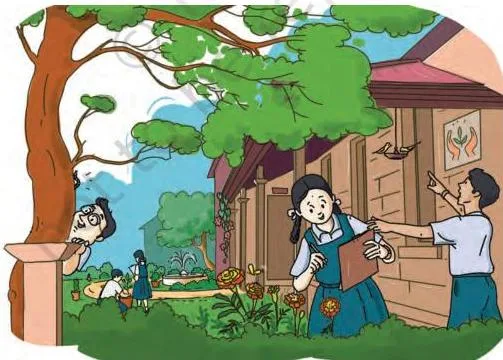
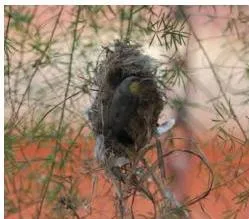
Figure 2.2 shows adaptation: a nest hanging from a veranda roof, where a cliff or tree would have served earlier. Animals that can adapt stay; those that cannot disappear from the area (NCERT, p. 26).
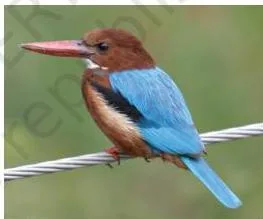
Figure 2.3 is the same story for a kingfisher — wires near water replace the branches it would usually hunt from. Both figures matter when you design: your garden must offer the same comforts that these human-made substitutes provide.
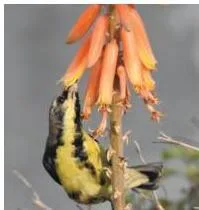
Figure 2.6 answers which animals will come: sunbirds are one of many nectar feeders that flowering plants draw in. The same act that feeds the bird pollinates the flower, so a garden with flowers feeds itself.
Animal Behaviour to Recognise
The next three figures train you to read what animals do. You will look for these behaviours yourself during Activities 3 and 7.

Figure 2.8 is a cautionary example. Fireflies signal to each other with light; as fields become houses and light pollution increases, their signals fail and the population drops (NCERT, p. 33). It shows why the garden must preserve the conditions animals evolved to need.

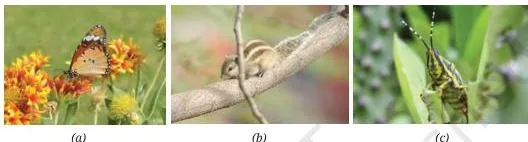
Figure 2.9 compares three habitat stories. Butterflies find brightly coloured flowers; squirrels come down from trees to grassy patches for food; grasshoppers need sunny, grassy, moist ground. Each animal reads the same garden differently, so the design must include different micro-habitats.
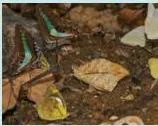
Figure 2.10 names three behaviours your garden must make room for. Dustbathing removes tiny insects from a bird’s feathers; water bathing cleans feathers and keeps them flight-ready; mudpuddling lets butterflies absorb nutrients and water together (NCERT, p. 36). That is why the layout includes shallow pools, a dust patch and moist puddling spots.
Elements You Will Build
The last group previews the making phase — the non-plant elements you add as the garden grows (NCERT, p. 41).
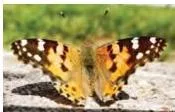
Figure 2.12 explains why a flat rock in a sunny spot is a garden feature, not a leftover: butterflies bask on it to warm their flight muscles. Place rocks where the sun reaches them.
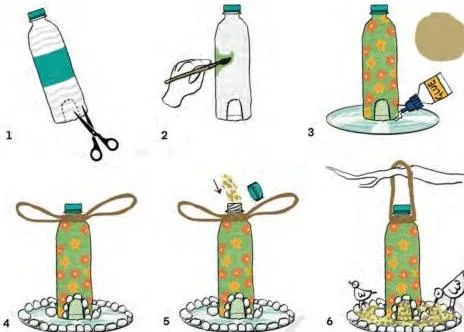
Figure 2.14 shows a bottle feeder that releases seed slowly onto a tray. Keep feeders and water containers at a height so cats and dogs cannot reach them (NCERT, p. 39).
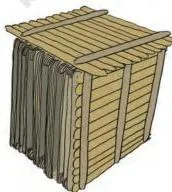
Figure 2.16 is a simple version of the slit boxes the chapter describes: narrow openings let butterflies in but keep birds out. Place it high and sheltered from wind (NCERT, p. 39).
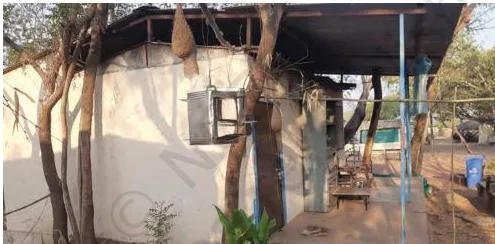
Figure 2.17 closes the arc: from empty ground to a garden with nests, shelters and visitors. As plants grow, the garden becomes a self-sustaining environment where insects feed birds, and birds and spiders control insect numbers (NCERT, p. 42).
Definitions: Terms the Project Uses
This project uses everyday words in precise ways. Here is what each one means when the chapter uses it.
| Term | What it means |
|---|---|
| Habitat | The place where an animal lives and finds everything it needs — space, shelter, food and water (NCERT, p. 26) |
| Sanctuary | An area where animals find safety and their needs are met; a habitat garden can be a miniature sanctuary (NCERT, p. 28) |
| Windbreak | A row of trees, a fence, a wall or a screen that shelters an area from the wind (NCERT, p. 37) |
| Dustbathing | A bird rubbing dry earth or sand through its feathers, while wriggling and flapping, to remove tiny insects and clean its skin (NCERT, p. 36) |
| Mudpuddling | Butterflies gathering at puddles, damp soil or animal droppings to absorb nutrients and water (NCERT, p. 36) |
| Naturalist | A person who understands the natural world through long observation (NCERT, p. 31) |
| Conservationist | A person who explains why animals need protection and suggests ways to protect them (NCERT, p. 31) |
| Zoologist | A person who studies animal behaviour (NCERT, p. 31) |
| Entomologist | A person who works mainly with insects (NCERT, p. 31) |
| Lepidopterist | A person who works mainly with butterflies and moths (NCERT, p. 31) |
| Botanist | A person who studies plants (NCERT, p. 31) |
| Biodiversity | The variety of living things in an area; the chapter notes that a growing garden gains biodiversity (NCERT, p. 42) |
| Food chain | The order of eating and being eaten — insects feed birds, and smaller creatures attract larger birds (NCERT, p. 42) |
Activity Guide: What the Nine Activities Ask You to Do
Each activity has a concrete output, usually a table or a drawing. Work through them in order — the output of one activity is the input to the next.
| Activity | What you do | What you produce |
|---|---|---|
| 1. Identify animals (p. 29) | Look around the school; ask park gardeners and nearby community members what animals they have seen | Table 2.1 — animals you want in the garden, and animals you want to avoid |
| 2. Talk to an expert (p. 31) | Interview a farmer, gardener, naturalist, zoologist or similar expert about the animals you listed | Tables 2.2 and 2.3 — needs of at least two birds, two insects and two small mammals, plus ways to keep unwanted animals out |
| 3. Observe habitats (p. 34) | Visit farmland, water bodies, forests, parks or large gardens early in the morning, when animals are most active | Table 2.4 — observations of habitat and behaviour for each animal |
| 4. Identify needs (p. 35) | Combine the expert’s advice with your observations to pin down each animal’s needs | Table 2.5 — needs under the headings space, food, water, shelter |
| 5. Design (p. 37) | Answer the seven design questions about location, sunlight, windbreaks and disturbance, then sketch the layout | A labelled sketch with mudpuddling, basking, dustbathing, water baths, feeders and plant areas |
| 6. Create (p. 40) | Clean the area, mark the boundary, loosen the soil, add compost, plant, fence and add non-plant elements | The habitat garden itself |
| 7. Observe visitors (p. 43) | Watch animals around water and feeding areas; arrive early, since birds and butterflies are most active at sunrise and sunset | Table 2.6 — observation records of the garden’s visitors |
| 8. Maintain (p. 45) | Water, refill containers, feed birds, weed, clean and compost on a fixed schedule | Table 2.7 — a maintenance schedule with tasks, dates and responsibilities |
| 9. Showcase (p. 46) | Label the garden’s features and prepare a chart or slide presentation | A labelled garden and a presentation for the Kaushal Mela |
Do not skip the expert conversation in Activity 2. The expert’s answers decide where the garden goes, which animals it can attract and how to keep unwanted ones out, and every later design decision rests on what you record there.
Table 2.7 shows the chapter’s suggested rhythm: watering, filling containers, cleaning and composting daily; feeding birds once a week; weeding once a month. Split into small teams, rotate tasks so everyone contributes, and keep a checklist so nothing is missed (NCERT, p. 45).
Using Apps to Identify Animals and Plants
The chapter recommends five identification apps (NCERT, p. 33):
- Seek by iNaturalist — identifies insects, butterflies, birds and animals through image recognition.
- PlantNet — identifies local plant species and explains their importance in conservation.
- eBird — logs bird sightings and adds them to a global citizen-science database.
- Merlin Bird ID — identifies bird species by sound or image.
- Picture Insect — identifies insects.
App safety still applies: ask your teacher before using the Internet, check before uploading or downloading anything, and do not share personal information (NCERT, p. 29).
Designing the Layout: the Questions That Matter
Activity 5 gives you seven design questions. Behind them is a simple logic: the garden must feel safe to the animals, or they will not come (NCERT, p. 37).
- Choose a quiet spot away from heavy human movement, or a terrace with pots close to a boundary wall.
- Note how much sunlight each part gets — full sun, shade, and hours of direct sun — because butterflies need open sunny areas.
- Keep existing trees and shrubs; they act as natural windbreaks and hideouts.
- Plan space for mudpuddling, basking, dustbathing, water baths and feeders, plus a walkway so you do not disturb animals while watering and weeding (NCERT, p. 38).
- Plan against pests: no stagnant water (it breeds mosquitoes) and no stacks of wood or unused boxes (they shelter snakes) (NCERT, p. 39).
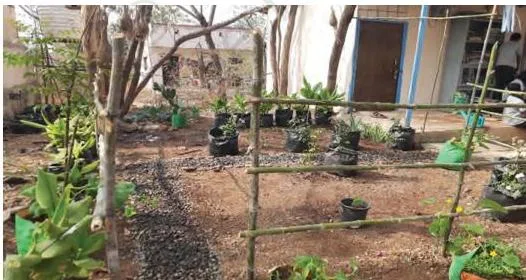
Figure 2.11 shows the point of Activity 5: the sketch comes before the digging. A clear visual plan guides where things go and how the garden is maintained (NCERT, p. 38).
Creating the Garden: a Soil and Compost Example
Before you dig, gather the supplies listed in the chapter under What will I need?: gardening tools (shovels, spades, trowels, watering cans), safety gloves, seeds or seedlings, compost, gravel or bricks for pathways, and waste materials like old containers, cardboard and string for shelters and feeders.
Activity 6 gives two rates to work with: about 20 to 30 kg of compost per 100 square metre planting bed, and a potting mix of 2 parts soil, 1 part compost and 1 part dry leaves or cocopeat (NCERT, p. 40). Here is how you scale them to your own site.
Example 1 — a 10 square metre bed. The bed is one-tenth of the 100 square metre area the rate is written for, so scale the whole rate by one-tenth: \(\frac{20}{100} \times 10 = 2\) kg and \(\frac{30}{100} \times 10 = 3\) kg. A 10 square metre bed needs about 2 to 3 kg of compost.
Example 2 — four pots. The potting mix is 2 parts soil, 1 part compost and 1 part dry leaves — 4 parts in all. If one part is 1 kg, one pot takes \(2 + 1 + 1 = 4\) kg of mix. Four pots take \(4 \times 4 = 16\) kg: 8 kg soil, 4 kg compost and 4 kg dry leaves.
These numbers are a worked example, not a rule for your school — measure your own bed area and scale the same way.
Mimicking Habitats: Nests, Feeders and Shelters
The chapter gives three ready-to-make elements that copy what animals find in nature (NCERT, p. 39):
- Nesting boxes for birds. The entrance size must match the expected bird — small for a sparrow, large for an owl. Make them from waste plywood or bamboo, and keep water containers at a height where cats and dogs cannot reach.
- Puddles and feeders for butterflies. Butterflies do not like deep water: fill containers with stones, pebbles and sand, add a pinch of salt and compost, and keep the area moist. Feed them rotting fruit or a sponge soaked in sugar syrup, and build narrow slit boxes, high and wind-sheltered, that butterflies can enter but birds cannot.
- Shelters for beneficial insects. Stack logs, straw, pinecones and bricks in layers inside a wooden frame or crate, leaving small gaps for insects to nest. Place the shelter 1 to 3 feet above the ground, near flowering plants or a compost pit.
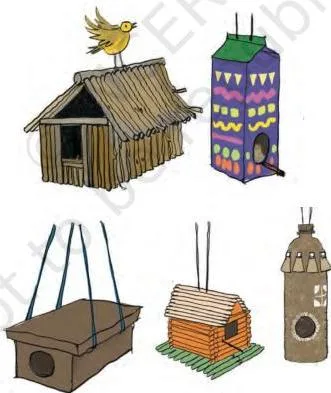
Figure 2.13 shows the range of materials a bird house can be made from. The chapter’s point is that waste — bottles, plywood, bamboo — becomes habitat when you design it for a specific animal.
Common Mistakes to Avoid in the Habitat Garden
These are the errors the chapter’s own advice points to. Check your plan against each one before you build.
| Mistake | Correct rule | How to check your answer |
|---|---|---|
| Leaving bird water at ground level | Keep water containers at a height, safe from cats and dogs (NCERT, pp. 39, 41) | Can a cat or dog reach the container from the ground? |
| Letting water stand and stagnate | No stagnant water anywhere in the garden (NCERT, p. 39) | Walk the garden daily and empty or refresh any standing water |
| Placing butterflies in open, windy ground | Keep trees and shrubs as windbreaks, or use a boundary wall for pots (NCERT, p. 37) | Is the butterfly area sheltered from the wind on all sides? |
| Disturbing animals while watering and weeding | Plan a walkway of sand or brick, and put mudpuddling spots in a corner (NCERT, p. 37) | Is there a path that keeps people away from shelters and feeding areas? |
| Expecting animals on the first day | Be patient; animals come once they are confident their needs will be met (NCERT, p. 44) | Keep observing over weeks, discuss with experts and adjust |
| Skipping the maintenance schedule | Make a chart with tasks, dates and names; rotate tasks among small teams (NCERT, p. 45) | Does Table 2.7 have planned dates and responsible names filled in? |
| Handling tools without protection | Wear gloves while handling tools and materials (NCERT, p. 29) | Gloves are on before any tool or material is touched |
What to Remember from Project 2
If you revise this chapter in ten minutes, hold on to these points:
- Every animal’s habitat is built on four essentials: space, shelter, food and water (NCERT, p. 26).
- Different animals need different versions of each — a sparrow’s shelter is a dense bush, a squirrel’s is a fork high in a tree.
- A habitat garden is a miniature sanctuary — a safe place where animals’ needs are met (NCERT, p. 28).
- The project order is fixed: identify → understand → design → create → observe → maintain → showcase.
- A thriving garden becomes a self-sustaining environment: plants draw insects, insects feed birds, and birds and spiders control insect numbers — a food chain and growing biodiversity (NCERT, p. 42).
- The project record is the timeline table of time spent per activity (NCERT, p. 47) and the Think and Answer reflection (NCERT, p. 48).
Project Record and Presentation Notes
This chapter has no conventional end-of-chapter questions. Its checkpoints are the activity tables themselves, the time-taken chart on page 47 and the Think and Answer prompts on page 48.
Activity 9 asks you to label the garden’s key features — names of flowering plants, animals benefiting from shelters, water containers and feeders, and marked areas for mudpuddling and dustbathing.
Then prepare a presentation covering four points: the purpose of the garden, the design and layout, the target species and their needs, and what you have observed since setting it up (NCERT, p. 46). You can present this at the Kaushal Mela.
Textbook contents and the examinable syllabus are not always identical — check the current official syllabus on the CBSE website for what is assessed this session.
What Else Can I Do? Extending the Project
The chapter suggests three ways to continue after the garden is running (NCERT, p. 47):
- Build a small butterfly garden at home, choosing the plants and non-plant elements that attract local butterflies.
- Write an essay or story about creating the garden and send it to the local newspaper.
- Make a time lapse video of the garden.
For the video, photograph the garden at growth milestones — germination, stems and leaves, then flowers. Search the Internet with the keywords “app + time lapse + video” to choose an app that turns still photographs into a video (NCERT, p. 47).
Related Resources
This listing is maintained for the 2026-27 academic session using the NCERT textbook information available to us. NCERT remains the authority for confirming the latest edition.
Project 2 is part of the Kaushal Bodh book for Class 7. The Class 7 Kaushal Bodh Vocational Education page lists the other projects in the book, and the Class 7 hub links to study material for the other Class 7 subjects.
For the kind of work this project introduces — observing and caring for living things — the work with life forms page is a useful next stop.
| What the chapter holds | Count | Where it is used |
|---|---|---|
| Printed pages | 24 | |
| Figures with NCERT captions | 23 | |
| Tables | 9 | |
| Official NCERT PDF | Download the chapter PDF | the chapter exactly as NCERT publishes it |



Reference: NCERT Class 7 Kaushal Bodh (Vocational Education) textbook, chapter 2, official edition on ncert.nic.in.
Sources and Data Verification
This page describes the NCERT Kaushal Bodh, Grade 7, Vocational Education textbook, Project 2 (School Habitat Garden), in the official NCERT edition maintained for the current academic session. Every figure, table and page number mentioned above comes from that textbook.
The page covers this one book only, not the full CBSE vocational scheme. NCERT settles textbook editions and PDFs; CBSE settles curriculum, syllabus and examinations. Refer to the official documents linked on this page for the current syllabus.
FAQs
What is Project 2 in Class 7 Kaushal Bodh about?
It is the School Habitat Garden project. You learn what a group of animals needs to live and thrive, then create a garden in your school that attracts birds, mammals, insects and reptiles by providing shelter, water, food and space (NCERT, p. 25).
How do I download the Class 7 Kaushal Bodh Project 2 PDF?
The official chapter is free on the NCERT textbook portal. Use the download link at the top of this page to open the Class 7 Kaushal Bodh chapter PDF and save a copy from NCERT’s own site.
What are the four things every animal habitat needs?
Space, shelter, food and water. The chapter calls them the foundation of every animal’s habitat, and the whole project is about providing them in the form each animal needs (NCERT, p. 26).
Which animals can a school habitat garden attract?
Birds such as pigeons, crows, sparrows, kites, bulbul, mynah, munia, sunbirds, woodpeckers and owls; small mammals such as squirrels, mice, bats and mongoose; and insects such as ants, butterflies, dragonflies, beetles and caterpillars (NCERT, p. 30).
Which apps does the chapter recommend for identifying animals and plants?
Seek by iNaturalist, PlantNet, eBird, Merlin Bird ID and Picture Insect (NCERT, p. 33). Seek and Merlin identify animals and birds, PlantNet identifies plants, eBird logs sightings, and Picture Insect identifies insects.
What is mudpuddling and why do butterflies do it?
Mudpuddling is when butterflies gather around puddles, damp soil or animal droppings. They do it to absorb nutrients and water, and the chapter treats it as a behaviour the garden should actively support (NCERT, p. 36).
Explore Class 7 Vocational Education Books
Related chapters: