
Life Around Us Class 1 is the third chapter of the NCERT English book Mridang — and the official PDF is right here. The chapter holds a picture talk, two counting rhymes, a draw-in-alphabetical-order activity, sight words and an animal-matching task.
Parents, teachers and children can all use this page: the official file is at the top, and every part of the chapter is explained below.
Download the official Life Around Us Class 1 chapter PDF
The file below is Chapter 3 of the official NCERT Class 1 English Mridang textbook, published free on the NCERT textbook portal — open it and the picture talk, both rhymes and every activity are there in full.
Chapter at a glance: what is inside the PDF
The table below lists what the chapter holds — its sections, illustrations, activities and questions — as recorded in this NCERT edition.
| What the chapter holds | Count | Where it is used |
|---|---|---|
| Printed pages | 7 | |
| Figures with NCERT captions | 4 | |
| Activities | 1 | |
| Official NCERT PDF | Download the chapter PDF | the chapter exactly as NCERT publishes it |
The chapter is built on rhymes and hands-on tasks, so its questions live inside the printed sections rather than in a numbered exercise set.
What the chapter contains: a picture talk, two rhymes, and the activities that follow
This chapter is oral-first: children speak and sing before they read or write. The sections run in a deliberate order, from looking and talking to singing, and finally to reading a few words.
- Picture Time — eight oral questions about the opening illustration: name the animals, give their English names, say where you have seen them, spot the birds, count the snakes, and tell what the monkey is doing.
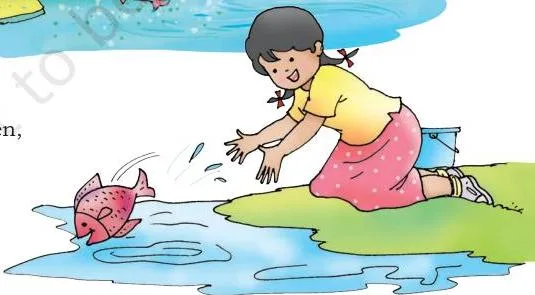
- Fun with Numbers — the fish-counting rhyme that recites one to ten around a small story of catching a fish and letting it go.
- Let us speak — three follow-up questions about fish: have you seen one, where, and what colour it was.
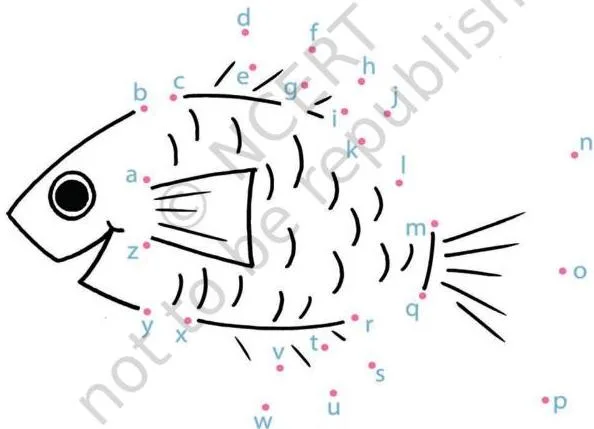
- Let us draw — join letters in the correct alphabetical order to complete a hidden picture, then colour it.
- Note to the teacher — a single instruction for the adult: help children follow the correct alphabetical order.
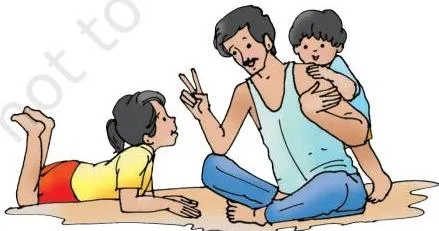
- Five Little Monkeys — the countdown rhyme from five monkeys down to none, with sight words and new words printed below it.
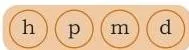
- Let us do — three short tasks: circle the word “little” wherever it appears, notice the rhyming pairs and build a rhyme for ten from a help box, and bring a number rhyme from home.
- Match the animals with their names — the closing activity, pairing six animals with their names as a vocabulary check.
Because the chapter is oral-first, a child who cannot read yet can still take part fully: every task can be done aloud first, and reading comes after the words are familiar.
Key ideas: counting rhymes, sight words and alphabetical order
A Class 1 English chapter teaches through rhymes and play because that is how a five-year-old meets language. Life Around Us builds on four strands, and each one reappears in later chapters.
Counting rhymes: forward and backward
Fun with Numbers counts one to ten in order, while Five Little Monkeys counts down from five to one and ends with no monkeys left — each verse leaves one fewer monkey on the tree. Meeting both directions makes counting a rhythm rather than a memory task.
| Rhyme | Counting direction | What the child practises |
|---|---|---|
| Fun with Numbers | One to ten (forward) | Naming the numbers one to ten in order |
| Five Little Monkeys | Five to none (backward) | Counting down as one monkey falls in each verse |
Count on fingers with the second rhyme — each verse drops one finger, so the count lands on none exactly when the verse ends.
Sight words: each, is and and
Sight words are common words a child should recognise instantly, without sounding them out. The chapter prints each, is and and under the heading Sight words, and the child meets them again inside the monkey rhyme.
New words: the rhyme’s vocabulary
New words are the words the rhyme itself uses, meant for reading and sounding out: one, two, three, four, five, little, fell, bumped and holding. Point to them in the poem as the child sings, so the spoken word meets the printed word.
Alphabetical order in Let us draw
The drawing task is a letter-sequence exercise before it is a picture: joining the letters in the correct alphabetical order completes the drawing. The note to the teacher says to help children follow the correct order of letters, because alphabetical order is the skill the task is really teaching.
Rhyming words: five–alive, tree–knee
Rhyming words end with the same sound. The chapter’s pairs are five–alive and tree–knee, and the help-box task asks the child to build rhyming words for ten.
The chapter also asks children to bring a number rhyme from home, in any language, and share it in class — a bridge from the child’s home language into English.
Walking through the pictures: what to point out to your child
The pictures are part of the printed chapter, so follow along in your own book. This section maps the three picture moments from the questions the chapter itself asks.
- The opening Picture Time scene. The illustration shows animals, birds and snakes — the questions say so. Ask the child to name every animal, then say the English name again, say where they have seen these animals, find the birds, count the snakes, and describe what the monkey is doing.
- The Let us draw picture. The drawing is hidden behind letters. The point is the letter order, not the picture: watch the child join the letters from a to z, then colour the finished drawing.
- The closing matching activity. Six animal pictures — lion, monkey, fish, elephant, frog and rabbit — form the final match: pair each picture with its name, and let the child say the name aloud before matching.
The picture talk comes first for a reason: answering aloud in full sentences builds the vocabulary that the matching activity checks at the end.
Words in this chapter, explained simply
The book prints no formal definitions, so these are plain explanations of the labels the chapter uses — the words a child will ask about.
| Term | What it means |
|---|---|
| Sight words | Common words a child should recognise at a glance; the chapter lists each, is and and. |
| New words | The rhyme’s vocabulary list: one to five, little, fell, bumped, holding. |
| Rhyming words | Words that end with the same sound, like the pairs five–alive and tree–knee. |
| Alphabetical order | The a-to-z sequence of letters that the Let us draw task depends on. |
| Number rhyme | A rhyme that teaches counting, like the two singing rhymes in this chapter. |
Common mistakes children make in Life Around Us
These are the stumbles this chapter produces most often, each with a fix a parent can apply the same evening.
| Mistake | Correct rule | How to check your answer |
|---|---|---|
| Saying “five” in every verse of Five Little Monkeys | The number names the monkeys still on the tree; after one falls, four remain | Count down on your fingers with each verse and land on none at the end |
| Circling the word “little” only once | The task says circle it wherever it appears, and it appears in every verse | Scan each line of the poem and count the circles against the verses |
| Guessing the dot-to-dot picture instead of following letter order | The skill being taught is the correct alphabetical order, not the drawing | Watch the child name each letter aloud as it is joined |
| Sounding out sight words letter by letter | Sight words are for instant recognition; the new words list is the one to sound out | Flash each sight word and see if the word comes within a second |
| Skipping the picture talk to reach the rhyme | The oral answers build the vocabulary the matching activity later checks | Do the eight picture questions aloud before singing anything |
One more note: the chapter invites a number rhyme from home in any language, so a child who is shy in English gets an early success in class.
What children should be able to do after this chapter
Class 1 English is not board examined, so success is defined by the chapter’s own tasks — and by whether the child can do them happily.
- Answer the eight Picture Time questions in full sentences, including what the monkey is doing.
- Sing Fun with Numbers, counting one to ten in order.
- Sing Five Little Monkeys, counting down from five to none.
- Join the Let us draw letters in the correct alphabetical order and colour the finished picture.
- Recognise the sight words each, is and and on sight.
- Match the six animals with their names: lion, monkey, fish, elephant, frog and rabbit.
- Share a number rhyme from home in any language.
Textbook contents and the examinable syllabus are not always identical — the printed tasks are the guide for Class 1, and the current official syllabus on the CBSE website settles anything examination-related.
Five minute recap: running this chapter at home
A warm-up, not a lesson — run these five steps the evening before the chapter is taught.
- Recite the fish rhyme and count one to ten.
- Sing Five Little Monkeys and count down on fingers from five to none.
- Hunt for the word “little” in every verse of the poem.
- Flash the sight words each, is and and — instant recognition.
- Point to the six animals and say their names aloud.
Related chapters and resources
This listing is maintained for the 2026-27 academic session using the NCERT textbook information available to us. NCERT remains the authority for confirming the latest edition.
Working through Mridang in order? The previous chapter of Mridang Class 1 English comes before this one, and the next chapter continues in the same oral-first style. For the whole book, see the Class 1 English book page; for other subjects in the same class, use the Class 1 hub.
The main notes directory opens every class and subject.
Sources and data verification
This page describes one chapter, not a syllabus. The points below say exactly what it covers and which authority settles what.
- This page describes Chapter 3, Life Around Us, of the NCERT Mridang Class 1 English textbook — the official edition as published on the NCERT textbook portal.
- It covers this chapter’s sections, rhymes and activities; it does not cover other Mridang units or other Class 1 subjects.
- The listing is maintained for the current academic session using the NCERT information available to us.
- NCERT settles the textbook, its editions and its PDFs; CBSE settles the curriculum and syllabus.
Reference: NCERT Class 1 English Mridang textbook, chapter 3, official edition on ncert.nic.in.
Frequently asked questions
Where can I download the official Life Around Us Class 1 Mridang PDF?
The official NCERT Class 1 English Mridang Chapter 3 Life Around Us PDF is published free by NCERT on its textbook portal. Use the download block at the top of this page, which points to the official file.
What does the Life Around Us chapter teach in Class 1 English?
The chapter builds speaking and early reading through a picture talk, two counting rhymes, an alphabetical-order drawing task, sight words and a closing animal-matching activity. It is oral-first: children speak and sing before they read.
What are the sight words and new words in the Life Around Us chapter?
The sight words are each, is and and — words for instant recognition. The new words are one, two, three, four, five, little, fell, bumped and holding — the rhyme’s vocabulary, meant for sounding out and pointing to in the poem.
How do I help my child with the Let us draw alphabet activity?
Encourage the child to name each letter as it is joined and to follow the correct alphabetical order from a to z. The chapter’s note to the teacher gives the same instruction: help children follow the correct alphabetical order — the picture is the reward, not the task.
Why does Five Little Monkeys count down from five?
It teaches backward counting. Each verse says one monkey falls, so the monkeys on the tree drop from five to four, three, two, one and then none. This balances Fun with Numbers, which counts forward one to ten, so the child practises the number sequence in both directions.
Is Life Around Us part of the CBSE Class 1 syllabus?
Life Around Us is Chapter 3 of the NCERT Mridang English book used in CBSE-affiliated schools for Class 1. Class 1 English is not board examined, and textbook contents and the examinable syllabus are not always identical — check the current official syllabus on the CBSE website.
Explore Class 1 English Books
Related chapters: