
This page is about The Food We Eat Class 1 — Chapter 7 of the NCERT English textbook Mridang. It is a short, picture-led chapter that builds early reading through food: sight words, food vocabulary, speaking activities, syllable clapping and riddles. The official chapter PDF is offered right below, and everything described here matches the NCERT Mridang edition in use this academic session.
Download The Food We Eat Class 1 Mridang PDF
The official chapter file is free on the NCERT website, together with the full Mridang textbook. Download The Food We Eat Class 1 Mridang Chapter 7 PDF (official NCERT edition) from ncert.nic.in — the same official file schools and teachers use, in the current NCERT English edition for Class 1.
What Is Inside the Chapter
The table below lists the chapter’s contents at a glance — its sections, figures and activities — taken straight from the NCERT edition.
| What the chapter holds | Count | Where it is used |
|---|---|---|
| Printed pages | 8 | |
| Figures with NCERT captions | 8 | |
| Tables | 2 | |
| Activities | 2 | |
| Official NCERT PDF | Download the chapter PDF | the chapter exactly as NCERT publishes it |
What the numbers cannot show is how the chapter works. It is picture-led and activity-based: every page asks the child to look, say, match or clap rather than read long text, which is exactly right for a Class 1 early reader.
What The Food We Eat Chapter Covers
This is an early-literacy unit built around food. It moves from talking about meals to reading food words, clapping syllables and solving riddles, with pictures supporting every new word.
The opening teacher note frames the chapter’s values before any reading starts: children should share food with each other, discuss sharing in the context of the mid-day meal, and feel gratitude and respect for food and for the people who provide it. The note also asks teachers to talk about the diversity of culture and food in India.
Sight words — eight high-frequency words the chapter expects children to recognise on sight: from, for, them, their, they, has, she, have.
New words — eight words that carry the chapter’s food-and-sharing vocabulary: have, thank you, share, lunch, sick, fruits, today, smiling.
Answer the questions — three discussion questions that connect these words to the child’s own life:
- Where do you sit when you have lunch at school?
- How do you share your food with your friends?
- When you were hungry, did anyone share food with you?
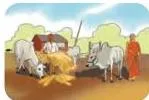
A. Think of words for the pictures and read aloud — the chapter’s picture passage, which tells where food comes from: food that farmers grow, farmers who keep animals, honey from bees, milk from cows, and curds and butter made from that milk. The passage ends with ‘thank you’ — the words we should say to the people who provide our food.
A second note to the teacher carries the same idea further: farmers work hard to give us many kinds of food, and we should not waste food.
Let us speak — four conversation questions about food at home:
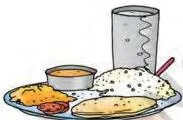
- Name the food items you see in the picture.
- Which is your favourite sweet?
- Who cooks food at home?
- Do you pick up your plate after a meal?
B. Match the food item to its shape — children match each food item to the shape it has. The Let us draw activity that follows asks them to say the names of special dishes they eat at home, draw and colour them, then look at what others have drawn.
Fun with Words — the chapter’s syllable work and a matching game. First, children listen to one-syllable words — man, food, cat, hut, eat, mat, go, come, sit — say each one and clap once.
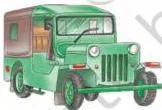
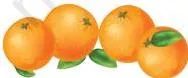
Then they say two-syllable words and clap for every syllable: far-mer, car-rot, mar-ket, brin-jal, man-go, break-fast, din-ner. The section ends with a colour-and-detail matching activity: this cow is brown, these are four oranges, this is a purple cap, this is my lunch, this is a green jeep.
Riddles — four food riddles close the chapter. Each riddle gives two or three clues, and the child writes the answer in the blank. The answer key sits at the back of the book, so the page itself stays a challenge.
The Early Reading Skills This Chapter Builds
Each block of this chapter teaches one early-reading skill. Here is what the child is actually practising.
- Sight words are high-frequency words a child should read instantly, on sight, without sounding them out. Words like from and they carry no picture clue, so automatic recognition matters.
- New words build a food vocabulary the child meets again in the picture passage and the questions. Knowing them makes the whole chapter readable.
- Syllable clapping builds phonemic awareness — hearing the beats inside a word. A child who hears far-mer as two beats can later spell it in two chunks, which is why this small game matters for spelling.
One detail confuses parents: have appears in both the sight-word list and the new-word list. That is deliberate — the chapter uses have with food, as in ‘have lunch’, meaning eat lunch. The word does two jobs, so it is taught twice.
The Pictures and What They Teach
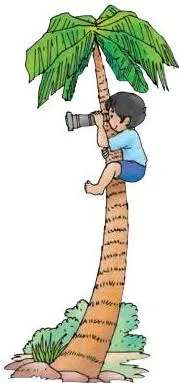
The pictures in this chapter are built into the activities — there are no separate labelled diagrams to read. Each picture is a prompt, and the teaching comes from what the activity asks the child to notice.
The picture passage tells a food story the child can read from images alone:
- food we eat is grown by farmers;
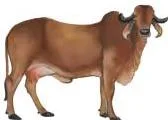
- some farmers keep animals, and cows give us milk;
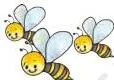
- bees give us honey;
- we make curds and butter from milk;
- and we should say ‘thank you’ to the people who provide our food.
Two matching activities train careful looking. In ‘Match the food item to its shape’, the child connects a food with the shape it has.
In the colour-and-detail matching, the sentences are near-identical, so the only way to match them is to notice small clues: this cow is brown, these are four oranges, this is a purple cap, this is my lunch, this is a green jeep.
A child who matches only the first word will match it wrongly, so the activity forces attention to colour and detail.
Words This Chapter Introduces
The chapter opens with two word lists, and the picture passage adds a third set. The table below gives each list and what the words do.
| Word list | The words | What the list teaches |
|---|---|---|
| Sight words | from, for, them, their, they, has, she, have | Words a child should recognise instantly, on sight, without sounding them out |
| New words | have (eat or drink), thank you (polite words of gratitude), share (give part of something to someone else), lunch (the mid-day meal), sick (unwell), fruits (foods that grow on plants and trees), today (this day), smiling (showing a happy face) | The food-and-sharing vocabulary used across the chapter |
| Food words from the picture passage | farmers, cows, milk, curds, butter, honey | Where food comes from — fields, animals and bees |
Where Children Usually Stumble
This section exists because the chapter’s own activities point to the exact spots children slip. Watch for these four, and correct them as soon as they appear.
| Mistake | Correct rule | How to check your answer |
|---|---|---|
| Mixing up the sight words they / them / their or she / has | They do the action, them receive it, their shows belonging; she names a girl or woman, and has pairs with she or he | Put each word back in a sentence: ‘They share. I share with them. It is their lunch. She has lunch.’ |
| Clapping once for a two-syllable word like farmer | Clap once for every syllable: far-mer, man-go and break-fast each get two claps | Say the word slowly and let the hand fall with each beat of the voice |
| Shouting an answer after only the first riddle clue | Read all the clues first. ‘My name is my colour’ fits many fruits; only orange fits the name and the colour together | Check the answer against every clue before writing it down |
| Reading have as possession only | With food words, have means eat or drink: ‘have lunch’ = eat lunch | Swap ‘eat’ into the sentence: ‘Where do you sit when you have lunch?’ becomes ‘…when you eat lunch?’ |
How Teachers Use This Chapter in Class
Class 1 is below the board-exam stage, so there is no written board exam for this chapter. Teachers use it as oral, in-class work and check these things:
- reading the sight words and new words aloud;
- answering the three discussion questions from the child’s own experience of lunch and sharing;
- clapping the correct number of syllables for each word;
- solving the four riddles and saying which clue gave the answer.
The teacher notes add a values layer that comes out in talk and behaviour rather than marks: sharing at the mid-day meal, gratitude and respect for food and for the people who provide it, not wasting food, and appreciating the diversity of culture and food in India.
What Children Take Away from This Chapter
When the chapter is finished, a child should be able to do all of these:
- recognise the eight sight words and the eight new words;
- name common foods from pictures;
- tell where milk, honey, curds and butter come from;
- say thank you and share food with others;
- clap once for one-syllable words and once for every syllable in longer words;
- read the four riddles and answer all four.
Related NCERT Class 1 Pages
If the child is working through Mridang chapter by chapter, these pages go with it:
- Class 1 hub — home of the Class 1 NCERT pages
- Class 1 English notes — help with the rest of Mridang
- The Food We Eat practice notes — extra practice ideas for this chapter
- The Seasons chapter notes — another early-literacy unit in Class 1 English
- CBSE notes home — the full notes index
Sources and Data Verification
This listing is maintained for the 2026-27 academic session using the NCERT textbook information available to us. NCERT remains the authority for confirming the latest edition.
The contents described on this page come from the current NCERT Class 1 English textbook Mridang. This page covers Chapter 7, ‘The Food We Eat’, and no other chapter of the book. The listing is maintained for the current academic session. NCERT settles textbooks, editions and PDFs; CBSE settles curriculum and examinations.
Textbook contents and the examinable syllabus are not always identical — check the current official syllabus where it matters.
Reference: NCERT Class 1 English textbook, chapter 7, official edition on ncert.nic.in.
FAQs on The Food We Eat Class 1
Where can I download The Food We Eat Class 1 Mridang chapter PDF?
From the official NCERT website, ncert.nic.in. The chapter is part of the Class 1 English textbook Mridang, and the download link in the first section of this page goes straight to the official source.
What are the sight words and new words in The Food We Eat chapter?
The eight sight words are from, for, them, their, they, has, she, have. The eight new words are have, thank you, share, lunch, sick, fruits, today, smiling.
What are the answers to the four riddles in The Food We Eat?
The four answers are orange, coconut, onion and grapes. Here is the clue that solves each one:
| Riddle clue | Answer |
|---|---|
| ‘I am a fruit. My name is my colour.’ | Orange — the fruit is named after its colour |
| ‘I am hard and brown on the outside, soft and white inside.’ | Coconut — a hard brown shell around soft white flesh |
| ‘I am a vegetable, pink or white. Cut me and I make you cry.’ | Onion — cutting it releases the fumes that make eyes water |
| ‘I am a fruit, green or purple, and I come in a bunch.’ | Grapes — they grow in bunches |
How does the clap once for each syllable activity work?
The teacher reads a word aloud, the child says it, and the child claps once for every syllable heard. One-syllable words such as man and food get one clap; two-syllable words such as farmer (far-mer) and mango (man-go) get two.
What is this chapter about in the NCERT Class 1 Mridang book?
It is an early-reading chapter on the theme of food. Children learn where food comes from, practise sight words and food vocabulary, discuss sharing and gratitude, clap syllables, and finish by solving four food riddles.
Explore Class 1 English Books
Related chapters: