
This is Chapter 2 of the NCERT Class 10 English First Flight textbook — an extract from Nelson Mandela’s autobiography Long Walk to Freedom, followed by the poem “A Tiger in the Zoo”.
The chapter runs across 16 printed pages, from book page 16 to page 31. The official NCERT PDF is offered right below; underneath it, this page gives a page-by-page map, the key ideas explained, the language exercises worked out and a walkthrough of the poem. This page is maintained for the current academic session.
Download the Official NCERT Chapter PDF
This is the official NCERT edition of Class 10 English First Flight Chapter 2, published on ncert.nic.in. Open the NCERT Class 10 English First Flight Chapter 2 Nelson Mandela PDF on the official First Flight textbook page to read the chapter online or download it for offline study — the extract, the exercises and the poem are all in the one file.
Chapter at a Glance: What Is Inside This PDF
The table below counts what this 16-page chapter contains — its sections, figures, activities, tables and exercise questions — so you can see the shape of the file at a glance before you start reading.
What This Chapter Covers: From the 1994 Inauguration to A Tiger in the Zoo
This chapter is not one continuous essay. It moves through a warm-up page, a BBC news item, an autobiographical extract broken up by three Oral Comprehension Checks, language exercises, a speaking section and a closing poem, so it helps to know where each part sits.
| Part of the chapter | What it is | Book pages |
|---|---|---|
| BEFORE YOU READ | Two warm-up questions: which of three countries (USA, South Africa, Australia) had apartheid until very recently, and what “the inauguration” might be | 16 |
| “Mandela Becomes South Africa’s First Black President” | A BBC news item from 10 May 1994: the ANC won 252 of 400 seats, the ceremony was at the Union Buildings amphitheatre in Pretoria, guests came from more than 140 countries, and Mandela said “Never, never again will this beautiful land experience the oppression of one by another” | 16-17 |
| Activity | Match six expressions (rainbow gathering, seat of white supremacy, and so on) with their meanings | 17 |
| Extract, movement 1: the inauguration speech | Mandela’s address at the Union Buildings — the “extraordinary human disaster”, the pledges, “Never, never, and never again…” | 17-18 |
| Extract, movement 2: the air show, the anthems and the meaning of courage | The military display, two national anthems, the patriots who came before him, courage, love and human goodness | 19-20 |
| Extract, movement 3: twin obligations and the meaning of freedom | Obligations to family and to people, freedom through the years, “freedom is indivisible”, the oppressor’s humanity | 22-23 |
| Thinking about the Text | Five short-answer questions covering the whole extract | 24 |
| Thinking about Language I-III | Noun-verb pairs, the definite article with proper nouns, idiomatic expressions | 24-26 |
| Speaking | Looking at Contrasts (balanced sentences) and Expressing Your Opinion (a paragraph on colour prejudice) | 26-27 |
| WHAT WE HAVE DONE, WHAT YOU CAN DO, Homophones | The chapter’s wrap-up boxes and the homophones puzzle | 28 |
| A Tiger in the Zoo | The poem by Leslie Norris, the poem’s exercise, and three companion poems | 29-31 |
Use the three Oral Comprehension Checks as checkpoints while you read:
- Do BEFORE YOU READ on page 16, then check your guess against the news item.
- Read movement 1 of the extract and answer Oral Comprehension Check 1 (page 18) — the five questions about the ceremony and the speech.
- Read movement 2 and answer Oral Comprehension Check 2 (page 20) — the generals, the anthems, courage and love.
- Read movement 3 and answer Oral Comprehension Check 3 (page 23) — twin obligations, boyhood freedom and the oppressor.
- Now do Thinking about the Text (page 24) — those five questions are a full revision of the extract.
Key Ideas in the Extract: Freedom, Courage, and Humanity
The chapter is a speech and a reflection, and the examinable ideas sit inside Mandela’s sentences. Each idea below is explained in plain words with the NCERT page beside it.
- Apartheid as an “extraordinary human disaster”: Mandela opens his speech by calling the system of racial separation that — a disaster that lasted too long before the new society could be born (NCERT, p.18).
- The inauguration as a “common victory for justice, for peace, for human dignity”: the ceremony belonged to the whole nation, not one group, and the pledge was that the land would “never again” experience the oppression of one by another (NCERT, p.18).
- Mandela as “the sum of all those African patriots”: his achievement was not his alone; it rested on the unnamed thousands whose sacrifices made the day possible (NCERT, p.19).
- Courage: he learned that courage is “not the absence of fear, but the triumph over it”; the brave man is the one who conquers fear, not the one who never feels it (NCERT, pp.19-20).
- Love over hate: no one is born hating another person’s colour, background or religion; hate is learned, so it can be unlearned, because “Man’s goodness is a flame that can be hidden but never extinguished” (NCERT, p.20).
- The twin obligations: every person owes a duty to family and a duty to people, community and country; apartheid made it impossible for a man of colour to fulfil both (NCERT, pp.22-23).
- Freedom is indivisible: if one person’s freedom is taken away, nobody is truly free — the oppressor, locked in prejudice, is robbed of humanity too (NCERT, p.23).
How Mandela’s idea of freedom changed
The extract traces Mandela’s freedom in stages, and this timeline shows how each stage changed its meaning — it is the spine of the answer to “How did Mandela’s understanding of freedom change with age and experience?” (page 24).
| Stage of life | What freedom meant | NCERT page |
|---|---|---|
| Boyhood | Running in the fields near his mother’s hut, swimming in the village stream, roasting mealies under the stars, riding the broad backs of slow-moving bulls | 22 |
| Student | “Transitory freedoms”: staying out at night, reading what he pleased, going where he chose | 22 |
| Young man in Johannesburg | “Basic and honourable freedoms”: achieving his potential, earning his keep, marrying and having a family | 22 |
| The turning point | He saw that his brothers and sisters were not free either, and joined the African National Congress | 23 |
| Conclusion | His own freedom became the greater hunger for the freedom of his people; “freedom is indivisible” | 23 |
Language Work in the Chapter: Words, Articles, and Balance
The chapter’s exercises are mostly language work, so students often lose marks on the grammar oddities even when they understand the text. The five parts below follow the language exercises in order.
Noun-verb pairs
The exercise on page 24 asks you to list nouns formed from verbs by suffixing -(at)ion or -ment, and to notice spelling changes. The text itself gives these pairs:
| Verb | Noun | What happens |
|---|---|---|
| form | formation | -ation is added |
| govern | government | -ment is added |
| rebel | rebellion | the ending changes to -lion |
| constitute | constitution | final -e drops, -tion is added |
The Martin Luther King Jr. paragraph (page 24) is a fill-in of noun forms. The completions in order are: contribution, assistance, subjugation, humiliation, imprisonment, resistance. Note the endings: -tion, -ance and -ment.
The definite article with proper nouns
Normally we do not say “the Nelson Mandela” or “Nelson Mandelas”. But the text has “the Oliver Tambos, the Walter Sisulus” — with the and a plural, a proper noun means people of that kind: not the literal men, but many others like them whose names may be less well known (NCERT, p.25).
The book’s own exercise on page 25 confirms option (b) as the right reading. The three practice sentences mean:
- “The Amitabh Bachchans and the Shah Rukh Khans” — famous actors of that type, big stars of that kind.
- “The Madhubala of our times” — a present-day equivalent of that actress; the phrase marks the person as the modern version.
- “The Alexanders, the Napoleons and the Hitlers” — conquerors and tyrants of those kinds, not the historical men themselves.
Idiomatic expressions
The exercise on page 26 asks for the phrase nearest in meaning. The four tested phrases: not unmindful of = aware of, had not forgotten; pushed to our limits = feeling you cannot endure the suffering any longer; keep me going = help me continue in hope in a very difficult situation; earning my keep = earning enough money to live on.
The pre-reading Activity on page 17 matches six expressions with meanings. Here they are in plain words:
| Expression | Plain meaning |
|---|---|
| A rainbow gathering of different colours and nations | A beautiful coming together of many peoples, like the colours of a rainbow |
| The seat of white supremacy | The centre of racial superiority |
| Be overwhelmed with a sense of history | Feel deeply emotional, aware of all the past events that led to the moment |
| Resilience that defies the imagination | An almost unimaginable ability to stay unchanged by suffering |
| A glimmer of humanity | A small sign of human goodness — kindness, pity, justice |
| A twilight existence | A half-secret life, like life in the fading light between sunset and darkness |
Balance and contrasts: Mandela’s two-part sentences
The textbook notes that Mandela’s writing is marked by balance: many sentences have two parts in balance (NCERT, p.26). The Looking at Contrasts exercise on pages 26-27 uses exactly these sentences:
| Balanced sentence | The two parts set against each other | NCERT page |
|---|---|---|
| “Courage was not the absence of fear, but the triumph over it.” | absence of fear vs triumph over fear | 19-20 |
| “The brave man is not he who does not feel afraid, but he who conquers that fear.” | feeling fear vs conquering it | 19-20 |
| “If people can learn to hate, they can be taught to love…” | hate vs love | 20 |
| “It requires such depths of oppression to create such heights of character.” | depths of oppression vs heights of character | 20 |
| “I am not truly free if I am taking away someone else’s freedom…” | my freedom vs another person’s freedom | 23 |
The completion exercise pairs each half of the sentence:
- “It requires such depths of oppression” + “to create such heights of character”
- “Courage was not the absence of fear” + “but the triumph over it”
- “The brave man is not he who does not feel afraid” + “but he who conquers that fear”
- “If people can learn to hate” + “they can be taught to love”
- “I was not born with a hunger to be free” + “I was born free”
Notice that each contrast pairs a past with a present, or a negative with a positive.
Homophones
Page 28 presents words “spelt similarly, and sometimes even pronounced similarly, but with very different meanings”:
- The bandage was wound around the wound. The first wound is the past tense of wind (to wrap); the second is an injury.
- The soldier decided to desert his dessert in the desert. The first desert is a verb meaning to abandon; dessert is the sweet course of a meal; the last desert is a noun meaning dry land.
The Chapter’s Poem: A Tiger in the Zoo and the Companion Verses
The chapter closes with a poem, and a student who came for Mandela should not skip it. “A Tiger in the Zoo” by Leslie Norris contrasts a tiger in captivity with the tiger in its natural habitat; the textbook note says the poem moves from the zoo to the jungle and back again to the zoo (NCERT, p.29).
Stanza map: which stanzas are the zoo, which are the jungle
| Stanza | Setting | What the stanza shows |
|---|---|---|
| 1 | Zoo | The tiger “stalks in his vivid stripes / The few steps of his cage”, walking on “pads of velvet quiet” in “his quiet rage” |
| 2 | Jungle (imagined) | “He should be lurking in shadow”, sliding through long grass near the water hole where plump deer pass |
| 3 | Jungle (imagined) | “He should be snarling around houses” at the jungle’s edge, baring fangs and claws, terrorising the village |
| 4 | Zoo | He is locked in a concrete cell, his “strength behind bars”, stalking the length of his cage, ignoring visitors |
| 5 | Zoo | He hears “the last voice at night” and the patrolling cars, and stares with “brilliant eyes” at the “brilliant stars” |
The word “should” is the key to the map: it signals what ought to happen, not what does. Stanzas 2 and 3 describe the tiger he should be; stanzas 1, 4 and 5 show the tiger he is — behind bars.
The movements and actions exercise
Thinking about the Poem (page 30) asks you to sort the tiger’s movements and actions into two columns. Cage: stalks. Wild: lurks, slides, snarls.
The place-words work the same way: “the few steps of his cage” and “a concrete cell” against “long grass”, “water hole” and “jungle’s edge”.
The repeated words are quiet / quiet in stanza 1 and brilliant / brilliant in stanza 5. The repetition joins the tiger’s outer state to his inner state — the walk is quiet and the rage is quiet, the eyes are brilliant and the stars are brilliant — and the effect is emphasis and contrast (NCERT, p.30).
The three companion poems
Three companion poems follow the main poem, and Thinking about the Poem asks you to read them before discussing zoos (pages 30-31).
- The Tiger by Peter Niblett (p.30): a caged tiger growls, snarls and roars, then reasons about being wild — hunters might shoot him, food might poison him, water might drown him — so he stays behind bars, and the poem ends as it began, with growling, snarling and roaring.
- The Panther by Rainer Maria Rilke (p.31): the panther’s vision has grown weary “from the constantly passing bars”; it paces “in cramped circles”, its mighty will paralysed, and only occasionally does an image plunge through to its heart.
- The Greater Cats by Victoria Sackville-West (p.31): “The greater cats with golden eyes / Stare out between the bars”, carrying deserts, different skies and “night with different stars” in their gaze.
The book closes the poem section with a discussion question: are zoos necessary for the protection and conservation of some species? Are they useful for educating the public? Are there alternatives to zoos?
The Chapter’s Figures and What They Show
Four images appear in the chapter, and each marks a moment worth stopping at: the source of the extract, a writing technique, a language puzzle and the closing poem.

This opening image on page 17 marks the source of the extract: Mandela’s own autobiography, Long Walk to Freedom (NCERT, p.17). The inauguration speech and the reflections on courage and freedom all come from that book.

This image pairs with the Looking at Contrasts exercise on page 26. “Balance” means a sentence with two halves set against each other — for example, “courage was not the absence of fear, but the triumph over it.” When you complete the exercise on pages 26-27 you are rebuilding these balanced sentences half by half.

This belongs to the Homophones exercise on page 28. The joke of the sentence is that one word appears three times with three different meanings: desert the verb (to abandon), dessert the sweet course, and desert the noun (dry land).
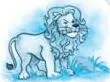
The phrase is the last line of The Greater Cats (page 31), the chapter’s final companion poem. The golden-eyed cats stare out between the bars of the zoo at a remembered world of deserts and different skies — a closing image of the caged animal’s imagined freedom.
Words to Know: The Textbook’s Margin Notes, Explained
The textbook prints word meanings in its margins as you read. This table collects them, each restated in plain words, so you can decode the extract without flipping back.
| Word | Plain meaning | NCERT page |
|---|---|---|
| besieged by | surrounded closely by | 17 |
| amphitheatre | a roofless building with rows of seats rising in steps | 17 |
| confer | (formal) give | 18 |
| emancipation | freedom from restriction | 18 |
| deprivation | being without one’s rightful benefits | 18 |
| discrimination | being treated differently or unfavourably | 18 |
| spectacular array | an impressive display | 19 |
| not unmindful of | conscious of; aware of | 19 |
| chevron | a V-shaped pattern | 19 |
| despised | held in very low opinion | 19 |
| wrought | (formal, old-fashioned) done, achieved | 19 |
| profound | deep and strong | 19 |
| inclinations | natural tendencies of behaviour | 22 |
| inevitably | unavoidably | 22 |
| illusion | something that appears real but is not | 22 |
| transitory | not permanent | 22 |
| curtailed | reduced | 22 |
| prejudice | a strong dislike without good reason | 23 |
| resilience | the ability to deal with hardship and recover from its effects | 20 |
| pushed to our limits | pushed to the last point of endurance | 20 |
| snarls | makes an angry, warning sound | 30 |
Note that resilience also appears in the pre-reading Activity list on page 17.
Common Mistakes Students Make in This Chapter
Several questions in this chapter trip students because the answers rest on details, not on the main story. The table below names each trap before you fall into it.
| Mistake | Correct rule | How to check your answer |
|---|---|---|
| Saying 10 May was a summery day | 10 May is an autumn day in South Africa because the country is in the Southern Hemisphere; Mandela calls it “that lovely autumn day” (NCERT, p.18) | Re-read the Oral Comprehension Check on page 18 — it asks exactly “how 10 May is an ‘autumn day'”; your answer must mention the Southern Hemisphere |
| Reading “an extraordinary human disaster” as the chaos of inauguration day | It means apartheid, the system of racial domination that lasted too long (NCERT, p.18) | The sentence says the disaster “lasted too long” and out of it “must be born a society” — a disaster that precedes the new nation, not the ceremony itself |
| Saying the “glorious human achievement” is the air show | It is the democratic, non-racial government — the end of oppression (NCERT, p.18) | The achievement line comes right after “Never, never, and never again…”, which is about liberation, not the fly-past |
| Reversing who sang which anthem | Whites sang “Nkosi Sikelel’ iAfrika” and blacks sang “Die Stem”, each group singing the anthem it had once despised (NCERT, p.19) | The point is unity: former opponents exchanging anthems. If your answer has blacks singing “Nkosi”, swap them |
| Reading “the Oliver Tambos, the Walter Sisulus” as the literal men | With the + plural, a proper noun means people of their kind — the well-known leaders and the many like them (NCERT, p.25) | The book’s own exercise on page 25 says option (b) is right: “men of their type or kind, whose names may not be as well known” |
| Placing stanza 1 of the poem in the jungle | Stanza 1 is the zoo: the tiger “stalks… The few steps of his cage”; stanzas 2-3 are the imagined jungle (NCERT, p.29) | The word “should” signals what ought to be, not what is — if the stanza says “should”, the tiger is not actually there |
| Confusing the three Oral Comprehension Checks with Thinking about the Text | The checks sit inside the extract (pages 18, 20, 23); Thinking about the Text is the five-question set after it (page 24) | The in-text checks are short and follow one movement of the extract; Thinking about the Text is the numbered set labelled on page 24 |
How to Practise This Chapter for Exams
This section is about using the chapter’s own questions as practice, not about predicting the paper. The most reliable set is Thinking about the Text on page 24 — five questions that cover the whole extract.
- Write out the five Thinking about the Text answers completely (page 24): why international leaders attended; the “sum of all those African patriots”; “depths of oppression” and “heights of character” with your own example; how Mandela’s understanding of freedom changed; how his hunger for freedom changed his life.
- Answer the three Oral Comprehension Checks aloud first (pages 18, 20, 23) — they are direct-concept questions — then put the same answers in writing.
- Do the language exercises in writing: the noun-verb pairs and the Martin Luther King paragraph (page 24), the definite article sentences (page 25), the idioms (page 26) and the Looking at Contrasts completions (pages 26-27).
- For the poem, practise the stanza map and the two-column words exercise (page 30) — they are the poem’s whole revision.
A model answer: “the sum of all those African patriots”
Question 2 of Thinking about the Text (page 24) asks what Mandela means by being “simply the sum of all those African patriots” who had gone before him. Here is a model answer with the reasoning shown step by step.
- Start with humility: Mandela means his presidency was not his personal achievement alone.
- Give the cause: that day had come about “through the unimaginable sacrifices of thousands of my people”, whose suffering and courage could never be counted or repaid (NCERT, p.19).
- Define “sum”: he saw himself as the total of everyone who struggled before him — their suffering, courage and ideals collected into one person.
- Quote the line: “that long and noble line ended and now began again with me” — the line of patriots ended with the last of the old generation and started afresh in him (NCERT, p.19).
- Add the regret: he was pained that he could not thank them and that they could not see what their sacrifices had wrought (NCERT, p.19).
- Conclude: the sentence carries humility and responsibility together — he is nothing alone, yet he now carries their cause forward.
All five Thinking about the Text questions are short-answer reasoning questions. A complete answer states the idea, supports it with a short quote, and then explains the quote in your own words — the same shape as the model answer above.
A safe example for “depths of oppression create heights of character”
Question 3 of Thinking about the Text (page 24) asks for your own example of the “depths of oppression” idea. A general and safe one: the Indian freedom struggle under colonial rule produced leaders of extraordinary character, whose discipline and courage were forged by the very oppression they fought.
The point to make is that hardship alone does not create greatness, but sustained injustice tested and revealed remarkable people.
A note of honesty: textbook contents and the examinable syllabus are not always identical — check the current official CBSE syllabus before you decide what to revise. No one can responsibly promise which questions will appear.
The Chapter in Brief: What to Remember
This is a two-minute recap. The book’s own wrap-up box — WHAT WE HAVE DONE (page 28) — says the chapter shared Mandela’s moving description of his inauguration as South Africa’s first black President and his thoughts on freedom.
- 10 May 1994 dawned bright and clear; the ceremony took place in the sandstone amphitheatre of the Union Buildings in Pretoria (pp.17-18).
- His speech pledged political emancipation and freedom from poverty, deprivation and discrimination, and ended with “never again” the oppression of one by another (p.18).
- He was overwhelmed with a sense of history, thinking of the patriots whose sacrifices made the day possible (p.19).
- Apartheid was a deep and lasting wound, yet it produced men of extraordinary courage, wisdom and generosity — “depths of oppression” created “heights of character” (p.20).
- Courage means triumph over fear; love is more natural to the human heart than hate; goodness is “a flame that can be hidden but never extinguished” (pp.19-20).
- Every man has twin obligations — to his family and to his people, community and country; freedom is indivisible, and the oppressor is robbed of humanity too (pp.22-23).
- The poem closes the chapter, contrasting the caged tiger with the tiger in the wild (p.29).
What you should remember: the inauguration date (10 May 1994) and what it ended; Mandela’s definition of courage (triumph over fear, not absence of fear); the twin obligations (family, and people, community and country); and the claim that freedom is indivisible — the oppressor is not free either.
Related Resources for Class 10 English
This listing is maintained for the 2026-27 academic session using the NCERT textbook information available to us. NCERT remains the authority for confirming the latest edition.
Move through the rest of First Flight from here: read the previous chapter, A Letter to God, or the next chapter, Two Stories about Flying. For the other chapters of this book, see the Class 10 English notes page, or go up to Class 10 revision notes and the CBSE notes index.
The current official edition of First Flight, including this chapter, is published by NCERT on ncert.nic.in — open the official First Flight textbook page to find the chapter PDFs. NCERT publishes the textbook and settles its editions; CBSE sets the curriculum and the examinable syllabus, which may differ from the full textbook contents.
| What the chapter holds | Count | Where it is used |
|---|---|---|
| Printed pages | 16 | |
| Figures with NCERT captions | 4 | |
| Tables | 3 | |
| Exercise questions | 10 | answered in our NCERT Solutions |
| In-text questions | 13 | |
| Activities | 1 | |
| Official NCERT PDF | Download the chapter PDF | the chapter exactly as NCERT publishes it |
Chapter-wise notes for this subject are not published yet. The unit-wise syllabus on this page is complete and verified against the official CBSE curriculum document.
Reference: NCERT Class 10 English First Flight textbook, chapter 2, official edition on ncert.nic.in.
Sources and Data Verification
The page numbers and figure captions on this page describe the current NCERT edition of First Flight for Class 10 as published on ncert.nic.in — the 16-page chapter running from book page 16 to page 31.
This page covers Chapter 2 of First Flight only — the Nelson Mandela extract and the poem “A Tiger in the Zoo”. It does not cover the other chapters of First Flight or the supplementary reader Footprints without Feet.
NCERT settles the textbook, its editions and the official PDFs; CBSE settles the curriculum, the syllabus and the examinations. For what is examinable in this chapter, check the current official CBSE syllabus.
Frequently Asked Questions About This Chapter
Why is 10 May called an autumn day in South Africa?
Because South Africa lies in the Southern Hemisphere, where the seasons are opposite to those of the Northern Hemisphere, so May falls in autumn. The 10th of May 1994 was therefore a “lovely autumn day” in Mandela’s words (NCERT, p.18).
What does Mandela mean by an extraordinary human disaster and a glorious human achievement?
The disaster is apartheid, the system of racial domination that “lasted too long”; the achievement is the democratic, non-racial government born out of it — political emancipation and the end of the oppression of one by another (NCERT, p.18).
What are the twin obligations Mandela talks about?
Every man has an obligation to his family (parents, wife and children) and a simultaneous obligation to his people, his community and his country. In apartheid South Africa a man of colour could not fulfil both — serving his people meant being cut off from his family (NCERT, pp.22-23).
What does courage mean to Mandela in Long Walk to Freedom?
He learned from his comrades in the struggle that courage “was not the absence of fear, but the triumph over it” — the brave man is not one who never feels afraid, but one who conquers that fear (NCERT, pp.19-20).
Why were two national anthems sung at the inauguration?
The new South Africa belonged to both former groups, and the two anthems symbolised that unity: whites sang “Nkosi Sikelel’ iAfrika” and blacks sang “Die Stem”, the old anthem of the Republic — each group singing the anthem it had once despised (NCERT, p.19).
Where does the poem A Tiger in the Zoo appear in the Nelson Mandela chapter?
It closes the chapter, on pages 29-31 of First Flight, after the extract and its exercises. The poem contrasts a tiger in the zoo with the tiger in its natural habitat, and is followed by three companion poems: The Tiger, The Panther and The Greater Cats (NCERT, pp.29-31).
Explore Class 10 English Books
Related chapters: