
This page holds the NCERT Class 7 Science (Curiosity) textbook Chapter 5, Changes Around Us: Physical and Chemical Class 7, for the current NCERT Class 7 Science curriculum — it runs from NCERT page 57 to page 72. The official chapter PDF is right here, and below it you will find the chapter’s flow, the experiments behind each concept, and a guide to the end exercises.
If you only need the file, take the download link first; if the chapter did not make sense in class, the sections below explain it the way a teacher would.
Download the Changes Around Us: Physical and Chemical Class 7 PDF
NCERT publishes the entire Class 7 Science (Curiosity) book free on its official portal, and you can download the NCERT Class 7 Science Chapter 5 Changes Around Us: Physical and Chemical Class 7 PDF to read the activities, figures and end exercises in the same printed edition your school follows.
Chapter 5 at a Glance
The table below lists what this chapter holds — its sections, figures, activities and closing exercises — as indexed in the NCERT chapter. By content, the chapter moves through three concept blocks: physical change, chemical change, and the combustion-and-rusting pair, followed by reversibility, desirable and undesirable changes, and the slow weathering of rocks.
Between the concept blocks sit short experiments (the “Let us explore” and “Let us investigate” activities) that the end exercises reuse, and the chapter closes with “In a Nutshell” and “Let Us Enhance Our Learning”.
What This Chapter Covers: From Melting Ice to Weathering
The chapter has one job: to give you a single test — is a new substance formed? — and show you how to sort every change around you with it. The opening pictures on page 57 are already examples of the test in action.

The banana above is the chapter’s first hint of a chemical change. More brown spots and a strong smell today mean new substances are forming inside the peel — and no amount of waiting will bring back the fresh yellow fruit (NCERT page 57).
The bottle below shows the opposite: the water simply warmed up, and the water is still water. A temperature change with no new substance is a physical change.
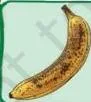
From there the chapter builds the idea in one direction:
- Physical change first, through paper, a balloon and chalk (page 59) — shape changes, no new substance.
- Chemical change next, through lime water and vinegar with baking soda (pages 60-61) — a milky solid appears.
- Rusting and combustion as everyday chemical changes (pages 62-64), with the covered candle showing that oxygen is needed.
- The burning candle, one process that is physical and chemical at once (pages 64-65).
- Reversibility as a separate way to sort changes (pages 65-66).
- Desirable versus undesirable changes (pages 66-67).
- Weathering and erosion — the same ideas applied to rocks (pages 67-68).
Key Concepts: Physical Change, Chemical Change and Combustion
Two definitions carry the whole chapter. A change is physical when the substance itself stays the same and only its shape, size or state changes. It is chemical when one or more new substances appear. Everything else in the chapter is a way of applying that test.
Physical Change: Same Substance, New Appearance
Try these with your hands first — none of them makes anything new. Fold paper into objects and unfold them: you get the same paper back. Inflate a balloon and let the air out: the uninflated balloon returns. But prick a second balloon and it is gone for good. Crush a chalk piece into powder: the pieces cannot be joined back.
In all three, the material — paper, rubber, chalk — stayed the same; only shape or size changed. That is a physical change (NCERT page 59).
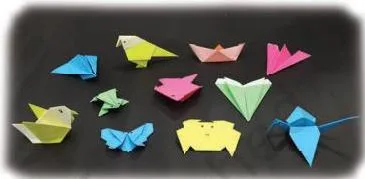
The folded objects in Fig 5.1 make the point visually: every object is the same paper, rearranged. You already met this idea in Grade 6 — water moving between solid, liquid and gas is physical too, because no new substance forms. Ice melting, water boiling and steam condensing are all state changes of the same substance.
Chemical Change: New Substances Appear
Now the test produces something you can see. In the first experiment (NCERT page 60), blow exhaled air through a straw into two tumblers — one with tap water, one with lime water.
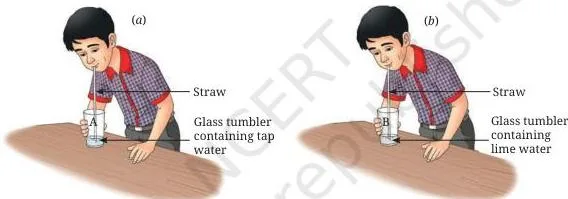
The tap water only bubbles. The lime water turns milky, and if you wait, a white solid settles at the bottom. That white solid is calcium carbonate — a new substance, insoluble in water — so the change is chemical. Exhaled air contains carbon dioxide, which reacts with the calcium hydroxide in lime water:
\[ \text{Calcium hydroxide} + \text{carbon dioxide} \rightarrow \text{calcium carbonate} + \text{water} \]
Turning lime water milky is therefore used as the standard test for carbon dioxide. The second experiment (NCERT page 61) shows the same test from the other side.
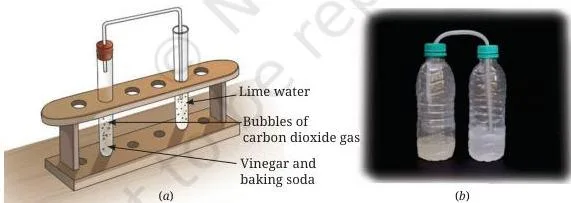
Add a pinch of baking soda to vinegar (or lemon juice) in a test tube: it fizzes and bubbles. Pass the gas through fresh lime water and it turns milky — so the gas is carbon dioxide. Because a new substance is formed, this is a chemical change too, written in short form:
\[ \text{Vinegar} + \text{baking soda} \rightarrow \text{carbon dioxide} + \text{other substances} \]
The chapter calls this short form a chemical equation — a way of writing the change without naming every product. A new substance is created through a chemical reaction.
Rusting and Combustion: Two Everyday Chemical Changes
Both are chemical changes you meet every week, and the test is the same: what new substance shows up?
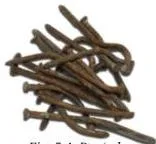
Rusting (NCERT page 62): iron left in air and moisture gains a brown layer — rust, which is iron oxide. Since a new substance forms, rusting is a chemical change, the same reaction you studied in The World of Metals and Non-metals chapter notes.
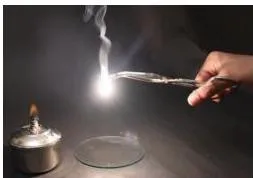
Combustion (NCERT page 62) is defined as a reaction in which a substance reacts with oxygen and produces heat and/or light. The burning magnesium ribbon in Fig 5.5 leaves a white powder, magnesium oxide, with heat and light given out:
\[ \text{Magnesium} + \text{oxygen} \rightarrow \text{magnesium oxide} + \text{heat} + \text{light} \]
Substances that undergo combustion — wood, paper, cotton, kerosene — are combustible substances. One strange case: fireflies.
Fireflies glow because a chemical change in their bodies makes light without heat — bioluminescence (NCERT page 63). Same test, same conclusion: light is evidence of a new reaction happening.
Reversible and Irreversible Changes
The chapter then asks a second, separate question: once a change has happened, can you get the original back? Some changes reverse, some do not — and this axis is independent of physical versus chemical.
Work through Table 5.2 (NCERT pages 65-66): melted ice can be reversible — refreeze it. Boiling water reverses too, since the steam can be condensed back to liquid water. But chopped vegetables cannot return to whole vegetables, and popcorn cannot become corn again — those are irreversible.
The reversal question is not the same as the new-substance question: chopping vegetables forms no new substance (physical), yet it cannot be undone.
The Exploratory Project at the end of the chapter applies the same test to a chameleon (NCERT page 72):
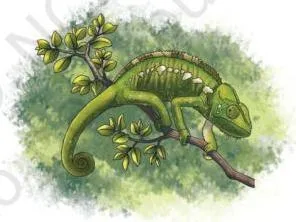
A chameleon changes colour to blend in with its surroundings, or when it is angry or senses danger. Is that change reversible? Yes — the lizard can go back to its earlier colour, just as melted ice can refreeze. The book asks you to explore further from the internet or your school library; the reversal test is the tool to use.
Desirable and Undesirable Changes
The third way to sort a change is by whether you want it — and the chapter insists the answer depends on the situation (NCERT pages 66-67).
- Desirable changes: milk turning into curd, ripening of fruits, cutting fruits, cooking food.
- Undesirable changes: rusting of iron, decay of food during storage.
- The twist: the same change — decomposition of food — is useful when it turns food waste into compost.
Some changes also add up over years. Increased fuel consumption in cars, trains and aeroplanes is raising the amount of carbon dioxide in the atmosphere, and paint drying on walls, doors and furniture releases polluting substances through evaporation — long-term environmental effects of changes we treat as routine.
Weathering and Erosion: Slow Changes That Build Soil
The final application takes the new-substance test out of the kitchen and into the mountains — and it explains where soil comes from.
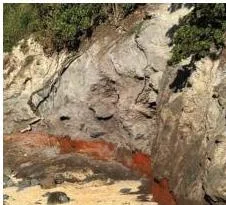
Weathering (NCERT page 67) is the name for physical and chemical changes that break rocks down. Temperature changes, growing tree roots, and water freezing inside cracks physically break large rocks into smaller pieces — the heaps of sand, soil and stones in Fig 5.10a are the result.
Meanwhile, water or chemicals in water react with rock minerals. In Fig 5.10b, an originally black rock called basalt, which contains iron, has chemically changed to produce a red layer: the red colour is iron oxide formed when the rock surface was exposed for a long time to water or moist air.
That is the same rust chemistry — iron forming iron oxide — applied to a rock. Weathering, step by step, leads to soil.
Erosion (NCERT page 68) is different: wind and flowing water break down and move material from one place to another. River pebbles become smooth because constant erosion wears them; when the water slows in a lake or ocean, the transported material settles down and can harden into new rocks over thousands of years.
These changes take so long that they cannot be reversed — erosion is a physical change.
Figure Walkthrough: The Experiments That Prove the Ideas
Students skim past these figures, yet the end exercises test exactly what they show. Each one proves a single idea, so read them as evidence, not decoration.
Fig 5.6: Why the Covered Candle Stops Burning
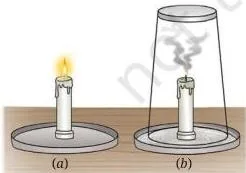
Why does a candle go out when covered? Light two identical candles on petri dishes and cover one with a glass tumbler (NCERT pages 62-63).
The open candle keeps burning; the covered one stops after some time, because it has used up the trapped air. The component of air that supports combustion is oxygen.
Add a little lime water to the petri dish under the used tumbler and it turns milky — proof that carbon dioxide was formed from the carbon of the wax and the oxygen of the air.
The same idea saves lives: if a person’s clothes catch fire, wrap a blanket or cloth around them to cut off the air supply (NCERT page 63). One hard caution from the book — never use a synthetic blanket or cloth, because it can melt and stick to the skin.
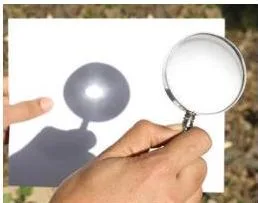
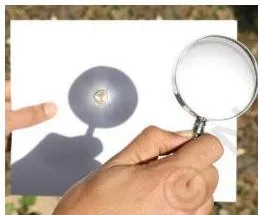
Figs 5.7a-b: A Substance Can Burn Even Without Fire
Can a substance burn without fire? Yes — heat alone can do it.
Focus sunrays with a magnifying glass to the smallest, brightest spot on a piece of paper (NCERT page 64). The paper heats up, starts to smoke, then catches fire — as in Fig 5.7b. No flame touched it. Heat raised the paper to its ignition temperature, the minimum temperature at which a substance catches fire.
A lighted matchstick works instantly because its flame is already hotter than the paper’s ignition temperature. The book warns to perform this activity only under the supervision of a teacher or an adult.
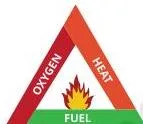
Fig 5.8: The Fire Triangle
All combustion needs the same three things, drawn as the fire triangle (NCERT page 64):
- a combustible substance — the fuel;
- oxygen;
- heat that brings the fuel to its ignition temperature.
Remove any one and the fire stops. That is why the covered candle died (oxygen cut off) and why the blanket works (air cut off). Every “how do we put out a fire?” answer in this chapter is the triangle with one corner removed.
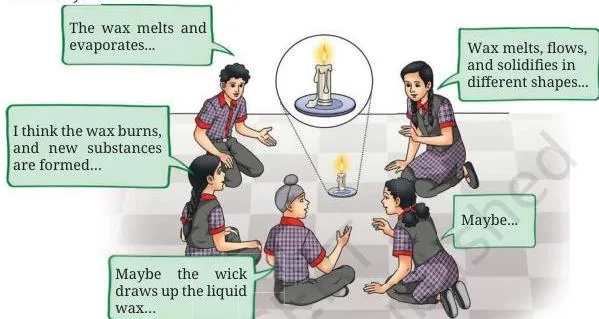
Fig 5.9: The Candle — Physical and Chemical Change Together
The burning candle looks like one change but is two at once — and the classroom discussion in Fig 5.9 works out which part is which (NCERT pages 64-65).
Follow the wax: it melts, travels up the wick, and evaporates because of the flame’s heat. Melting, solidifying and evaporating are physical changes — the wax is still wax. Then the wax vapour burns, producing new substances and the flame — that part is a chemical change. So burning a candle is both physical and chemical in the same process.
The candle has a famous history. Michael Faraday used it for a series of nineteenth-century lectures called the Chemical History of a Candle, calling it the perfect object for introducing scientific study because it mixes melting, vapourisation and combustion (NCERT page 65).
Fig 5.11: Applying the Lime Water Test in the Exercises
Exercise Q10 (NCERT page 71) shows four experimental set-ups and asks in which ones the lime water turns milky, and why.
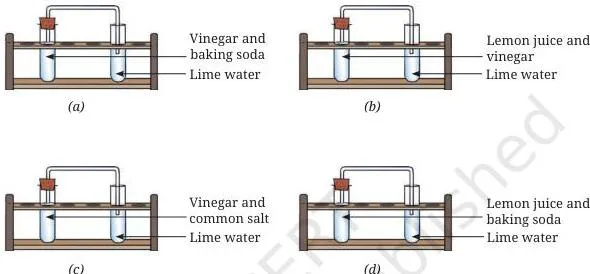
The only rule you need is the test from pages 60-61: lime water turns milky when carbon dioxide actually passes through it. So for each set-up ask two questions. First, is there a source of carbon dioxide — exhaled air, or vinegar (or lemon juice) reacting with baking soda?
Second, is there a clear path for that gas to reach the lime water?
If both are true, the lime water goes milky; if the gas never reaches it, it stays clear. The milkiness is the insoluble calcium carbonate — the same new substance formed in Activities 5.3 and 5.4. Work through the four set-ups in your book with this check and you will have the answer and the reason together.
Key Terms at a Glance
These are the terms the chapter keeps using, with the NCERT page where each one is defined. Use this table as a quick lookup while you revise.
| Term | What it means |
|---|---|
| Physical change | A change in shape, size or state only; no new substance forms (p. 59). |
| Chemical change | A change in which one or more new substances form (pp. 60-61). |
| Chemical reaction | The process by which new substances are formed (p. 61). |
| Chemical equation | The short written form of a reaction, e.g. \( \text{vinegar} + \text{baking soda} \rightarrow \text{carbon dioxide} + \text{other substances} \) (p. 61). |
| Combustion | A reaction with oxygen that gives out heat and/or light (p. 62). |
| Combustible substances | Substances that undergo combustion — wood, paper, cotton, kerosene (p. 62). |
| Rust | The new brown substance, iron oxide, formed when iron rusts (p. 62). |
| Ignition temperature | The lowest temperature at which a substance catches fire (p. 64). |
| Reversible change | A change that can be undone by bringing back the original substance (p. 65). |
| Weathering | Physical and chemical changes in rocks that break them down into soil (p. 67). |
| Erosion | The breaking down and moving of material by wind and flowing water (p. 68). |
How to Classify Any Change in Three Steps
After this section you can classify any change the exercises throw at you. Run these three steps in order:
- Ask: is a new substance formed? Look for evidence — a new colour (brown rust, milky lime water), a gas (bubbles), a new smell, or an insoluble solid settling out.
- Name the change. No new substance → physical change. A new substance → chemical change.
- If asked about reversal, apply the reversal test. Can you bring back the original substance? Yes → reversible; no → irreversible. This is a separate axis, not a physical/chemical test.
| Question to ask | Physical change | Chemical change |
|---|---|---|
| Is a new substance formed? | No — the substance stays the same; only shape, size or state change (p. 59) | Yes — one or more new substances appear (pp. 60-61) |
| Examples in the chapter | Folding paper, inflating a balloon, crushing chalk, melting ice, boiling water (p. 59) | Lime water turning milky (p. 60), vinegar + baking soda (p. 61), rusting (p. 62), combustion (p. 62) |
| Heat and light | Not given out in these examples — the substance just changes form | Often given out, as in combustion and burning magnesium (p. 62) |
| Can it usually be reversed? | Often yes — melted ice refreezes, steam condenses (p. 65) | Usually no — rust and burnt paper cannot be undone (p. 65) |
Worked example 1 — cooking rice. Step 1: new substance? Yes — raw rice changes into soft cooked rice with a new taste, texture and smell; you cannot get the raw grains back. Step 2: a new substance formed, so it is a chemical change.
The chapter confirms this in its closing summary, where combustion, cooking and rusting are listed together as chemical changes (NCERT page 68). Step 3: reversal? No — cooked rice does not return to raw grains.
Worked example 2 — drying wet clothes. Step 1: new substance? No — the water leaves the cloth as vapour, and the cloth is still cloth; evaporate the water and condense it and you have the same water back (p. 65). Step 2: no new substance, so it is a physical change. Step 3: reversal? Yes — condensing the vapour brings the water back.
Drying wet clothes is one of the observations in Table 5.1 on page 58.
Common Mistakes in This Chapter
Five wrong answers that look right — and why the book rejects them. Each row is the mistake, the correct rule, and the check that catches it.
| Mistake | Correct rule | How to check your answer |
|---|---|---|
| “Bubbles always mean a chemical change.” | Bubbles alone prove nothing — blown air bubbles in tap water without changing it. The sign of a chemical change is a new substance, like the milky colour (p. 60). | Ask: what new substance formed? If nothing new appears, the change is physical. |
| “A flame is needed to start a fire.” | Heat to the ignition temperature is enough — focused sunlight set paper burning with no flame (p. 64). | Check temperature reached, not the presence of a flame. |
| “Burning a candle is one kind of change.” | It is both: melting, solidifying and evaporating of wax are physical; the burning of wax vapour is chemical (p. 65). | Split the process: what happens to the wax, and what happens to the vapour? |
| “Reversible change = physical change.” | Reversibility is a separate way of sorting. Chopped vegetables are physical (no new substance) yet irreversible (pp. 59, 65-66). | Run the two tests separately: new substance? Then, can it be brought back? |
| “Decay of food is always undesirable.” | It is undesirable during storage, but the same decomposition is desirable when it turns food waste into compost (p. 66). | Ask who wants the change: in a compost pit, decay is the goal. |
How This Chapter Is Asked in Tests and Exercises
The end set, “Let Us Enhance Our Learning” (NCERT pages 69-71), tests the same three moves: spot the new substance, apply the reversal test, justify the answer. Here is what each numbered item checks.
- Q1 (p. 69) — MCQ on physical change. The true characteristics are (i) the state of the substance may or may not change and (iii) no new substance is formed — option (c). Options (ii) and (iv) describe a chemical change.
- Q2 (p. 69) — reversal test across everyday items. Twisting string back, unrolling a mat, drawing water from a well and boiling water all reverse — nothing new formed, and water vapour condenses back. Dissolving sugar in water also reverses: evaporating the water leaves the sugar unchanged. Stitching cloth, making idlis, ripening fruits and grinding wheat to flour do not reverse, because the original form cannot be rebuilt. Forming soil from rocks is irreversible too (p. 68). If you are unsure, write “not sure” and say why — the question asks for exactly that.
- Q3 (p. 70) — true/false. Melting wax is necessary for burning a candle (True — wax must melt and evaporate before its vapour burns, p. 65). Condensing water vapour is a chemical change (False — it is physical, no new substance). Compost formation is a chemical change (True — p. 66). Mixing baking soda with lemon juice is a chemical change (True — it fizzes and forms carbon dioxide, p. 61).
- Q4 (p. 70) — fill in the blanks. Brown deposits on a cycle handle are due to rusting, a chemical change. Folding a handkerchief is physical and can be reversed. A reaction with oxygen giving out heat is combustion, a chemical change. Magnesium burnt in air produces magnesium oxide, a white powder (p. 62), and the change is chemical.
- Q5-Q7 (p. 70) — justification items. Water to ice and water to steam: physical — state change, no new substance, reversible. Curdling of milk: chemical — milk becomes curd with new properties and cannot return to milk. Soil formation by wind and rain: both physical and chemical — physical breaking of rocks plus chemical reactions such as basalt turning red (p. 67).
- Q8 (p. 70) — the “Eco-friendly Prithvi” story: chopping, peeling, cutting and collecting are physical (shape and size only); decomposition of peels into compost is chemical (p. 66); germination of seeds and growth of plants are chemical, since new substances form. Also give the story a suitable title, as asked.
- Q9 (p. 71) — sorting into A (physical), B (chemical), C (both): tearing paper, melting ice and folding clothes → A. Rusting, curdling of milk, ripening of fruits, burning of magnesium and mixing baking soda with vinegar → B. Burning a candle → C (p. 65).
- Q10 (p. 71) — the Fig 5.11 lime water set-ups, explained in the figure walkthrough above.
Justify any answer in this pattern: name the change → give the evidence (a new substance, or none) → add the reversal check when asked. Example: “Rusting is a chemical change because a new brown substance, iron oxide, is formed, and it cannot be reversed.” That one sentence carries the whole justification.
One warning: textbook contents and the examinable syllabus are not always identical. This chapter is part of the NCERT Class 7 Science (Curiosity) textbook; check the current official CBSE syllabus at cbseacademic.nic.in for what is examinable this session, and treat no single question as guaranteed to appear.
What to Remember: The Chapter’s “In a Nutshell”
The book closes with its own summary, “In a Nutshell” (NCERT pages 68-69), restated here in plainer words.
- Physical change: physical properties change, but no new substance forms.
- Chemical change: one or more new substances form through a chemical reaction, written as a chemical equation.
- Combustion, cooking and rusting are chemical changes.
- Combustible substances give out heat and/or light when they burn.
- Ignition temperature: the lowest temperature at which a substance catches fire.
- Some changes can be reversed; some cannot.
- Some changes are desirable; some are not.
- Weathering — physical and chemical changes in rocks — leads to soil.
- Erosion by flowing water and wind is a physical change.
Now the chapter’s opening question answers itself. The ice that became water is a reversible physical change — refreeze it and it is ice again. The banana’s growing brown spots and smell are a chemical change — new substances have formed, and no waiting will reverse them.
Related Resources
This listing is maintained for the 2026-27 academic session using the NCERT textbook information available to us. NCERT remains the authority for confirming the latest edition.
For the rest of the book, open the Class 7 Science notes page or the Class 7 hub to move between chapters. This chapter builds directly on The World of Metals and Non-metals — rusting and the burning of magnesium are both introduced there — and the next chapter is Adolescence: A Stage of Growth and Change.
The CBSE notes index covers every class and subject on this site.
| What the chapter holds | Count | Where it is used |
|---|---|---|
| Printed pages | 16 | |
| Sections in the chapter | 11 | |
| Figures with NCERT captions | 22 | |
| Tables | 2 | |
| Activities | 3 | |
| Official NCERT PDF | Download the chapter PDF | the chapter exactly as NCERT publishes it |
Reference: NCERT Class 7 Science (Curiosity) textbook, chapter 5, official edition on ncert.nic.in.
NCERT publishes the textbook and its official PDF; the CBSE syllabus governs what is examinable.
Sources and Data Verification
The descriptions on this page follow the NCERT Class 7 Science (Curiosity) textbook, chapter 5, “Changes Around Us: Physical and Chemical”, as published in the official NCERT edition on ncert.nic.in. This page covers that one chapter, including its activities, figures and end exercises; it does not cover other Class 7 chapters or subjects.
The listing is maintained for the current academic session using the NCERT edition published on ncert.nic.in. NCERT settles textbook editions and PDFs; CBSE settles the curriculum and examinations. Textbook contents and the examinable syllabus are not always identical, so check the current official CBSE syllabus before assuming any chapter detail is on the exam.
Frequently Asked Questions
What is the difference between a physical change and a chemical change?
A physical change alters only shape, size or state and forms no new substance — folding paper or melting ice (NCERT page 59). A chemical change forms one or more new substances, like the milky calcium carbonate when exhaled air meets lime water (NCERT pages 60-61). Look for the new substance: that is the whole test.
Is burning of a candle a physical change or a chemical change?
Burning a candle is both a physical and a chemical change (NCERT page 65). Melting, solidifying and evaporating of the wax are physical; the burning of wax vapour, which produces the flame and new substances, is chemical.
Why does lime water turn milky when we blow air through it or add vinegar and baking soda?
Both actions supply carbon dioxide (NCERT pages 60-61): exhaled air contains it, and vinegar with baking soda produces it. The gas \( (CO_2) \) reacts with calcium hydroxide \( (Ca(OH)_2) \) in lime water to form calcium carbonate, a white insoluble substance that makes the liquid milky. That milkiness is the standard test for carbon dioxide.
What are the three requirements for combustion?
The three requirements are a combustible substance (fuel), oxygen, and heat that brings the fuel to its ignition temperature (NCERT page 64). Removing any one of the three stops the fire — which is why a blanket smothers flames by cutting off air.
Is rusting of iron a physical change or a chemical change?
Rusting is a chemical change (NCERT page 62). Iron reacts with air and moisture to form a new brown substance, rust, which is iron oxide, and the original shiny iron cannot be recovered.
Is boiling water a physical change?
Yes — boiling water is a physical change (NCERT page 59). Liquid water becomes water vapour with no new substance formed, and the vapour can be condensed back to liquid water (NCERT page 65).
Explore Class 7 Science Books
Related chapters: