
Exploring Class 7 Science Chapter 2 is the acids, bases and neutral substances chapter — “Exploring Substances: Acidic, Basic, and Neutral” — from the NCERT Class 7 Science (Curiosity) textbook, printed on pages 7 to 22.
The official NCERT Class 7 Science Chapter 2 Exploring PDF is right below, so you can follow every activity in the original book as you read.
Download NCERT Class 7 Science Chapter 2 Exploring PDF
The file is the exact chapter as printed in the current NCERT Class 7 Science (Curiosity) textbook, published by NCERT. Open the NCERT Class 7 Science Chapter 2 Exploring PDF on the official NCERT portal whenever you need the chapter’s original text, activities and figures in one file.
Chapter at a Glance: What the PDF Contains
The table below shows what the chapter file holds.
What This Chapter Covers: From a Science Fair Trick to Neutralisation
This chapter teaches one skill — sorting everyday substances into acidic, basic and neutral. Exploring Class 7 science with this chapter means following one story: from a science-fair trick to neutralisation in daily life.
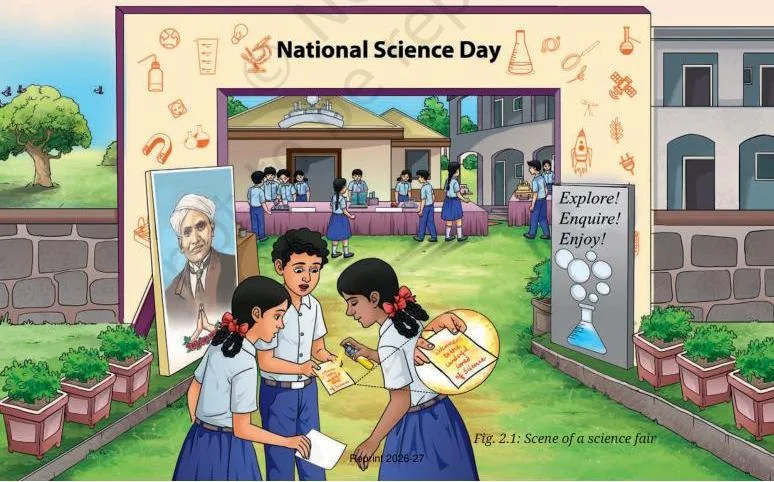
- The science-fair opening (p. 7) — a spray makes the words “Welcome to the Wonderful World of Science” appear on plain white sheets. The trick is the chapter’s central question, answered at the close.
- Activity 2.1: testing household samples (pp. 8–10) — lemon juice, soap solution, amla juice, tamarind water, vinegar, baking soda solution, lime water, tap water, washing powder solution, sugar solution and salt solution are tested with blue and red litmus paper, then sorted into Groups A, B and C.
- Taste and touch clues (p. 11) — sour taste points to acids; soapy-slippery feel and bitter taste point to bases, with the chapter’s own caution never to taste anything unknown.
- Homemade indicators — red rose extract (pp. 12–13), turmeric paper (pp. 14–15) and onion as an olfactory indicator (p. 16).
- Activity 2.7: acid meets base (pp. 17–18) — the colour change that reveals neutralisation.
- Neutralisation in daily life (pp. 18–19) — ant bites, acidic soil, basic soil and acidic factory waste.
- The close (pp. 19–22) — In a Nutshell, the exercise set Let Us Enhance Our Learning, the DIVE question and Exploratory Projects.
Watch for the boxed features as you read: HOLISTIC LENS explains that lichens are a fungus–alga partnership (p. 10); FASCINATING FACTS covers hydrangea flower colours and turmeric as the “golden spice” (pp. 14–15); KNOW A SCIENTIST introduces Acharya Prafulla Chandra Ray, the Father of Modern Indian Chemistry (p. 17).
Key Concepts: Acids, Bases, Neutral Substances and Indicators
These five ideas carry the whole chapter. Each one has its printed page beside it, so you can check it in your own book.
How litmus sorts substances into three groups
Litmus is the chapter’s standard indicator — a natural substance obtained from lichens, available as a solution and as blue and red paper strips (NCERT, p. 10). One drop of a sample on a strip is enough to place the substance in one of three groups.
- Acidic — turns blue litmus paper red.
- Basic — turns red litmus paper blue.
- Neutral — changes neither blue nor red litmus paper (pp. 10–11).
In Activity 2.1 the groups come out as: Group A — lemon juice, amla juice, tamarind water, vinegar (all acidic); Group B — soap solution, baking soda solution, lime water, washing powder solution (all basic); Group C — tap water, sugar solution, salt solution (all neutral).
Lime water is not the fruit lime. To prepare lime water from chuna: mix chuna (calcium oxide) in water, leave it undisturbed for about an hour, then filter the liquid into another container (NCERT, p. 9). The clear filtrate is lime water — a solution of calcium hydroxide in water.
The fruit called lime is a citrus fruit similar to lemon, unconnected to lime water.
Lichens, the source of litmus, are the association of a fungus and an alga, and they grow on rocks and trees where the air is clean (NCERT, p. 10).
What acids and bases feel and taste like
Indicators give the verdict; your senses give the first clue. The chapter connects the two so you can predict a result before you test it.
- Acids taste sour. Lemon, curd, tamarind and vinegar all taste sour, and each carries a common acid (Fig. 2.4, NCERT, p. 11).
- Bases feel soapy or slippery. Rubbing baking soda solution between your fingers gives the soapy feel (NCERT, p. 11).
- Bases generally taste bitter — but bitter is not proof. Bitter gourd (karela) is bitter yet not basic in nature (NCERT, p. 11).
Caution: never taste or touch an unknown substance. The chapter’s warning is to taste nothing until asked, and never to taste anything unknown (NCERT, p. 11).
Natural indicators you can make at home
Litmus comes from a shop; these indicators come from your kitchen. Each one has its own colour rule, and mixing up the rules is the most common test error in this chapter.
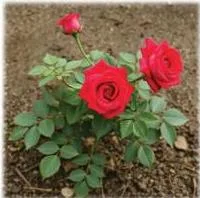
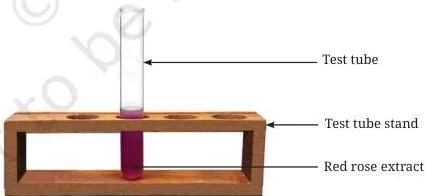
- Red rose extract (pp. 12–13) — crush washed petals, soak them in hot water for 5–10 minutes, then filter. The extract is red in an acid, green in a base. Beetroot, purple cabbage, Indian blackberry (jamun) and red hibiscus (gudhal) can also act as indicators (p. 13).
- Turmeric paper (pp. 14–15) — dip filter paper in turmeric paste, dry it and cut strips. The yellow paper turns red in a base only; it stays yellow in acids and neutral substances. So turmeric detects bases but cannot distinguish an acid from a neutral substance — both leave it yellow. This is the exact trap in Question 10 of the exercise set, where turmeric alone cannot separate vinegar from sugar solution.
- Onion — an olfactory indicator (p. 16) — finely chopped onion kept overnight in a closed container with clean cloth or filter paper strips gives strips whose odour changes when an acidic or basic solution is dropped on them. It works when you cannot see a colour change.
That is also why a curry stain on a white shirt turns reddish when soap is rubbed on it — the stain carries turmeric, and soap, a base, turns turmeric red (p. 15).
The table below compares the four indicators in this chapter — litmus, red rose extract, turmeric paper and onion — with their colour or odour in acidic, basic and neutral solutions.
| Indicator | In an acidic solution | In a basic solution | In a neutral solution |
|---|---|---|---|
| Litmus paper (p. 10) | Blue litmus turns red | Red litmus turns blue | No change on either strip |
| Red rose extract (p. 13) | Turns red | Turns green | No change in colour |
| Turmeric paper (p. 15) | Stays yellow | Turns red | Stays yellow |
| Onion strips (p. 16) | Odour changes | Odour changes | Odour stays as it was |
Read the table the way the exercise set will: one observation on one indicator fixes the nature of a substance, as long as you use that indicator’s own rule.
The Guru Purnima card (p. 16) — Ashwin coated paper with dried turmeric paste and wrote his message with one of the tested solutions. The solution is the basic one, soap solution: turmeric turns red wherever a base touches it, so the writing shows red on yellow.
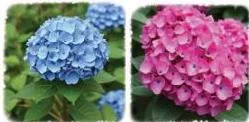
The hydrangea clue (p. 14) — the same plant gives blue flowers in acidic soil and pink or red flowers in basic soil. A whole garden acting as an indicator.
Neutralisation: what happens when acid meets base
The chapter’s central question is what happens when an acid and a base are mixed. The answer is neutralisation, and the experiment that shows it is Activity 2.7.
In Activity 2.7 (NCERT, p. 17), one drop of lemon juice is diluted with about twenty drops of water. A drop of blue litmus solution turns the mixture red. Adding lime water drop by drop, while swirling, eventually changes the colour back to blue — the acid has been neutralised (Fig. 2.10a/b).
That is the signature of a neutralisation reaction: when the solution of an acid is mixed with the solution of a base in sufficient quantity, the resulting solution is neither acidic nor basic. The reaction forms salt and water with the release of heat:
Acid + Base → Salt + Water + Heat (NCERT, p. 17) How to recognise neutralisation: the acid’s effect disappears (the colour comes back), the product is neutral, and heat is released. The word “neutral” means the result does not turn litmus either way.
Neutralisation in daily life
One idea — an acid and a base cancel each other — solves three very different problems, and this is how the chapter closes its teaching (NCERT, pp. 18–19).
- Red ant bite (p. 18) — the ant injects formic acid into the skin, causing stinging pain. Moist baking soda, a base, neutralises the acid and relieves the bite.
- Acidic soil (p. 18) — excessive chemical fertiliser makes soil acidic and plants stop growing well. Lime, a base, is added to neutralise the soil.
- Basic soil (p. 19) — organic matter such as manure and composted leaves releases acids that neutralise the basic nature of the soil.
- Acidic factory waste (p. 19) — waste is neutralised with basic substances before it is released into a lake, protecting the fish.
The chapter adds one caution: plants in neutral soil can still grow poorly when the soil simply lacks nutrients — not every poor crop is an acidity problem (p. 19).
Figure Walkthrough: What Each Diagram Shows




These are the chapter’s own NCERT figures, in the order they appear in the book. For each one, the point to notice is named, so you can use the figure to answer a question instead of only recognising it.
Fig. 2.1 (p. 7) opens the chapter. Notice that the white sheets look blank before the spray, and the words appear the moment the liquid lands. The whole chapter exists to explain that trick — by the end, you should be able to name the writing solution, the spray and the colour logic.
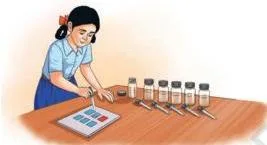
Fig. 2.2(a) (p. 8) shows the acid test. Each household sample is dropped on its own piece of blue litmus, spread on a white tile. The pieces that turn red mark the acidic samples. Notice the method: one drop per sample, recorded in Table 2.1.
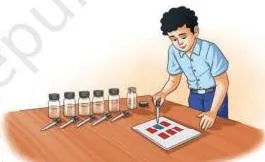
Fig. 2.2(b) (p. 8) is the mirror image. The same samples on red litmus: the pieces that turn blue identify the basic samples. A sample that changes neither strip belongs in Group C.
Fig. 2.3 (p. 10) is your reference picture. Litmus paper comes in two colours, blue and red, and each has its own rule: blue turns red under an acid, red turns blue under a base. A strip that keeps its own colour means the sample is neutral for that test.
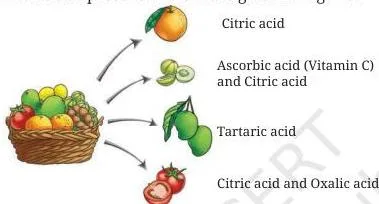
Fig. 2.4 (p. 11) connects sourness to real acids. Lemon, curd, tamarind and vinegar each contain a common acid, and each tastes sour. This figure is the evidence behind the rule that sour-tasting substances tend to contain acids.
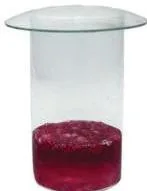
Fig. 2.6 (p. 12) is the first step of making a rose indicator. Crushed petals are completely immersed in hot water and the tumbler is covered for 5–10 minutes until the water takes up the colour. The filtered liquid is the extract you use as the indicator.
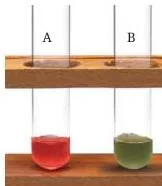
Fig. 2.8 (p. 13) proves the rose extract works — with its own colour scheme. Lemon juice turns the extract red; soap solution turns it green. Do not carry the litmus rule onto this indicator: here red/green replaces blue/red.
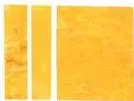
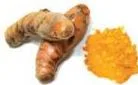
Fig. 2.9 (p. 14) shows both ends of the turmeric test. On one side, turmeric paste; on the other, the yellow strips cut from turmeric-dipped filter paper. A basic sample turns a strip red; an acidic or neutral sample leaves it yellow.
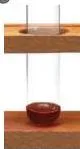
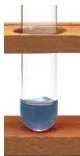
Figs. 2.10(a) and 2.10(b) (p. 17) are the before-and-after of neutralisation. The first shows diluted lemon juice turned red by blue litmus — the acid’s effect. The second shows the same tube after enough lime water: the red has changed back to blue.
This is the reverse direction of the earlier litmus tests — here the base undoes the acid’s colour change. A stage comes when the solution is neither acidic nor basic: that stage is neutralisation.
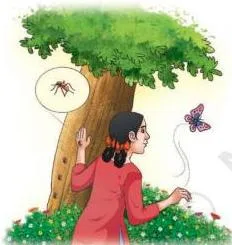
Fig. 2.11 (p. 18) is neutralisation on skin. The red ant injects formic acid, which causes the sting; moist baking soda, a base, neutralises the acid and relieves the pain. Same reaction as Activity 2.7, just outside the test tube.
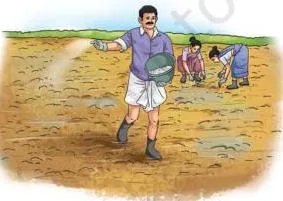
Fig. 2.12 (p. 18) scales neutralisation up to a field. Overuse of fertiliser made the soil acidic, so lime, a base, is added to cancel the acidity. If the soil were basic instead, the fix would flip to organic matter such as manure and composted leaves.
Definitions: Key Terms from This Chapter
These are the terms the chapter expects you to use precisely. The page number is where the term is settled in the book.
| Term | Plain definition | Page |
|---|---|---|
| Litmus | A natural substance obtained from lichens, available as a solution and as blue and red paper strips. | p. 10 |
| Acid-base indicator | A substance that shows different colours in acidic and basic solutions. | p. 10 |
| Acidic | The nature of a substance that turns blue litmus paper red. | p. 10 |
| Basic | The nature of a substance that turns red litmus paper blue. | p. 10 |
| Neutral | Neither acidic nor basic; changes neither blue nor red litmus paper. | pp. 10–11 |
| Acid | In this chapter, the sour-tasting component of edible substances such as lemon, curd, tamarind and vinegar. | p. 11 |
| Base | A substance that generally tastes bitter and feels soapy or slippery, and turns red litmus paper blue. | p. 11 |
| Olfactory indicator | A substance whose odour changes in an acidic or basic medium. | p. 16 |
| Neutralisation reaction | A reaction of an acid with a base that gives salt and water with the release of heat, leaving a solution neither acidic nor basic. | p. 17 |
| Lime water | A solution of calcium hydroxide in water, prepared by mixing chuna (calcium oxide) in water, leaving it, and filtering. | p. 9 |
Common Mistakes Students Make in This Chapter
These are the places where students who understand the chapter still drop marks. Each row names the mistake, the rule that fixes it, and how to check your answer.
| Mistake | Correct rule | How to check your answer |
|---|---|---|
| Confusing lime water with the fruit lime. | Lime water is a solution of calcium hydroxide made from chuna (calcium oxide), not juice of the fruit lime. | Ask: was the liquid made by mixing chuna in water, leaving it and filtering? If yes, it is lime water (p. 9). |
| Using turmeric paper to test for acids. | Turmeric turns red only in bases; it cannot distinguish an acid from a neutral substance — both leave it yellow. | Lemon juice and sugar solution both leave turmeric yellow; only a base turns it red (p. 15). |
| Thinking every bitter substance is a base. | Bitter is only a general clue. Bitter gourd (karela) is bitter but not basic. | Confirm with an indicator before classifying (p. 11). |
| Reversing the litmus rules. | Acids turn blue litmus red; bases turn red litmus blue. | Memory hook — B-A-R: Blue litmus + Acid = Red. The base rule is the exact mirror: red litmus + base = blue (p. 19). |
| Forgetting what neutralisation actually forms. | Acid + Base gives Salt + Water + Heat. The colour change is the sign; the products are the answer. | When asked what neutralisation produces, name salt, water and heat — not just “the colour changed back” (p. 17). |
| Carrying one indicator’s colour scheme onto the next. | Red rose extract is red in acid and green in base; turmeric is red only in bases; litmus works on blue/red. Every indicator has its own scheme. | Before answering, write the chosen indicator’s colour in acid and in base from the comparison table above (p. 13). |
How This Chapter Is Asked in Tests
The best guide to what gets asked is the chapter’s own exercise set, Let Us Enhance Our Learning (pp. 20–21). The questions repeat a small number of patterns; spotting the pattern is most of the battle.
- Reading an indicator-results table (Q4) — a liquid is tested with several indicators and you must name its nature and justify it. A full-marks answer states the nature and quotes the exact indicator rule — never just the verdict.
- Single-indicator questions (Q2) — one observation fixes everything. Red litmus turning blue means basic; turmeric turning red means basic; rose extract turning green means basic. Learn each indicator’s one-line rule and these become instant.
- Reversal questions (Q1) — something turned red litmus blue; which added solution would undo the change? The undoer is an acid (vinegar), because an acid turns blue back to red.
- The secret-message task (Q6) — choose the writing solution and the spray. A basic writing solution with turmeric spray is one working combination, because the base turns turmeric red.
- The blindfold question (Q5) — no colour change can be seen, so use the indicator that works by smell: the onion olfactory indicator.
- The DIVE question (p. 22) — vinegar bubbles on an eggshell but soap solution does not. The acid reacts with the eggshell material while the base does not — the same pattern, one observation on each side.
Worked example: classify three unknown liquids using the indicator rules. Suppose liquids P, Q and R give these results: turmeric paper turns red with P; blue litmus paper turns red with Q; red rose extract stays unchanged with R.
- P → basic. Turmeric turns red only in bases, so P must be a base.
- Q → acidic. Blue litmus turning red is the acid rule, so Q is an acid.
- R → neutral. If R were acidic the rose extract would turn red; if basic it would turn green. No change means neither, so R is neutral.
Cross-check with a second indicator whenever you can: a base should turn red litmus blue, an acid should leave turmeric yellow, and a neutral substance should change neither litmus strip. The exercise set is built on exactly this cross-checking logic (Q2, Q4, pp. 20–21).
Textbook contents and the examinable syllabus are not always identical — check the current official syllabus for what is examinable this session.
The Chapter in a Nutshell
If you remember only this much, you have the chapter (built from the book’s own In a Nutshell, pp. 19–20).
- Substances around us are acidic, basic or neutral.
- Extracts of lichen, red rose, red hibiscus, purple cabbage and turmeric can act as acid-base indicators.
- Acids turn blue litmus red; bases turn red litmus blue.
- Red rose extract is red in acid, green in base.
- Turmeric turns red in bases; it stays yellow in acids and neutral substances.
- Acid + Base → Salt + Water + Heat.
- Neutralisation manages a red ant bite, acidic or basic soil, and acidic industrial waste.
Related Resources and Official Source
This listing is maintained for the 2026-27 academic session using the NCERT textbook information available to us. NCERT remains the authority for confirming the latest edition.
This chapter is from the Curiosity textbook, the NCERT book currently used for Class 7 Science — some schools may still follow an older edition, so confirm which book your school uses.
- All Class 7 Science chapters — every Curiosity chapter listed on this site.
- Other Class 7 NCERT books — the Class 7 book hub.
- Class 7 Science study notes — short-form revision, including Chapter 1, The Ever-Evolving World of Science and the electricity, circuits and their components notes.
- CBSE notes collection and the Class 7 study hub — notes organised by class and subject.
| What the chapter holds | Count | Where it is used |
|---|---|---|
| Printed pages | 16 | |
| Sections in the chapter | 6 | |
| Figures with NCERT captions | 24 | |
| Tables | 5 | |
| Activities | 2 | |
| Official NCERT PDF | Download the chapter PDF | the chapter exactly as NCERT publishes it |
Reference: NCERT Class 7 Science (Curiosity) textbook, chapter 2, official edition on ncert.nic.in.
Sources and Data Verification
This page describes the NCERT Class 7 Science (Curiosity) textbook, Chapter 2, printed pages 7–22 of the official NCERT edition. The chapter PDF is published by NCERT and linked at the top of this page. NCERT settles the textbook, its editions and the official PDF; CBSE settles the curriculum, syllabus and examinations.
This page is maintained from the NCERT textbook itself for the current academic session — not from any coaching material.
Frequently Asked Questions
Short answers to the questions students search for most often about this chapter.
Why did the words “Welcome to the Wonderful World of Science” appear on the white sheet at the science fair?
The chapter’s own suggested explanation (p. 19) is that the message was written with a basic solution such as soap solution, and the spray was turmeric solution. Turmeric turns red wherever a base touches it, so the soap-written words turned red the moment the spray landed, while the rest of the sheet stayed yellow (p. 15).
Why does turmeric paper turn red with soap solution but not with lemon juice?
Because soap solution is basic and lemon juice is acidic. Turmeric turns red only in bases; in acids it stays yellow. That is also why turmeric cannot distinguish an acid from a neutral substance — both leave it yellow (p. 15).
How do I prepare lime water for the litmus activity?
Mix lime (chuna, calcium oxide) in water and leave it undisturbed for about an hour, then filter the liquid into another container. The clear filtrate is lime water, a solution of calcium hydroxide — it has nothing to do with the fruit lime (p. 9).
Why is moist baking soda applied to a red ant bite?
Because the ant injects formic acid into the skin, and moist baking soda is a base. The base neutralises the acid, which relieves the stinging pain (p. 18).
Which indicator should a blindfolded student use to test whether a solution is acidic or basic?
The onion olfactory indicator. Its odour changes in an acidic or basic medium, so the test works by smell — no colour change needs to be seen (p. 16).
What happens when an acid is mixed with a base?
A neutralisation reaction takes place: the acid and base cancel each other, forming salt and water with the release of heat. The resulting solution is neither acidic nor basic (p. 17).
Explore Class 7 Science Books
Related chapters: