
This is the page for 1 The Ever-Evolving World of Science Class 7 — Chapter 1 of the NCERT Class 7 Science textbook Curiosity, published for the current academic session. It is a six-page opening chapter, and it is not a topic chapter: it is an invitation to question, experiment and explore, and a preview of everything the year will study.
The official NCERT file is right below, and under it a walkthrough of what every page holds — including a worked demonstration of Activity 1.1 with questions written fresh for this page.
Download the 1 The Ever-Evolving World of Science Class 7 chapter PDF
Get the exact official file: Download the 1 The Ever-Evolving World of Science Class 7 chapter PDF from NCERT’s own textbook portal (ncert.nic.in), where the Curiosity Textbook of Science for Grade 7 is published free for every student — open the portal, choose Science under Class 7, and this chapter lives inside the book file.
Chapter at a glance
The table below shows what this chapter contains — pages, sections, figures, the activity and the end-of-chapter count. Every number in it can be checked against the PDF itself.
| What the chapter holds | In this chapter |
|---|---|
| Printed pages | 6 (pages 1–6) |
| Main section | 1 — “The Ever-Evolving World of Science” |
| Activity | 1 — “Activity 1.1: Question the Answer” (pages 5–6) |
| Illustrations | 6 |
| Worked examples | 0 |
| Exercise questions | 0 |
The table makes the chapter’s character clear: this is an opener, not a topic chapter. It holds no solved examples and no exercise set — its work is introducing the year and the question-asking habit.
What this chapter actually covers
This is not a chapter that teaches one topic. It is the book’s introduction, doing three jobs: an invitation to the year, a preview of every unit ahead, and one activity that changes how you ask questions.
The invitation: pages 1–2
- The book opens by continuing the Grade 6 Curiosity journey. Its own line is that this is “not just a textbook with facts” but an invitation to question, to perform experiments and to explore the world (p. 1).
- The page numbers follow the flight of a butterfly and the soar of a paper plane — the chapter’s way of saying that learning takes flight when curiosity leads (p. 1).
- Something as simple as a paper plane inspired real flight research, from early inventors studying bird wings to modern aircraft designers (p. 1).
- Science, as the book said in Grade 6, is a process: a way of thinking that welcomes curiosity, asks questions and stays open to the unknown (pp. 1–2).
- The deeper questions of the year: How do things work? Why do events happen the way they do? What can we learn from the patterns we see in nature? (p. 2)
- Science also carries responsibility — human activities are linked to the natural world and to society, and science can help address environmental challenges and build a more sustainable world (p. 2).
The preview of the year: pages 2–4
From page 2 the chapter tours its own book, theme by theme:
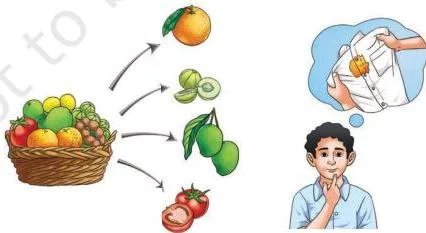
- Materials and their properties — why are some fruits sour, and what happens when a haldi stain lands on a school uniform? (p. 2)
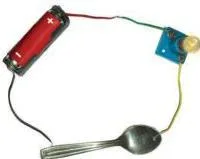
- Electric circuits and conductors — playing with batteries, lamps and wires to find out what makes a lamp glow (p. 3)
- Metals and non-metals — classifying materials by their properties leads straight into this world (p. 3)
- Changes and heat — batteries run out, ice melts, fruits ripen, rocks break into pebbles; some changes are reversible, others are not, and heat speeds many of them up (p. 3)
- The water cycle — the Sun’s heat evaporates water from the seas, it falls as rain, and trickles into the ground (p. 3)
- Life processes and plant nutrition — bodies change fast in the middle-school years; animals eat, breathe and circulate blood to grow, and the chapter asks whether plants also need food and breathe (p. 4)
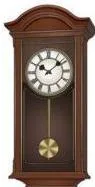
- Time and shadows — what time is, how we measure it, and how early humans read the Sun’s position from shadows long before clocks (p. 4)
- Light, eclipses and the Earth–Moon–Sun system — the Earth and the Moon cast shadows, producing eclipses; day and night depend on sunlight; the Earth rotates, the Moon goes around the Earth, and the Earth around the Sun (pp. 4–5)
Activity 1.1: Question the Answer (pages 5–6)
The chapter’s only activity turns the usual school format around. Instead of being handed questions and then finding answers, you are given answers and must invent the questions.
The chapter recalls the Grade 6 saying, “To be a wise person, you must be a whys person” — great scientists are the ones who ask amazing questions, not just the ones who answer them (p. 5).
How Activity 1.1 works — with an original example
The rule in one line: take a given answer, and write a curious, creative question that could have produced it. The chapter guarantees there are never any wrong questions (p. 6) — and then immediately warns against the lazy kind. For the answer 42, it names “What is 32+10?”
as exactly the obvious question to avoid (p. 6), because that is arithmetic dressed up as curiosity.
To see the difference, take a fresh answer that is not in the book. Suppose the answer is:
Answer: “Because the seeds need darkness to sprout.”
Three possible questions that could lead to that answer:
- “Why do we keep the seed tray covered and away from the window?” — it works, but it only re-states the situation.
- “Why did my bean seeds sprout in the cupboard but not on the windowsill?” — the interesting one: it comes from a real observation, it asks “why”, and it expects an explanation you could test.
- “Why is my room so dark?” — the obvious one to avoid: almost any answer about darkness could fit, so the question teaches nothing.
The test for a strong question: it follows from something you have actually observed, it asks why or how, and it cannot be answered by simply repeating the answer back. Practise on everyday statements of your own — pick any answer you meet during the day and build an interesting question for it.
Key concepts this chapter sets up
This chapter plants ideas rather than definitions, and those ideas keep returning all year. Five of them are worth being able to name after one reading:
- Science is a process, not a pile of facts. It is a way of thinking that welcomes curiosity and stays open to the unknown (pp. 1–2).
- Asking questions matters as much as answering them. The entire activity on page 5 rests on this, and the Grade 6 line about being a “whys person” comes back to underline it (p. 5).
- The fields of science are interconnected. Physics, chemistry, biology and earth sciences appear as separate chapters, but ideas in one field inspire questions in another (pp. 2–3).
- Science carries responsibility. Human activity is linked to the natural world and to society, and science can help meet environmental challenges and build sustainability (p. 2).
- Observation comes before technology. Early humans told time from the Sun’s shadows before clocks existed, and the paper plane inspired flight research before aircraft did (pp. 1, 4).
The biggest set of ideas the chapter plants is its preview of the year’s themes. The table below maps each theme to the page where the chapter introduces it:
| Theme | What the chapter says | NCERT page |
|---|---|---|
| Materials and their properties | Opens the year by asking why some fruits are sour and what happens to a haldi stain on a school uniform | p. 2 |
| Electric circuits and conductors | Batteries, lamps and wires — what kind of material makes a lamp glow? | p. 3 |
| Metals and non-metals | Classifying materials by their properties leads into the world of metals and non-metals | p. 3 |
| Changes and heat | Batteries run out, ice melts, fruits ripen, rocks break — some changes reverse, some cannot, and heat speeds many of them | p. 3 |
| The water cycle | The Sun’s heat evaporates sea water; it falls as rain and trickles into the ground | p. 3 |
| Life processes and plant nutrition | Eating, breathing and blood circulating nutrients keep animals alive and growing — do plants need food and do they breathe too? | p. 4 |
| Time and shadows | Early humans read the position of an object’s shadow in the Sun to tell the time | p. 4 |
| Light, eclipses and the Earth–Moon–Sun system | The Earth and the Moon cast shadows, making eclipses; day and night depend on sunlight reaching the Earth | pp. 4–5 |
Figure walkthrough: the six illustrations in this chapter


The six illustrations in this chapter carry no numbered captions — they sit inside the running text as visual markers for the idea being discussed. Walk them in order and the shape of the chapter becomes easy to see.
The first illustration sits beside the note about the book’s page numbers, which follow the flight of a butterfly and the soar of a paper plane. Carry away the chapter’s opening idea: learning takes flight when curiosity leads — and a simple paper plane once inspired real scientific study of flight (p. 1).
The second illustration marks the pivot from invitation to contents. It accompanies the passage where the book turns to the year’s topics, beginning with the materials we experience every day — sour fruits, haldi stains — but rarely think to question (p. 2).
The third illustration accompanies the electricity passage. The idea to keep: we test materials to find which ones let a lamp glow, then classify them by what they do — the path that leads into metals and non-metals (p. 3).
The fourth illustration opens the passage on change. The idea: some changes are visible — ice melting, fruit ripening — while others, like water moving through the water cycle, happen invisibly around us (p. 4).
The fifth illustration accompanies early timekeeping. The idea: observation came before technology — reading the Sun’s position from an object’s shadow was a working clock long before clocks were invented (p. 4).
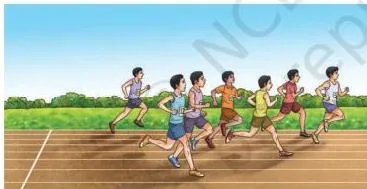
The sixth illustration closes the preview with a promise about the year’s method: every chapter ahead is hands-on. Observe, do experiments, and think like a scientist — and expect even a confirming experiment to raise new questions (p. 5).
Key terms and definitions in this chapter
An honest note first: this chapter has no glossary and introduces no formal definitions — that is normal for an opening chapter, and there is nothing to memorise here. The book does give three near-definitions worth recognising, because they name things the rest of the year keeps using:
| Idea | What the chapter says | NCERT page |
|---|---|---|
| Science as a process | A way of thinking that welcomes curiosity, asks questions and stays open to the unknown — carried over from Grade 6 | pp. 1–2 |
| Fields of science | Physics, chemistry, biology and earth sciences are named as the different fields covered this year, and they stay interconnected | p. 2 |
| Life processes | The activities essential to survival and growth — eating, breathing, and blood circulating nutrients through the body | p. 4 |
Mistakes students make in this chapter
This chapter has no right-answer traps, but it sets up habits — and four habits formed here will cause trouble in later chapters if they are not corrected now.
| Mistake | Correct rule | How to check your answer |
|---|---|---|
| Treating Activity 1.1 as a test with one correct question | The chapter says there are never any wrong questions (p. 6) — the task is to ask an interesting one, not to guess “the” right one | Your question should lead naturally to the given answer and make someone think. If it feels like a guess, write another. |
| Giving the obvious question to the answer 42 | The chapter names “What is 32+10?” as exactly the obvious question to avoid (p. 6) | Cover the answer and say your question aloud — if any classmate would ask it instantly, it is probably too obvious. |
| Skipping this chapter as “just an introduction” | It installs the question-asking habit that the year’s activities and experiments depend on (p. 2) | After reading, you should still be able to name the three questions it plants: How do things work? Why do events happen? What patterns can we learn? (p. 2) |
| Treating science as a pile of facts to memorise | The chapter defines science as a process — a way of thinking, not a collection of facts (pp. 1–2) | For any new idea this year, ask “what process produces it?” instead of memorising the sentence that names it. |
Exam guidance for this chapter
Start with the structural fact: this chapter has no exercise set and no solved examples. As the book’s opener, its content is framing and preview rather than a fixed body of facts to revise.
That calls for two honest cautions. First, textbook contents and the examinable syllabus are not always identical — check the current official CBSE syllabus before assuming that every theme previewed here is examinable this session.
Second, nothing in these six pages is the kind of content that gets directly “asked” in an exam, so do not spend revision time memorising the preview.
What this chapter does offer is one transferable skill: the question-asking habit of Activity 1.1. The productive way to revise it is to practise it — take any everyday answer (“Because the door was locked”, “It’s too salty”) and build an interesting question for it.
Since the chapter itself says there are never any wrong questions, this is the one activity you can safely rehearse with a friend.
The chapter in five moves — quick revision path
A night-before path: five moves that distil these six pages, built from the chapter’s own structure.
- The invitation — this book asks you to question, experiment and explore (p. 1).
- Science is a process — a way of thinking that welcomes curiosity, not a collection of facts (pp. 1–2).
- The year ahead — materials and their properties, changes and heat, water and the water cycle, life processes and plant nutrition, time and shadows, light and eclipses (pp. 2–5).
- How to use the book — observe, do hands-on experiments, and think like a scientist; even a confirming experiment can raise new questions (p. 5).
- Activity 1.1 — turn given answers into interesting questions, and avoid the obvious ones (pp. 5–6).
If you remember one thing from this chapter, it is that science is a process that welcomes curiosity (pp. 1–2). This chapter carries no printed SUMMARY section, so this five-move path is the whole revision.
Related resources
This listing is maintained for the 2026-27 academic session using the NCERT textbook information available to us. NCERT remains the authority for confirming the latest edition.
This opener is the door into the Curiosity textbook, so the useful next steps are the pages that list what follows it.
- NCERT Class 7 Science book page for Curiosity — the full chapter list of this textbook
- Class 7 hub — every NCERT book for Class 7
- Class 7 Science revision notes — the year’s topics as study notes
- Exploring Class 7 Science — how to work through the Curiosity chapters
- Class 7 study resources — notes and help for the whole class
- All CBSE notes — study notes for every class
Sources and data verification
The authority behind this page, in four plain lines:
- This page describes Chapter 1 of the NCERT Curiosity textbook, Textbook of Science for Grade 7, English edition, as published by NCERT, with page references from the printed book.
- It covers this one chapter only — not the full syllabus and not the whole book.
- NCERT settles the textbook, its editions and its official PDFs; CBSE settles the curriculum, syllabus and examinations.
- This page is maintained for the current session using the NCERT information available to us.
| What the chapter holds | Count | Where it is used |
|---|---|---|
| Printed pages | 6 | |
| Sections in the chapter | 1 | |
| Figures with NCERT captions | 6 | |
| Official NCERT PDF | Download the chapter PDF | the chapter exactly as NCERT publishes it |
Reference: NCERT Class 7 Science Curiosity textbook, chapter 1, official edition on ncert.nic.in.
FAQs
Is 1 The Ever-Evolving World of Science Class 7 a chapter I have to study for exams?
It is the opening chapter of the Curiosity textbook, and its job is to set habits rather than deliver a fixed body of content — so the short structural answer is that the chapter itself has no exercise set.
Whether its previewed themes are examinable this session is a separate question: textbook contents and the examinable syllabus are not always identical, so check the current official CBSE syllabus. The habit worth keeping is the question-asking skill of Activity 1.1.
Where is the official PDF for Class 7 Science Curiosity Chapter 1?
On NCERT’s official textbook portal at ncert.nic.in. Choose Class 7, then Science, and the Curiosity Textbook of Science for Grade 7 opens as the official PDF; Chapter 1, “The Ever-Evolving World of Science”, is the first chapter inside that file. The download box at the top of this page links straight to the portal.
How do I do Activity 1.1 Question the Answer in the Curiosity textbook?
Read the answers given on page 6, and for each one write a question that could have produced it — the activity deliberately works backwards from the usual test format. The chapter says there are never any wrong questions, but it warns against obvious ones: for the answer 42, it rejects “What is 32+10?” as too obvious.
The worked demonstration above shows the difference using a fresh answer.
Which topics does the opening chapter of Curiosity Class 7 preview?
Eight themes: materials and their properties; electric circuits and conductors; metals and non-metals; changes and heat; the water cycle; life processes and plant nutrition; time and shadows; and light, eclipses and the Earth–Moon–Sun system. The preview-themes table above maps each one to the page where the chapter introduces it.
Does this chapter have exercise questions at the end?
No. The chapter ends with Activity 1.1 Question the Answer on pages 5–6, and it contains no exercise set and no solved examples — the at-a-glance table shows both as zero. The question sets begin with the topic chapters that follow this opener.
Explore Class 7 Science Books
Related chapters: