
If you searched for the NCERT Class 8 Social Science Chapter 1 PDF, this page gives it to you directly. This is Chapter 1 of Exploring Society: India and Beyond Part I: “Natural Resources and Their Use.”
The chapter runs 20 printed pages, and the official NCERT PDF is right below — followed by a full explanation of what the chapter teaches, with page references.
Download the official NCERT Chapter 1 PDF
The official NCERT Class 8 Social Science Chapter 1 Natural Resources and Their Use PDF is published free on NCERT’s own website — open it to read the chapter exactly as printed, photographs, maps and questions included.
The file comes from ncert.nic.in, the same official portal your school uses for textbooks. If the link ever changes, the NCERT site keeps the current edition under Class 8, Social Science.
What is inside this chapter
This section maps the chapter so you know where each part sits before you open the file. The chapter-at-a-glance table on this page shows the chapter’s totals — its sections, captioned figures and end-of-chapter questions.
- The Big Questions (p. 1): the three questions the whole chapter sets out to answer.
- When does Nature become a resource? (p. 2): the definition of a natural resource and the three conditions that make something usable.
- Categories of natural resources (pp. 3–8): first by use, then by renewability.
- Distribution and its implications (pp. 8–10): how unevenly scattered resources shape settlements, trade and conflicts.
- The natural resource curse (p. 11): why abundance does not guarantee prosperity.
- Responsible and wise use: stewardship (pp. 12–18): the chapter’s longest section, argued through soil, groundwater, cement, Sikkim and solar energy.
- Before we move on (p. 19): the chapter’s closing summary of its own argument.
- Questions and activities (p. 19): the end-of-chapter questions.
- A Note on History’s Darker Periods (p. 20): the textbook’s guidance on studying painful history.
The note on page 20 explains how to study history’s darker periods: face them and analyse what made them possible, with detachment and sensitivity — rather than denying them or blaming anyone living today. The same principle, the book says, applies to the ‘Tapestry of the Past’ chapters in this textbook.
What this chapter teaches: from Big Questions to stewardship
The chapter opens with three Big Questions (p. 1): how we categorise natural resources, how their distribution connects to different aspects of life, and what unsustainable use or over-exploitation leads to.
It then builds its answer in order — the definition of a resource on page 2, two ways of categorising on pages 3 to 8, distribution and the resource curse on pages 8 to 11, and stewardship through concrete cases on pages 12 to 18. The closing box ‘Before we move on’ on page 19 states the argument in four points.
When does nature become a resource?
This is the chapter’s foundation: one definition and three conditions that decide whether anything in nature counts as a resource.
Natural resources, the chapter says, are materials and substances that occur in Nature and are valuable to humans (NCERT, p. 2). Trees exist on their own; they become a resource when we cut them and turn the wood into furniture.
But not everything in nature is automatically reachable or usable. Three conditions must hold (NCERT, p. 2):
- Technologically accessible — existing technology can reach it.
- Economically feasible — extraction costs less than the resource is worth.
- Culturally acceptable — using it does not violate values.
Remember the three as TEA: a resource must be Technologically accessible, Economically feasible, and culturally Acceptable. The book’s own examples are petroleum deep under the ocean, where technology or cost may block extraction, and sacred groves, where cutting trees is culturally unacceptable (NCERT, p. 2).
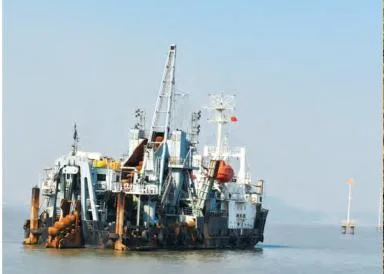
The offshore oil rig in Fig. 1.3 shows the technology condition in action — it reaches petroleum buried under the seabed and turns it into a usable resource.
Here is the key takeaway: the same deposit can stop and start being a resource. A deep-sea petroleum field was not a resource in 1900 for most societies — the deposit never changed; technology and cost did.
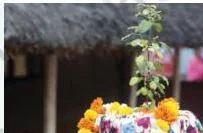
The Tulasi puja in Fig. 1.6 shows the cultural condition from the other side: a plant treated as sacred in daily worship, reflecting a tradition in which Nature is a nurturer and nourisher, not a thing to be used up (NCERT, p. 3).
One word in this chapter does not mean what you expect. Exploitation here means extraction, utilisation and consumption of natural resources — not harm (NCERT, p. 2). The damage comes from the ‘over-’ in over-exploitation, which appears later in the chapter.
Two ways to categorise natural resources
This listing is maintained for the 2026-27 academic session using the NCERT textbook information available to us. NCERT remains the authority for confirming the latest edition.
Categorisation gives people a shared vocabulary — once a name is agreed, a whole set of ideas can be discussed without re-describing them.
The book’s simple example is ‘living and non-living things’: two words that carry a full set of meanings because everyone shares them (NCERT, p. 3). The chapter’s first way of sorting resources is by the uses we put them to (NCERT, p. 4):
- Resources essential for life — the air we breathe, water, food and soil. We cannot make these ourselves.
- Resources for materials — nature’s gifts shaped into objects, from a chair to a carved statuette; the book lists wood, marble, coal and gold among India’s variety (NCERT, p. 4).
- Resources for energy — coal, water, petroleum, natural gas, sunlight and wind, which power buildings, transport and production (NCERT, p. 4).
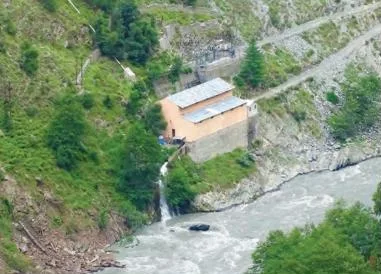
Flowing water is an energy resource: the microhydel plant in Himachal Pradesh in Fig. 1.2 converts the power of flowing water into electricity (NCERT, p. 2).
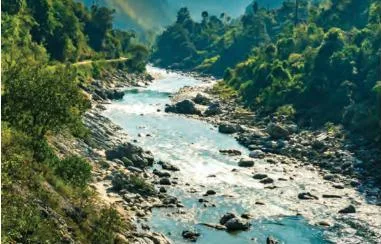
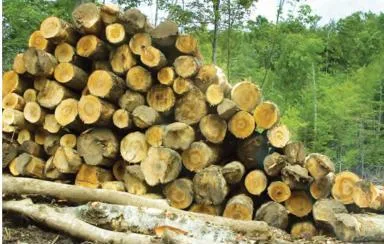
Figs. 1.7 and 1.8 together carry the chapter’s central warning. River water is renewable only as long as glaciers and forests exist to feed it, and timber keeps coming only if we take limited quantities and allow the forest to regenerate (NCERT, p. 5).
The second way of categorising — renewable versus non-renewable — is what the next section examines.
Renewable and non-renewable resources compared
This is the categorisation the later case studies lean on. It rests on two natural processes and one condition.
Nature’s general principle is to work in a restorative and regenerative way (NCERT, p. 5). Restoration returns something degraded to its original healthy state — a cut heals, a forest recovers after a wildfire. Regeneration goes further: it creates new life and the conditions for thriving, as when planting the original trees lets birds and squirrels return.
Nature works in cycles where there is no waste (NCERT, p. 5). A fallen tree decomposes, feeds the soil with the help of bacteria, fungi and insects, and new trees grow from its decay — restoration and regeneration in practice.
Renewable resources — solar energy, wind, energy from flowing water and timber — stay renewable on one condition: the natural rhythm of restoration and regeneration must not be disturbed (NCERT, p. 5). Harvest timber faster than the forest can grow trees, and the forest depletes.
The book shows the condition breaking in two places. Himalayan glaciers are melting faster than precipitation can replace them, threatening the water security of the plains that depend on this ‘water tower’ (NCERT, p. 6). And commercial over-fishing depleted tuna so sharply that agreements on fishing controls were needed (NCERT, p. 6).
Non-renewable resources are created over long periods and cannot be replenished at the rate we use them — coal, petroleum, iron, copper and gold are the book’s examples (NCERT, p. 8). India has significant coal reserves, but the book reports an estimate that they may last about 50 years while electricity demand keeps rising (NCERT, p. 8). That is why judicious use matters.
The core comparison, across six criteria:
| Criterion | Renewable resources | Non-renewable resources |
|---|---|---|
| Definition | Renew themselves while the rhythm of restoration and regeneration is undisturbed (p. 5). | Formed over long periods; not replenished at the rate we use them (p. 8). |
| Examples from the chapter | Sunlight, wind, flowing water, timber, river water (pp. 5–6). | Coal, petroleum, iron, copper, gold (p. 8). |
| Formation time | Continuous, through Nature’s cycles. | Long geological periods. |
| Condition for staying useful | The natural rhythm of restoration and regeneration is undisturbed (p. 5). | None — using them consumes them. |
| Effect of overuse | Turns a renewable into a depleting resource — timber, groundwater (p. 5). | Eventual exhaustion; India’s coal may last about 50 years (p. 8). |
| What we should do | Use within Nature’s rate of renewal; do not over-exploit (p. 19). | Use judiciously while sustainable alternatives are developed (p. 17). |
The chapter also separates what Nature does from what we gain from it. Ecosystem functions are Nature’s inherent ways of working — a tree producing oxygen, a forest filtering water, preventing soil erosion, providing habitat. Ecosystem services are the benefits humans receive from those processes: clean water, protected farmland, pollinated crops (NCERT, p. 7).
The book’s oxygen numbers make the distinction concrete (NCERT, p. 7): a mature tree produces about 275 litres of oxygen per day, and a human being needs about 350 litres per day.
Worked example — oxygen for a family of four: four people need \( 4 \times 350 = 1400 \) litres of oxygen every day. One mature tree supplies about 275 litres, so \( 1400 \div 275 \approx 5.1 \). A family of four therefore depends on roughly five mature trees for its daily oxygen.
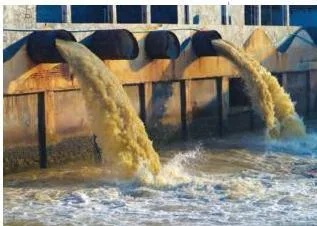
Fig. 1.10 shows the opposite of Nature’s cycles: industrial waste dumped without treatment. Such waste cannot decay into any lifeform’s food, so it disturbs the cycle of restoration and regeneration and can turn a river poisonous, unable to support life (NCERT, p. 7).
How the distribution of resources shapes lives and conflicts
This section explains why where a resource sits matters as much as what it is.
Natural resources are not evenly distributed across the planet or even within countries (NCERT, p. 8). That unevenness shapes human settlements, trade patterns, international relations and conflicts; many wars have been fought to control resources (NCERT, p. 8).
Industries located near resources create employment and townships, and make modern facilities accessible. But the book lists the costs honestly: people displaced from their homes, sacred places under threat, and conflicts that follow (NCERT, p. 9).
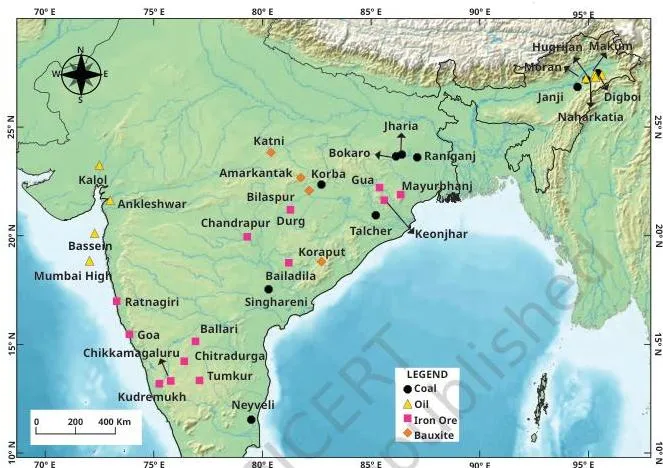
The mineral distribution map in Fig. 1.11 makes the unevenness visible — minerals concentrate in some regions and sit thinly in others. The LET’S EXPLORE box on page 9 asks you to notice what your own region holds and how it is distributed.
Trade follows resource location. Combined with human knowledge and skills, resources can produce unique goods — Wootz steel is the chapter’s example — and trade fuelled the development of large empires in India (NCERT, p. 9).
Nature pays no attention to political boundaries (NCERT, p. 10). The Kaveri’s water is shared among Karnataka, Tamil Nadu, Kerala and Puducherry, and keeping that sharing fair took negotiation and deft management. Rivers shared between countries, as with the Brahmaputra, are harder still.
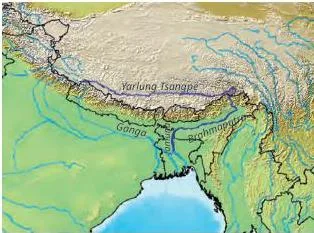
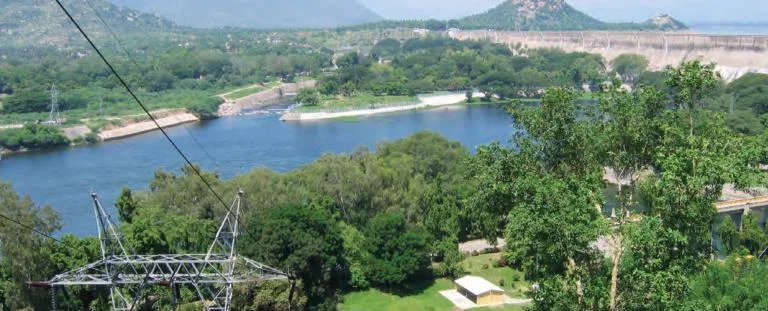
Fig. 1.12 shows the Brahmaputra as shared waters crossing borders; Fig. 1.13 shows the Mettur dam on the Kaveri — infrastructure built on a river no single state owns.
Abundance does not guarantee prosperity. Economists call this the natural resource curse, or the paradox of plenty: some regions rich in resources grow slower, often because they cannot build industries that convert raw resources into higher-value products (NCERT, p. 11).
India has generally avoided this curse by investing in such industries. The chapter’s conclusion: human knowledge, good governance and strategic planning decide whether resources become lasting benefits or temporary windfalls (NCERT, p. 11).
Stewardship: groundwater, cement, Sikkim and solar energy
Stewardship is the chapter’s answer to its third Big Question — what responsible use looks like in practice. The book makes its case through soil, groundwater, cement, Sikkim and solar energy.
Stewardship means respecting Nature, enabling the restoration and regeneration of renewable resources, and using non-renewables responsibly and judiciously (NCERT, p. 12). The warning behind it: irresponsible treatment of natural resources has caused pollution, biodiversity loss and accelerated climate change (NCERT, p. 12).
Soil and the limits of chemical farming (p. 12)
In most states, groundwater is extracted faster than the water table is replenished (NCERT, p. 12). The deficit builds up, the cost of extraction rises, and eventually the water becomes unavailable — the book predicts many growing cities will run out of groundwater soon.
The improper use of chemical fertilisers and pesticides has led to soil degradation. Traditional practices — cow dung and other natural fertilisers, mulching, multi-cropping — treated soil as part of Mother Earth and managed it holistically, and the book says we must learn from them (NCERT, p. 12).
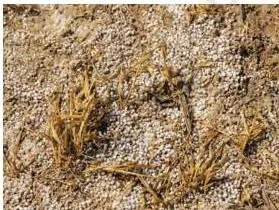
Fig. 1.14 is what that degradation looks like in a field: crop failure on account of injudicious use of chemical fertilisers.
Punjab: a groundwater crisis (pp. 13–14)
Punjab was home to the Green Revolution that fed a large part of India and made the country self-sufficient in food. Today the same state faces a sustainability crisis — Nature exploited beyond regeneration, at least in the short term (NCERT, p. 13).
Three factors combined (NCERT, p. 13):
- In the 1960s, farmers shifted to high-yielding varieties of wheat and paddy that demanded more water than traditional seeds.
- The supply of free power encouraged over-pumping of groundwater — a situation still prevalent in much of India.
- Modern techniques required chemical pesticides and fertilisers.
The result (NCERT, pp. 13–14):
- Groundwater in a large part of Punjab has become inaccessible till depths of about 30 metres.
- Chemicals from pesticides and fertilisers have dissolved into the groundwater, causing health hazards.
- Almost 80% of Punjab’s area is classified as ‘over-exploited’ — water drawn far faster than restoration and rejuvenation is possible.
The book’s verdict is measured: food security was ensured for the short term, but the long-term consequences will take time and effort to heal (NCERT, p. 14).
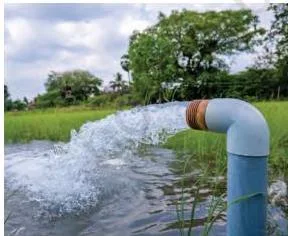
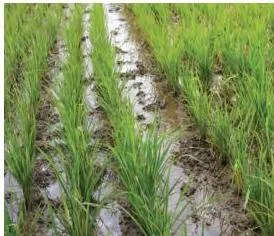
Fig. 1.15 shows extraction — the everyday pumping whose cumulative effect created the crisis. Fig. 1.16 shows wet paddy fields, the water-hungry crops that made the pumping necessary.
Cement: a most polluting industry, and its alternatives (p. 15)
Cement builds our houses, schools, hospitals, bridges, roads and airports — yet its production is listed as one of the most polluting industries (NCERT, p. 15). The process releases fine dust that damages lungs, settles on leaves and lowers yields, and causes soil and water pollution.
The Central Pollution Control Board has created guidelines for cement factories to minimise or eliminate this pollution (NCERT, p. 15). Alongside, there is a move toward alternative materials — traditional stone and mud, new plant-based materials, and recycled waste plastic.
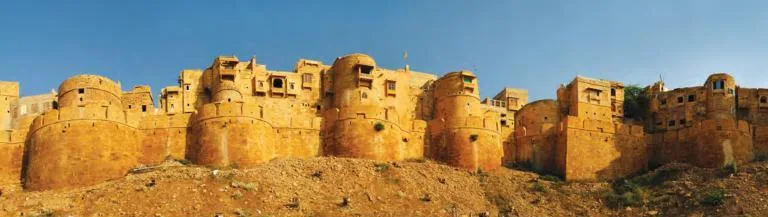
Earth construction is not new. Fig. 1.18 shows the Jaisalmer fort, a 12th-century mud structure later refurbished with sandstone — proof that local materials can last centuries.
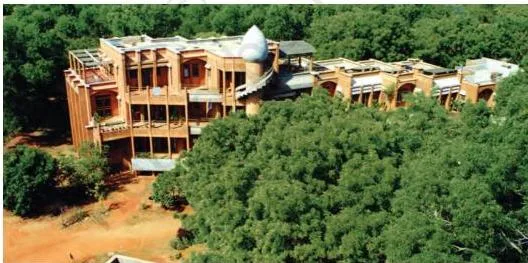
Fig. 1.19 shows the modern version: a community building in Auroville made of mud by the Auroville Earth Institute, which holds the UNESCO Chair for Earthen Architecture (NCERT, p. 15).
The chapter then introduces Vrikshayurveda, an ancient Indian plant science — from vriksa (tree) and ayurveda (the science of life). Formalised in Surapala’s text around the 10th century CE, it advises on soil-specific planting, seed collection and care, irrigation by species and season, natural pest repellents, and ploughing that retains soil moisture and supports soil organisms (NCERT, p. 15).
Sikkim: a successful switch to organic (p. 16)
Pema’s family farm in Sikkim faced declining yields and mounting debts from expensive chemical inputs. When the state announced a policy to promote organic farming, the family decided to try — and it was not easy at first (NCERT, p. 16).
Initially the yields dropped while the soil recovered. The family switched to compost, made natural pest repellents from neem and garlic, and grew multiple crops across the year. After about five years the farm was thriving, and Pema sold cardamom, ginger and traditional vegetables at premium prices (NCERT, p. 16).
In 2016, Sikkim became a 100% organic state, with all its farmland certified organic. The effects were transformational: biodiversity flourished, birds and insects returned, tourism increased, and farmers’ incomes grew by about 20% on average (NCERT, p. 16).
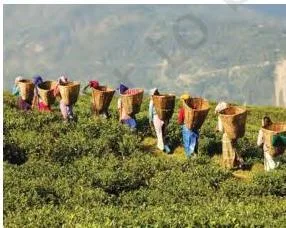
Fig. 1.20, organic farming in Sikkim, is the visual of that transformation — a farm that rebuilt its soil instead of depleting it.
The two caselets make the same point from opposite ends. Compare them to see what made one a crisis and the other a success:
| Aspect | Punjab: overexploitation crisis | Sikkim: organic transition |
|---|---|---|
| Starting point | Green Revolution farming that fed a large part of India (p. 13). | Chemical inputs, declining yields, mounting debts (p. 16). |
| What pushed it | High-yielding crops needing more water, free power, chemical inputs (p. 13). | A state organic policy and one family’s decision to switch (p. 16). |
| What happened | Groundwater became inaccessible to about 30 m; almost 80% of the state over-exploited; chemicals contaminated water (pp. 13–14). | Yields dipped first, then soil recovered; incomes grew about 20% on average; biodiversity and tourism returned (p. 16). |
| Result | Short-term food security at long-term environmental cost (p. 14). | 100% organic by 2016; a global model of sustainable farming (p. 16). |
| Lesson | Exploiting beyond regeneration creates a debt Nature takes time to repay. | Restoring Nature can restore livelihoods too. |
Responsible use, solar energy and fairness (pp. 17–18)
For non-renewables, the rule is: use them so they last until sustainable alternatives are widely available, and switch to renewables for as many purposes as we can (NCERT, p. 17).
India and France launched the International Solar Alliance in 2015 — a coalition of sunshine-rich countries committed to harnessing solar power (NCERT, p. 18).
India has helped channel billions of dollars into solar projects across developing nations, sharing technical expertise and creating affordable financing options. The Bhadla Solar Park symbolises India’s transition from traditional energy sources to renewable alternatives. For Indians, the alliance represents both environmental responsibility and economic opportunity (NCERT, p. 18).
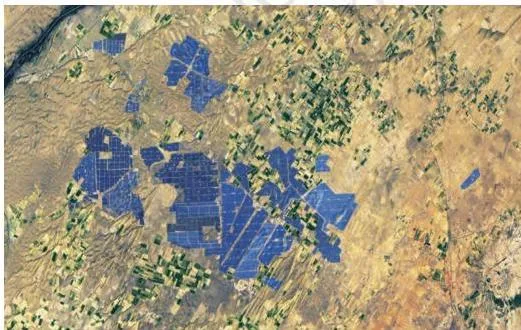
The satellite image in Fig. 1.21 shows one of the largest solar parks in the world, in Rajasthan, generating enough electricity to power about 15% of the state’s current needs — the chapter’s evidence that renewables can work at scale (NCERT, p. 17).
The chapter closes with fairness. Access to basic resources — water and clean air — is often unfair to some sections of society: many city areas lack adequate and regular drinking water supply, and air pollution hits hardest those who cannot protect themselves (NCERT, p. 18).
It ends with lokasangraha, the idea from the Bhagavad Gita that everyone must transcend personal desires and act for the wellbeing of all (NCERT, p. 18).
Figure walkthrough: reading the Punjab groundwater map
This is a short map-reading lesson — the skill the chapter assumes when it prints the Punjab groundwater map as evidence.
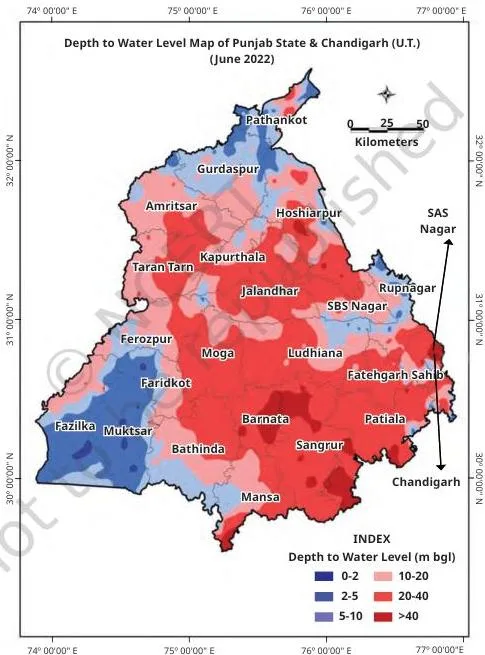
Fig. 1.17 is the depth to water level map of Punjab and Chandigarh, June 2022 (NCERT, p. 14). The caption spells out the unit: m bgl = metres below ground level.
Depth to water level answers one question: how far below the surface must you drill to reach the water table? The bigger the m bgl number, the deeper the drill — and the more severe the depletion.
Now read the map as evidence for the caselet. Where the map shows water sitting tens of metres down, the text connects it to the claim that in a large part of Punjab groundwater has become inaccessible till depths of about 30 metres (NCERT, p. 13).
The map’s territory-wide picture supports the chapter’s harder number: almost 80% of Punjab’s area classified as ‘over-exploited’ (NCERT, p. 14).
Once you can read ‘m bgl’, you can interpret any groundwater map: the depth bands show where the water table sits, and change over time shows whether a region is heading toward crisis or recovery.
Definitions: key terms with page numbers
This lookup table collects the chapter’s key terms. Each is defined in plain words with the NCERT page where the book introduces it — use it for a quick lookup.
| Term | What it means | NCERT page |
|---|---|---|
| Natural resources | Materials and substances that occur in Nature and are valuable to humans. | p. 2 |
| Exploitation (in this chapter) | Extraction, utilisation and consumption of natural resources — a neutral term here, not harm. | p. 2 |
| Restoration | Returning something degraded to its original healthy state. | p. 5 |
| Regeneration | Nature creating new life and conditions for thriving; goes beyond restoration. | p. 5 |
| Renewable resources | Resources that renew themselves while the rhythm of restoration and regeneration is undisturbed — sunlight, wind, flowing water, timber. | p. 5 |
| Non-renewable resources | Formed over long periods and not replenished at the rate we use them — coal, petroleum, iron, copper, gold. | p. 8 |
| Ecosystem functions | Nature’s inherent ways of working, such as a tree producing oxygen or a forest filtering water. | p. 7 |
| Ecosystem services | The benefits humans receive from ecosystem functions — clean water, protected farmland, pollinated crops. | p. 7 |
| Natural resource curse / paradox of plenty | The pattern in which abundant resources do not automatically bring prosperity. | p. 11 |
| Stewardship | Respecting Nature, enabling restoration and regeneration of renewables, and using non-renewables responsibly and judiciously. | p. 12 |
| Vrikshayurveda | Ancient Indian plant science (vriksa = tree, ayurveda = science of life) covering planting, seed care, irrigation and pest control. | p. 15 |
| Arghyam | An offering, generally of water, as a mark of respect or gratitude. | p. 6 |
| Lokasangraha | Acting for the wellbeing of all, beyond personal desires. | p. 18 |
Common mistakes students make in this chapter
These are the confusions the chapter’s own definitions can set up. Knowing them in advance stops half the errors.
| Mistake | Correct rule | How to check your answer |
|---|---|---|
| “Renewable means unlimited.” | A resource stays renewable only while the natural rhythm of restoration and regeneration is undisturbed (p. 5). | Ask whether the rate of use stays within Nature’s rate of renewal — timber taken faster than regrowth depletes the forest (p. 5), and over-fishing depleted tuna (p. 6). |
| “Restoration and regeneration are the same.” | Restoration returns something to its original healthy state; regeneration creates new life and conditions for thriving (p. 5). | Ask: is something being repaired, or is new life being created? A healed cut is restoration; replanted trees with returning birds is regeneration. |
| “Exploitation always means harm.” | In this chapter exploitation means extraction, utilisation and consumption of natural resources (p. 2). | Substitute ‘extraction, utilisation and consumption’ for ‘exploitation’ in the sentence and see if it still reads correctly. |
| “Ecosystem functions and services are the same.” | Functions are Nature’s inherent processes; services are the benefits humans receive from them (p. 7). | Ask who benefits. No human benefit named — it is a function; clean water or pollinated crops — it is a service. |
| “A country with abundant resources is automatically rich.” | The natural resource curse: abundance does not guarantee prosperity, and resource-rich regions can grow slower (p. 11). | Ask whether the country has industries converting resources into higher-value products. India invested in them and generally avoided the curse (p. 11). |
| “Only technology and cost decide whether something is a resource.” | Cultural acceptability matters too — cutting trees in sacred groves may be unacceptable however accessible the trees are (p. 2). | Ask whether the use is culturally acceptable, as with Tulasi puja (p. 3). |
Exam guidance: what to take from this chapter
Use this section to revise efficiently. The chapter’s own Three Big Questions are the best checklist, and each end-of-chapter question on page 19 maps to the pages that answer it.
The Big Questions ask: how we categorise natural resources; how distribution connects to different aspects of life; and what unsustainable use or over-exploitation leads to.
| End-of-chapter question (p. 19) | Where the chapter answers it | What a full answer should include |
|---|---|---|
| 1. What can make a renewable resource non-renewable tomorrow, and what actions can prevent it? | pp. 5–6 | State the condition — the undisturbed rhythm of restoration and regeneration; give one mechanism, such as harvesting timber faster than regrowth or over-fishing tuna; then actions, such as regulated harvest and allowing regeneration, as with the tuna agreements. |
| 2. Name five ecosystem functions that serve humans. | p. 7 | Any five inherent forest processes, each tied to the benefit it gives humans: producing oxygen, filtering water, preventing soil erosion, providing habitat, pollinating crops. |
| 3. What are renewable resources, how do they differ from non-renewable ones, and how can people keep renewables available? Give two examples. | pp. 5–8 | Define both and give examples — sunlight, wind, flowing water, timber versus coal, petroleum, iron, copper, gold; then the renewability condition, and two actions with two examples such as managed timber and solar energy. |
| 4. Identify cultural practices of mindfulness in the use of natural resources. | pp. 3 and 18 | Practices such as Tulasi puja (p. 3) and the idea of lokasangraha — acting for the wellbeing of all (p. 18). |
| 5. What considerations should guide the production of goods for our current use? | pp. 12 and 15–17 | The environmental cost of production (cement dust, p. 15); whether production breaks Nature’s cycles (p. 12); whether sustainable materials and renewable energy can replace polluting ones (pp. 16–17). |
One honest caveat: textbook contents and the examinable syllabus are not always identical — check the current official syllabus for what is examinable this session. No one can promise that a particular question will appear; the chapter’s own pages and questions, not guesses, are the safe revision target.
What to remember from this chapter
These points rebuild the chapter’s closing box ‘Before we move on’ (NCERT, p. 19) — the four ideas the book wants you to carry away, plus the two cases that prove them.
- Natural resources are materials and substances that occur in Nature and are valuable to humans.
- There are different ways of categorising resources; renewable and non-renewable is a useful pair.
- The resource curse can be overcome through investment in technology and skills.
- We must be vigilant about the rate at which we use renewables, so that they are not over-exploited.
- Judicious and wise use of non-renewables stretches them for a longer period.
- Recall the two caselets — Punjab’s over-exploited groundwater and Sikkim’s 100% organic farming — and India’s solar leadership through the International Solar Alliance.
Related resources
If you are working through the whole book, open the NCERT Class 8 Social Science book page for chapter-wise help, or the Class 8 hub for notes across subjects. The full notes library covers every class. The themes of this chapter continue in later chapters such as Reshaping India’s Political Map.
NCERT’s official website, ncert.nic.in, is the authoritative source for textbook editions and PDFs.
| What the chapter holds | Count | Where it is used |
|---|---|---|
| Printed pages | 20 | |
| Figures with NCERT captions | 22 | |
| Official NCERT PDF | Download the chapter PDF | the chapter exactly as NCERT publishes it |
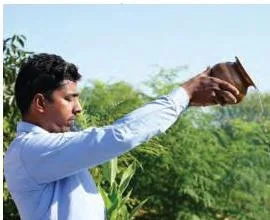
Reference: NCERT Class 8 Social Science textbook, chapter 1, official edition on ncert.nic.in.
Sources and data verification
- This page describes NCERT Class 8 Social Science, Exploring Society: India and Beyond Part I, Chapter 1 — “Natural Resources and Their Use”, 20 printed pages, official NCERT edition from ncert.nic.in.
- It covers this single chapter — not the whole book and not the wider CBSE syllabus.
- It is maintained for the current academic session using the NCERT information available to us.
- NCERT settles textbooks, editions and official PDFs; CBSE settles the curriculum, syllabus and examinations.
Questions students ask about this chapter
What are natural resources according to the NCERT Class 8 chapter?
Natural resources are materials and substances that occur in Nature and are valuable to humans (NCERT, p. 2). The chapter’s examples include water, air, soil, timber, coal and petroleum.
What is the difference between renewable and non-renewable resources?
Renewable resources renew themselves through Nature’s cycles — sunlight, wind, flowing water and timber (NCERT, p. 5). Non-renewable resources formed over long periods and are not replenished at the rate we use them, like coal, petroleum, iron, copper and gold (NCERT, p. 8).
What can make a renewable resource non-renewable?
Disturbing the natural rhythm of restoration and regeneration. Harvest timber faster than the forest regrows, or fish a population faster than it recovers, and the resource depletes (NCERT, pp. 5–6).
What is the natural resource curse?
It is the finding that abundant resources do not automatically bring prosperity; some resource-rich regions grow slower because they cannot convert resources into higher-value products (NCERT, p. 11). India has generally avoided it through investment in such industries.
Why is groundwater over-exploited in Punjab and what were the consequences?
High-yielding crops needing more water, free power that encouraged over-pumping, and chemical inputs depleted the water table; groundwater became inaccessible to about 30 metres and chemicals contaminated it (NCERT, p. 13). Almost 80% of Punjab’s area is classified as over-exploited (NCERT, p. 14).
What is the International Solar Alliance and why does the chapter include it?
It is the coalition of sunshine-rich countries that India and France launched in 2015 to harness solar power, through which India has helped channel billions of dollars into solar projects in developing nations (NCERT, p. 18). The chapter uses it as evidence that a country can lead the transition to renewable energy.
Explore Class 8 Social Science Books
- Next: Reshaping India’s Political Map
Related chapters:
- Introduction: How, When and Where
- Resources
- The Indian Constitution