
This is the NCERT Class 6 Social Science textbook Exploring Society: India and Beyond, Chapter 8 — “Unity in Diversity, or Many in the One”.
The chapter starts on textbook page 124 and runs for 12 pages, and the official Unity in Diversity, or Class 6 Social Science Chapter 8 PDF is right below. Everything on this page follows the current NCERT edition of the book.
Download the Unity in Diversity, or Class 6 Social Science Chapter 8 PDF
Download the Unity in Diversity, or Class 6 Social Science Chapter 8 PDF from the official NCERT portal to read the complete chapter the way NCERT published it — the opening quotations, the three Big Questions, every figure, the Let’s Explore activities and the closing projects.
The file is free and official. It comes from the Class 6 Social Science textbook Exploring Society: India and Beyond, and the chapter starts on textbook page 124. If your school uses this NCERT book, this is the exact chapter you need.
Chapter 8 at a Glance: Sections, Figures and Activities
The table below reflects the structure of the NCERT chapter itself — its sections, its figures, its Let’s Explore activities and its questions — so you can see how much of the chapter is reading and how much is doing before you start.
What Chapter 8 Covers: From the Big Questions to the Epics
The chapter opens with two quotations that frame its central idea — “the Many in the One”. Rabindranath Tagore’s prayer is about never losing the joy of touching the One within the play of the Many; Sri Aurobindo adds that unity in diversity has always been natural to India (NCERT, pp. 124-125).
Three Big Questions then set the task: what ‘unity in diversity’ means in the Indian scenario, which aspects of India’s diversity are most striking, and how we make out the unity underneath it.
From there the chapter explores four dimensions of Indian life, each as an example of unity in diversity:
- A Rich Diversity (NCERT, p. 126) — the scale of India (over 1.4 billion people, the People of India project) and historian Vincent Smith’s question about how any history can be written in the face of such diversity.
- Food for All (NCERT, p. 127) — the same staple grains and spices across the country produce countless different dishes.
- Textiles and Clothing (NCERT, pp. 128-130) — the sari as one unstitched cloth in hundreds of varieties, with a long history and many uses beyond a dress.
- Festivals Galore (NCERT, pp. 131-132) — one harvest festival around January 14 celebrated under many regional names.
- An Epic Spread (NCERT, pp. 133-135) — the Panchatantra, the Ramayana and the Mahabharata as one shared store of stories with countless regional, folk and tribal versions.
The chapter closes with “Before we move on…” (NCERT, p. 135), which sums the idea in three lines, and “Questions, activities and projects” (NCERT, p. 136), which offers five discussion projects.
Unity in Diversity: What the Idea Means in This Chapter
This chapter teaches the idea by example rather than by a single definition: again and again it shows one shared foundation appearing in many forms.
Before the examples, it gives two facts that make India’s diversity concrete (NCERT, p. 126): over 1.4 billion people — about 18 percent of the world’s population — and the People of India project, which surveyed 4,635 communities across all States and counted 325 languages using 25 scripts.
The four worked examples in the chapter — food, clothing, festivals and literature — all work the same way:
| Example | The unity | The diversity |
|---|---|---|
| Staple grains and spices | The same grains (rice, wheat, barley, millets such as bajra, jowar and ragi, and pulses) and the same spices (turmeric, cumin, cardamom, ginger) are used across India (NCERT, p. 127). | Thousands, if not lakhs, of different dishes and preparations (NCERT, p. 127). |
| The sari | One unstitched length of cloth worn in most parts of India (NCERT, p. 128). | Hundreds of varieties of fabric, weave, design and colour, plus many non-dress uses (NCERT, pp. 128-130). |
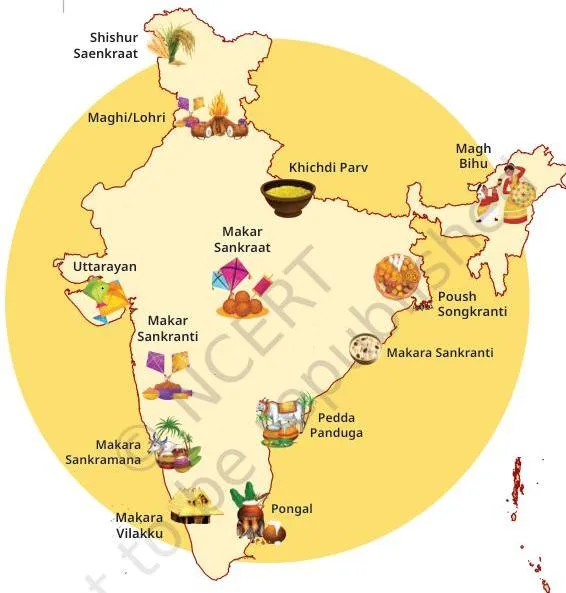
| Makara Sankranti | One festival marking the beginning of the harvest season on or around January 14 (NCERT, p. 131). | Different regional names across India for the same festival (NCERT, p. 131). |
| The two epics | One shared store of stories — the Ramayana and the Mahabharata — known in India for over two millennia (NCERT, p. 133). | Regional literatures, countless folk versions and tribal oral versions, such as the shrine in the Nilgiris (NCERT, pp. 133-135). |
The pattern is always the same: the unity is the shared base, and the diversity is what people have made from it. That is why the chapter calls the idea “Many in the One” — one thing, appearing in many forms.
The Chapter’s Figures: A Walkthrough of What Each One Shows
Every figure in this chapter is an example of unity in diversity. Working through them in order gives you the whole argument of the chapter with the book open beside you.
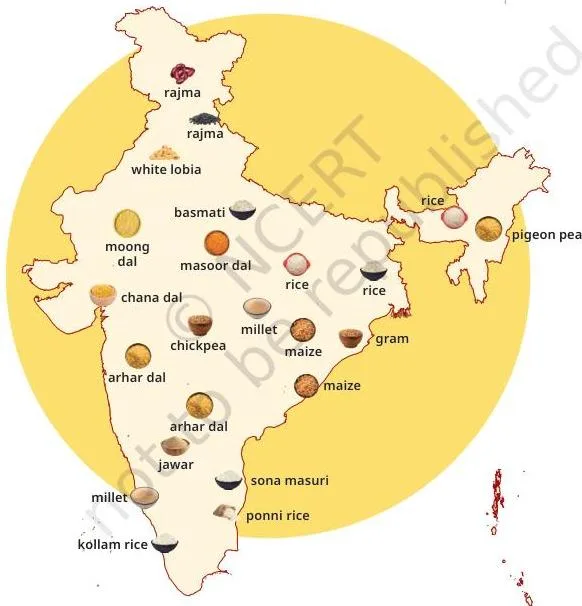
Fig 8.1 — Cereals and Pulses from Different Regions
The figure shows staple grains collected from different regions — the cereals rice, wheat and barley; the millets bajra, jowar and ragi; and pulses. The chapter’s point is that these same grains are basic food across India, while the dishes made from them are countless (NCERT, p. 127).
Look for grains you recognise from your own home — that is the unity side of the example.
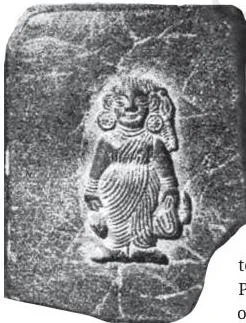
Fig 8.2 and 8.3 — The Sari in Stone and in Cloth
The stone relief from Vaishali goes back a few centuries BCE — proof that the sari is not a recent fashion but an old and continuous tradition (NCERT, p. 128). The relief also gives the chapter its definition of the term: a design that stands out from the surface of a panel (NCERT, p. 129).
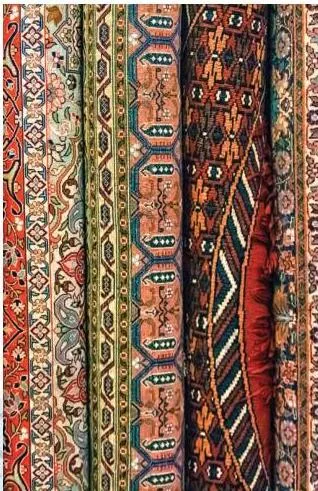
Fig 8.3 shows the other side: the same garment in many materials and decorations. The sari is made from cotton, silk or synthetic fabrics; famous silk varieties include Banarasi, Kanjivaram, Paithani, Patan Patola, Muga and Mysore, and there are many more cotton saris besides (NCERT, p. 128).
Different methods of weaving, designing and colouring produce hundreds of varieties — one dress, many forms.
Fig 8.4 — The Sari Put to Many Uses
The pictures in Fig 8.4, all from south India, show women putting the sari to many uses beyond that of a dress (NCERT, p. 130).
The chapter deliberately does not label the uses — naming them is the activity. Look at each picture, say what the sari is being used for, and then imagine more uses of your own before moving to the dhoti activity on the same page.
Fig 8.5 — Different Names of Similar Festivals Around the Same Date
The map accompanies the Makara Sankranti example. Makara Sankranti marks the beginning of the harvest season in many parts of India on or around January 14, and the map shows the different names under which similar festivals are celebrated across India about the same date (NCERT, p. 131).
Read it as a map of unity in diversity: one season and one festival, many names. The activity on the next page asks you to do the same for the festivals of October-November (NCERT, p. 132).
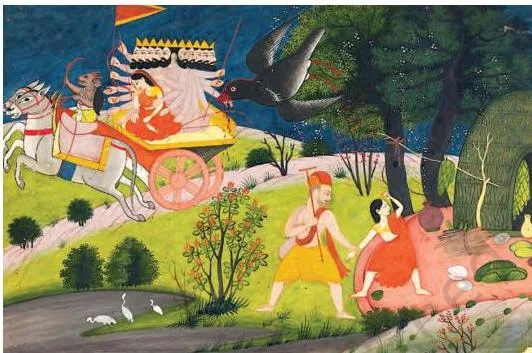
Fig 8.6 and 8.7 — The Epics in Paint and Stone
The painting is an 18th-century work from Himachal Pradesh showing a major episode from the Ramayana (NCERT, p. 134). The chapter does not name the episode — the Let’s Explore task is to identify it in a class discussion, along with the details connected to it (NCERT, p. 134).
That is the point: the epic travelled into regional art, and recognising the story in a new form is itself an act of seeing unity in diversity.
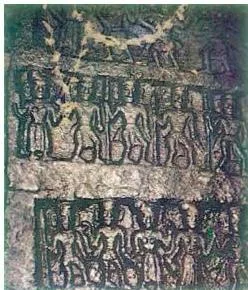
The last figure is a carved stone in a forest of the Nilgiris in Tamil Nadu. It depicts the five Pandava brothers, and the shrine containing it is maintained by Irula tribals to commemorate the Pandavas’ passing through the area (NCERT, p. 135).
This is the chapter’s strongest example of how the epics became local: tribal communities such as the Bhils, Gonds and Mundas keep their own versions of the Ramayana and Mahabharata, transmitted orally along with legends of the heroes visiting their regions (NCERT, p. 134).
Key Terms the Chapter Explains: Staple Grains, Relief, Epic
The chapter defines a few terms inside its text, and knowing them makes the examples easy to follow. All four can be tested in class discussion, so learn them with the page numbers.
| Term | What the chapter means by it | NCERT page |
|---|---|---|
| Staple grains | Food grains common to almost every part of India — cereals such as rice, barley and wheat; millets such as bajra, jowar and ragi; and pulses — called staple because they are the basic food for most Indians (NCERT, p. 127). | 127 |
| Relief | A design that stands out from the surface of a panel, which may be of stone, wood, ceramic or another material (NCERT, p. 129). | 129 |
| Epic | A long poem generally narrating the adventures of heroes and other great figures of the past (NCERT, p. 133). | 133 |
| People of India project | A massive survey by the Anthropological Survey of India of 4,635 communities across all States; it counted 325 languages using 25 scripts and observed that many Indians live away from their birthplace or original community (NCERT, p. 126). | 126 |
Common Mistakes Students Make About Unity in Diversity
The idea is easy to misunderstand, and the chapter’s examples are chosen to correct exactly these four confusions. Name the mistake before it happens, and check your answer against the book’s rule.
| Mistake | What the chapter actually shows | How to check your answer |
|---|---|---|
| “Unity means everyone is the same.” | The same staple grains and spices are cooked into thousands, even lakhs, of different dishes (NCERT, p. 127). Unity is the shared base; the differences remain real. | Ask: do the examples keep their differences? They must — the grains are the same, the dishes are not. |
| “Different festival names mean different festivals.” | Makara Sankranti is one harvest festival marking the beginning of the harvest season around January 14, celebrated under different regional names (NCERT, p. 131). | Check the date and the season. Same date, same season, different name — likely the same festival. |
| “The Ramayana and Mahabharata exist only in Sanskrit.” | For over two millennia the epics have been translated and adapted into regional literatures, with countless folk versions; a survey in Tamil Nadu alone counted about a hundred folk versions of the Mahabharata (NCERT, pp. 133-134). | Count the versions: regional, folk, tribal and oral — one story, many tellings. |
| “The sari is just a dress.” | The sari is one unstitched cloth in hundreds of varieties of fabric, weave, design and colour, and women put it to many uses beyond that of a dress (NCERT, pp. 128-130). | Look at Fig 8.4 and name the non-dress uses; the dhoti activity asks the same question. |
Let’s Explore: The Activities Inside Chapter 8
This chapter is built around small activities that appear after each section, and it closes with a longer project list. Use the map below to see which part of the chapter each task tests.
| Activity | Where it appears | What it asks you to do |
|---|---|---|
| Birthplaces and languages | Let’s Explore, after A Rich Diversity (NCERT, p. 126) | List the birthplaces of at least five classmates and their parents, and your mother tongues and other known languages; discuss the results in terms of diversity. |
| Ingredients and one vegetable | Let’s Explore, after Food for All (NCERT, pp. 127-128) | List the grains and spices used in your home; then take one vegetable and think how many different dishes can be made from it. |
| The sari in your own words | Let’s Explore, after Textiles and Clothing (NCERT, p. 129) | Explain how the example of the sari reflects both unity and diversity, in 100-150 words. |
| Sari uses and dhoti styles | Let’s Explore, after Fig 8.4 (NCERT, p. 130) | Recognise what the sari is used for in the pictures, imagine more uses, then list dhoti styles and their uses and draw a conclusion. |
| Festivals around you | Let’s Explore, after Festivals Galore (NCERT, p. 132) | Name your favourite festival and how it is celebrated in your region; check if it is celebrated elsewhere under a different name. Then list the major October-November festivals and their regional names. |
| The Ramayana episode | Let’s Explore, after An Epic Spread (NCERT, p. 134) | In a class discussion, identify the episode depicted in Fig 8.6 and the important details associated with it. |
| Closing projects | Questions, activities and projects (NCERT, p. 136) | Discuss the opening quotations; retell Panchatantra stories; collect regional folk tales; find an ancient story shown through art; and discuss Nehru’s quotation on the epics in the lives of ordinary people. |
Using Chapter 8 for Class Work and Assessment
The real test of this chapter is whether you can explain ‘unity in diversity’ in your own words and back it with examples from the book. After studying it, you should be able to:
- Define the idea of “Many in the One” and connect it to the Tagore and Sri Aurobindo quotations that open the chapter.
- Give one example each from food, clothing, festivals and literature — for instance staple grains, the sari, Makara Sankranti and the epics.
- Write the 100-150 word answer explaining how the sari reflects both unity and diversity (NCERT, p. 129).
- Take part in a class discussion using the chapter’s quotations — Tagore’s, Sri Aurobindo’s or Nehru’s (NCERT, pp. 124, 136).
- Complete the Let’s Explore activities and closing projects as the chapter lays them out.
Textbook contents and the examinable syllabus are not always identical, so check the current official CBSE syllabus for Class 6 Social Science before deciding what to prioritise.
Before We Move On: Chapter 8 in Three Lines
The chapter sums itself up in its closing “Before we move on…” section (NCERT, p. 135). Rebuilt in your own words, it says:
- India offers immense diversity in its landscapes, people, languages, dresses, foods, festivals and customs.
- Diversity is easy to perceive in many fields, but an underlying unity runs through it.
- Diversity does not divide — it enriches. Indian culture celebrates diversity as an enrichment while never losing sight of the unity that nourishes it.
Related Chapters and Resources
This listing is maintained for the 2026-27 academic session using the NCERT textbook information available to us. NCERT remains the authority for confirming the latest edition.
Chapter 8 belongs to the “Our Cultural Heritage and Knowledge Traditions” part of Exploring Society: India and Beyond. The previous chapter, India’s Cultural Roots, sets up the heritage theme, and the next chapter, Family and Community, moves from heritage to social life.
For revision help across the year, see the Class 6 Social Science notes, the Class 6 hub, or the full notes library.
The complete textbook — all its chapters, including this one — is free on the official NCERT textbook portal. The CBSE website carries the current curriculum and syllabus for Class 6.
| What the chapter holds | Count | Where it is used |
|---|---|---|
| Printed pages | 12 | |
| Figures with NCERT captions | 9 | |
| Official NCERT PDF | Download the chapter PDF | the chapter exactly as NCERT publishes it |
Reference: NCERT Class 6 Social Science textbook, chapter 8, official edition on ncert.nic.in.
Sources and Data Verification
- The chapter described on this page is from the NCERT Class 6 Social Science textbook Exploring Society: India and Beyond, official edition.
- This page covers Chapter 8 of that book only, not the wider CBSE scheme of subjects.
- This listing is maintained for the current academic session using the NCERT information available to us.
- NCERT settles textbooks, editions and PDFs; CBSE settles the curriculum, syllabus and examinations.
Frequently Asked Questions About Unity in Diversity, or (Class 6)
What is the meaning of ‘unity in diversity’ in Class 6 Chapter 8?
It means India’s many communities, languages, foods, festivals and customs rest on shared foundations. The chapter calls this “Many in the One”: the same staple grains and spices are the basic food across India, yet the dishes made from them are countless (NCERT, p. 127).
What examples of unity in diversity does Chapter 8 give?
Four, one from each dimension of life: food (staple grains and spices), clothing (the sari), festivals (Makara Sankranti), and literature (the Panchatantra, the Ramayana and the Mahabharata).
Why does the chapter call the sari an example of unity in diversity?
Because it is one unstitched length of cloth worn in most parts of India, yet it comes in hundreds of varieties of fabric, weave, design and colour, with many regional ways of draping it and many uses beyond a dress (NCERT, pp. 128-130).
What is the People of India project mentioned in the chapter?
A massive survey conducted by the Anthropological Survey of India in the late 20th century, covering 4,635 communities across all States. It counted 325 languages using 25 scripts, and observed that many Indians live away from their birthplace or original community (NCERT, p. 126).
Are the Ramayana and Mahabharata only Sanskrit texts?
No. For over two millennia they have been translated and adapted into regional literatures, and there are countless folk and tribal versions transmitted orally. A survey in Tamil Nadu alone counted about a hundred folk versions of the Mahabharata (NCERT, pp. 133-134).
Why is Makara Sankranti celebrated under different names?
Because it is the same festival — marking the beginning of the harvest season in many parts of India on or around January 14 — and different regions celebrate it under different local names (NCERT, p. 131).
Explore Class 6 Social Science Books
Related chapters:
- Why Social Science?
- Oceans and Continents
- Landforms and Life