
This is the NCERT Class 10 English First Flight Chapter 3, Two Stories about Flying, printed on pages 32-47 of the official book. It contains two prose stories — Liam O’Flaherty’s His First Flight and Frederick Forsyth’s The Black Aeroplane — and two poems, Carolyn Wells’s How to Tell Wild Animals and John Berryman’s The Ball Poem.
If a PDF is what you came for, the two stories about flying class 10 chapter file is linked right below — official NCERT, exactly as printed on pages 32-47, and followed for the current academic session.
Download the official Chapter 3 PDF
Everything on this page follows the printed book. For the chapter itself — the four texts, their margin glosses and all the exercise pages — the official file is the most reliable place to read.
Download the Two Stories about Flying Class 10 PDF from the official NCERT textbook page on ncert.nic.in to open Chapter 3 exactly as printed, including the margin glosses that explain the vocabulary in both stories and both poems.
If you want the whole book rather than one chapter, the NCERT textbook portal lists First Flight in full along with every other NCERT title; the chapter file above is the same official edition.
Chapter at a glance
The table below lists what Chapter 3 holds — its printed span, texts, illustrations and exercise questions — so you can see the size of the unit at a glance.
| Item | What Chapter 3 holds |
|---|---|
| Printed pages | 32-47 (16 pages) |
| Prose stories | 2 — His First Flight and The Black Aeroplane |
| Poems | 2 — How to Tell Wild Animals and The Ball Poem |
| Figures | 9 |
| Exercise questions | 16 |
The chapter runs in this order through the book:
- BEFORE YOU READ — p. 32
- His First Flight story and exercises — pp. 32-36
- The Black Aeroplane story and exercises — pp. 37-41
- The English is funny compound-words page — p. 42
- How to Tell Wild Animals — pp. 43-45
- The Ball Poem — pp. 46-47
Many students are surprised that one chapter contains two prose stories and two poems. All four texts sit inside Chapter 3; the poems are not a separate section of the book.
What this chapter covers
This section walks through the chapter in the order the book prints it, so you can follow along with the book open and find each text by its page.
His First Flight (pages 32-36)
The chapter opens on page 32 with BEFORE YOU READ, which sets up the two framing questions of the unit: how does a young seagull conquer his fear of flying, and who helps a pilot lost in storm clouds arrive safely?
Liam O’Flaherty’s story then shows the young seagull alone on his ledge. His two brothers and his sister had flown away the day before, but every time he ran to the brink of the ledge, fear stopped him (p. 33).
The sea stretched ‘miles down’ beneath him, and he felt certain that his wings would never support him. So he ran back to the little hole under the ledge where he slept (p. 33).
For twenty-four hours nobody came near him. His parents flew about with his brothers and sister, perfecting them in the art of flight — skimming the waves, diving for fish — while the family taunted him for his cowardice and threatened to let him starve (p. 33).
The turning point is hunger. His mother tears at a piece of fish at her feet; the starving seagull calls and begs. She flies across to him with the fish, then halts just out of his reach and screams back at him derisively (pp. 34-35). Maddened by hunger, he dives at the fish — and falls into the air.
The terror lasts only a minute. His wings spread, the wind rushes against his breast and under his stomach, and he is soaring. His family circle around him, curveting and banking, and he lands on the green sea and floats on it. The story closes with ‘He had made his first flight’ (pp. 35-36).
The family’s behaviour — the taunts, the fish dangled out of reach — is the engine of the story, and it returns in the common mistakes section below.
The Black Aeroplane (pages 37-41)
Frederick Forsyth’s story opens with the narrator flying his old Dakota DS 088 from France back to England at one thirty in the morning, already dreaming of the breakfast waiting at home (p. 37).
Paris Control tells him to turn twelve degrees west. He checks the map and compass, switches to his second and last fuel tank, and turns. All is well until, about 150 kilometres beyond Paris, he sees storm clouds ‘like black mountains’ (p. 37).
He cannot fly over the clouds, and he does not have enough fuel to fly around them. Going back to Paris would be safe, but he wants to be home for breakfast. ‘I’ll take the risk,’ he thinks, and flies straight into the storm (p. 37).
Inside the clouds everything is suddenly black, and it is impossible to see anything outside the aeroplane. The compass is dead, spinning round and round; the other instruments are dead; the radio is dead. He is lost (pp. 37-38).
Then, in the black clouds quite near him, he sees another aeroplane. It has no lights on its wings, but he can see the pilot’s face turned towards him, and the pilot waves and says, ‘Follow me’ (p. 38). He follows the strange black aeroplane for half an hour, with fuel left for only five or ten minutes.
The guide begins to descend, the narrator follows through the storm, and suddenly there is a runway. He is safe. When he turns to thank his friend, the sky is empty (p. 39).
The woman in the control centre tells him that no other aeroplanes were flying that night — his was the only one on radar. The story ends on page 39 with that mystery unresolved; its exercises run to page 41.
How to Tell Wild Animals (pages 43-45)
Carolyn Wells’s humorous poem offers a ‘simple rule’ for identifying wild animals: you know each beast by the harm it does to you (p. 43).
The Asian Lion roars at you as you’re dying; the Bengal Tiger eats you; the Leopard leaps on you, then leaps again; the Bear hugs you very, very hard; hyenas come with merry smiles; and crocodiles weep (pp. 43-44).
The joke is that the advice is useless — the identification works only after the animal has already attacked. The poem ends with a chameleon stanza whose punchline is that if there is nothing on the tree, it is the chameleon you see (p. 45).
The poet deliberately misspells ‘dyin’ so it rhymes with lion, and ‘lep’ to keep the leopard stanza’s rhythm. The book’s own questions ask you to notice this poetic licence (pp. 43, 45).
Four illustrations punctuate the poem, each drawn straight from the stanza it sits beside: the Asian Lion roaring at a victim, the Leopard’s repeated leap, the Bear’s crushing caress, and the Crocodile weeping. Each mixes deadpan verse with a picture of the attack — the ‘identification’ advice happening exactly as the words describe.
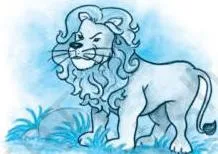
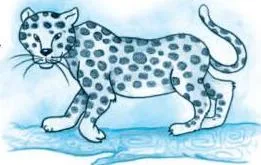
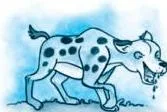
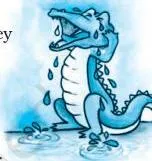

The poem’s title illustration appears on the closing page of the section (p. 45), keeping the joke alive in the artwork as well as the words.
The Ball Poem (pages 46-47)
John Berryman’s poem watches a boy lose his ball. It bounces merrily down the street and into the harbour water; the boy stands rigid and trembling, staring down after it (NCERT, p. 46).
The poet will not intrude on him and will not offer a dime for another ball — ‘Money is external’ (p. 46). The loss is not about money at all.
What the boy is learning, through his first responsibility in a world of possessions, is the epistemology of loss — and the poem repeats its real lesson twice: how to stand up (pp. 46-47).
Language, speaking and writing work (pages 36, 40-42, 45)
The chapter asks for more than reading. This practice work is easy to skip and often reused, so know where it sits.
- Thinking about Language — six sentences using ‘black’ in different senses, and a matching exercise on five phrases built on ‘fly’ (pp. 40-41).
- English is funny — a compound-word joke page: quicksand works slowly; there is no egg in eggplant, no ham in hamburger, no apple in pineapple; boxing rings are square (p. 42); and your nose runs while your feet smell (p. 45).
- Speaking — group presentations on the progression of models of airplanes, models of motorcars, birds and their wing span, and migratory birds (p. 36).
- Writing — a humorous composition on learning a skill such as cycling or swimming (p. 36), and a paragraph narrating being alone in a thunderstorm (p. 41).
- WHAT YOU CAN DO — the book suggests narrating your own story about flying — from a plane, a kite, or watching a bird (pp. 41-42).
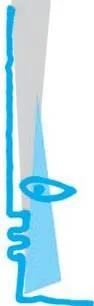
The two cartoons below are part of the same English is funny joke — a boxing ring is drawn square, and the body turns an old expression into a picture.

Working top to bottom through the six ‘black’ sentences (p. 40), the standard dictionary meanings are:
- hands and face absolutely black → dirty, covered in grime
- a black look → an angry glare, full of hostility
- blackest crimes → the most wicked or evil
- black comedy → dark comedy, humour about disturbing subjects
- selling goods in black → the black market, illegal sale
- beaten black and blue → bruised and discoloured
The matching exercise pairs each ‘fly’ phrase with its meaning straight from the book (p. 40):
| Phrase (Column A) | Meaning (Column B) |
|---|---|
| Fly a flag | Display a flag on a long pole |
| Fly into rage | Become suddenly very angry |
| Fly along | Move quickly/suddenly |
| Fly high | Be successful |
| Fly the coop | Escape from a place |
Key ideas: fear, risk and help across the two flights
The chapter deliberately pairs a bird’s first flight with a pilot’s near-fatal flight, and the same three ideas run through both: fear, the push that overcomes it, and help.
| What to compare | Young seagull | Pilot in the Dakota |
|---|---|---|
| The fear | The sea stretched ‘miles down’; he was certain his wings would never support him (p. 33) | Storm clouds ‘like black mountains’ and not enough fuel to go around them (p. 37) |
| What pushes him | Hunger, and the mother’s fish dangled just out of reach (p. 35) | The wish to be home for breakfast; going back to Paris lost its appeal (p. 37) |
| Who helps | The mother, whose trick forces the flight; the family circles around him, praising him (p. 35) | The pilot of the strange black aeroplane, who waves and says ‘Follow me’ (p. 38) |
| What is learned | His wings had always been ready; the flight was inside him all along (p. 36) | Someone guided him when every instrument failed (p. 39) |
Each poem extends the theme. The wild-animal poem works by reversal: the ‘identification’ advice is useless until the animal has already attacked you (p. 43).
The Ball Poem turns a cheap lost ball into a first lesson in responsibility: the boy must learn to stand up in a world of possessions (p. 46).
About the black aeroplane, the text gives no single answer. The woman’s line — no other aeroplanes were flying, his was the only one on radar — supports an imagined helper (p. 39). The pilot’s detailed observations — the face turned towards him, the lifted hand, the wave, the turn north — support a real one (p. 38).
The book’s own follow-up activity asks students to debate exactly this: was it really there, or did the pilot imagine it? (pp. 41-42). Both readings are defensible; a good answer names its reading and gives reasons.
Reading the storm illustrations
The two pictures inside The Black Aeroplane mark the two moments the story turns. Most students skip them; they carry the plot.

This is the exact point where navigation fails. The caption states it plainly: inside the clouds everything was suddenly black (NCERT, p. 37). The illustration shows the small Dakota alone in that blackness — nothing outside is visible, so the compass and radio are the pilot’s only link to the world, and both go dead.

This is the moment a guide appears (p. 38). The strange aeroplane has no lights, and the illustration keeps it a dark shape against the dark — the reader cannot be entirely certain it is real, which is exactly the doubt the ending leaves.
Compare the two pictures: darkness alone, then darkness with something ahead of you. The second image gives the story its hope, and the empty sky afterwards takes it away.
Words the chapter explains
The book prints margin glosses for both stories and both poems. This section collects them in one place so you can find any word fast.
- His First Flight (pp. 33-35): ledge, upbraiding, skim, herring, preening, whet, derisively, dizzy, curveting, banking.
- How to Tell Wild Animals (pp. 44-45): ground, discern, hide, peppered, caress, novice, nonplus.
- The Ball Poem (p. 46): ‘O there are other balls’, shaking grief, rigid, intrude on, dime, desperate, epistemology of loss.
A few of these trip students more than the rest:
- derisively — mockingly, showing the other person is stupid; the mother screams it at the begging seagull (p. 34).
- curveting and banking — leaping like a horse, and flying with one wing higher than the other; the family show off these moves around the seagull as he learns to fly (p. 35).
- nonplus — to puzzle or confuse; the line ‘A novice might nonplus’ bends the grammar to keep the rhyme, and the poem’s questions ask you to spot that (pp. 44-45).
- epistemology of loss — the glossary defines it as understanding the nature of loss, what it means to lose something; epistemology itself comes from the Greek word episteme, meaning knowledge (p. 46).
Common mistakes students make in this chapter
Most marks slip away in this chapter on predictable misreadings, not on plot. The six below are the ones that matter.
| Mistake | Correct reading | Where to check |
|---|---|---|
| ‘The seagull’s parents are cruel.’ | The mother’s derisive scream and the fish dangled just out of reach are a deliberate trick — hunger, not cruelty, forces the flight. | The fish halts ‘almost within reach of his beak’ (pp. 34-35); the family spent the day perfecting the others (p. 33) |
| ‘The black aeroplane was definitely imaginary / definitely real.’ | The text is deliberately open; both readings have evidence. | Radar answer, no other planes (p. 39) vs the pilot’s detailed sightings (p. 38) |
| ‘The only risk was the weather.’ | The risk bundles no fuel to go around, no way back to Paris, and flying blind into the clouds. | ‘I did not have enough fuel to fly around them’ (p. 37) |
| ‘‘dyin’ and ‘lep’ are printing errors.’ | They are deliberate poetic licence that preserves the rhyme and the rhythm. | The poem’s questions ask why they are spelt that way (pp. 43, 45) |
| ‘‘Black’ always means the colour.’ | Context changes the meaning — dirty, angry, wicked, dark, illegal and bruised all appear. | Six sentences, six different senses (p. 40) |
| ‘The Ball Poem is about losing a cheap ball.’ | The point is what the boy learns: first responsibility and how to stand up after loss. | ‘Money is external’ and ‘epistemology of loss’ (p. 46) |
How the textbook questions work
The exercises split into questions with one answer in the text and questions that ask for your own experience. Knowing which is which saves time.
| Exercise set | Text-based questions | Personal / open questions |
|---|---|---|
| His First Flight — Thinking about the Text (p. 36) | Why the seagull was afraid (p. 33); what compelled him — the sight of the food (p. 35); why his parents threatened and cajoled him (p. 33) | Are all young birds timid? Your parents’ push to try something scary; was success guaranteed, or was trying what mattered (Q1, Q4, Q5) |
| The Black Aeroplane — Thinking about the Text (p. 40) | What ‘the risk’ was (p. 37); describing the flight into the storm (pp. 37-38); why the woman looked at him strangely (p. 39) | Who helped the narrator — a discussion question: choose a reading and give reasons (Q5) |
For open questions, give a reason drawn from the text even when the question asks for an opinion. For ‘who helped the narrator’, name the reading you choose and support it with at least one detail of the story.
The language items — the six ‘black’ sentences and the fly-phrase matching (pp. 40-41) — test words in context. The two poems’ ‘Thinking about the Poem’ sets ask about poetic licence and personal experience (pp. 45, 47).
Textbook contents and the examinable syllabus are not always identical — check the current official syllabus for what is examinable in your session.
Quick revision summary
The book itself condenses the unit in its own note on page 41: ‘two stories about flying — one about a bird, another about a human being in a plane’ (p. 41). In compressed form:
- His First Flight (pp. 33-36): alone on the ledge; fear of the sea ‘miles down’; twenty-four hours of hunger and taunts; the mother’s fish; the dive; the discovery of flight; floating on the green sea.
- The Black Aeroplane (pp. 37-39): a clear night; storm clouds like black mountains; dead compass, radio and instruments; the stranger’s ‘Follow me’; the runway; no other plane on radar.
- How to Tell Wild Animals (pp. 43-45): identify the beast by the harm it does; the misspellings keep the rhyme; the chameleon punchline.
- The Ball Poem (p. 46): a ball lost in the harbour; money is external; the boy learns the epistemology of loss and how to stand up.
Both prose stories are about fear and the help that arrives at the moment of risk — for the seagull it is his mother’s trick, for the pilot it is the stranger in the clouds.
Related resources
This listing is maintained for the 2026-27 academic session using the NCERT textbook information available to us. NCERT remains the authority for confirming the latest edition.
Useful next steps around this chapter:
- Class 10 English notes hub — chapter-by-chapter revision notes for First Flight and the other books.
- Class 10 hub — everything for your class in one place.
- Notes index — every chapter covered on this site.
- Previous chapter in First Flight: Nelson Mandela: Long Walk to Freedom.
- Next chapter: From the Diary of Anne Frank.
For the book itself, use the official NCERT textbook page for First Flight Chapter 3, or the NCERT textbook portal for the full series — the chapter PDF linked at the top of this page comes from that official source.
Sources and data verification
This page describes the NCERT Class 10 English First Flight textbook, Chapter 3, ‘Two Stories about Flying’, as published in the official edition on ncert.nic.in.
All page numbers, 32-47, refer to the printed NCERT edition; the chapter runs from the unit title page to the end of The Ball Poem.
The listing is maintained for the current academic session using the NCERT information available to us. NCERT settles textbooks, editions and PDFs; CBSE settles the curriculum and examinations.
This page claims no independent expert review. The textbook is the authority for the content, and the official syllabus is the authority for what is examinable.
| What the chapter holds | Count | Where it is used |
|---|---|---|
| Printed pages | 16 | |
| Figures with NCERT captions | 9 | |
| Tables | 2 | |
| Exercise questions | 16 | answered in our NCERT Solutions |
| Official NCERT PDF | Download the chapter PDF | the chapter exactly as NCERT publishes it |
Reference: NCERT Class 10 English First Flight textbook, chapter 3, official edition on ncert.nic.in.
Frequently asked questions
Who wrote the two stories in Two Stories about Flying?
Liam O’Flaherty wrote His First Flight and Frederick Forsyth wrote The Black Aeroplane (p. 32). The same chapter also includes How to Tell Wild Animals by Carolyn Wells (p. 45) and The Ball Poem by John Berryman (p. 46).
Why was the young seagull afraid to fly?
He was afraid because the sea lay ‘miles down’ beneath the ledge, and he felt certain that his wings would never support him (NCERT, p. 33). The distance made the plunge look desperate, so he ran back to his ledge instead of taking it.
Was the black aeroplane real? Who helped the pilot reach safely?
The story deliberately leaves this open. The control-centre woman says no other aeroplanes were flying that night — his was the only one on radar (p. 39) — which supports an imagined helper. But the pilot saw the plane, the pilot’s face, the wave and the turn north (p. 38), which supports a real helper.
Both readings are defensible; give reasons for whichever you choose.
Are the poems How to Tell Wild Animals and The Ball Poem part of this chapter?
Yes. Chapter 3 contains four texts: the two prose stories (pp. 32-41), How to Tell Wild Animals (pp. 43-45) and The Ball Poem (pp. 46-47).
What does epistemology of loss mean in The Ball Poem?
The book’s glossary defines it as ‘understanding the nature of loss — what it means to lose something’ (p. 46). The boy is learning, through losing his ball, that loss is part of life — and the poem says he is learning how to stand up after it. Epistemology comes from the Greek word episteme, meaning knowledge (p. 46).
Which page does Two Stories about Flying start on in the NCERT First Flight book?
The chapter begins on page 32 of First Flight. Page 32 carries the unit title, the two authors and the BEFORE YOU READ note; His First Flight opens there and runs to page 36, The Black Aeroplane to page 41, How to Tell Wild Animals to page 45, and The Ball Poem closes the chapter on pages 46-47.
Explore Class 10 English Books
Related chapters: