
This is Chapter 1 of the NCERT Class 5 Mathematics textbook Math-Mela, titled Reading and Writing Large Numbers. The chapter runs 16 pages in the official NCERT PDF and covers place value up to ten thousands, number names, comparing and ordering, and rounding.
The official PDF is right below, followed by a plain-language walkthrough of every section so you know exactly what the chapter holds before you open it.
Download the Official NCERT Chapter PDF
Download Reading and Writing Large Numbers Class 5 (Chapter 1) PDF — this is the official NCERT edition of Math-Mela Chapter 1, hosted on ncert.nic.in. It has the same pagination as the printed textbook, so the page numbers cited across this page match what you will find in the PDF and in your physical copy.
Chapter at a Glance
The rendered table below (generated directly from the chapter file) shows how much the chapter holds — its sections, figures and activity sets. The prose on this page deliberately does not repeat those totals, so the table is the single place the numbers appear.
The chapter teaches five big ideas:
- Place value up to ten thousands — the place value chart grows a new TTh (ten thousands) column, and 10 thousands make 10,000 (pp. 1–2).
- Number names, commas and expanded form — reading and writing large numbers from the left, with one comma after the thousands (pp. 2–4, 14).
- Comparing and ordering — deciding which of two large numbers is bigger, then arranging prices and populations in order (pp. 6, 13).
- Rounding — finding the nearest ten, hundred and thousand by counting jumps, the way the hungry rabbit finds its food (pp. 7–8).
- Large numbers in real life — travel speeds and vehicle counts, plus three logic puzzles including the always-9 digit puzzle (pp. 9–12) and King’s Horses (pp. 15–16).
Inside the Chapter: A Section-by-Section Tour
This chapter has no separate exercise block. Practice is built into the Let Us Do sets and the puzzles, so knowing where each idea lives helps you study. Here is the walk through every named section, with the page each one starts on.
- Opening travel scene (p. 1) — the chapter opens with how people travelled long ago, because distances are the first place children meet large numbers.
- Reading and writing large numbers (pp. 1–4) — the place value chart gains the new TTh column; token tables show how to write and name numbers beyond 10,000. The book’s own convention is no “and” in names.
- Let Us Do — number patterns and names (p. 5) — continuing number sequences and filling in number names with commas.
- Let Us Do — ordering and digit swap (p. 6) — arranging numbers in increasing order, the 9,990 vs 49,014 comparison, and swapping digits to make new numbers.
- Nearest Tens, Hundreds and Thousands (p. 7) — the hungry rabbit finds its food at the neighbouring ten, hundred and thousand by jump-counting.
- Let Us Think — rounding (p. 8) — rounding the same number to different places, and noticing when the results agree.
- Travelling, Now and Then (p. 9) — speeds by foot, horse, cycle, train, ship, aircraft and spacecraft, from 3–5 km up to 28,000 km.
- Let Us Do — vehicles for a trip (p. 10) — how many bicycles, cars or buses are needed to carry a school of 461 girls and 439 boys.
- Finding Large Numbers Around Us (p. 10) — counting things in the classroom and school whose counts are 4- or 5-digit numbers.
- Pastime Mathematics (pp. 11–12) — the river crossing puzzle, the pile of pebbles game, and the reversed-digits puzzle that always ends at 9.
- Let Us Do — numbers between, expanded form and notes (pp. 13–14) — writing numbers between two given numbers, expanded form, and grouping ₹7,934 into notes of ₹10, ₹100 and ₹500.
- King’s Horses (pp. 15–16) — the stable counting trick: 5 horses per side of a square, but not 20 distinct horses.
Tokens at the end of the book let students build numbers physically — a 10,000 token, a 1,000 token, and so on — which is exactly how the token tables on pages 3–4 work.
Key Concepts: Place Value, Number Names, Comparing and Rounding
These are the mathematical ideas the chapter is built on. Each one is explained below so you can follow it step by step even if you are stuck.
Place Value: The Column That Grows by Ten Times
Place value is the idea that the same digit means different amounts depending on where it sits. The ones column counts single objects, the tens column counts groups of ten, the hundreds column groups of a hundred, the thousands column groups of a thousand — and now the chapter adds the ten thousands (TTh) column, which counts groups of ten thousand.
The rule to remember: each column is ten times the column to its right (NCERT, p. 2). That is why 9,999 needs a new column:
\[ 10\ \text{thousands} = 10,000 = \text{Ten Thousand} \]
When you add 1 to 9,999, all four digits roll over to 0 and the 1 lands in the new TTh column, making 10,000.
Number Names and the Comma
Number names are how we read a number in words. The chapter’s convention (NCERT, pp. 2–4) is to write names from the left, place one comma after the thousands in this range, and use no “and” — so 45,867 is forty-five thousand eight hundred sixty-seven.
Comparing and Ordering Large Numbers
To compare two numbers, decide which is bigger. The step-by-step rule: count the digits first — a five-digit number is always bigger than a four-digit number — then, if the counts are equal, compare from the highest place working leftwards (NCERT, p. 6).
Worked example with fresh numbers:
Step 1: Compare 26,847 and 9,531.
Count digits: 26,847 has 5 digits; 9,531 has 4.
So 26,847 is greater.
Step 2: Now compare 26,847 and 26,749.
Both have 5 digits, so compare from the ten thousands: both 2.
Move to the thousands: both 6.
Move to the hundreds: 8 vs 7 — 8 wins.
Final answer: 26,847 \( \gt \) 26,749.
Notice the rule beats intuition: in the book’s own example (NCERT, p. 6), a student says 9,990 is greater than 49,014 because 9 is greater than 4 — but 49,014 has one more digit, so it is bigger.
Rounding: Choosing the Closer Neighbour
Rounding means replacing a number with a nearby one that ends in zeros. The chapter teaches it as choosing the closer neighbour: count the jumps to each neighbouring ten, hundred or thousand — the one requiring fewer jumps wins, exactly as the rabbit finds its food (NCERT, p. 7).
Worked example on a fresh number, 6,482:
Step 1 (nearest ten): The neighbouring tens are 6,480 and 6,490.
From 6,482: 2 jumps to 6,480, 8 jumps to 6,490.
Fewer jumps wins.
Step 2 (nearest hundred): The neighbouring hundreds are 6,400 and 6,500.
From 6,482: 82 jumps to 6,400, 18 jumps to 6,500.
Step 3 (nearest thousand): The neighbouring thousands are 6,000 and 7,000.
From 6,482: 482 jumps to 6,000, 518 jumps to 7,000.
Final answer: 6,482 rounds to 6,480 (nearest ten), 6,500 (nearest hundred), and 6,000 (nearest thousand).
Why it works: a number sits between two landmarks, and rounding chooses whichever landmark is closer. Memorised rules (“5 and above, round up”) are shortcuts; the jump-count is the reason behind them. Note that rounding to hundred and to thousand can agree for numbers near a thousand — that is the point of the Vijay and Suma question on page 8.
Expanded Form and Regrouping
Expanded form writes a number as the sum of the values of its digits. The key warning: keep the zeros, because a zero in a place still holds that place (NCERT, p. 14).
\[ 8,062 = 8,000 + 60 + 2 \]
Regrouping is the reverse: one number can be split many ways, such as \( 983 = 90\ \text{tens} + 83\ \text{ones} \) (NCERT, p. 14). This is the thinking behind the money-notes questions at the end of the chapter.
The Pastime Mathematics Puzzles and the Maths Under Them
The river crossing, pile of pebbles and reversed-digits puzzles build logical and strategic thinking, which the book’s teacher’s note says underlies all of mathematics (NCERT, p. 12). The reversed-digits puzzle has a hidden nine-times rule: reversing the digits of a two-digit number and subtracting gives 9 times the gap between the digits (NCERT, p. 12).
The Chapter’s Figures, Explained
Each NCERT figure below is shown with its official caption. The teaching notes that follow each one tell you what to actually do with the picture while studying — never just look at it.
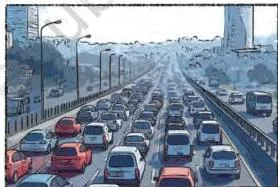
The travel scene (p. 1). The chapter opens with travelling because distances are where children first meet large numbers: a 3 km walk, a 12 km cycle ride, a 28,000 km spacecraft journey. Reading this picture, think about each distance as a number with a different number of digits — that is the hook for everything after.

The place value chart (p. 2). Read it column by column from right to left: Ones, Tens, Hundreds, Thousands, and the new TTh (ten thousands) column. Each step left multiplies by ten, which is exactly why 9,999 needs the new column — nine thousand nine hundred ninety-nine plus one more is ten thousand.

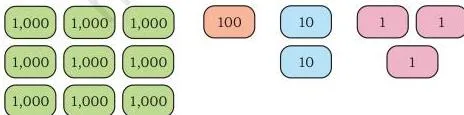
The expanded-form figures (p. 2). Both pictures read the same way — thousands + hundreds + tens + ones. Compare them deliberately: 1,380 has a zero in the ones place, and the figure shows it; 9,123 has none. That zero is not nothing — it holds the ones place so the number stays 1,380 and not 138.

The number line (p. 7). One line, two uses. First, comparing: place 9,990 and 49,014 on the line and the larger one sits further right — which is the same answer the digit-count rule gives. Second, rounding: count the jumps from a number to its neighbouring tens, hundreds and thousands; the closer neighbour wins, exactly as the rabbit finds its food.

The transport figure (p. 9). Tie the picture to the speed list in the text: 3–5 km on foot (one digit), 10–15 km on horseback, 12–20 km by cycle, 40–160 km by train, 750–920 km by aircraft, minimum 28,000 km by spacecraft (five digits). The figure is a visual reminder that place value grows exactly as real distances grow.
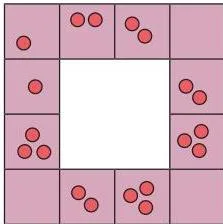
King’s Horses stable (p. 15). Count the dots yourself, exactly as the book asks. A corner horse sits on two sides at once, so “5 on each side” is not 20 distinct horses: 5 × 4 counts every corner twice, and the true side count is 20 − 4 = 16 distinct positions.
The extra horses stand inside the square, so the king sees 5 along each side without noticing the missing ones.
Key Terms from the Chapter, Defined
Use this quick-reference table so your homework and class answers use the chapter’s words correctly. Each definition is in plain student language, from how the book uses the term.
| Term | What it means | Where it appears |
|---|---|---|
| Place value chart | A table with one column for each place — Ones, Tens, Hundreds, Thousands, Ten Thousands — used to read and write numbers | p. 2 |
| Ten thousand (10,000) | The number you get when you add a thousand to 9,000; ten groups of one thousand | p. 2 |
| Comma | The mark that separates the thousands from the hundreds, so big numbers are easier to read — 45,867 | pp. 2, 6 |
| Number name | The number written in words, from the left, with no “and” in this book — forty-five thousand eight hundred sixty-seven | pp. 2–4 |
| Expanded form | A number written as the sum of the values of its digits — 8,062 = 8,000 + 60 + 2 | p. 14 |
| Nearest ten / hundred / thousand | The neighbouring ten, hundred or thousand that a number is closest to, found by counting jumps | pp. 7–8 |
| Increasing (ascending) order | Numbers arranged from smallest to largest | pp. 6, 13 |
| Decreasing (descending) order | Numbers arranged from largest to smallest | p. 13 |
Common Mistakes in This Chapter, and the Fix for Each
Here are the errors students make in this exact chapter, named before you make them. Every one is grounded in a question the book itself asks.
- Comparing by the first digit only. The student in the book claims 9,990 is greater than 49,014 because 9 is greater than 4 (p. 6). Fix: count digits first — a five-digit number beats any four-digit number — then compare from the highest place.
- Double-counting the corners in King’s Horses. 5 per side × 4 sides seems to give 20 horses, but every corner horse is counted twice (pp. 15–16). Fix: true side positions are 20 − 4 = 16; the rest stand inside the square.
- Misplacing the comma. In this range there is exactly one comma, after the thousands: 45,867 — never 45867 or 458,67 (pp. 2, 6).
- Dropping a place in expanded form. 8,062 is 8,000 + 60 + 2, not 800 + 60 + 2 (p. 14). Fix: keep the zeros — the zero in the hundreds place is what makes the number 8,062.
- Rounding by memorised rules instead of neighbours. The nearest ten, hundred or thousand is the neighbour requiring fewer jumps, exactly as the rabbit finds its food (pp. 7–8). Rounding to hundred and to thousand can agree for numbers near a thousand (Vijay and Suma, p. 8).
- Adding “and” into number names. This book writes “ten thousand five” and “forty-five thousand eight hundred sixty-seven” with no “and” (pp. 4, 6).
How to Study This Chapter
This chapter has no separate exercise block — practice is the Let Us Do sets and the puzzles. Each activity set builds a specific skill, so use them deliberately.
- Number patterns (p. 5) → place value fluency: recognising how a sequence moves by tens, hundreds or thousands.
- Ordering, comparing, prices and populations (pp. 6, 13) → comparing from the highest place, and arranging numbers in ascending and descending order.
- Vehicle counts and school counts (p. 10) → seeing 4- and 5-digit numbers in real life.
- Expanded form and note grouping (p. 14) → regrouping and place value: how many ₹100 notes make a given amount.
- River crossing, pile of pebbles and reversed-digits puzzle (pp. 11–12) → logical and strategic thinking, which the book’s own teacher’s note says underlies all of mathematics.
Study advice: do every activity in writing before checking the answer; build numbers physically with the tokens at the end of the book; and replay the three puzzles with friends. A note on scope: textbook contents and the examinable syllabus are not always identical — check the current official syllabus for what is examinable this session.
Revision Summary: What to Remember from Chapter 1
This chapter has no printed SUMMARY, so this list is drawn from the chapter’s own sections and activities — the six things to hold onto the night before a test.
- The place value chart runs O, T, H, Th, TTh, and each column is ten times the one to its right, so 10 thousands = 10,000 (pp. 1–2).
- One comma after the thousands — 45,867 — and number names written from the left without “and” in this book (pp. 2–4).
- Compare by the number of digits first, then from the highest place; a five-digit number is always larger than a four-digit number (pp. 6, 13).
- The nearest ten, hundred or thousand is the neighbour requiring fewer jumps (pp. 7–8).
- Expanded form keeps the value of every digit, and one number can be regrouped many ways (p. 14).
- The reversed-digits puzzle always lands on a multiple of 9, and King’s Horses warns you about double-counting shared corners (pp. 12, 15–16).
You can also explore the Class 5 Mathematics (Math-Mela) notes index for chapter-by-chapter help, or jump to a specific topic like Shapes and Angles — Class 5 notes as you move through the book.
Related Resources for Class 5 Math-Mela
This listing is maintained for the 2026-27 academic session using the NCERT textbook information available to us. NCERT remains the authority for confirming the latest edition.
Continue with the rest of the book, the Class 5 hub, and the official NCERT source:
- Class 5 Math-Mela book page — chapter list and notes for the whole textbook.
- All Class 5 NCERT books hub — every subject, not just Mathematics.
- CBSE notes home — the full index across classes.
- The official NCERT PDF of this chapter is the authoritative source; verify the exact live URL against the NCERT textbook portal at publish time.
Sources and Data Verification
- This page describes Chapter 1 of the NCERT Class 5 Mathematics textbook Math-Mela, official edition published on ncert.nic.in; all page numbers refer to that edition.
- This page covers Math-Mela Chapter 1 only — not the whole book, and not other Class 5 books.
- The listing is maintained for the current academic session using the NCERT edition published on ncert.nic.in.
- NCERT settles textbook editions and PDFs; CBSE settles the curriculum, syllabus and examinations.
| What the chapter holds | Count | Where it is used |
|---|---|---|
| Printed pages | 16 | |
| Figures with NCERT captions | 7 | |
| Tables | 9 | |
| Activities | 3 | |
| Official NCERT PDF | Download the chapter PDF | the chapter exactly as NCERT publishes it |
Reference: NCERT Class 5 Mathematics textbook, chapter 1, official edition on ncert.nic.in.
Frequently Asked Questions
Why is 49,014 greater than 9,990 even though 9 is bigger than 4?
Because the number of digits comes first. 49,014 has five digits; 9,990 has four. Any five-digit number is larger than any four-digit number, so 49,014 wins before you compare any single digit (NCERT, p. 6). Only when two numbers have the same number of digits do you compare from the highest place.
What is the nearest ten, hundred and thousand of 2,346?
By the jump-counting method: the nearest ten is 2,350 (4 jumps away, vs 6 to 2,340); the nearest hundred is 2,300 (46 jumps, vs 54 to 2,400); the nearest thousand is 2,000 (346 jumps, vs 654 to 3,000) (NCERT, p. 7).
Why does the reversed two-digit puzzle always end at 9?
Because reversing the digits of a two-digit number and subtracting gives 9 times the gap between the digits. For 3 and 7: the difference is 4, and 9 × 4 = 36. The next difference is always another multiple of 9, so the chain keeps shrinking until it lands on 9 itself (NCERT, p. 12).
In King’s Horses, why did the caretaker’s count of 20 horses go wrong?
Because the four corner horses sit on two sides each. “5 along each side” counts each corner twice, so 5 × 4 = 20 overcounts. The true number of distinct side positions is 20 − 4 = 16, and the rest of the horses stand inside the square so the king still sees 5 per side (NCERT, pp. 15–16).
How many ₹100 notes are there in ₹7,934?
79, with 34 rupees left over — because 7,934 = 79 hundreds + 34 ones. This is the same regrouping idea as place value: the hundreds place holds 79 groups of 100, and the remaining 34 rupees cannot make another full hundred (NCERT, p. 14).
Where does the comma go in a five-digit number like 45687?
After the thousands digit: 45,687. In this range there is exactly one comma, and it separates the thousands from the hundreds (NCERT, pp. 2, 6).