
This is the official Gender, Religion and Caste Class 10 chapter — chapter 3 of Democratic Politics-II, the political science book in the NCERT Class 10 Social Science set. It runs about 17 pages — textbook pages 29 to 45 — in the edition used in the current academic session, and the official NCERT PDF is right below.
Download the official chapter PDF
Open the Gender, Religion and Caste Class 10 NCERT chapter PDF to get chapter 3 of Democratic Politics-II exactly as printed — text, figures, tables and exercises — hosted on the official NCERT site at ncert.nic.in. This is the current NCERT edition of the book; the same page also carries every other chapter of Democratic Politics-II.
What is inside this chapter


The chapter works through three social divisions one at a time — gender, religion and caste — and for each one asks the same three questions: what kind of division is it, how does it enter politics, and is that political expression healthy for democracy? It spans textbook pages 29 to 45 of the current edition.
A table on this page lists the chapter’s contents — its sections, figures and exercise questions — so you know what the file holds before you open it.
What this chapter covers: three social divisions in Indian politics
This chapter puts one idea to work: social diversity does not by itself threaten democracy, and political expression of social differences can be desirable (NCERT, p. 29). It then applies that idea to three Indian divisions — gender, religion and caste — looking at the nature of each division, how it enters politics, and whether that expression is healthy for democracy (NCERT, pp. 30, 36, 38).
The whole chapter, compressed into one table:
| Division | How it enters politics | The chapter’s verdict |
|---|---|---|
| Gender | Sexual division of labour, under-representation in legislatures, feminist movements demanding equal rights and reserved seats. | Positive: a disadvantaged group gained ground once the division became a political issue (p. 35). |
| Religion | Legitimate links — ethics in politics, protection of minorities, reform of family laws — versus communalism in four forms. | Communalism threatens the very idea of India; the secular state is a foundation of the country (p. 37). |
| Caste | Parties pick candidates by caste composition, make appeals to caste sentiment, and castes get politicised under universal adult franchise. | Both faces: it helped Dalits and OBC groups reach decision-making, but exclusive caste politics is unhealthy (pp. 42-43). |
Keep this table in mind as you read — every section of the chapter is one row of it, expanded.
Key concepts: gender, religion and caste in politics
These are the three big ideas the chapter builds in order. Each follows the same pattern — the division itself, its political expression, and the chapter’s judgement — so once you can hold one, you can hold all three.
Gender and politics: from household work to the legislature
The gender part is the chapter’s positive example: a division once treated as natural entered politics, and the disadvantaged group benefited from that. The argument starts with the sexual division of labour — the system in which all work inside the home is done or organised by women, while men work outside (NCERT, p. 30).
The chapter opens with a poster from Bengal affirming women’s strength — the discussion of gender in politics begins by questioning the idea that women belong only in the home.
The division of labour is not biological: boys and girls are brought up to believe housework is women’s work, and men take up the same tasks the moment they are paid for them (NCERT, p. 30).
Why does a civics textbook discuss housework? The book’s answer: if politics is about power, then male dominance in the household is political (NCERT, p. 30). Women’s movements — feminist movements — organised for equal voting rights, for better education and careers, and some for equality in personal and family life (NCERT, p. 31).
The chapter then gives the evidence of women’s disadvantage (NCERT, pp. 32-33):
- Literacy: 54 per cent for women against 76 per cent for men; more girls drop out because parents spend more on sons’ education.
- Pay: the Equal Remuneration Act, 1976 promises equal wages for equal work, but in almost all areas women are paid less than men for the same work.
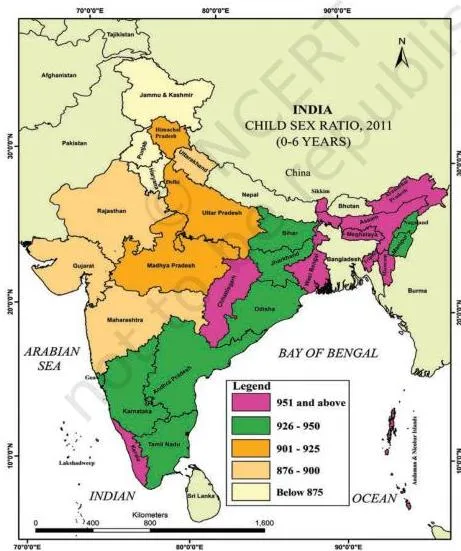
- Child sex ratio: sex-selective abortion has brought the number of girl children per thousand boys down to 919, and below 850 or 800 in some states.
- Violence: harassment, exploitation and domestic violence, with urban areas particularly unsafe.
A time use survey across six states found an average woman works a little over seven and a half hours a day against an average man’s six and a half — yet men’s work is more visible because it generates income, while the bulk of women’s work is unpaid and invisible (NCERT, p. 32).
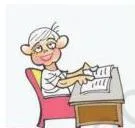
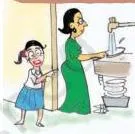
The “Mummy” cartoon makes the point. The child watches a mother who works non-stop yet tells outsiders she does not work; the child’s question — “if what she does is not work, what else is work?” — is the chapter’s argument about invisible labour (NCERT, p. 33).
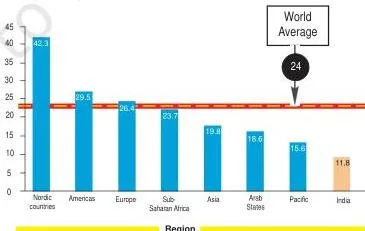
Because women’s problems get little attention, feminists concluded that women must hold power themselves — and that means more women as elected representatives. In 2019 the women’s share of the Lok Sabha touched 14.36 per cent; in state assemblies it is less than 5 per cent (NCERT, p. 34).
One-third of seats in panchayats and municipalities are now reserved for women, giving local bodies more than ten lakh elected women representatives (NCERT, p. 35). The Women’s Reservation Act, 2023 gives 33 per cent reservation in the Lok Sabha, state assemblies and the Delhi Assembly. The chapter’s verdict: disadvantaged groups benefit when a social division is expressed in politics.
Religion and politics: the legitimate link versus communalism
The religion part is the chapter’s negative example: healthy expression of religion in politics is possible, and the unhealthy version — communalism — threatens the very idea of India.
The chapter first shows what a legitimate religion-politics link looks like (NCERT, p. 36):
- Gandhiji’s view: politics must be guided by ethics drawn from religion — the moral values common to all religions.
- Human rights groups: they have demanded state protection for religious minorities and steps to prevent communal riots.
- The women’s movement: it has argued that the family laws of all religions discriminate against women and must be made more equitable.
The test for all three: these acts are not wrong as long as every religion is treated equally (NCERT, p. 36).
Communalism begins when religion is made the principal basis of social community (NCERT, p. 36). It treats all followers of one religion as one community with identical interests, and holds that people of different religions cannot share the same social community. The chapter rejects this: everyone has several roles and identities, and every community has many voices within it (NCERT, p. 37).
Communalism takes four forms in politics (NCERT, pp. 36-37):
- Everyday beliefs — the most common form: religious prejudices, stereotypes of religious communities and belief in the superiority of one’s own religion.
- A quest for political dominance — for the majority community, majoritarian dominance; for a minority, the desire for a separate political unit.
- Political mobilisation on religious lines — using sacred symbols, religious leaders, emotional appeal and fear to bring the followers of one religion together in the political arena.
- Communal violence — riots and massacre, as India and Pakistan saw at Partition.
Against this stands the secular state, built on four constitutional provisions (NCERT, p. 37):
- No official religion for the Indian state.
- Freedom for all individuals and communities to profess, practise and propagate any religion, or to follow none.
- No discrimination on grounds of religion.
- The state may intervene in religious matters to ensure equality within communities — the ban on untouchability is the example.
Secularism, the book insists, is not one party’s ideology; it is one of the foundations of the country. Communalism is not a threat only to some people in India — it threatens the very idea of India (NCERT, p. 37).
Caste and politics: change, persistence and political expression
The caste part has both a positive and a negative face, so it is the chapter’s most balanced case. It is also the one division special to India.
Caste is an extreme form of hereditary occupational division. Unlike in other societies, it was sanctioned by rituals: members of one caste practised the same occupation, married within the caste and did not eat with other groups, and the system was built on exclusion and the inhuman practice of untouchability (NCERT, p. 38).
Reformers — Jotiba Phule, Gandhiji, B.R. Ambedkar and Periyar Ramaswami Naicker — worked to build a society free of caste inequalities.
Partly through their efforts and partly through economic and social change, the old caste hierarchy is breaking down. The causes: economic development, large-scale urbanisation, literacy and education, occupational mobility and the weakening of village landlords; and the Constitution prohibits caste-based discrimination (NCERT, pp. 38-39).
Yet caste has not disappeared. Most people still marry within their own caste, untouchability has not ended completely, and centuries of accumulated advantage mean the upper castes are over-represented among the urban middle classes (NCERT, p. 39).
The chapter’s data: Scheduled Castes were 16.6 per cent and Scheduled Tribes 8.6 per cent of the population in 2011, and the National Sample Survey (2004-05) put the Other Backward Classes at around 41 per cent — together about two-thirds of the population (NCERT, p. 39).
Caste enters politics in visible ways: parties choose candidates with the caste composition of the electorate in mind; governments are formed taking care that different castes and tribes are represented; and parties appeal to caste sentiment. Universal adult franchise also brought a new consciousness among groups once treated as inferior (NCERT, p. 40).
But the book cautions against the impression that elections are all about caste. Four facts show why (NCERT, p. 42):
- No parliamentary constituency has a clear majority of one single caste, so every candidate needs support from more than one community.
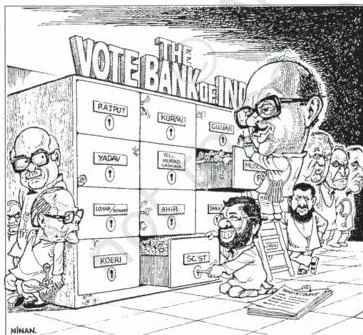
- No party wins the votes of all the voters of a caste — a “vote bank” only means a large proportion of voters.
- Several parties may put up candidates from the same caste, while some voters have no candidate of their caste.
- Ruling parties and sitting MPs and MLAs frequently lose, which could not happen if voters were frozen in caste loyalties.
The relation runs both ways. It is not politics that becomes caste-ridden; it is caste that gets politicised — caste groups expand by absorbing neighbours, enter coalitions and form new “backward” and “forward” groupings (NCERT, pp. 42-43).
The gain: caste politics has helped Dalits and OBC groups gain access to decision-making. The risk: exclusive attention to caste diverts attention from poverty, development and corruption, and can lead to tension, conflict and even violence (NCERT, p. 43).
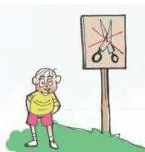
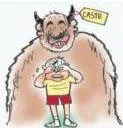
The “Now you don’t like it!” cartoon answers a reader who asks why the textbook discusses caste at all. The reply: wherever there is domination it should be discussed — caste will not disappear if we keep quiet about it (NCERT, p. 40).
A walk through the chapter’s maps, graphs and data tables
The chapter uses data figures as evidence, and knowing how to read them answers half the exercise questions. Work through the five visuals below — three figures and two tables.
1. The child sex ratio map of India (NCERT, p. 33). This map colours states by child sex ratio — the number of girl children per thousand boys — from the 2011 Census. The national figure is 919, and the chapter notes that some states have fallen below 850 or even 800. The book asks you to find your own state and identify the states below 900.
2. Women in national parliaments (NCERT, p. 34). The graph compares the percentage of women in the directly elected houses of parliament across world regions, as on 1 October 2018. India sits in the bottom group of nations — behind the averages for several developing countries of Africa and Latin America — the visual proof behind the low-representation argument.
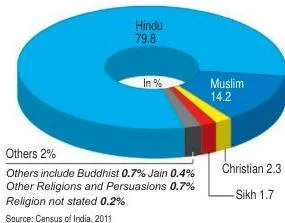
3. The pie chart of religious communities in India (NCERT, p. 39). It shows the population share of six major religious communities in the 2011 Census. Proportions have been broadly stable since 1961: Hindu, Jain and Christian shares have declined marginally, while Muslim, Sikh and Buddhist shares have risen slightly.
The Sachar Committee estimate puts the expected Muslim rise at about 3 to 4 per cent over the next 50 years — the population balance is not changing in a big way.
4. The time use table (NCERT, p. 32). Read it row by row. Men spend 6:00 on income-generating work against women’s 2:40; women spend 5:00 on household and related work against men’s 0:30. Every row adds up to a 24-hour day — the point is not who works more, but whose work is paid and visible.
| Activity | Men | Women |
|---|---|---|
| Income generating work | 6:00 | 2:40 |
| Household and related work | 0:30 | 5:00 |
| Talking, gossip | 1:25 | 1:20 |
| No work / leisure | 3:40 | 3:50 |
| Sleep, self-care, reading etc. | 12:25 | 11:10 |
Source: Government of India, Time Use Survey, 1998-99 (as given in NCERT).
5. The poverty table (NCERT, p. 41). It lists the percentage of each caste or community group living below the official poverty line in 1999-2000. Scheduled Tribes and Scheduled Castes have the highest shares, the upper castes the lowest, and the Other Backward Classes sit in between — in both the rural and urban columns.
| Caste and community group | Rural | Urban |
|---|---|---|
| Scheduled Tribes | 45.8 | 35.6 |
| Scheduled Castes | 35.9 | 38.3 |
| Other Backward Classes | 27.0 | 29.5 |
| Muslim Upper Castes | 26.8 | 34.2 |
| Hindu Upper Castes | 11.7 | 9.9 |
| Christian Upper Castes | 9.6 | 5.4 |
| Sikh Upper Castes | 0.0 | 4.9 |
| Other Upper Castes | 16.0 | 2.7 |
| All groups | 27.0 | 23.4 |
Source: National Sample Survey Organisation, 55th Round, 1999-2000 (as given in NCERT). “Upper caste” here means not from SC, ST or OBC.
Key terms explained with their textbook pages
These six terms are the chapter’s working vocabulary, and the matching exercise at the end checks them directly. Each definition below is in plain words, with the page where the book defines it.
- Feminist — a woman or a man who believes in equal rights and opportunities for women and men (NCERT, p. 31).
- Patriarchy — literally “rule by father”; a system that values men more and gives them power over women (NCERT, p. 32).
- Family laws — laws on marriage, divorce, adoption and inheritance; in India, different family laws apply to followers of different religions (NCERT, p. 37).
- Urbanisation — the shift of population from rural areas to urban areas (NCERT, p. 40).
- Occupational mobility — the shift from one occupation to another, usually when a new generation takes up work different from its ancestors’ (NCERT, p. 40).
- Caste hierarchy — the ladder-like formation in which caste groups are ranked from “highest” to “lowest” (NCERT, p. 40).
Mistakes students make in this chapter, with the correction
Each mistake below is one the chapter’s discussion boxes deliberately set out to catch. Name it before you make it.
| Mistake | Correct rule | How to check your answer |
|---|---|---|
| “Gender division is biological.” | It is based on social expectations and stereotypes, not biology (p. 30). | Would the division survive if boys were raised to share housework? |
| “My mother doesn’t work — she’s a housewife.” | The time use survey shows women work about an hour more a day; men’s work is visible only because it is paid (p. 32). | Total the paid and unpaid hours in your own family for a week. |
| “All religion in politics is communalism.” | Ethics in politics, minority protection and family-law reform are legitimate as long as every religion is treated equally (p. 36). | Ask: does this act treat one religion as superior? |
| “I’m not religious, so communalism doesn’t concern me.” | Communalism threatens the very idea of India, not only religious people (p. 37). | Ask: does it weaken equal citizenship for everyone? |
| “Jokes about another religion are harmless.” | Everyday beliefs are the most common form of communalism (p. 37). | Would you say it if the target were your own community? |
| “The Muslim share of the population will overtake others.” | The Sachar Committee estimate is a rise of about 3 to 4 per cent over 50 years; the balance is not changing in a big way (p. 39). | Read the pie chart — proportions have barely moved since 1961. |
| “Discussing caste promotes casteism.” | Wherever there is domination it should be discussed; caste will not disappear if we keep quiet (p. 40). | Does naming a problem create it, or does silence preserve it? |
| “A vote bank means every voter of that caste supports that party.” | It means a large proportion of voters from that caste; no party wins all the voters of any caste (p. 42). | Do rich and poor, men and women of one caste always vote alike? |
| “Elections are all about caste.” | No constituency has a single-caste majority, and voters’ assessment of government performance and leaders often decides results (p. 42). | Check: sitting MPs and MLAs frequently lose. |
How the exercise questions test this chapter
The chapter’s exercise set splits into direct recall questions, options questions and a matching activity. Use the mapping below to revise by concept rather than by number.
| Question | What it tests | Where the answer lives |
|---|---|---|
| Q1 | Aspects of life in which women are discriminated or disadvantaged: literacy, pay, child sex ratio, violence | pp. 30-33 |
| Q2 | The forms of communal politics, each with an example | pp. 36-37 |
| Q3 | Continuing caste inequalities: marriage within caste, untouchability, economic status | pp. 39-41 |
| Q4 | Two reasons caste alone cannot determine election results | p. 42 |
| Q5 | Status of women’s representation in India’s legislative bodies | pp. 34-35 |
| Q6 | Two constitutional provisions that make India a secular state | p. 37 |
| Q7 (options) | Meaning of gender divisions — the social answer, unequal roles assigned by society (b) | p. 30 |
| Q8 (options) | Where seats are reserved for women — Panchayati Raj bodies (d) | p. 35 |
| Q9 (options) | Beliefs behind communal politics — statements A and C are correct (c) | p. 36 |
| Q10 (options) | The wrong statement about the Constitution — “gives official status to one religion” (b) | p. 37 |
| Q11 (fill-in) | The social division peculiar to India — caste | p. 38 |
| Q12 (matching) | Glossary terms: feminist, communalist, casteist, secularist — pairs 1-B, 2-A, 3-D, 4-C | pp. 31-40 |
A complete answer to Q1-Q6 names the chapter’s own examples: the evidence list for Q1, one example per form for Q2, the what-persisted list for Q3. Q5 needs all three levels — Lok Sabha, state assemblies and local bodies. Remember that textbook contents and the examinable syllabus are not always identical — the related resources section below links the official syllabus.
Worked example: why caste alone cannot decide an election. Take a hypothetical constituency with 640,000 voters. The largest caste group has about 29 per cent of the voters — roughly \( \frac{29}{100} \times 640{,}000 = 185{,}600 \) people. Two more groups have about 22 per cent and 17 per cent, and the rest are spread across many smaller groups.
Now apply the chapter’s logic. Winning the seat needs a majority of votes cast — about 320,001 if everyone votes. Even if a candidate won every single voter of the largest caste, that would still fall far short: \( 185{,}600 \lt 320{,}000 \).
The candidate must therefore attract other castes, and the campaign becomes a cross-caste coalition rather than a single-caste appeal. That is exactly why the book says no constituency has a single-caste majority, and why caste alone cannot determine the result (NCERT, p. 42).
Worked example: a fictional family’s one-day time diary. Here is one day for two adults in an imaginary household, counted on the chapter’s categories (NCERT, p. 32):
| Activity | Mother | Father |
|---|---|---|
| Income-generating work | 3:30 | 6:30 |
| Household and related work | 4:30 | 0:30 |
| Talking / gossip | 0:30 | 1:00 |
| Leisure | 0:30 | 1:00 |
| Sleep, self-care, reading | 15:00 | 15:00 |
| Total working time (paid + household) | 8:00 | 7:00 |
The mother does 8 hours of work against the father’s 7, yet only her 3:30 of income-generating work is visible as “work”. Her 4:30 of household work is unpaid, so it is easy to describe as “not working”.
On the survey’s categories she works longer but appears to work less — that gap between total work and paid work is the chapter’s point about invisible labour.
The chapter in five minutes
Here is the chapter’s argument compressed into five conclusions, in the order the book reaches them.
- Diversity is not a threat. Political expression of social differences is possible and sometimes desirable in a democracy; the chapter applies this to gender, religion and caste (p. 29).
- Gender: a hierarchical division, a political remedy. The sexual division of labour rests on social expectations, not biology; under-representation in legislatures followed, and reservation in local bodies plus the 2023 Women’s Reservation Act are the political response (pp. 30-35).
- Religion: legitimate link or communalism. Religion in politics is acceptable when every religion is treated equally; communalism — in everyday beliefs, dominance-seeking, mobilisation and violence — threatens the very idea of India; the secular state rests on four constitutional provisions (pp. 36-37).
- Caste: breaking down, but persisting. The old hierarchy is weakening through urbanisation, literacy and mobility, yet most people still marry within caste, untouchability survives, and caste stays closely linked to economic status (pp. 38-41).
- Caste and politics shape each other. Caste gets politicised rather than politics becoming caste-ridden; Dalits and OBC groups have gained access to decision-making, but exclusive caste politics is unhealthy for democracy (pp. 42-43).
Related NCERT chapters and resources
This listing is maintained for the 2026-27 academic session using the NCERT textbook information available to us. NCERT remains the authority for confirming the latest edition.
This is chapter 3 of Democratic Politics-II. Chapter 2, Federalism, is where the book works out how power is shared; chapter 4, Political Parties, applies the same method to parties and party systems.
For revision help on the rest of the Class 10 Social Science set, use the Class 10 Social Science notes page, or start from the Class 10 notes hub and the main CBSE notes index.
Two chapters connect directly with the ideas here: Sectors of the Indian Economy shows how work and income are counted — the same question the time use survey raises — and Agriculture deals with the rural economy in which caste and landholding are so closely tied.
This page covers the NCERT textbook chapter; the examinable syllabus is set by CBSE, so check the current official Class 10 syllabus for what is examinable this session.
Sources and data verification
Four things, stated plainly, about what this page describes:
- This page describes NCERT Class 10 Social Science, Democratic Politics-II, chapter 3 (Gender, Religion and Caste), textbook pages 29 to 45 of the current edition available on ncert.nic.in.
- It covers only this chapter of this book — not the History, Geography or Economics books in the Class 10 set, and not the other chapters of Democratic Politics-II.
- It is maintained using the NCERT edition on ncert.nic.in.
- NCERT settles textbooks, editions and PDFs; CBSE settles curriculum, syllabus and examinations.
| What the chapter holds | Count | Where it is used |
|---|---|---|
| Printed pages | 17 | |
| Figures with NCERT captions | 10 | |
| Tables | 4 | |
| Exercise questions | 12 | answered in our NCERT Solutions |
| Official NCERT PDF | Download the chapter PDF | the chapter exactly as NCERT publishes it |
Reference: NCERT Class 10 Social Science (Democratic Politics) textbook, chapter 3, official edition on ncert.nic.in.
Frequently asked questions
Which Class 10 book contains the chapter Gender, Religion and Caste?
Democratic Politics-II, the political science book in the NCERT Class 10 Social Science set. It is chapter 3 of that book, on textbook pages 29 to 45 of the current edition.
What is the sexual division of labour in this chapter?
It is the system in which all work inside the home is done or organised by women, while men work outside the home. The chapter stresses that this division is not based on biology but on social expectations and stereotypes (NCERT, p. 30).
What does the time use survey in this chapter show?
It shows that an average woman works a little over seven and a half hours a day against an average man’s six and a half hours, yet men’s work is more visible because most of it generates income. The bulk of women’s work is household work, which remains unpaid and invisible (NCERT, p. 32).
What constitutional provisions make India a secular state?
Four, in the chapter’s account: no official religion for the state; freedom to profess, practise and propagate any religion or none; no discrimination on grounds of religion; and the state’s power to intervene in religious matters to ensure equality within communities, such as the ban on untouchability (NCERT, p. 37).
Why does the chapter say caste alone cannot determine election results?
Because no constituency has a single-caste majority; no party wins all the voters of a caste; several parties may field candidates from the same caste; and ruling parties and sitting MPs and MLAs frequently lose elections (NCERT, p. 42).
Does discussing caste in the textbook promote casteism?
No — this is exactly what the “Now you don’t like it!” cartoon answers. Wherever there is domination it should be discussed, and caste will not disappear if we keep quiet about it (NCERT, p. 40). The chapter also argues that caste is only one aspect of a person’s identity, not the sole basis of community.
Explore Class 10 Social Science Books
Related chapters: