
This is Chapter 1, Power-sharing, of Democratic Politics-II — the NCERT Class 10 political science textbook (English edition, used for the current academic session) in your Social Science bundle. The chapter runs to 12 printed pages and opens with two country stories before building the case for why democracies must share power.
The official Power-Sharing Class 10 PDF is right below, and the rest of this page maps what the chapter teaches, section by section, so you can follow its argument and answer its exercises without hunting through the book.
Get the Power-Sharing Class 10 PDF
NCERT keeps every Class 10 textbook on its own portal, free to read and download, so you always get the exact published version — including the maps, cartoons and margin questions that photocopies lose.
Open the official Power-Sharing Class 10 PDF from NCERT’s textbook portal to read the chapter exactly as published, with its maps, cartoons and margin questions intact. If you hold the printed book, the page numbers cited on this page match it — the PDF is numbered identically.
Chapter at a Glance: What the PDF Contains
The table below is counted from the official NCERT book and shows what this chapter holds — how many sections, figures, tables and exercise questions — so you know its size before you open the file.
The chapter’s running order is a straight line:
- Belgium and Sri Lanka — two democracies with complex social compositions, and one question: what did each do with its majority?
- Majoritarianism in Sri Lanka — the measures that followed independence in 1948, and the civil war they ended in.
- Accommodation in Belgium — four constitutional arrangements made between 1970 and 1993.
- Why power sharing is desirable — the prudential and moral reasons.
- Khalil’s dilemma — a story from Lebanon that tests the chapter’s principle on a hard case.
- Forms of power sharing — the four arrangements common in modern democracies.
- Exercises — recall, reasoning and judgement questions that close the chapter.
What This Chapter Covers: From Two Stories to Four Forms
Know the chapter’s argument before you learn any detail, because every fact below is evidence for one step of it.
The chapter opens with a common-sense equation: sharing power = dividing power = weakening the country. The book does not mock that idea — it tests it. Belgium and Sri Lanka are two democracies that faced the same question: what should the majority do with its numbers?
The argument runs in four steps:
- Two stories show what happens when a majority shares power (Belgium) and when it refuses to (Sri Lanka).
- The two outcomes produce two sets of reasons for sharing — prudential reasons, which say sharing leads to better results, and moral reasons, which say sharing is what democracy means.
- A fictional dilemma from Lebanon asks whether these reasons survive when power sharing itself feels unfair to an individual.
- The chapter closes by classifying power sharing into four forms that you will meet again in later chapters.
Hold on to that arc — story, reasons, test case, classification. When an exercise asks why power should be shared, it is asking you to reproduce step 2.
Belgium and Sri Lanka: Two Democracies, Two Starting Points
The chapter starts with two countries instead of a definition because both pose the same question: what does a majority do with its numbers? The answers are opposites, and the demographic facts come first (NCERT, p. 2).
| Country | Who lives there | The tension | What followed |
|---|---|---|---|
| Belgium | 59% live in the Flemish region and speak Dutch; 40% live in the Wallonia region and speak French; 1% speak German. In Brussels, 80% speak French and 20% Dutch. | The French-speaking minority was relatively rich and powerful. The Dutch-speaking community resented this, since it gained the benefits of economic development and education much later. | Leaders recognised the regional and cultural differences and amended the constitution to share power (NCERT, p. 2). |
| Sri Lanka | 74% Sinhala-speaking; 18% Tamil-speaking — 13% Sri Lankan Tamils plus the Indian Tamils whose forefathers came as plantation workers in the colonial period; about 7% Christians, both Tamil and Sinhala. | The Sinhala community enjoyed an even bigger majority and could impose its will on the entire country. | The majority imposed its will; the refusal to share power ended in civil war (NCERT, pp. 2-3). |
One detail drives the Belgian story. Dutch speakers were a majority in the country but a minority in the capital, where 80% of people spoke French. The chapter calls this the special problem of Brussels: the community that dominated Belgium felt outnumbered in its own capital, and tension there was more acute than anywhere else (NCERT, p. 2).
Geography matters too. Sri Lankan Tamils are concentrated in the north and east of the island, which is why their later demand was for autonomy in the provinces they populated. The book’s map question — where are the different communities concentrated? — sets that up (NCERT, p. 2).
Sri Lanka’s Majoritarianism: What Happened When the Majority Refused to Share
Sri Lanka is the chapter’s negative example — a democracy whose majority chose dominance over accommodation. Learn the sequence in order, because each measure deepened the alienation of the Tamils (NCERT, p. 3).
Majoritarianism is the belief that the majority community may rule a country in whichever way it wants, disregarding the wishes and needs of the minority (NCERT, p. 3). It sounds like ordinary democracy, but it is not: democracy gives the minority a voice and rights, while majoritarianism ignores both.
- 1948 — Sri Lanka becomes independent. Leaders of the Sinhala community seek dominance over government by virtue of their majority.
- 1956 — an Act makes Sinhala the only official language, disregarding Tamil.
- Then — preferential policies favour Sinhala applicants for university positions and government jobs.
- Then — a new constitution declares that the state shall protect and foster Buddhism.
- Tamil parties and struggles demand recognition of Tamil as an official language, regional autonomy and equality of opportunity — and the demand for more autonomy to Tamil-populated provinces is repeatedly denied.
- By the 1980s — political organisations demand an independent Tamil Eelam (state) in the north and east.
- Civil war — distrust turns into widespread conflict; thousands on both sides are killed, many families flee as refugees, and the country’s social, cultural and economic life suffers a terrible setback.
- 2009 — the civil war ends (NCERT, p. 3).
The book puts the majority’s case in the margin: “What’s wrong if the majority community rules?” The chapter’s answer is that a majority which rules everywhere leaves the minority nowhere — no stake in the system, no voice, no equality — and the country pays the price.
The Belgian Model: How One Country Designed Accommodation
Belgium did not wait for its tensions to become a war. Between 1970 and 1993 its leaders amended the constitution four times, each time to work out an arrangement that would let everyone live together in the same country (NCERT, p. 4). The result — the Belgian model — has four elements:
- Equal ministers in the central government. The constitution prescribes an equal number of Dutch- and French-speaking ministers, and some special laws require the support of a majority of members from each linguistic group — so no single community can make decisions unilaterally.
- Strong state governments. Many powers of the central government are given to the state governments of the two regions, and these state governments are not subordinate to the central government.
- A separate Brussels government. Both communities have equal representation in it. The French-speaking people accepted this because the Dutch-speaking community accepted equal representation in the central government.
- A community government. A third kind of government, elected by people of one language community — Dutch, French or German-speaking — no matter where they live. It has power over cultural, educational and language-related issues (NCERT, p. 4).
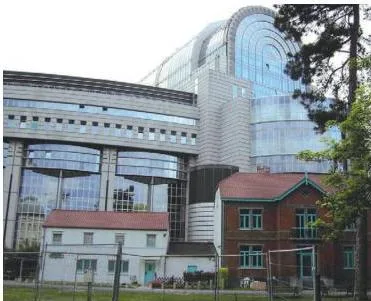
The chapter’s verdict is honest: the model is very complicated, even for people living in Belgium. But it has worked — it helped avoid civic strife between the two major communities and a possible division of the country on linguistic lines, and when Europe came together to form the European Union, Brussels was chosen as its headquarters (NCERT, p. 5).
The two stories together make the chapter’s central claim. Both countries are democracies, but Belgium’s leaders realised that respecting the feelings and interests of different communities is the only way to keep the country united, while Sri Lanka’s majority tried to force its dominance and refused to share power — a path that undermined the unity of the country (NCERT, p. 5).
Why Power Sharing Is Desirable: Prudential and Moral Reasons
Why should a majority share power at all? The chapter gives two different families of reasons, and the labels are exam favourites — do not mix them (NCERT, p. 6).
Prudential reasons are based on prudence, on a careful calculation of gains and losses; they justify power sharing by its outcomes. Moral reasons value the act of sharing itself — power sharing is the very spirit of democracy.
| Type of reason | What it argues | The test word |
|---|---|---|
| Prudential | Power sharing reduces the possibility of conflict between social groups; since conflict brings violence and political instability, sharing ensures the stability of the political order. Imposing the majority’s will may look attractive in the short run, but in the long run it undermines national unity. | “It works.” |
| Moral | Power sharing is the very spirit of democracy. People have a right to be consulted on how they are governed, and a legitimate government is one where citizens, through participation, acquire a stake in the system. | “It is what democracy means.” |
(NCERT, p. 6)
A worked answer plan for Exercise 2: one prudential and one moral reason with an Indian example
Question 2 asks you to state one prudential reason and one moral reason for power sharing, each with an example from the Indian context. The chapter’s own material supplies both:
- Prudential reason: giving more power to the panchayats reduces corruption and increases administrative efficiency — when people participate in planning and implementing development schemes, they control those schemes and the corrupt middlemen are eliminated. This is exactly the argument of the passage in Exercise 5, and it is prudential because it promises better outcomes (NCERT, p. 10).
- Moral reason: reserved constituencies in the Lok Sabha and state assemblies give socially weaker sections and women representation in the legislature — a share in power itself, so that groups who would otherwise feel alienated from government gain a stake in the system. This is moral because the sharing is valuable in itself (NCERT, p. 9).
Write the answer in that order: name the reason, state it, then give the Indian example. The error that costs marks is labelling a prudential example as moral, or vice versa — so check the label before you finish.
Khalil’s Dilemma: Should Lebanon Follow ‘Normal’ Democratic Rules?
Midway through, the chapter interrupts its argument with a folk tale, and the interruption is a test. Khalil’s dilemma asks whether power sharing is always right — or whether it can itself be unfair to an individual.
Lebanon’s leaders, at the end of a bitter civil war, agreed on fixed community rules: the President must belong to the Maronite Catholic community, the Prime Minister must be a Sunni Muslim, the Deputy Prime Minister an Orthodox Christian, and the Speaker a Shi’a Muslim.
Under the pact, Christians agreed not to seek French protection and Muslims agreed not to seek unification with Syria. The communities were nearly equal in population then; today Muslims are a clear majority, yet both sides keep the pact (NCERT, p. 7).
Khalil objects in the name of ordinary democracy: why can’t Lebanon hold an election, let everyone contest, and let whoever wins the most votes become president, whatever his community? His elders, who lived through the civil war, reply that the present system is the best guarantee of peace (NCERT, p. 7).
Decision exercise: which rules would you write?
Vetal’s question to Vikram is direct: if you had the power to rewrite Lebanon’s rules, would you adopt the “regular” rules Khalil suggests, stick to the old pact, or do something else? The book gives no answer, so the decision is yours. Think along these lines:
- Keep the pact: it guarantees every major community a share of the top offices, and the memory of the civil war is the reason it exists — a prudential argument.
- Adopt Khalil’s rule: it is fair between individuals — anyone can become president — but a community that always lost would feel it had no stake, which is how the Sri Lankan story began.
- Write something else: you could keep elections for most offices while guaranteeing each community a share of some positions or protections, which is closer to the Belgian model.
Whatever you choose, you are weighing exactly what the chapter weighs: outcomes against fairness, prudential reasons against moral ones. There is no single right answer; the point is to see why Lebanon’s communities chose the pact they did.
The Four Forms of Power Sharing in Modern Democracies
This is the chapter’s most tested list, and the exercises lean on it. Learn the four forms, then attach the textbook’s example to each (NCERT, pp. 8-9).
| Form of power sharing | What is shared | Example from the chapter |
|---|---|---|
| 1. Horizontal — among organs of government | Power is shared among the legislature, executive and judiciary, which sit at the same level. Each organ checks the others, so no organ can exercise unlimited power — the system of checks and balances. | Judges are appointed by the executive, yet they can check the functioning of the executive or of laws made by the legislature (NCERT, p. 8). |
| 2. Vertical — among governments at different levels | Power is shared between a general government for the whole country and governments at the provincial or regional level; the constitution lays down each level’s powers. The same principle extends lower, to the municipality and panchayat. This is the federal division of power. | India’s Union (Central) and State governments; Belgium’s state governments (NCERT, p. 8). |
| 3. Among social groups | Religious and linguistic groups, and socially weaker sections and women, are given space in government and administration so they do not feel alienated. | Belgium’s community government; India’s reserved constituencies in assemblies and Parliament (NCERT, p. 9). |
| 4. Among political parties, pressure groups and movements | Parties compete for power, form alliances and, if elected together, share power as a coalition government; interest groups influence decision-making. | An alliance that contests elections together and then forms a coalition. The chapter also points to Germany, where the rival Christian Democratic Union and Social Democratic Party had to run a coalition after neither won a clear majority in the 2005 elections (NCERT, pp. 6, 9). |
The book plants a margin question here that students routinely misread: if the class monitor changes every month, is that a power-sharing arrangement? It is not one of the four forms. Think about what is missing — no group, organ or level of government is sharing anything; one student simply replaces another.
The question is meant to make you see what “sharing power” actually requires.
How to Read the Chapter’s Cartoons and Images



Democratic Politics uses cartoons as arguments, not decoration. Each of the chapter’s images makes one point, and reading them is part of the chapter’s method.
“You might find the Belgian model very complicated”
This cartoon lands right after the four elements of the Belgian model, and it is the chapter being honest. The book has just listed equal ministers, special-majority laws, a separate Brussels government and a community government — and it admits the result is very complicated, even for people living in Belgium (NCERT, p. 5).
The cartoon lets you laugh at the tangle before learning it, and the apology is part of the argument: the model is complicated because the country is complicated.
The European Parliament in Brussels
This photograph of the European Parliament is the chapter’s evidence that the Belgian model worked. When many European countries came together to form the European Union, they chose Brussels as its headquarters (NCERT, p. 5) — a city that had nearly divided the country became the capital of a continent. That is what accommodation can buy.
“So you are saying that sharing of power makes us more powerful”
This is the cartoon answer to the equation the chapter opened with — sharing power = dividing power = weakening the country.
The speaker finds the claim odd, and the entire chapter argues that the odd claim is true: sharing power avoids conflict, keeps the political order stable and gives citizens a stake in the system, so a country that shares is stronger, not weaker (NCERT, p. 5).
Parties, pressure groups and movements
This image belongs to the fourth form of power sharing. It shows that sharing power is not only a matter of governments and organs — organised groups outside the state also control or influence those in power, through competition among parties, through alliances that become coalition governments, and through the interest groups that pressurise decision-making (NCERT, p. 9).
Key Terms in Power-Sharing: What Each Word Really Means
These terms do precise work in the chapter, and answers that blur them fall apart. Learn each definition, then the page where the book uses it.
| Term | Meaning | Page |
|---|---|---|
| Ethnic | A social division based on shared culture. People of the same ethnic group believe in a common descent because of similar physical type, or culture, or both — they need not share the same religion or nationality. | NCERT, p. 2 |
| Majoritarianism | The belief that the majority community should be able to rule a country in whichever way it wants, disregarding the wishes and needs of the minority. | NCERT, p. 3 |
| Civil war | A violent conflict between opposing groups within a country, so intense that it appears like a war. | NCERT, p. 4 |
| Prudential | Based on prudence, or on careful calculation of gains and losses; prudential decisions are contrasted with decisions based purely on moral considerations. | NCERT, p. 6 |
| Moral (as the chapter uses it) | Reasons that value the act of power sharing itself — power sharing is the very spirit of democracy, and citizens acquire a stake in the system through participation. | NCERT, p. 6 |
Mistakes Students Make in Power-Sharing (and the Fix)
The chapter’s exercises expose the same errors every year. Here they are, with the correction and a way to check yourself.
| Mistake | Correct rule | How to check your answer |
|---|---|---|
| Writing that Belgium’s Dutch-speaking majority dominated the French-speaking minority | In Belgium the leaders chose accommodation. It was the French-speaking minority that was relatively rich and powerful, and the Dutch-speaking community that resented it (NCERT, p. 2). | Use Exercise 7: statement A is the false one — the correct option there is (d), B, C and D. |
| Treating majoritarianism as ordinary democracy | Democracy gives the minority voice, rights and a share; majoritarianism rules by disregarding the wishes and needs of the minority (NCERT, p. 3). | Ask: does the minority have rights, voice and representation? If none, it is majoritarianism, not democracy. |
| Mixing horizontal and vertical division | Horizontal = organs at the same level (legislature, executive, judiciary) checking each other; vertical = higher and lower levels of government (Union, State, municipality, panchayat) (NCERT, p. 8). | Name the two things sharing power. Same level, different organs → horizontal. Different levels → vertical. |
| Believing power sharing is only for divided or large societies | Every society needs some form of power sharing, even small ones without religious, linguistic or ethnic divisions — Ouseph’s position in Exercise 3 (NCERT, p. 10). | Ask: is there any democracy where citizens should have no stake in how they are governed? |
| Believing power sharing weakens the country | The chapter reverses the opening equation: sharing reduces conflict, keeps stability and gives citizens a stake, so it strengthens the country (NCERT, pp. 5-6). | Ask: what did Belgium’s accommodation achieve, and what did Sri Lanka’s refusal cost? |
| Forgetting that “majority” depends on the level | Dutch speakers were the national majority (59%) but a minority in Brussels, where 80% spoke French — the special problem of Brussels (NCERT, p. 2). | Before calling any group a majority, ask: at which level — the country or the city? |
How to Use the Exercises to Master the Chapter
The exercises at the end of the chapter are not all testing the same thing. Map each to the skill it trains, then practise the ones you are weak at.
| Question | Skill it trains | What a full answer needs |
|---|---|---|
| Q1 — forms of power sharing | Recall | Name all four forms and give one example of each, using the chapter’s examples (NCERT, p. 10). |
| Q2 — prudential and moral reasons, Indian context | Application | One prudential reason and one moral reason, each with an Indian example, correctly labelled (NCERT, p. 10). |
| Q3 — three students’ conclusions | Judgement | The chapter’s argument supports Ouseph: every society needs some form of power sharing, even if small or without divisions — give your reasons in about 50 words (NCERT, p. 10). |
| Q4 — the Merchtem school ban | Application to a new case | No — a ban on speaking French in a Flemish town’s schools is not in keeping with the spirit of Belgium’s arrangements, which work precisely by accommodating both language communities on cultural and educational matters (NCERT, p. 10). |
| Q5 — prudential reason in a passage | Comprehension | Pick the prudential reason from the panchayat passage: giving power to panchayats reduces corruption and increases administrative efficiency (NCERT, p. 10). |
| Q6 — arguments for and against | Sorting | In favour: A, B, D and F → option (a). Statements C, E and G are the arguments against (NCERT, p. 11). |
| Q7 — statements on Belgium and Sri Lanka | Fact check | Correct statements are B, C and D → option (d). A is false because Belgium’s leaders never let the Dutch majority impose domination (NCERT, p. 11). |
| Q8 — matching forms to governments | Classification | 1-B separation of powers; 2-D federal government; 3-A community government; 4-C coalition government → option (c) (NCERT, p. 12). |
| Q9 — true or false on the core claim | Understanding | Both A and B are true → option (b) (NCERT, p. 12). |
One honest warning before you treat this chapter as a syllabus map: textbook contents and the examinable syllabus are not always identical, so check the current official CBSE syllabus to see how this chapter is examined this year. This page will teach you the chapter, but it cannot guarantee what will appear in an examination.
Power-Sharing in One Read: The Chapter’s Core Ideas
The chapter has no closing summary, so here is one. If you have five minutes before a test, read this table and the forms line.
| Approach | Outcome | Lesson | |
|---|---|---|---|
| Belgium | Accommodation: constitution amended between 1970 and 1993; equal ministers, strong state governments, a separate Brussels government, a community government. | No civic strife; a possible division on linguistic lines was avoided; Brussels became the EU headquarters. | Sharing power by respecting different communities and regions keeps a country united. |
| Sri Lanka | Majoritarianism: Sinhala made the only official language (1956), preferential policies in universities and jobs, Buddhism fostered, Tamil autonomy denied. | Alienation, then civil war from the 1980s that ended in 2009; thousands killed, families displaced, the country’s life set back. | A majority that refuses to share power undermines the unity of the country. |
And the four forms in one line: horizontal (among organs), vertical (among levels of government), among social groups, and among political parties, pressure groups and movements (NCERT, pp. 8-9).
Related Resources for Class 10 Democratic Politics
This listing is maintained for the 2026-27 academic session using the NCERT textbook information available to us. NCERT remains the authority for confirming the latest edition.
What you study in this chapter leads straight into the next one: Federalism, the second chapter of Democratic Politics, which takes the vertical division of power further.
For quicker revision before a class test, use the Class 10 Social Science revision notes, the Class 10 study hub and the main CBSE notes index. For other chapters you will study this year in Social Science, see the notes on Forest and Wildlife Resources.
Sources and Data Verification
This page follows the NCERT Democratic Politics textbook for Class 10 (English edition), Chapter 1, ‘Power-sharing’, as published on ncert.nic.in. The chapter’s sections, page numbers, figures and exercises are described from that edition of the book.
NCERT settles textbooks, their editions and the official PDFs; CBSE settles the curriculum, syllabus and examinations. The exercise map above describes what the chapter asks; what is examinable in a given year is set out in the current official syllabus.
| What the chapter holds | Count | Where it is used |
|---|---|---|
| Printed pages | 12 | |
| Figures with NCERT captions | 4 | |
| Tables | 4 | |
| Exercise questions | 9 | answered in our NCERT Solutions |
| Official NCERT PDF | Download the chapter PDF | the chapter exactly as NCERT publishes it |
Frequently Asked Questions About Power-Sharing
What is the difference between power sharing in Belgium and Sri Lanka?
Belgium’s leaders chose accommodation: between 1970 and 1993 they amended the constitution four times to give both language communities a share in government, and the country avoided civic strife.
Sri Lanka’s Sinhala majority chose dominance: the 1956 Act made Sinhala the only official language, followed by preferential policies and the denial of Tamil autonomy, and the refusal to share power led to a civil war that ended in 2009. Both were democracies; the difference is what each did with its majority (NCERT, pp. 2-5).
What are the four forms of power sharing in Class 10?
Horizontal division among organs of government (legislature, executive, judiciary — checks and balances); vertical division among governments at different levels (Union and State, extended to municipality and panchayat); sharing among social groups (Belgium’s community government, India’s reserved constituencies); and sharing among political parties, pressure groups and movements (alliances and coalition governments) (NCERT, pp. 8-9).
What is the difference between prudential and moral reasons for power sharing?
Prudential reasons argue from outcomes: power sharing reduces conflict between social groups and keeps the political order stable, so it is good for the country (NCERT, p. 6).
Moral reasons argue from the nature of democracy: power sharing is the very spirit of democracy, because people have a right to be consulted on how they are governed and acquire a stake through participation (NCERT, p. 6). Prudential asks “does it work?” — moral asks “is it right?”
Why was Brussels a special problem in Belgium?
Because a majority depends on the level you look at. Dutch speakers were the national majority, but in Brussels 80% of people spoke French — so the same community was a minority in the capital. The tension between the two communities was more acute in Brussels than anywhere else (NCERT, p. 2).
Do all societies need power sharing, or only those with social divisions?
The chapter’s argument supports Ouseph’s position in Exercise 3: every society needs some form of power sharing, even if it is small or has no religious, linguistic or ethnic divisions.
The reason is that power sharing is the very spirit of democracy — political power is distributed among as many citizens as possible so that they have a stake in the system (NCERT, pp. 6, 10).
Reference: NCERT Class 10 Democratic Politics textbook, chapter 1, official edition on ncert.nic.in.
Explore Class 10 Social Science Books
Related chapters:
- Resources and Development
- The Rise of Nationalism in Europe
- Notes for the Teacher